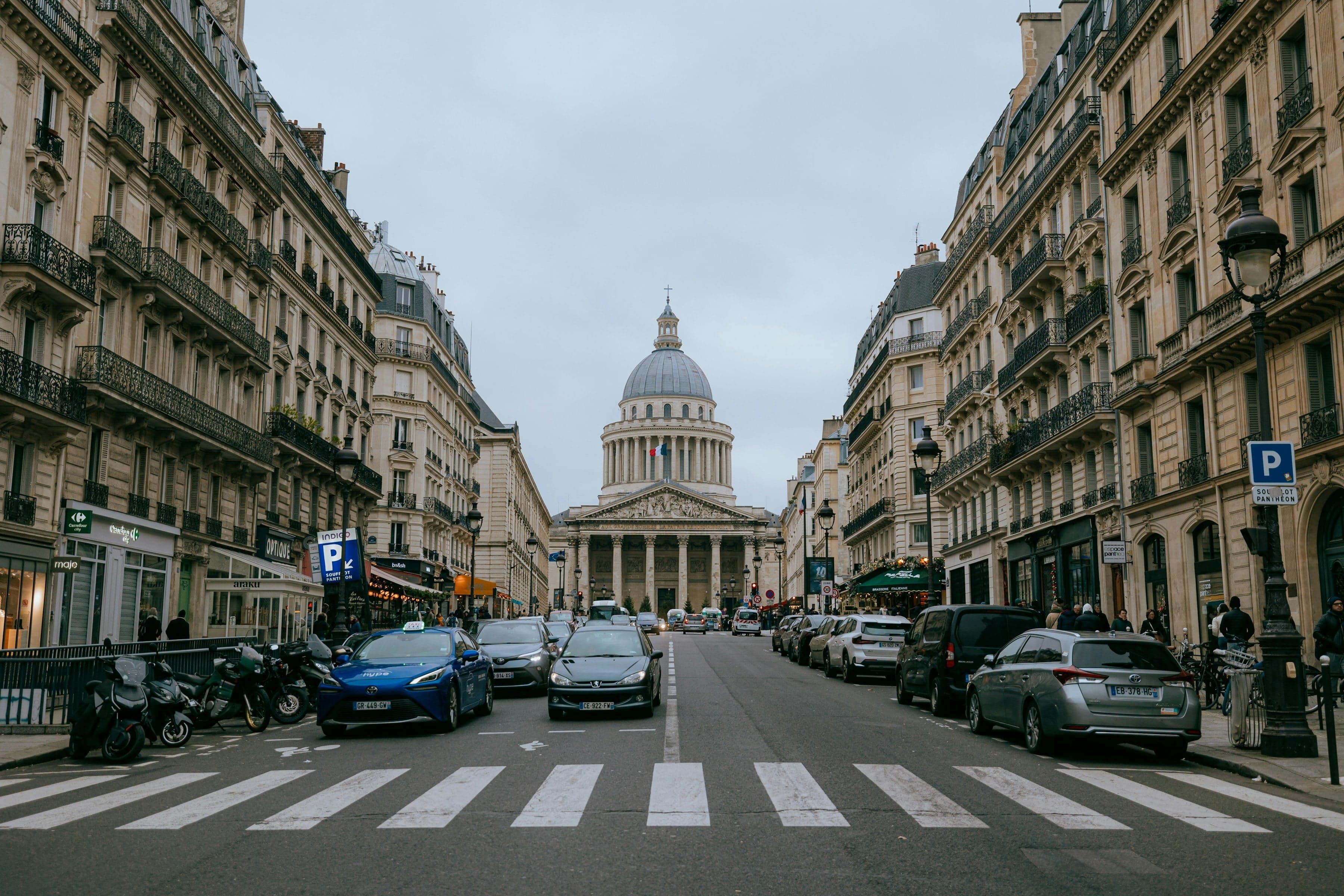
From a twelfth-century church across the Seine from Notre-Dame, past Roman baths and the Sorbonne up to the Panthéon, through the Luxembourg Garden past the Medici Fountain and the Senate's palace, and down past Saint-Sulpice to the abbey tower of Saint-Germain-des-Prés.
Start · Saint-Julien-le-Pauvre: Where the University Met
DirectionsStops
- 1
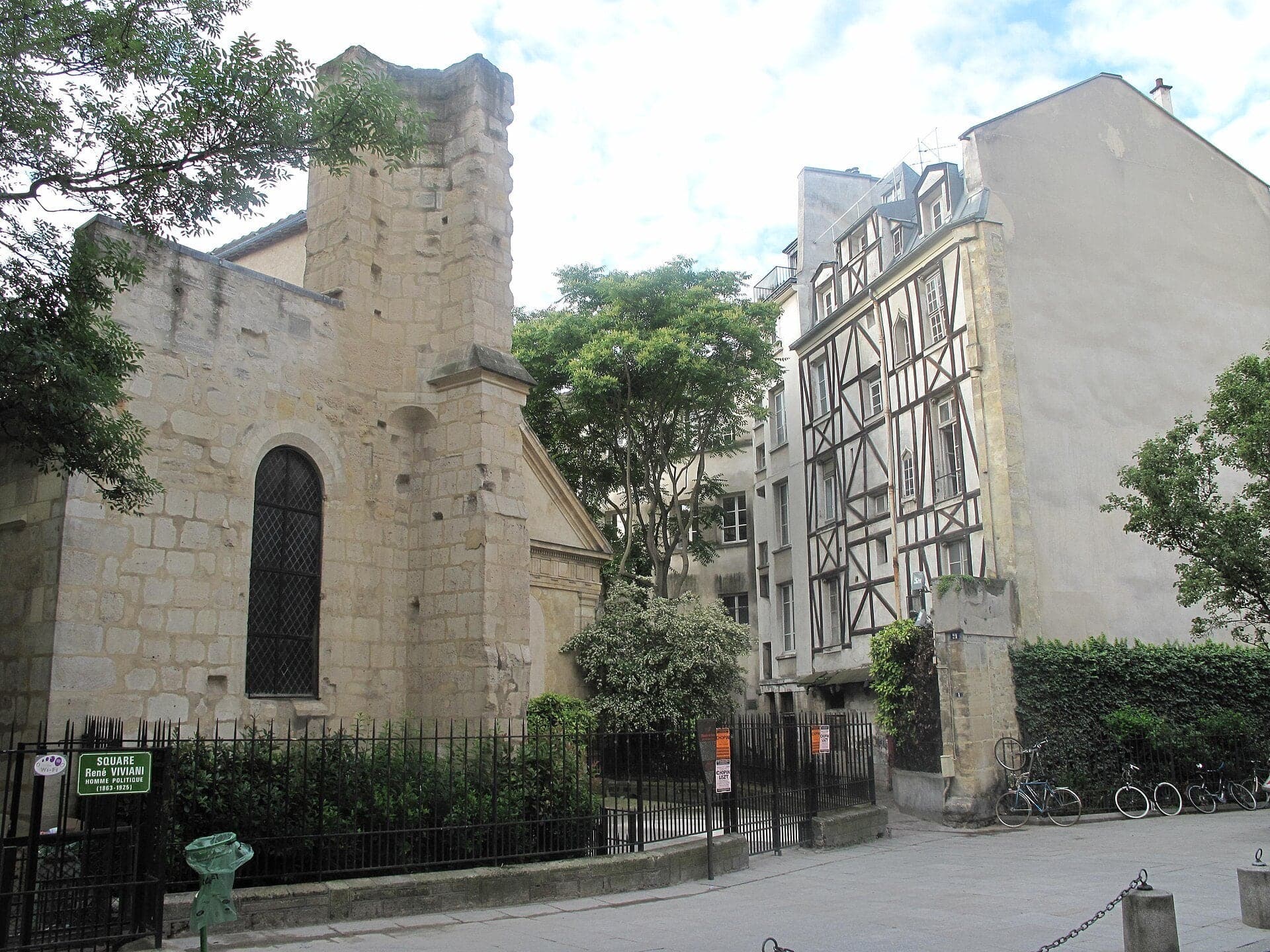
Saint-Julien-le-Pauvre: Where the University Met
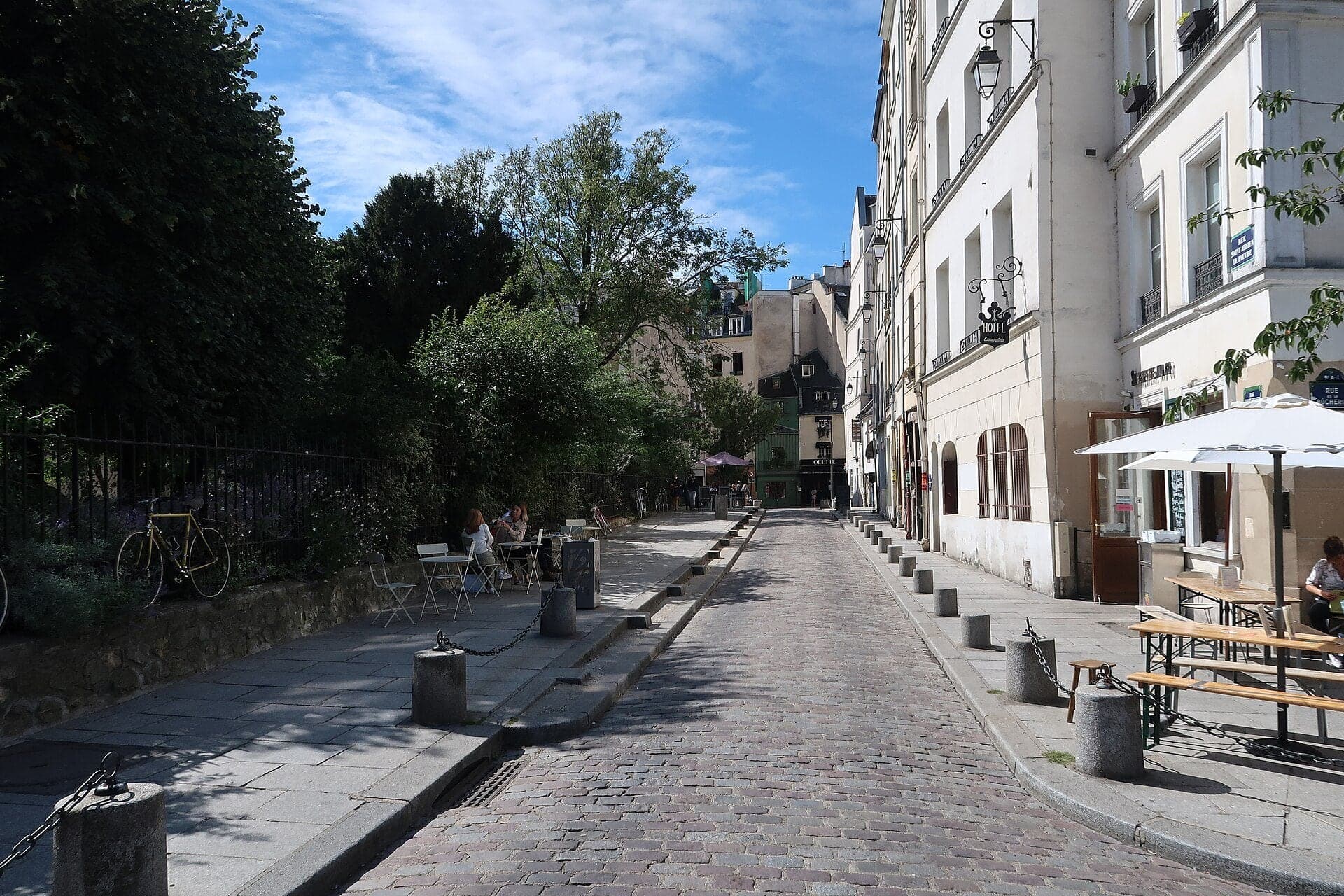
Where the University held assemblies. The University held its first assemblies here, and beside it grows a robinia the City calls the oldest tree in Paris.
- 2
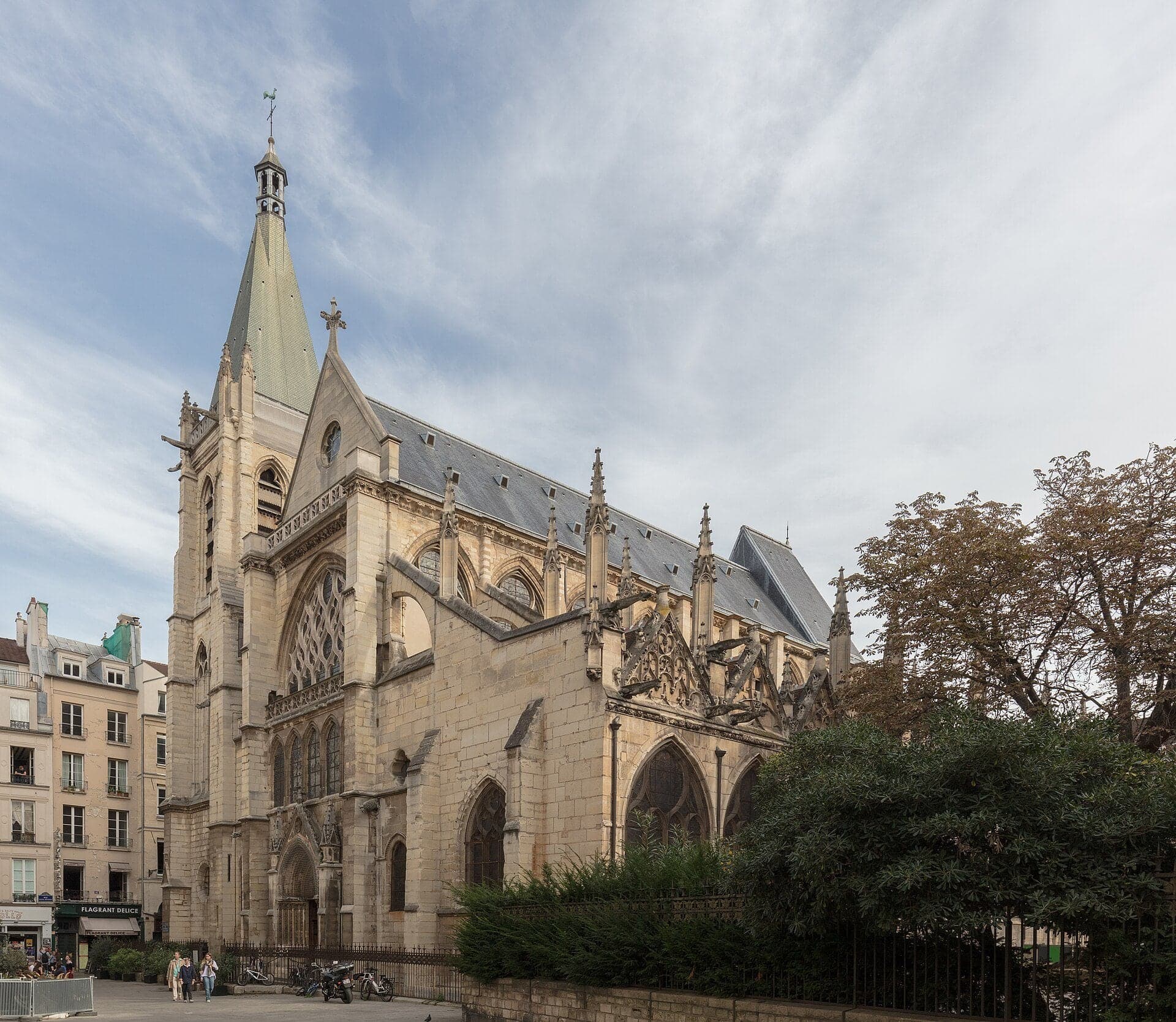
Saint-Séverin: Rebuilt After a War
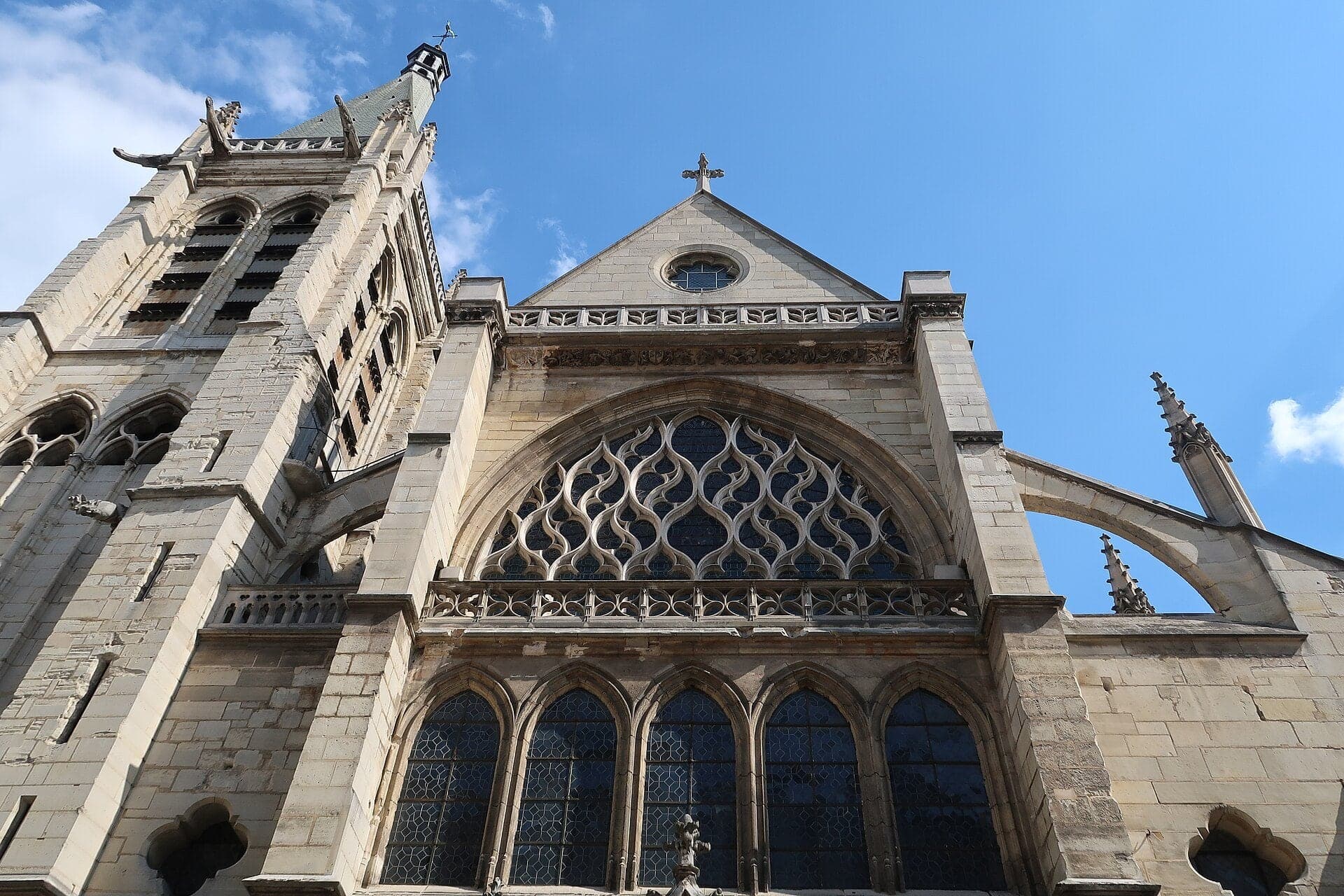
Main doorway came from another church. Its main doorway came from a demolished church on the Île de la Cité.
- 3
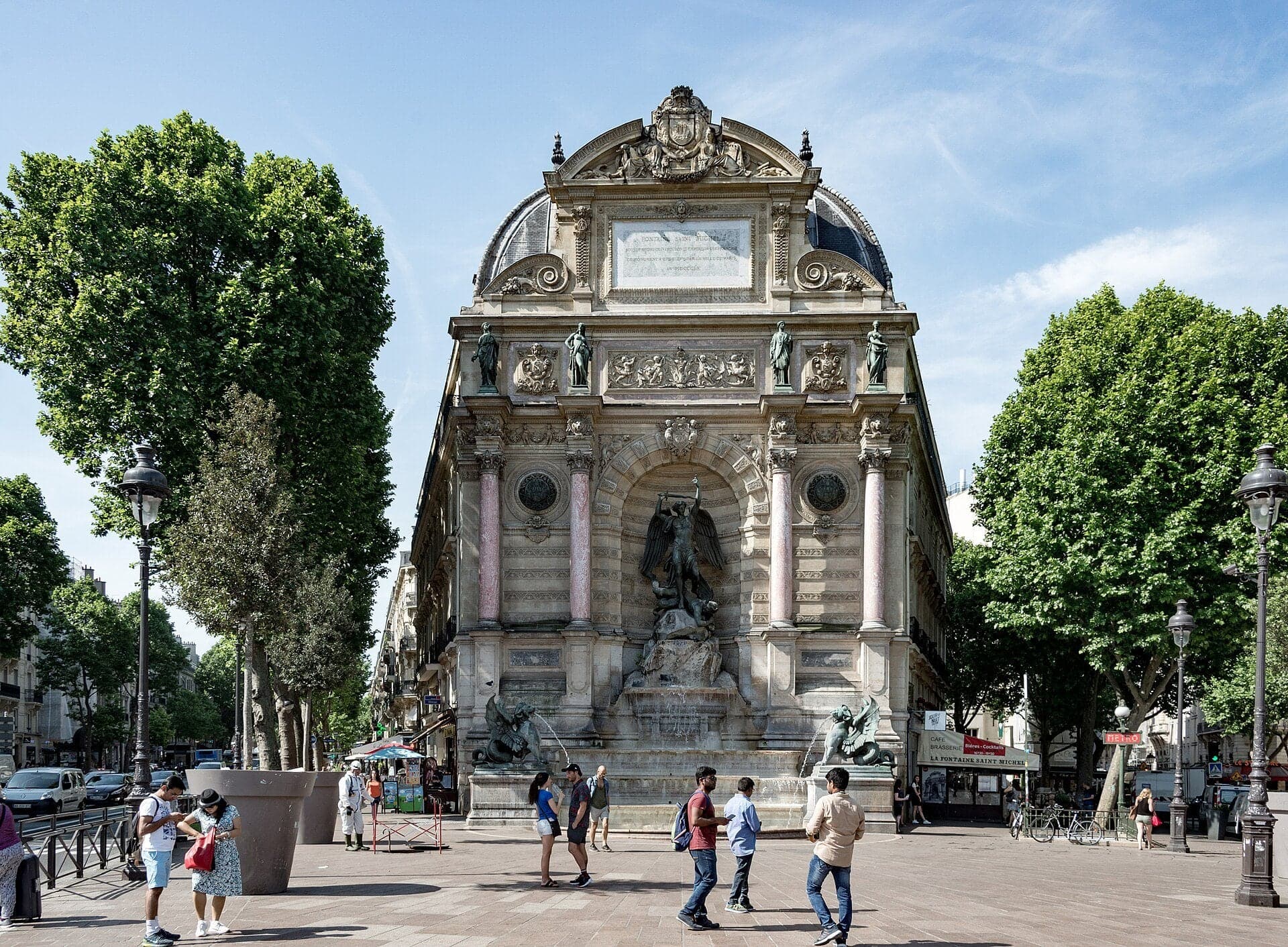
Fontaine Saint-Michel: A Fountain to Hide a Wall
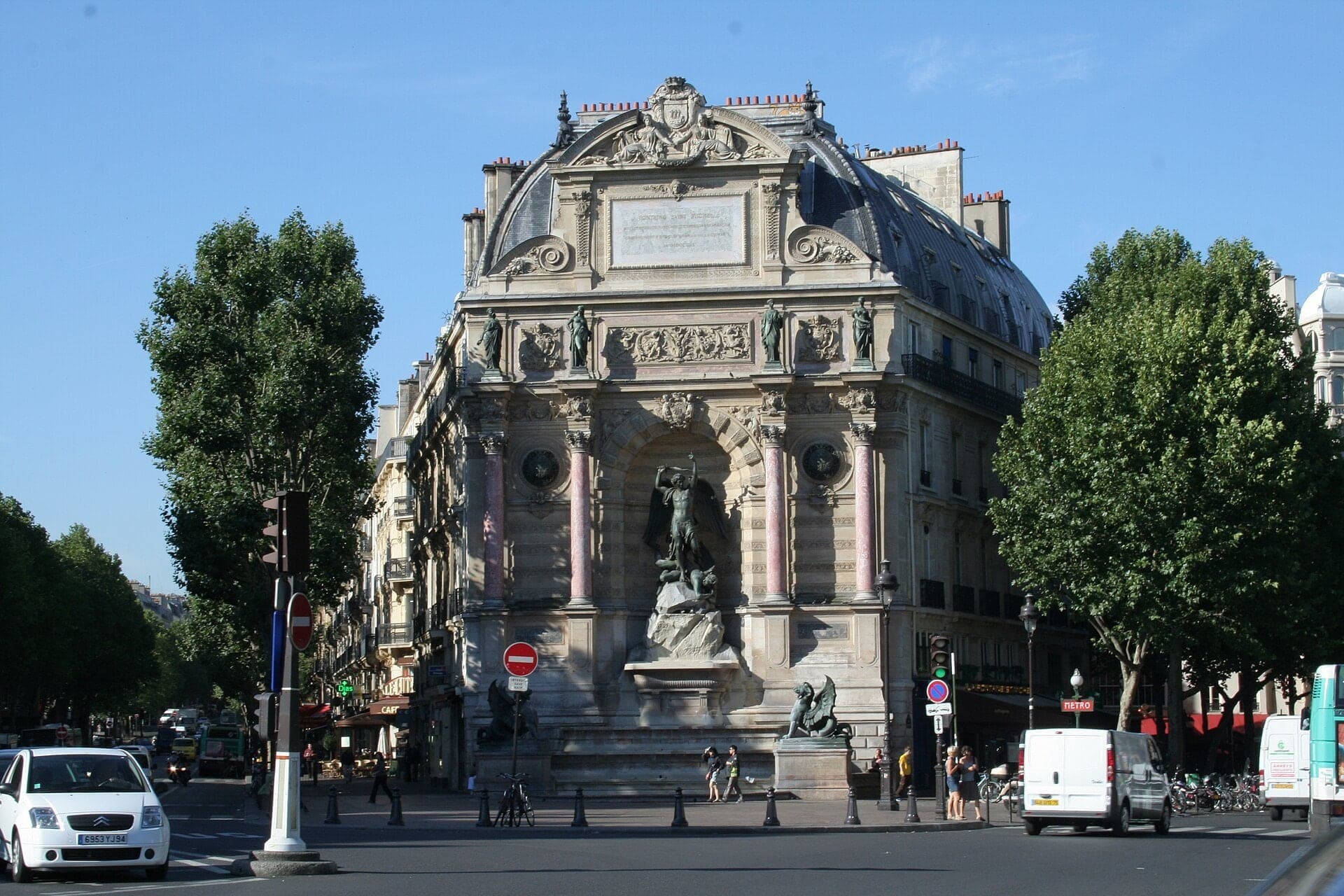
Built in 1860 to hide a wall. Haussmann's new boulevard ran straight into it, and a restoration of 2025 and 2026 brought back its original colors.
- 4
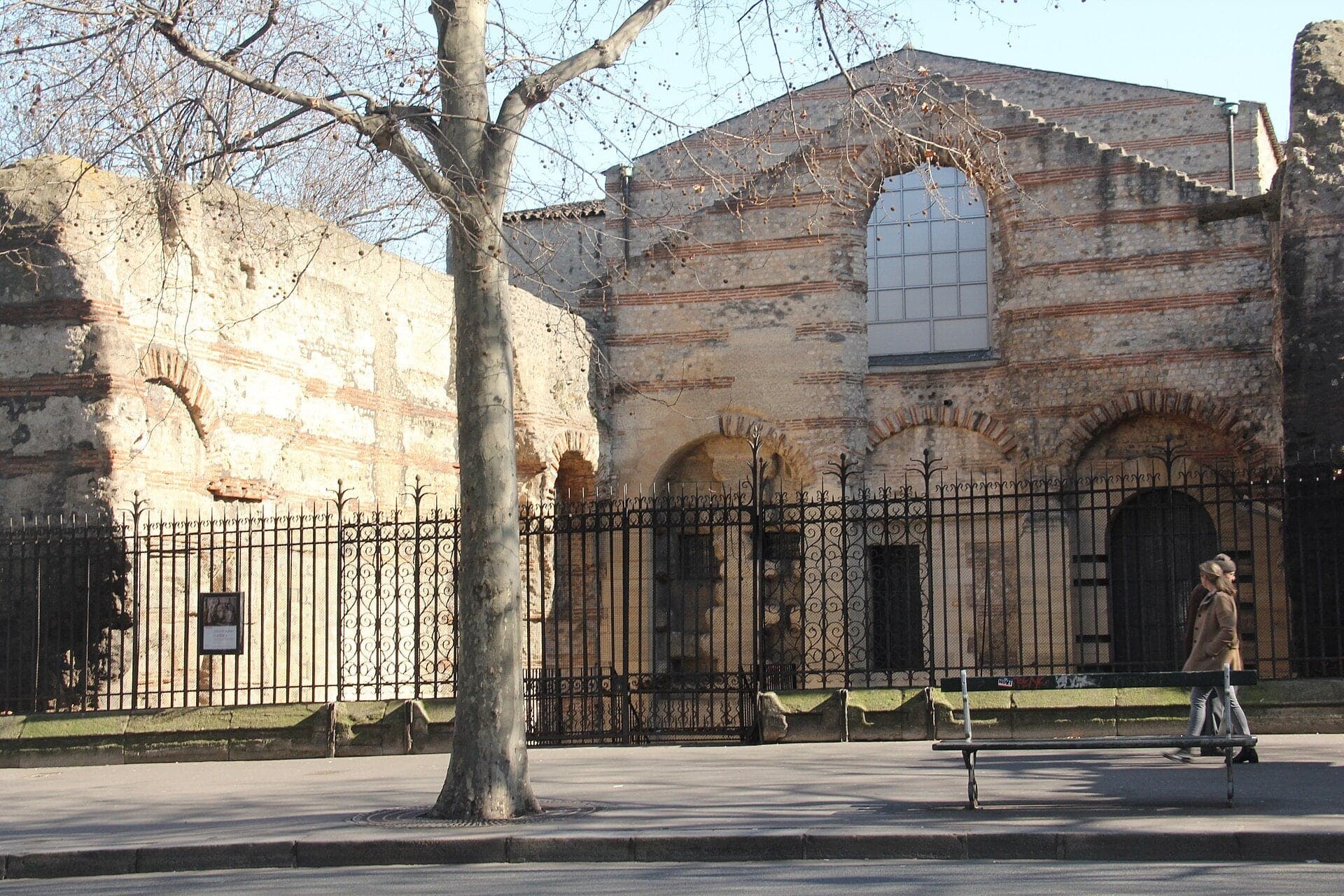
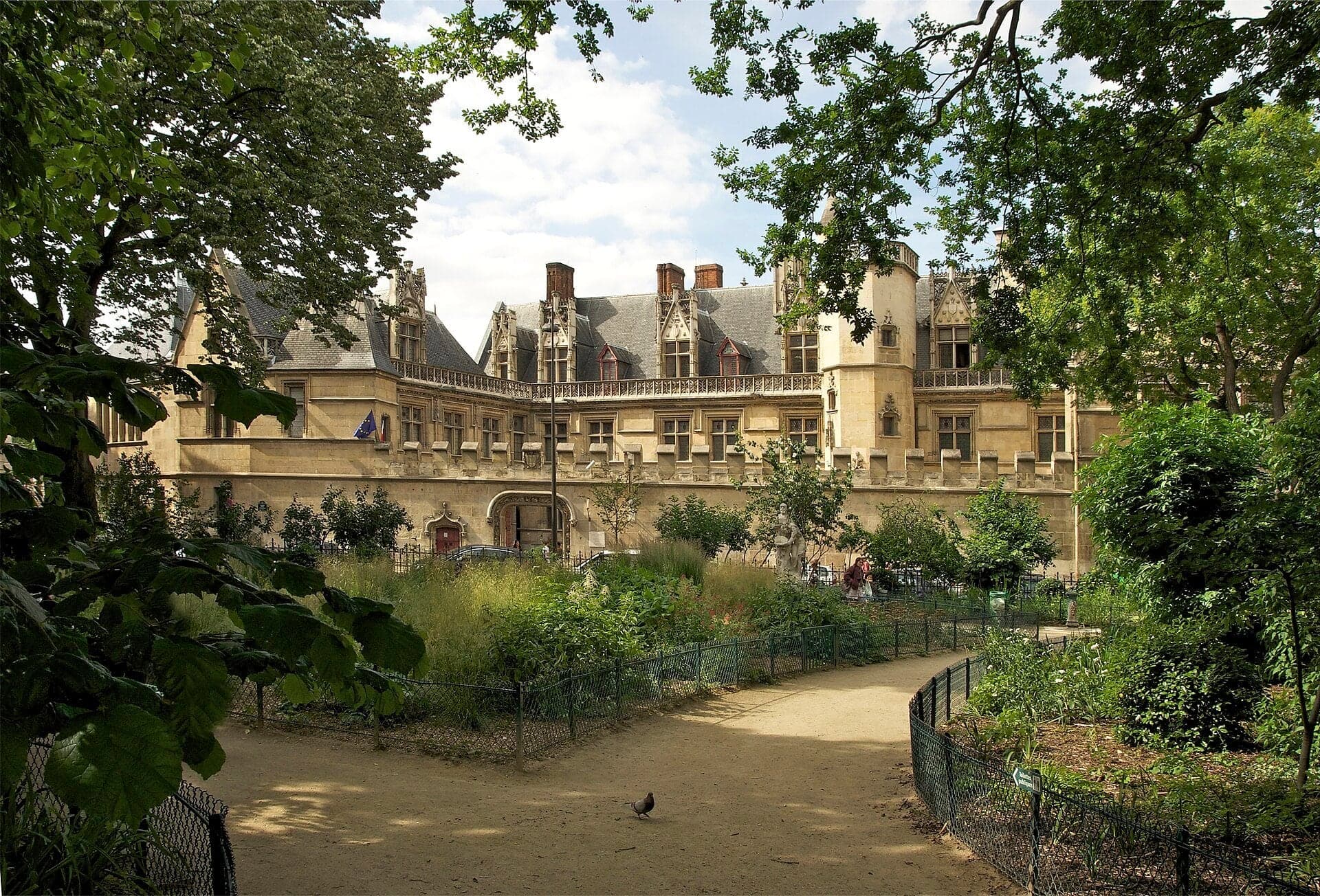
Musée de Cluny: Roman Baths and an Abbots' House
Walls of the largest Roman baths, built around AD 100, with the town house of the abbots of Cluny built against them.
- 5
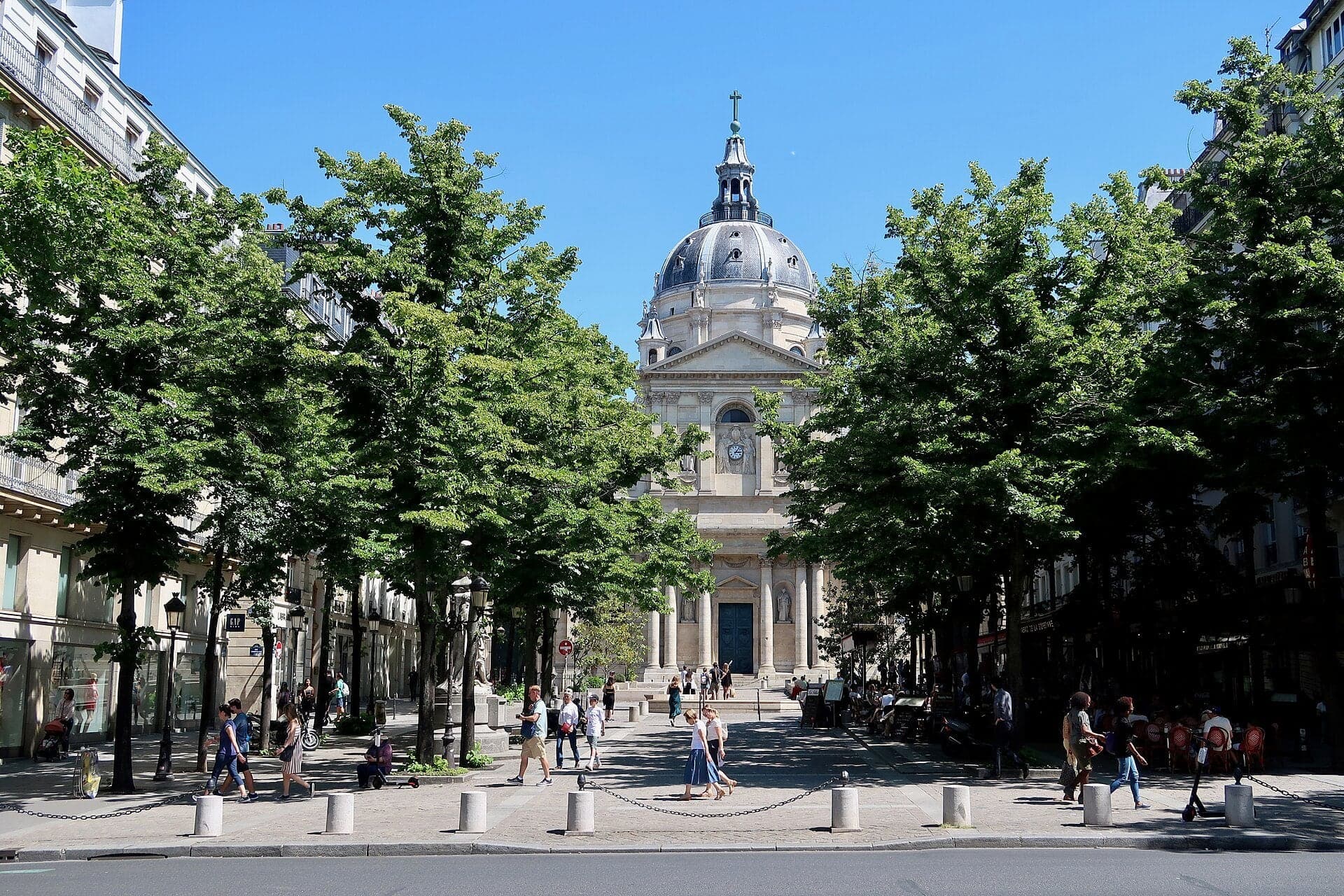
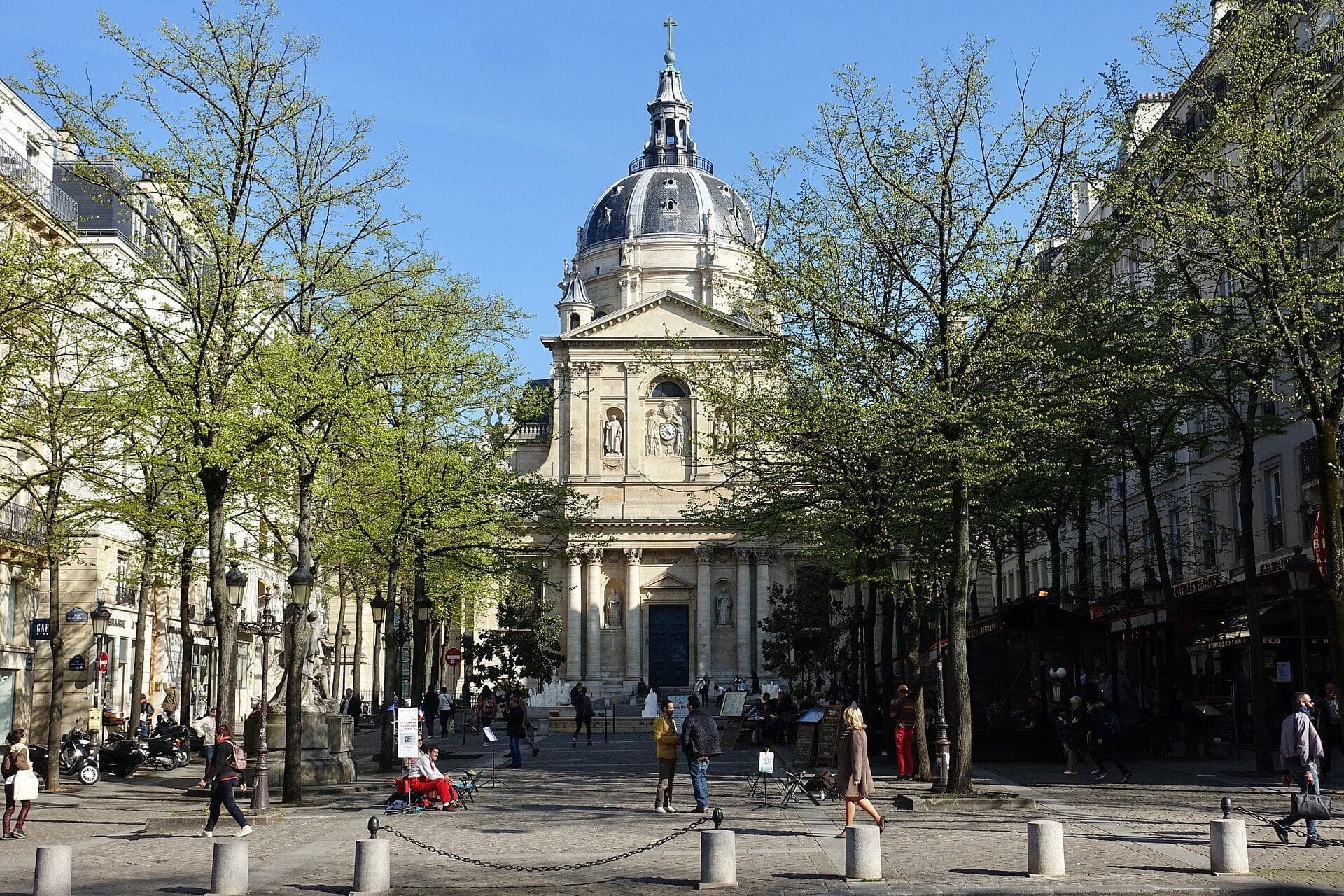
Place de la Sorbonne: Richelieu's Domed Chapel
Richelieu's domed chapel of 1635: its domed chapel, begun in 1635, at the head of a small square in the heart of the Latin Quarter.
- 6
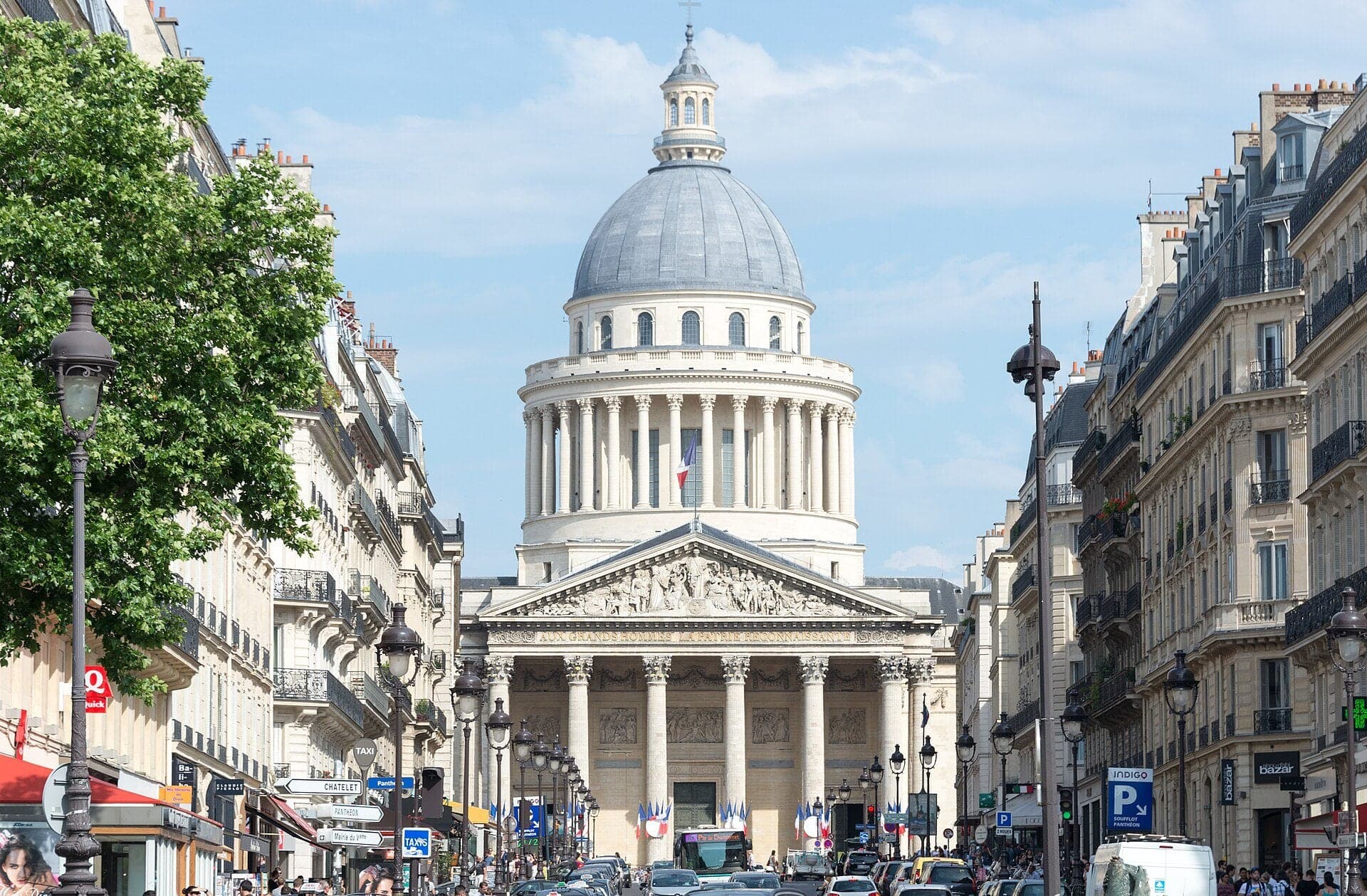
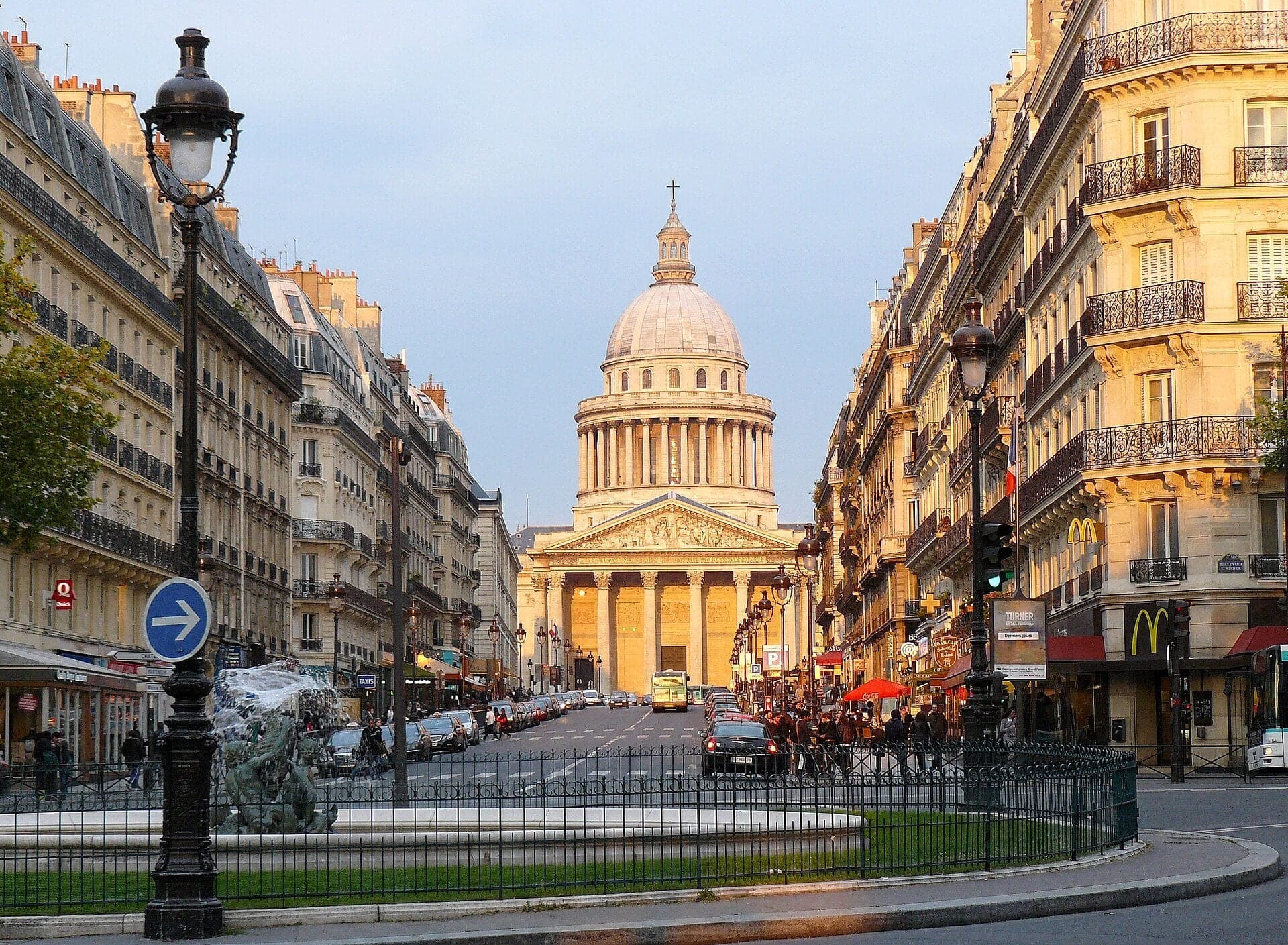
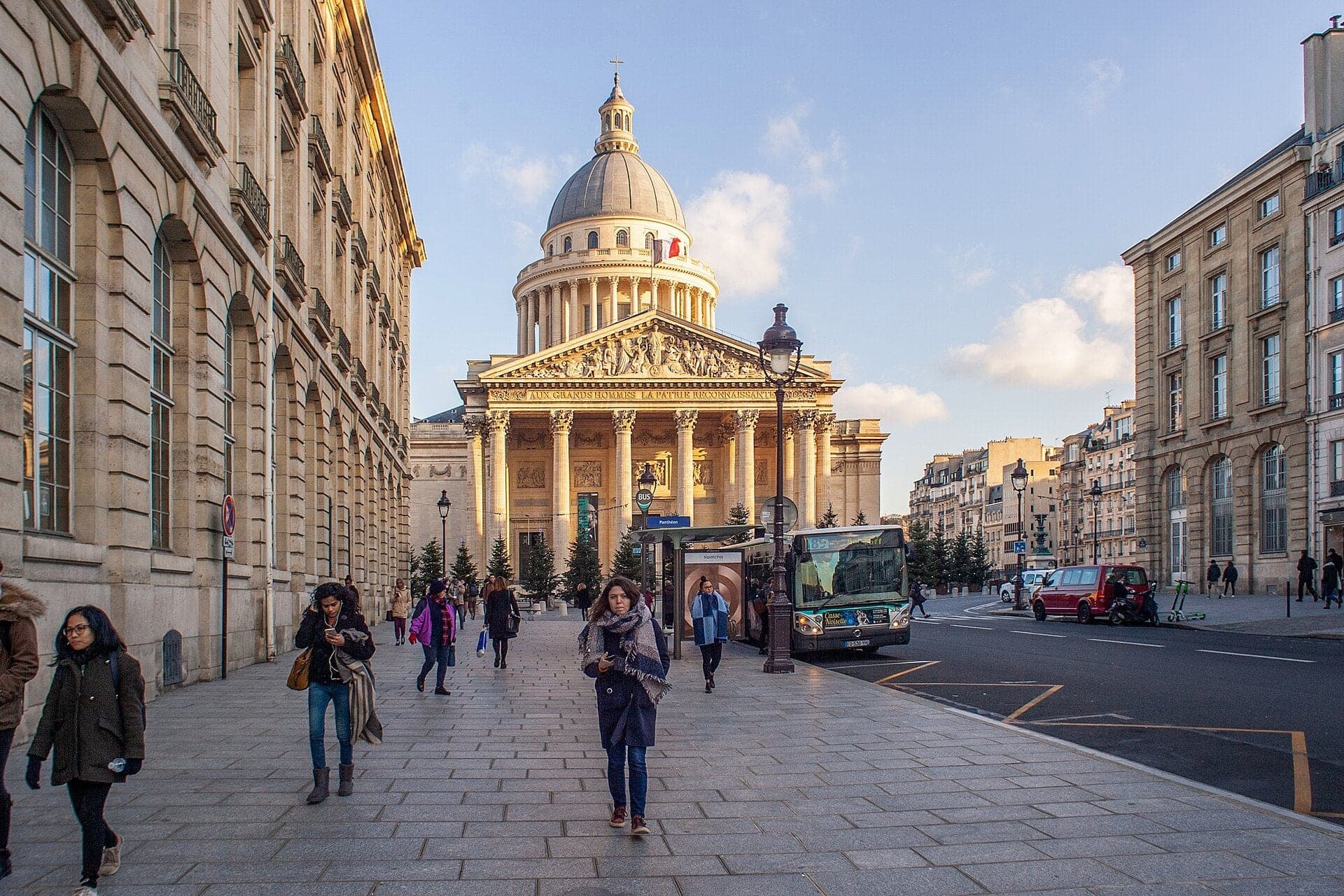
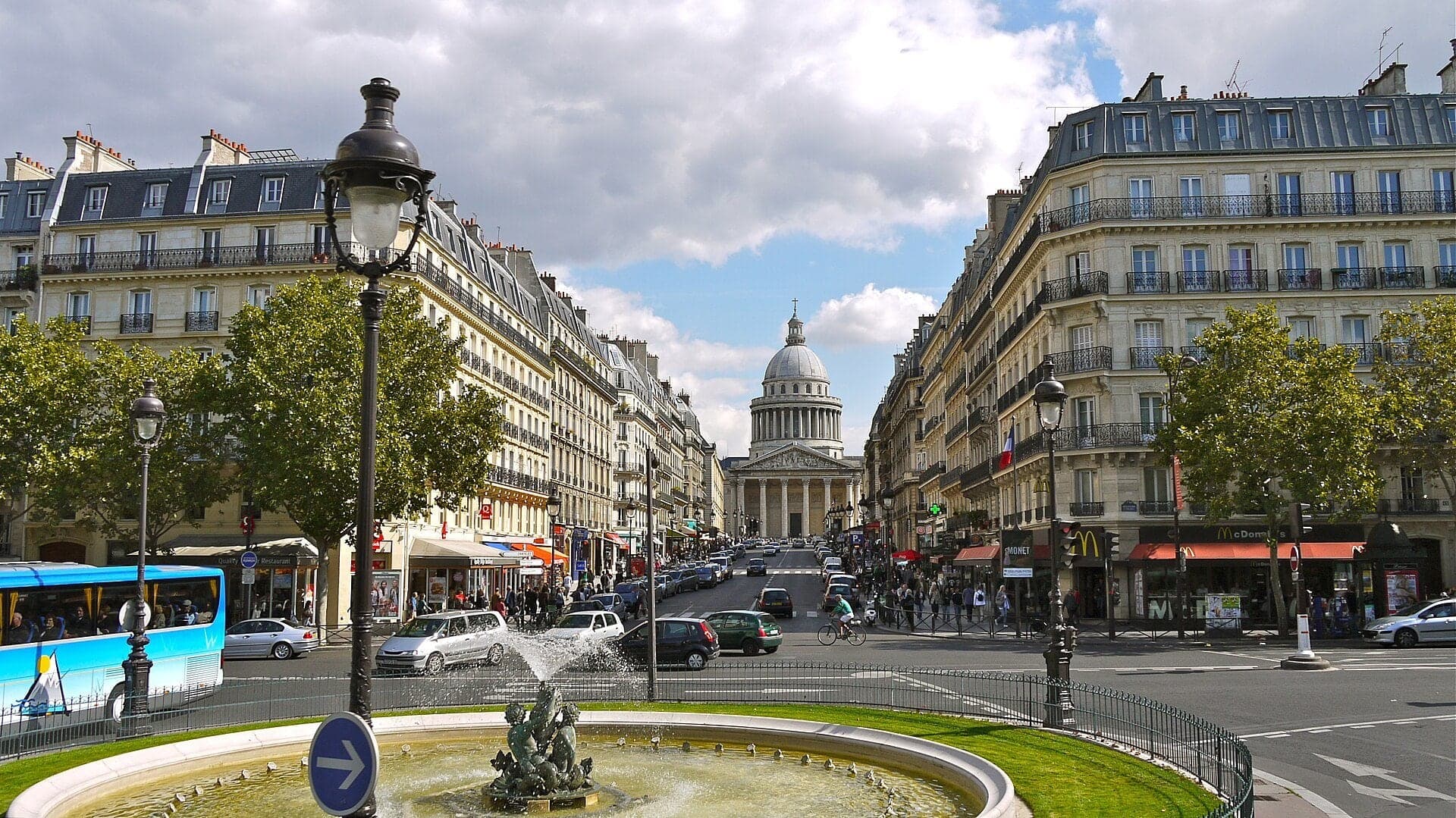
The Panthéon: A King's Church, a Nation's Tomb
Louis XV's church for Saint Genevieve. The Revolution turned it into a resting place for France's great, and Foucault showed the Earth turning inside it.
- 7
Luxembourg Garden: A Queen's Garden, Cut Back
The corner gate of a queen's garden, the queen's garden gathered from 1614. Sales and Haussmann's boulevard cut its edges back to the outline seen today.
- 8
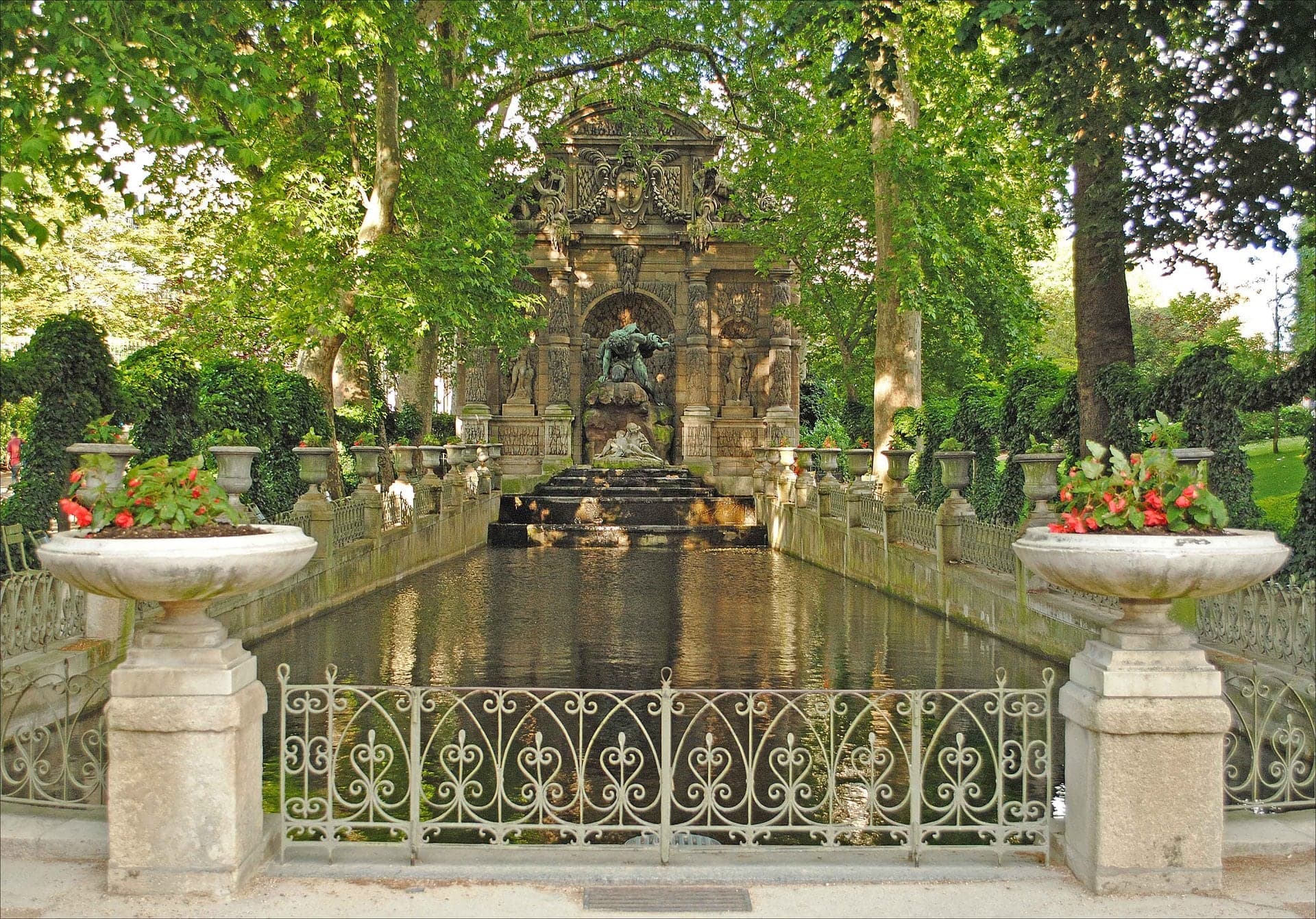
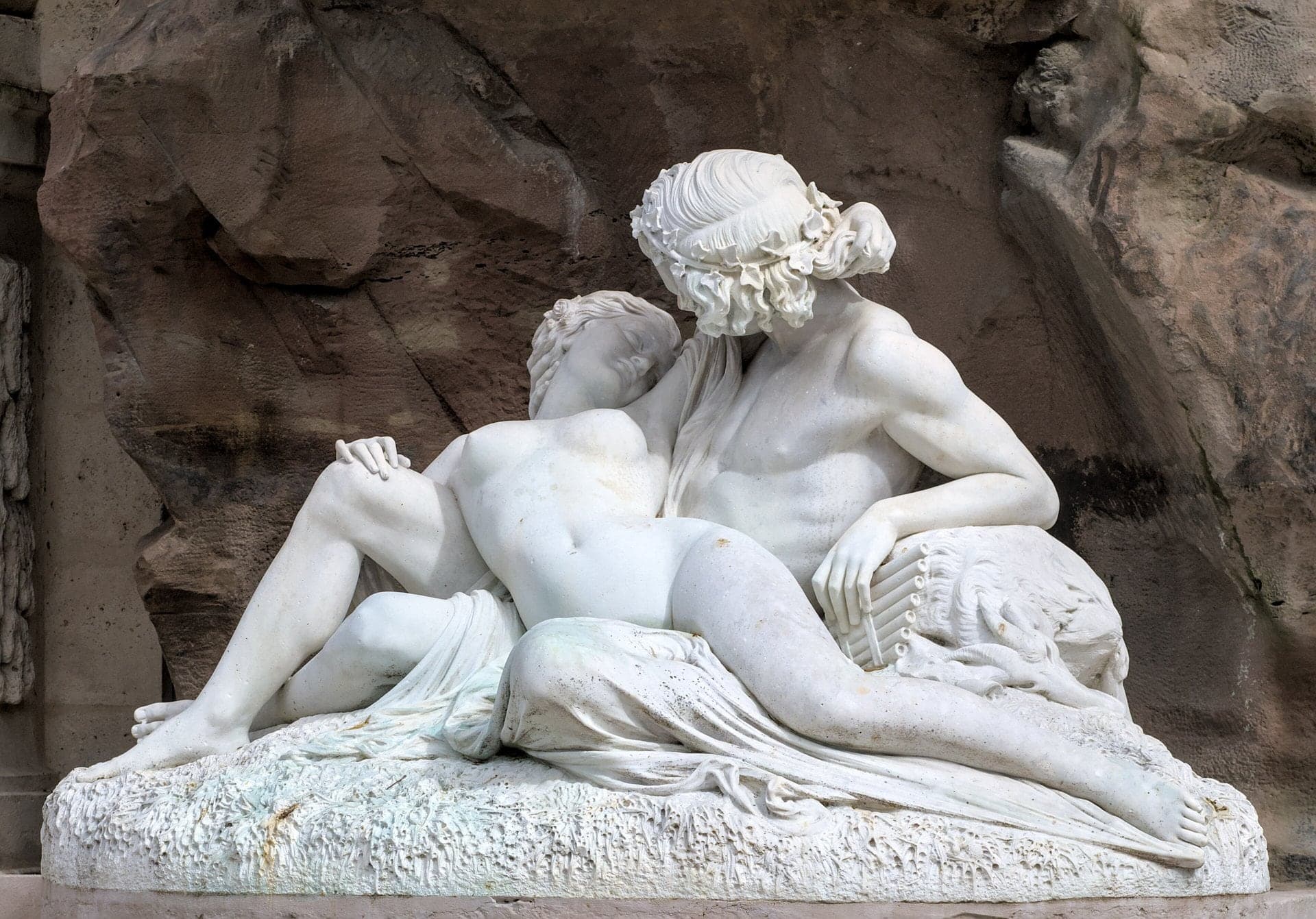
Medici Fountain: A Grotto Moved for a Street
A queen's grotto moved stone by stone in 1862. Haussmann's Rue de Médicis displaced it, and the move gave it its long pool and its bronze Cyclops.
- 9
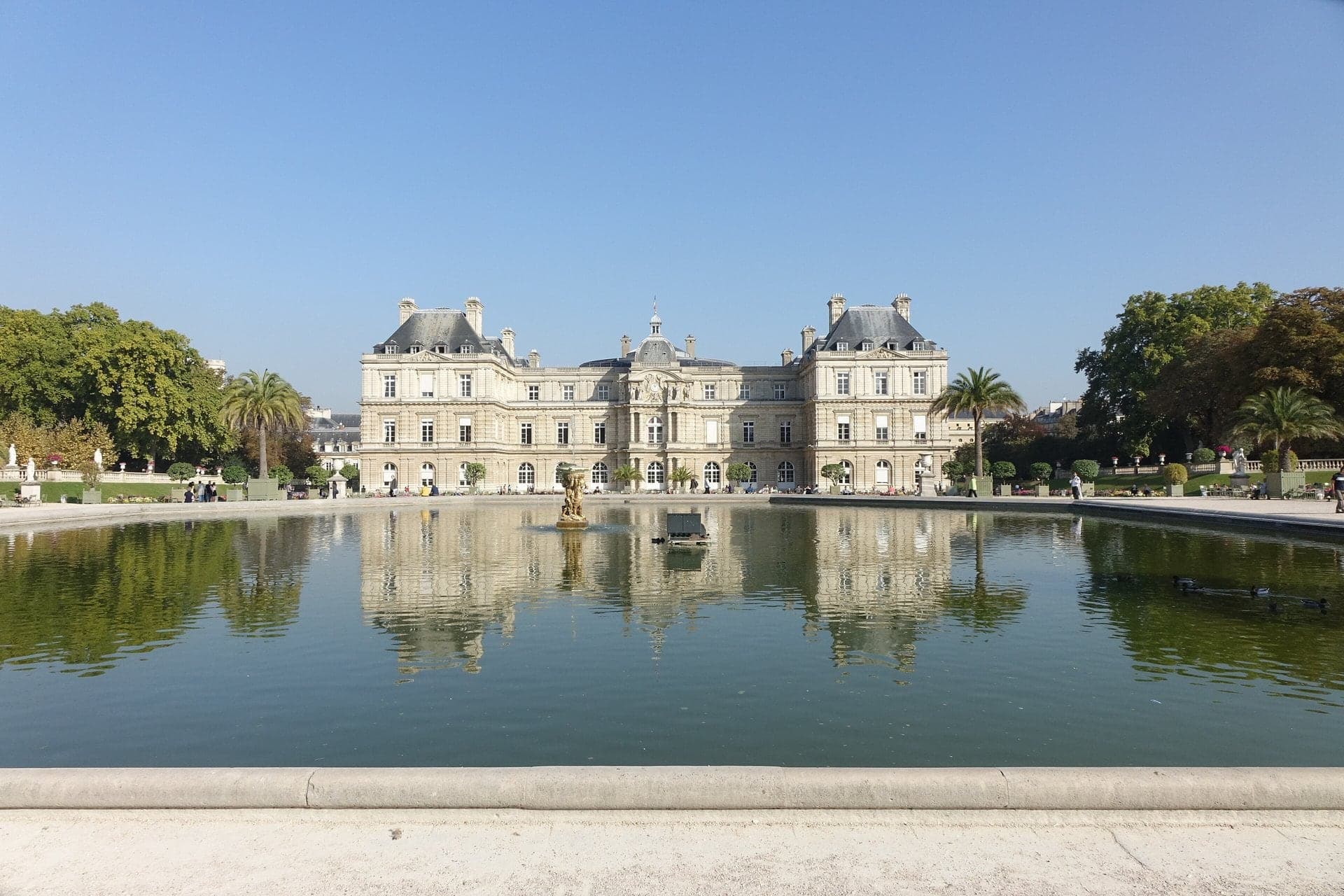
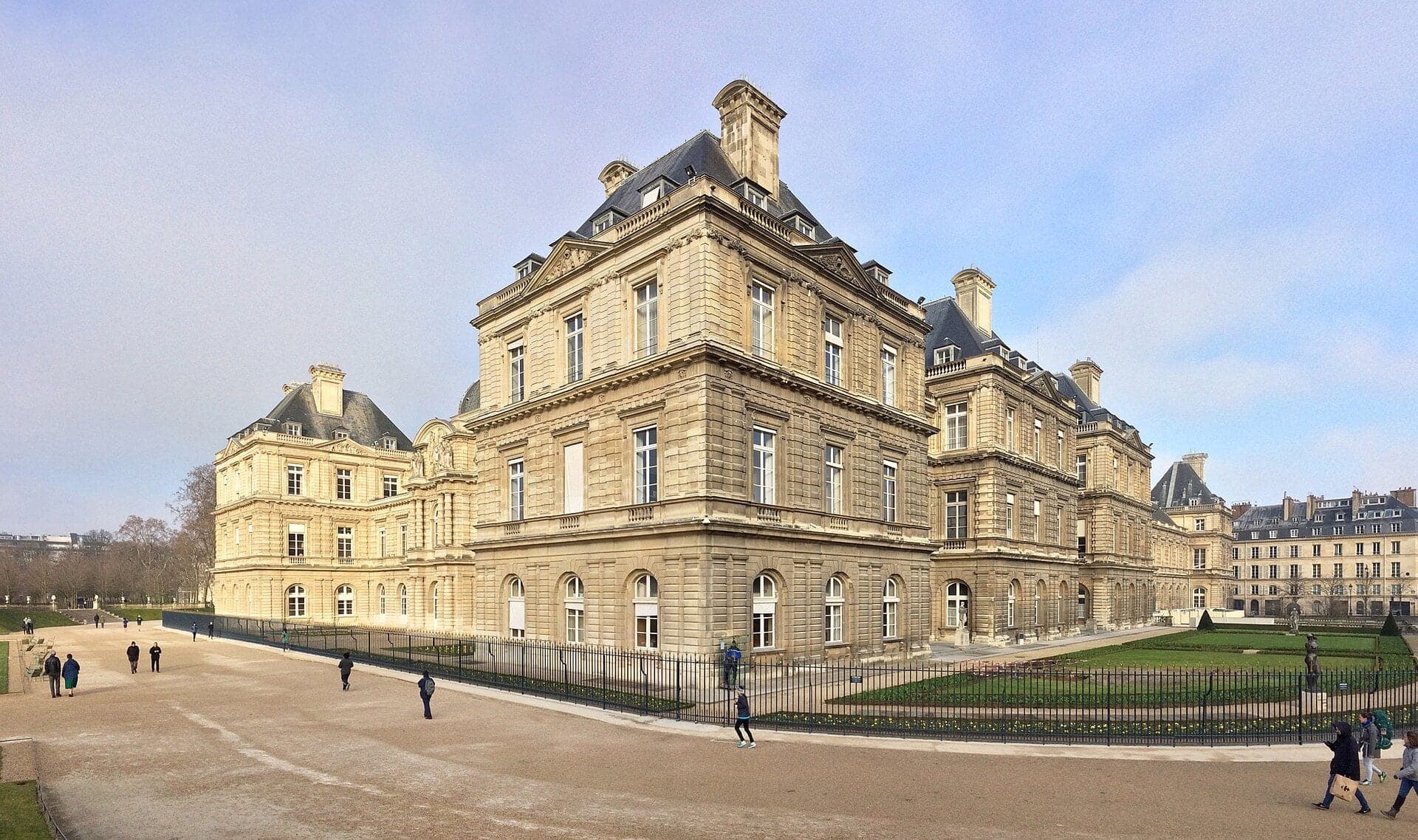
Luxembourg Palace: A Queen's House, Now the Senate
The Senate's palace above the garden's big pool. Begun in 1615 for Marie de Médicis on a Florentine model, it became a prison, the Directory's seat and, since 1958, the French Senate.
- 10
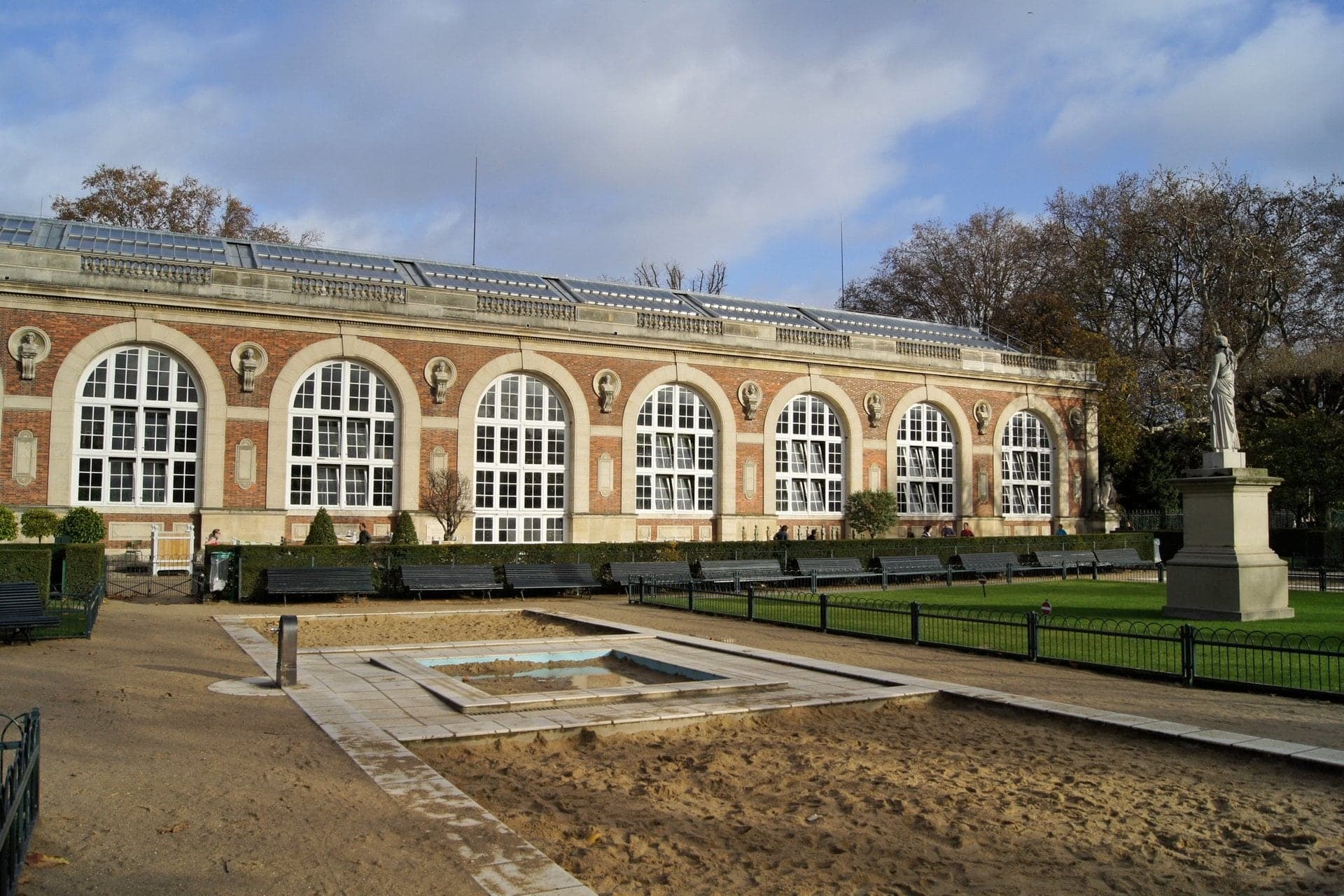
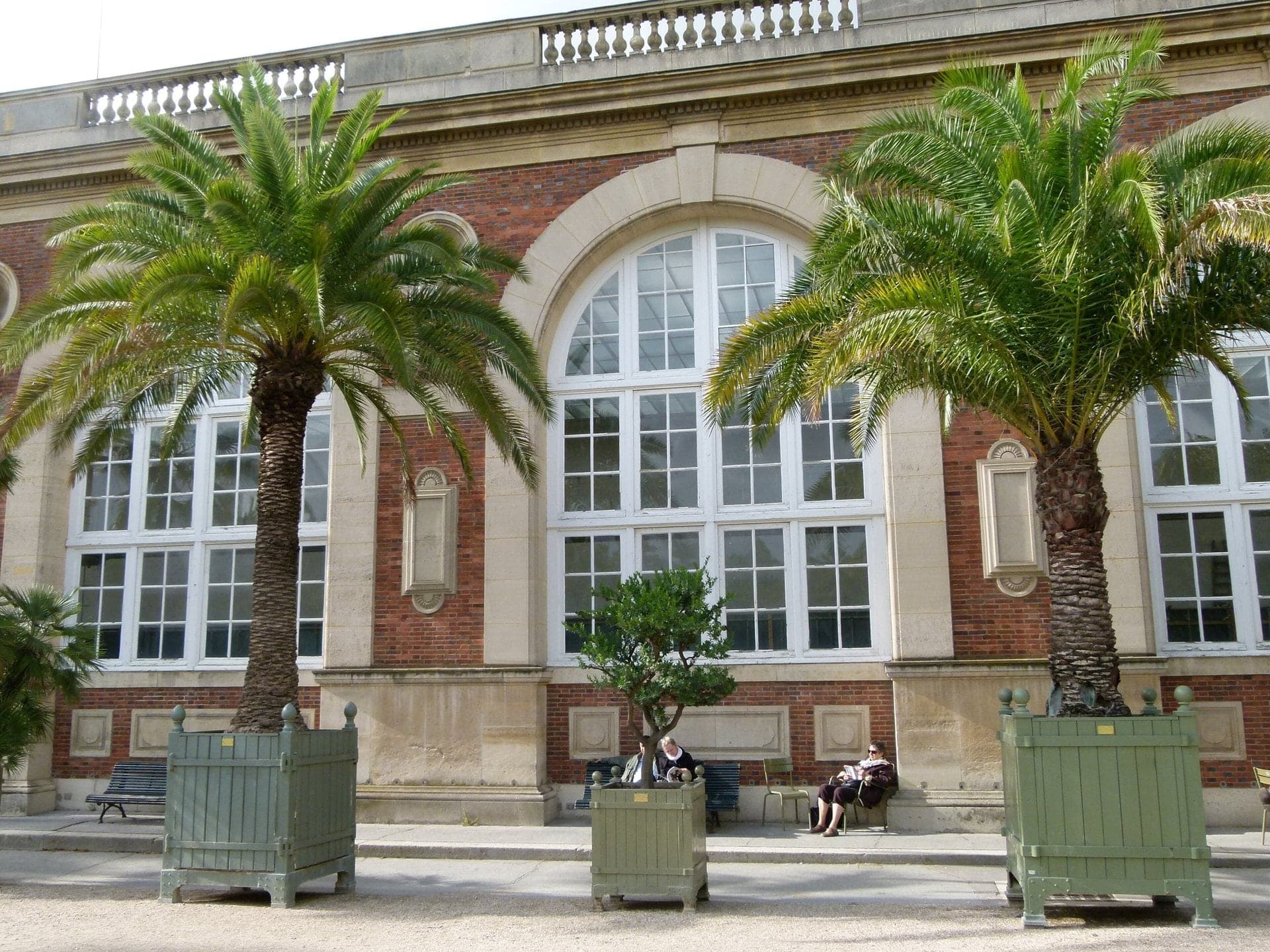
Orangerie: The Garden's Winter House
The garden's winter house for its orange trees. Built in 1839 and lent to the Luxembourg Museum from 1886, it still shelters orange trees the Senate dates at 250 to 300 years old.
- 11
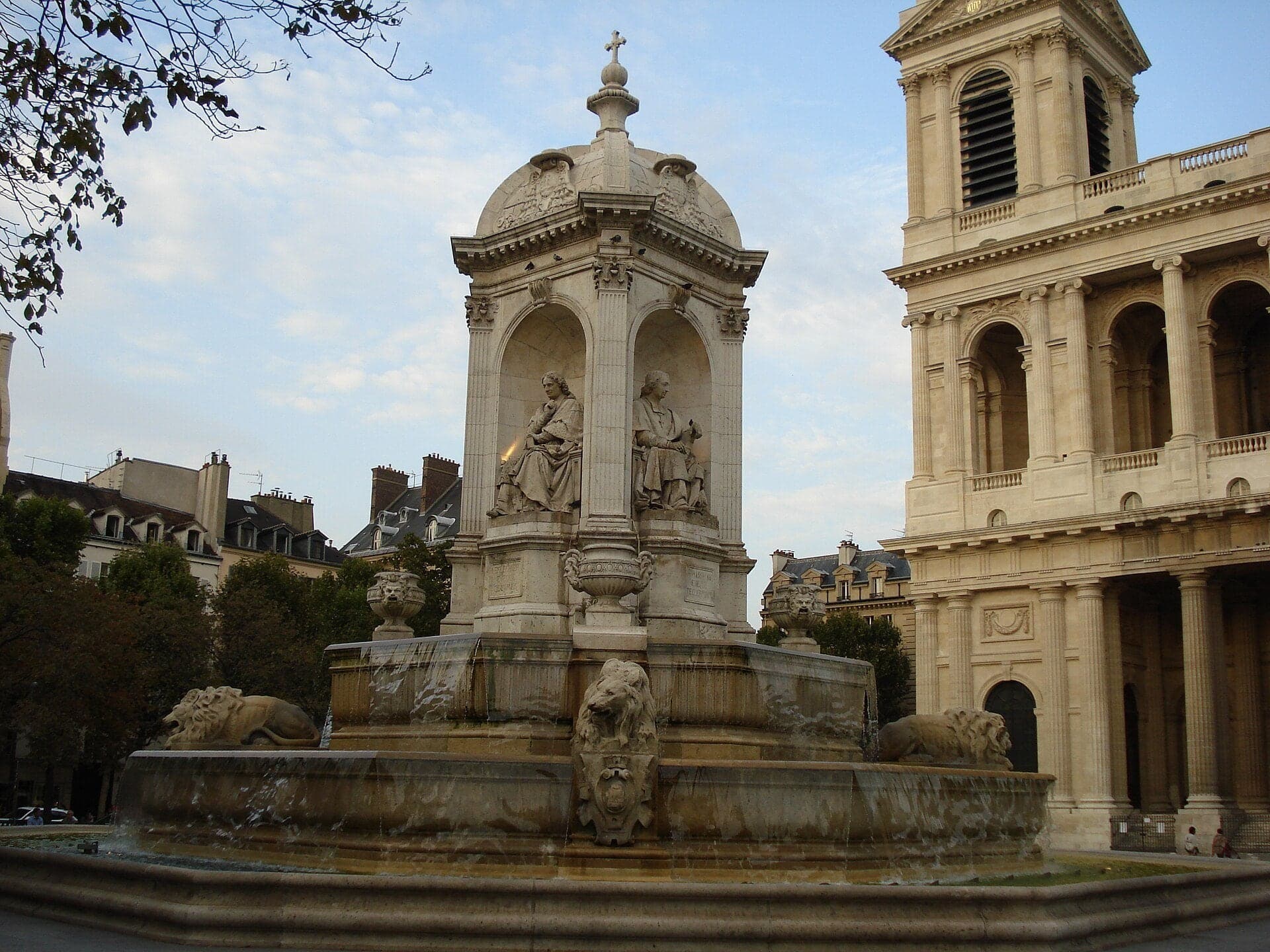
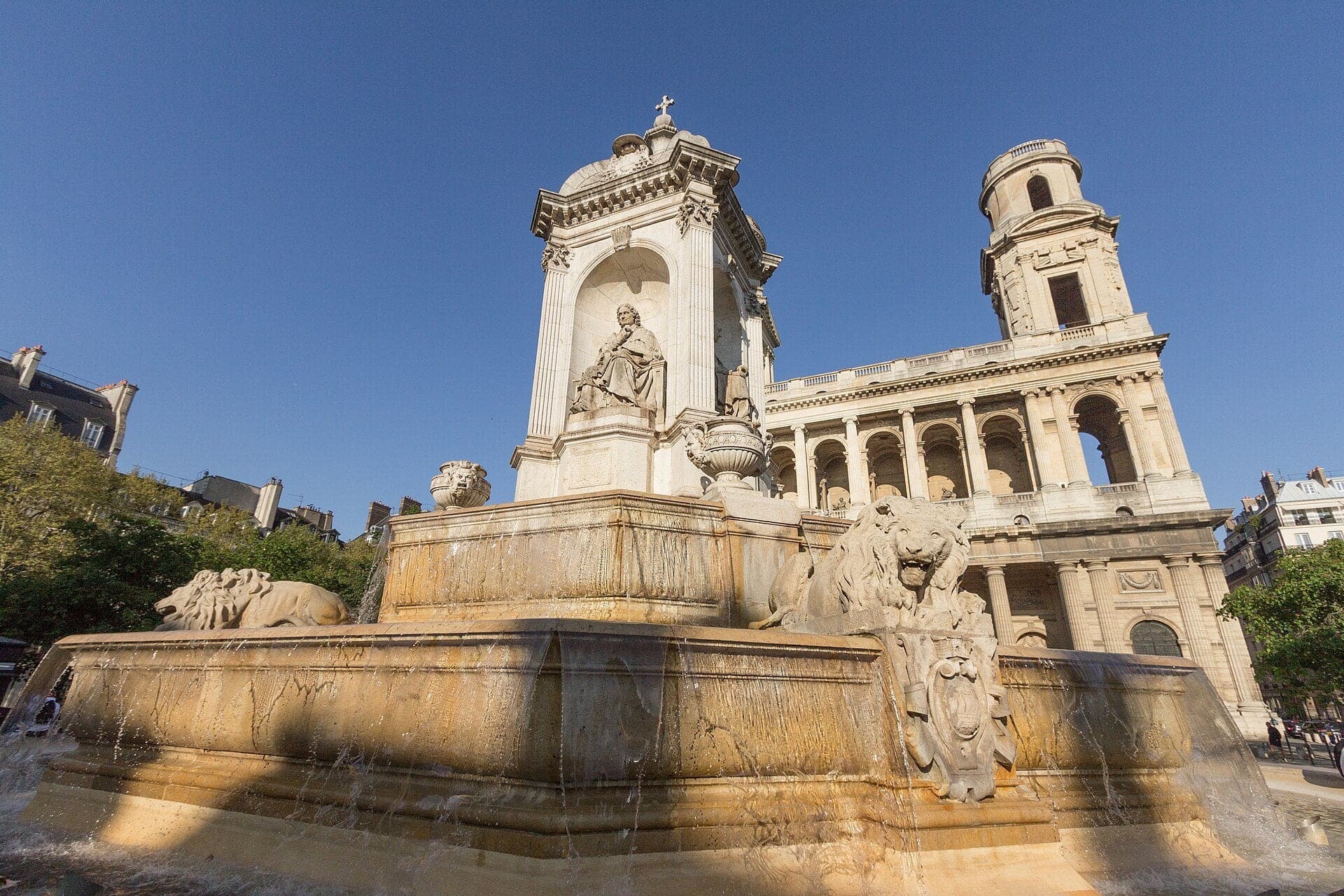
Saint-Sulpice: Two Towers That Don't Match
Rebuilt over a century from 1645. It was consecrated in 1745 before its towers were built, and the two towers still do not match.
- 12
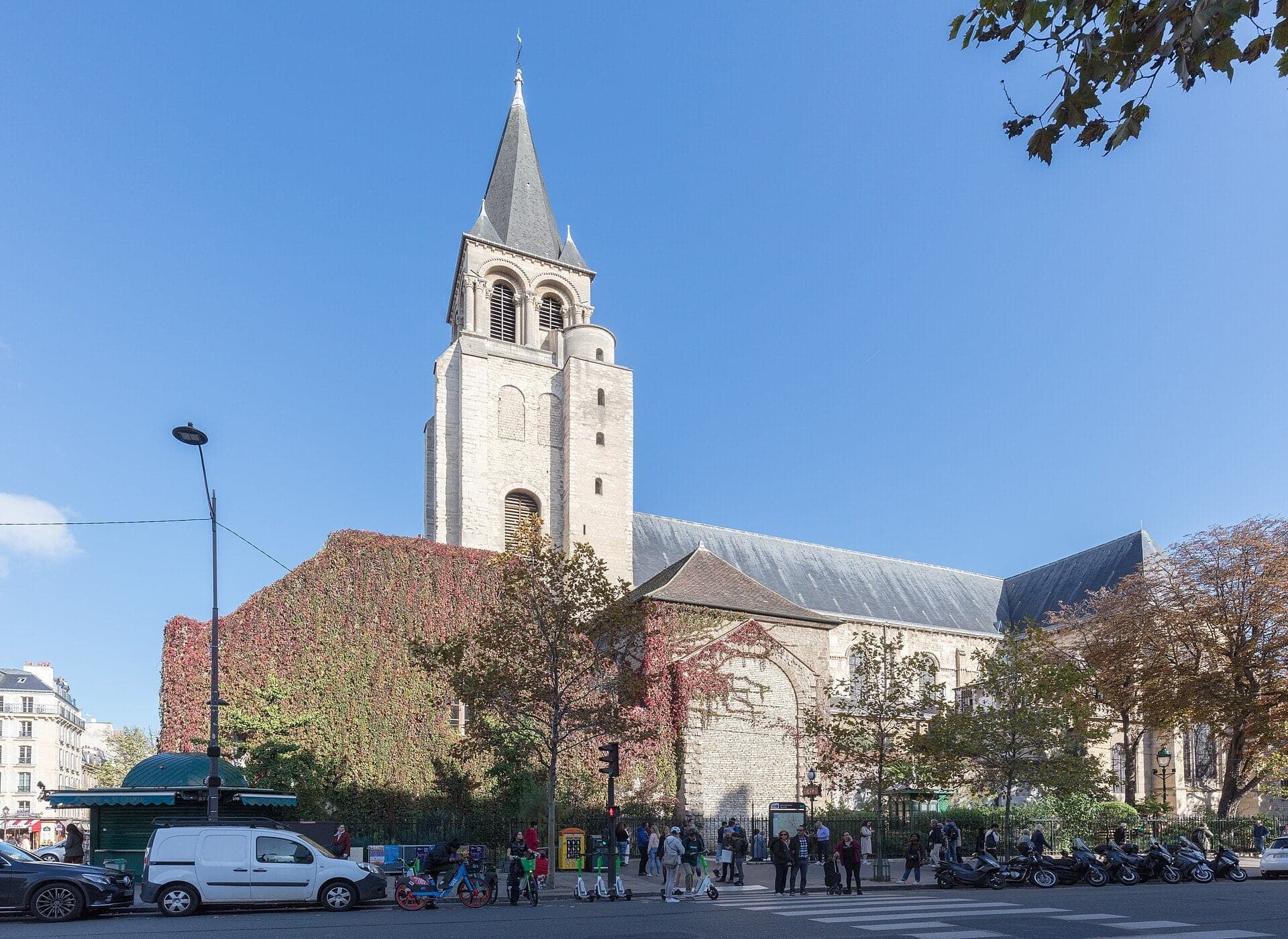
Saint-Germain-des-Prés: The Abbey Tower
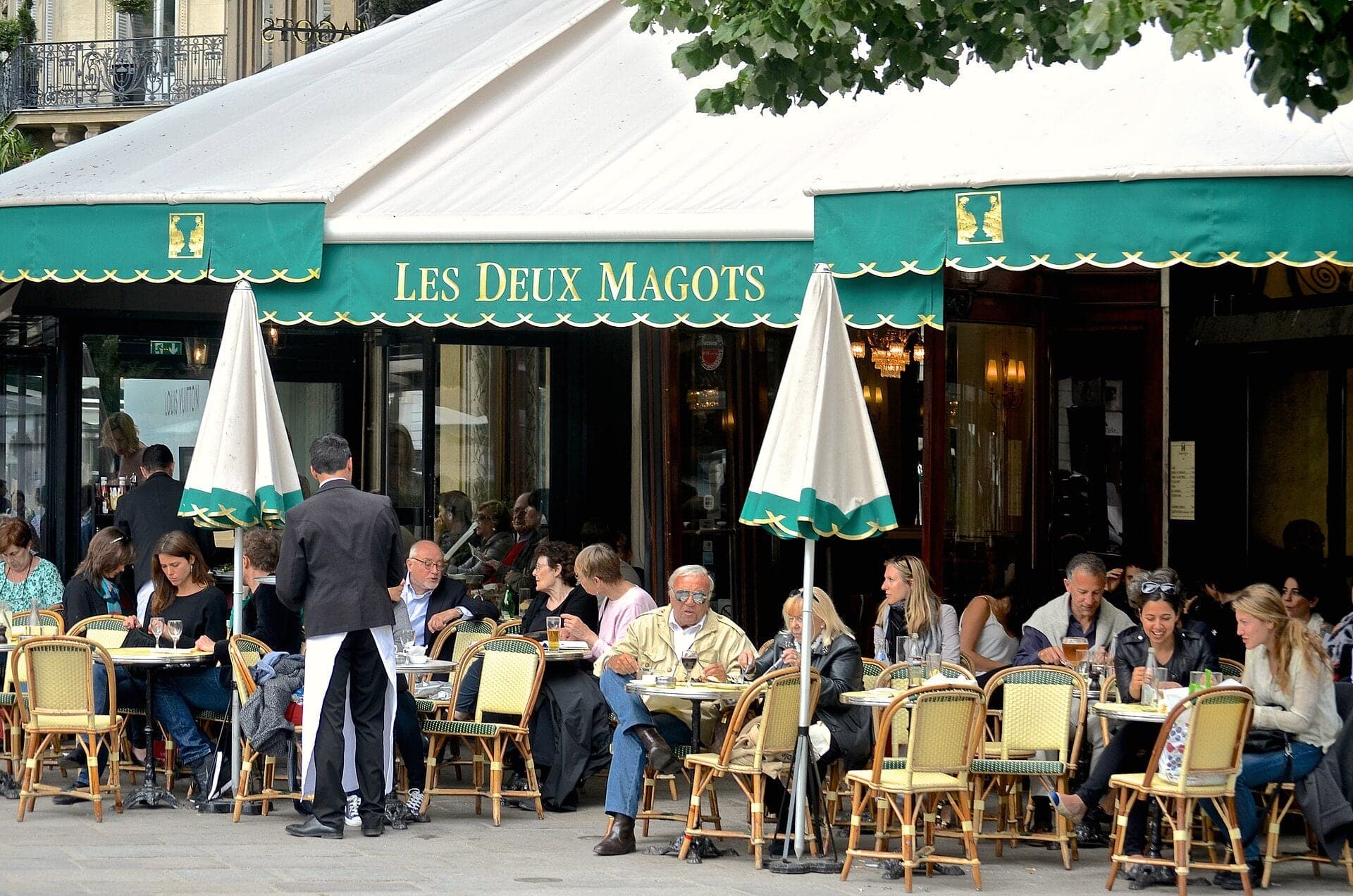
Begun around 990 and finished 1170. It stands on the church of an abbey its parish dates to 543, across the square from two famous cafés.
Details
Best Time to Visit
A dry morning from Tuesday to Saturday, starting by about 9.30am, so that the Musée de Cluny (closed Mondays) and the Panthéon (from 10am) are open as you pass and the restaurant lanes are still quiet. Stops 8 to 10 are inside the Luxembourg Garden, whose gates follow the sun: in 2026 they close at 6.45pm from 1 to 15 October, 6.15pm until the clocks change on 25 October, 5.15pm to the end of October, 5pm from 1 to 15 November, 4.45pm from 16 to 30 November and 4.30pm in December, and open at about 8am. Reach the gate (stop 7) at least half an hour before closing: the garden part of the walk takes about twenty minutes; after that, take the evening route round the outside. Checked 8 October 2026 at jardin.senat.fr.
Pro Tips
- •Getting to the start: Saint-Michel Notre-Dame (RER B and C) and Saint-Michel (Metro line 4) are a few minutes' walk away, and Maubert-Mutualité (line 10) is also close. The walk ends at Saint-Germain-des-Prés Metro (line 4), right on the last square. Checked 7 October 2026.
- •Musée de Cluny (stop 4): 9.30am to 6.15pm, closed Mondays, late opening to 9pm on the 1st and 3rd Thursday of the month; 14 EUR, reduced 12 EUR; free for under 18s, EU residents aged 18 to 25 and everyone on the first Sunday of the month. The museum's medieval-style garden is closed until further notice. Checked 7 October 2026 at musee-moyenage.fr.
- •Panthéon (stop 6): daily 10am to 6pm from October to March, last admission 45 minutes before closing, and from noon on the first working Monday of the month. The viewing platform around the dome is closed for renovation. Check the current ticket price on paris-pantheon.fr. Checked 7 October 2026.
- •The churches are free: Saint-Séverin is open Monday to Saturday 9.30am to 7.30pm and Sunday 9am to 8pm; Saint-Sulpice daily 8am to 7.45pm, with an English tour on Sundays at 12.15pm; Saint-Germain-des-Prés Tuesday to Friday from 7.30am, Saturday from 8.30am, Sunday and Monday from 9.30am, all to 8pm. Do not visit during a service. Checked 7 October 2026.
- •Saint-Julien-le-Pauvre (stop 1) is a working Greek Melkite Catholic church with limited opening hours.
- •Théâtre de la Huchette, at 23 Rue de la Huchette on the way to stop 3: the two Ionesco plays run Tuesday to Saturday evenings, in French, with English surtitles on Wednesdays. Checked 7 October 2026 at theatre-huchette.com.
- •The Shakespeare and Company bookshop is a minute north of stop 1, on Rue de la Bûcherie by the river.
- •The Sorbonne is a working university: its historic building can be visited only on a guided visit booked through the Chancellerie des universités, and the chapel opens only on a few days a year, such as the European Heritage Days in September. Checked 7 October 2026.
- •The Luxembourg Garden (stops 8 to 10) is free. Its gates open and close with the sun and change every two weeks, there is no published last entry, and the Senate can close it at short notice. The free chairs are for everyone. Garden office: +33 1 42 34 20 00. Checked 8 October 2026 at jardin.senat.fr.
- •Step-free walkers: the route goes down a short flight of steps with a handrail just before stop 8. To avoid it, from the gate take the path along the far side of the long pool, which reaches the same end of the pool with no steps. The rest of the walk has none.
- •The Senate lists sailboat rental at the big pool (stop 9) as a paid activity in season; hours vary, so check on the day.
- •The old orange trees stand outside along the palace from May to October and spend the winter in the Orangerie (stop 10). The Orangerie is open inside only when an exhibition is on; none was listed on 8 October 2026.
Safety & Precautions
- •Rue Saint-Séverin and Rue de la Huchette (stop 2 and the lane to stop 3) are crowded at meal times, with restaurant staff inviting passers-by in. Place Saint-Michel (stop 3) and the café terraces at Saint-Germain-des-Prés (stop 12) are pickpocket spots: keep bags closed and in front of you.
- •The route crosses Boulevard Saint-Michel before stop 3, between stops 3 and 4 and before stop 7, and Boulevard Saint-Germain between stops 3 and 4: all busy main roads, all at lights. Cross only on the green.
- •Between stops 10 and 11, just outside the garden gate, the route crosses Rue de Vaugirard on a zebra crossing with a traffic island and no lights, and at the end of Rue Férou, a quiet street into the Place Saint-Sulpice, also without lights: wait for the traffic to stop.
- •Between stops 11 and 12 the route crosses Place du Québec and the Boulevard Saint-Germain in front of the cafés at zebra crossings with no lights: wait for the traffic to stop. The zebra in front of the church has a traffic island halfway and no lights: finish crossing before you stop to listen, even if the next stop's audio has begun.
- •Stops 8, 9 and 10 are inside the Luxembourg Garden, which closes at dusk: in 2026, 6.45pm from 1 to 15 October, 6.15pm until 24 October, 5.15pm from 25 October, 5pm from 1 to 15 November, 4.45pm from 16 to 30 November and 4.30pm in December (checked 8 October 2026 at jardin.senat.fr). Never stay in the garden past closing. If the gates are shut when you reach stop 7, take the evening route round the outside, about 800 m: cross at the lights to the garden railings and follow them along Rue de Médicis, turn left along Rue de Vaugirard past the Senate's guarded front, cross Rue de Vaugirard at the zebra by Rue Férou (no lights), walk down Rue Férou to the Place Saint-Sulpice, and play stop 11 there yourself: the app will not start it on arrival when stops 8 to 10 are skipped.
- •In the garden, stay on the paths: the lawns are closed to walkers, and bikes and scooters must be pushed.
- •The palace (stop 9) is the Senate and is guarded. Look from the garden path, do not go up to its railings, and do not film the guards.
- •The Square René-Viviani (stop 1) is gated and closes at dusk; the walk stays outside it.
- •The Fontaine Saint-Michel's water was due to be turned back on in the autumn of 2026 after its restoration; it may still be off.
- •The route climbs gently from stop 4 to the Panthéon (stop 6). The only steps are a short flight with a handrail on the garden path before stop 8.
- •Exterior works can appear at short notice: scaffolding can go up on any of these churches, or on Notre-Dame across the river from stop 1, at short notice. Views may be partly hidden by scaffolding.
Travel advisory: Exercise Increased Caution (Level 2).
Gallery
Related Reading
Go deeper on what you'll see, hear, and walk through.
Overview
Best Self-Guided Walking Tours in Paris (2026)
5 min
Overview
One Day in Paris: A Walkable Right-Bank-to-Latin-Quarter Itinerary (2026)
6 min
Overview
Paris Travel Guide: How Many Days, Getting Around, When to Go (2026)
5 min
Thematic
Best History Walking Tours in Paris (2026)
2 min
Thematic
Paris in Layers: How Five Centuries of Power Left the City We Walk
7 min
Companion
Reading Haussmann's Paris: A Field Guide to the Marks He Left
4 min
Companion
The Latin Quarter and Saint-Germain: A Hill of Schools Every Regime Remade
4 min
Read the walk
The full story of Latin Quarter and Saint-Germain: Remade by Every Regime, in words. Prefer to listen? Play it narrated, from home or on location.
Introduction
Paris, the capital of France, keeps some of its oldest layers on the Left Bank of the Seine. This walk explores the Latin Quarter. The City of Paris says it is named for the Latin once used for all teaching here. Masters were teaching on this side of the river in the eleven hundreds, and colleges for poor students spread up the hill.
Every regime since has remade that hill to make a point. A cardinal rebuilt a college around a domed chapel. A king vowed a church on the summit, and the Revolution turned it into the Panthéon. A queen's palace and garden became the Senate's. And from the eighteen fifties a new boulevard was driven straight through the old lanes. Saint-Germain, where the walk ends, grew round an abbey older than any of those rebuildings.
Three people come back along the way. Haussmann, whose works cut the boulevard Saint-Michel. Cardinal Richelieu, who rebuilt the Sorbonne. And Marie de Médicis, a queen from Florence, who had the Luxembourg Palace and its garden made.
The Musée de Cluny and the Panthéon are ticketed and worth going into; the details are on their cards. The churches are free.
The walk is twelve stops over about two point seven kilometers, about one point seven miles, and takes about ninety minutes. It climbs gently, with one short flight of steps. Three stops are inside the Luxembourg Garden, which closes at dusk.
1. Saint-Julien-le-Pauvre: Where the University Met
Welcome to Saint-Julien-le-Pauvre, on the Left Bank of the Seine. The low stone church beside this lane is one of the oldest buildings on the walk. France's heritage register dates its main building work to the second half of the eleven hundreds and the first half of the twelve hundreds.
Look at its walls. Heavy stone buttresses, the piers that prop a church's walls from outside, stand out along its side. They are twelfth-century work, and they are a good first lesson in the old Left Bank: thick, plain stone, built long before anyone planned a street here.
The City of Paris says this is where the University held its first assemblies. Teaching had grown up on this side of the river, and the masters and students needed somewhere to meet. Later the church had harder times. In the Revolution it was a salt store, then an annex of the Hôtel-Dieu hospital, and it went back to worship only in eighteen eighty-nine. Since then it has been the church of a Greek Melkite Catholic community. It opens limited hours; if it is open, you may step in quietly.
Beside the church is a fenced garden, the Square René-Viviani, open by day. Over its railings, look for an old tree leaning on props hidden in the ivy. It is a robinia, and the City calls it the oldest tree in Paris, planted in sixteen oh one. Beyond the garden's trees, across the river, you may glimpse the towers of Notre-Dame.
A few steps away, on the street along the river, is the bookshop Shakespeare and Company. It opened in nineteen fifty-one under another name and took this one in nineteen sixty-four, in honor of an earlier Paris shop of the same name, founded in nineteen nineteen.
Follow the route through the lanes, and cross Rue Saint-Jacques at the lights, to a much bigger church.
2. Saint-Séverin: Rebuilt After a War
Walk on along the pedestrian lane to the corner of a large Gothic church, and stop there. This is Saint-Séverin, the parish church of the old student quarter. It is free to enter and open every day.
Its parish tells its story. A hermit named Séverin is said to have lived here in the five hundreds, and a church stood here by the ten hundreds. In the twelve hundreds a new Gothic church went up for the growing student quarter, and its tower was then the highest of any church in Paris.
Then came the Hundred Years' War. By its end, three quarters of the church had been destroyed. Only the tower and the first three bays of the nave were left, and the rest was rebuilt in the late Gothic style called Flamboyant, named for its flame-like shapes, with five aisles side by side. Look up at the stone: it is busier, sharper and more pointed than the plain buttresses of the little church you just left.
Now the main doorway, at the church's west end, by this corner. It was not made for this church. In the eighteen thirties the front was reworked and given the Gothic portal of Saint-Pierre-aux-Bœufs, a church on the Île de la Cité that was being demolished to widen a street. A church door, carried across the river and set into another church's front.
If you step inside, look behind the altar for a twisted stone pillar. Around it the ribs of the vault spread like the fronds of palm trees, and the parish calls it the palm grove. It went up between fourteen eighty-nine and fourteen ninety-five. The windows around it are modern and abstract, from nineteen seventy.
Follow the route into Rue de la Huchette, a narrow lane of restaurants, to the big square at its end, and cross the boulevard at the lights, to the fountain.
3. Fontaine Saint-Michel: A Fountain to Hide a Wall
Walk on into the Place Saint-Michel, stop on the pavement, and turn to face the great fountain set against the wall of buildings. Keep a hand on your bag: this is one of the busiest corners of the Latin Quarter.
The narrow lane you just came along, Rue de la Huchette, is the scale of the old quarter. This square and its boulevard were built to cut through it.
This fountain is a cover-up. From eighteen fifty-five Haussmann's works pushed a new boulevard, the boulevard Saint-Michel, south from the river through the old quarter. At the bridge, the City of Paris says, the new view ran straight into a huge blank gable wall at the corner of Rue Saint-André-des-Arts. So Haussmann commissioned a fountain to hide it. Work began in eighteen fifty-eight, and it was inaugurated on the fifteenth of August, eighteen sixty: twenty-six meters high.
Look at the center. In bronze, the archangel Saint Michael stands over the devil, a figure inspired, the City says, by a painting by Raphael in the Louvre. Below him are two winged dragons, and around him four allegorical figures.
Now look at the color. The fountain has had its first complete restoration, which began in May twenty twenty-five, and the scaffolding came down in July twenty twenty-six. The restorers found its original colors and brought them back: blond stone, dark grey rock, red marble columns and bronze. The fountain faces north and never gets the sun, and the color, the architect says, was there to bring it light. In eighteen sixty the critics called it overloaded and too colorful. The City planned to turn the water back on in the autumn of twenty twenty-six, so it may or may not be running.
Follow the route up the boulevard, crossing the two big boulevards at the lights, to a corner of Roman walls.
4. Musée de Cluny: Roman Baths and an Abbots' House
Cross the boulevard at the lights, walk on to the corner where a short street leaves it, and stop facing the old walls of stone and brick beside the boulevard, not the modern entrance building along the side street. These are Roman. Paris was then a Roman town called Lutetia, and these were its largest public baths. They now belong to the Musée de Cluny, the national museum of the Middle Ages, which is ticketed, closed on Mondays and well worth it; the details are on this stop's card.
Look at how the wall is built: in bands. Courses of rough limestone, then courses of brick laid flat, then stone again. That is the Roman way of building here, and the museum says the baths went up around the turn of the first and second centuries, almost two thousand years ago. The whole complex covered almost six thousand square meters, and nearly half of it can still be seen. Inside, the great cold-bath hall keeps its vault, more than fourteen meters high, one of the best preserved in northern France.
Built against the ruins is a much later house. In fourteen eighty-five the abbots of Cluny, an order of monks with a college up the hill, began their Paris town house here. Instead of knocking the Roman hall down, the builder took it into the new house. The museum calls it one of the earliest Paris mansions built between a courtyard and a garden. Its front, with a battlemented wall and a gateway for carriages, is further along this side street, beyond the museum's modern entrance.
So here, side by side: a Roman bath, a medieval house, and the boulevard you walked up, cut past them both in the eighteen fifties.
Follow the route along the boulevard, across Rue des Écoles at the lights, and up a narrow pedestrian street to the square in front of the Sorbonne.
5. Place de la Sorbonne: Richelieu's Domed Chapel
Walk on into the Place de la Sorbonne and stop on the square, with the domed chapel ahead of you at its far end. This is the heart of the Latin Quarter, and the name is plain: the City of Paris says all teaching here was once in Latin, until the Revolution slowly replaced it…
Full narration for this stop unlocks with the tour.
6. The Panthéon: A King's Church, a Nation's Tomb
Walk on to the corner of Rue Soufflot, stop on this pavement, and turn to look up the street to the dome at its top. That is the Panthéon. Its nave and crypt are ticketed and worth seeing; the details are on this stop's card. From the street, it is free. It began as a king's…
Full narration for this stop unlocks with the tour.
7. Luxembourg Garden: A Queen's Garden, Cut Back
Walk on to the top of the Place Edmond-Rostand and stop on the pavement, with the garden railings across the street. Behind them is the Luxembourg Garden, and the walk goes in. Its gates open and close with the sun, on a timetable that changes every two weeks, so the next three…
Full narration for this stop unlocks with the tour.
8. Medici Fountain: A Grotto Moved for a Street
Walk on along the path, down the short flight of steps, and stop at the end of a long, narrow pool between two rows of plane trees. Turn so that the water runs away from you to the stone grotto at its far end. This is the Medici Fountain, and like the whole garden it is…
Full narration for this stop unlocks with the tour.
9. Luxembourg Palace: A Queen's House, Now the Senate
Walk on along the wide path in front of the palace and stop where the garden opens out. Look out across the lawns, away from the palace: there is the big pool at the heart of the garden, and beyond it the long straight axis of the garden. In season, little sailboats are rented…
Full narration for this stop unlocks with the tour.
10. Orangerie: The Garden's Winter House
Walk on along the walk under the plane trees, and stop with a long, low stone building ahead of you, set back from the walk, with a row of tall arched windows. This is the Orangerie, the garden's winter house for its plants. The Chamber of Peers, which then sat in the palace,…
Full narration for this stop unlocks with the tour.
11. Saint-Sulpice: Two Towers That Don't Match
You have come down Rue Férou, a quiet street of old paving stones, into the Place Saint-Sulpice. Stop on the square, then turn round to face the great church with two towers, the big fountain to one side. This is Saint-Sulpice. It is free to enter and open every day. Look at…
Full narration for this stop unlocks with the tour.
12. Saint-Germain-des-Prés: The Abbey Tower
Finish crossing first, then walk on along the pavement by the cafés and stop there, with the church's stone tower across the square. This is Saint-Germain-des-Prés. It is free to enter. Look at the tower. It is nothing like the boulevards you have walked: heavy, plain, older…
Full narration for this stop unlocks with the tour.
- Rue Saint-Julien-le-Pauvre (Paris, 5e). — Polymagou, CC BY-SA 4.0 · source
- Church of Saint Severin, Paris, France — Diego Delso, CC BY-SA 4.0 · source
- Église Saint-Séverin, rue des Prêtres-Saint-Séverin (Paris, 5e). — Polymagou, CC BY-SA 4.0 · source
- 58864-Paris — xiquinhosilva from Cacau, CC BY 2.0 · source
- Vue de la fr:fontaine Saint-Michel — Coyau, CC BY-SA 3.0 · source
- Musée de Cluny, Paris. — Ana Paula Hirama, CC BY-SA 2.0 · source
- Place de la Sorbonne (Paris, 5e). — Celette, CC BY-SA 4.0 · source
- Sorbonne @ Paris — Guilhem Vellut from Paris, France, CC BY 2.0 · source
- 57348-Paris — xiquinhosilva from Cacau, CC BY 2.0 · source
- IDS-37 — I&D Sioma from London, United Kingdom, CC BY-SA 2.0 · source
- Le Panthéon, vu des grilles du jardin du Luxembourg, soleil couchant à 19h45. — Siren-Com, CC BY-SA 3.0 · source
- P1090024 France, Paris, le Panthéon et la rue Soufflot vus de la place Edmond-Rostand — Marie Thérèse Hébert & Jean Robert Thibault, CC BY-SA 2.0 · source
- Palais du Luxembourg, Sitz des französischen Senats, Rue de Vaugirard, Jardin du Luxembourg, 6e arrondissement, Paris, 1615–1645, Salomon d — Gunnar Klack, CC BY-SA 4.0 · source
- Fontaine Saint-Sulpice, Paris, Place Saint-Sulpice — Wilwarin, CC BY-SA 3.0 · source
- Paris — Bobo Boom, CC BY 2.0 · source
- Abbey of Saint-Germain-des-Prés, Paris, France — Diego Delso, CC BY-SA 4.0 · source
- Once an intellectual haven — David McSpadden from Daly City, United States, CC BY 2.0 · source
- Fontaine Médicis, jardin du Luxembourg Paris. Année 1630. — Le plombier du désert, CC BY-SA 4.0 · source
- Bassin et facade sud du Palais du Luxembourg, VIe arrondissement, Paris, France. — 최광모, CC BY-SA 4.0 · source
- L'orangerie du jardin du Luxembourg à Paris — besopha, CC BY-SA 2.0 · source
Images may be cropped or resized. Other photos via Unsplash and Pexels.