Most cities are read as a skyline. Paris is read as a section. Cut down through it anywhere and you find not one city but several, laid on top of each other by different regimes, each of which wanted the stone to say something about who held power and why. The reason Paris feels coherent is that each layer was ambitious enough to reach for the whole city, and the reason it feels endless is that none of them ever fully erased the one before.
Here is the stack, bottom to top, and how to walk each one.
Layer one: the royal square
The oldest deliberate image of power a walker can still stand inside is the Place des Vosges, begun in 1605 as the Place Royale under Henri IV and inaugurated in 1612. Thirty-six pavilions share one brick-and-stone design, and the taller Pavillon du Roi and Pavillon de la Reine face each other across the square. The idea was radical for its moment: one architecture imposed on a whole public space. It is one of the first planned squares in Paris, though not, as is often claimed, the oldest in France. The mansions around it did not stay mansions. The Hôtel de Sully was built in 1624 for a financier and by the nineteenth century housed shops and craftsmen; the Hôtel de Sens later housed a haulage firm and a laundry before it became a library; the Hôtel Carnavalet was bought by the City in 1866 and opened as a museum in 1880. The Marais is a quarter the rich left and public money rescued.
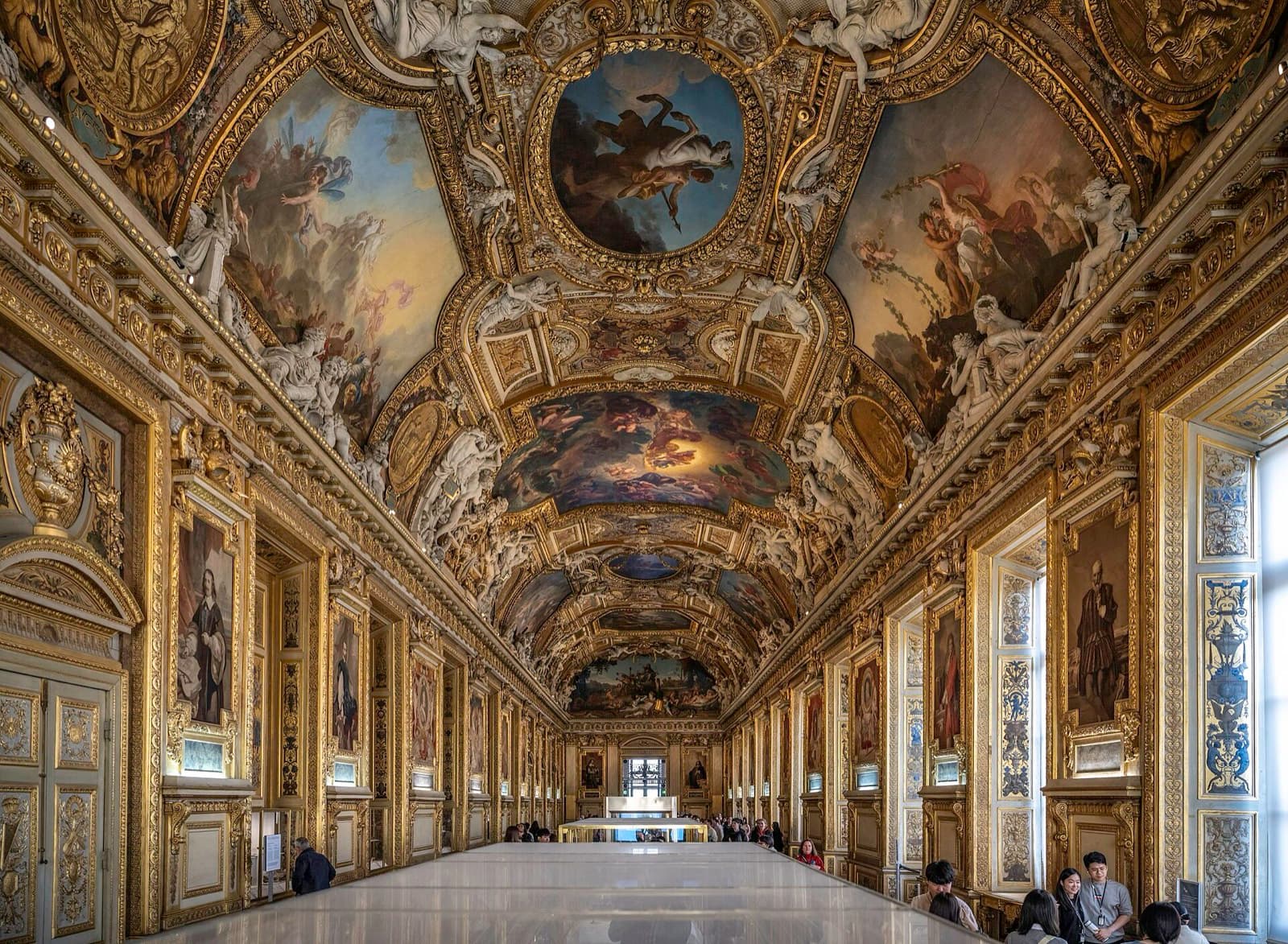
Royal power left its other great mark at the Louvre. The Louvre and Tuileries walk starts at the Colonnade, a front designed in the 1660s by a committee rather than a single famous name, for a palace whose king soon left it for good, and follows the line of the palace's lost garden out to the Place de la Concorde.
If a museum is on your list, Roamer's independent audio guide to the Louvre covers it room by room, with no route to follow: read what to see at the Louvre or open the Louvre guide.
Layer two: the city of ideas
Hear a stop from this walk
Quai d'Anjou and the Hôtel de Lauzun: A Plain Front, a Rich House
Teaching on the Left Bank began in the open air in the twelfth century, and colleges for poor students grew up on the flank of the Montagne Sainte-Geneviève. The Sorbonne was one of them: a college founded in the twelve-fifties by Robert de Sorbon, chaplain to Louis IX (the sources give 1253 and 1257). It is not the University of Paris, only one college of it. Lessons were given in Latin, which is where the quarter's name comes from. Richelieu became the Sorbonne's head in 1622 and had it rebuilt, and his chapel, begun in 1635, is all that survives of his Sorbonne. In 1791 the Revolution closed the Sorbonne, and in the same year the new church of Sainte-Geneviève became the Panthéon, a national necropolis after the death of Mirabeau. Voltaire was brought in that year, Rousseau in 1794.
Layer three: the city the nineteenth century cut open
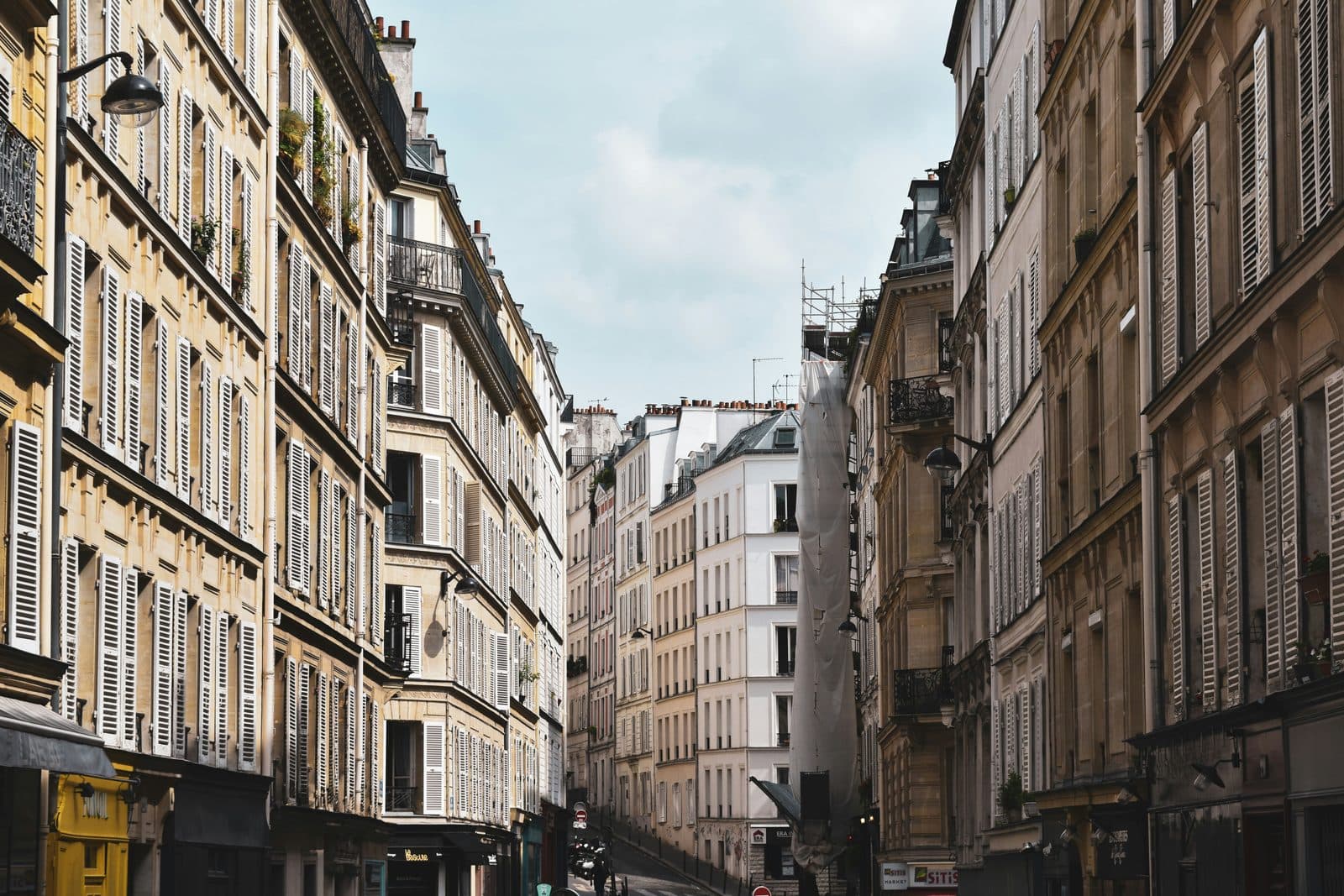
The layer most visitors mistake for all of Paris is the nineteenth-century rebuild. Under Napoleon III the prefect of the Seine, Georges-Eugène Haussmann, drove new streets through the old fabric. You will find precise totals online for buildings demolished and people displaced, but the published figures disagree, so we quote none. The Ville de Paris is exact where it matters: on the Île de la Cité, apart from the cathedral and the Conciergerie, only the Place Dauphine and the heart of one block between the Rue d'Arcole and the Rue du Cloître-Notre-Dame resisted the massive demolitions of the nineteenth century. On the Left Bank, the boulevard Saint-Michel, extended from 1855, ran into a huge blank gable at the Pont Saint-Michel, and Haussmann commissioned Davioud's fountain to hide it. Even the cathedral you see is partly of that century: the spire that burned in 2019 and the chimeras of the tower gallery were Viollet-le-Duc's, not medieval. The Île de la Cité walk shows the island as the nineteenth century left it, and the Latin Quarter walk shows the fountain beside the lanes the boulevard was built to cut through.
The century also burned its own showpieces. The Hôtel de Ville was set on fire in the Commune on 24 May 1871 and rebuilt as a Renaissance-style copy of itself, with works finished in 1882. The Tuileries Palace burned in the same Commune and its ruins stood until they were razed in 1883.
Layer four: the iron tower on a twenty-year agreement
The Eiffel Tower belongs to the world's fair of 1889, and it came with a time limit. Gustave Eiffel signed an agreement with the State and the City of Paris granting him the rights to the site for twenty years. In February 1887 more than forty writers and artists signed a protest published in Le Temps, and its wording looks ahead to "twenty years" of the odious shadow of a column of bolted sheet metal, which was the length of that agreement. The tower's operator says it was saved by the scientific experiments Eiffel encouraged, in particular the first radio transmissions. It measured 312 metres when it opened and is 330 metres with its antennas today. The Eiffel Tower walk reaches it through the neighbourhood it was dropped into and ends at the École Militaire, founded under Louis XV in 1751, which closes the axis at the far end of the Champ de Mars.
Layer five: the republic in glass
The newest deliberate layer is the Grand Louvre of President François Mitterrand. I. M. Pei was named architect in July 1983, and the glass pyramid in the Cour Napoléon was inaugurated on 29 March 1989 after four years of building. Before it the courtyard held two squares from Napoleon III's day and a car park. The Pyramid is about twenty-one metres high, and the Louvre itself notes that it and the Arc du Carrousel do not line up, so a statue of Louis XIV stands in the line between them. The Louvre's own account admits that opponents called the project a pharaonic building site. The Louvre and Tuileries walk reaches the Pyramid at its third stop.
A hill apart
Montmartre sits outside the stack. Its great landmark, the Sacré-Cœur, is often said to have been built to atone for the Commune. It was not: the national vow was first written on 8 December 1870, three months before the Commune began, and the basilica's first stone was laid on 16 June 1875. The Montmartre walk climbs from the Abbesses to the basilica.
How to read the stack yourself
You do not have to hold all of this in your head at once, and you should not try. The mistake most Paris itineraries make is treating the city as a checklist of monuments with no argument connecting them. Read one layer per walk instead. Spend an afternoon in the Marais and you read the royal city and the mansions that went to work. Cross to the Latin Quarter for the city of ideas. Walk the island for what the nineteenth century cleared and what it left standing, the Louvre and Tuileries for a palace turned into a museum, and the Eiffel Tower walk for the iron layer.
Each Roamer Paris tour is built around one of these arguments rather than around a list of sights. That is the whole design: not to show you Paris, but to hand you the reading key so the city explains itself.
Frequently asked questions
- What are the historical layers of Paris?
- Five a walker can read today: the royal Paris of Henri IV and Louis XIV (the Place des Vosges, begun in 1605 and inaugurated in 1612, and the Louvre), the Left Bank Paris of ideas (the Sorbonne, a college for poor students founded in the twelve-fifties), the island the nineteenth century cleared (Notre-Dame, the Conciergerie, Place Dauphine), the iron Paris of the 1889 world's fair (the Eiffel Tower), and the glass Paris of the Louvre Pyramid, inaugurated on 29 March 1989.
- Why does Paris look so uniform?
- Much of what reads as one Paris is nineteenth-century work. Under Napoleon III the prefect Georges-Eugène Haussmann drove new streets through the old city from the 1850s, and the Ville de Paris says that on the Île de la Cité, apart from the cathedral and the Conciergerie, only the Place Dauphine and the heart of one block resisted the massive demolitions of that century. Older Paris survives in pockets, like the Marais and the lanes around Saint-Julien-le-Pauvre.
- What is the best way to understand Paris on foot?
- Pick one layer at a time. A walk through the Marais reads the royal and aristocratic city and what became of its mansions; the Latin Quarter reads the city of ideas; the Île de la Cité shows what the nineteenth century cleared and what it left; the Louvre and Tuileries walk follows a royal palace into a museum; the Eiffel Tower walk reads the iron layer; and Montmartre is the hill where a national vow became a basilica. Each Roamer tour is built around one idea rather than a checklist of monuments.
- Did Haussmann destroy old Paris?
- Partly. The Ville de Paris says that on the Île de la Cité only the cathedral, the Conciergerie, the Place Dauphine and the heart of the block between the Rue d'Arcole and the Rue du Cloître-Notre-Dame resisted the massive demolitions of the nineteenth century, and the boulevard Saint-Michel, extended from 1855, cut into the Latin Quarter. Published counts of buildings demolished and people displaced disagree, so treat any single figure with caution. Districts such as the Marais still carry the earlier city.
Ready to experience it?
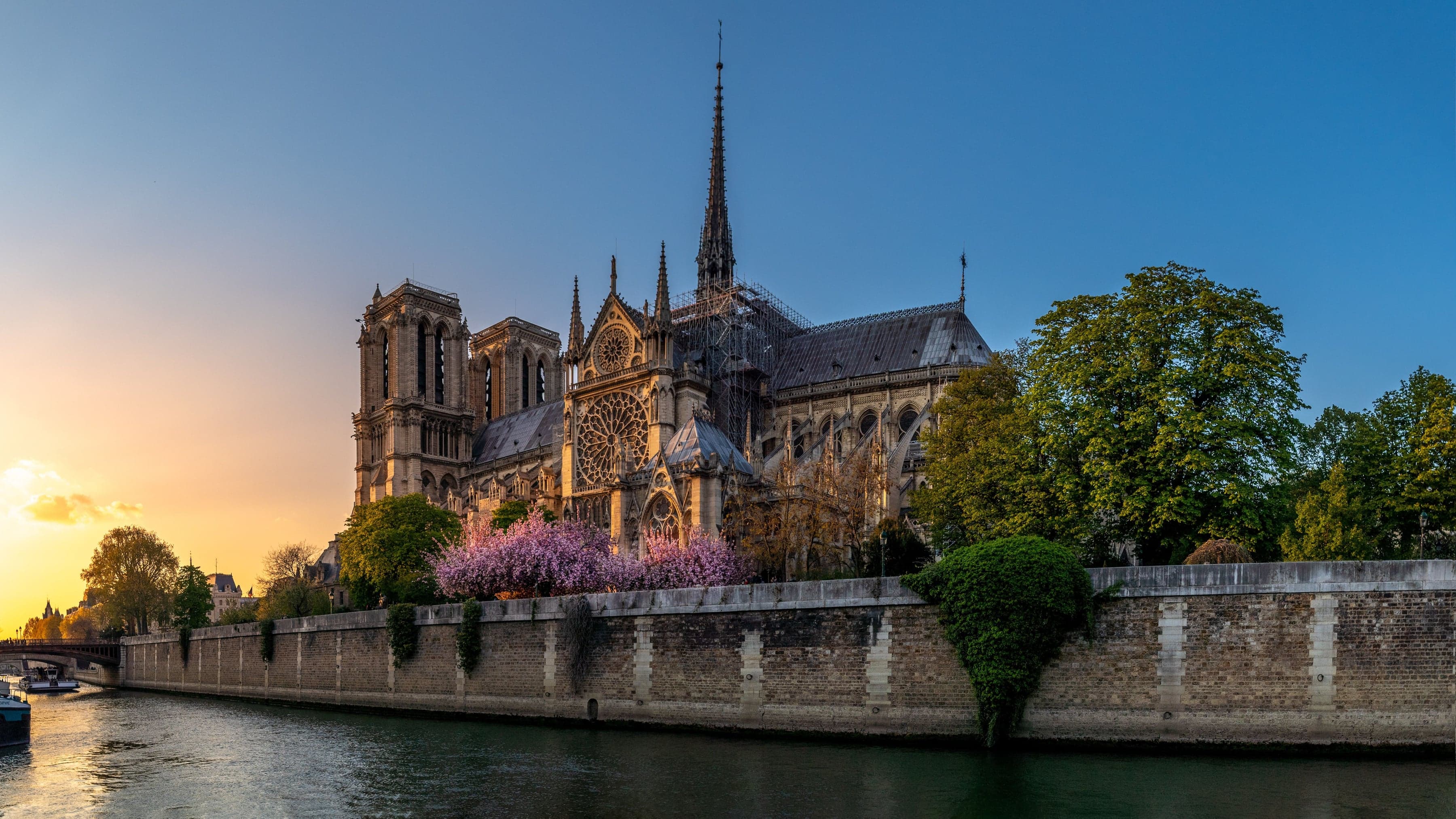
Notre-Dame and Île de la Cité: An Island Rebuilt Three Times
90 min · 2.1 km · easy
More from Paris
Explore more at your own pace.
Musée d'Orsay: What to See, Floor by Floor
The Code of Hammurabi at the Louvre: Which Room, and the Story of the Stone
The Louvre: What to See, by Wing and Room Number, and a Two-Hour Route

The Mona Lisa: Which Room It Is In and What to Know
The Raft of the Medusa at the Louvre: Where It Hangs and the True Story