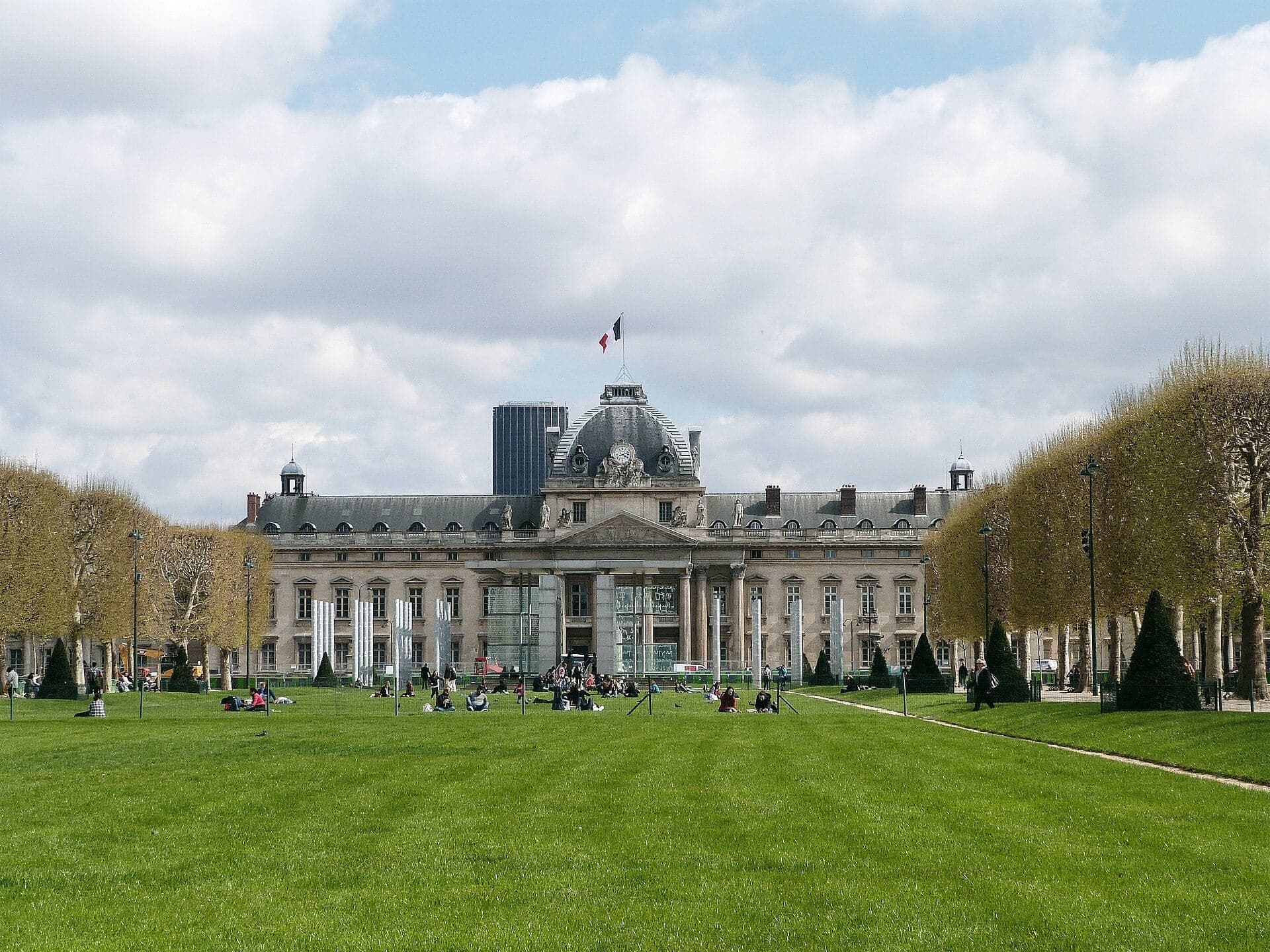
Look down the long green rectangle of the Champ de Mars from the foot of the Eiffel Tower and the view does not end in a park. It ends in a building. At the far end of the axis stands a grand eighteenth-century block with a domed centre. It is not decoration: it is the École Militaire, the military academy that closes the view and, before the park, gave the field its use as a drill ground. A century before the tower, this was where France trained its officers, and one of the students who passed through it changed the map of Europe.
A school for the noble but not the rich
The École Militaire was founded by Louis XV by an edict of January 1751 to educate five hundred young nobles born without fortune. The founding is usually credited to a proposal by Marshal Maurice de Saxe, supported by Madame de Pompadour and the financier Joseph Pâris Duverney. The purpose was pointed: to train the sons of families who had rank but not the money that was the usual ticket to an officer's career. That founding idea matters, because it is the reason a poor Corsican noble's son could ever have walked through the door.
The building on the Grenelle plain
Hear a stop from this walk
École Militaire: The End of the Line
Ange-Jacques Gabriel was the architect in charge of the work, on what the City calls the old plain of Grenelle. The heritage record lists building dates of 1751, 1788, 1820 and 1856, with later work by Boullée and Brongniart. Sources disagree about when the school actually opened, so we give no opening date. What Gabriel produced is a monumental, symmetrical composition, the kind of ordered classical front that reads as the state announcing its seriousness.
The one-year cadet
The school was reorganised in 1777 as the École des Cadets-gentilshommes, and it is the reorganised academy that admitted its most famous student. Napoleon Bonaparte, fifteen years old, entered in October 1784 and left in October 1785, after a single year; the Fondation Napoléon gives the dates 22 October 1784 and 28 October 1785. He did not linger, which tells you something about the speed of the man who would later crown himself emperor. Stand in front of the façade and hold that image: a teenager in a hurry, leaving a school built to give the un-rich a chance, on his way to remaking Europe.
A working academy, not a ruin
The École Militaire is not a museum. It houses the École supérieure de guerre, the Bibliothèque de l'École militaire and other defence bodies, so visitors enter only with ID by arrangement, and guided visits are announced for the heritage weekends. Its main buildings, the monumental gates on the Place Joffre and the courtyards were classified as a historic monument on 13 August 1990. The building doing its dignified job at the end of the Champ de Mars is still doing the job it was founded for.
How to read it on the ground
The Roamer walk crosses the Champ de Mars lawns and ends at their south end, on the gravel short of the school's grounds, with the École Militaire ahead and the tower at the far end of the lawns behind you. Read the axis as a single composition: an eighteenth-century academy at one end, a nineteenth-century iron giant at the other, and a park between them that was laid out only in 1908, not in Napoleon's day. Do not go in or photograph the guards; give the façade time from the ground instead.
This is the last stop on a walk across the monumental west of Paris. To set the school in the wider city, read how the Eiffel Tower came to stay, how Haussmann redrew Paris, wander the older streets of the Marais, or cross to the student world of the Latin Quarter. Then browse the full set of Paris walking tours, plan one day in Paris, or start from Paris itself. Come back to the Champ de Mars seeing a parade ground with a school at its head, and the whole axis makes sense.
Sources
- Mérimée (POP) notice PA00088684, École militaire: building dates, the architect Gabriel, the historic-monument classification of 13 August 1990.
- Fondation Napoléon: Bonaparte at the school from 22 October 1784 to 28 October 1785.
- Ville de Paris, Parc du Champ de Mars: the drill ground and the park of 1908.
- Roamer tour transcript, "Eiffel Tower: The Tower Meant to Stand Twenty Years" (paris-eiffel-tower), fact-audited.
Ready to experience it?
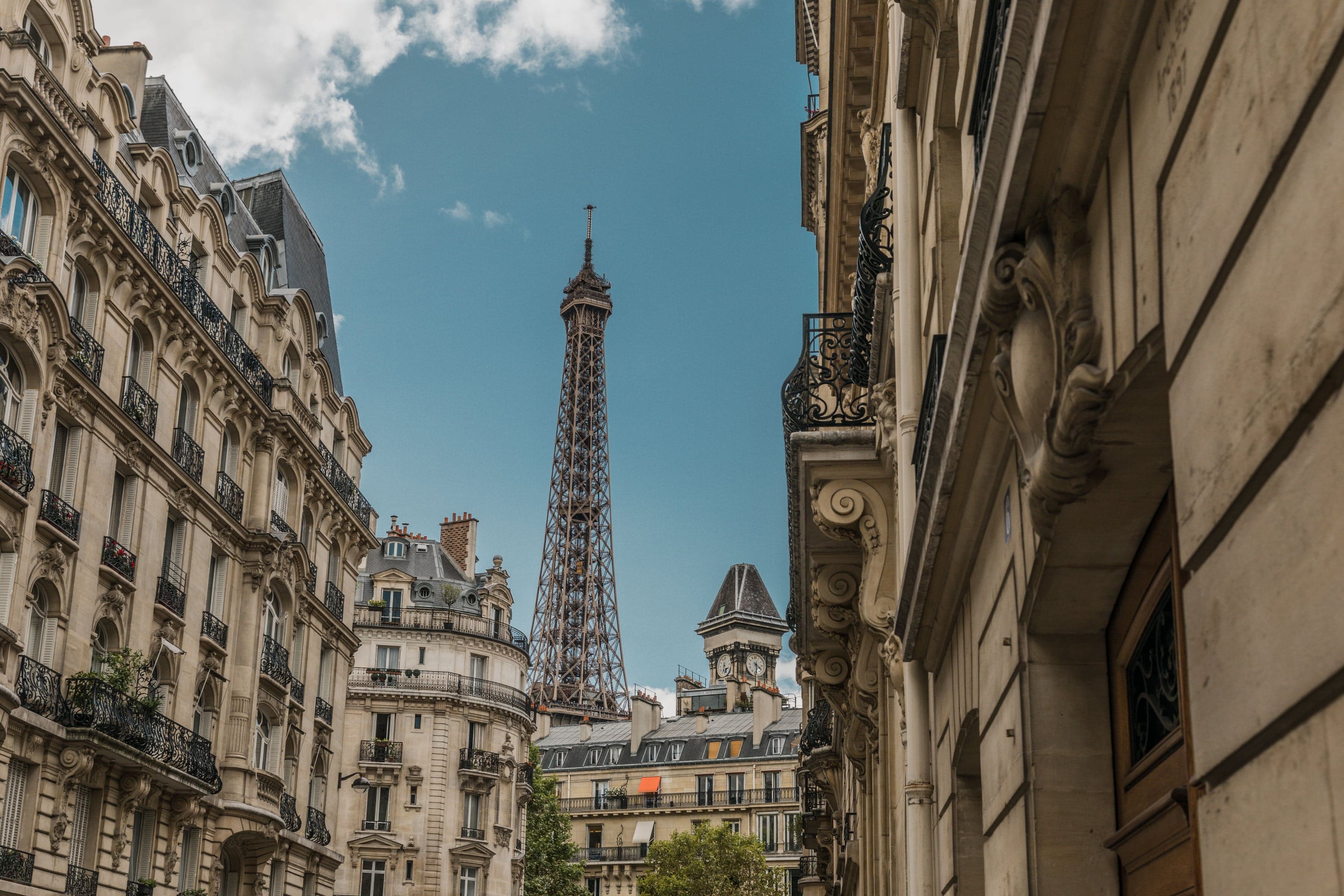
Eiffel Tower: The Tower Meant to Stand Twenty Years
80 min · 2.4 km · easy
More from Paris
Explore more at your own pace.
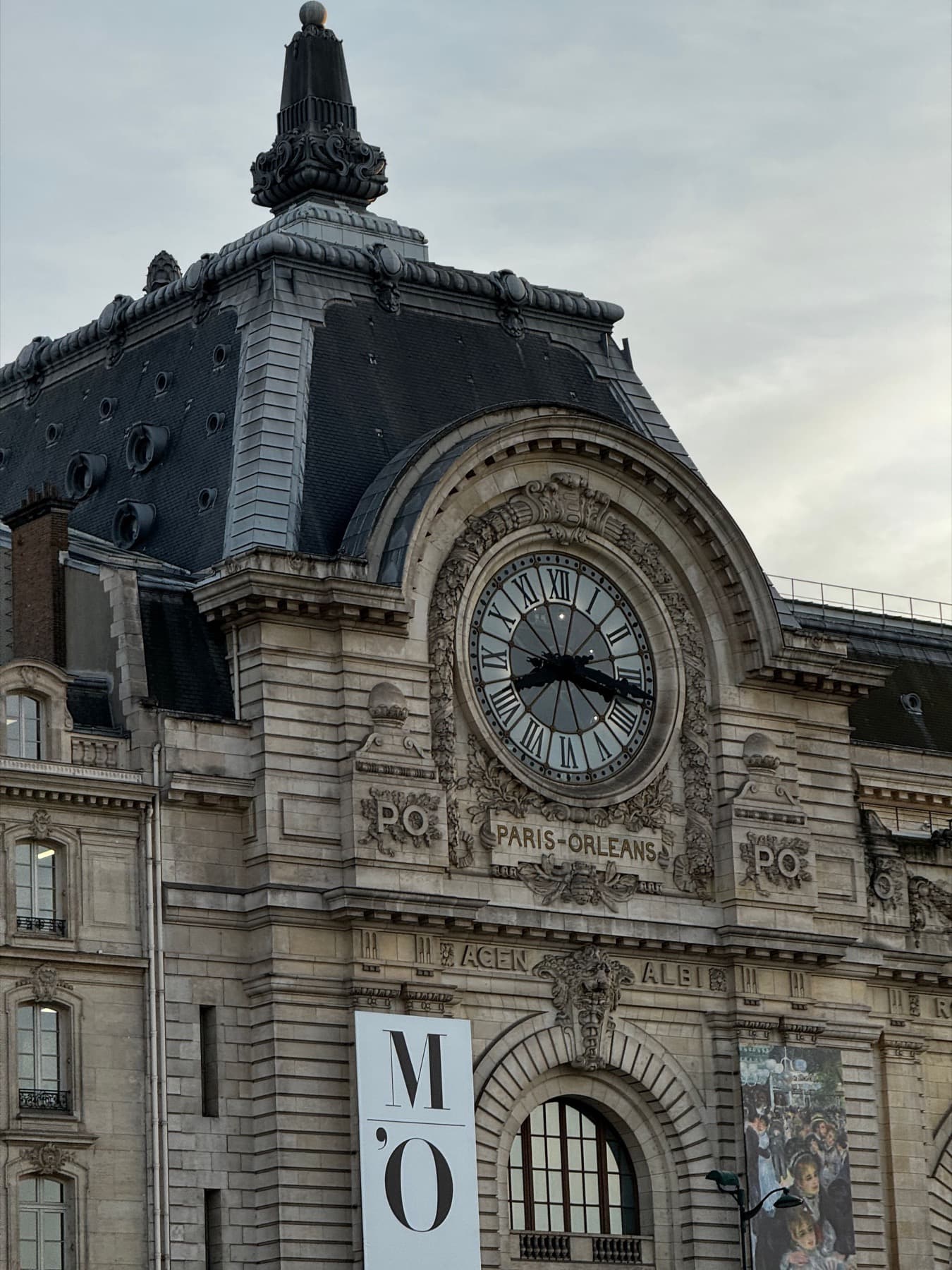
Musée d'Orsay: What to See, Floor by Floor
The Code of Hammurabi at the Louvre: Which Room, and the Story of the Stone
The Louvre: What to See, by Wing and Room Number, and a Two-Hour Route

The Mona Lisa: Which Room It Is In and What to Know
The Raft of the Medusa at the Louvre: Where It Hangs and the True Story