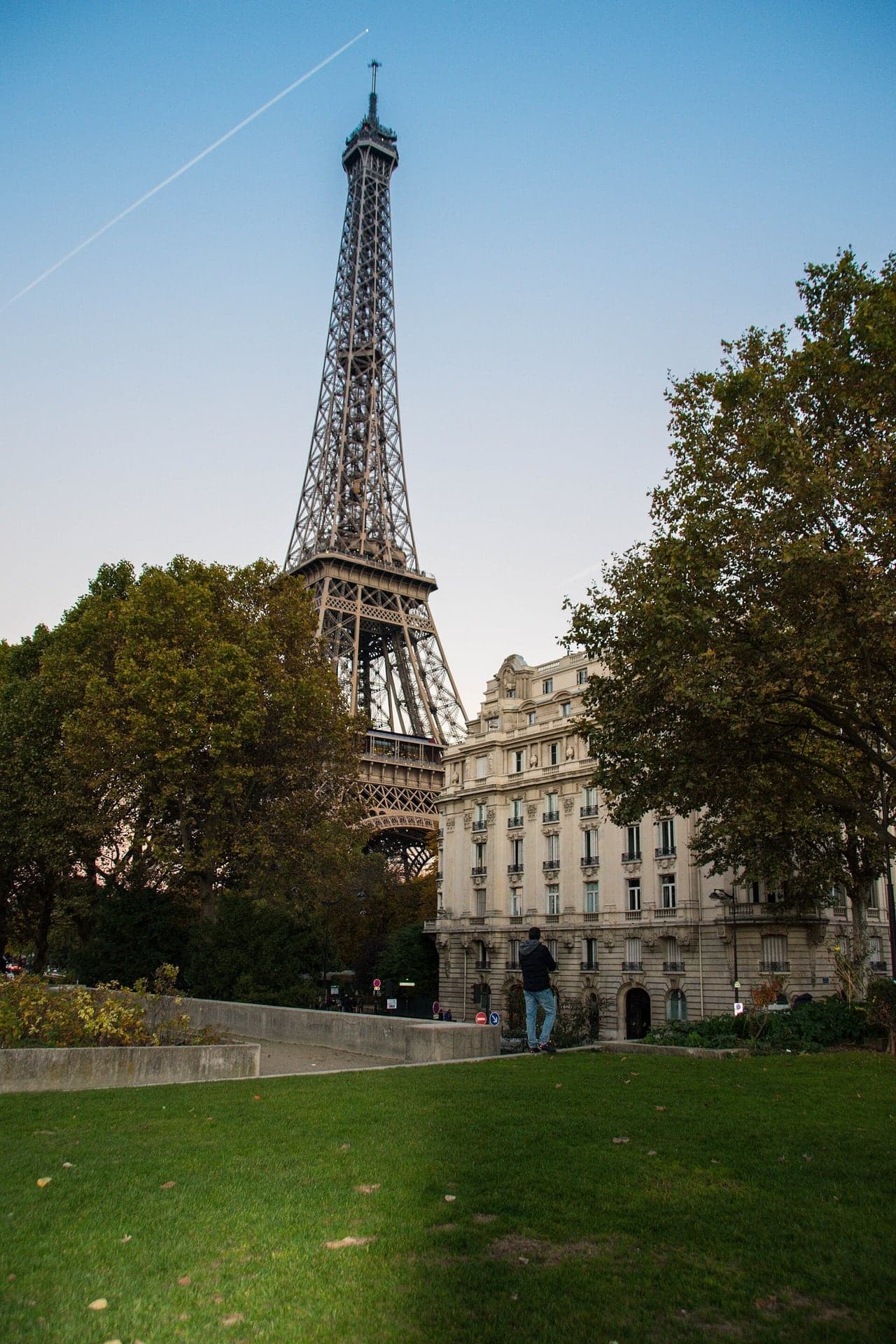
Most people meet the Eiffel Tower as a postcard: a graceful silhouette, a place to take a photo and move on. The stranger truth is that it was built for a world's fair on a twenty-year agreement, and that more than forty of the writers and artists of the day signed a protest against it before it went up. It lasted because it turned out to be useful as well as famous. Read it that way, as a machine that outlived its own deadline, and the iron starts to look very different.
A giant built against the clock
The tower rose fast. Digging began in January 1887, the pillars started on 1 July 1887, the first floor was reached on 1 April 1888, the second on 14 August 1888, and the tower was finished on 31 March 1889, in two years, two months and five days according to its operator. It was the centrepiece of the 1889 world's fair. About 150 workers made the parts at the factory in Levallois-Perret, between 150 and 300 worked on site, and a riveting team was four men.
Whose tower it actually is
Hear a stop from this walk
École Militaire: The End of the Line
It carries one man's name, but the idea was a team's. The winning entry in a competition of 107 projects combined Gustave Eiffel, the engineers Maurice Koechlin and Émile Nouguier, whose idea dates from June 1884, and the architect Stephen Sauvestre, who worked on its form. Eiffel patented the design in September 1884. So the silhouette you photograph is a collaboration, with a famous name on the door.
The numbers that make it stand up
The competition programme asked for a square base 125 metres across and 300 metres tall. As built the tower was 312 metres high without its antennas; with them it is 330 metres today. Its metal frame weighs 7,300 tonnes and the whole structure about 10,100 tonnes. It holds 18,038 iron parts joined by about 2.5 million rivets, only a third of them driven on site. The tower is usually credited with holding the world height record for 41 years, until the Chrysler Building in New York passed it in 1930.
Twenty years, and why it is still here
Here is the part the postcard leaves out. Eiffel signed an agreement with the State and the City of Paris granting him the rights to the site for twenty years. In February 1887, before the tower stood, more than forty writers and artists signed a protest published in Le Temps, calling it useless and monstrous. The signatories included the composer Gounod, the writer Maupassant, the painter Bouguereau and the architect Charles Garnier. Their letter looked ahead to twenty years of the odious shadow of a column of bolted sheet metal, and the twenty years were the length of Eiffel's agreement. It was not a demolition order, though, and what kept the tower standing was use. The operator's own history says it was saved by the scientific experiments Eiffel encouraged, and in particular by the first radio transmissions. Radio was not the whole story, but it is the part that turned a showpiece with a time limit into a permanent landmark.
How to read it on the ground
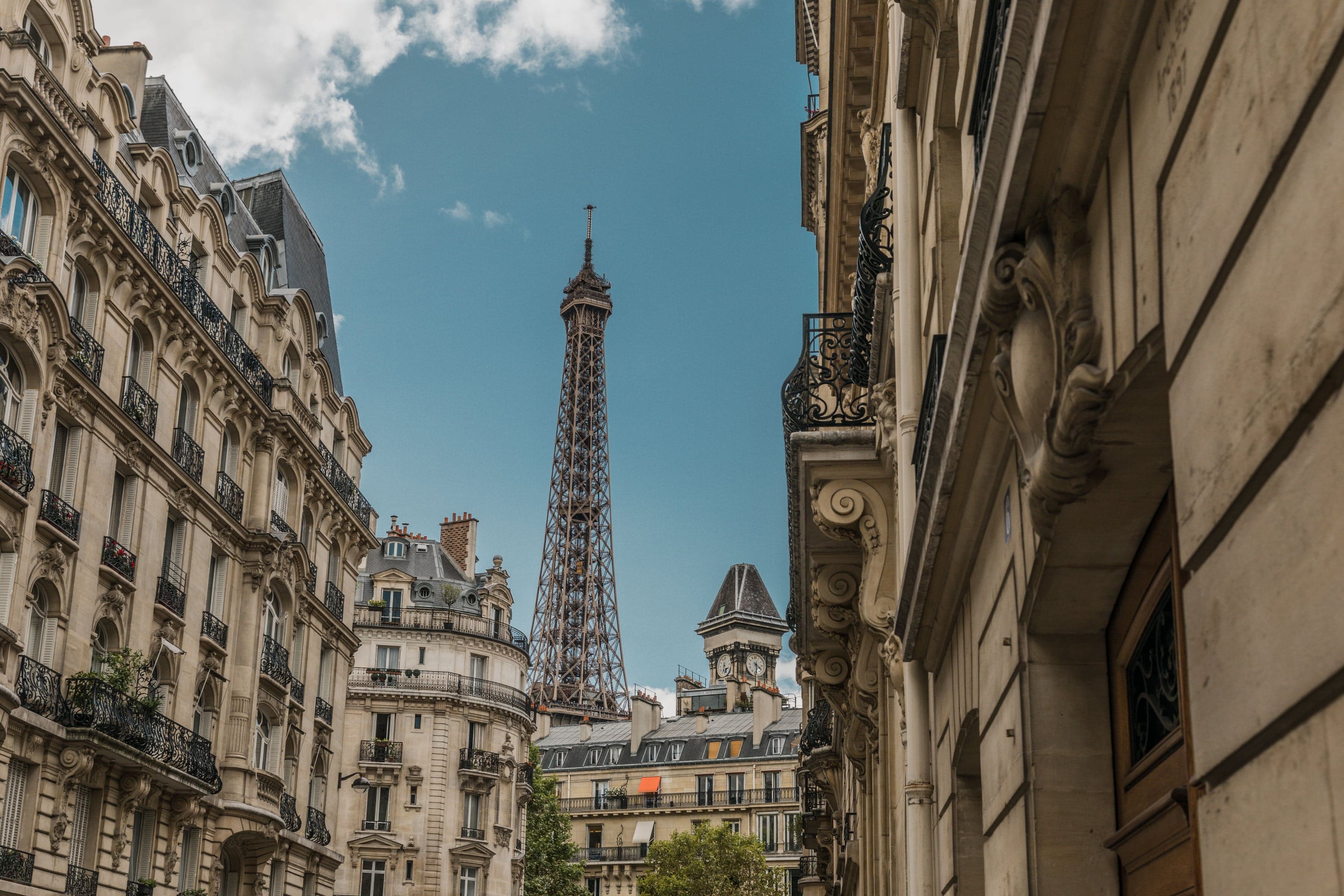
The lattice is the whole idea: strength from openness, a giant that is mostly air. Since 2018 the tower has stood inside a security perimeter, with a bullet-resistant glass wall on the Seine side and the Champ de Mars side, so you cannot simply wander between its feet. As published in 2026, the free esplanade and gardens are reached through security checks at the entrances. The Roamer walk sees the tower through the glass from the Quai Branly promenade, and the Trocadéro gives the head-on view across the Pont d'Iéna.
The far end of the same axis is closed by the École Militaire, where a teenage Napoleon learned his trade. The green Champ de Mars between them was a drill ground before it was an exhibition ground, and the park as you see it was laid out in 1908.
Practicalities: the operator says it welcomes almost 7 million visitors a year, about three quarters of them from abroad. Its published prices in September 2026 were 36.70 euros for an adult ticket to the summit by lift and 23.50 euros to the second floor, and from 29 September 2026 stairs tickets need advance booking. Check the official site, which also warns about fraudulent ticket sites. You do not have to go up to understand it. The engineering reads best from below and from across the river.
This is one stop on a walk through the monumental west of Paris. To place the tower in the wider city, read Reading Haussmann's Paris, how the Louvre pyramid updated a palace, or how the Palais Garnier staged the Second Empire, whose architect signed the protest. Then browse the full set of Paris walking tours, plan one day in Paris, or start from Paris itself. Come back to the tower seeing a machine that outlived its agreement, and the iron stops being a postcard.
Sources
- Société d'exploitation de la tour Eiffel (SETE), the tower's operator: key figures, history, the note on the artists who protested, and the visitor and price pages as published in September 2026. Dates, heights, tonnages, rivets, visitor numbers, the twenty-year agreement and the first radio transmissions.
- Ville de Paris, Parc du Champ de Mars. The drill ground and the 1908 park.
- Roamer tour transcript, "Eiffel Tower: The Tower Meant to Stand Twenty Years" (paris-eiffel-tower), fact-audited.
Ready to experience it?
Eiffel Tower: The Tower Meant to Stand Twenty Years
80 min · 2.4 km · easy
More from Paris
Explore more at your own pace.
Musée d'Orsay: What to See, Floor by Floor
The Code of Hammurabi at the Louvre: Which Room, and the Story of the Stone
The Louvre: What to See, by Wing and Room Number, and a Two-Hour Route
The Mona Lisa: Which Room It Is In and What to Know
The Raft of the Medusa at the Louvre: Where It Hangs and the True Story