From the Trocadéro terrace down through the gardens and over the Pont d'Iéna to the tower, past a museum's living wall, a ceramic facade and the Fontaine de Mars, then across the Champ de Mars lawns to the École Militaire.
Start · Trocadéro: The View Three Fairs Built
DirectionsStops
- 1
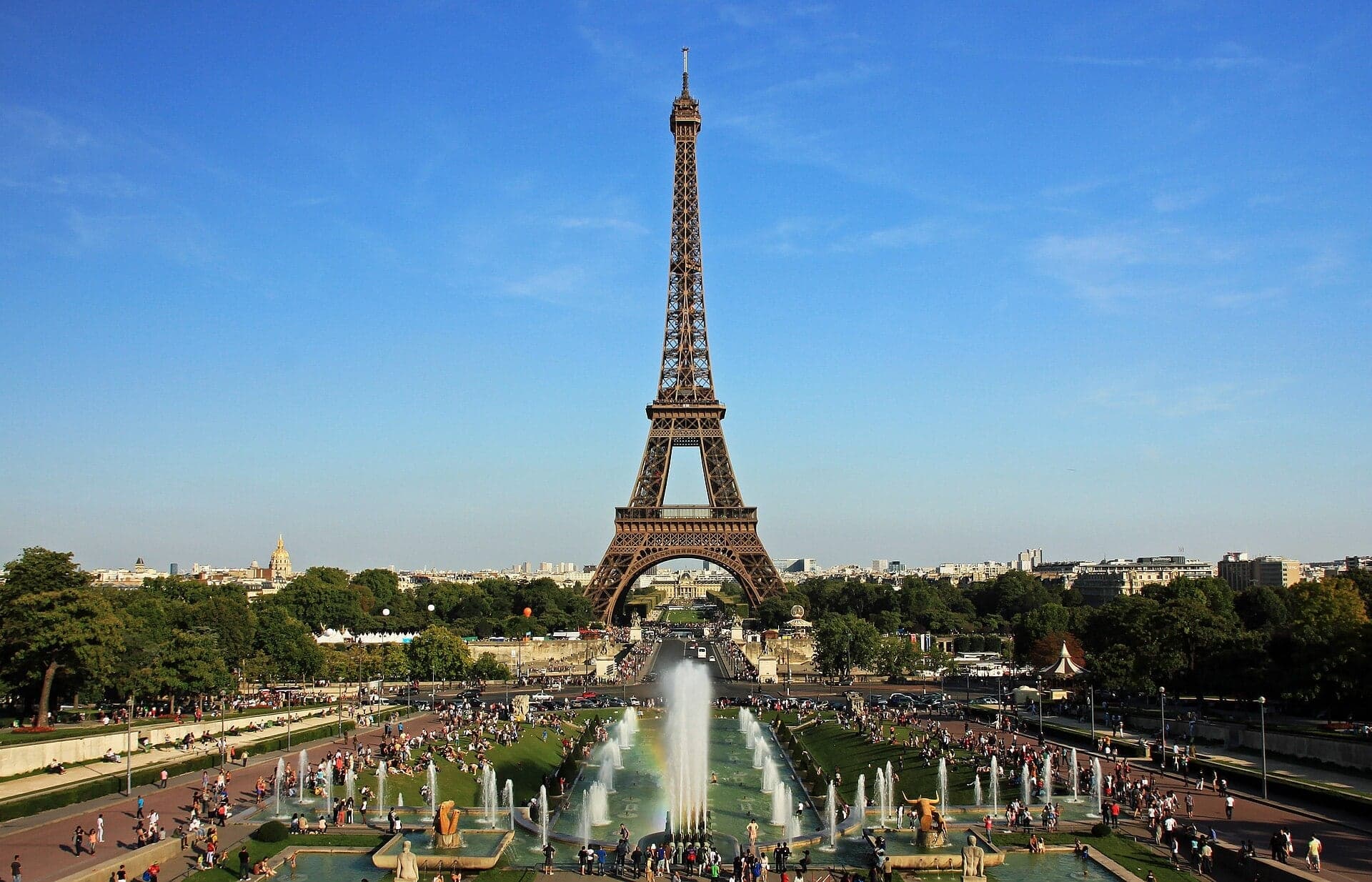
Trocadéro: The View Three Fairs Built
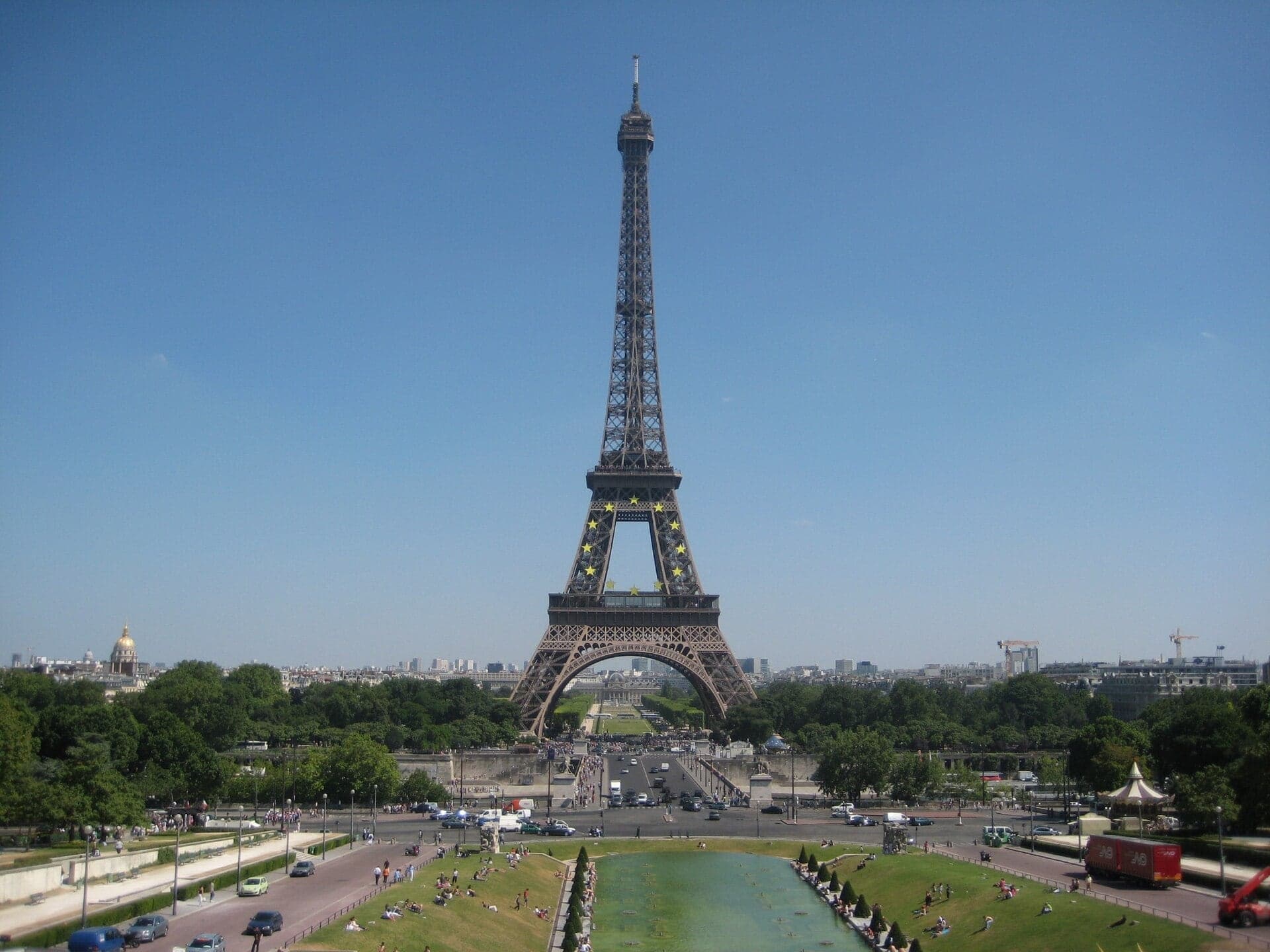
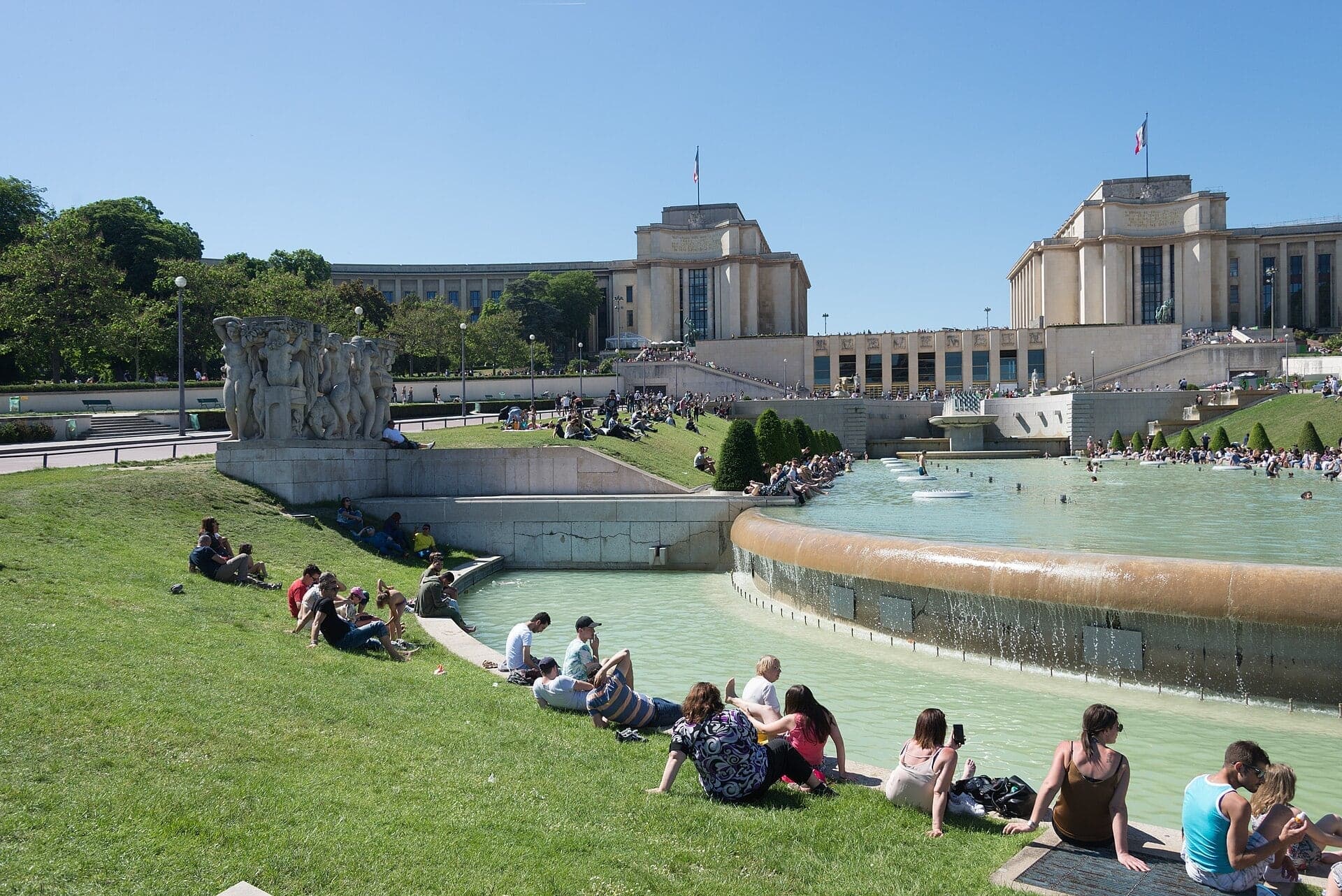
A 1937 palace frames the view. Its curved wings stand on the frame of a palace built for the fair of 1878.
- 2
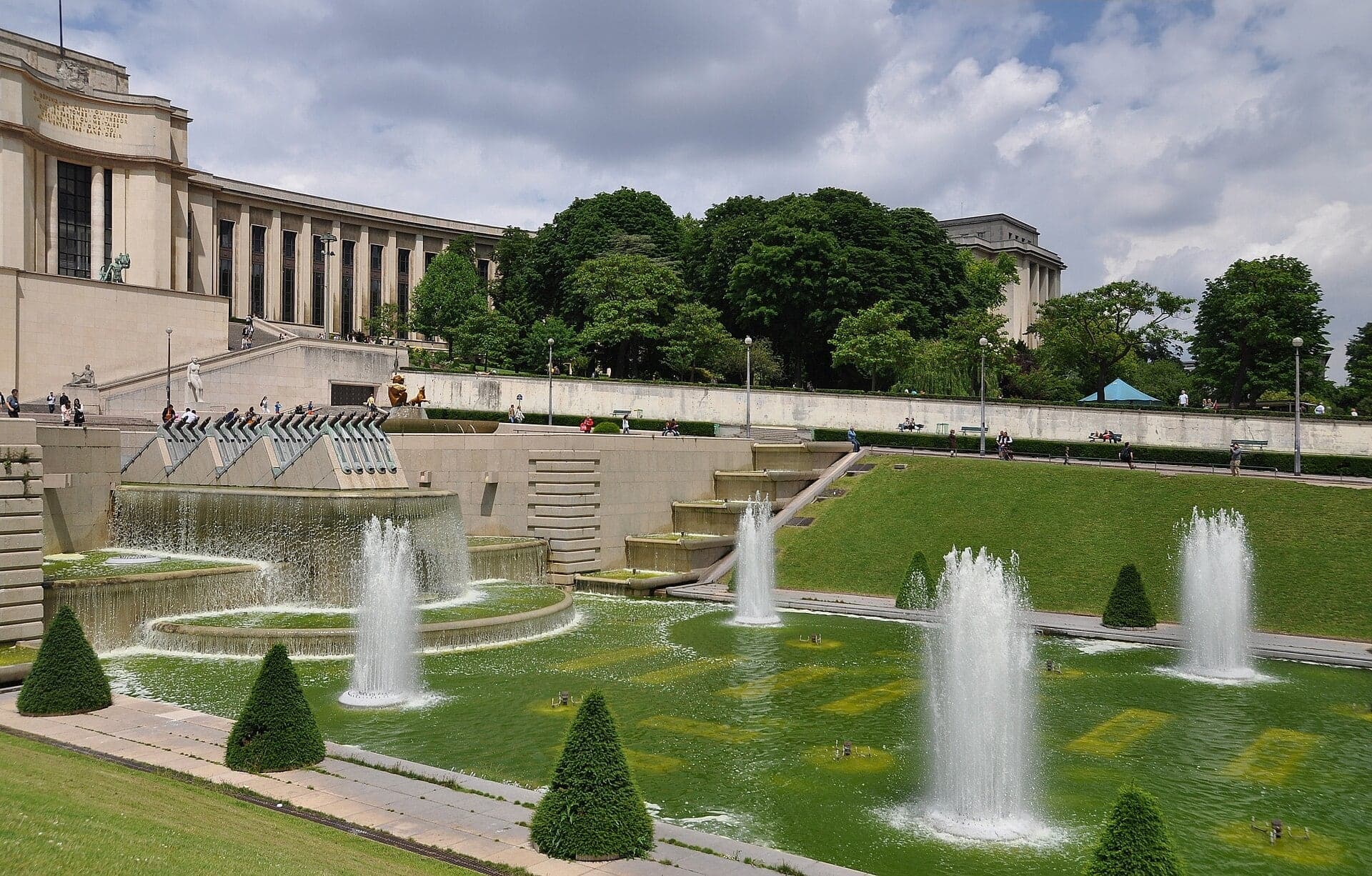
Trocadéro Gardens: Down to the River
1878 fair gardens step down. The long pools and the fountain people call the Warsaw fountain were added in 1937.
- 3
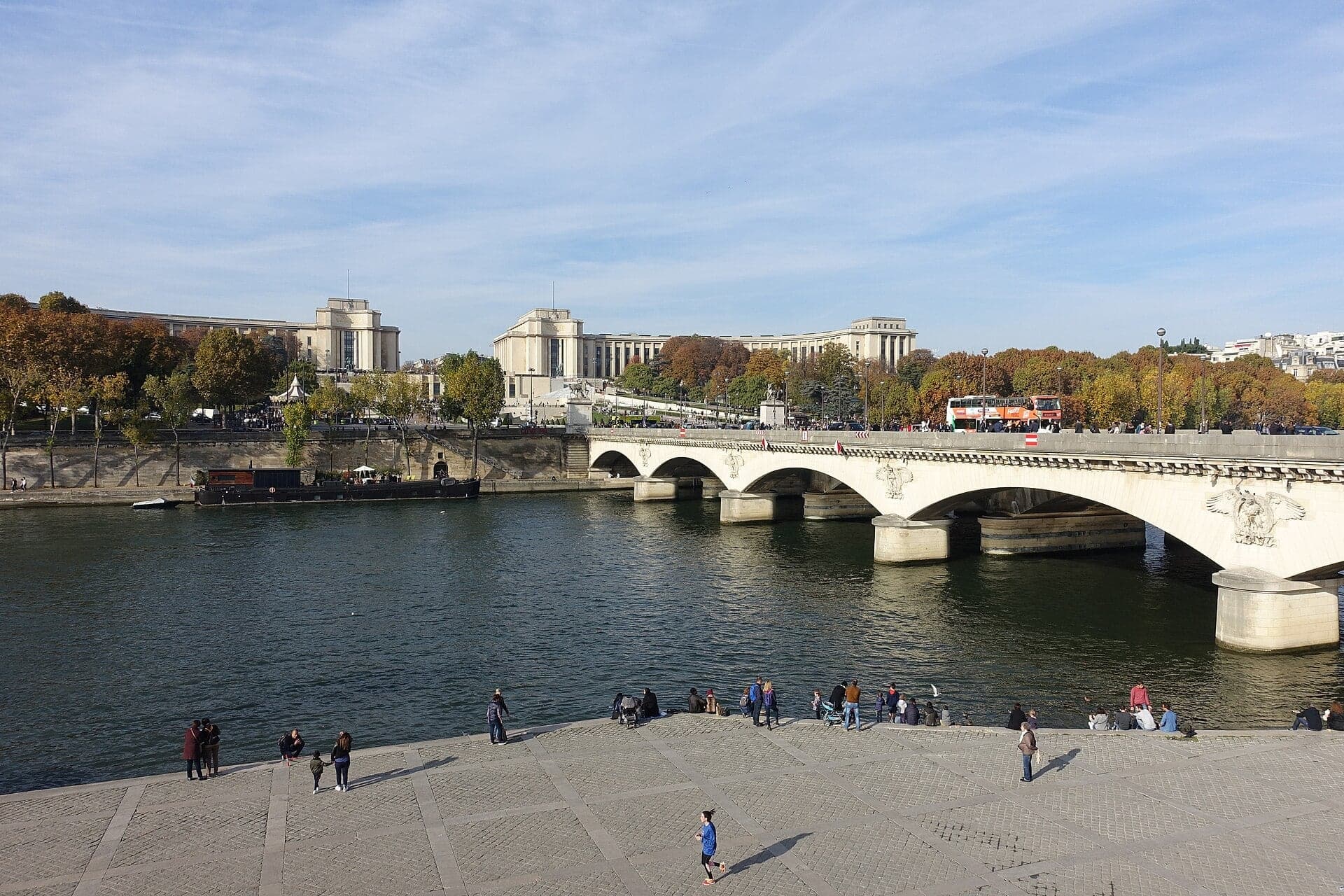
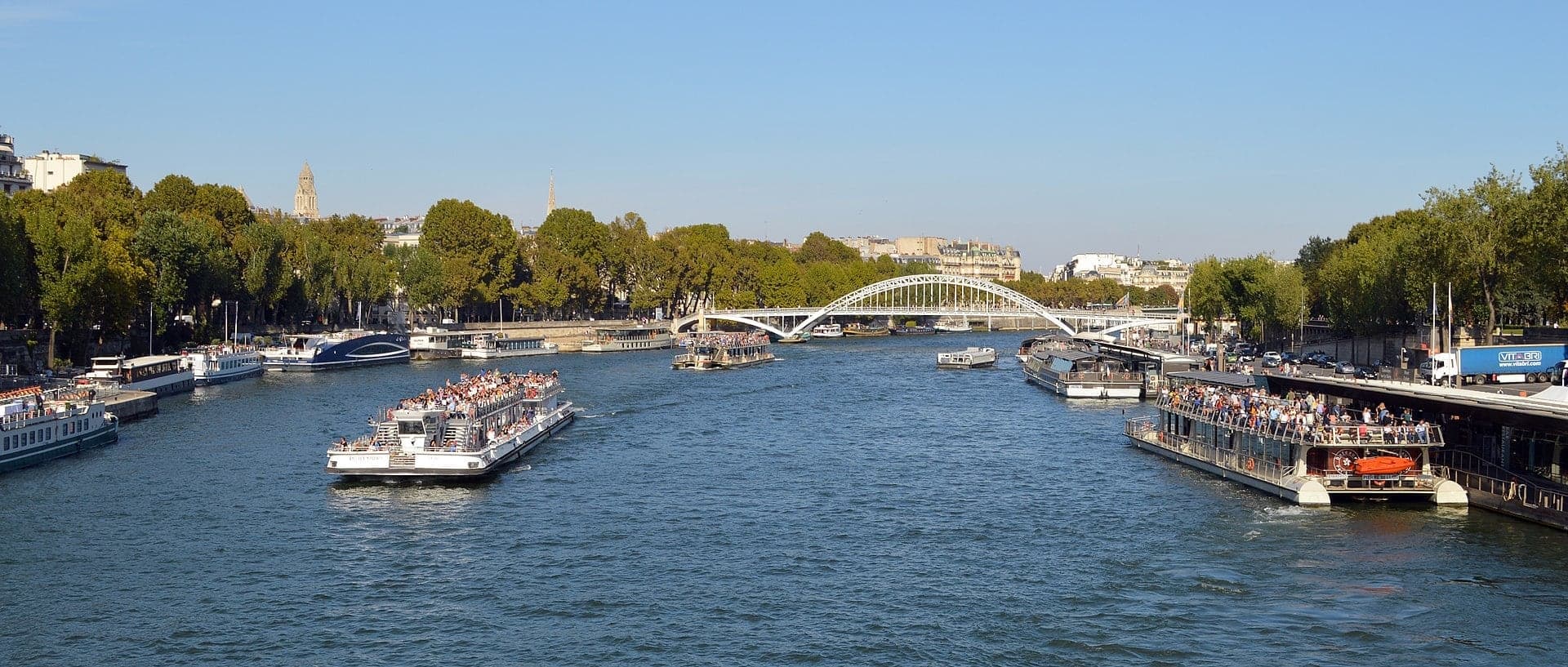
Pont d'Iéna: Napoleon's Bridge to the Tower
Stone horsemen guard both ends. Stone horsemen guard both ends, and the deck was widened for the fair of 1937.
- 4
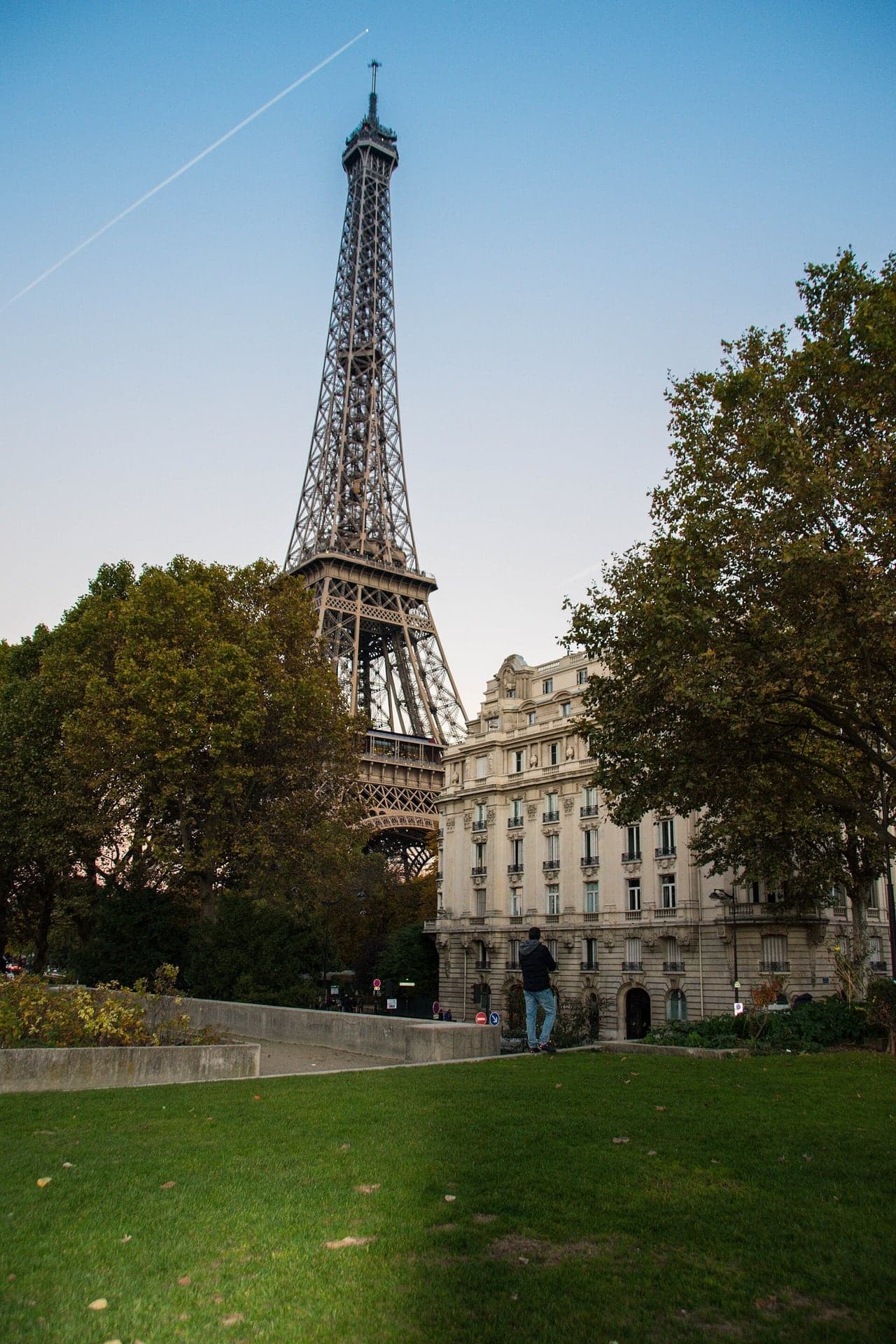
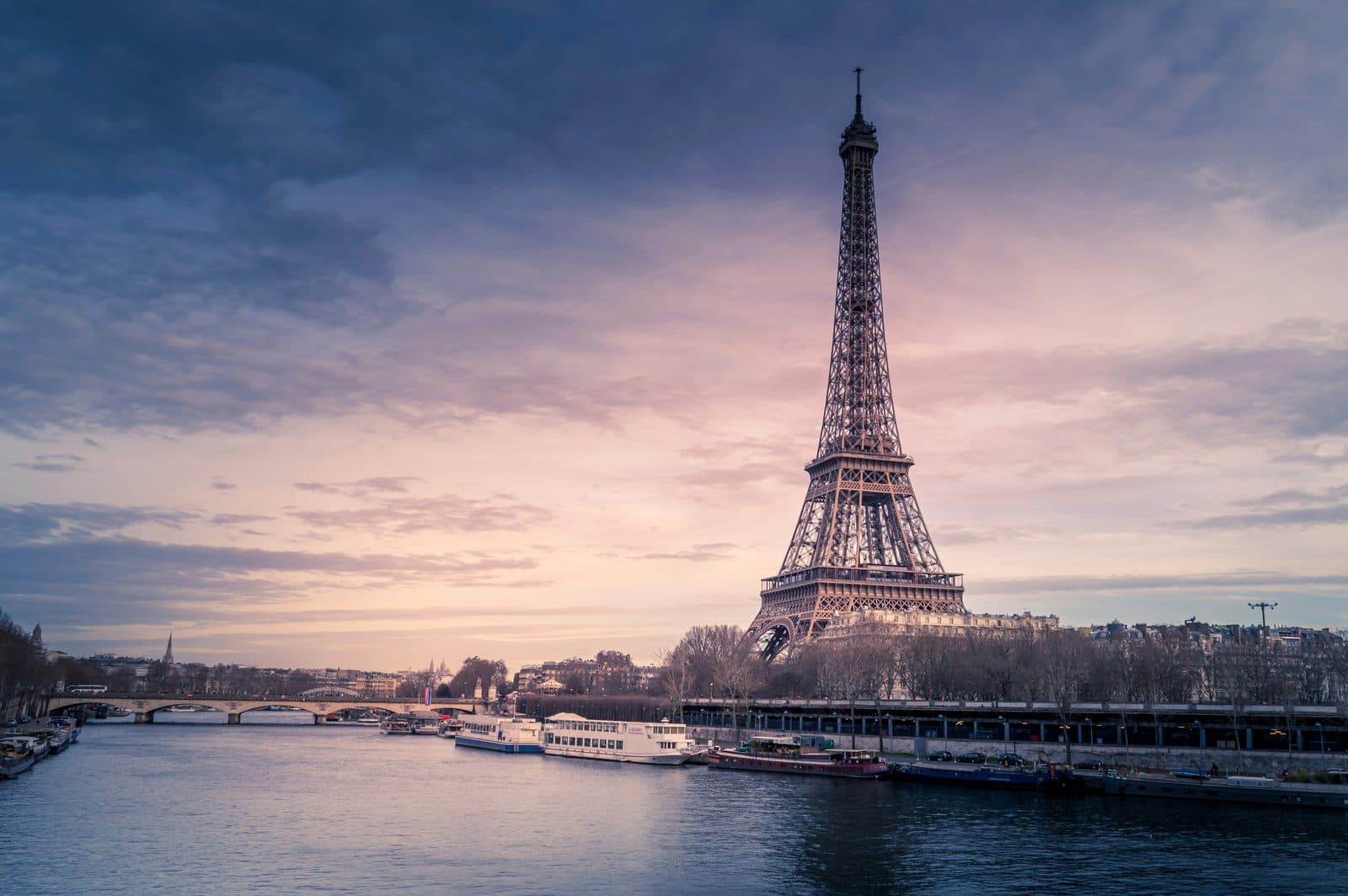
The Eiffel Tower: Twenty Years That Never Ended
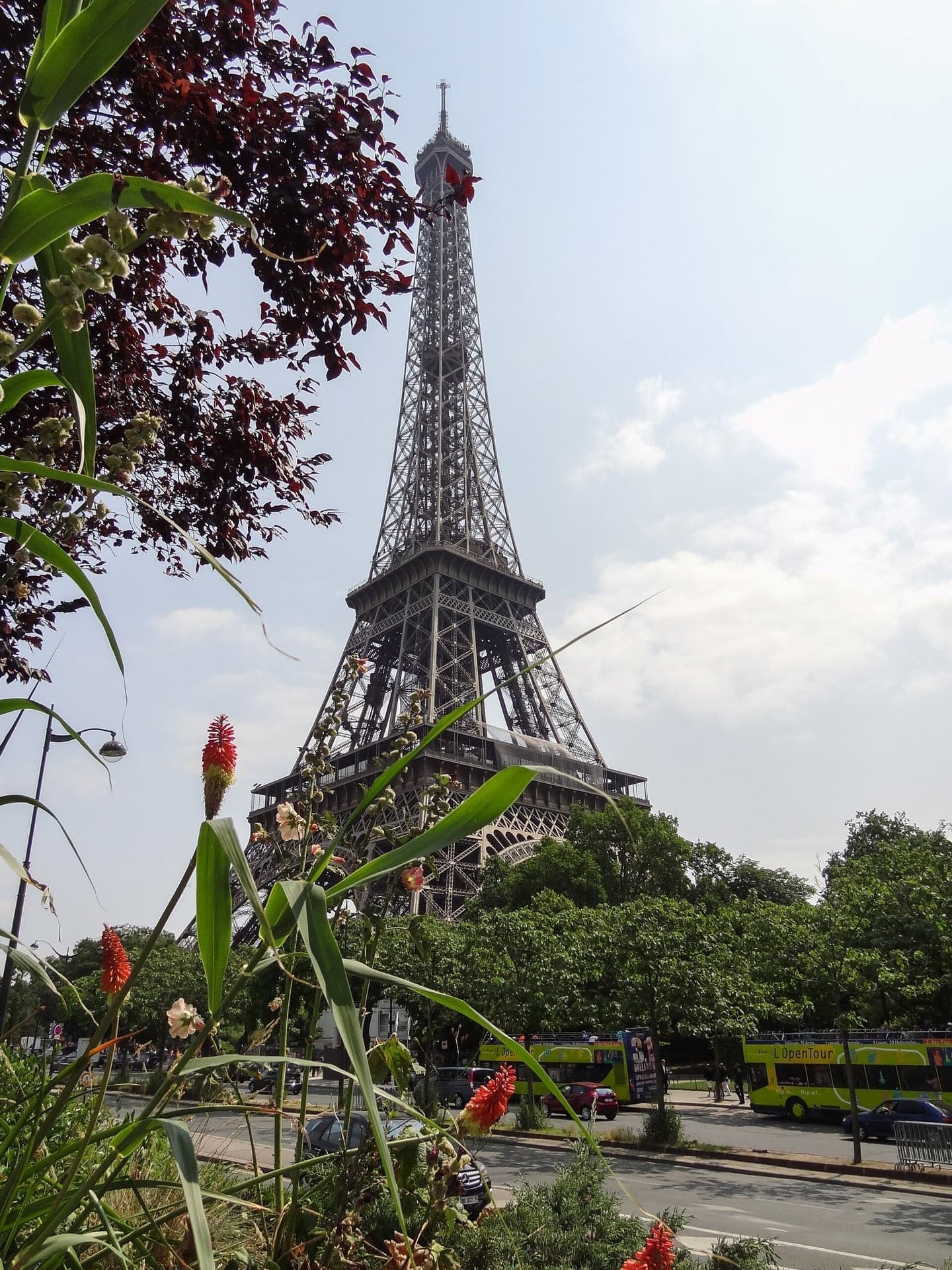
Built in two years for 1889. Built in two years, two months and five days for the fair of 1889, on a site granted for twenty years.
- 5
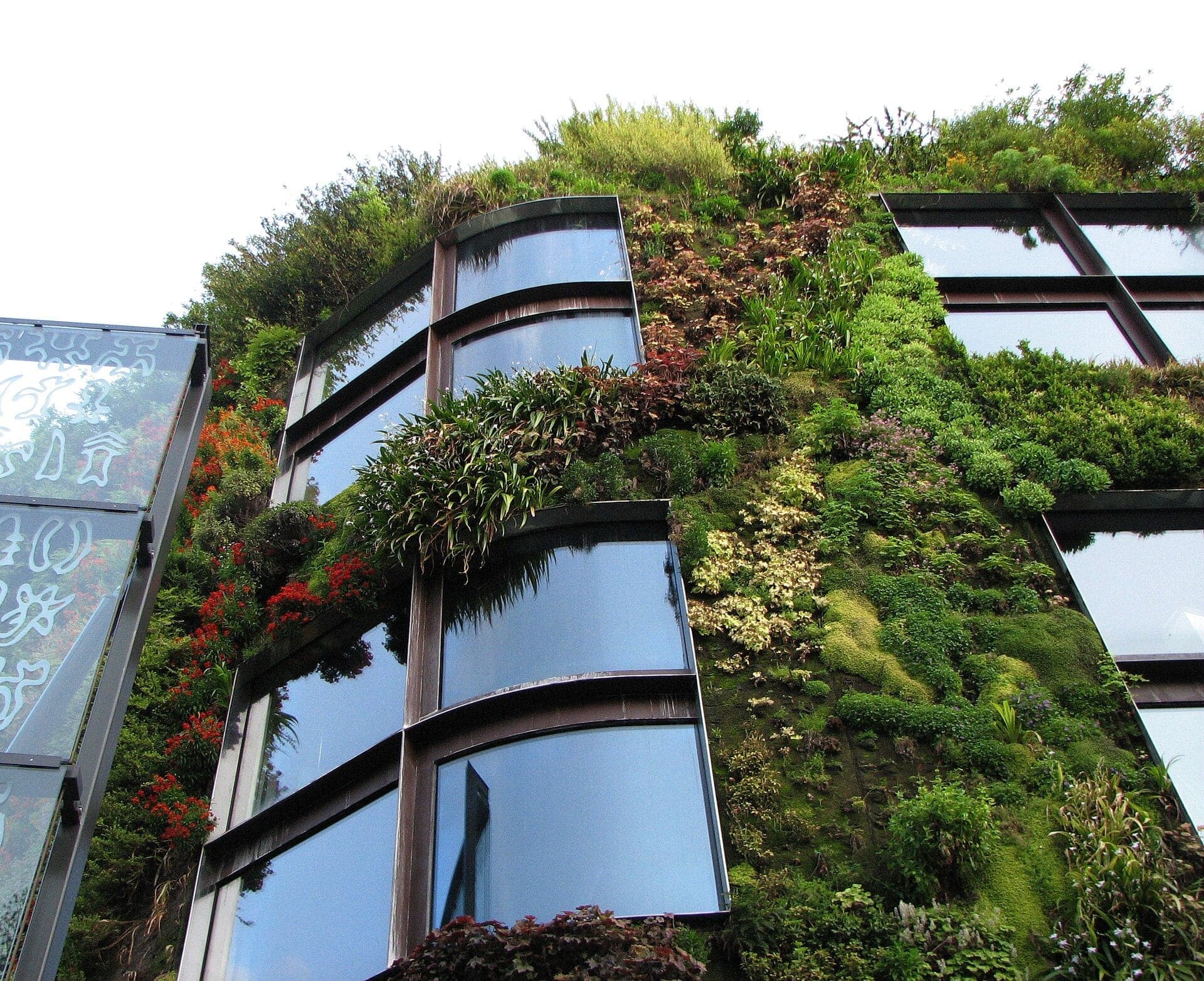
Musée du quai Branly: A Garden on the Wall
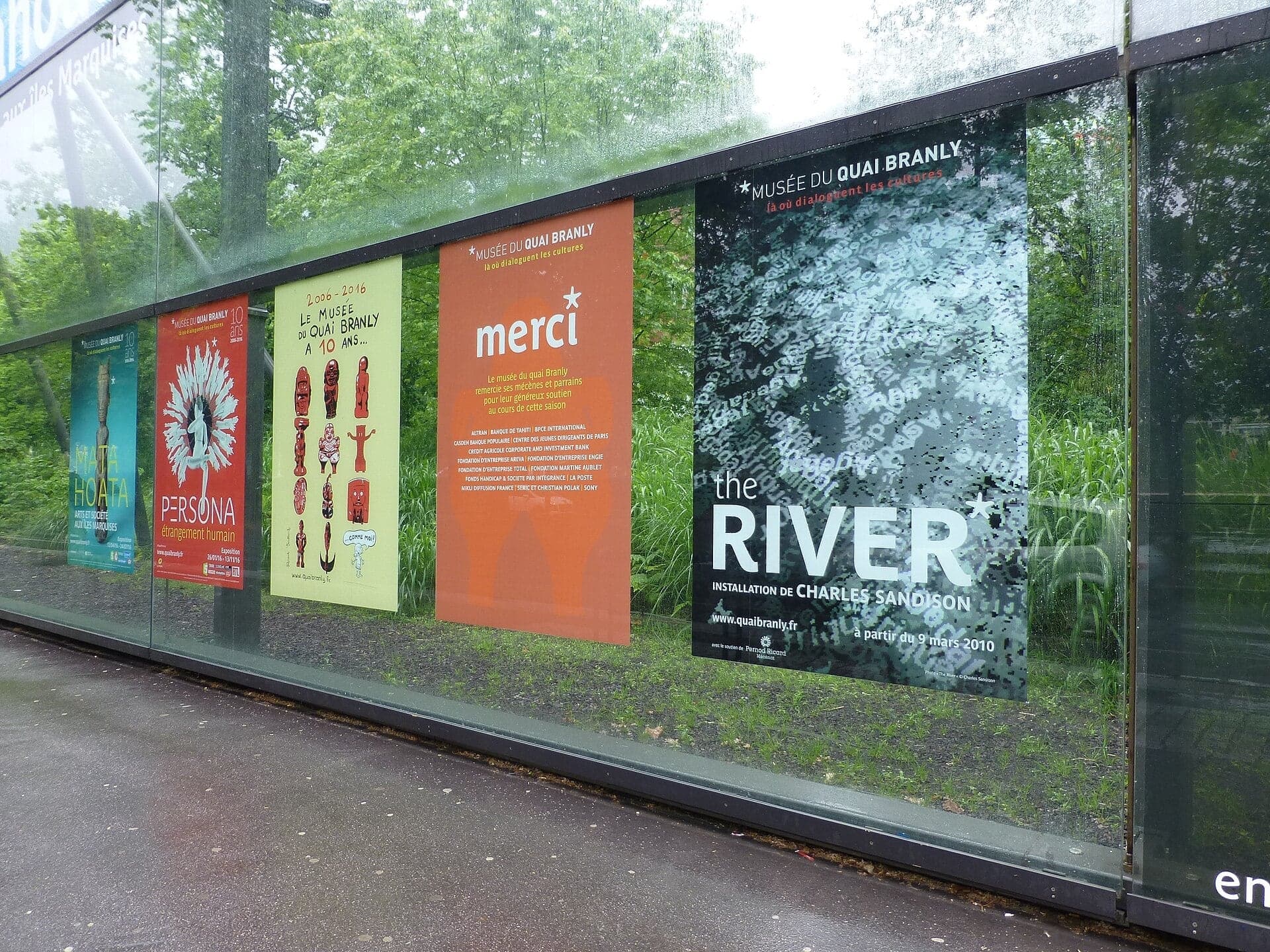
Living plants cover the wall. Jean Nouvel's museum of 2006 stands on stilts behind a glass screen, on what was a river island until 1812.
- 6
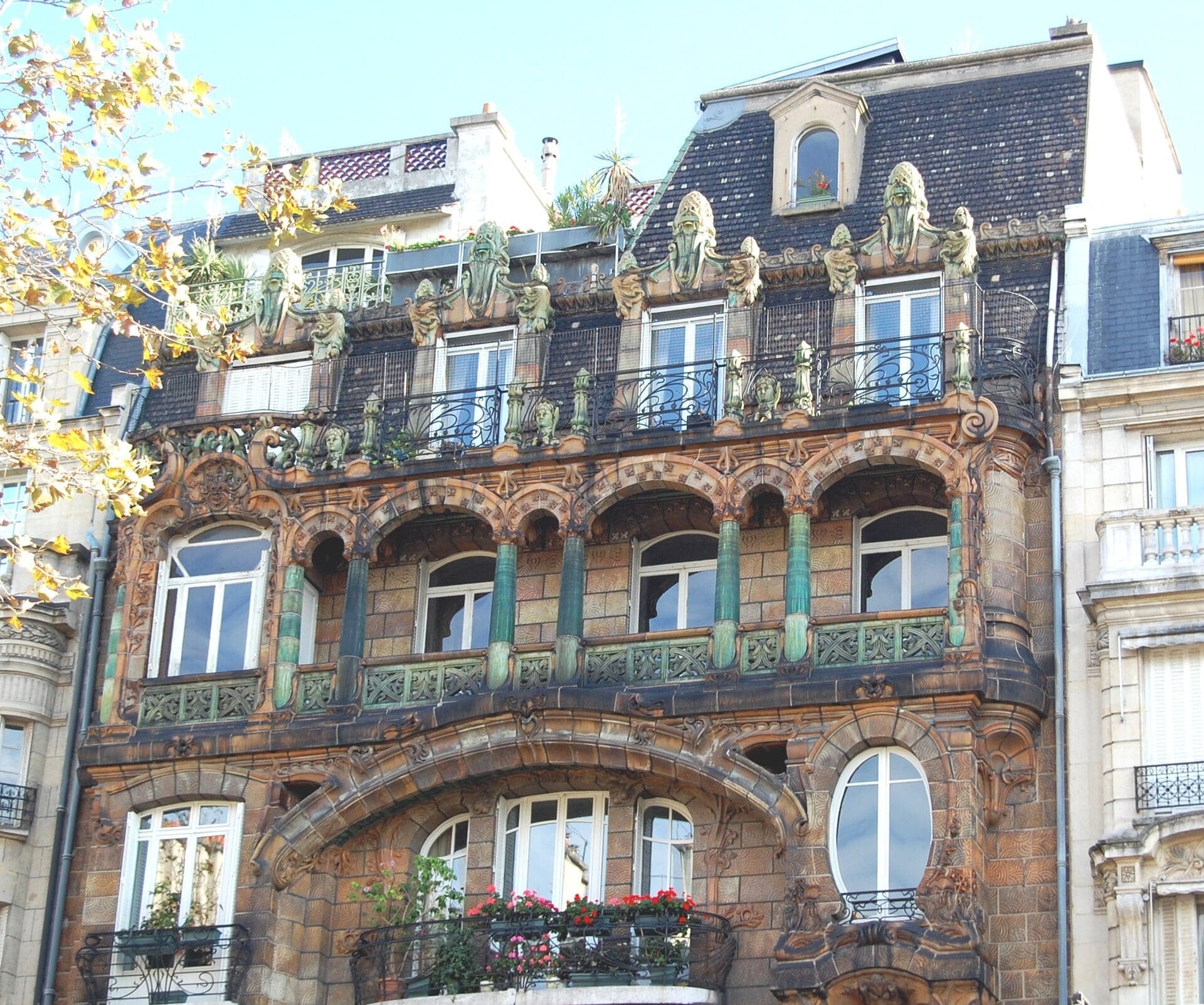
Avenue Rapp: Lavirotte's Ceramic Shop Window
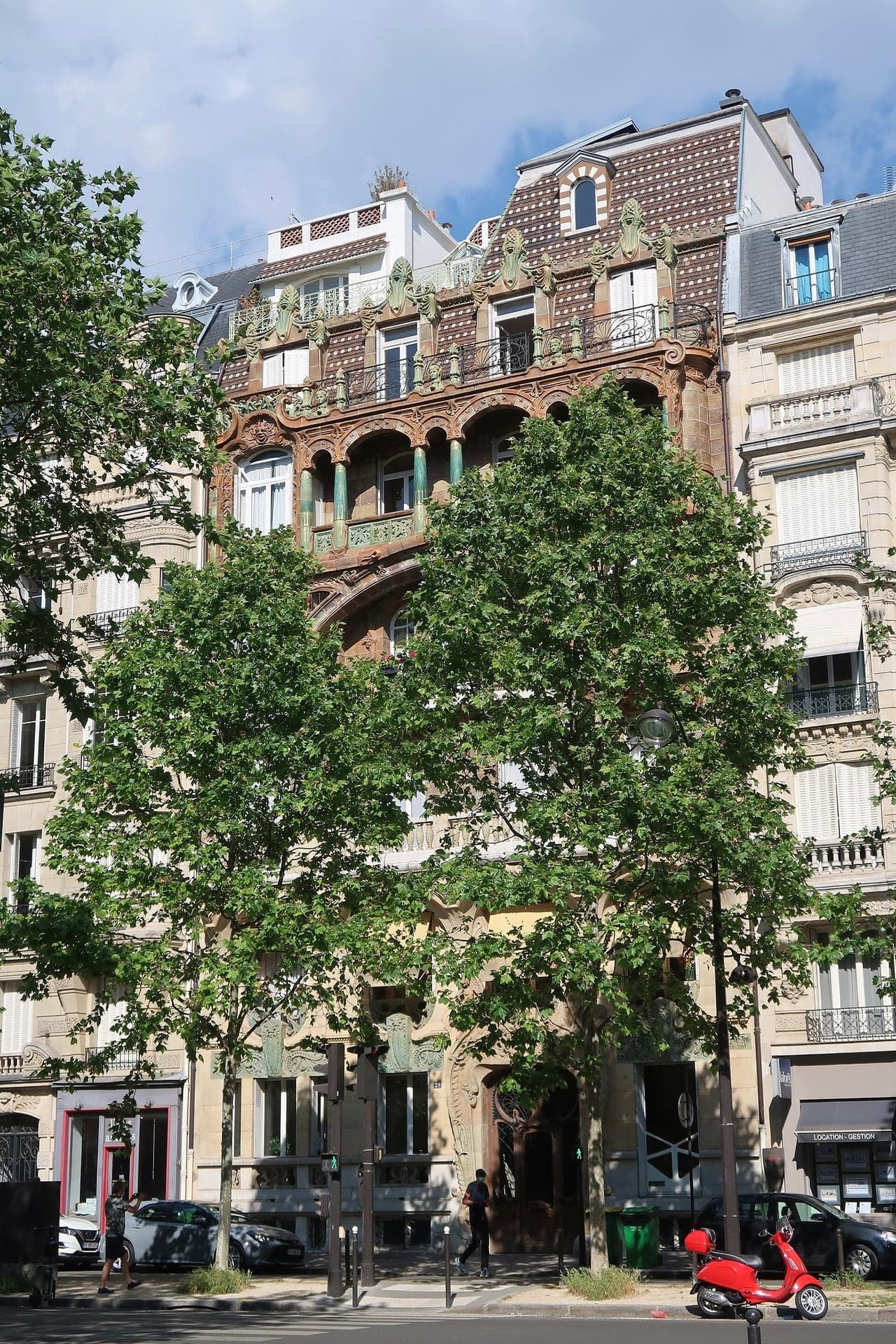
A ceramic front won a prize. Number 29, built in 1900, won a City of Paris facade prize in 1901.
- 7
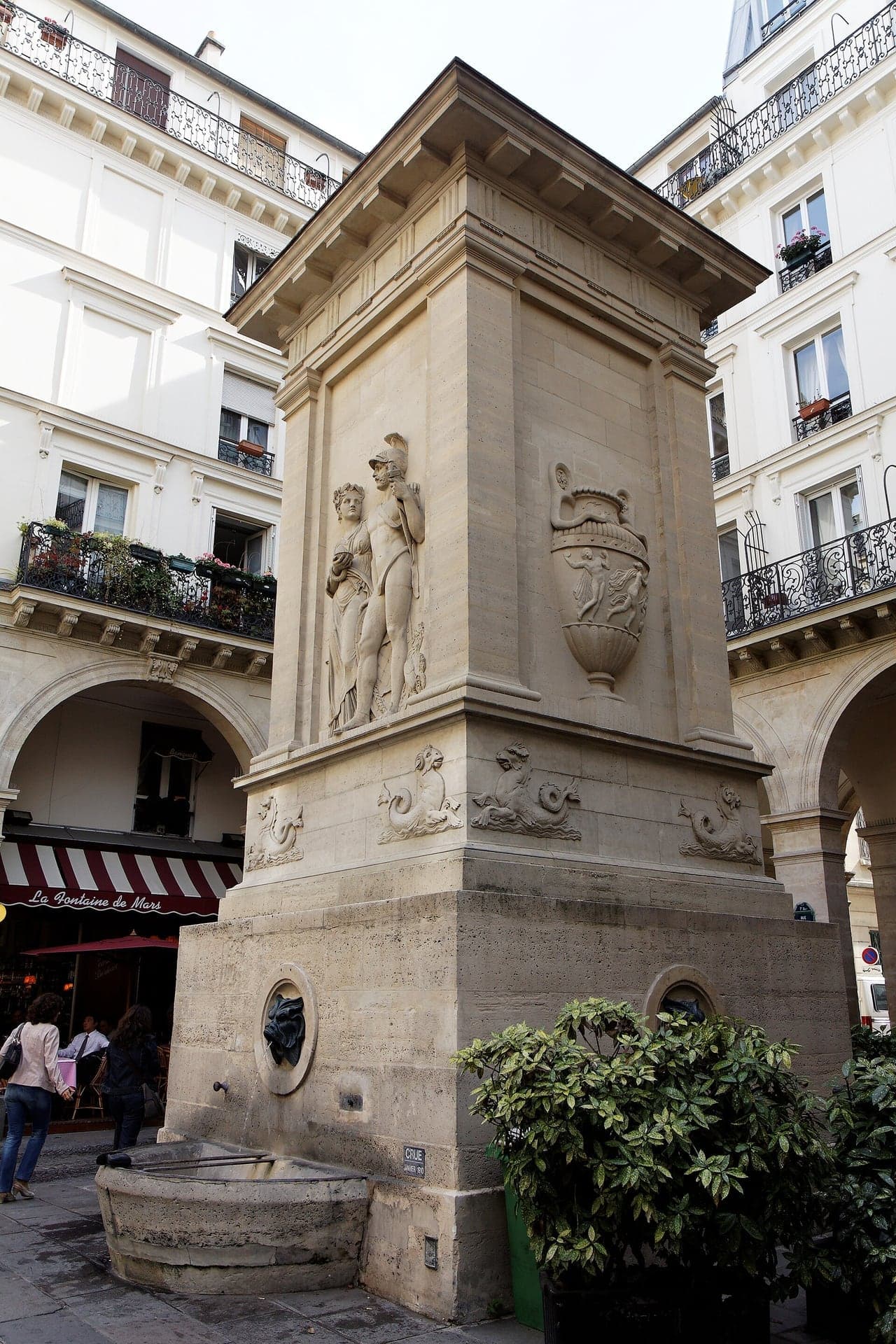
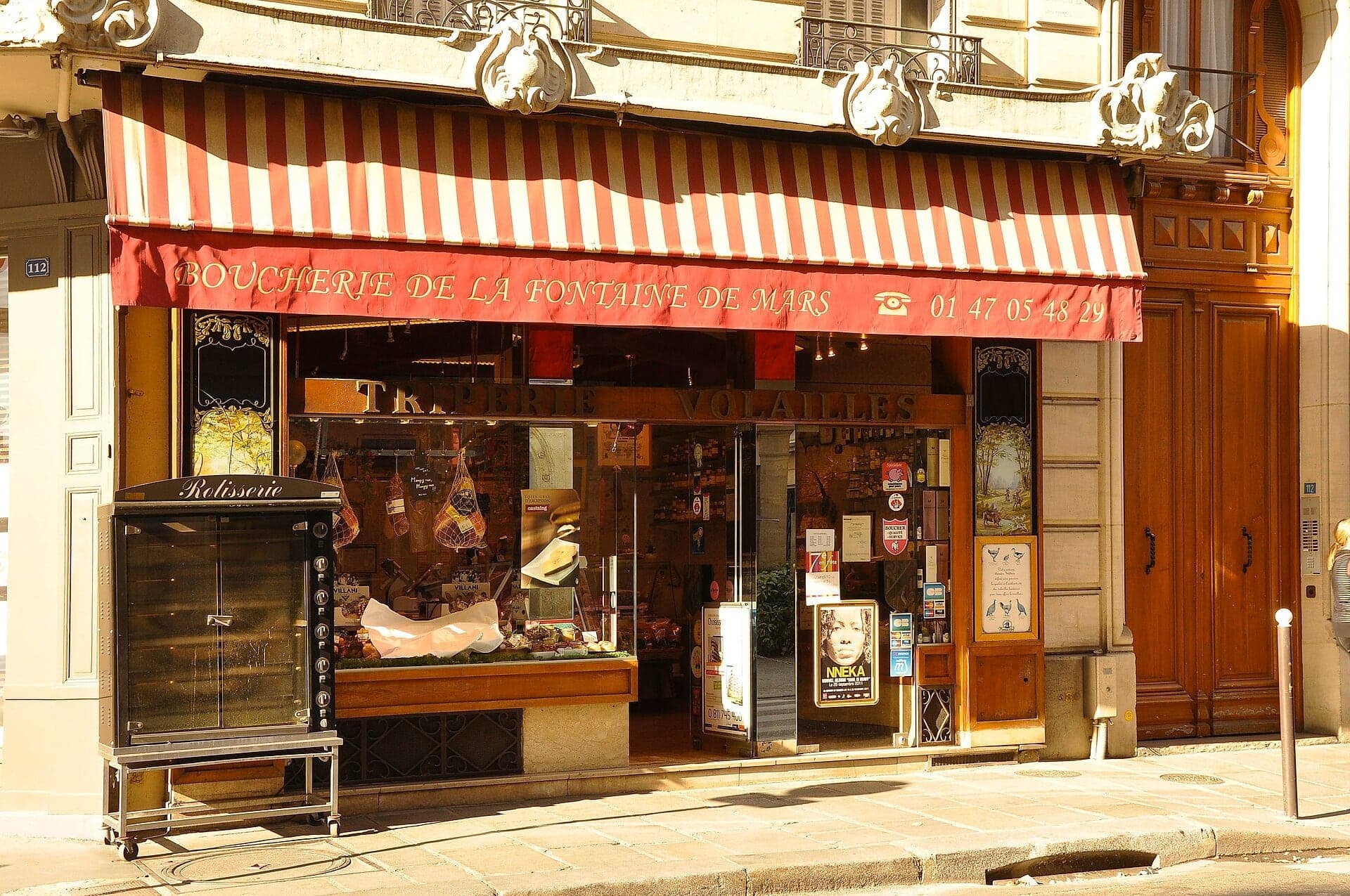
Fontaine de Mars: War and Health at the Hospital Gate
Mars meets the goddess of health. It stood at the gate of a military hospital, and a plaque at its foot marks the flood of 1910.
- 8
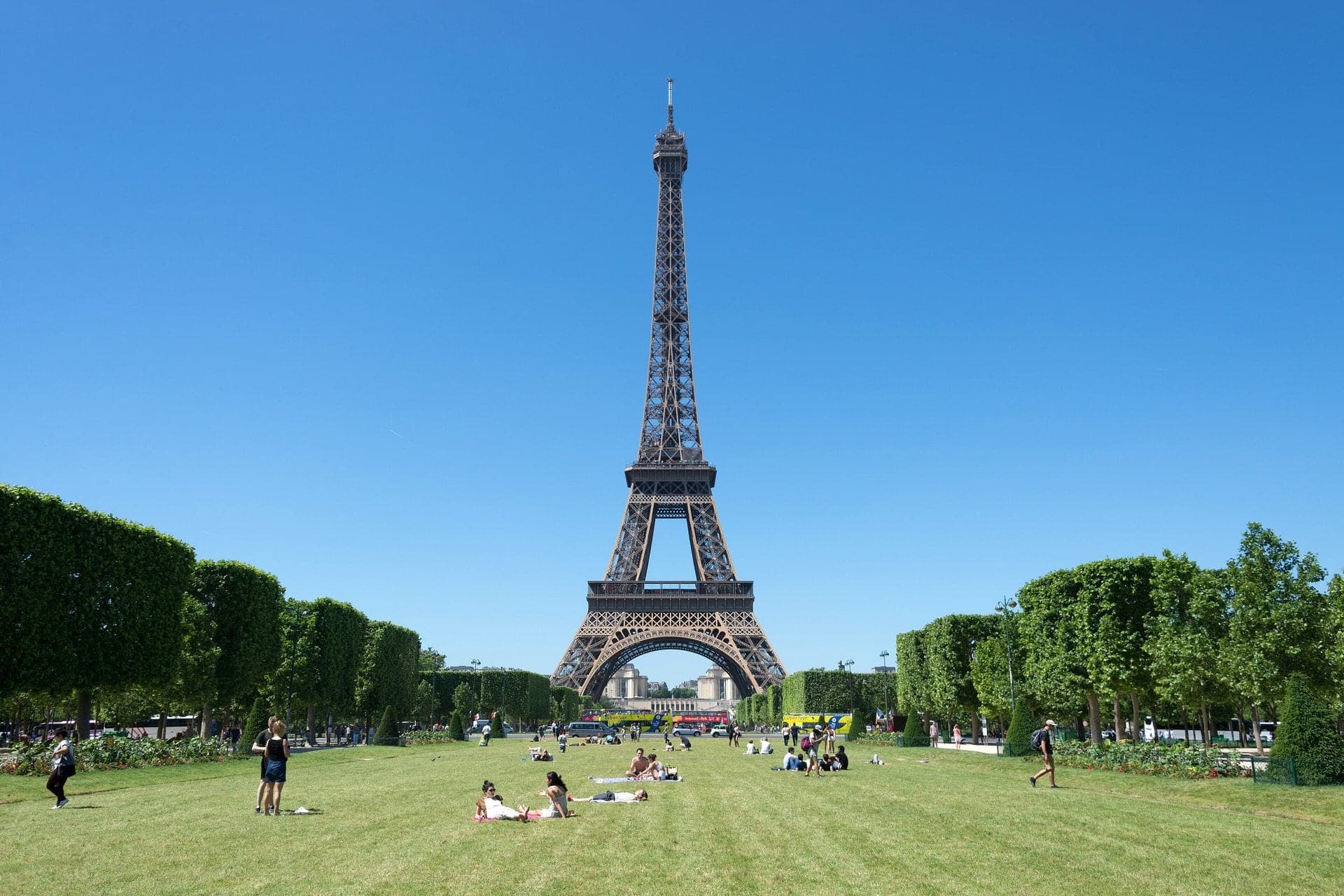
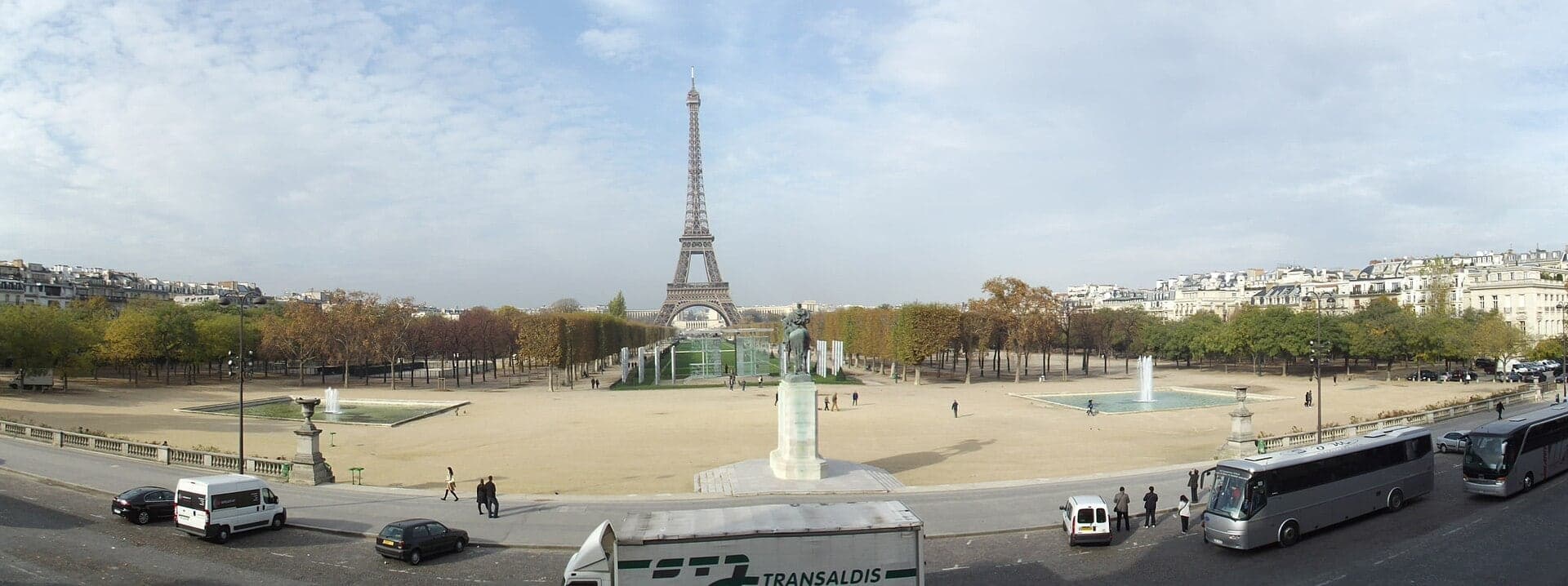
Champ de Mars: From Drill Ground to Garden
The walk crosses the old drill ground. Five world's fairs were held here, and in 1908 it became a garden of long lawns.
- 9
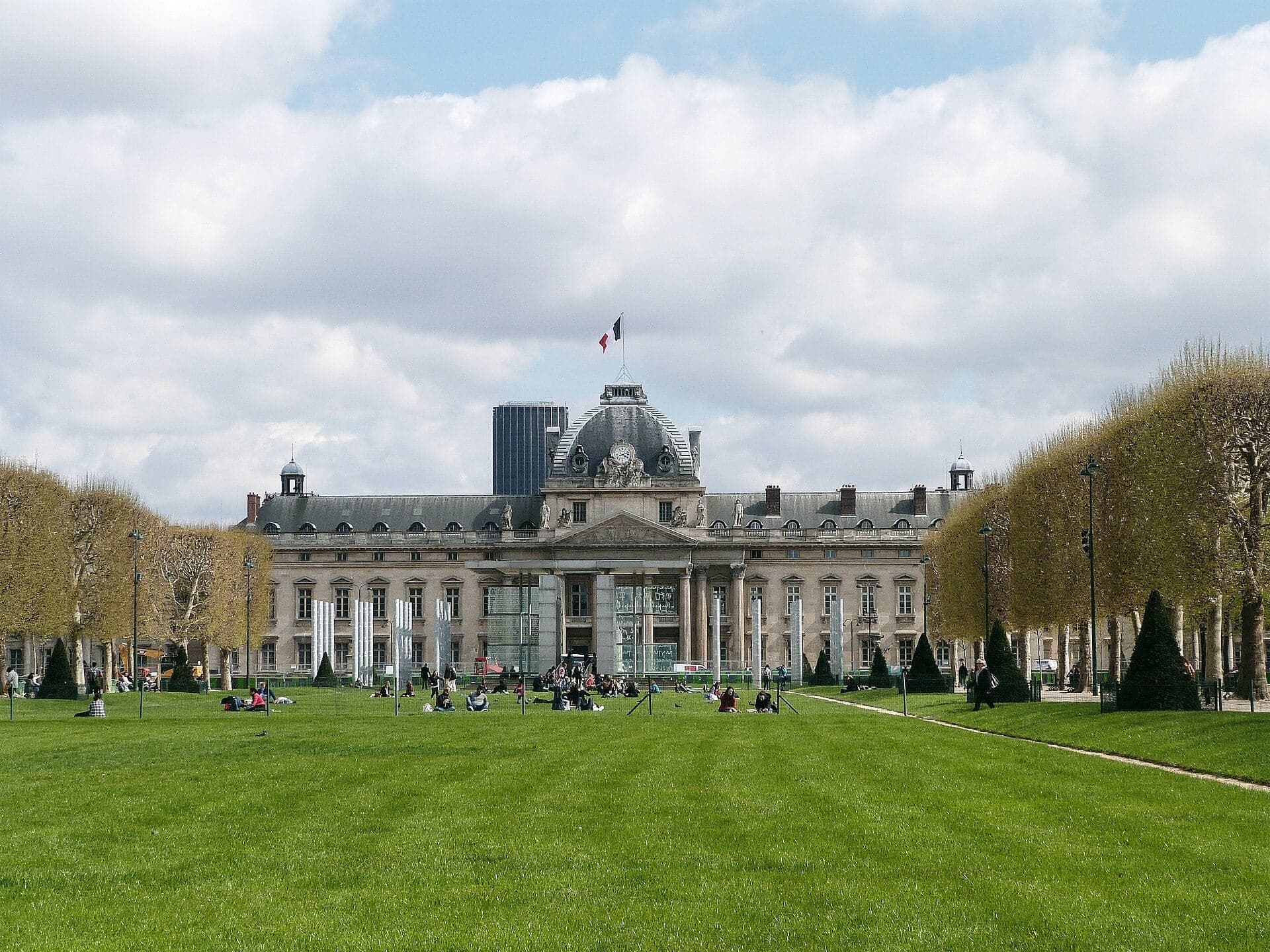
École Militaire: The End of the Line
The school closes the long view. Founded in 1751, it looks down the lawns to the tower at their far end.
Details
Best Time to Visit
Daytime, Tuesday to Saturday, starting by about 4pm in October so the Musée du quai Branly garden is still open: 9.15am to 7.30pm (Thursday to 10.15pm) per the museum's own page on 6 October 2026; Monday opening is not confirmed. The views at stops 1 to 4 work at any hour. The Champ de Mars (stops 8 and 9) has no gates and is open 24 hours a day per the City of Paris (checked 8 October 2026), but its gravel avenues are best walked in daylight; after dark, use the street fallback in the precautions. Tower hours vary by date: the operator's September 2026 calendar showed 9.30am to 11pm. Checked 7 October 2026.
Pro Tips
- •Getting to the start: Trocadéro Metro station (line 9) is a couple of minutes' walk from stop 1. Bus 72 stops at the Pont d'Iéna (stop 3). The walk ends at the south-east end of the Champ de Mars lawns, a short walk from École Militaire Metro station (line 8); RER C Champ de Mars-Tour Eiffel and buses 82, 30, 86 and 69 also serve the area. On certain Sundays from September to November 2026, Metro line 6 is suspended between Charles de Gaulle-Étoile and La Motte-Picquet-Grenelle and Bir-Hakeim station is closed. Checked 7 October 2026.
- •The Eiffel Tower (stop 4): from 29 September 2026 stairs tickets must be booked in advance, and groups of more than nine must buy online, not at the ticket office. Prices, hours and the free gardens are on the stop's card. Buy only on the official site: the operator warns of fraudulent ticket sites. Checked 7 October 2026.
- •Walking under the tower is free: go through the security check at entrance 1 or 2, in the queue for visitors without tickets. Large luggage is not allowed and there is no left-luggage service. Checked 7 October 2026.
- •The Musée du quai Branly's garden (stop 5) is a free public garden behind the glass wall: 9.15am to 7.30pm, Thursday to 10.15pm, per the museum's page on 6 October 2026; Monday is not confirmed. The museum itself is open 10.30am to 7pm, Thursday to 10pm. Checked 7 October 2026.
- •The Champ de Mars (stops 8 and 9) has no gates: the City of Paris lists it as open 24 hours a day in every period through September 2027, with public toilets, play areas and a snack bar inside the park. The gravel avenues can be soft after rain. Checked 8 October 2026.
- •Hungry at the end? The Rue Cler, a pedestrian street of food shops, is a short walk north-east of stop 9. Many of its shops close on Monday, and Sunday afternoon is quiet.
Safety & Precautions
- •Steps: between stops 1 and 2 the route goes down the Trocadéro gardens by a flight of about 53 steps with no handrail and a flight of 8 steps with a ramp beside it. There is no step-free way down this slope on the route. Wheelchair users can start at stop 3, the Pont d'Iéna (bus 72), where the rest of the walk is flat.
- •The Trocadéro terrace (stop 1) and the Pont d'Iéna (stop 3) are busy with sellers and street games; keep bags closed and in front of you, and walk past anyone offering bracelets or a game of chance.
- •The Pont d'Iéna is closed to private cars but buses, bicycles and emergency vehicles still use it: keep to the pavement.
- •Cross the riverside roads, the Avenue Rapp and the Avenue de la Bourdonnais only at the signals. The Avenue Rapp's side lanes, the Rue Sédillot and the Rue Saint-Dominique at the fountain, and the small road at the Champ de Mars edge after stop 7 have no lights: look both ways.
- •You cannot walk under the tower on this route without a security check; the walk stays outside the perimeter. Do not buy tickets from street sellers.
- •29 Avenue Rapp (stop 6) is private housing: look from the street only.
- •The École Militaire (stop 9) is an active military institution: stay on the park side, outside its grounds; do not enter and do not photograph the guards.
- •The City of Paris is renovating the Champ de Mars's paths and lawns and gives no dates or plan of the works; parts may be fenced off, and large events can fence big areas for weeks (checked 8 October 2026). If the gravel avenues of stops 8 and 9 are fenced, or after dark, stay on the street: after the lights at the Avenue de la Bourdonnais, follow its pavement south-east to its end, then turn right to the Place Joffre, at the end of the lawns, and take stop 9's view from there; play stops 8 and 9 by hand, as they will not start on their own off the park avenues.
- •The Trocadéro fountain's jets run on a schedule that was not confirmed; they may be off.
Travel advisory: Exercise Increased Caution (Level 2).
Gallery
Related Reading
Go deeper on what you'll see, hear, and walk through.
Overview
Best Self-Guided Walking Tours in Paris (2026)
5 min
Overview
One Day in Paris: A Walkable Right-Bank-to-Latin-Quarter Itinerary (2026)
6 min
Overview
Paris Travel Guide: How Many Days, Getting Around, When to Go (2026)
5 min
Thematic
Best Architecture Walking Tours in Paris (2026)
2 min
Thematic
Paris in Layers: How Five Centuries of Power Left the City We Walk
7 min
Deep dive
École Militaire: Where a Teenage Napoleon Learned His Trade
4 min
Deep dive
The Eiffel Tower: The Iron Giant Paris Gave Twenty Years
5 min
Read the walk
The full story of Eiffel Tower: The Tower Meant to Stand Twenty Years, in words. Prefer to listen? Play it narrated, from home or on location.
Introduction
Paris, the capital of France, has a landmark that was only supposed to stay for twenty years. The Eiffel Tower went up for the world's fair of eighteen eighty-nine, on an old drill ground beside the Seine, and its builder was granted the site for twenty years. It is still here. This walk crosses the river to it, goes into the quarter behind it, and ends on the old drill ground itself.
Beside the tower, where a museum stands now, there was an island, with a channel of the river between it and the bank, until eighteen twelve. The long lawns behind the tower were a field for training soldiers before they became the stage for world's fairs. The fairs left a palace, a garden, a widened bridge and a tower. The streets behind them kept a life of their own: a ceramic facade, a fountain from Napoleon's time.
Three people come back along the way. Gustave Eiffel, the engineer whose company built the tower. Napoleon, who ordered the bridge you will cross, and who went to school at the far end of the walk. And Jean Nouvel, the architect of the museum by the river.
The walk is nine stops over about two point four kilometers, about a mile and a half, and takes about eighty minutes. It begins with long flights of steps down through the Trocadéro gardens, and is flat after that.
1. Trocadéro: The View Three Fairs Built
Welcome to the Trocadéro, and to the classic view of the tower. Across the river stands the Eiffel Tower. With the tower in front of you, two long curved wings sweep out from behind you, one on each side. They belong to the Palais de Chaillot, and along the open space between them stand statues of gilded bronze.
The palace was built for a world's fair, the one of nineteen thirty-seven. It was not built from nothing. It went up on the old structure of an earlier palace, the Trocadéro, built here for the fair of eighteen seventy-eight. The old palace had a large building in the middle. The new one did without it, and the gap between the wings became this terrace, opening up the view across the river.
So three world's fairs made what you see from here: eighteen seventy-eight for the gardens below, eighteen eighty-nine for the tower, nineteen thirty-seven for the palace.
Now look at the tower's color. It is not gray and not black. It is a warm yellow-brown, the shade Gustave Eiffel chose in nineteen oh seven. Other browns covered it for decades, and the company that runs the tower brought the yellow-brown back for the Paris Olympic and Paralympic Games of twenty twenty-four. The tower has been repainted twenty times in its life, most of it by hand, with brushes, because its iron needs paint to keep rust away. In nineteen hundred Eiffel wrote that the more careful the painting, the longer the tower would last. Keep that color in mind. You will see it again at the very end, from the other side.
Follow the route down into the gardens. The way down is by long flights of steps.
2. Trocadéro Gardens: Down to the River
Walk on down through the gardens and stop by the long pools, where the tower stands straight ahead. These are the Trocadéro gardens. They were laid out for the fair of eighteen seventy-eight, so they are older than the palace above them. The pools and the fountain people call the Warsaw fountain were added in nineteen thirty-seven. The jets run only at certain times, so you may find them still.
Notice what you have just done. You have come down, from the terrace on the hilltop toward the level of the river. Everything ahead of you now is low ground beside the Seine, and not all of it has always been ground. Beside the tower, where a museum stands now, there was an island, with a channel of the river between it and the bank. One of its names was the Isle of Swans. In eighteen twelve the channel was filled in, and the island became part of the bank. You will reach its edge in a few stops.
The tower ahead stands on the old drill ground. The museum stands on the old island. Behind them both lies a quarter that grew up on its own terms, with a fountain from Napoleon's time. The walk goes there after the tower, and then out onto the old drill ground itself.
Follow the route down to the river, crossing the main roads at the lights, to the bridge.
3. Pont d'Iéna: Napoleon's Bridge to the Tower
Walk on to the middle of the bridge, keeping to the pavement, and stop there. Buses still use the road. This is the Pont d'Iéna, and the tower fills the sky ahead.
Napoleon ordered this bridge in eighteen oh seven, in a decree signed in Warsaw, and named it for one of his victories, the battle of Jena, fought the year before. Work ran from eighteen oh eight to eighteen fourteen. The bridge points across the river at a building he knew well: the École Militaire, the military school at the far end of the lawns behind the tower. Napoleon studied there as a teenager. That is where this walk ends.
And while the bridge was going up, the bank ahead was being remade: in eighteen twelve the river channel beside the old island, a little upstream, was filled in.
Under your feet, five stone arches carry the deck about a hundred and fifty-five meters from bank to bank. At each end stand stone horsemen, added in eighteen fifty-three: an Arab and a Greek on the bank you came from, a Gaul and a Roman on the tower's bank.
The world's fairs kept changing the bridge. In nineteen hundred it was set aside for the fair's visitors. For the fair of nineteen thirty-seven it was widened, from about fourteen meters to about thirty-five. That is why it looks so broad for a bridge of Napoleon's time. Since September twenty twenty-four, private cars have been banned from it.
Now look at the tower's four legs, and how each one curves inward as it rises. Hold on to that curve for the next stop.
Follow the route off the bridge, crossing at the lights, to the riverside promenade.
4. The Eiffel Tower: Twenty Years That Never Ended
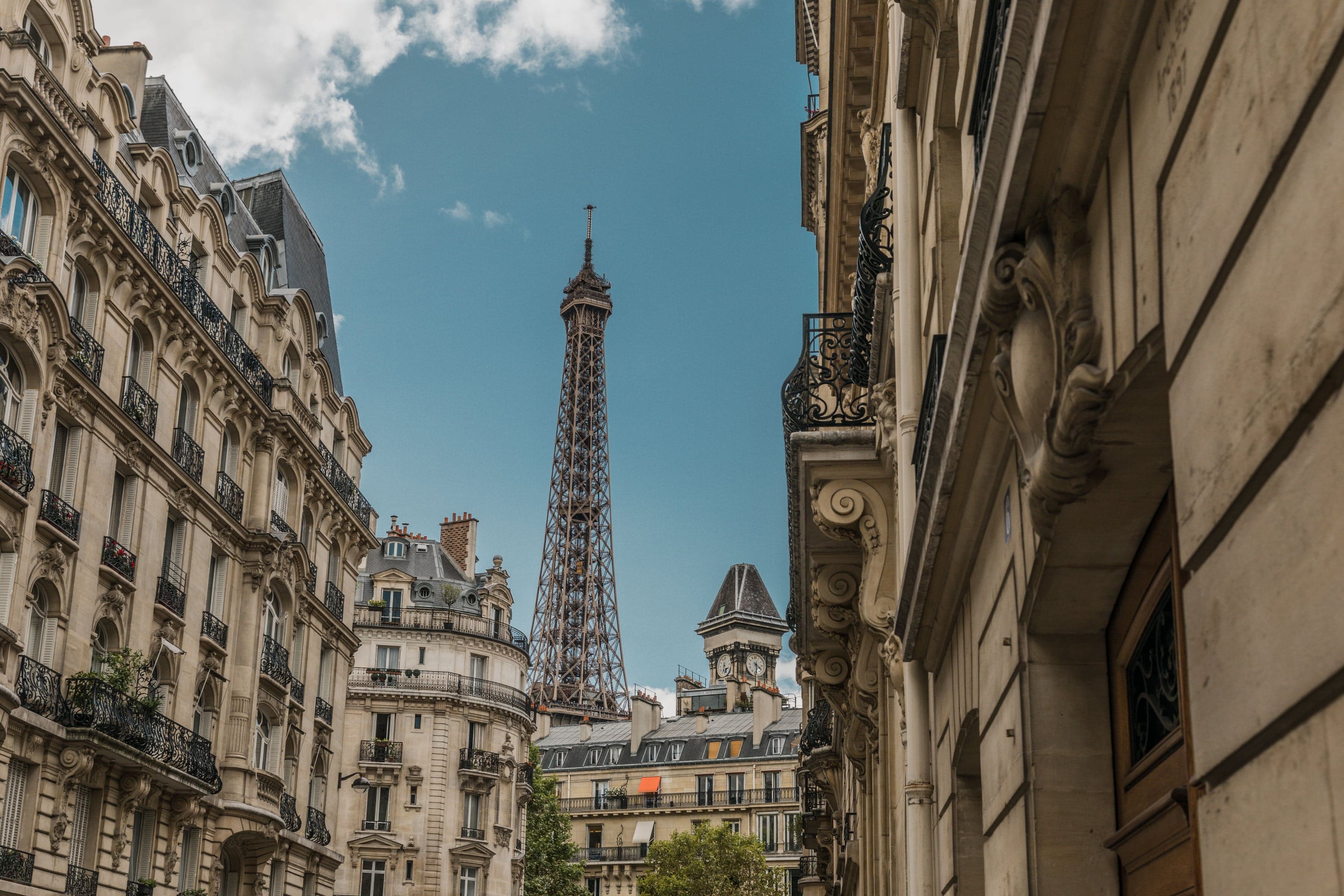
Walk on along the riverside promenade, stop, and face the tower across the road. Going up is ticketed, and worth it, by lift or by stairs; the details are on this stop's card. Since twenty eighteen the tower has stood inside a security perimeter, and the free gardens beneath it…
Full narration for this stop unlocks with the tour.
5. Musée du quai Branly: A Garden on the Wall
Finish crossing the river road to the corner of the Avenue de la Bourdonnais, and stop there. On this side of the avenue, where the museum's buildings begin along the river road, find the end of a building covered in living plants. That is the Musée du quai Branly, and that wall…
Full narration for this stop unlocks with the tour.
6. Avenue Rapp: Lavirotte's Ceramic Shop Window
Walk on to the Avenue Rapp and stop on this side of the crossing. Straight across the avenue stands number twenty-nine, a building whose front is worked all over in ceramic and sculpted figures. Look back the way you came: the tower stands at the end of the street behind…
Full narration for this stop unlocks with the tour.
7. Fontaine de Mars: War and Health at the Hospital Gate
Walk on to the Rue Saint-Dominique and stop on this pavement. Across the street opens a small square lined with arcades. In the middle of it stands a small block of stone, framed by columns, with figures carved on its face. This is the Fontaine de Mars, the fountain of…
Full narration for this stop unlocks with the tour.
8. Champ de Mars: From Drill Ground to Garden
Walk on into the park and stop where your path meets a wide gravel avenue, at the edge of the long central lawn. This is the Champ de Mars, the Field of Mars, named for the same god of war as the fountain. Step to the edge of the lawn and face along it, toward the river. There…
Full narration for this stop unlocks with the tour.
9. École Militaire: The End of the Line
Walk on to the end of the lawns and stop on the gravel, well short of the school's grounds. Ahead stands the long, pale front of the École Militaire, with a low dome at its center. Then turn your back to the school and look down the whole length of the lawns. At the far end,…
Full narration for this stop unlocks with the tour.
- Eiffel Tower and Jardins du Trocadéro from the Palais de Chaillot, Paris. — NonOmnisMoriar, CC BY-SA 3.0 · source
- La tour Eiffel, initialement nommée tour de 300 mètres, est une tour de fer puddlé construite par Gustave Eiffel et ses collaborateurs pour — Guillaume Cattiaux, CC BY-SA 2.0 · source
- Fountains of Trocadéro in the 16th arrondissement of Paris, France. — Moonik, CC BY-SA 3.0 · source
- 56404-Paris — xiquinhosilva from Cacau, CC BY 2.0 · source
- Berge rive gauche de la Seine, pont d'Iéna et - au loin - jardins et palais du Trocadéro, vus du Port de Suffren, VIIe arrondissement, Paris — Guilhem Vellut from Paris, France, CC BY 2.0 · source
- Paris, France — Maria Eklind, CC BY-SA 2.0 · source
- Taken while on the Promenade Quai Branly looking to the Eiffel Tower, with a l'Open Tour bus stop in the foreground. — Eutouring, CC BY-SA 4.0 · source
- Musée du Quai Branly. — Lauren Manning, CC BY 2.0 · source
- Paris, Quai Branly. — Als33120, CC BY-SA 4.0 · source
- Art Nouveau Building from the architect Jules Lavirotte, 29 avenue Rapp, Paris 7th district, France — Pline, CC BY-SA 3.0 · source
- Immeuble Lavirotte, 29 avenue Rapp (Paris, 7e). — Polymagou, CC BY-SA 4.0 · source
- La Fontaine de Mars ou Fontaine du Gros-Caillou, 129-131 rue Saint-Dominique, inscrit aux monuments historiques. — Thesupermat, CC BY-SA 3.0 · source
- Boucherie de la Fontaine de Mars, 112 rue Saint-Dominique, Paris, France. — Moonik, CC BY-SA 3.0 · source
- École Militaire, Paris. — RymB from France, CC BY 2.0 · source
- View of the Eiffel from the École Militaire — cherisam, CC BY-SA 3.0 · source
- Central lawn of the Champ-de-Mars, Paris. — xiquinhosilva from Cacau, CC BY 2.0 · source
Images may be cropped or resized. Other photos via Unsplash and Pexels.