Olinda: The Hill They Burned and Rebuilt
90 min · 2.4 km · moderate
Yes, you can see the best of Olinda in one day. Here is the route.
Olinda is not a city you rush, but it is one you can genuinely finish in a day, because it is small, dense, and stacked on a single green hill above the sea. The historic center is a UNESCO World Heritage site of cobblestone lanes, pastel houses, and gilded baroque churches, all within a short, steep walk of each other. This itinerary climbs the hill in the cool morning, reads its churches and convents at midday, browses the artist ateliers in the afternoon, and comes down to the Mercado da Ribeira before the light goes. Each block names the self-guided Olinda walking tour that anchors it so the story walks with you.
A note on pace before you start. Olinda is hilly, and the cobblestones are uneven. This is a modest distance, roughly 2.5 km, but the climbs are real, so wear shoes with grip, carry water, and treat the food and view stops below as part of the plan.
Morning: climb to the Alto da Se
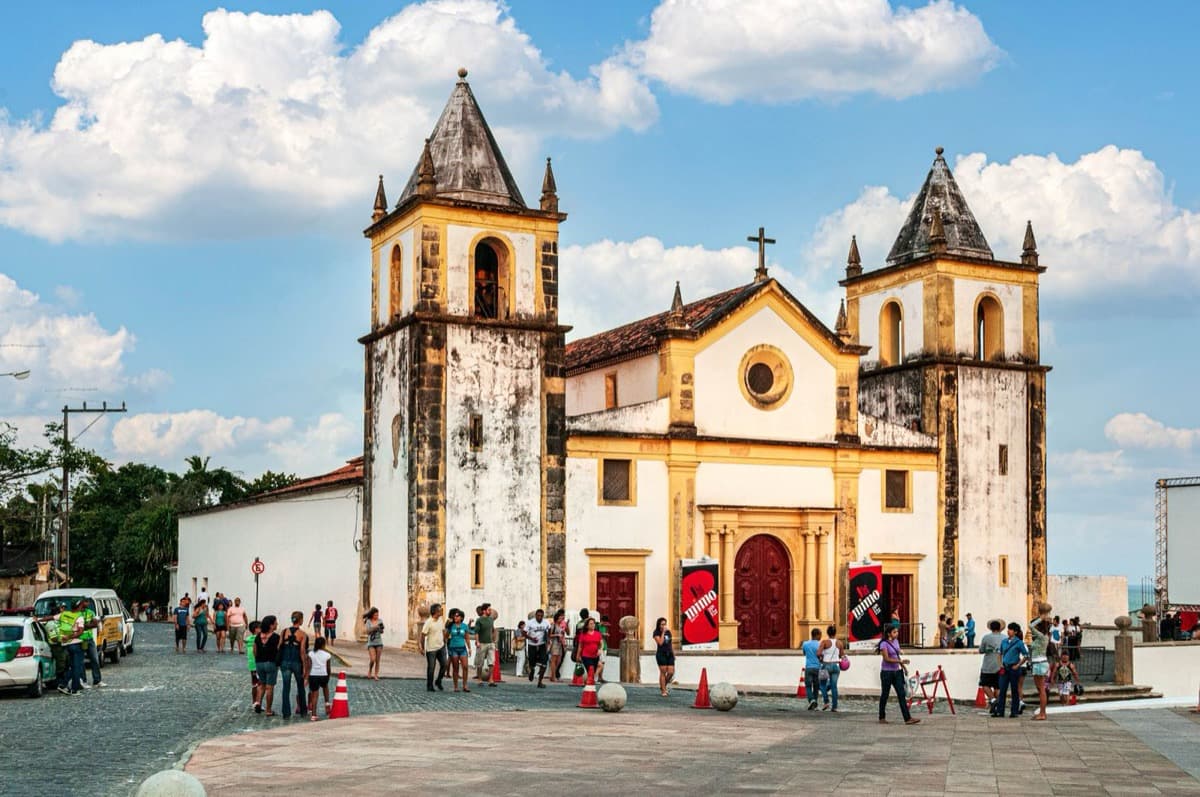
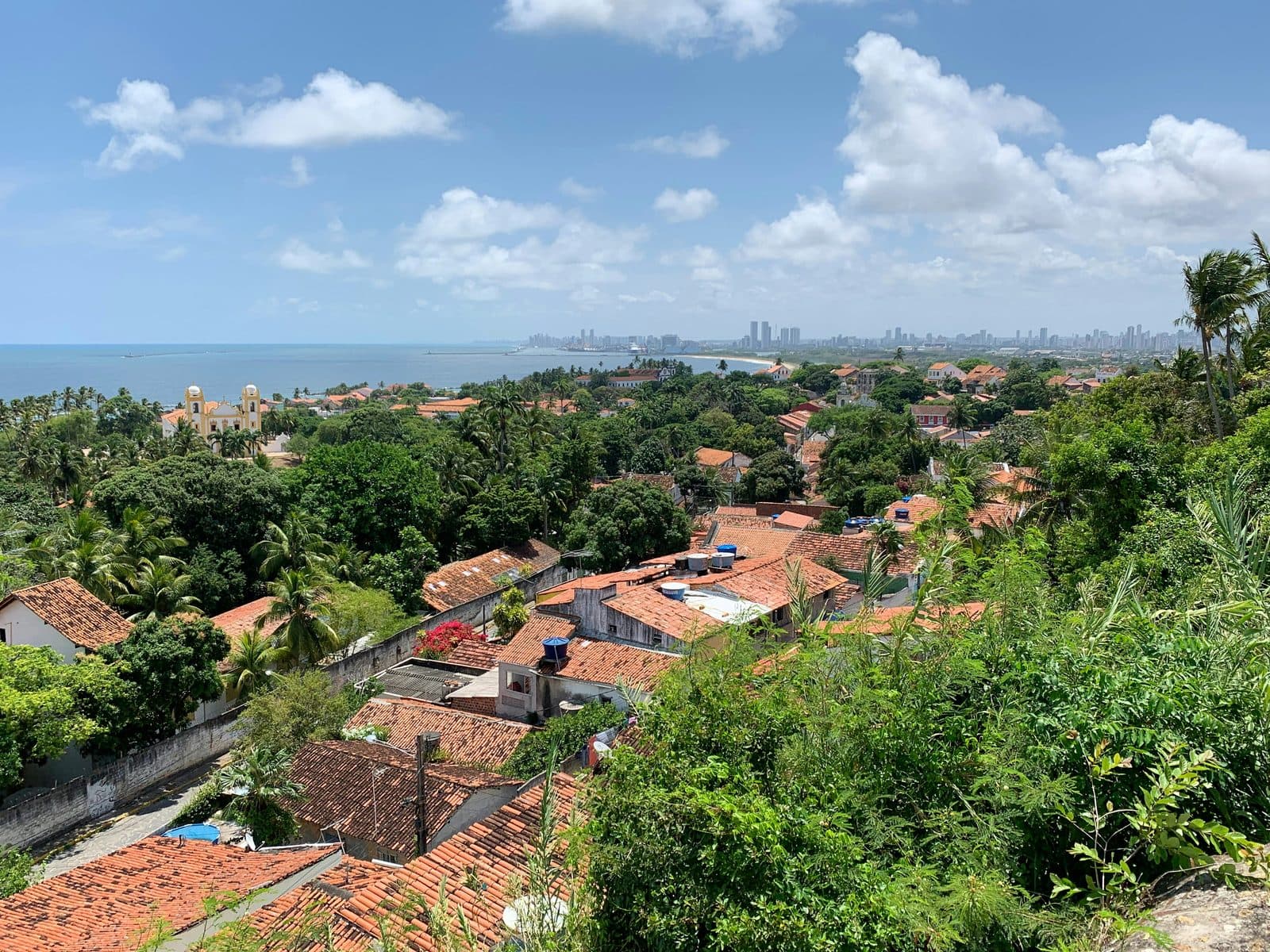
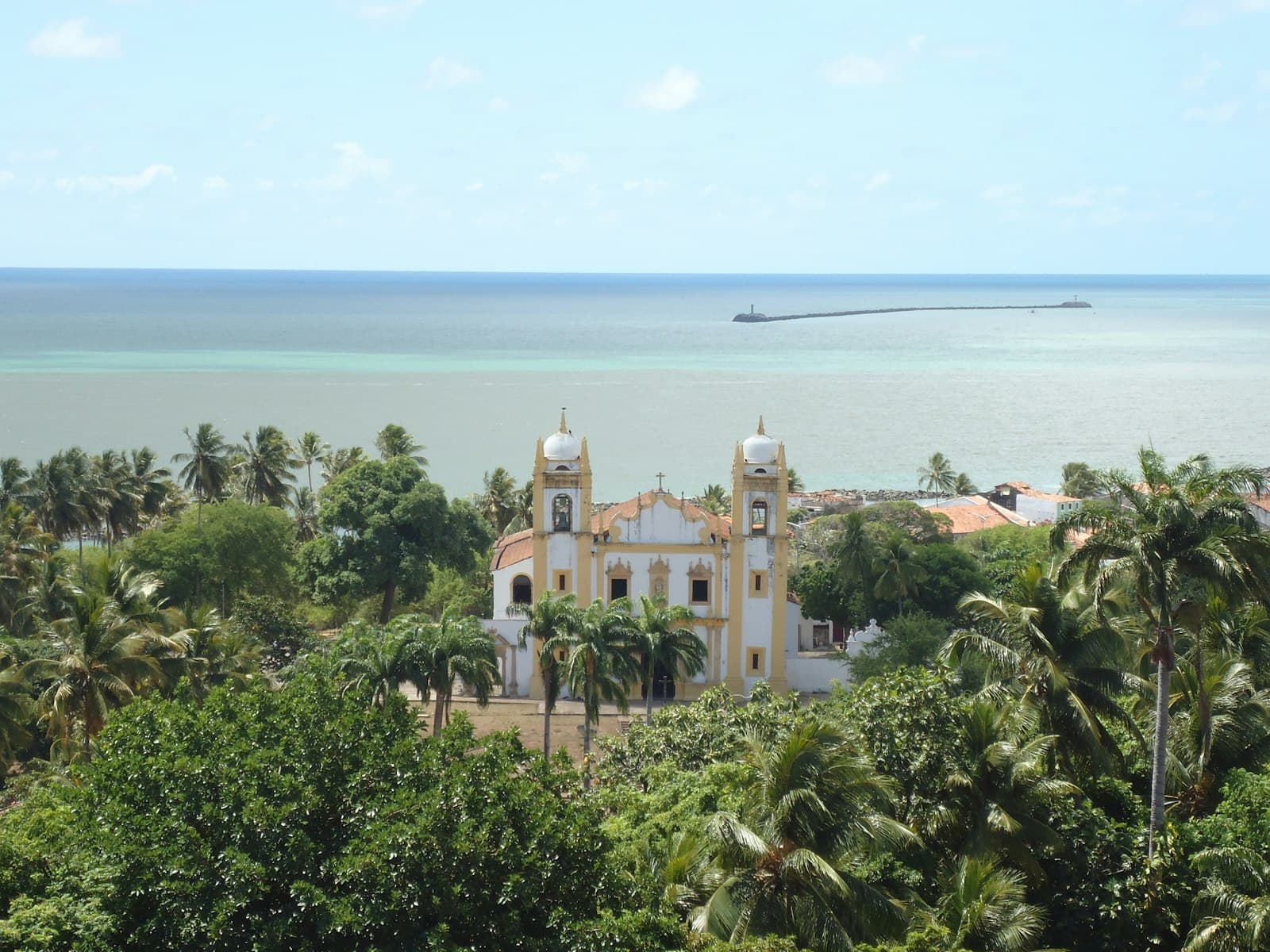
Start early and start low, near the Praca do Carmo at the foot of the hill, where the Igreja do Carmo marks the old harbor gateway into town. Climb from there. The reward at the top is the Alto da Se, the summit terrace beside the Se Cathedral (Catedral da Se), with the widest view in the city: the red roofs of Olinda tumbling downhill, the Atlantic, and the skyline of Recife rising in the distance across the water. Go up while the morning is still cool, because this is the hardest climb of the day and the busiest square by afternoon.
This ascent is the spine of the Olinda: The Hill They Burned and Rebuilt self-guided audio tour, which reads the hill as a survivor: a town that grew rich on sugar, was looted and burned by the Dutch, and answered by rebuilding itself in gold leaf and stone from the harbor churches up to the cathedral crown. Near the top you also pass the Caixa d'Agua, the old water tank turned lookout, whose terrace holds the whole story of the hill in a single view.
Midday: the baroque churches and the Franciscan convent
Hear a stop from this walk
Caixa d'Agua do Alto da Se: The View That Holds the Whole Story
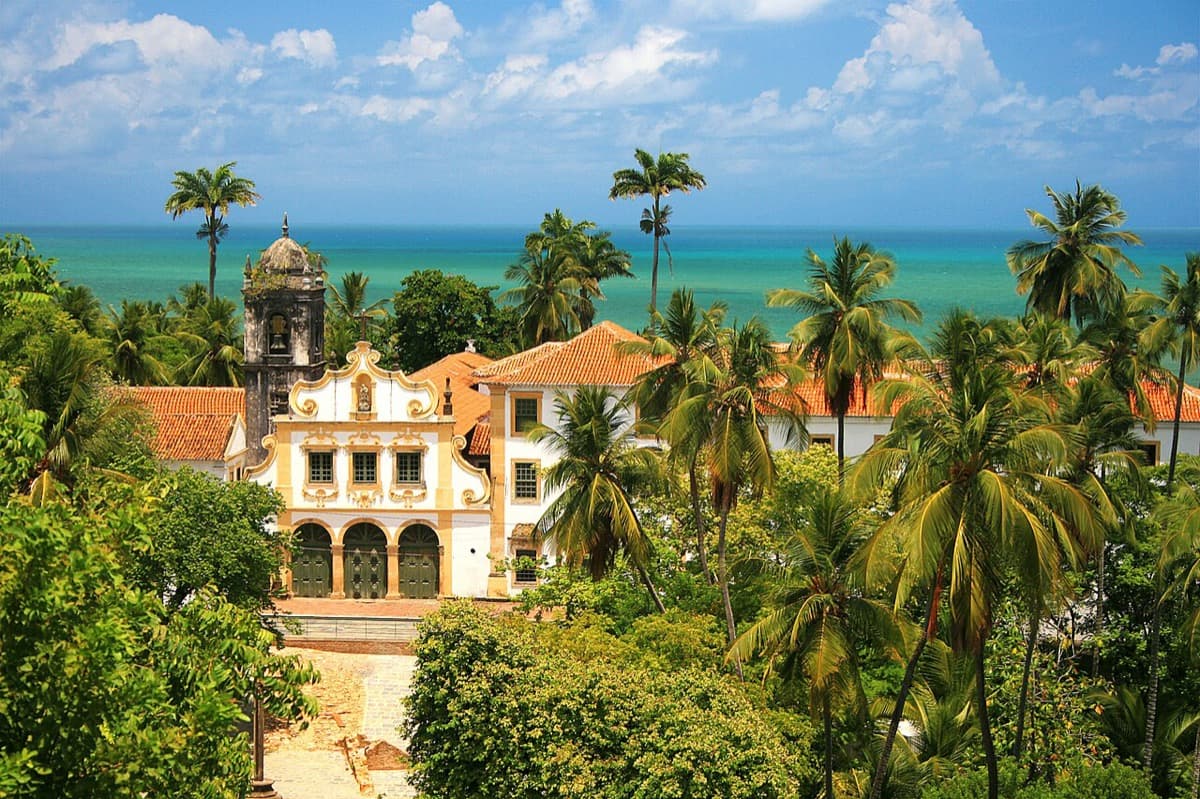
From the summit, wind down through Olinda gilded churches. This is a town of convents, and its calm baroque interiors reward slow looking. The Mosteiro de Sao Bento holds a famous gilded altar, carved and covered in gold leaf, that is the single most dazzling interior in the city. Nearby, the Convento de Sao Francisco is the first Franciscan convent built in Brazil, its cloister lined with blue-and-white Portuguese tiles. The Igreja da Misericordia, high on the ridge, pairs blue azulejos with a gilded chapel of its own.
Walk this stretch with the Convents of the Coast tour, which reads every calm church as a survivor of fire, a rebuild in gold over ashes, and traces how a school of the Church here became a seedbed of revolt. If you want to go deeper before you walk, the companion pieces on the Mosteiro de Sao Bento gilded altar and the Convento de Sao Francisco are good primers on the two headline interiors.
Midday is also the moment for your first proper snack. The Alto da Se square is lined with tapioca stalls, and a fresh coalho-cheese tapioca eaten with the view is one of Olinda simplest pleasures. See what to eat in Olinda for the dishes worth ordering here.
Afternoon: artist ateliers and colonial streets
Olinda is an artists town, and the afternoon belongs to its studios. The lanes around the Rua do Amparo and the Quatro Cantos (Four Corners) are lined with ateliers, galleries, and workshops, and this is where the giant Carnival puppets, the bonecos gigantes, are built and stored between festivals. The colonial houses are painted in deep blues, ochres, and greens, and the whole descent is a slow browse through open studio doors.
The Carnival Town: Giants, Frevo, and the Steep Streets tour reads this quarter beautifully in the off-season: the squares where the blocos gather, the ateliers where the four-meter giants are born, and the Afro-Brazilian brotherhood church the oldest giant steps out from at midnight. The companion piece on the Homem da Meia-Noite, the midnight giant, tells the story of the figure that opens Olinda Carnival on the stroke of twelve.
Late afternoon: the Mercado da Ribeira
End the walking day at the Mercado da Ribeira, the old covered market on the lower streets, now full of craft stalls, folk art, and the woodwork and ceramics the town is known for. It is the natural place to buy a small boneco, a print, or a piece of Pernambuco craft, and a calm way to wind down off the hill.
From here the day should close at a table. Olinda cafes and bars cluster around the Alto da Se and the lower streets, and this is the hour for a cartola (fried banana with coalho cheese and cinnamon), a slice of bolo de rolo, or a cold beer as the sun drops over Recife.
The one-day route at a glance
| Block | Where | Anchor tour |
|---|---|---|
| Morning | Praca do Carmo, Alto da Se, Se Cathedral | Olinda: The Hill They Burned and Rebuilt |
| Midday | Sao Bento, Sao Francisco, Misericordia | Convents of the Coast |
| Afternoon | Rua do Amparo, Quatro Cantos, ateliers | Carnival Town: Giants, Frevo, and the Steep Streets |
| Late afternoon | Mercado da Ribeira, dinner | (browse and unwind) |
Plan the rest of your trip
One day covers the hill. For how Olinda pairs with Recife, how to get around, and when to go, read the Olinda travel guide. For every route in town, see the best self-guided walking tours in Olinda, or browse all Olinda tours. Every tour is free to start: the introduction and first stop play in full, and every later stop plays a short preview before an optional purchase.
Frequently asked questions
- Can you see Olinda in one day?
- Yes, comfortably. Olinda historic center is a small, compact UNESCO hill town, so one unhurried day on foot covers its essentials: the Alto da Se viewpoint over Recife, the cathedral and the baroque churches and convents, the artist ateliers along the colonial streets, and the Mercado da Ribeira. Many travelers visit Olinda as a day trip from Recife, which sits about 6 km away, and add a second day only if they want the beaches or Recife own old center.
- Is Olinda walkable in a day?
- Very, but it is genuinely hilly. The whole historic center is walkable and best seen on foot, on cobblestone streets that climb and drop steeply. Wear real shoes with grip, carry water, and take the inclines slowly. Because it is compact, you are never walking far between sights, so the day is more about pacing the hills than covering distance.
- What is the best area to start a one-day visit to Olinda?
- Start low and climb early, before the midday heat. A good route begins near the Praca do Carmo at the foot of the hill and works up toward the Alto da Se, the summit viewpoint by the cathedral, then winds back down through the churches, ateliers, and market. Climbing in the cool morning and descending in the afternoon is far kinder than doing it the other way.
- Do I need to book anything in advance for one day in Olinda?
- Almost nothing. The streets, viewpoints, and church exteriors are open to walk-ups, and most churches charge only a small entrance fee or none at all. The main thing worth planning ahead is transport from Recife or the REC airport by taxi or Uber, and, during Carnival in February or March, accommodation well in advance. The self-guided audio tours that anchor each block are free to start and can be downloaded ahead of time, so the history walks with you even without signal.
Brazil eSIM· 10% off with ROAMER10
Ready to experience it?
Olinda: The Hill They Burned and Rebuilt
90 min · 2.4 km · moderate
More from Olinda
Explore more at your own pace.
Olinda Travel Guide: How Many Days, Getting Around, When to Go (2026)
Olinda vs Recife: Which to Stay In, and How to See Both
Olinda: The Hill the Dutch Burned and the Portuguese Rebuilt

What to Eat in Olinda: A Pernambuco Food Guide (2026)
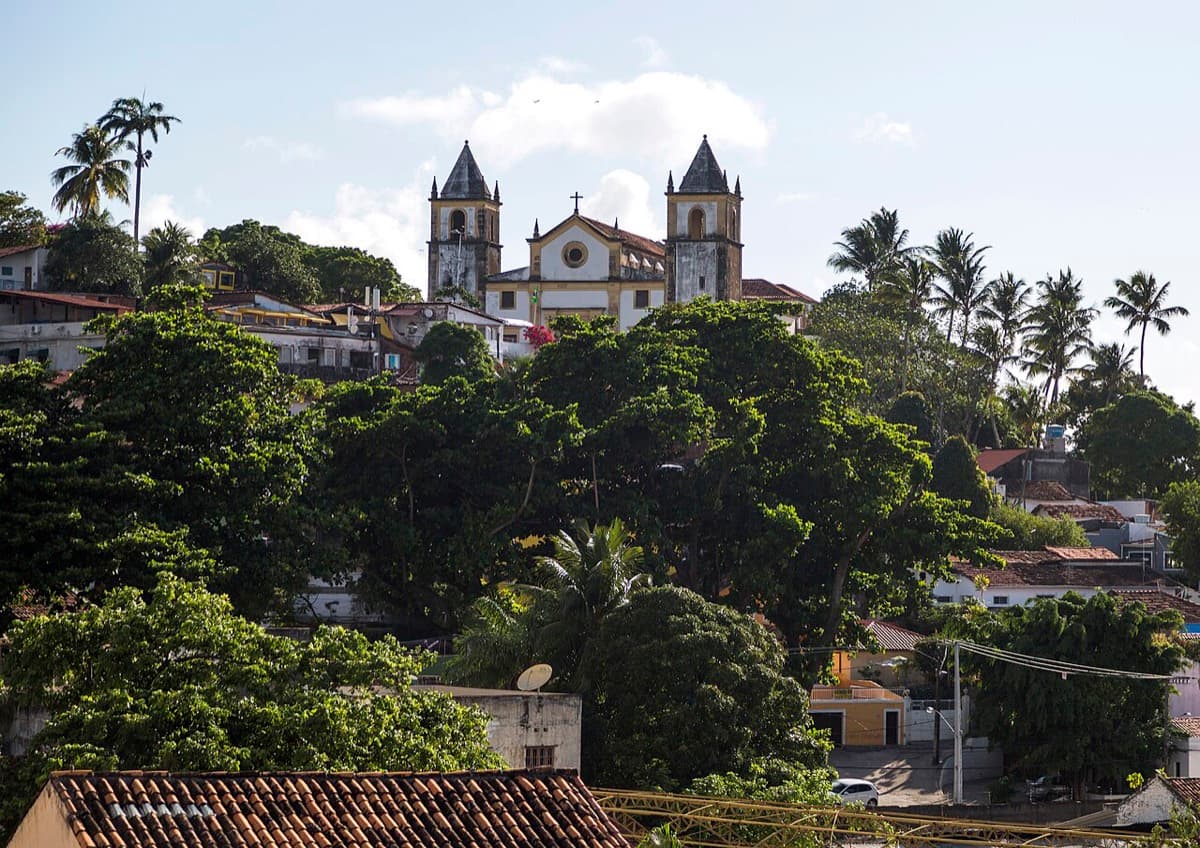
Alto da Se: The Summit Cathedral That Crowns Olinda's Founding Hill