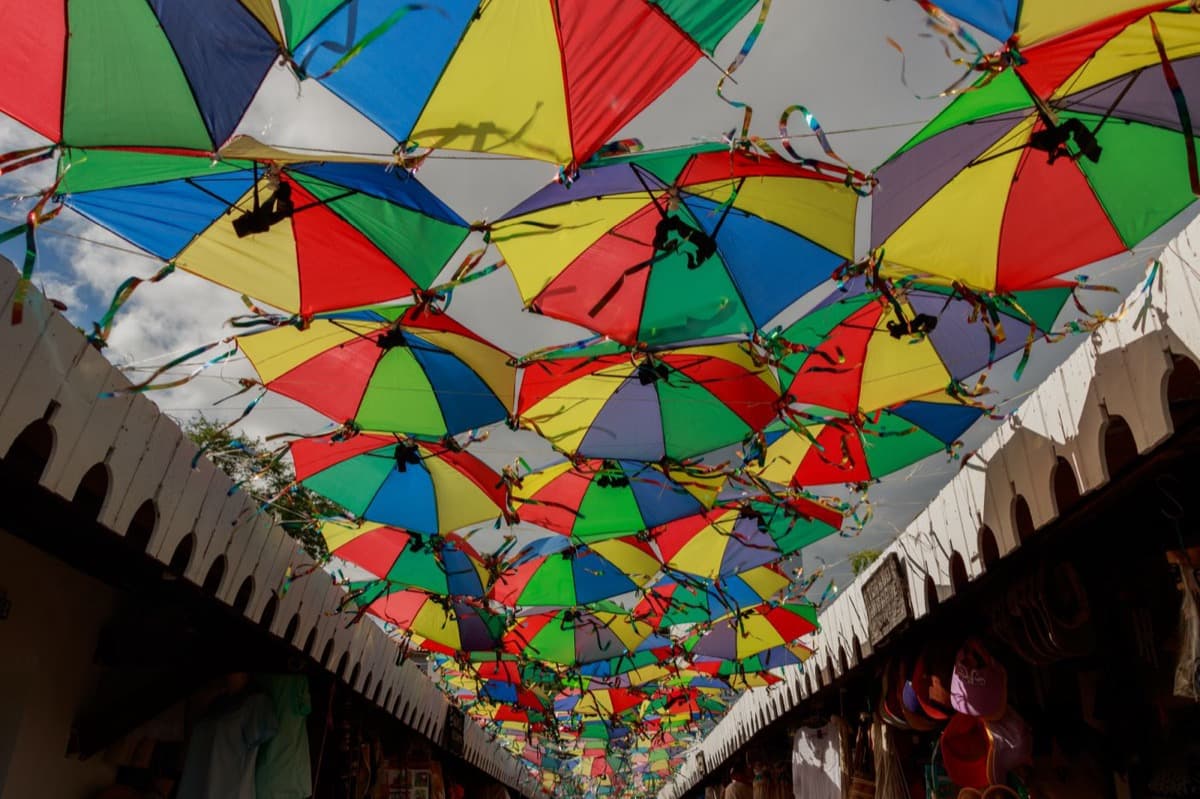
Climb Olinda's historic hill to read its famous street Carnival in the off-season: the squares where blocos gather, the ateliers where four-meter giants are born, and the Afro-Brazilian brotherhood church the oldest giant steps out from at midnight.
Start · Praca do Carmo: The Gateway to the Climb
DirectionsStops
- 1
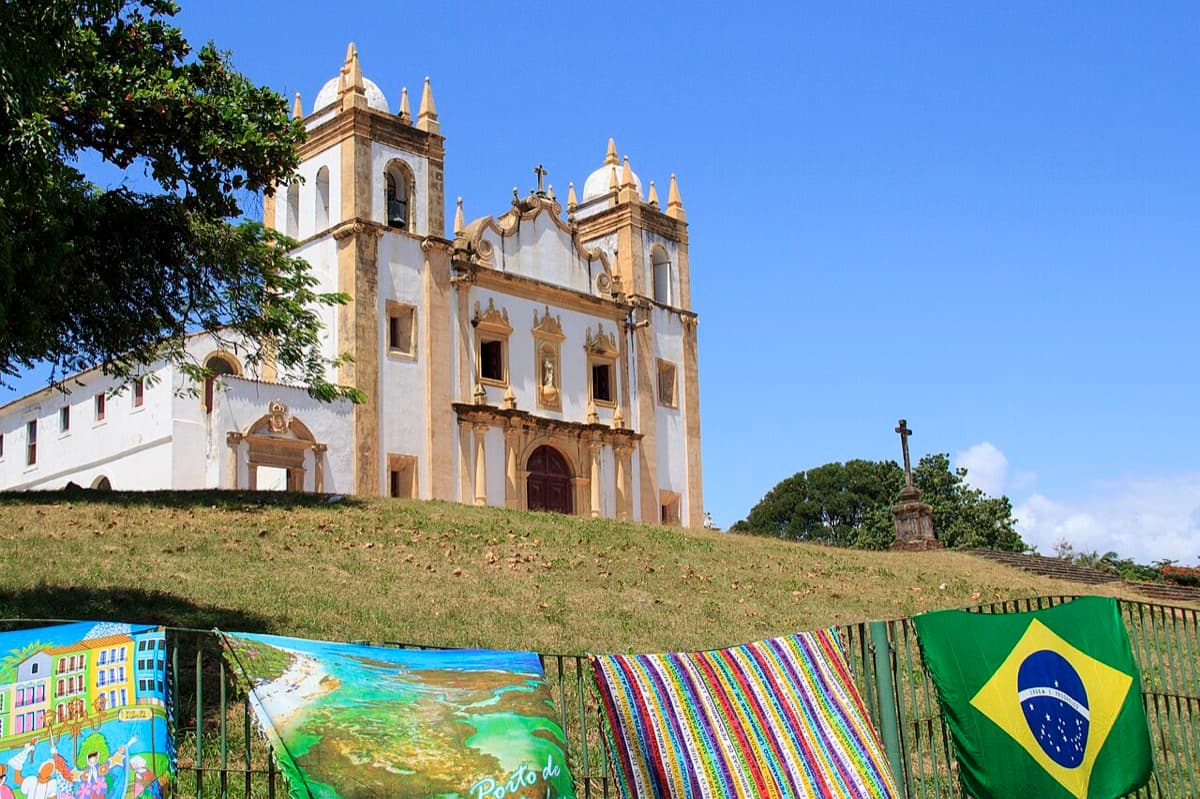
Praca do Carmo: The Gateway to the Climb
The staging square at the base of the historic hill, watched over by the oldest Carmelite church in the Americas.
- 2
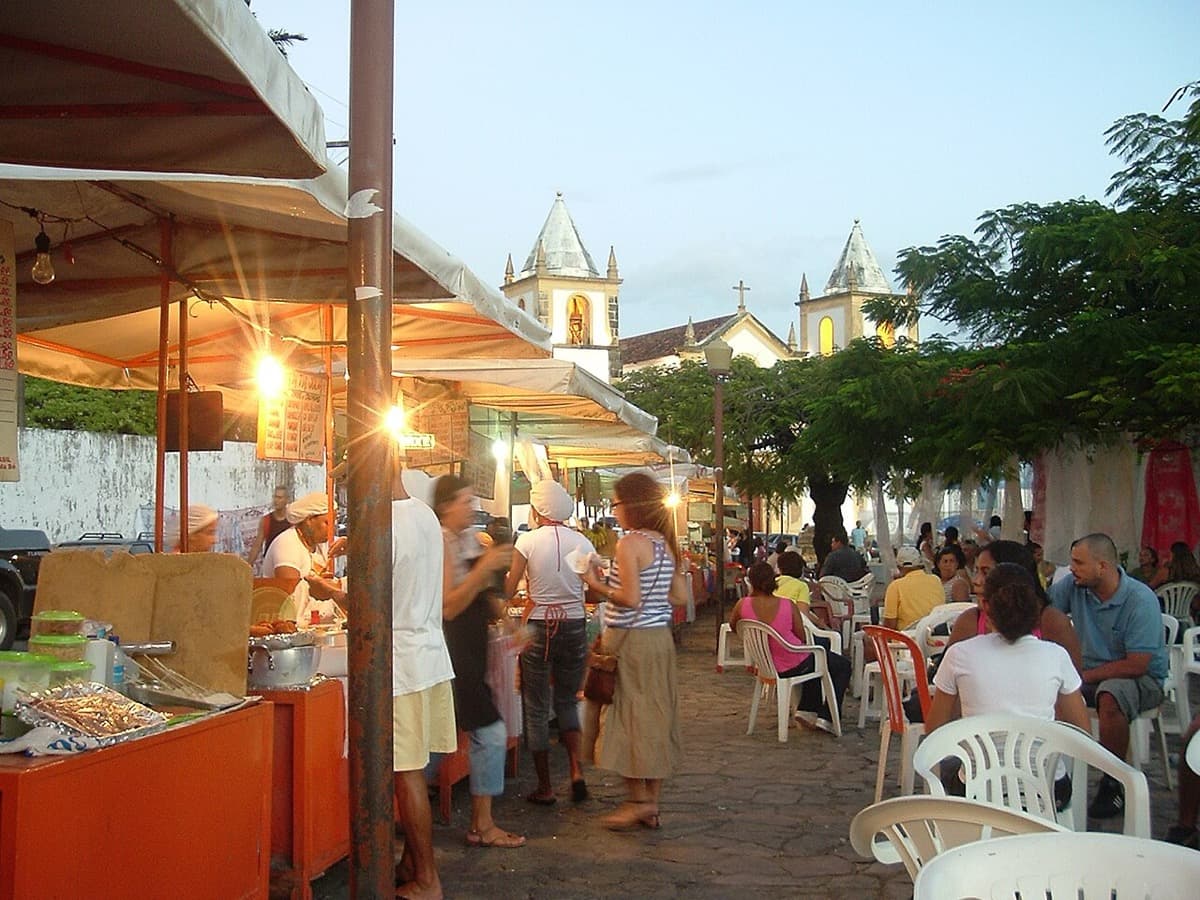
Alto da Se: The Summit Market and the View
Olinda's hilltop square, where a daily crafts and tapioca market spreads before the Se Cathedral and the best view in town.
- 3
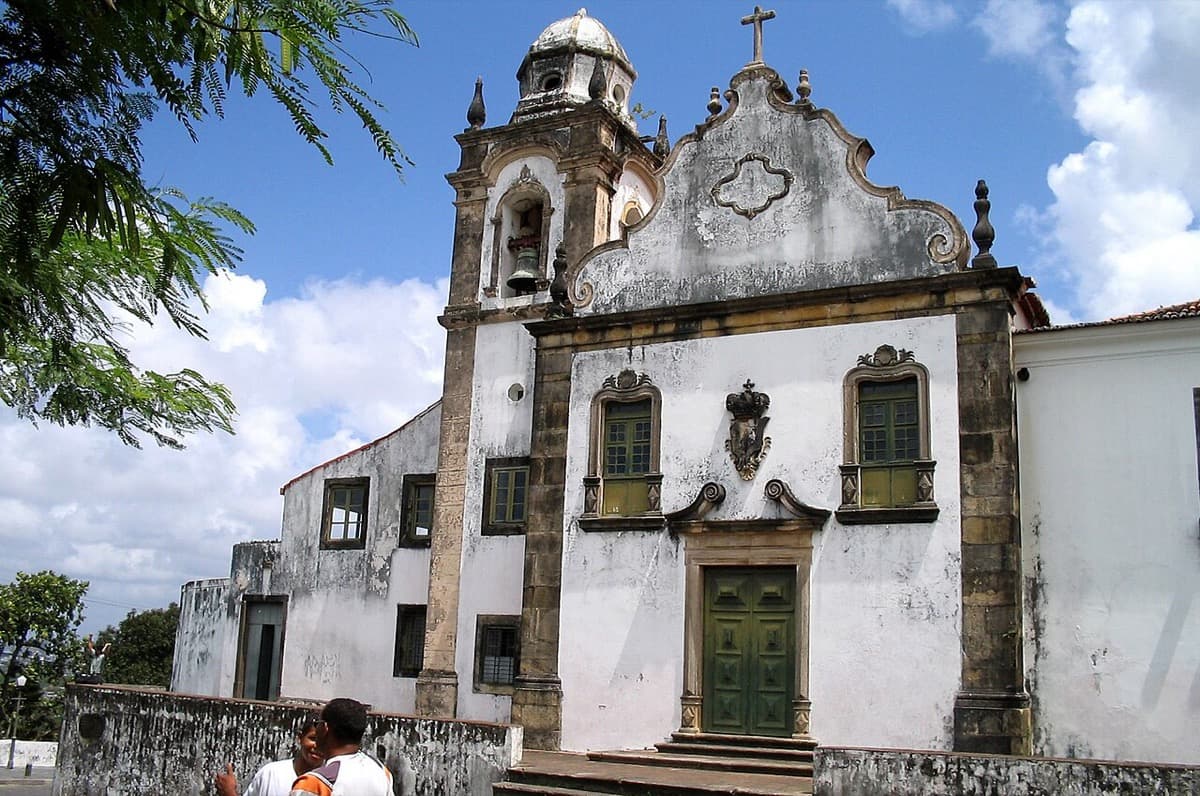
Igreja da Misericordia: Why the Party Walks
A gilded church perched on the edge of a steep slope, the perfect place to understand why Olinda's Carnival must be on foot.
- 4
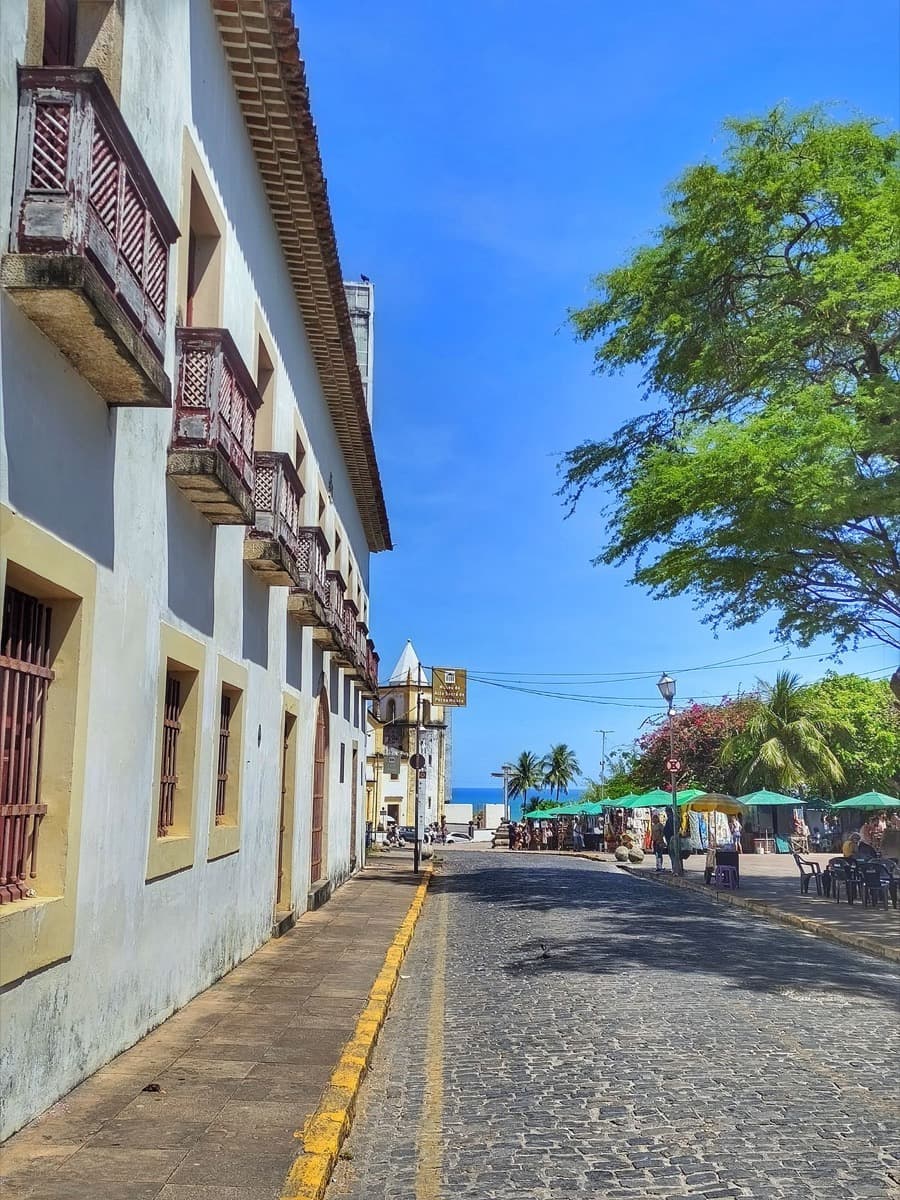
Quatro Cantos: Where the Blocos and Frevo Converge
The Four Corners crossroads of the upper town, where street bands concentrate and the boiling rhythm of frevo crosses the hillsides.
- 5
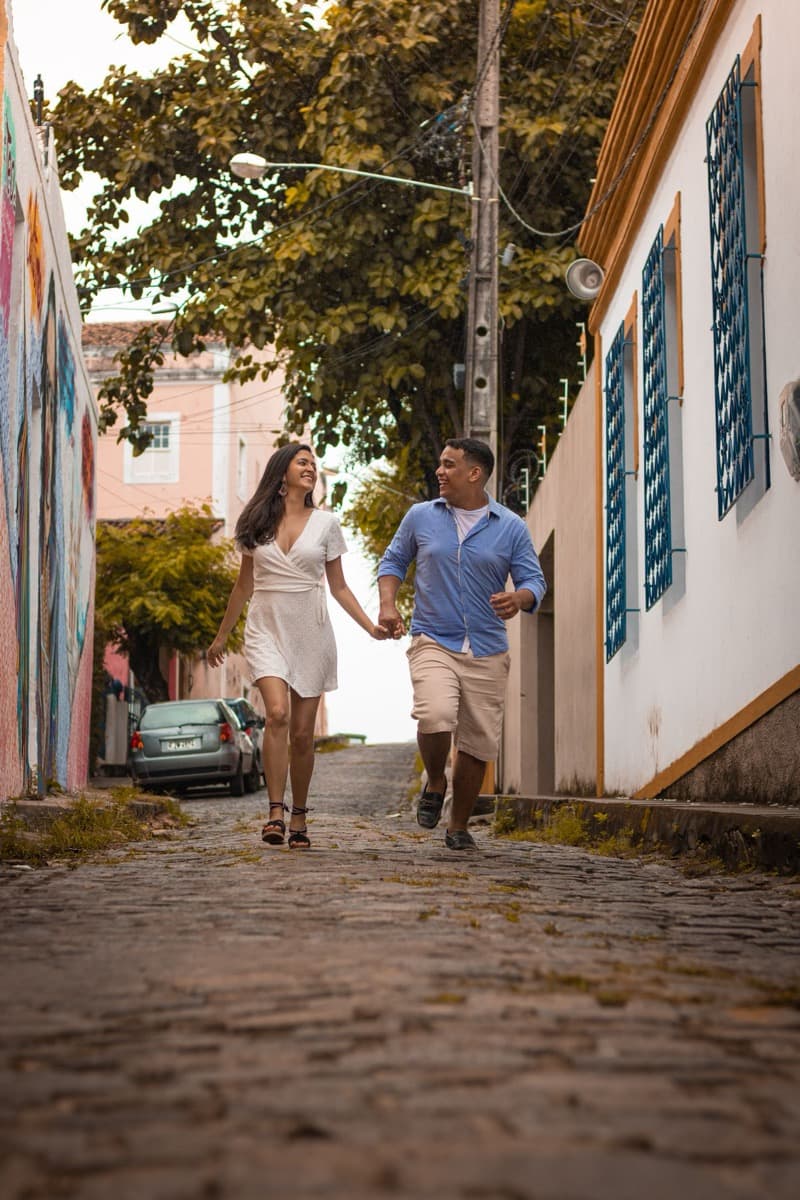
The Amparo Ateliers: Where the Giants Are Born
A colonial street of artists' workshops where Olinda's masks and towering papier-mache giants are made by hand.
- 6
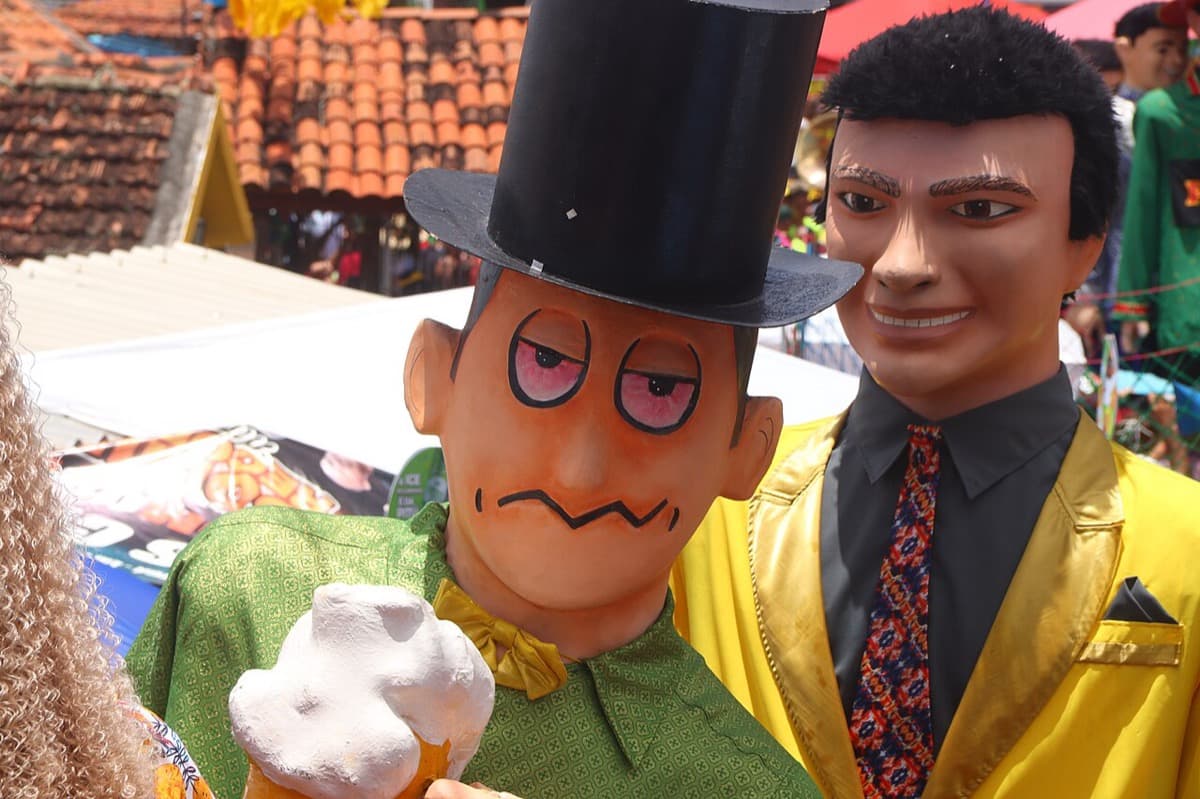
The Rosario dos Homens Pretos: Home of the Midnight Man
The first church of a Black brotherhood in Brazil, and the place from which Olinda's oldest giant steps out at exactly midnight.
Details
Best Time to Visit
Late afternoon is ideal outside of Carnival: the light softens over the red-tiled roofs, the Alto da Se view glows, and the steep climbs are cooler than at midday. Mornings are quieter and good for church interiors and open ateliers. If you want the streets in full roar, Carnival falls in February or early March, but expect enormous crowds, so weigh that against the calm of an ordinary day. The whole northeastern coast is warmest and driest roughly from September to March; the wetter months bring short, heavy downpours that can make the cobbles slick.
Pro Tips
- •Walk it in the direction given, low to high to low: you do the hardest climbing early, then trace the Carnival slopes gently downhill on tired legs.
- •Pause at the Alto da Se for tapioca and the view; it is the natural rest point at the summit and the best panorama of the entire walk.
- •Church opening hours are limited and can be irregular, so treat interiors as a bonus. The squares, slopes, and street character carry the story even when doors are closed.
- •The ateliers of the Amparo are living workshops, not a museum. Browse respectfully, ask before photographing work in progress, and remember artists are working, not performing.
- •Carry small cash for the hilltop market and any workshop purchases; open-air stalls and small studios often cannot take cards.
- •Go at your own pace and skip freely. Each stop stands on its own, so a closed church or a steep block is never a reason to give up the rest of the walk.
Safety & Precautions
- •The northeastern Brazilian sun is intense, especially on the exposed Alto da Se. Bring water, sunscreen, and a hat, and rest in the shade between the climbs.
- •The historic centre is paved in steep, uneven, often slick cobblestones. Wear closed, grippy shoes with good tread, watch your footing on the ladeiras, and take the descents slowly, particularly after rain.
- •The churches here are active places of worship and the Carnival traditions carry deep Afro-Brazilian religious meaning. Dress modestly inside, keep your voice low, and treat references to Iemanja, Oxum, and the brotherhoods with respect rather than as spectacle.
- •As in any historic town centre, stay aware of your surroundings and your belongings, keep valuables out of sight, and prefer well-populated streets after dark, especially on the quieter slopes away from the main squares.
Travel advisory: Exercise Increased Caution (Level 2).
Gallery
Related Reading
Go deeper on what you'll see, hear, and walk through.
Overview
Best Self-Guided Walking Tours in Olinda (2026)
3 min
Overview
Olinda Travel Guide: How Many Days, Getting Around, When to Go (2026)
5 min
Overview
One Day in Olinda: A Walkable Hilltop Itinerary (2026)
6 min
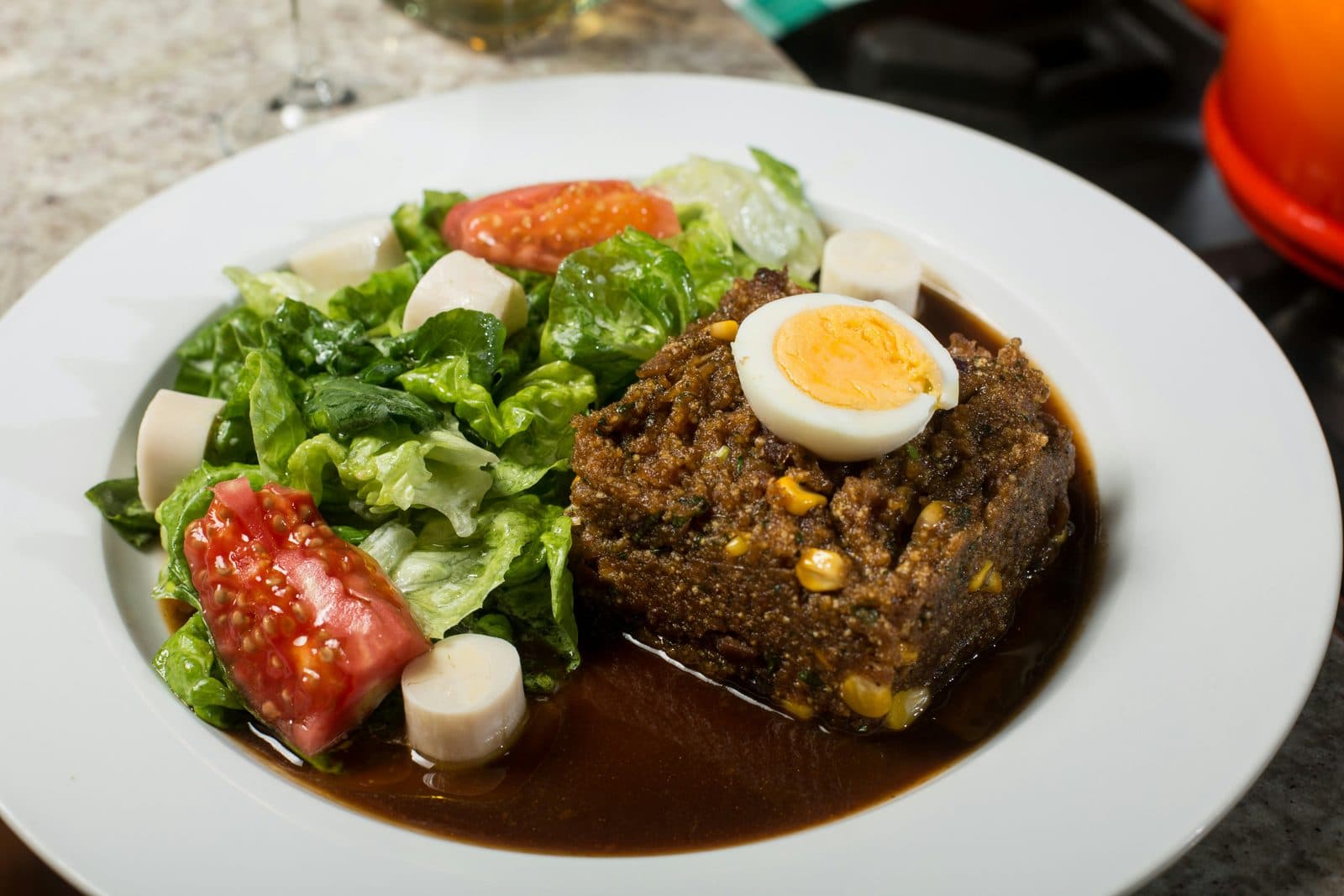
Thematic
What to Eat in Olinda: A Pernambuco Food Guide (2026)
4 min
Deep dive
The Homem da Meia-Noite: The Giant That Opens Olinda's Carnival at Midnight
7 min
Read the walk
The full story of Carnival Town: Giants, Frevo, and the Steep Streets, in words. Prefer to listen? Play it narrated, from home or on location.
Introduction
Olinda does not throw its Carnival on a grandstand. It throws it through its own steep streets in daylight, a folk party with no floats and no ticket, led by giants carried through the crowd to the boil of frevo. This walk climbs the historic hill of Olinda, in northeastern Brazil, to read that party in its quiet, off-season bones. There are six stops, roughly two and three quarter kilometres of climbing and gentle descent, and roughly ninety minutes if you linger. Go at your own pace. Every stop stands on its own, so skip any that does not call to you and rest whenever the slope asks you to. You will start low, where the modern town meets the colonial climb, then rise to the summit for the market and the view over red roofs to the sea. From there you will trace the Carnival slopes back down: the steep ladeira, the crossroads where the blocos and the frevo converge, the workshops where masks and giant puppets are made by hand, and finally the brotherhood church that the oldest giant of all steps out from at exactly midnight. The heritage of Olinda is usually told through baroque stone and an ocean postcard. What this walk keeps in view is louder and made by hand: papier-mache giants, umbrella-spinning dancers, and blocos that self-organize on the hills. The pretty view is real, and so is the labor and the Afro-Brazilian history underneath it. Both stay true at once. When you arrive at Praca do Carmo, begin with stop one.
1. Praca do Carmo: The Gateway to the Climb
Stand in Praca do Carmo and you are at the hinge of Olinda, the point where the flat lower town gives way to the colonial climb. There is a bandstand here, a coreto, and above it on a small rise sits the Igreja do Carmo. Construction began around fifteen eighty, when the Carmelite Order settled in Olinda, and it is counted as the oldest Carmelite temple in the Americas, the first the order raised in the New World. Its story carries a wound. When the Dutch took and burned much of Olinda in sixteen thirty-one, this church was damaged with the rest of the town. The friars came back only after the invaders were pushed out, and rebuilding got underway from sixteen fifty-four. Today it is listed heritage, protected by IPHAN, and inside you will find two altars of carved wood laid with gold leaf, that warm baroque glow layered over an older, plainer Mannerist frame. Now picture this same square in February. Olinda's Carnival is free and ticketless, with no floats at all, and a gateway square like this becomes a gathering place, a spot where people and street bands assemble before they push up the ladeiras. The stone you are standing on was shaped to hold both things: a quiet church rise and a staging ground for a roaring folk party. Take a slow look up the slope from here. Everything the giants and the blocos climb begins at a square like this one, at the very bottom of the hill.
2. Alto da Se: The Summit Market and the View
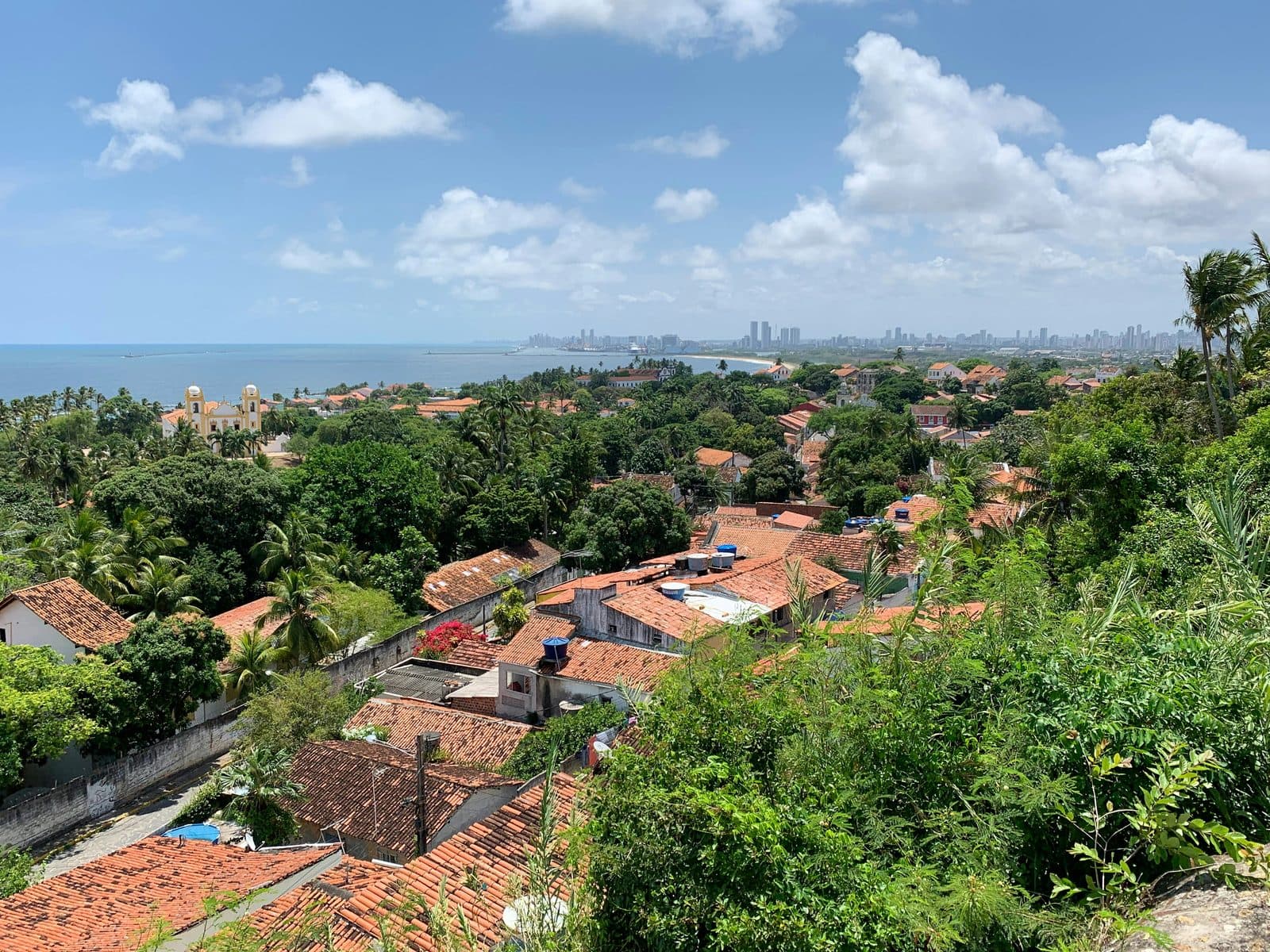
This is the top of the climb, the Alto da Se, and it rewards you twice: with a view and with a taste. In front of you stands the Se Cathedral, the mother church of Olinda. It began humbly, as a simple chapel of taipa, rammed earth, built between fifteen thirty-seven and fifteen forty and dedicated to Christ the Saviour of the World. It was rebuilt in stone in fifteen eighty-four, badly damaged by fire during the Dutch occupation of sixteen thirty-one, and raised to a cathedral in sixteen seventy-six when the bishopric of Olinda was established. A major restoration in the nineteen seventies, from nineteen seventy-four to nineteen seventy-six, gave it the clean Mannerist face you see now. But the square itself is the living thing here. Nearly every day it fills with a small crafts market and food stalls, and the star is tapioca, a warm crepe made from cassava starch, folded around fillings sweet or savory. It is not a specialty of one vendor. It is a daily habit of this square, folk food and folk craft sold in the open air. Then turn and look outward. From this rail you get the best view in Olinda: a cascade of red-tiled roofs and church towers tumbling down to the ocean, with the tall skyline of Recife, Olinda's twin city, standing far off to the south. Hold that geography in your mind. Recife is where much of Olinda's Carnival music was born, and from up here you can see just how close the two cities sit, roof to roof, hill to skyline.
3. Igreja da Misericordia: Why the Party Walks
Look at how this church sits. The Igreja da Misericordia perches right at the edge of a pronounced slope, on the Ladeira da Misericordia, with retaining walls and an off-center stairway climbing up to reach it. The building itself is worth the pause. Its brotherhood, the Santa…
Full narration for this stop unlocks with the tour.
4. Quatro Cantos: Where the Blocos and Frevo Converge
They call this the Quatro Cantos, the Four Corners, where several of the old town's streets meet. In Carnival it becomes a knot the blocos tie themselves around, a place where the music seems to come from every direction at once. The music is frevo, and here is where honesty…
Full narration for this stop unlocks with the tour.
5. The Amparo Ateliers: Where the Giants Are Born
Slow your steps along the Amparo. This is one of Olinda's cultural spines, a run of well-preserved colonial houses that now hold artists' workshops, small galleries, and studios. You are welcome to look. Along here the ateliers keep their doors open, and artists let visitors…
Full narration for this stop unlocks with the tour.
6. The Rosario dos Homens Pretos: Home of the Midnight Man
This last stop holds the whole walk together. The church before you, Nossa Senhora do Rosario dos Homens Pretos, is the first church in Brazil to belong to a Black brotherhood, an irmandade of Black men. The brotherhood is referenced from the middle of the fifteen hundreds, and…
Full narration for this stop unlocks with the tour.