Olinda: The Hill They Burned and Rebuilt
90 min · 2.4 km · moderate
Olinda food is Pernambuco food, and Pernambuco food is a meeting of three roots. The indigenous cassava of the Northeast becomes tapioca and macaxeira. The Portuguese sugar plantations and their guava orchards gave rise to bolo de rolo and cartola. And the Afro-Brazilian kitchens of the coast contributed the palm oil and black-eyed-pea fritters you find at every festival. Eating well in Olinda is less about a single restaurant and more about grazing the hill: a tapioca with the view, a sweet named after a hat, a cold drink as the sun drops over Recife. This guide covers the dishes worth seeking out and where the food culture actually lives, and it pairs naturally with a slow climb on one of our Olinda self-guided tours.
The dishes to seek out
Tapioca. The everyday star. A crepe made from cassava starch, cooked flat on a hot griddle and folded around a filling, sweet or savory. Coalho cheese, grated coconut, sweetened condensed milk, and shredded carne de sol are the classics. It is a direct inheritance from the indigenous peoples of Brazil, and it is sold hot from stalls all over Olinda, most famously on the Alto da Se.
Bolo de rolo. Pernambuco proudest cake, recognized as Intangible Heritage of the state. A paper-thin sponge is spread with guava paste and rolled into many fine layers, so each slice shows dozens of delicate spirals. Refined, not rustic, and the classic thing to carry home from Olinda.
Cartola. A beloved Northeastern dessert, also protected as Pernambuco heritage: ripe banana fried soft, layered with coalho cheese, and dusted with sugar and cinnamon. Its roots reach back to the big houses of the sugar plantations. Warm, simple, and worth ending a walk on.
Macaxeira. Macaxeira is the local word for cassava, and it appears everywhere, boiled, fried, or mashed. A regional favourite pairs it with carne de sol, sun-dried salted beef, for a hearty plate that speaks to the cattle country of the interior.
Sururu. A small mussel typical of the region, cooked into an aromatic, coriander-scented broth. A coastal, unpretentious dish that ties Olinda kitchens to the mangroves and estuaries around it.
Acaraje and the fritters. Acaraje, a black-eyed-pea fritter fried in dende palm oil and split to hold shrimp and pepper sauce, is an Afro-Brazilian street food born in Bahia and beloved across the whole Northeast. You will find it and its cousins at Olinda festivals and stalls, a taste of the African heritage woven through Pernambuco cooking.
Cachaca and cold beer. The sugar coast that built Olinda also distilled its spirit. Cachaca, Brazil sugarcane liquor, is the base of a caipirinha and the natural drink to end a hot climb, alongside an ice-cold beer as the light fades over the roofs.
Where the food culture lives
Hear a stop from this walk
Caixa d'Agua do Alto da Se: The View That Holds the Whole Story
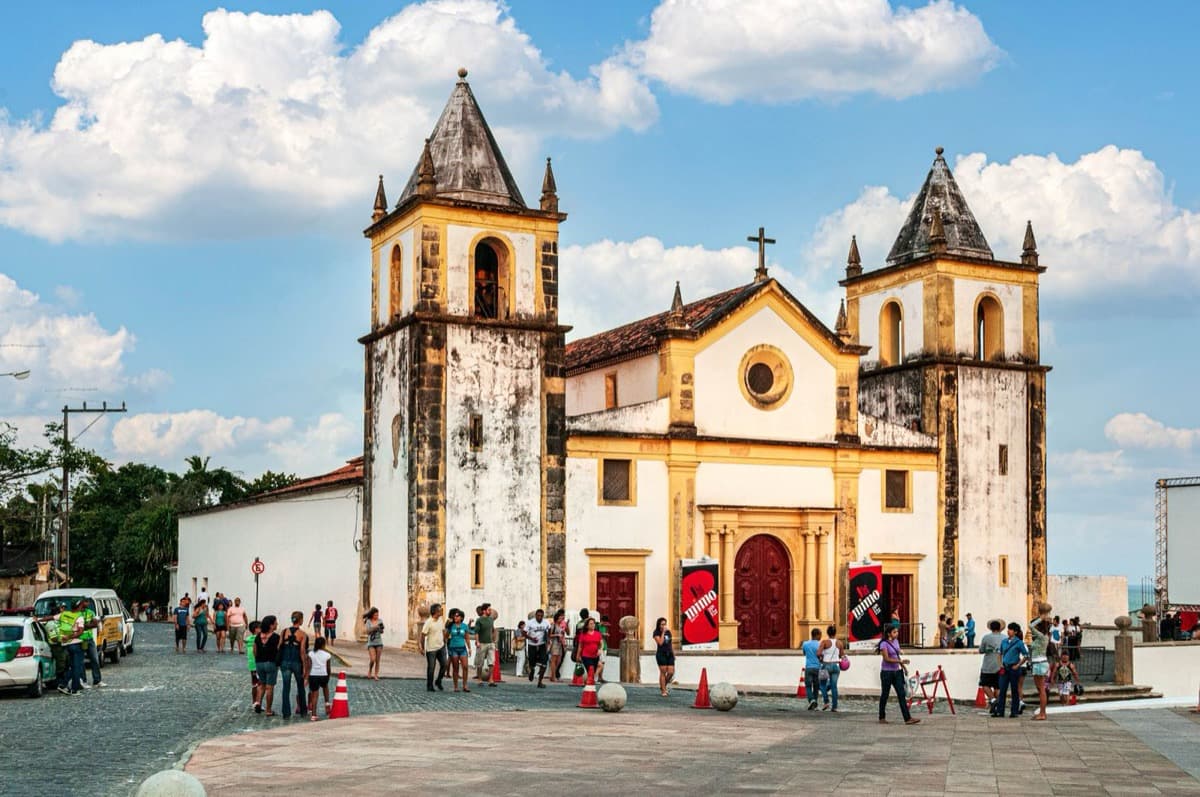
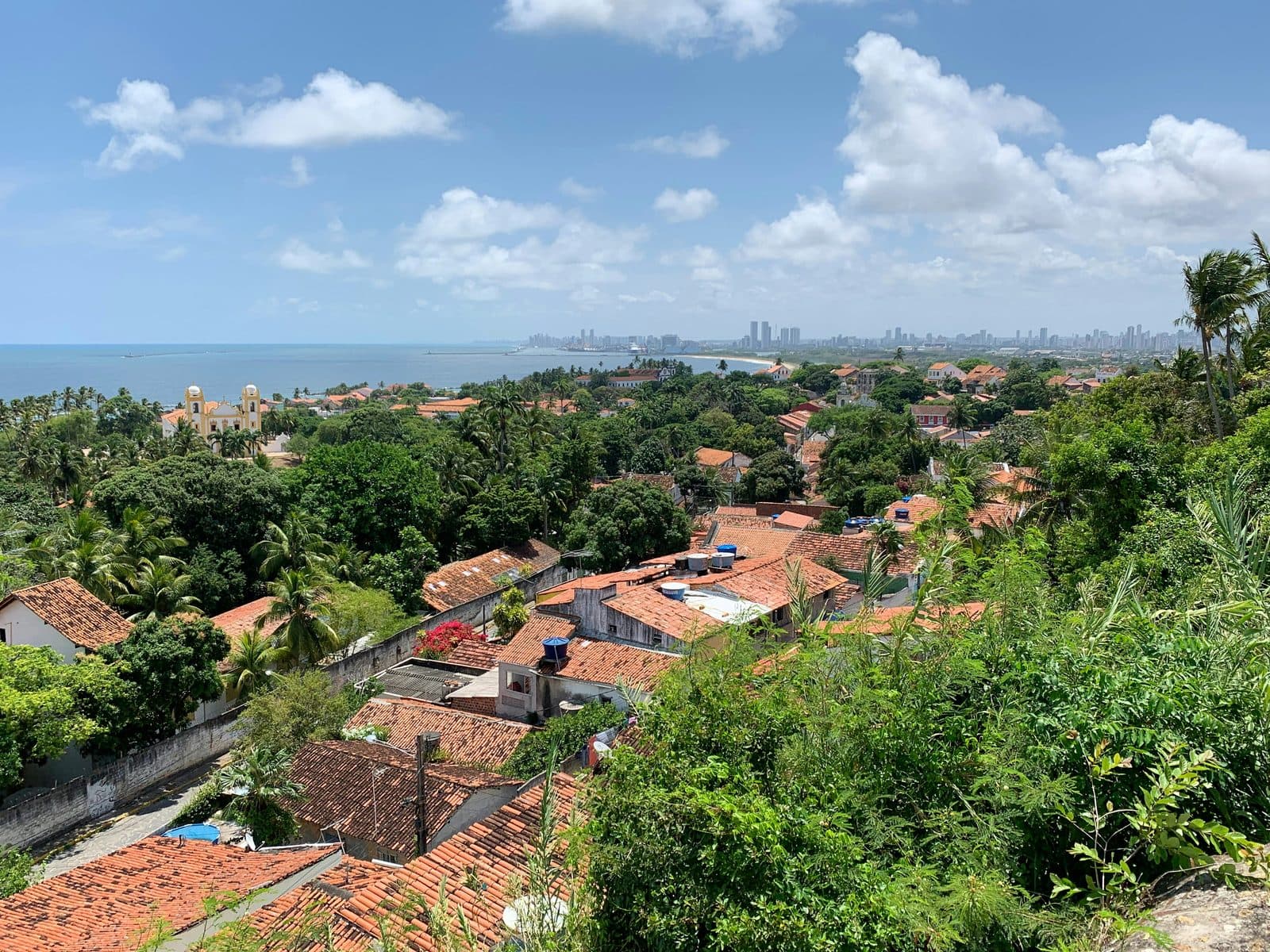
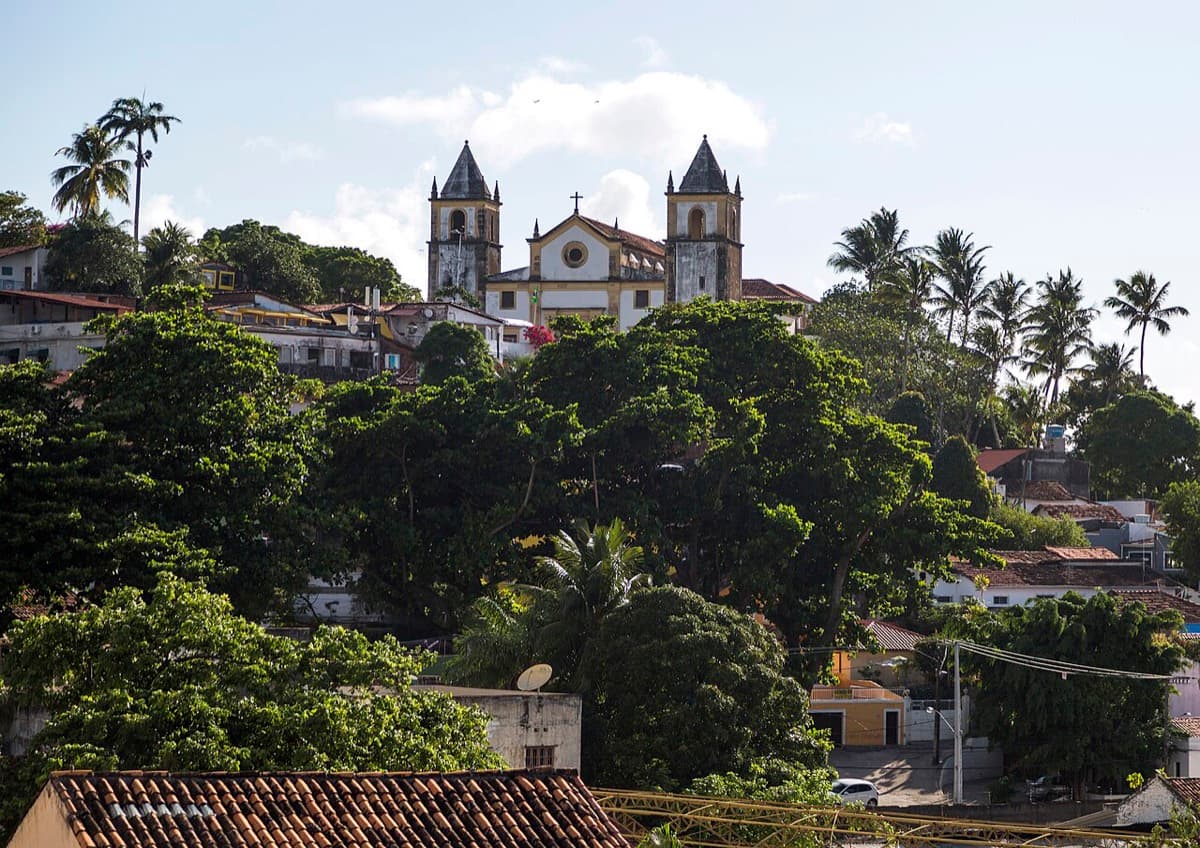
The Alto da Se stalls. The summit square by the cathedral is the single best spot to graze. Stalls make tapioca to order, and the terrace gives you the widest view in Olinda to eat it with. This is the same viewpoint that crowns the Olinda hilltop tour, so a snack here folds neatly into your walk.
The Mercado da Ribeira. The old covered market on the lower streets mixes folk art and craft with food, a calm place to buy sweets, taste local staples, and pick up bolo de rolo to take home. It is a natural end to a day off the hill.
Carnival streets, for the festival food. During Carnival the whole town becomes a food street, with vendors following the frevo blocos and the giant puppets: tapioca, skewers, fritters, sweets, and cold cachaca drinks eaten on the move. The Carnival Town tour reads this festival landscape in the off-season, and the companion piece on the Homem da Meia-Noite midnight giant explains the figure whose midnight march starts the party.
Cafes and bars around the churches. Between the baroque interiors of the Convents of the Coast route, small cafes serve cartola, coffee, and cold drinks. They are the right place to rest a hill-tired pair of legs.
Eat as you walk
The best way to work through this list is on foot, one climb at a time. Pair a morning ascent to the Alto da Se with a tapioca and the view, a midday of churches with a coffee and a cartola, and an afternoon in the ateliers with something sweet from the Mercado da Ribeira. Route your day with the one day in Olinda itinerary, plan the practical side with the Olinda travel guide, and browse all Olinda tours. Every tour is free to start: the introduction and first stop play in full, and every later stop plays a short preview before an optional purchase.
Frequently asked questions
- What food is Olinda known for?
- Olinda food is the cuisine of Pernambuco and the Brazilian Northeast. The headline items are tapioca (a cassava-starch crepe with sweet or savory fillings, sold from stalls on the Alto da Se), bolo de rolo (a paper-thin sponge rolled with guava paste, Pernambuco Intangible Heritage), cartola (fried banana with coalho cheese and cinnamon), macaxeira (cassava, often served with carne de sol, sun-dried beef), and sururu (a small regional mussel in aromatic broth). Cold beer and cachaca round it out.
- What should you eat on the Alto da Se in Olinda?
- Tapioca. The summit square by the cathedral is lined with stalls making tapioca to order, a warm cassava-starch crepe folded around coalho cheese, coconut, sweetened condensed milk, or sun-dried beef. Eating a fresh tapioca with the view over Recife is one of the simplest and most iconic Olinda pleasures. Follow it with a cartola or a slice of bolo de rolo for the sweet side.
- What is bolo de rolo?
- Bolo de rolo is Pernambuco signature cake and one of its proudest food traditions, recognized as Cultural and Intangible Heritage of the state. It is a very thin sponge, almost like a crepe, spread with a layer of guava paste and rolled up into many fine spirals, so a slice shows dozens of delicate rings. It is far more refined than an ordinary jelly roll, and it is the classic edible souvenir to take home from Olinda.
- Is there good street food during Olinda Carnival?
- Yes. During Carnival the streets fill with vendors selling tapioca, grilled skewers, acaraje and other Afro-Brazilian fritters, sweets, and plenty of cold beer and cachaca-based drinks. Street food is part of the festival experience, eaten on the move between the frevo blocos and the giant puppets. Outside Carnival, the same staples live at the Alto da Se stalls and the Mercado da Ribeira.
Brazil eSIM· 10% off with ROAMER10
Ready to experience it?
Olinda: The Hill They Burned and Rebuilt
90 min · 2.4 km · moderate
More from Olinda
Explore more at your own pace.
Olinda Travel Guide: How Many Days, Getting Around, When to Go (2026)
One Day in Olinda: A Walkable Hilltop Itinerary (2026)
Olinda vs Recife: Which to Stay In, and How to See Both
Olinda: The Hill the Dutch Burned and the Portuguese Rebuilt
Alto da Se: The Summit Cathedral That Crowns Olinda's Founding Hill