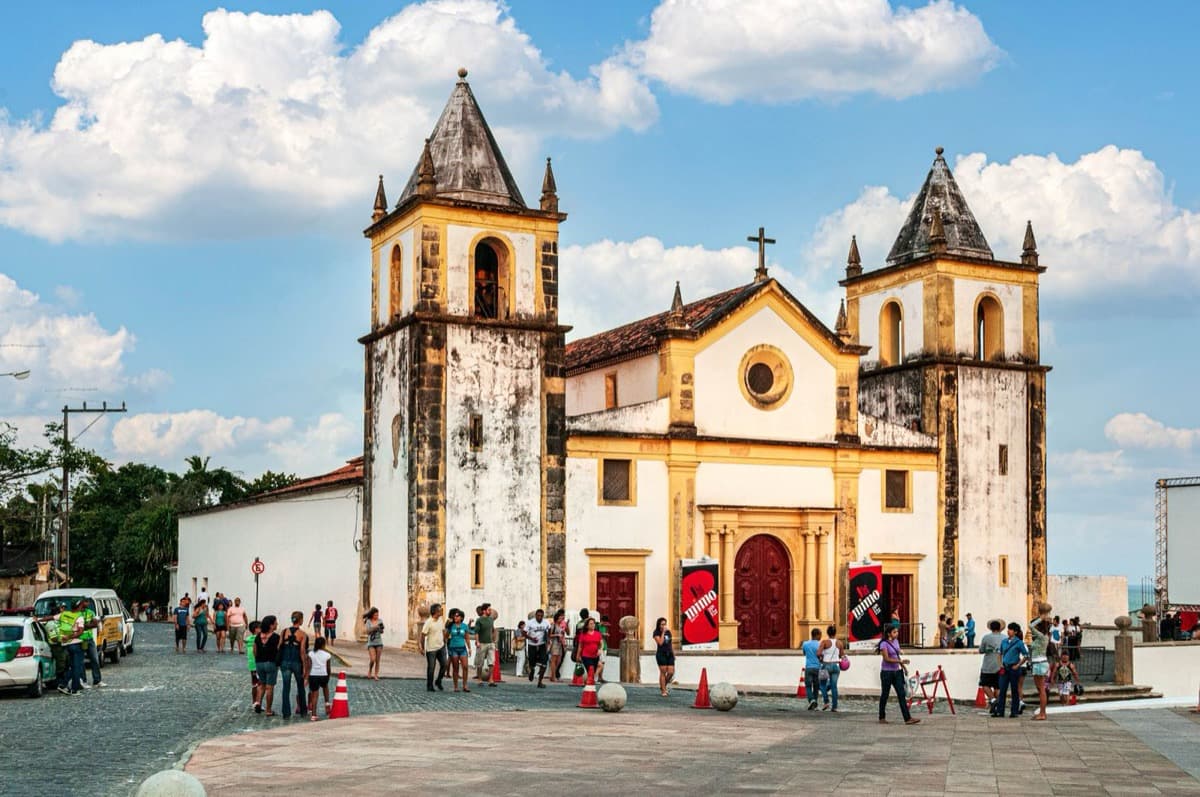
Climb a survivor: a green Brazilian hill above the sea that grew rich on sugar, was looted and burned by the Dutch, and answered by rebuilding itself in gold leaf and stone from the harbor churches up to the cathedral crown.
Start · Igreja e Convento do Carmo: The Harbor Gateway
DirectionsStops
- 1
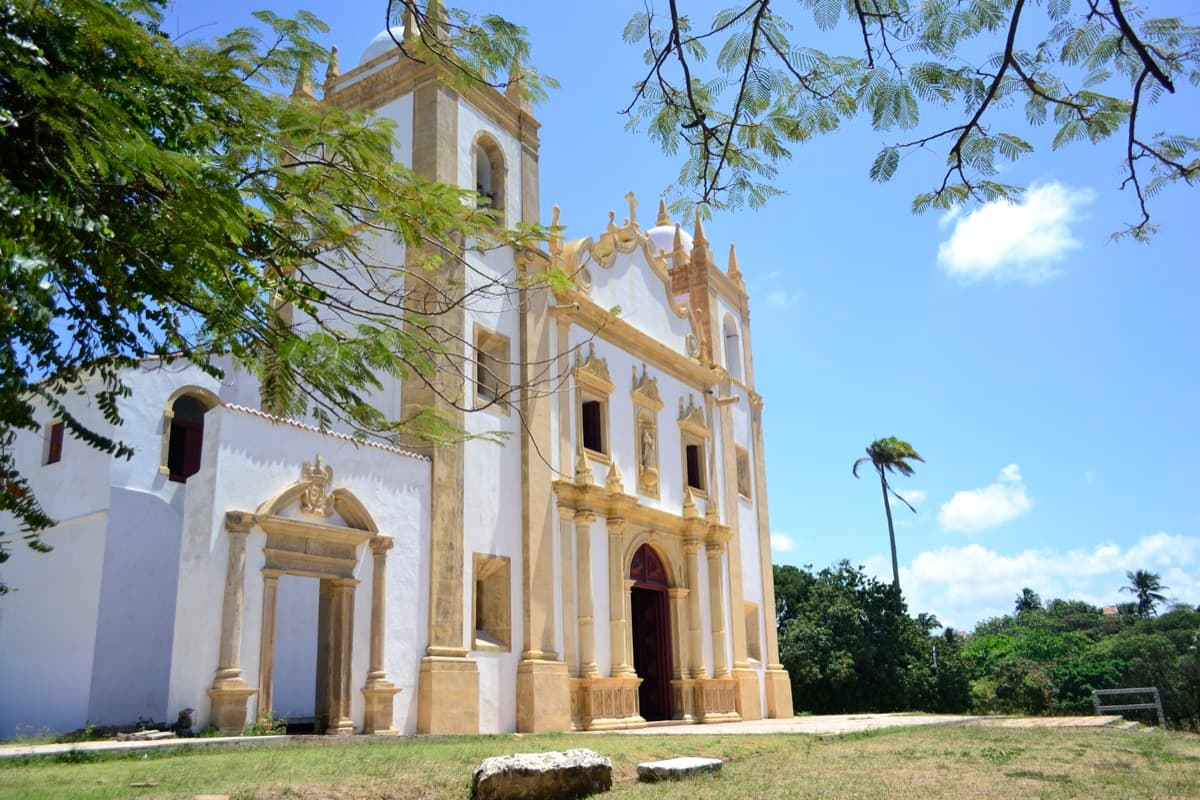
Igreja e Convento do Carmo: The Harbor Gateway
A Carmelite church and convent at the low eastern edge of Olinda, long the first thing arriving visitors met, and the order's oldest foundation in the Americas.
- 2
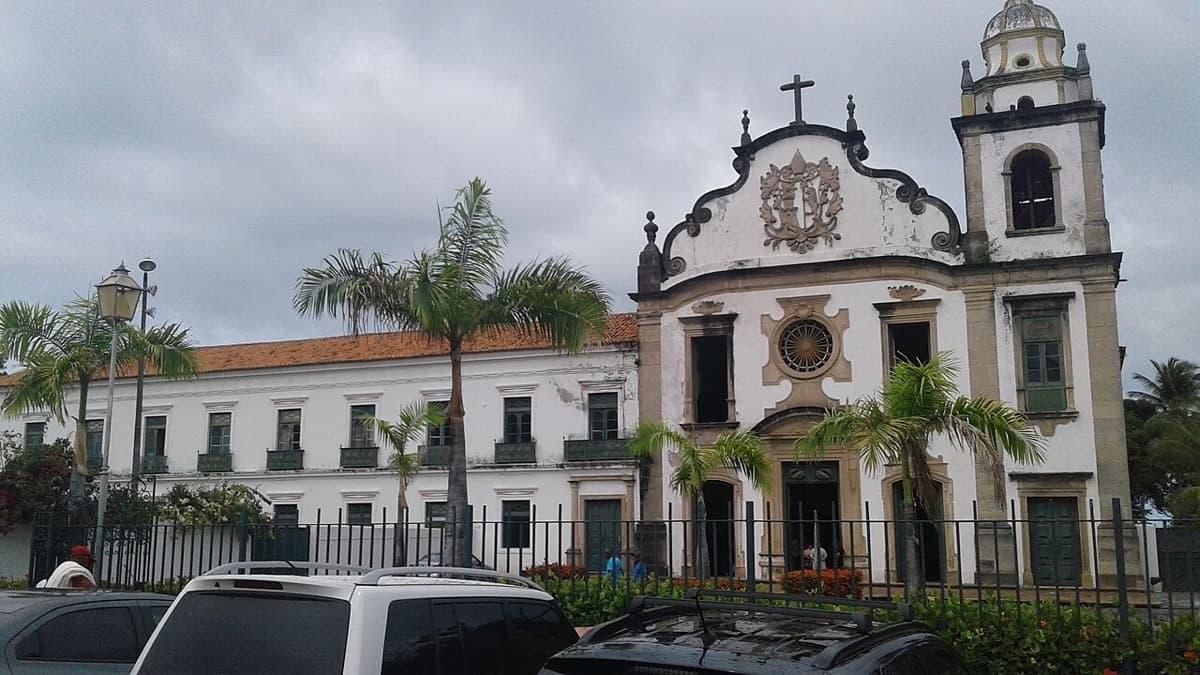
Mosteiro de Sao Bento: The Altar That Crossed an Ocean
A Benedictine monastery in the lower town whose gilded main altarpiece is among the great works of baroque carving in Brazil, and which once housed one of the country's two first law schools.
- 3
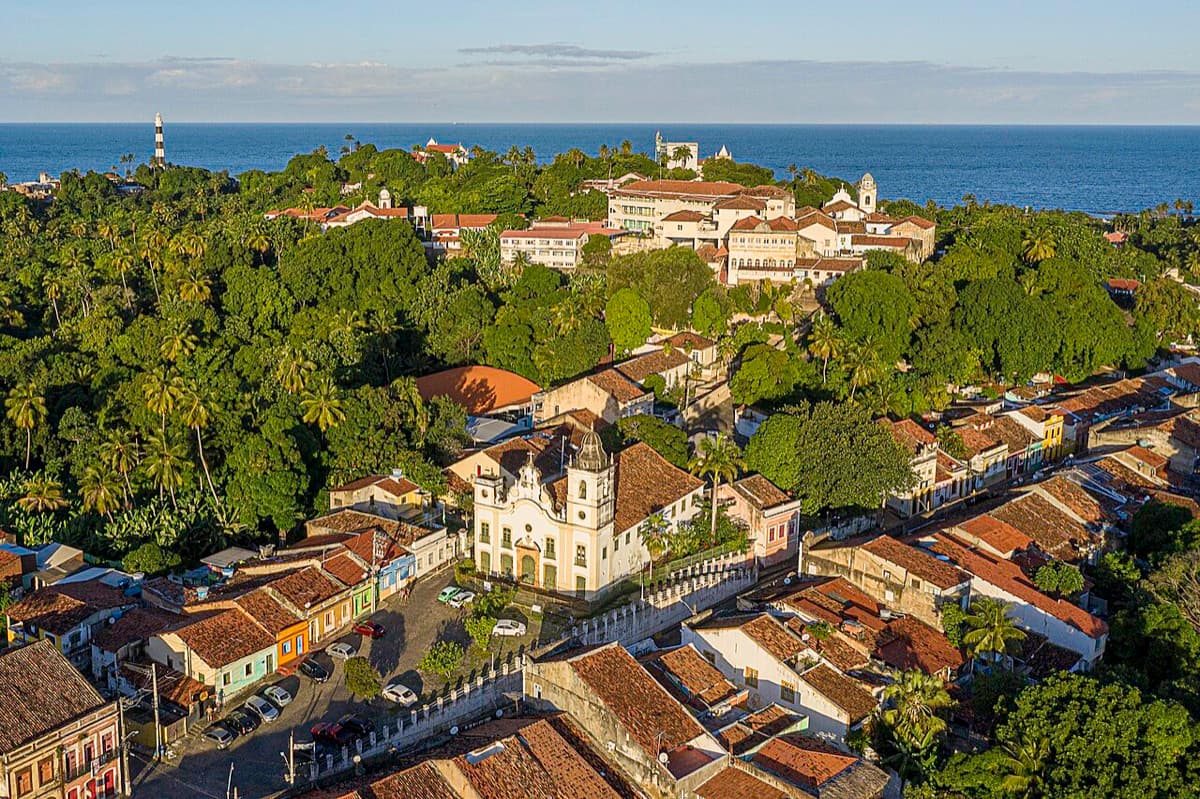
Igreja do Amparo e Rua do Amparo: The Brotherhood on the Slope
A mid-slope baroque church built by a lay brotherhood of free mixed-race men, on a steep colonial street long bound up with Olinda's living arts tradition.
- 4
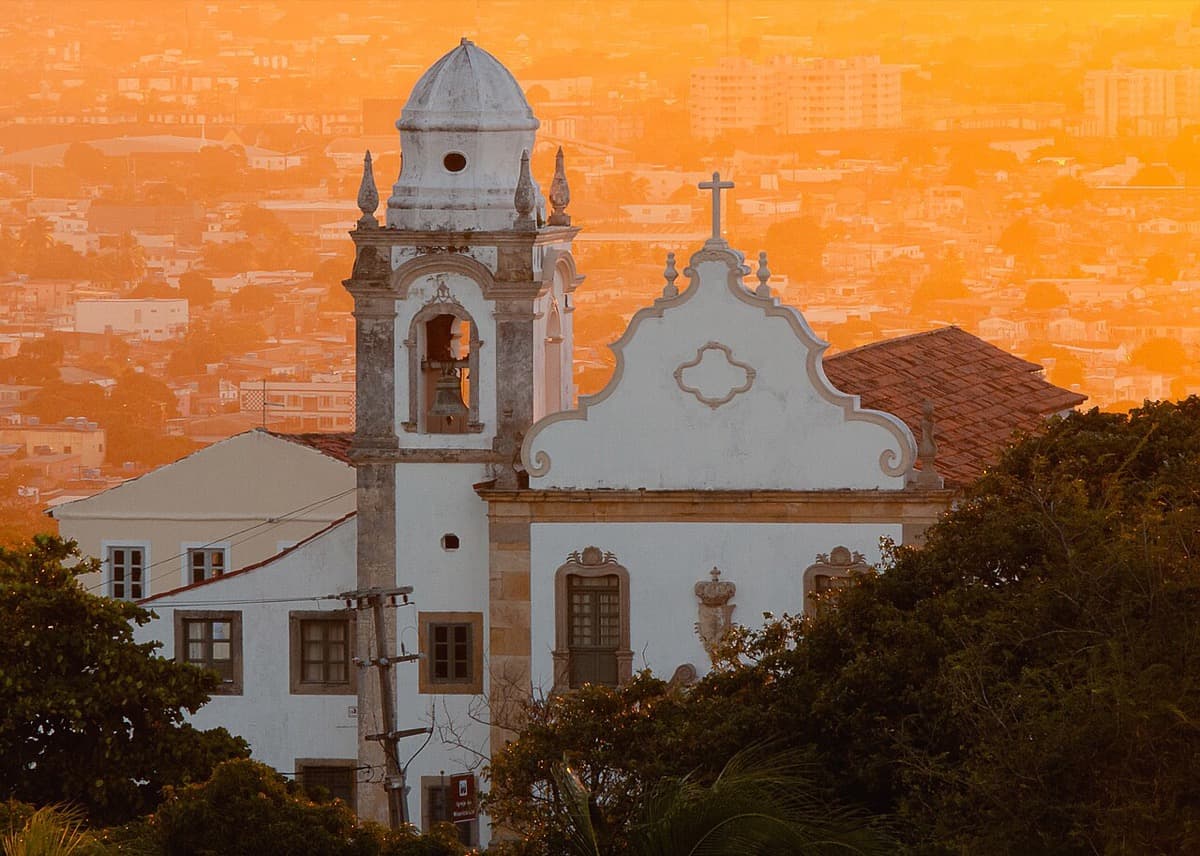
Igreja da Misericordia: Blue Tiles and a Gilded Chapel
Near the top of the hill, a church founded by Brazil's first lay brotherhood, famous for its blue-and-white azulejo tilework and a main chapel sheathed in gold.
- 5
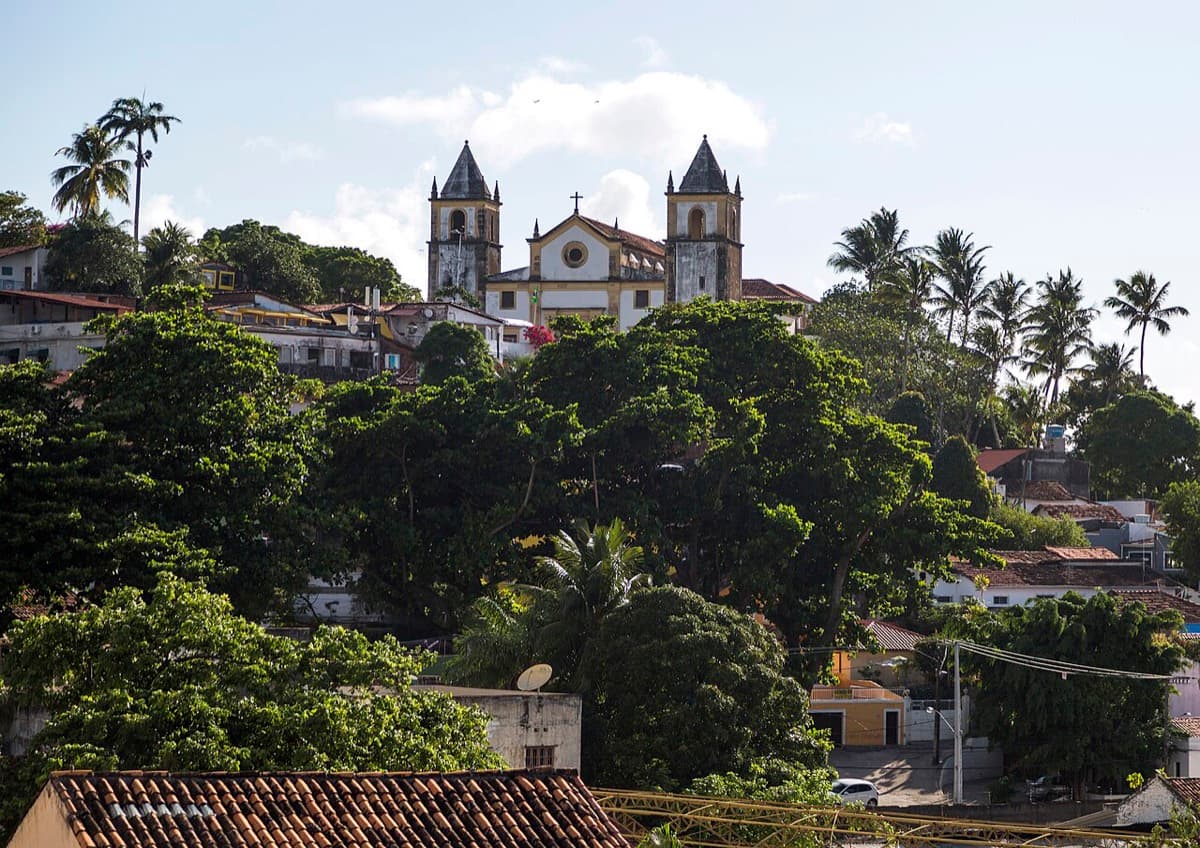
Catedral da Se: The Crown of the Founding Hill
The cathedral dedicated to the Holy Saviour of the World, crowning the Alto da Se, the founding high ground of Olinda and the oldest church in the town.
- 6
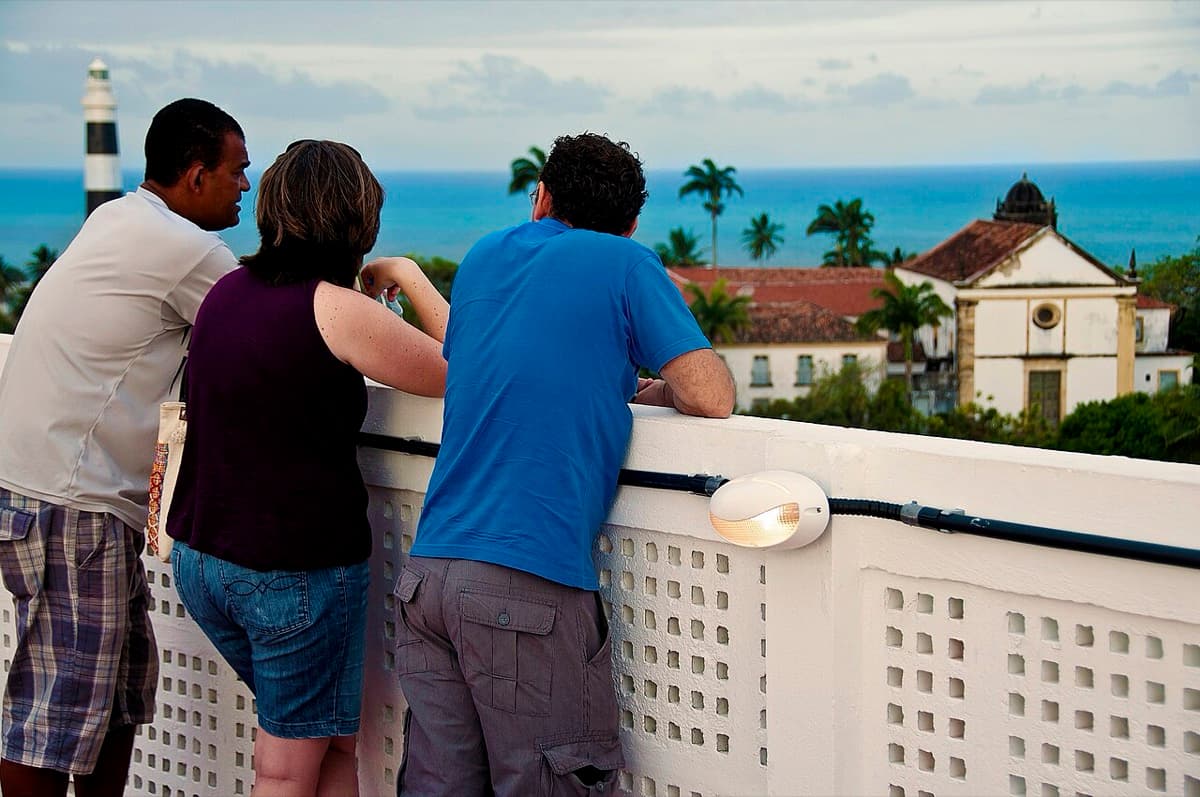
Caixa d'Agua do Alto da Se: The View That Holds the Whole Story
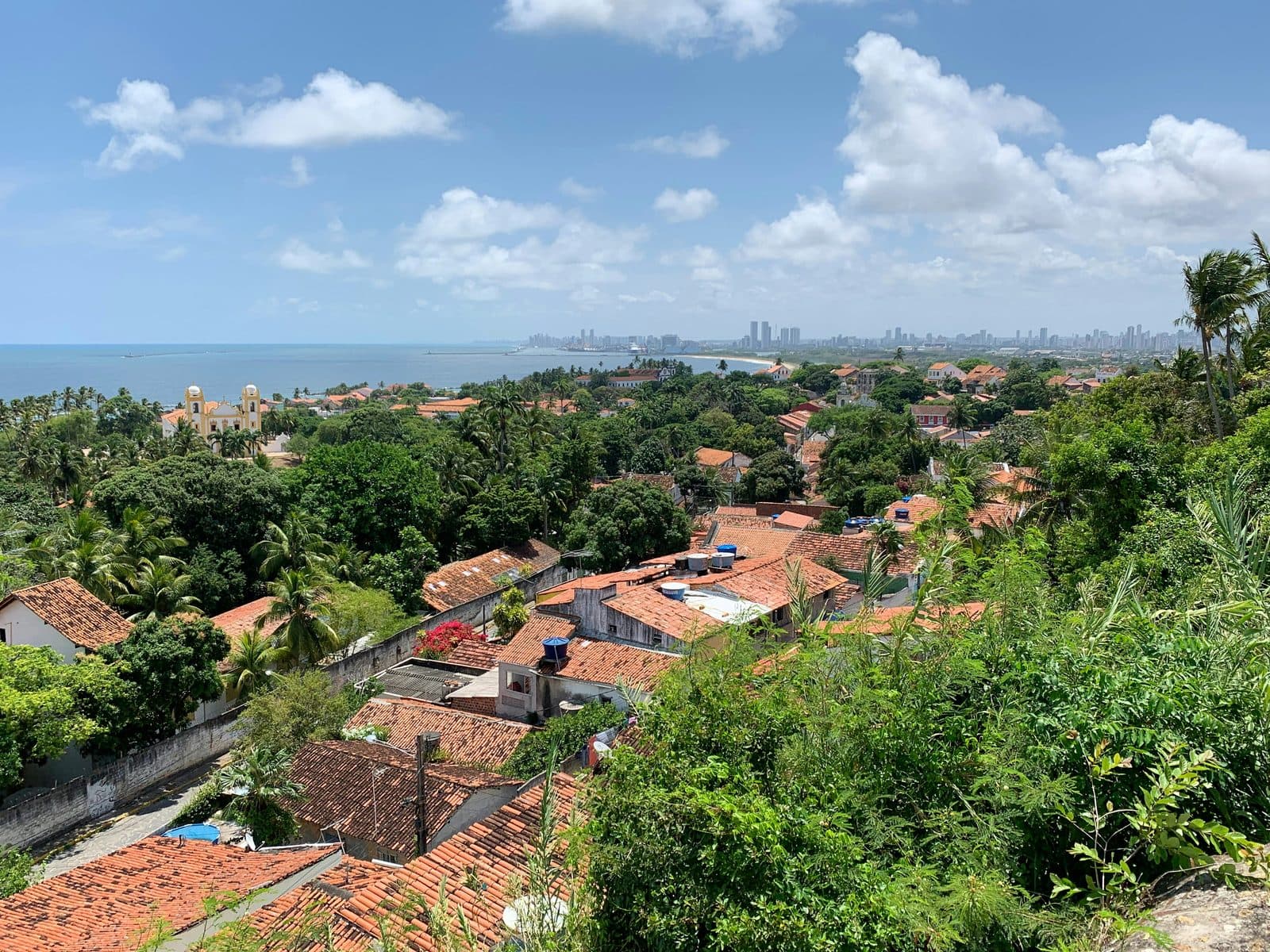
A nineteen-thirties water tower on the Alto da Se whose top was turned into a panoramic lookout, framing Olinda's red roofs and towers against the skyline of modern Recife.
Details
Best Time to Visit
Late afternoon is ideal. Start around three to three-thirty in the afternoon so you climb as the heat eases, and time the final lookout for sunset, roughly five to five-thirty, when locals say the light over the red roofs and toward Recife is at its best. Mornings are cooler and quieter if you prefer to avoid the strongest sun. The rainy season in this part of Brazil runs heaviest from roughly April through July, so check the sky before setting out.
Pro Tips
- •Wear real walking shoes with grip. The route is almost entirely uphill on uneven historic cobbles that get slick when wet.
- •Carry water and go at your own pace. The climb is short in distance but steep, and there is no rush to reach the top.
- •Treat the churches as living places of worship. Dress modestly, lower your voice, and ask before photographing interiors or people at prayer.
- •Do not count on any single church being open. The Igreja da Misericordia in particular is known for short and irregular hours, so enjoy whatever doors you find open as a bonus.
- •The Alto da Se square and its view are free. The panoramic elevator up the water tower costs only a few reais, around five, if you want the higher vantage.
- •Bring a little cash in small notes for the elevator and to support local artists and musicians you may pass, since not every spot on the hill takes cards.
Safety & Precautions
- •The tropical sun here is intense, and the walk is an open-air climb. Use sunscreen, a hat, and water to avoid heat exhaustion, especially in the midday hours.
- •Sudden heavy downpours are common in the rainy months. The cobbled slopes become genuinely slippery, so slow down, use handrails where they exist, and pause under cover if a storm rolls in.
- •Olinda's living culture includes sacred spaces and religious traditions, including Afro-Brazilian ones. Approach any ceremony, altar, or gathering with quiet respect, never treat it as a photo backdrop, and ask permission before recording.
- •As in any busy historic center, keep valuables out of sight and stay aware of your surroundings, particularly on quiet lanes and after dark. Stick to well-traveled streets in the evening and keep your phone secure while navigating.
Travel advisory: Exercise Increased Caution (Level 2).
Gallery
Related Reading
Go deeper on what you'll see, hear, and walk through.
Overview
Best Self-Guided Walking Tours in Olinda (2026)
3 min
Overview
Olinda Travel Guide: How Many Days, Getting Around, When to Go (2026)
5 min
Overview
One Day in Olinda: A Walkable Hilltop Itinerary (2026)
6 min

Thematic
What to Eat in Olinda: A Pernambuco Food Guide (2026)
4 min
Deep dive
Alto da Se: The Summit Cathedral That Crowns Olinda's Founding Hill
5 min
Deep dive
The Olinda Altar That Crossed an Ocean to Stand on Fifth Avenue
6 min
Read the walk
The full story of Olinda: The Hill They Burned and Rebuilt, in words. Prefer to listen? Play it narrated, from home or on location.
Introduction
You are standing at the foot of Olinda, a hilltop town on the Atlantic coast of Brazil, just north of the city of Recife. This walk has six stops and takes roughly ninety minutes at an unhurried pace, covering roughly two and a half kilometres, almost all of it uphill on old cobbles. Go as slowly as you like. The climb is the point. Olinda was founded in fifteen thirty-five, and by the sixteen hundreds it had grown rich on sugar and lovely enough that a later legend turned its very name into a sigh of admiration. Then, in sixteen thirty-one, Dutch forces looted the town and set it on fire, and most of its churches burned. After the Dutch were expelled, the Portuguese rebuilt on the same slope in baroque, and much of what you will see today dates from the seventeen hundreds. So this is the story of a place destroyed once, that chose to build upward rather than walk away. You will move from the harbor churches at the base, past a monastery famous for a gilded altar that once crossed an ocean, up through an old artists' quarter, along a belt of tiled and gold-leafed churches, to the cathedral that crowns the founding high ground. It ends at a lookout where the whole story resolves into a single view. Two honest notes before you start. Olinda's wealth came from a sugar economy built on enslaved African and Indigenous labor, and the gold you will admire sits on that harder truth. And some of its most charming tales are legend, not fact. Hold both. When you arrive at the Igreja e Convento do Carmo on Praca do Carmo, begin with stop one.
1. Igreja e Convento do Carmo: The Harbor Gateway
Start here, at the bottom of the hill, because this is where people have long arrived in Olinda from the Recife side. The Igreja e Convento de Nossa Senhora do Carmo sits on Praca do Carmo, the low gateway to the historic center, and it makes a quiet claim worth repeating in its own words. The church describes itself as the oldest temple of the Carmelite Order anywhere in the Americas. The Carmelites settled in Olinda around fifteen eighty, and construction began soon after, on the site of an earlier hermitage. Then came sixteen thirty-one. When Dutch forces destroyed the town, this church was seriously damaged along with nearly everything else on the hill. The friars returned after the Dutch expulsion in sixteen fifty-four and set about rebuilding. Work continued into the early seventeen hundreds, and the south tower was finished in seventeen twenty-six. The building was eventually closed in eighteen twenty, and much later, between nineteen sixty-six and nineteen sixty-eight, the national heritage institute IPHAN carried out a restoration. Look at the architecture and you can read that layered history. There is a mannerist discipline in the design, drawn from the school of Vignola, blended with the baroque exuberance that came later. That mixture is the whole town in miniature: an older, sober plan overtaken by the golden style of the rebuilding age. Stand a moment and let the slope reveal itself above you. Every church you are about to see was burned in the same fire and answered in the same way. This one, at the water's edge, is where that answer begins. Take your time before you start to climb.
2. Mosteiro de Sao Bento: The Altar That Crossed an Ocean
A little higher, in the harbor-side lower town, stands the Mosteiro de Sao Bento. The Benedictines arrived in Pernambuco in fifteen ninety-two and completed their monastery here in fifteen ninety-nine. What draws people in is the main altarpiece, a monumental work of gilded carved wood, the style Brazilians call talha dourada. It is counted among the most significant examples of gilded carving in the country, and it was built between seventeen eighty-three and seventeen eighty-six. Here is the detail that still surprises visitors. In two thousand one, that altar was carefully taken apart and restored by the Fundacao Joaquim Nabuco, then shipped to New York and displayed at the Solomon R. Guggenheim Museum in an exhibition called Brazil: Body and Soul. A baroque altar from a hill in Pernambuco, standing in a Manhattan rotunda, then returning home. Few objects tell the story of Olinda's reach so plainly. This monastery holds a second piece of history. According to the archdiocese, it was here, on May fifteenth, eighteen twenty-eight, that the Faculdade de Direito de Olinda was installed. It was one of Brazil's two first law schools, both created by imperial law under Dom Pedro the First in eighteen twenty-seven, the other in Sao Paulo. Classes began that June with forty-one students, and the course stayed until eighteen fifty-four, when it moved to Recife. So picture the two lives of this quiet building: monks chanting in a gilded church, and young men arguing law in its rooms, all on the same rebuilt slope. Sit with it before you keep climbing.
3. Igreja do Amparo e Rua do Amparo: The Brotherhood on the Slope
Now the climb steepens, and the character of the town shifts. This is Largo do Amparo, mid-slope, and the church before you, the Igreja de Nossa Senhora do Amparo, carries a detail worth pausing over. It was erected in sixteen thirteen by the Brotherhood of Nossa Senhora do…
Full narration for this stop unlocks with the tour.
4. Igreja da Misericordia: Blue Tiles and a Gilded Chapel
You are near the top now, just below the summit, at the Igreja de Nossa Senhora da Misericordia. Its story reaches back further than almost anything else on the hill. It was founded by the Brotherhood of the Santa Casa de Misericordia of Olinda, created in fifteen thirty-nine as…
Full narration for this stop unlocks with the tour.
5. Catedral da Se: The Crown of the Founding Hill
This is the summit, the Alto da Se, the founding high ground of Olinda, and the Catedral da Se that crowns it. Its full dedication is the Igreja de Sao Salvador do Mundo, the Holy Saviour of the World, and it is the oldest church in the town, described as the largest…
Full narration for this stop unlocks with the tour.
6. Caixa d'Agua do Alto da Se: The View That Holds the Whole Story
End here, a few steps from the cathedral, at the Caixa d'Agua of the Alto da Se. It began as a water tower, designed in nineteen thirty-four, standing about twenty metres tall, roughly the height of a six-story building. At some point its top was adapted into a panoramic…
Full narration for this stop unlocks with the tour.