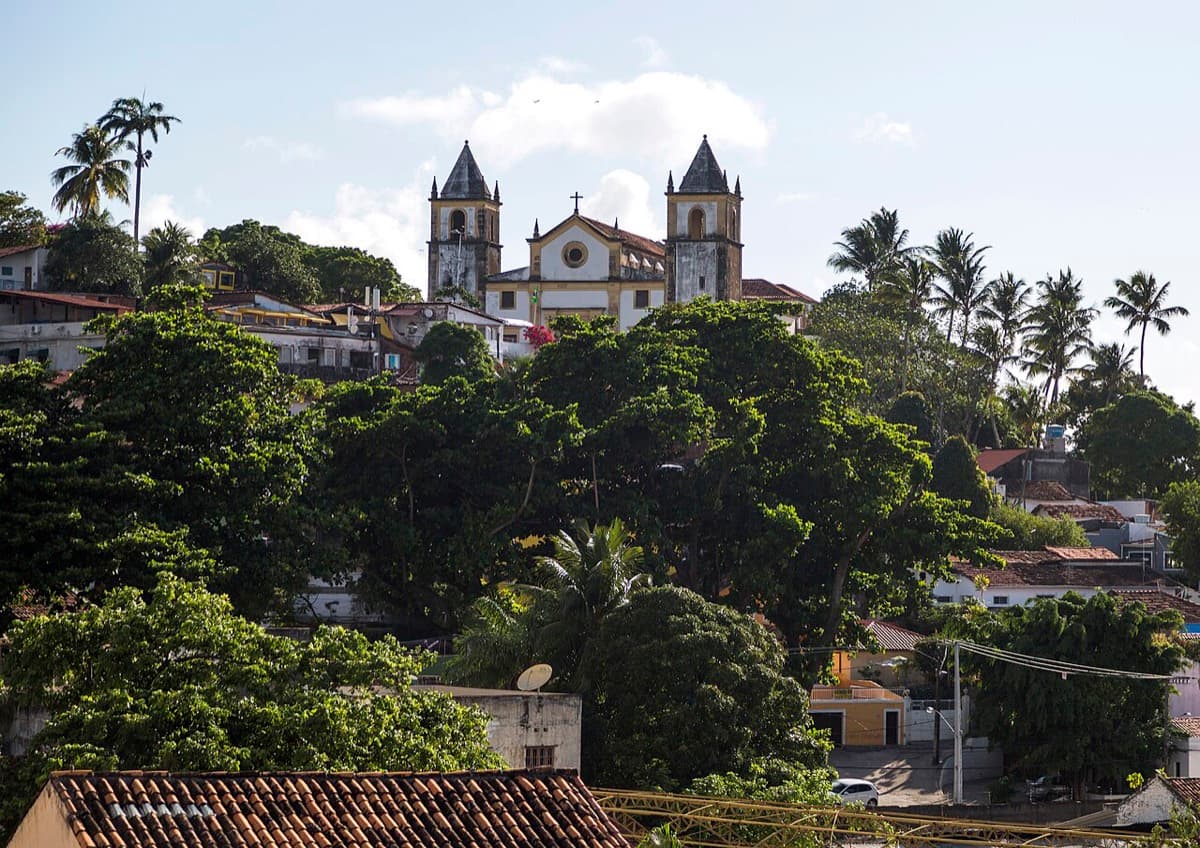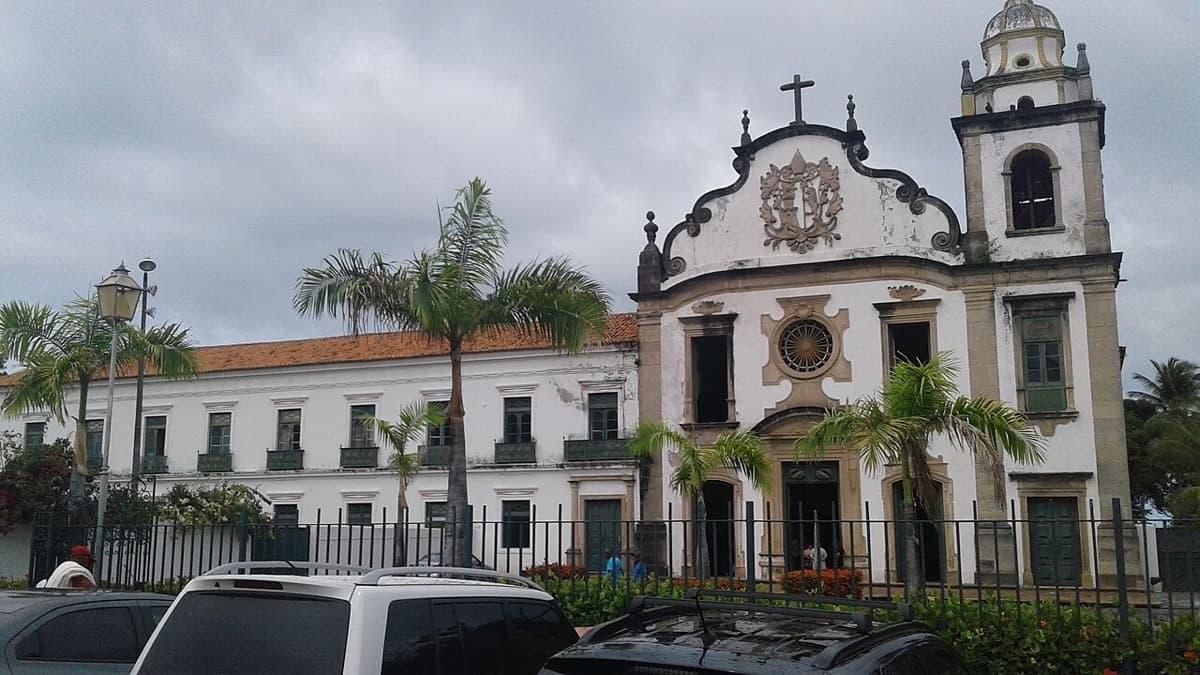
The gilded altar of Olinda's Mosteiro de São Bento carries the town's whole story in one object. This is a monastery church in the lower town of a Brazilian hill that grew rich on sugar and was burned by the Dutch. It opened one of the country's first two law schools. And in 2001 its baroque altarpiece was taken apart, shipped across an ocean to a Manhattan museum, and then carried home. Few carved objects have traveled so far to prove a point about where they came from.
Start with the wood itself, because that is what pulls people through the door. The Benedictines arrived in the captaincy of Pernambuco in 1592 and completed their monastery here in 1599. The main altarpiece is a monumental work of gilded carved wood, the craft Brazilians call talha dourada. It ranks among the most significant examples of gilded carving anywhere in the country, and it was built late in the colonial period, between 1783 and 1786. Stand in front of it and the surface reads less like decoration than like an argument. Light was expensive, gold was scarce, and a poor town on a hot slope chose to spend both on the front wall of a church.
An altar on Fifth Avenue
The detail that still startles visitors is more recent. In 2001 the altar was carefully dismantled and restored by the Fundação Joaquim Nabuco, the research foundation based in nearby Recife, then shipped to New York and installed at the Solomon R. Guggenheim Museum. It stood there as the centerpiece of an exhibition called "Brazil: Body and Soul," which ran in New York from October 2001 into January 2002 and was organized by an international team led by the art historian Edward J. Sullivan. Reviewers at the time described a five-story eighteenth-century altar dismantled in São Bento de Olinda and reconstructed on Fifth Avenue, filling the rotunda of Frank Lloyd Wright's spiral building.
Hold that image for a moment. A baroque altar from a hill in Pernambuco, reassembled under the coil of one of the most famous modern buildings in the world, then packed up again and returned to the same lower-town monastery it had never really left. Most great objects in a place like Olinda stay put and let the world come to them. This one made the round trip and came back to its own nave. That is the rarest kind of provenance, an object that proves its worth by leaving and returning intact.
The second life of a quiet building
Hear a stop from this walk
Caixa d'Agua do Alto da Se: The View That Holds the Whole Story
The monastery holds a second history that has nothing to do with carving. According to the archdiocese, it was here, on May 15, 1828, that the Faculdade de Direito de Olinda was installed, in rooms the Benedictine monks provided. This was one of Brazil's two first law courses. Both were created together by imperial law under Dom Pedro the First, signed on August 11, 1827, five years after the country declared independence. The other course opened in São Paulo. A young empire that had just stopped being a colony needed its own lawyers, judges, and administrators, and it decided to make them in exactly two places. One of them was this monastery on a slope above the Atlantic.
The numbers are small enough to picture. Classes began in June 1828 with 41 students drawn from across the Brazilian provinces and from as far away as Portugal and Angola. The course stayed at São Bento until 1854, when it moved down to Recife and became the Faculdade de Direito do Recife. So for a quarter of a century this single building held two lives at once. Monks chanted the daily office in a gilded church while, in the rooms next door, young men argued the first law of an independent nation. Both were being built on the same rebuilt ground.
Why the rebuilding matters
To understand why any of this survives, you have to know what happened to the hill. Olinda was founded in 1535 and grew wealthy on sugar. In 1631 Dutch forces looted the town and set it on fire, and most of its churches burned. That wealth, it should be said plainly, rested on the labor of enslaved African and Indigenous people, and the gold you admire in the altar sits on that harder truth. After the Dutch were expelled in the 1650s, the Portuguese did not walk away. They rebuilt on the same slope in baroque, church by church, from the harbor up to the cathedral crown. The São Bento altarpiece, carved in the 1780s, belongs to that long answer. It is not the original decoration of the 1599 monastery. It is the reply of a town that had been destroyed once and chose to spend a fortune making the front of its churches shine anyway.
That is what makes this one building a fair stand-in for the whole climb. The gold is real, and you can touch the cool of the stone around it. The gold is also a story a wounded place told itself while it rebuilt, and the exiled altar coming home from New York only makes the story louder. Beauty as a physical fact, and beauty as a claim a community keeps making out loud, over everything it survived.
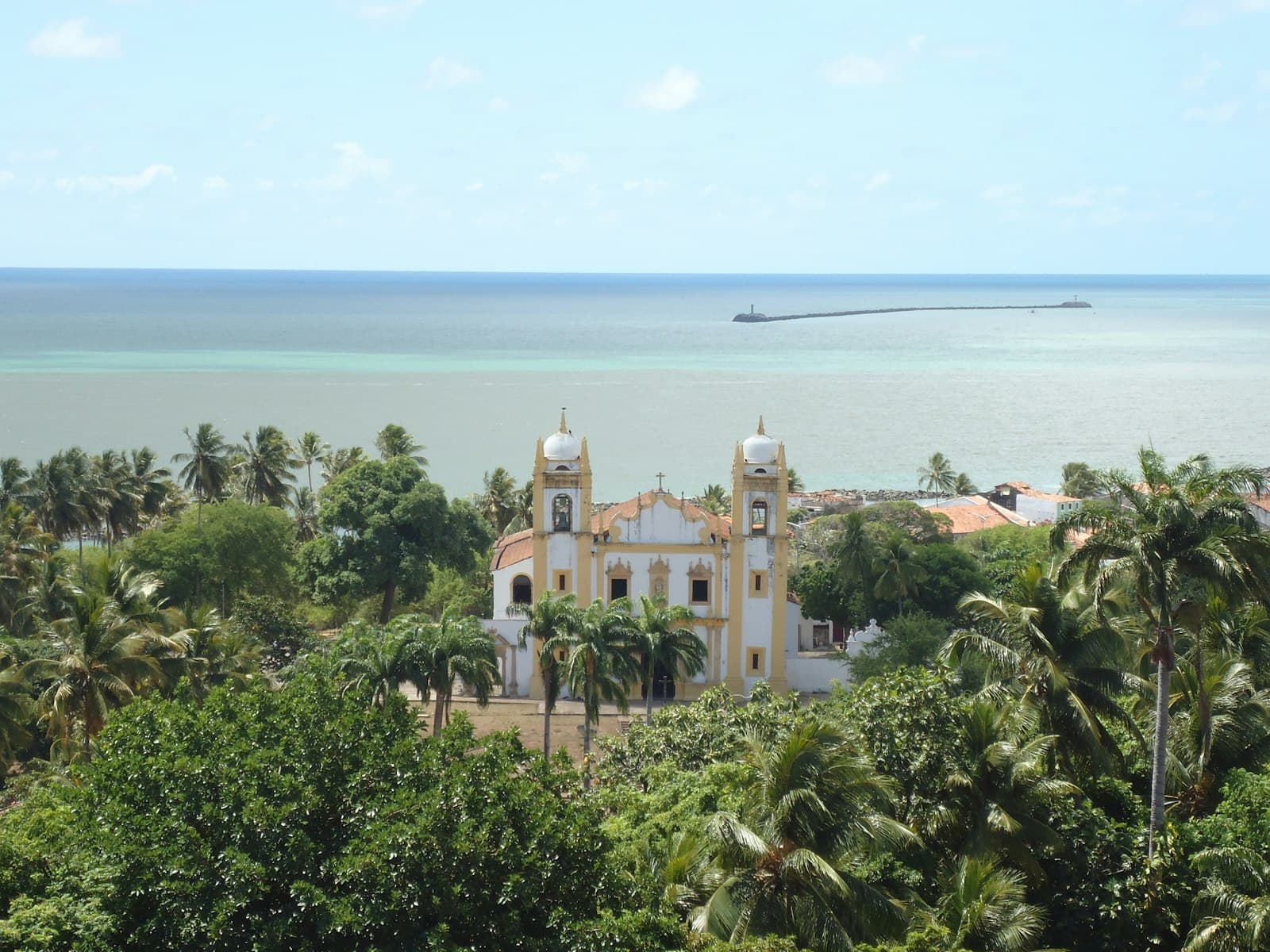
The monastery sits in the lower town, near the harbor side, an easy first climb from the Igreja do Carmo. Entry is free. Treat it as a working place of worship: dress modestly, keep your voice down, and ask before you photograph the interior. If you walk the full hilltop route, this is the stop where the town stops being a view and becomes a decision. Everything above it is the same choice repeated, all the way up to the cathedral. You can walk it yourself in Olinda.
Sources
- Guggenheim Museum, "Brazil: Body & Soul" exhibition page. Confirms the New York run and the monumental baroque altar as the centerpiece of the show.
- Artforum / Free Library reprint, "Brazil: Body and Soul" review (2002). Contemporary review describing the five-story eighteenth-century altar dismantled in São Bento de Olinda and reconstructed on Fifth Avenue.
- Faculdade de Direito de Olinda, Portuguese Wikipedia. Documents the August 11, 1827 imperial law, the May 15, 1828 installation in São Bento, the 41 first students, and the 1854 move to Recife.
- Arquidiocese de Olinda e Recife, São Bento page. Institutional source for the monastery's founding (Benedictines in Pernambuco 1592, monastery completed 1599) and the Fundação Joaquim Nabuco restoration.
- Revista Pesquisa FAPESP, "Providing a legal education." Background on the twin 1827 founding of the Olinda and São Paulo law courses after independence.
Brazil eSIM· 10% off with ROAMER10
Ready to experience it?
Olinda: The Hill They Burned and Rebuilt
90 min · 2.4 km · moderate
More from Olinda
Explore more at your own pace.
Olinda Travel Guide: How Many Days, Getting Around, When to Go (2026)
One Day in Olinda: A Walkable Hilltop Itinerary (2026)
Olinda vs Recife: Which to Stay In, and How to See Both
Olinda: The Hill the Dutch Burned and the Portuguese Rebuilt

What to Eat in Olinda: A Pernambuco Food Guide (2026)