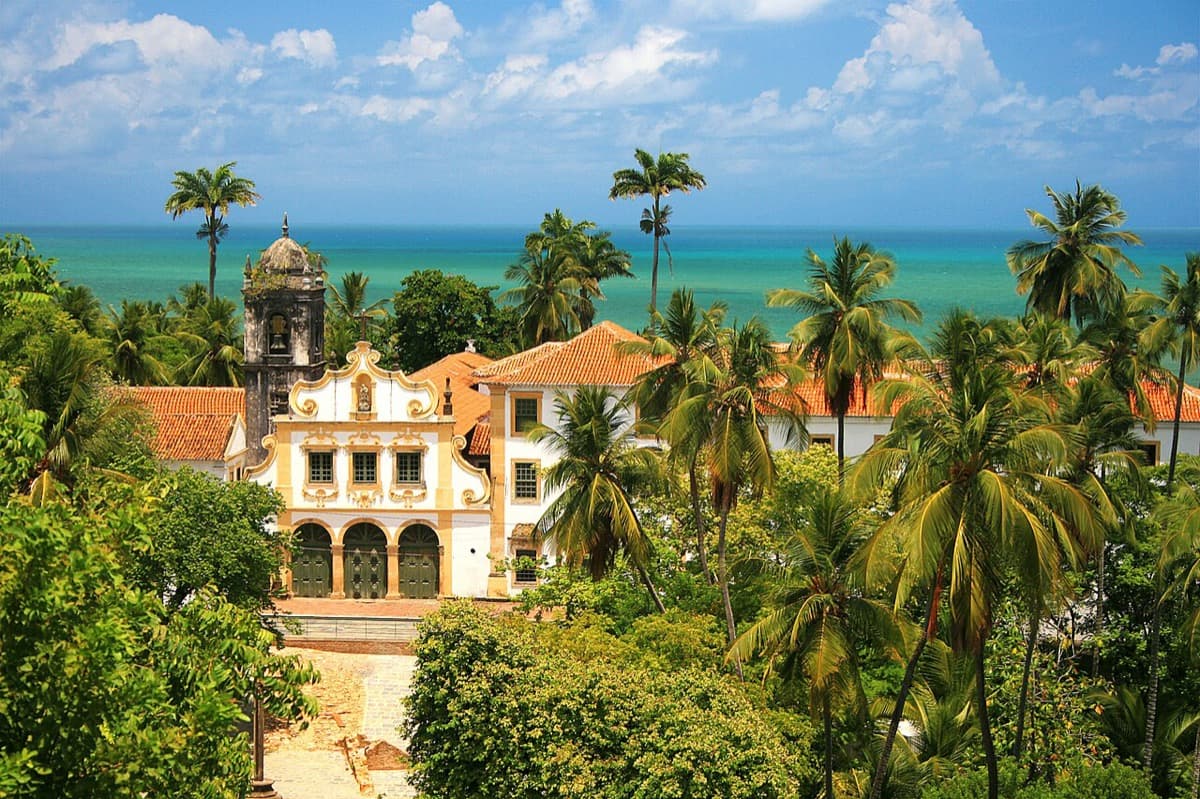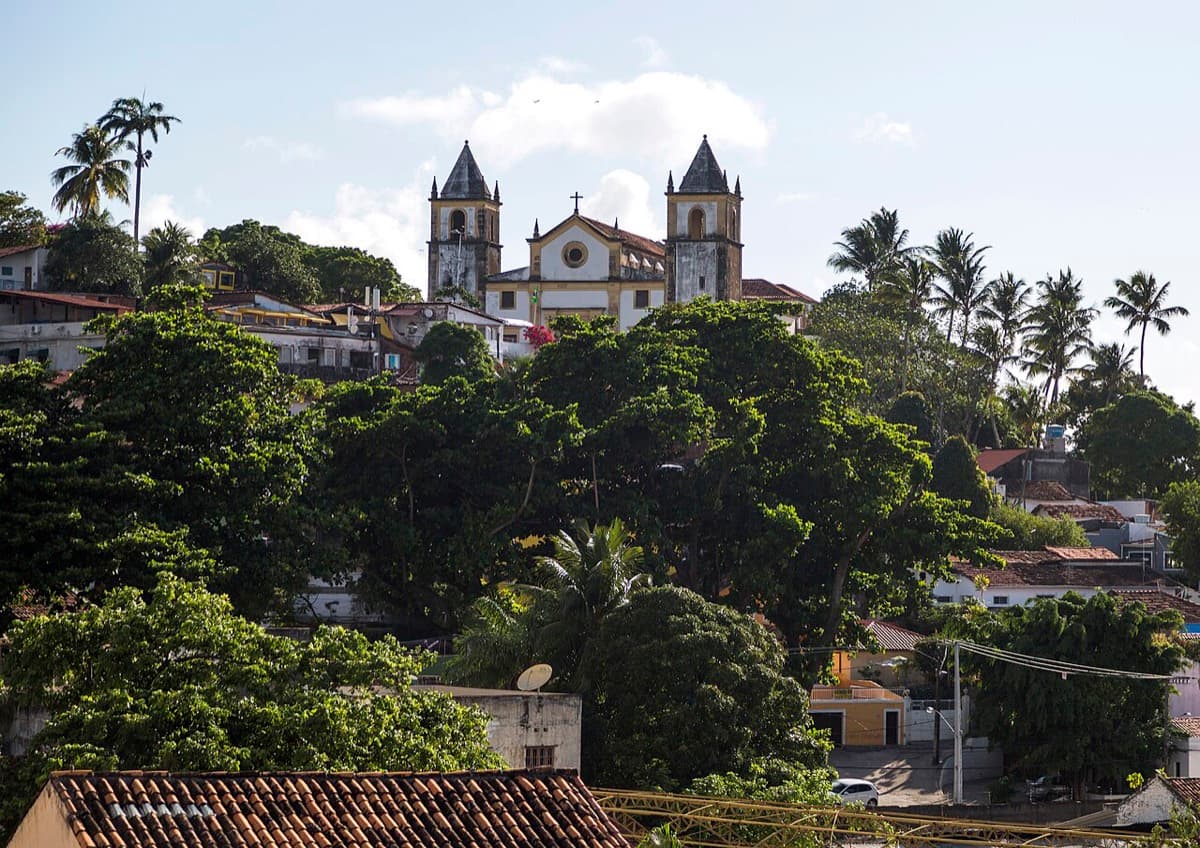
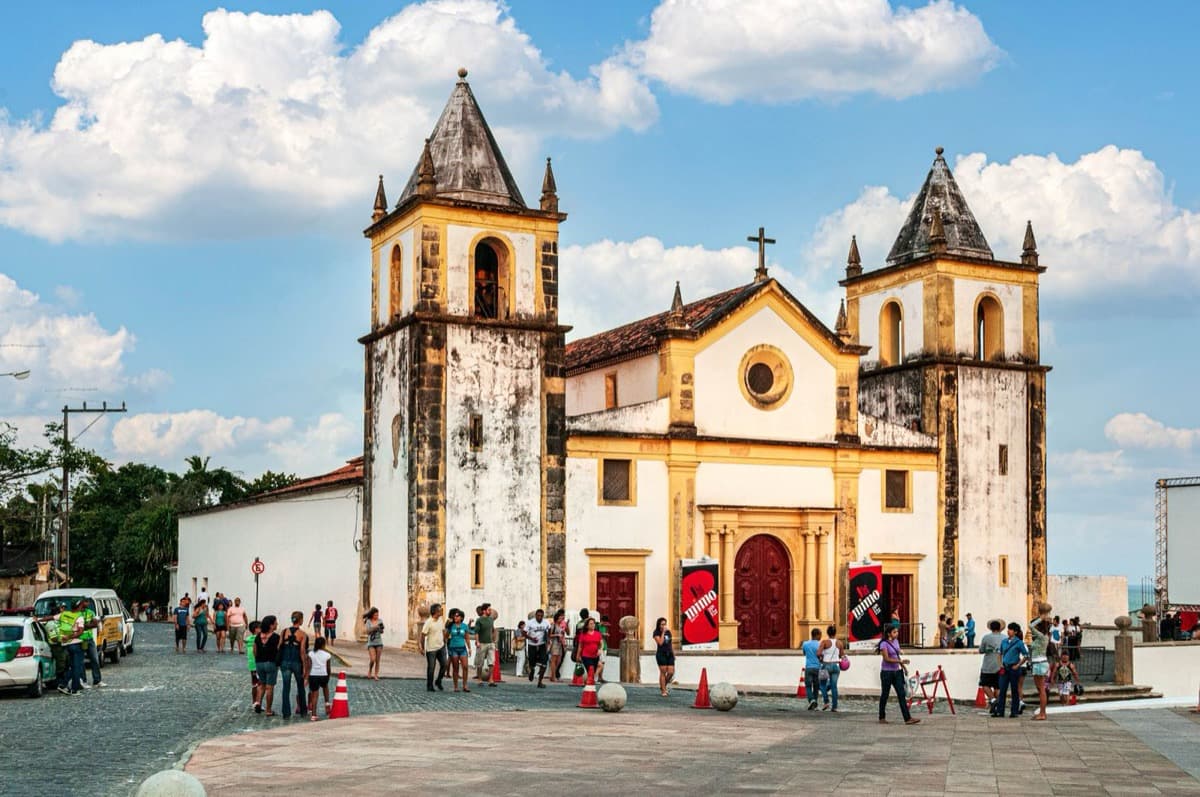
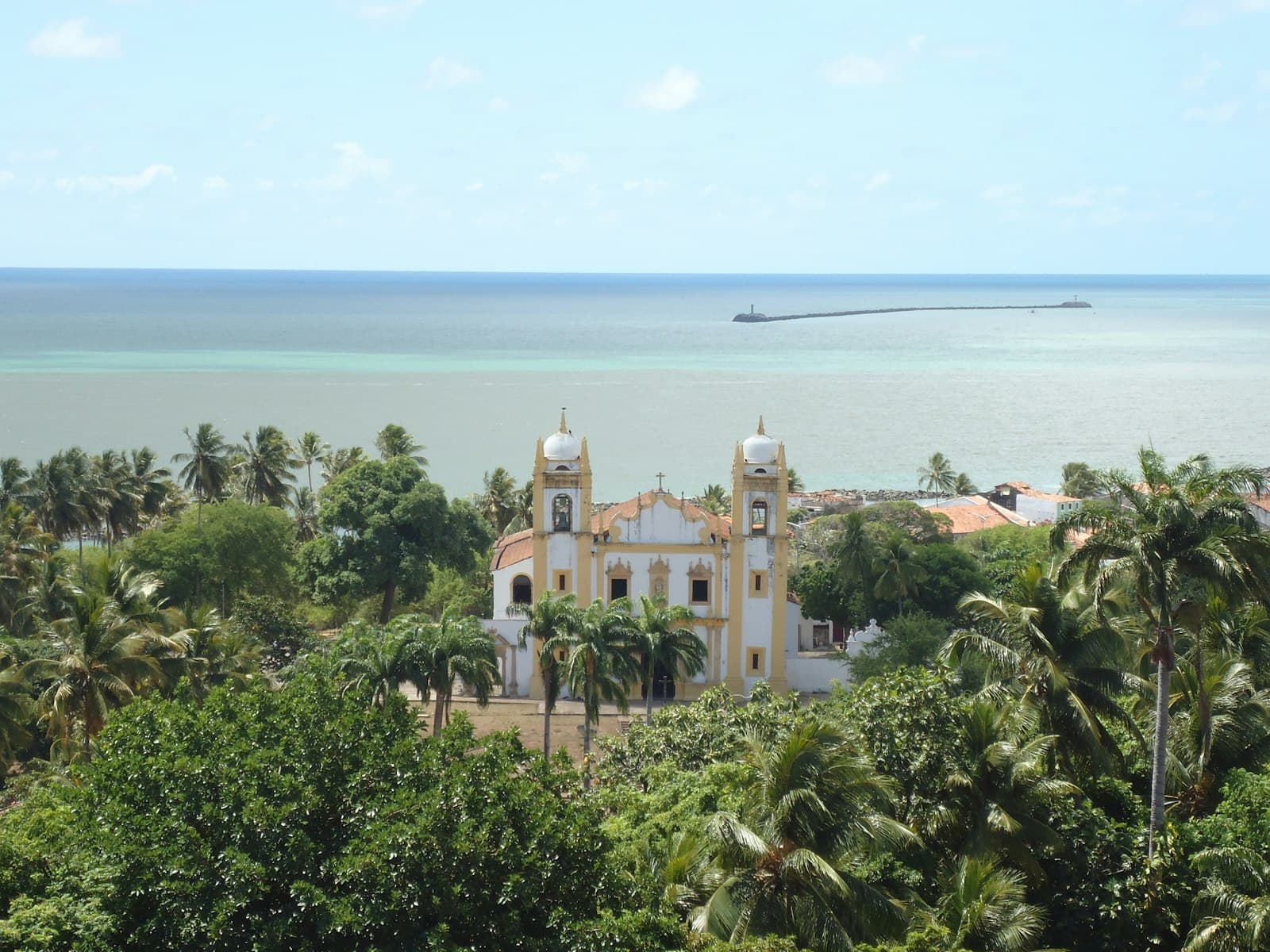
Climb to the top of Olinda and you reach the Alto da Se, the highest point of the town, where its oldest church crowns the founding hill. The Catedral da Se is where Olinda began, in the most literal sense: the first church on this spot went up in 1540, five years after the town was founded. It has burned, been rebuilt, and stood again, and its summit gives you the one view from which the entire rebuilt town, its ridge of church towers falling away toward the sea, reads as a single story. This is the place to end a climb through Olinda, because it is where the whole town explains itself.
The oldest church on the hill
The Catedral da Se is the oldest church in Olinda, and its history is the history of the town in miniature. It started in 1540 as a modest chapel built of mud, raised soon after the town's founding in 1535, on the commanding summit that dominates the whole hillside. As Olinda grew rich on sugar, the chapel was replaced by a proper masonry church in 1567. For a young colonial town this summit church was the spiritual crown, the building everything else on the hill deferred to.
Then the war for the sugar coast reached Olinda. When the Dutch looted and burned the town in 1631, the church on the summit was not spared: it was used as a stable and then burned in the sack. The founding church of the founding hill was reduced with the rest of the town.
Burned, rebuilt, and crowned a cathedral
Hear a stop from this walk
Caixa d'Agua do Alto da Se: The View That Holds the Whole Story
Olinda's defining act was to rebuild, and the summit church rose again with the town. After the Portuguese returned, the church was reconstructed, and in 1676 it was elevated to the status of a cathedral, the seat of the bishop, confirming the summit as the ecclesiastical head of the whole region. What you see today is the result of that long life: a church that has been repeatedly remade, whose fabric belongs to the eighteenth-century reconstruction that defines the whole rebuilt town. The cathedral is not a single moment frozen in stone. It is a building that carries its own destruction and recovery in its walls.
The view that holds the whole town
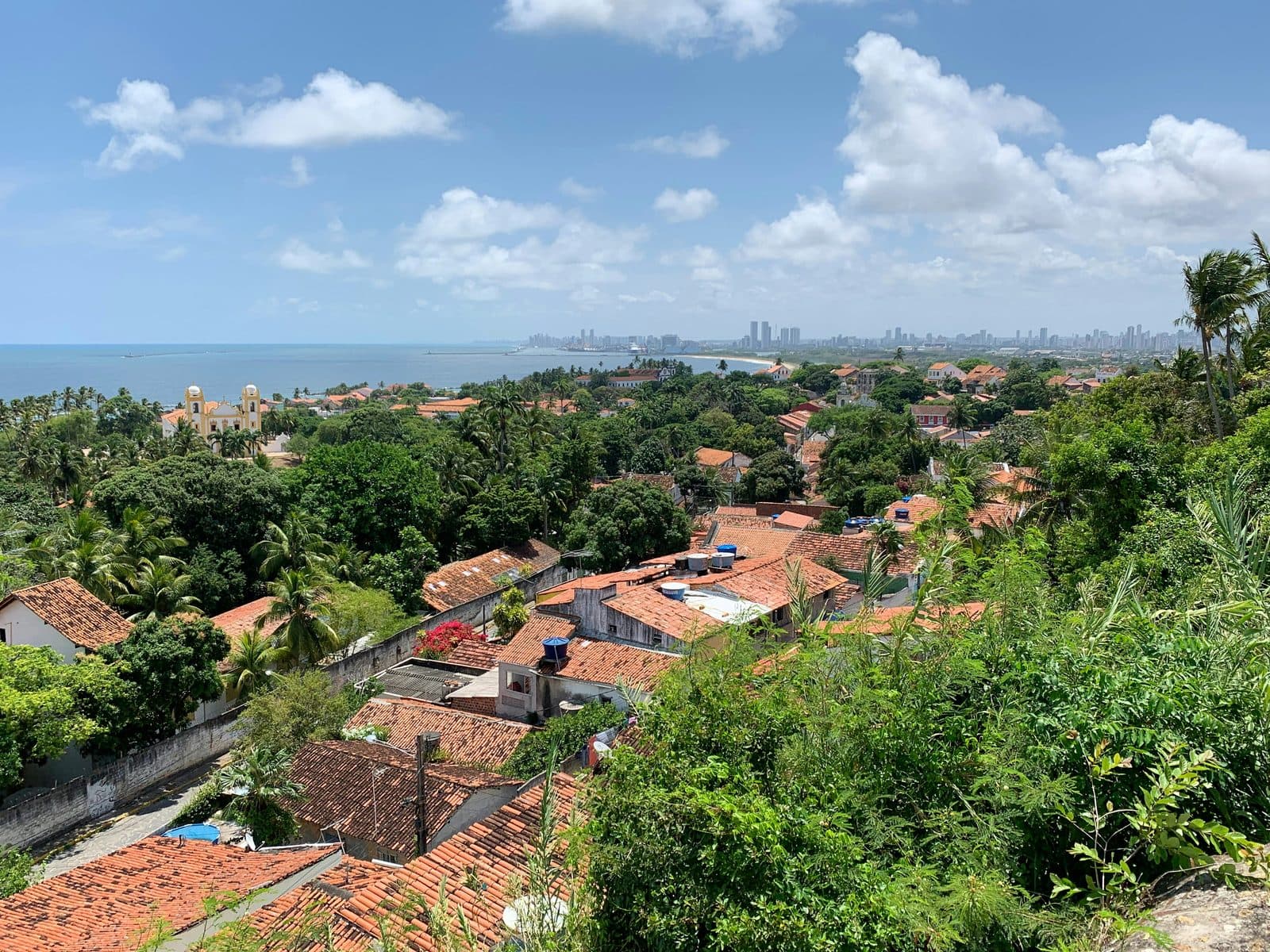
The reason the Alto da Se is the climax of any walk through Olinda is the vantage. From the summit terrace beside the cathedral, the town falls away below you toward the Atlantic, and the ridge reveals itself: the towers of the convents and churches, the red roofs, the pastel walls, and beyond them the flat sprawl and towers of modern Recife on the coastal plain. From up here you can see exactly why Olinda and Recife are two different worlds side by side, the old colonial hill and the modern port. You can trace the line of the town's other great churches, including the Mosteiro de Sao Bento with its altar that crossed an ocean, and understand how the rebuilt town is arranged along its ridge. The Alto da Se is also, in the evenings, a gathering place, with craft stalls and street food and a relaxed crowd watching the light change over the coast.
Reading it in place
Save the Alto da Se for the end of your climb. Step into the cathedral for the sense of Olinda's oldest and most-remade church, then turn to the view and let it do the teaching: the ridge of towers, the sea, the modern city beyond. Knowing that the church under your feet began as a mud chapel, burned, and was crowned a cathedral, you are standing on the exact spot where the town's whole cycle of destruction and rebirth is most legible. Come toward late afternoon for the light and the easy summit crowd.
The cathedral crowns Roamer's Olinda: The Hill They Burned and Rebuilt, which climbs from the harbor gateway to this summit. For the fuller story of the town's destruction and rebuild, see the hill they burned and rebuilt, and to plan the day, see one day in Olinda.
Sources
- Wikipedia, Igreja da Se (Olinda) and Olinda: the cathedral begun as a mud chapel in 1540, replaced in masonry in 1567, used as a stable and burned by the Dutch in 1631, rebuilt after the return of the Portuguese, and elevated to cathedral status in 1676; the Alto da Se as the town's highest point.
- UNESCO World Heritage Centre, Historic Centre of the Town of Olinda: the founding in 1535, the Dutch burning of 1631, and the eighteenth-century reconstruction of the historic town.
- Roamer tour transcript, Olinda: The Hill They Burned and Rebuilt (olinda-colonial-hilltop), fact-audited: the summit cathedral as the crown of the founding hill and the view over the whole town.
Brazil eSIM· 10% off with ROAMER10
Ready to experience it?
Olinda: The Hill They Burned and Rebuilt
90 min · 2.4 km · moderate
More from Olinda
Explore more at your own pace.
Olinda Travel Guide: How Many Days, Getting Around, When to Go (2026)
One Day in Olinda: A Walkable Hilltop Itinerary (2026)
Olinda vs Recife: Which to Stay In, and How to See Both
Olinda: The Hill the Dutch Burned and the Portuguese Rebuilt

What to Eat in Olinda: A Pernambuco Food Guide (2026)