Historic Center: The City That Kept Reassigning Itself
110 min · 3.2 km · moderate
Yes, you can see the heart of Oaxaca in a day. Here is the route.
You cannot fit four thousand years of Zapotec, Mixtec, and Spanish history, plus the ruins ringing the valley, into a single day, and you should not try. What you can do is walk the compact, UNESCO-listed core where the city's most famous sights sit within a few blocks of each other: the colonial Zócalo, the gilded church of Santo Domingo, and the smoke-filled markets that have never stopped being indigenous. This itinerary routes those around a comfortable walking day and names the self-guided Oaxaca walking tour that anchors each block so the history walks with you.
A note on pace before you start. This is a flat but full day, roughly 4 to 6 km on foot, at an altitude of about 1,555 meters, so drink water, take it slowly, and treat the market and mezcal stops below as part of the plan, not interruptions to it.
Morning: the Zócalo and the Cathedral
Start at the Zócalo, the shaded central plaza that has been the city's living room since the sixteenth century, ringed by arcaded portales, café tables, and the fronting Cathedral of Our Lady of the Assumption. The square is the origin point of the Spanish city, traced fresh in 1529 and measured outward from this spot, and it is the natural place to begin reading the centre.
This is the block to walk with the Historic Center: The City That Kept Reassigning Itself self-guided audio tour, a twelve-stop loop of about 3.2 km built on one observation: almost nothing here was ever demolished, and almost everything was reassigned. A convent becomes a car park and then a museum, an army drill yard becomes a botanical garden, a bookbinder's house becomes a national shrine. If you want to go deeper before you walk, the companion piece Who Decides What a Building Is For sets out the argument stop by stop.
Midday: the Andador and Santo Domingo
Hear a stop from this walk
Santo Domingo: A Church, a Barracks, and a Garden in the Drill Yard
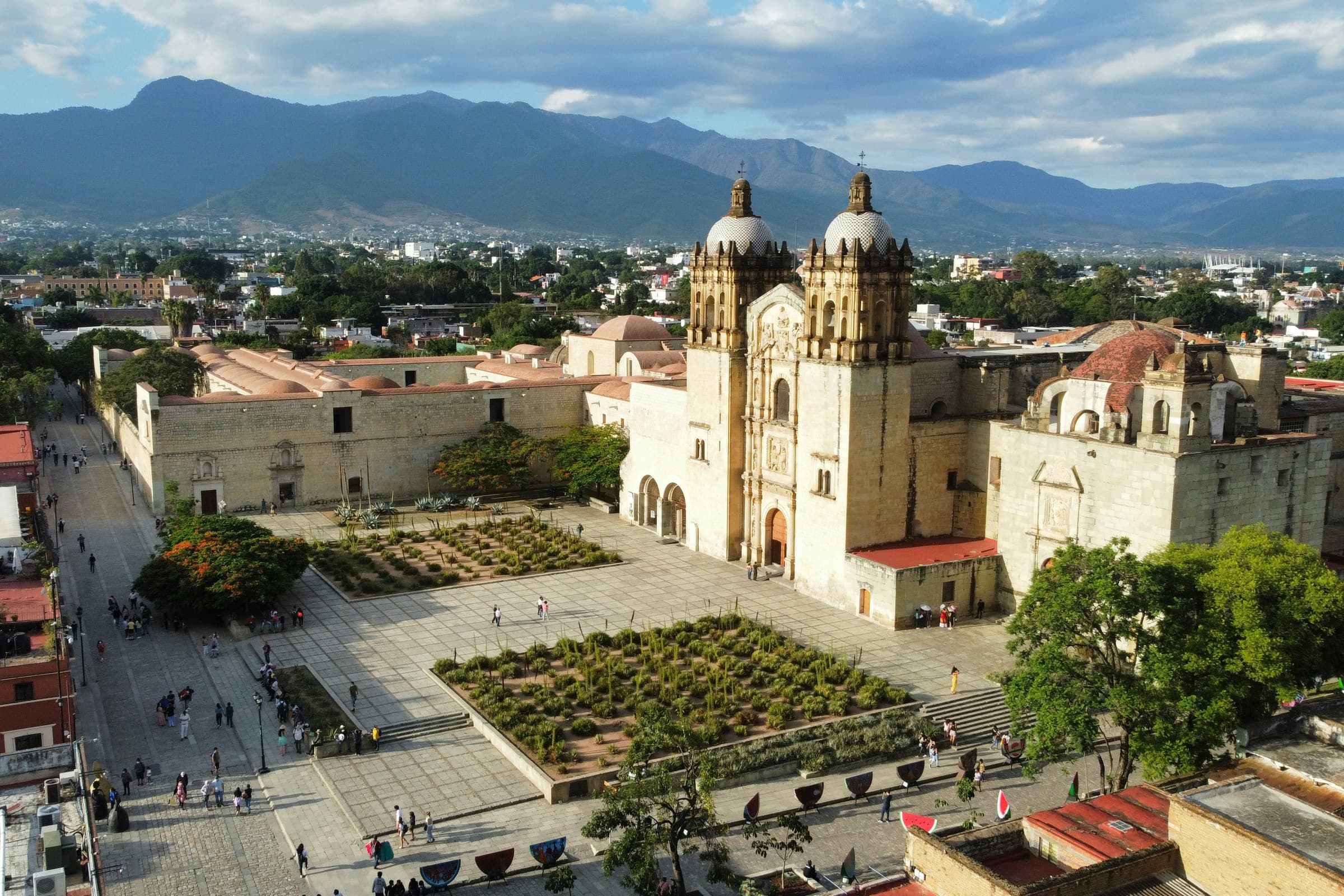
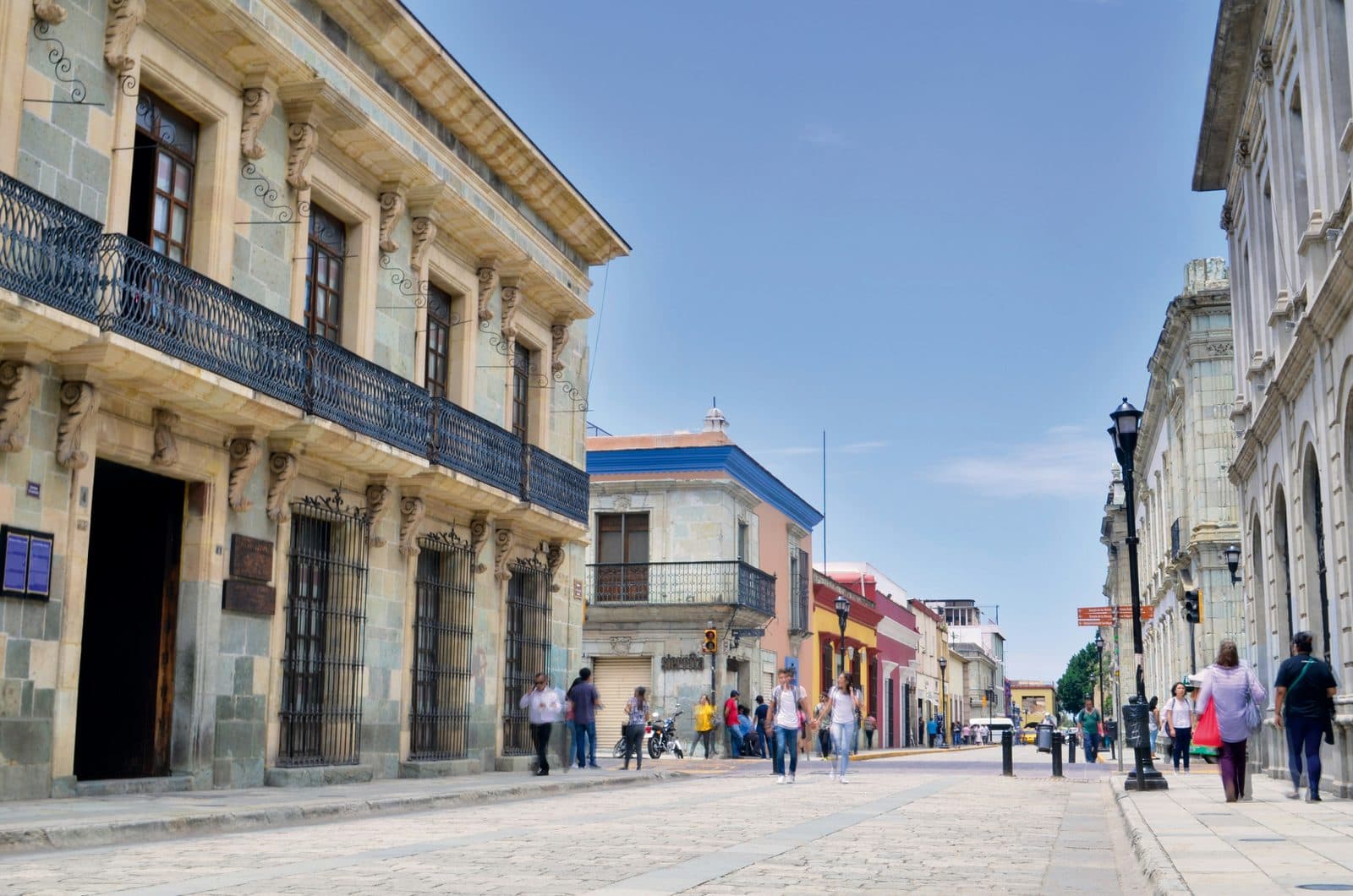
From the Zócalo, walk north up the Andador Macedonio Alcalá, the pedestrian street lined with galleries and courtyards, with the Teatro Macedonio Alcalá at its foot, to the Church of Santo Domingo de Guzmán. This is the climax of the historic center: a baroque complex whose gilded barrel vault was laid in 1659, adjoining the Museo de las Culturas de Oaxaca, which holds the Mixtec offering recovered from Tomb 7 at Monte Albán. Behind the church, the Jardín Etnobotánico grows the plants of the region's indigenous knowledge on ground that was the convent's orchard and then the army's drill yard. It can only be visited on a guided tour, and its gate is a separate one about two hundred metres east of the church, not through the museum.
The gold at Santo Domingo was paid for by a boom you can taste later in the day; the companion piece Santo Domingo de Guzmán: How a Cochineal Boom Built the Gilded Church explains how a tiny insect dye funded all that gilding.
Afternoon: the markets and mezcal
Head a few blocks south of the Zócalo to the two great covered markets. Mercado Benito Juárez is the older general market of produce, chocolate, and crafts; the neighboring Mercado 20 de Noviembre, housed in an 1882 building, holds the famous Pasillo de Humo, the smoke alley where you pick your cut of tasajo or cecina and have it grilled on the spot. This is lunch, and it is the point of the afternoon.
Walk this stretch with the Oaxaca: Markets, Mezcal & The Indigenous Continuity self-guided tour, which reads the markets not as stores but as continuations of Zapotec trade rituals that pre-date the Spanish by a thousand years. For what to order once you are inside, see what to eat in Oaxaca, from the seven moles to tlayudas and quesillo.
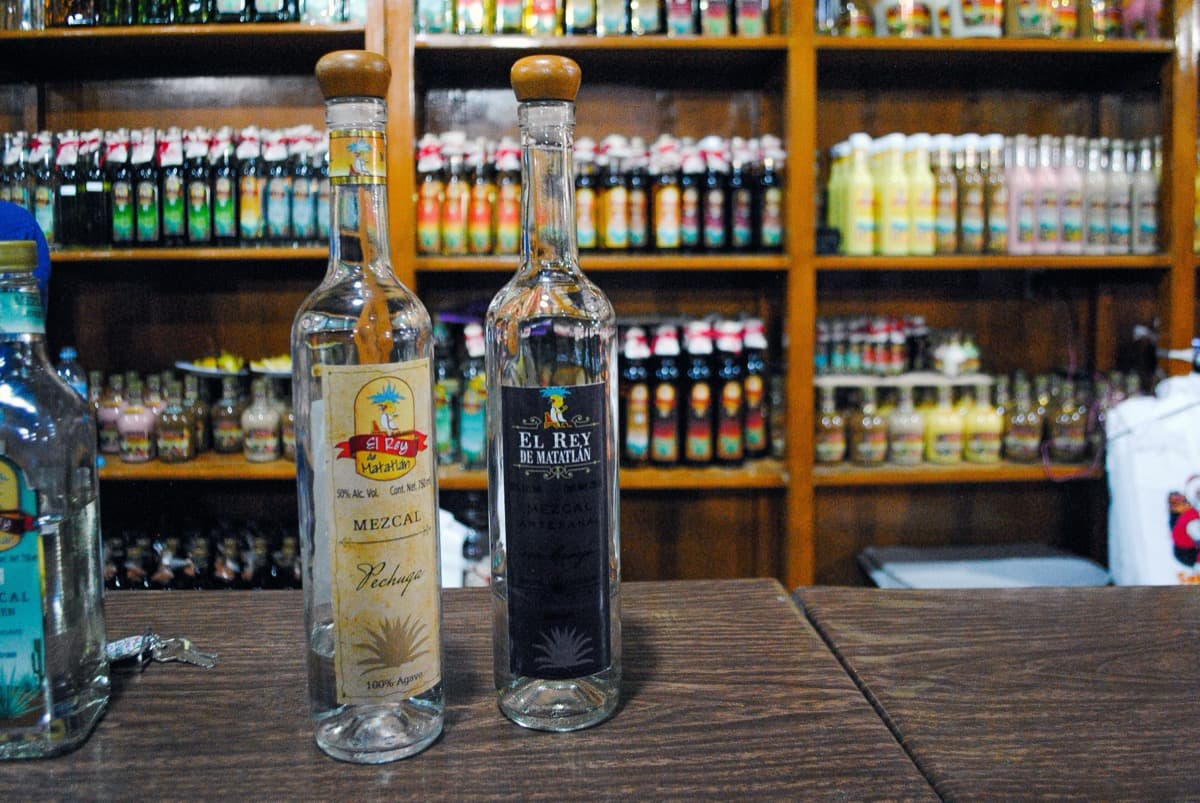
End the afternoon with mezcal, the smoky agave spirit that is Oaxaca's signature. The tour closes on a tasting, and the companion piece What Is Actually In the Glass explains why it is best understood as pre-Columbian liquid memory rather than a novelty shot.
Evening: Jalatlaco or the Zócalo at dusk
For the last light, either drift east to the cobbled barrio of Jalatlaco, a quiet artist neighborhood of painted facades and street art a short walk from Santo Domingo, or simply return to the Zócalo as the café tables fill and the marimbas start. Both are the right register to close a day in Oaxaca: slow, sociable, and lit by string lights rather than a schedule. Dinner is easy either way, the streets around Santo Domingo and the Andador are dense with mezcalerías and mole kitchens.
The one-day route at a glance
| Block | Where | Anchor tour |
|---|---|---|
| Morning | Zócalo, Cathedral, portales | Historic Center: The City That Kept Reassigning Itself |
| Midday | Andador Alcalá, Santo Domingo, museums | (Historic Center tour continues) |
| Afternoon | Mercado Benito Juárez, 20 de Noviembre, mezcal | Oaxaca: Markets, Mezcal & The Indigenous Continuity |
| Evening | Jalatlaco or the Zócalo at dusk | (Markets & Mezcal tour continues) |
A nearby half-day: Monte Albán
If you have a second day, spend a half-day at Monte Albán, the mountaintop Zapotec capital about 10 km (6 miles) west of the city, roughly a 20-minute ride up. This UNESCO World Heritage site served as the Zapotec capital for more than a thousand years, with ceremonial platforms, carved reliefs, a ball court, and sweeping views over the Valley of Oaxaca. Two to four hours covers it comfortably, which is why it belongs on its own half-day rather than crammed into the walking day above.
Plan the rest of your trip
One day covers the historic center. For how many days Oaxaca really deserves, how to get around, and when to go, read the Oaxaca travel guide. For every route in the city, see the best self-guided walking tours in Oaxaca, or browse all Oaxaca tours. Every tour is free to start: the introduction and first stop play in full, and every later stop plays a short preview before an optional purchase.
Frequently asked questions
- Can you see Oaxaca in one day?
- You cannot see all of Oaxaca and its surrounding valley in a day, but you can see the historic center very well. A focused day covers the Zócalo, the Cathedral, the golden church of Santo Domingo, and the great food markets, all within a compact, walkable UNESCO-listed core. The famous Zapotec ruins of Monte Albán sit about 10 km west and deserve their own half-day, so most travelers save them for a second day.
- What is the best area to base a one-day visit to Oaxaca?
- Base yourself in or just around the Centro Histórico, within walking distance of the Zócalo and the pedestrian Andador Turístico that runs up to Santo Domingo. Nearly everything on a one-day route sits inside this compact core, so staying central keeps your walking short and your sightseeing time high. The markets are a few blocks south of the Zócalo, and the barrio of Jalatlaco is a short walk east.
- How much walking is a one-day Oaxaca itinerary?
- Expect roughly 4 to 6 km on foot across the day, almost all of it flat on the level streets of the historic center. Oaxaca sits at about 1,555 meters (5,100 feet) of altitude, so the air is thinner than at sea level; pace yourself, drink water, and build in market and mezcal breaks. Comfortable shoes are enough, the routes have no real hills.
- Do I need to book anything in advance for one day in Oaxaca?
- Most of this route needs no booking: the Zócalo, the churches, the pedestrian streets, and the public markets are all open to walk-ups, and market grazing is pay-as-you-go. The one thing worth reserving is a half-day trip out to Monte Albán if you add it. The self-guided audio tours that anchor each block are free to start and can be downloaded in advance, so the history walks with you even where there is no signal.
Mexico eSIM· 10% off with ROAMER10
Ready to experience it?
Historic Center: The City That Kept Reassigning Itself
110 min · 3.2 km · moderate
More from Oaxaca
Explore more at your own pace.
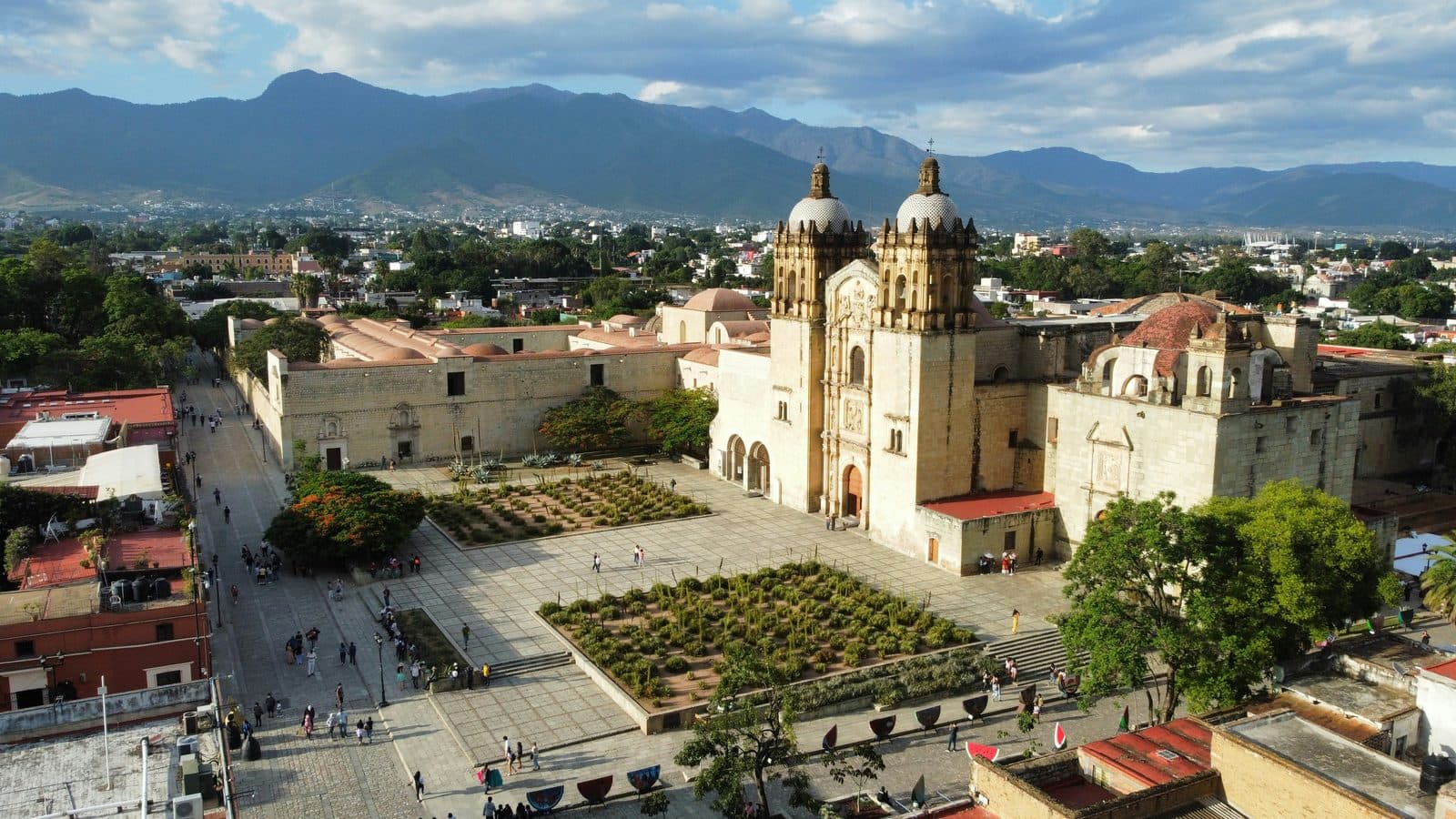
Best Self-Guided Walking Tours in Oaxaca (2026)
Oaxaca Travel Guide: How Many Days, Getting Around, When to Go (2026)
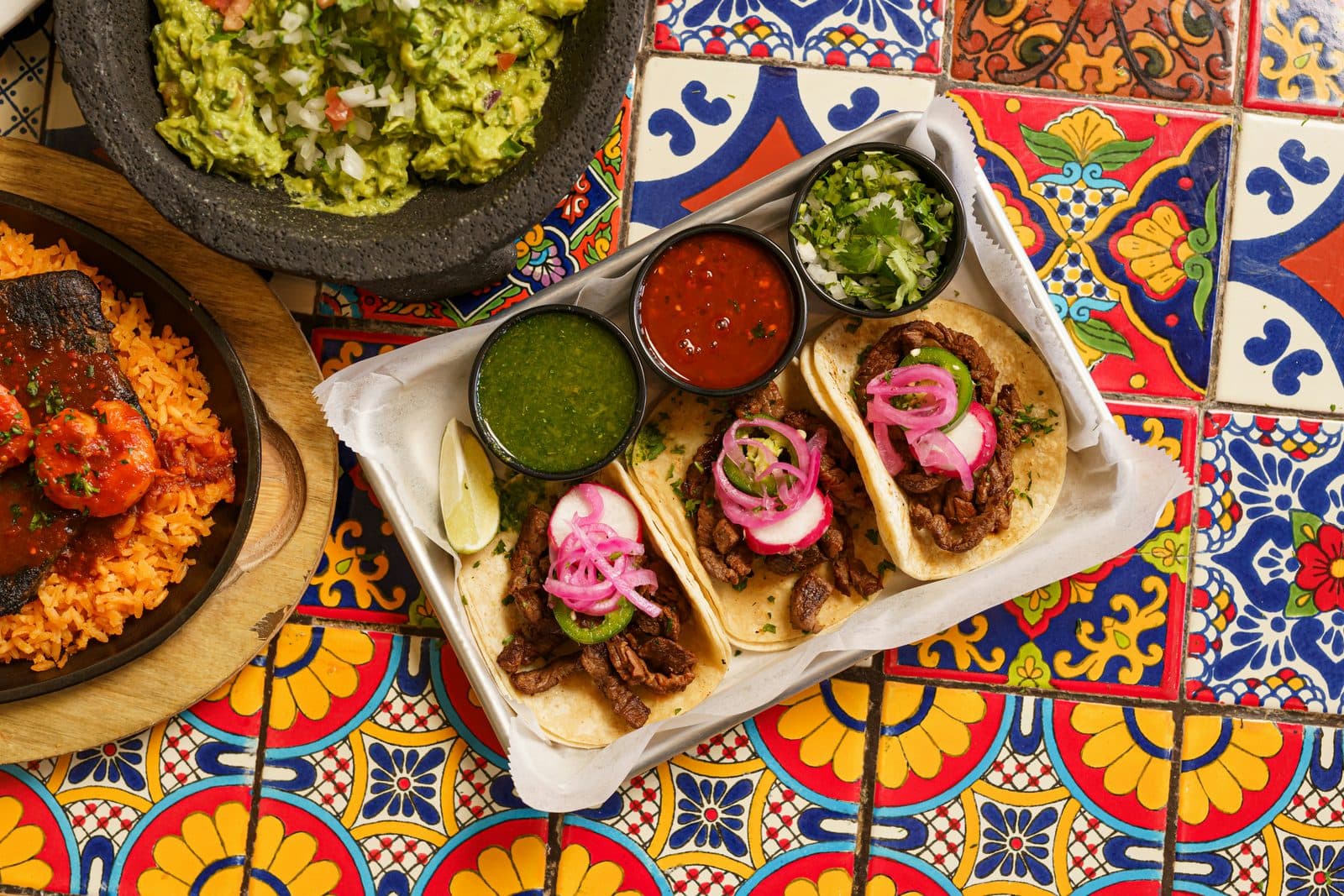
What to Eat in Oaxaca: A Food Guide (2026)
Markets, Mezcal, and the Continuity the Spanish Never Broke
Who Decides What a Building Is For: Reading Oaxaca's Historic Centre