The standard story about indigenous culture in colonial Latin America is that the Spanish disrupted everything and what survived was a fragment. The standard story is wrong about Oaxaca. The Spanish built a colonial town next to the Zapotec and Mixtec valley, and the indigenous trade and craft economy that already supplied the valley kept running. New buyers arrived. New materials became available. The colonial church started taking a tithe. But the actual mechanics, the market cycle, the rotation of producer towns, the agave fermentation, the loom and dye work, were never broken. They are still the mechanics today.
The Markets and Mezcal tour walks four kilometres through the surviving infrastructure of that economy. Eleven stops, two distinct neighbourhoods, ending at a mezcal tasting. This piece is the longer essay on what you are walking through.
The market cycle
The two central markets, Mercado Benito Juárez (Stop 1) and Mercado 20 de Noviembre (Stop 3), are housed in late-nineteenth-century iron-and-glass buildings, but the market on this ground predates the buildings by centuries. The Zapotec ran a rotating market system in the Valley of Oaxaca for at least two thousand years before the Spanish arrived. Different towns held their primary market on different days of the week. Producers travelled the circuit. Consumers timed their purchases to it. The system minimised storage problems for perishable goods and spread economic activity across the valley.
That rotation still exists. The big market days in nearby towns are still staggered: Tlacolula on Sunday, Ocotlán on Friday, Etla on Wednesday, Zaachila on Thursday, Miahuatlán on Monday. The two central markets in the city function as the daily anchor while the rotating valley markets pull producers in on their assigned days. If you are buying a wedding's worth of mole ingredients, you do not buy them all at Juárez. You drive to Tlacolula on Sunday for one thing, Ocotlán on Friday for another. The geography of the cuisine is dispersed across the calendar.
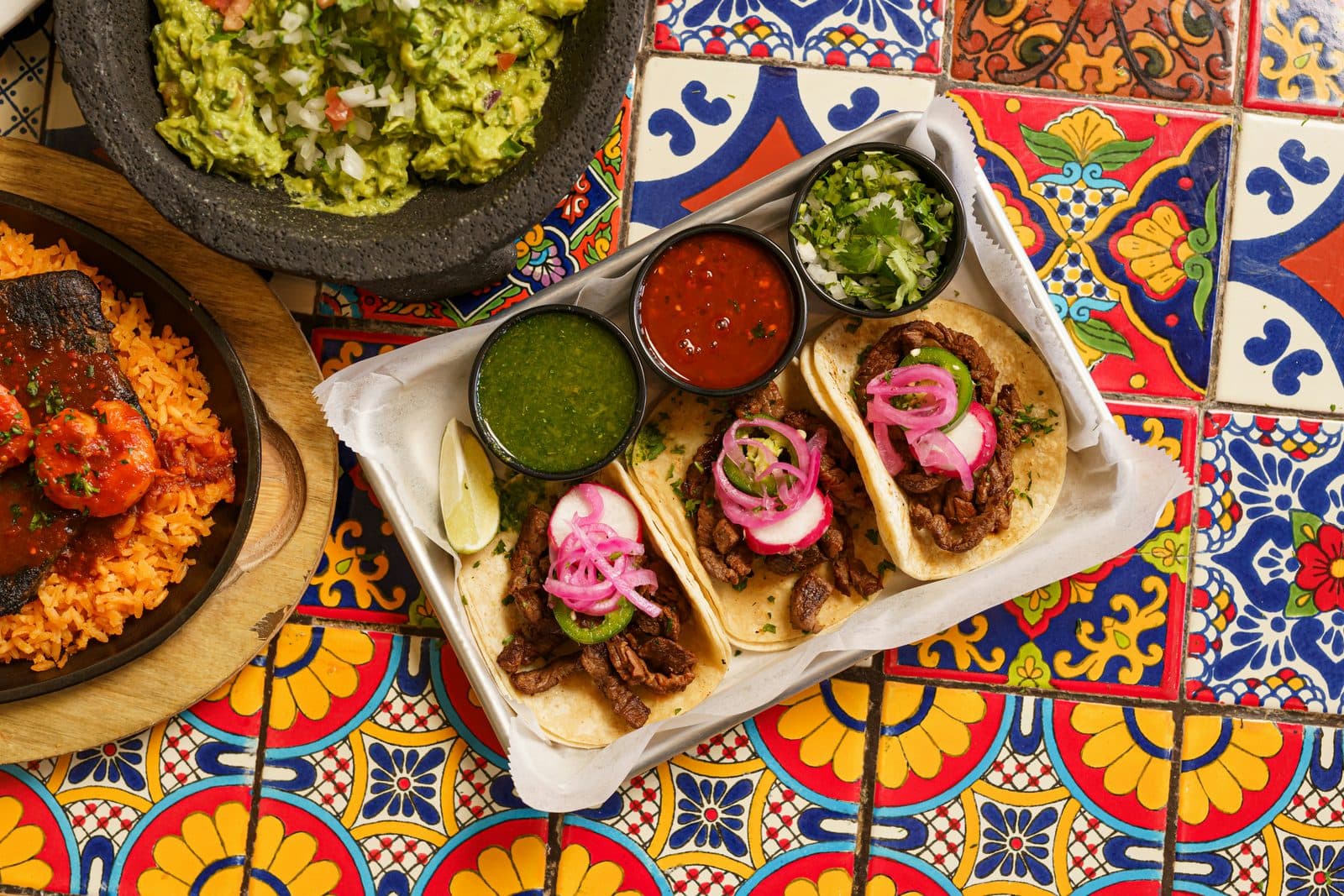
The Pasillo de Humo, the "Hall of Smoke" inside Mercado 20 de Noviembre, is the most concentrated demonstration of what the market actually does. You pick a cut of meat, usually tasajo (a thin marinated beef) or cecina enchilada (a chile-rubbed pork), at a butcher's counter. The vendor hands it to a grill operator who cooks it over coals in the centre of the hall. You pay separately for tortillas, salsas, and grilled onions at adjacent stalls. The supply chain that feeds the hall, from the cattle and pigs raised in the valley to the chiles ground for the salsas, is almost entirely Zapotec and Mixtec. The colonial-era addition was the wheat bread.
The textile thread
Hear a stop from this walk
Mezcal Tasting Experience
Stop 4 is the Museo Textil de Oaxaca, the textile museum. It exists because Oaxaca's loom and dye traditions are old, hyperlocal, and at risk. The state has more than four hundred distinct textile villages, most of them Zapotec or Mixtec, each with its own combination of fibres, weaves, dyes, and motifs. Teotitlán del Valle weaves wool rugs on European-style upright looms. Santo Tomás Jalieza weaves cotton on Zapotec-style backstrap looms. San Pedro Cajonas spins silk. Pinotepa de Don Luis weaves cotton huipiles dyed with caracol púrpura, a purple snail extract that produces a colour you cannot get any other way.
The two dyes that ran the colonial economy still come from this valley. Cochineal, the red insect dye that built half the baroque architecture in Oaxaca, is still produced commercially on prickly pear cactus farms near Tlacolula and Ocotlán. Caracol púrpura, the purple snail dye, is still extracted from live snails on the Pacific coast by Mixtec divers who release the snails after milking them. These are not historical reenactments. They are working industries selling to designers and museums.
The textile museum is a free institution that exists because the painter Francisco Toledo and a group of collaborators recognised that the survival of these traditions depended on the existence of an institution that documented them, exhibited them at a high standard, and made them legible to people who would never visit the producing villages.
The neighbourhood as continuation
The middle stretch of the tour, Stops 6 through 10, walks two neighbourhoods that were originally indigenous suburbs of the colonial town: Jalatlaco and Xochimilco. The names give them away. Jalatlaco means "place of sand in the water" in Nahuatl; Xochimilco means "place of flower fields." Both barrios housed indigenous service populations that worked in the colonial centre but lived outside it. Xochimilco supplied water to the centre through a Spanish-built aqueduct (Stop 7) that overlaid an older Zapotec water management system. Jalatlaco supplied skilled craftsmen.
What the walk shows is what those barrios became when their working populations stayed in place into the late twentieth century. Both are now thick with street art. Jalatlaco's murals are softer, more decorative, more obviously aimed at the people walking through. Xochimilco's murals are harder. They reference the forty-three students disappeared in Ayotzinapa in 2014, the 2006 Oaxacan teachers' strike that turned the city into a months-long political occupation, and the ongoing fight against transgenic corn imports that threaten the native Mexican varieties. The corn imagery is everywhere because Oaxaca is one of the places where corn was domesticated from wild teosinte grass roughly nine thousand years ago. The state still grows dozens of native corn varieties (blue, red, yellow, white, multicoloured) each adapted to a specific microclimate. The murals are arguing that this genetic heritage is not separable from the people who curate it.
The Sánchez Pascuas detour
Stop 5, the Mercado Sánchez Pascuas, is a deliberate counter to the two central markets. It is a neighbourhood market, the kind of place where Oaxacans buy their daily tortillas and herbs. There are no souvenir vendors. The tortillas are hand-patted in front of you on a hot comal. The herb stalls sell hierba santa, chepil, and pitiona, three local herbs that essentially do not exist outside the state. Hierba santa is a heart-shaped leaf that wraps tamales and flavours mole verde. Chepil is a leguminous herb that grows wild in the Oaxacan countryside. Pitiona is a Oaxacan variant of oregano. None of these are luxury ingredients. They are what the women shopping at Sánchez Pascuas have been buying every morning for as long as the market has existed, and they are the reason Oaxacan home cooking is genuinely irreproducible elsewhere.
The market also showcases nixtamalization, the process of soaking dried corn in lime water before grinding it into masa. Nixtamalization was invented in Mesoamerica thousands of years ago and is one of the most consequential food innovations in human history. Without it, corn lacks key bioavailable nutrients, and a corn-based diet causes pellagra. With it, corn becomes a complete enough staple to sustain civilisations. Every tortilla you eat in Oaxaca rests on a chemistry the Zapotec worked out before the wheel reached the Americas.
The mezcal climax
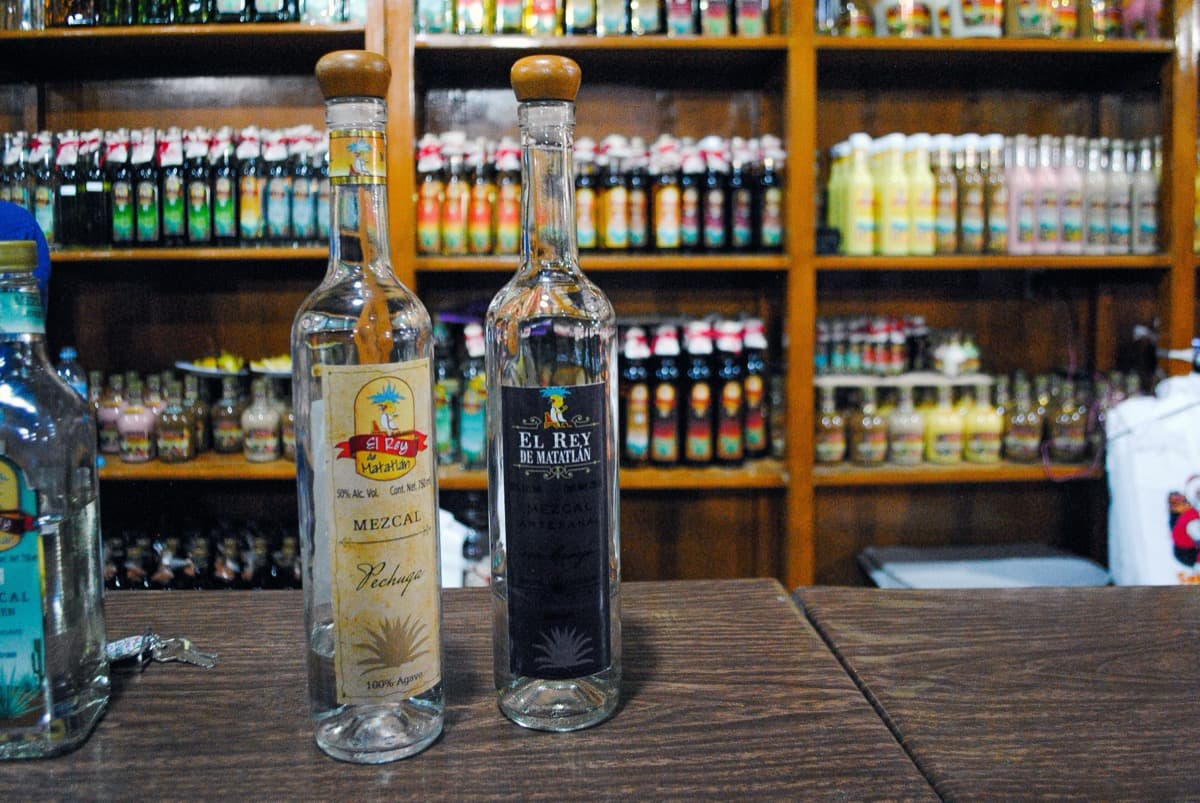
The tour ends with a guided mezcal tasting (Stop 11), and the climax is structured this way because mezcal is the most concentrated demonstration of indigenous continuity in the whole circuit. A dedicated POI deep-dive piece covers the technique. The short version is this. Mezcal is produced by roasting the heart of an agave plant in a stone-lined earth pit for several days, fermenting the resulting sweet pulp in open wooden vats, and distilling the wash in small copper or clay stills. The Zapotec and Mixtec were doing the first two steps for at least a thousand years before the Spanish arrived; the distillation step was added in the 1500s, possibly with Spanish copper, possibly with Filipino clay stills brought across the Pacific by the Manila galleon trade. The recipe is older than the bottle.
The tour finishes here because the mezcal tasting collapses the argument into one drink. Pre-Columbian agriculture, colonial-era distillation, twentieth-century certification standards, and twenty-first-century international demand are all in the glass. That is the city in miniature. The layers are stacked, but they are still side by side, and they are still working.
Mexico eSIM· 10% off with ROAMER10
Ready to experience it?
Oaxaca: Markets, Mezcal & The Indigenous Continuity
150 min · 3.5 km · easy
More from Oaxaca
Explore more at your own pace.
Best Self-Guided Walking Tours in Oaxaca (2026)
Oaxaca Travel Guide: How Many Days, Getting Around, When to Go (2026)
One Day in Oaxaca: A Walkable Historic-Center Itinerary (2026)
What to Eat in Oaxaca: A Food Guide (2026)
Who Decides What a Building Is For: Reading Oaxaca's Historic Centre