Yes, you can see the heart of Bogotá in a day. Here is the route.
You cannot fit an eight-million-person Andean capital into a single day, and you should not try. What you can do is walk the dense, connected old town where its most famous sights sit within a few blocks of each other: the colonial streets and grand plaza of La Candelaria, two of Latin America best museums, the open-air graffiti that covers half the neighbourhood, and the Monserrate viewpoint that puts the whole city at your feet. This itinerary routes those around a comfortable walking day, and names the self-guided Bogotá walking tour that anchors each block so the history walks with you.
A note before you start. Bogotá sits at about 2,640 metres, one of the highest capital cities in the world, so you will feel the thin air on the hills and stairs. Take the first part of the day gently, drink more water than you think you need, and treat the museum and food stops below as part of the plan, not interruptions to it. If you only just arrived, this walkable, low-effort day is actually an ideal first day while you acclimatize.
Morning: La Candelaria and Plaza Bolívar
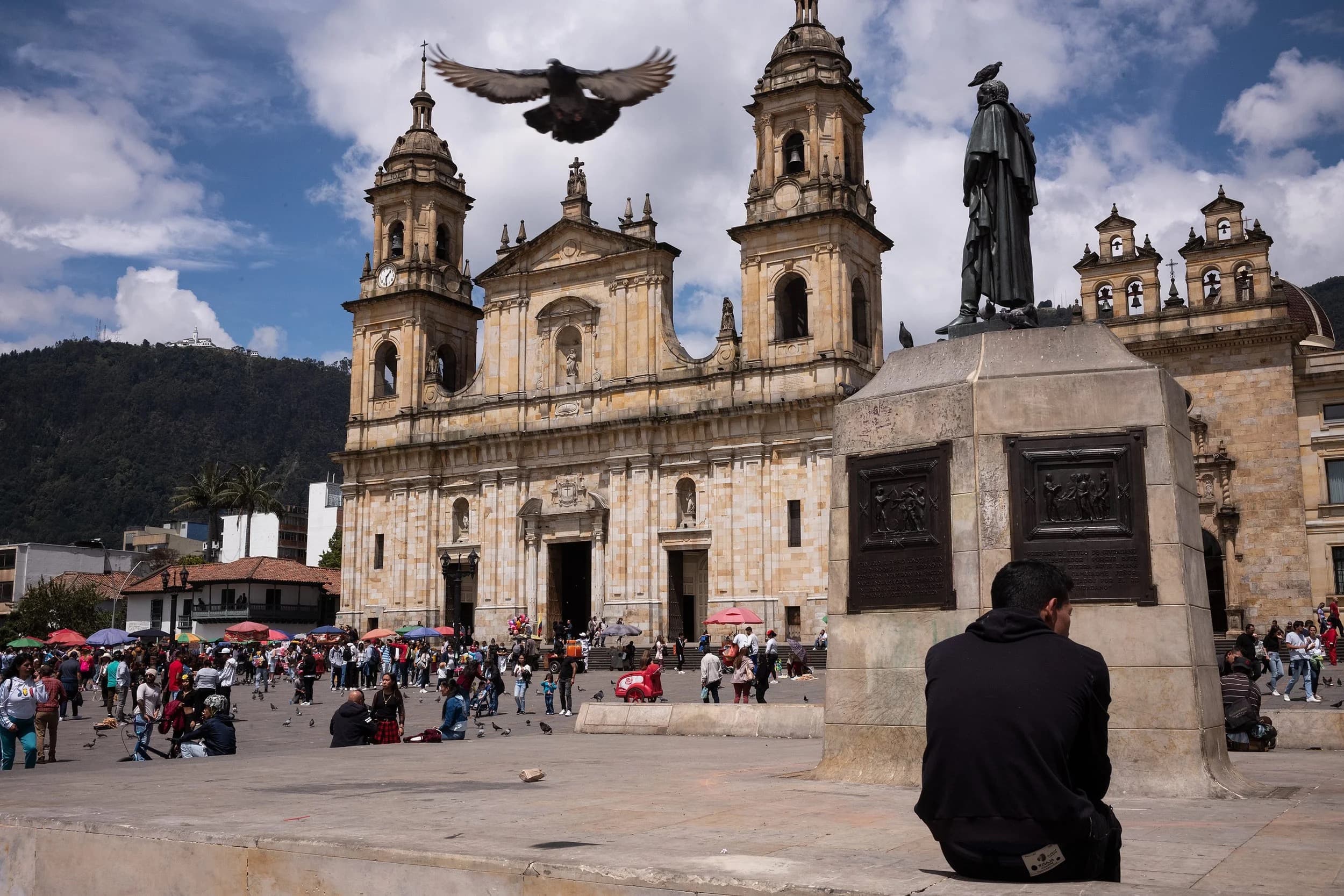
Start early, ideally by 8:30, while La Candelaria is quiet and cool and before the plaza crowds build. Begin at Plaza Bolívar, the vast main square ringed by the neoclassical Cathedral, the Capitolio Nacional, the mayor palace, and the Palace of Justice, the ceremonial center of the whole country. From there, wind into the colonial streets of La Candelaria: cobblestones, ochre and blue two-storey houses with wooden balconies, the university quarter, and small plazas like Chorro de Quevedo, the spot traditionally held to be where the city was founded.
This is the block to walk with the Historic Heart of Bogotá self-guided audio tour. It reads La Candelaria as what it really is: the layered old core where Muisca gold, Spanish conquest, and a flower vase that helped spark a revolution all left their mark. If you want to go deeper on the neighbourhood before you walk, the companion piece The Paradox of La Candelaria is a good primer, and Bogotá: How a 2,640-Metre City Works explains the plateau the whole city is balanced on.
Midday: the Gold Museum and the Botero Museum
Hear a stop from this walk
Plazoleta del Chorro de Quevedo
Late morning is for Bogotá two signature museums, and both sit within a short walk of Plaza Bolívar.
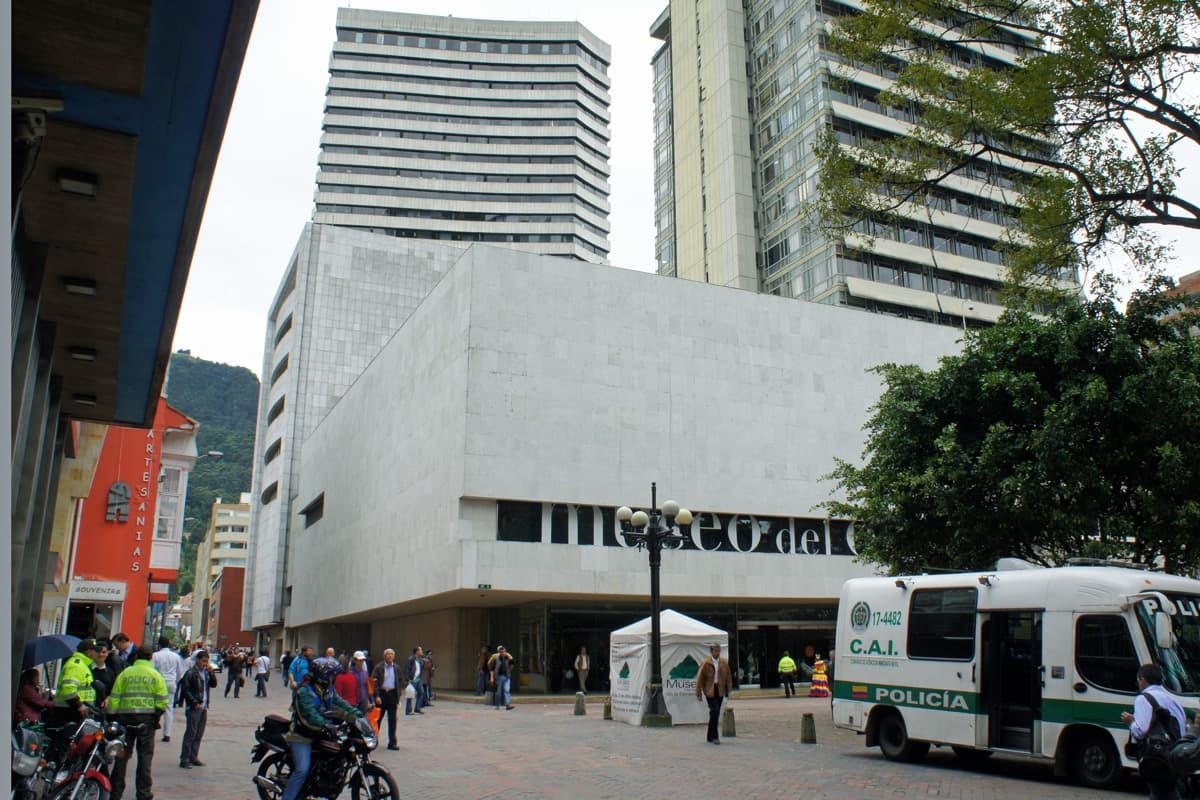
The Gold Museum (Museo del Oro) holds one of the world most important collections of pre-Hispanic metallurgy, tens of thousands of gold pieces from the Muisca and other cultures, including the tiny Muisca votive raft that stands behind the El Dorado legend. Adult admission is only a few thousand pesos, and it closes on Mondays. To understand the single object at its heart before you go, read The Muisca Raft.
A few blocks away, the Botero Museum (Museo Botero) is free, closed Tuesdays, and holds more than 120 works Fernando Botero donated, his own rounded figures alongside pieces by Picasso, Dalí, Monet, and Miró, in a restored colonial mansion. Free entry was a condition of Botero own gift.
This is the natural point to break for lunch. La Candelaria is full of set-menu almuerzo spots, and this is the moment to try the city signature dish. See what to eat in Bogotá for the dishes worth ordering, starting with ajiaco santafereño, the herb-scented chicken and potato soup that is the taste of the city.
Afternoon: the street art of La Candelaria
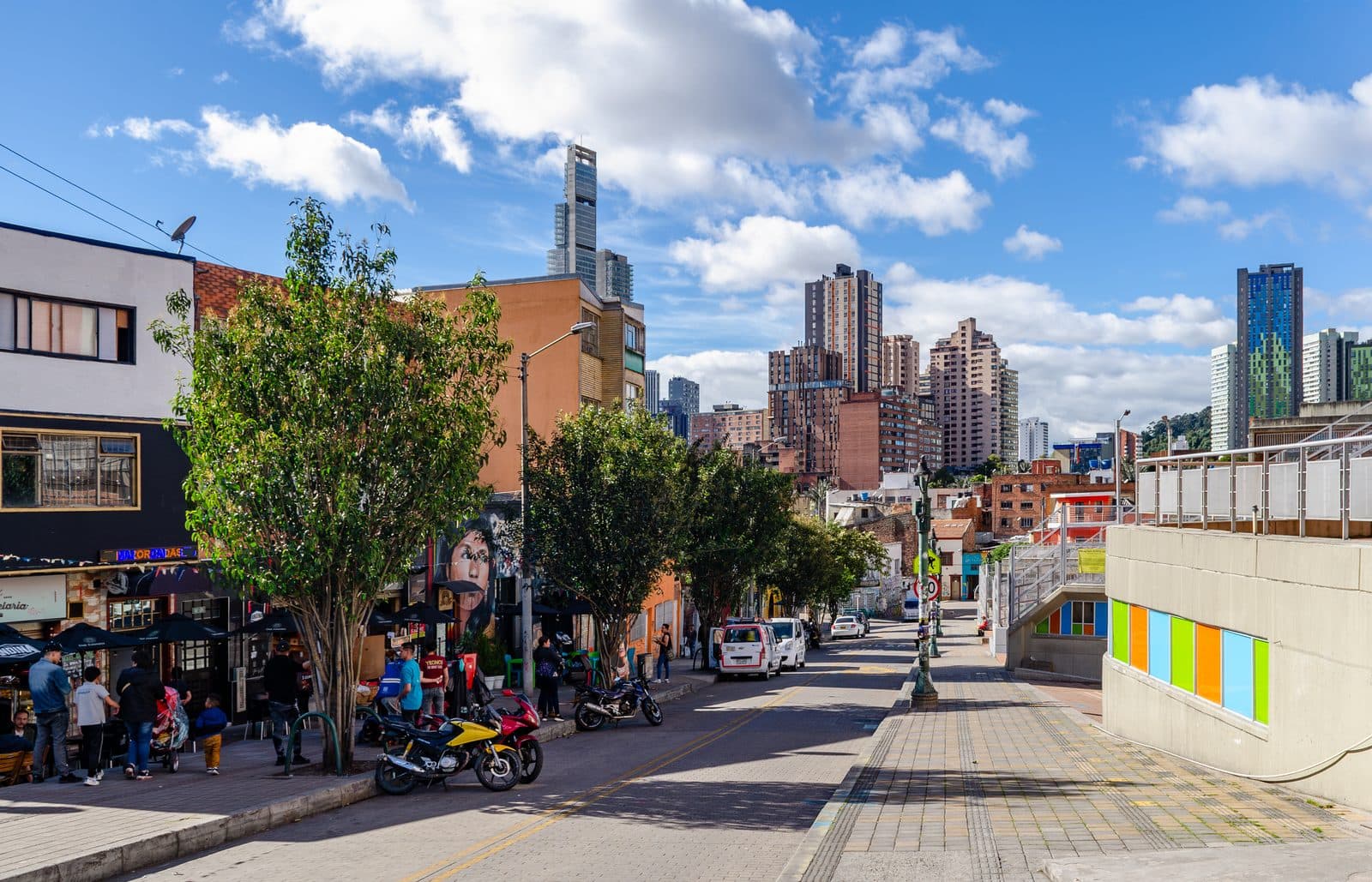
Early afternoon, let the neighbourhood become an open-air gallery. Bogotá has one of the most celebrated street art scenes in the world, concentrated right here in La Candelaria and spilling up toward bohemian La Macarena, from giant political murals to delicate stencil work by artists like Stinkfish and DJ Lu.
Walk it with the Street Art and Bohemia self-guided tour, which reads the murals as what they are: a scene born from tragedy and a change in the law that turned much of the city into a sanctioned canvas. The companion pieces How One Death and One Law Made Bogotá a Painted City and Parque de los Periodistas fill in the true story behind the paint.
Evening: the Monserrate view at dusk
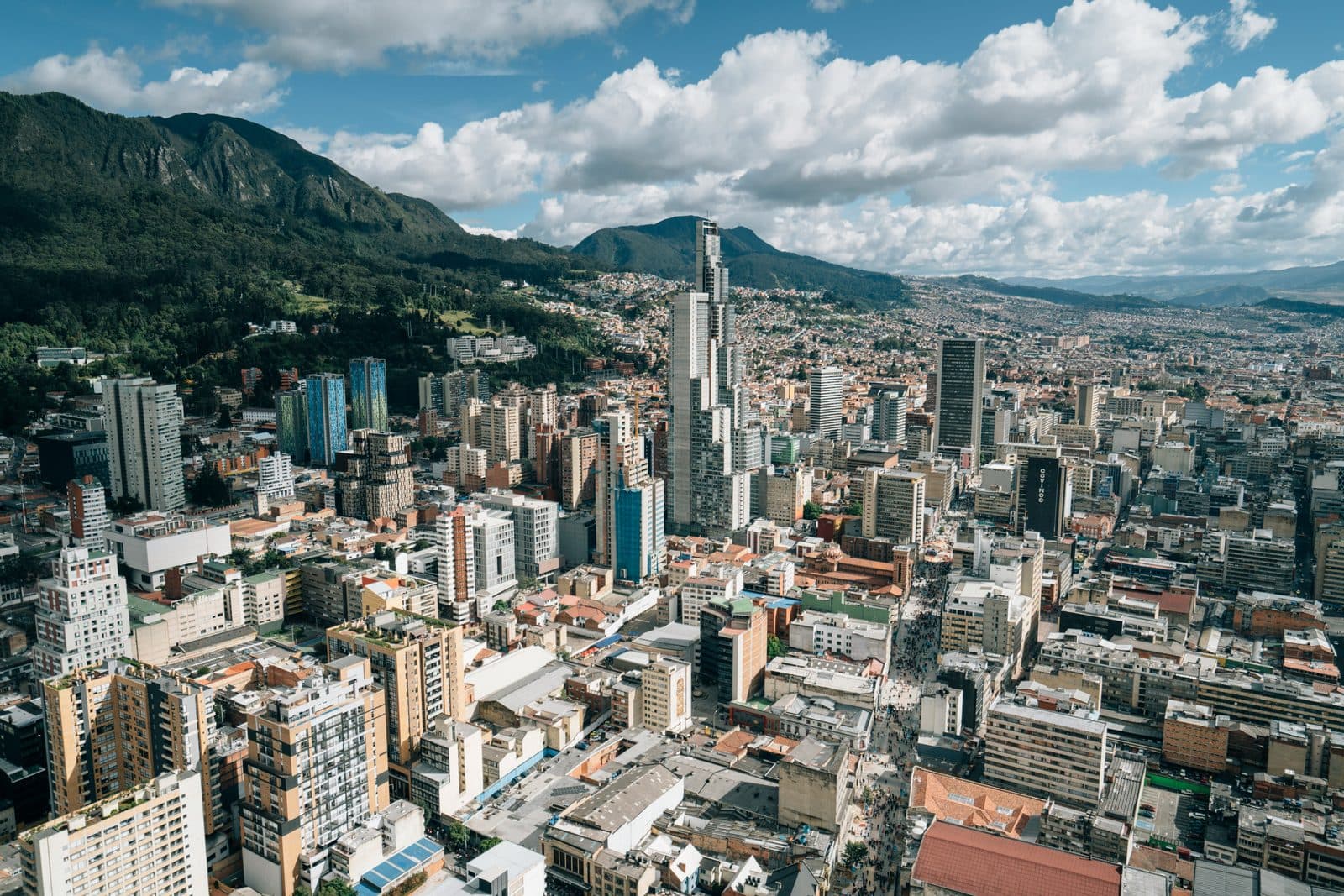
Finish the day high above the city. Monserrate rises to 3,152 metres directly behind La Candelaria, crowned by a white pilgrimage church, and you reach the top by funicular or cable car rather than walking, which is exactly right on a high-altitude day. Time it for late afternoon so you catch the city in daylight and then watch the lights come on as the sun drops behind the western plain. The 360-degree view over eight million people on a plateau is the single best way to grasp how the city sits in the Andes.
Come back down before it gets late, and take an Uber or a registered taxi rather than walking dark streets. Then eat well: this is the hour for a proper Bogotá dinner, hot chocolate with cheese if you want the local classic, or a table in the Candelaria or La Macarena.
The one-day route at a glance
| Block | Where | Anchor tour |
|---|---|---|
| Morning | Plaza Bolívar, La Candelaria colonial streets | Historic Heart of Bogotá |
| Midday | Gold Museum, Botero Museum, lunch | (Historic Heart tour continues) |
| Afternoon | La Candelaria street art, La Macarena | Street Art and Bohemia |
| Evening | Monserrate funicular, viewpoint, dinner | (self-guided, view stop) |
Plan the rest of your trip
One day covers the historic heart. For how many days Bogotá really deserves, how to get around, when to go, and how to stay safe, read the Bogotá travel guide. For every route in the city, see the best self-guided walking tours in Bogotá, or browse all Bogotá tours. Every tour is free to start: the introduction and first stop play in full, and every later stop plays a short preview before an optional purchase.
Frequently asked questions
- Can you see Bogotá in one day?
- You cannot see all of Bogotá in a day, but you can see its historic heart well. A focused day covers La Candelaria, the colonial old town, plus Plaza Bolívar, the Gold Museum (Museo del Oro), the Botero Museum, the street art scene, and the Monserrate viewpoint, almost all of it on foot within a compact district. Sprawling modern areas like Chapinero, Usaquén, and the northern zones are best saved for a second day, since reaching them means crossing a very large city.
- What is the best area to base a one-day visit to Bogotá?
- Base yourself in or right beside La Candelaria, the historic center. Almost every must-see on a one-day route sits within a few walkable blocks here: Plaza Bolívar, the Gold Museum, the Botero Museum, the colonial streets, and the funicular up to Monserrate. Staying central keeps your walking time low and your sightseeing time high, and it means you are close to Uber or a registered taxi when you head out in the evening.
- How much walking is a one-day Bogotá itinerary?
- Expect roughly 4 to 6 km on foot across the day, most of it flat within La Candelaria, plus stairs and steep colonial streets. The one real climb is Monserrate, and you take the funicular or cable car up rather than walking. Remember Bogotá sits at about 2,640 metres, so you tire faster than at sea level: pace yourself, drink extra water, and treat the museum and food stops as rest as much as sightseeing.
- Do I need to book anything in advance for one day in Bogotá?
- Most of this route needs no booking: the plazas, streets, and murals are free to walk, the Botero Museum is free, and the Gold Museum charges only a few thousand pesos. Monserrate tickets can be bought on arrival, though buying online avoids a queue. The self-guided audio tours that anchor the day are free to start and can be downloaded in advance, so you can walk with narration even where signal is patchy.
Colombia eSIM· 10% off with ROAMER10
Ready to experience it?
Historic Heart
100 min · 3 km · moderate
More from Bogota
Explore more at your own pace.
Best Self-Guided Walking Tours in Bogotá (2026)
Bogotá Travel Guide: How Many Days, Altitude, Getting Around, Safety (2026)

What to Eat in Bogotá: A Colombian Food Guide (2026)
The Paradox of La Candelaria: Power, Gold, and Everything Visitors Came For
Parque de los Periodistas: The Park That Started a Law