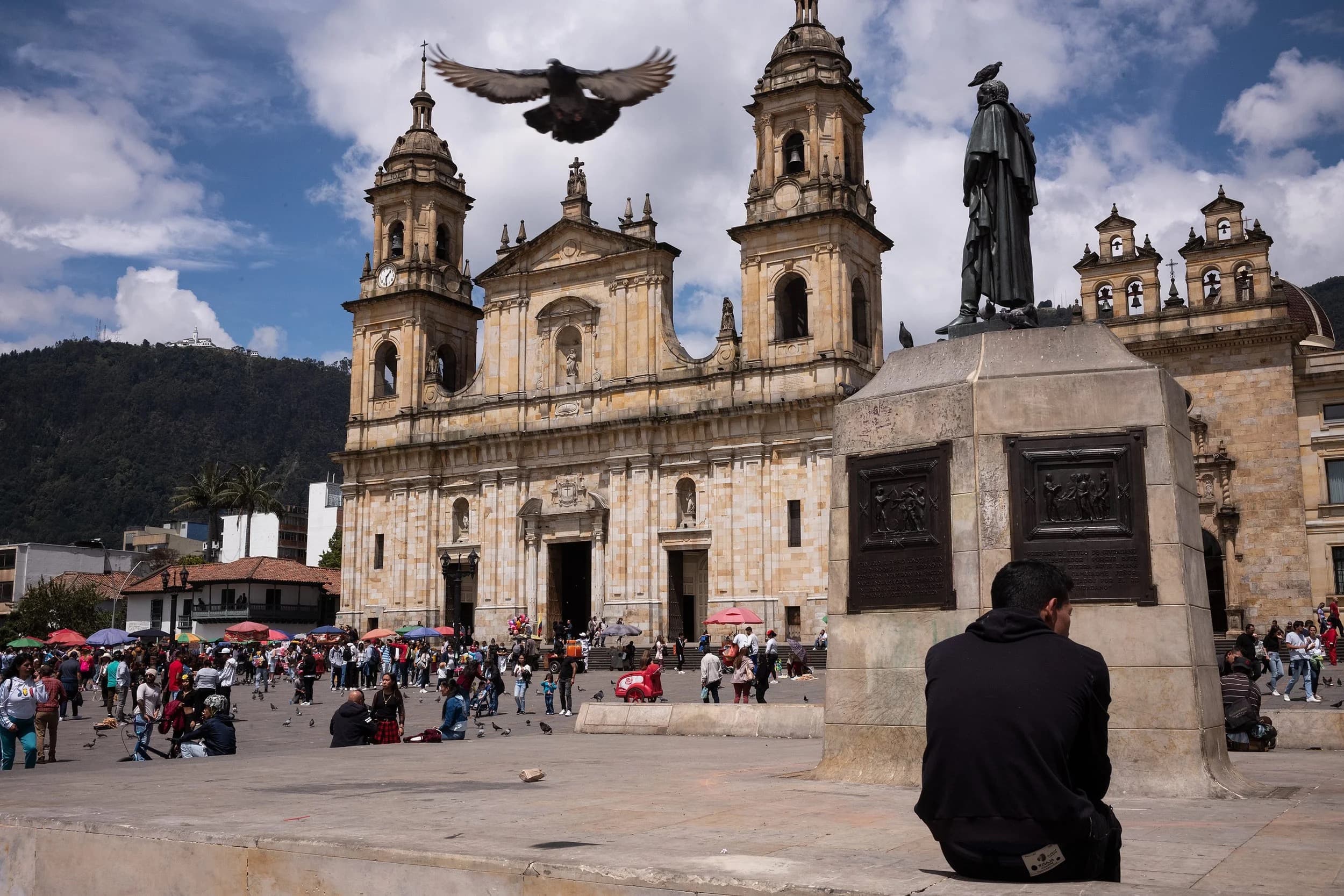
From the Muisca gold that inspired the El Dorado legend to the flower vase that sparked a revolution — walk through 500 years of Colombian history in La Candelaria.
Start · Plaza de Bolívar
DirectionsStops
- 1
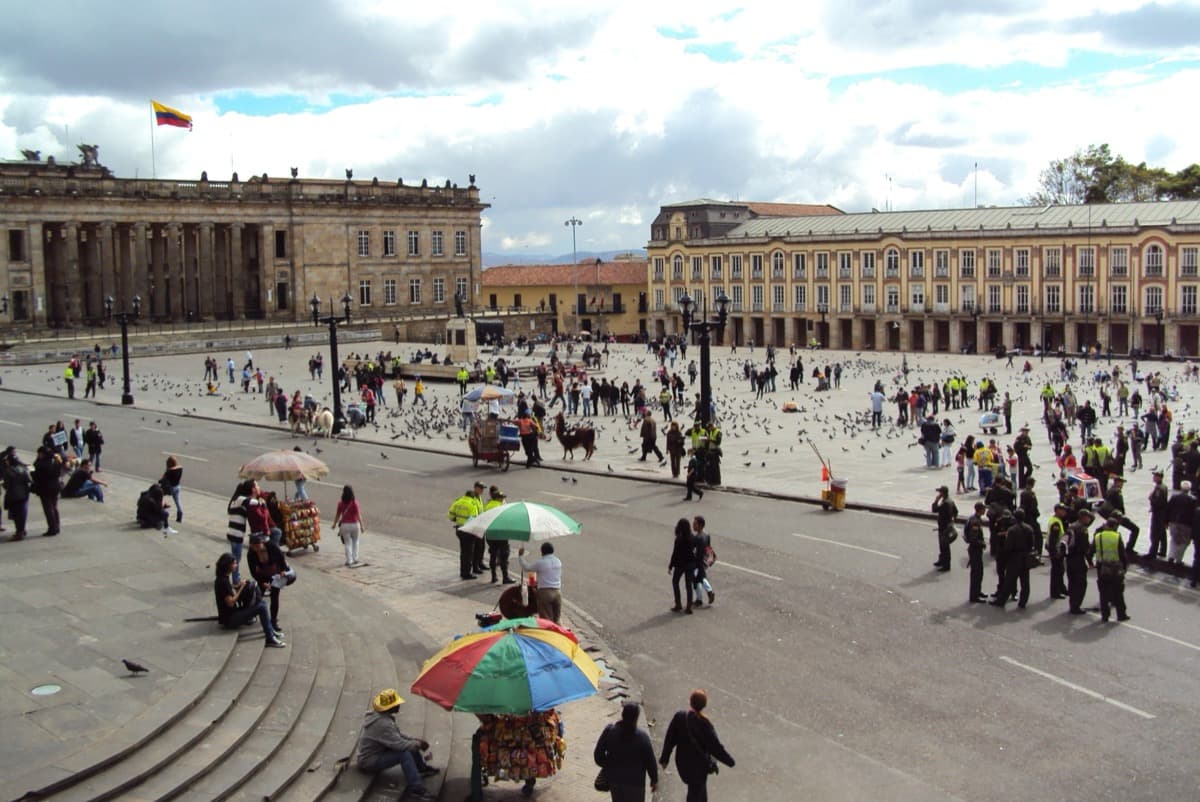
Plaza de Bolívar
The political and symbolic center of Colombia, flanked by the Cathedral, Congress, Palace of Justice, and City Hall.
- 2
Casa del Florero (Museo de la Independencia)
The site of the 'flower vase incident' on July 20, 1810 — the spark that ignited Colombian independence.
- 3
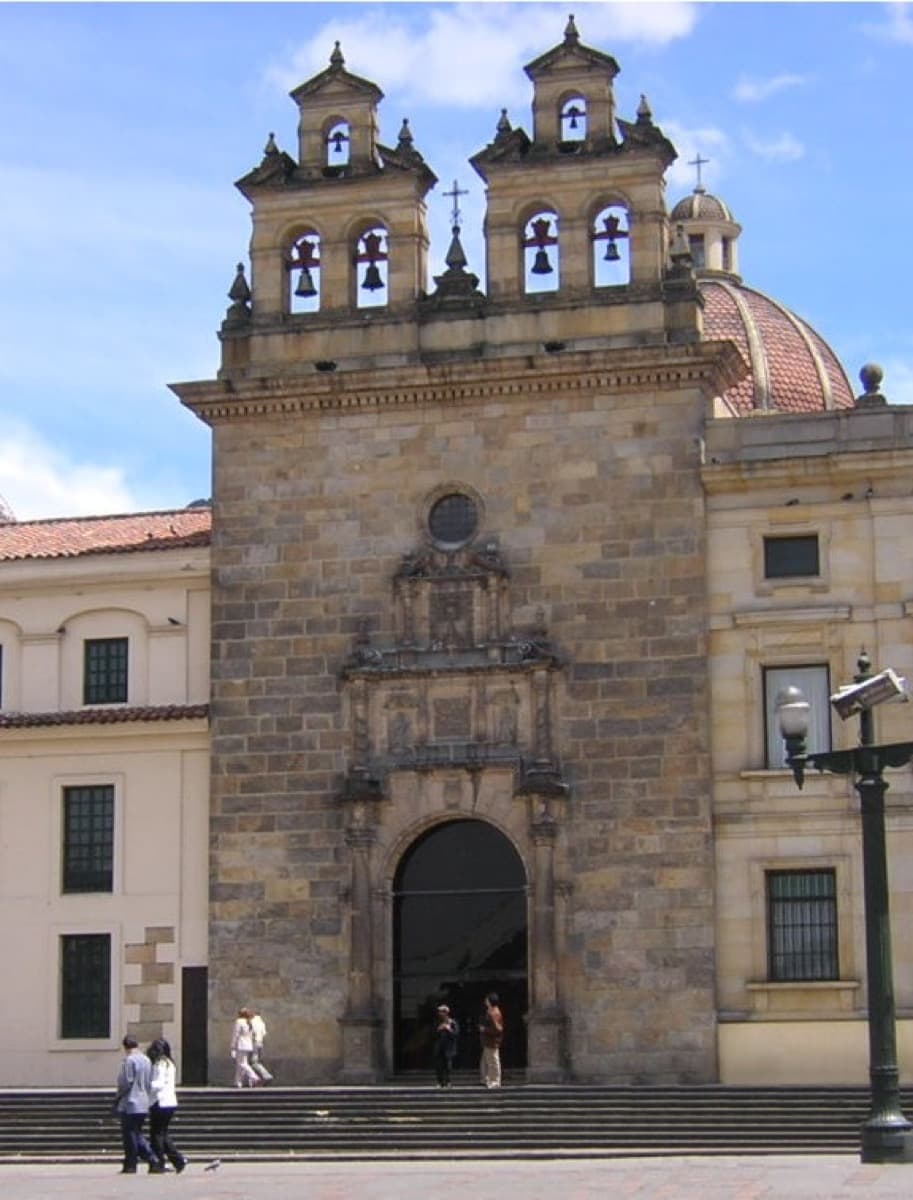
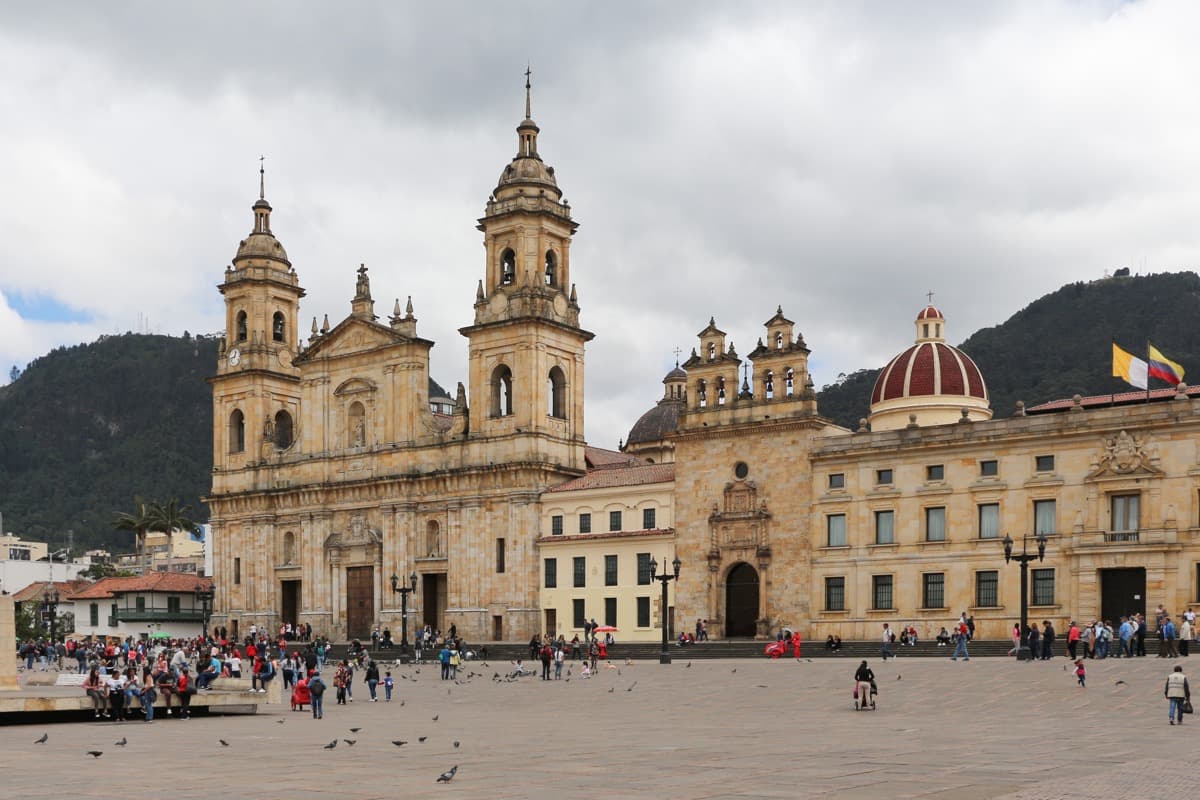
Catedral Primada & Capilla del Sagrario
Colombia's largest cathedral and the exquisite baroque Capilla del Sagrario, housing the tomb of Bogotá's founder.
- 4
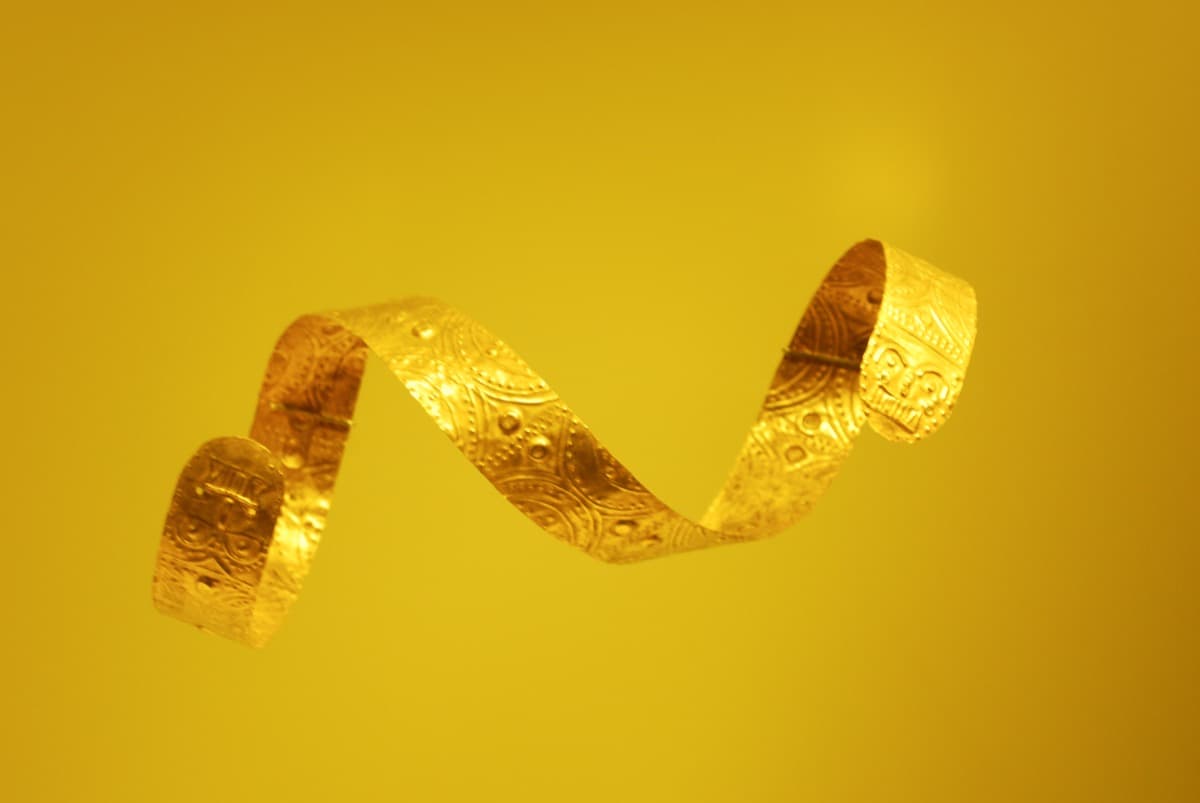
Iglesia de San Francisco
Bogotá's oldest surviving church (1557-1621), with a towering gilded altarpiece and Mudéjar ceiling.
- 5
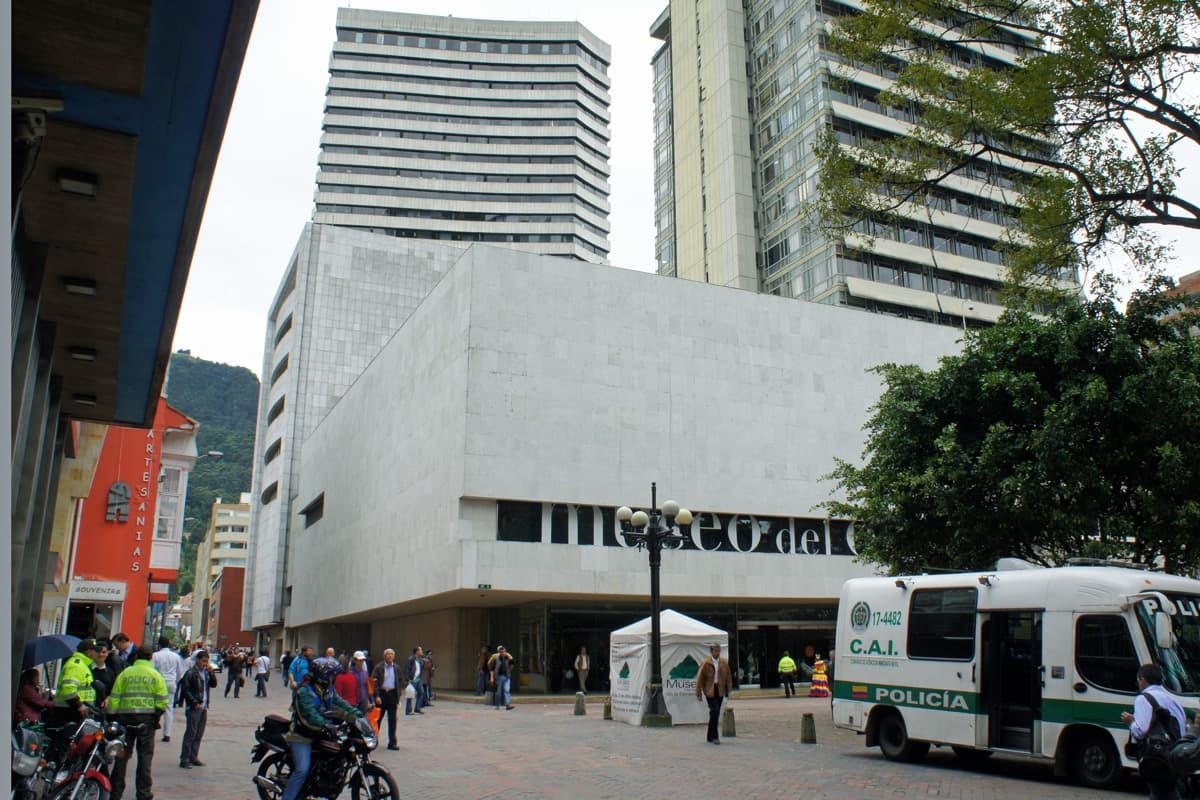
Museo del Oro (Gold Museum)
Home to 55,000 pre-Columbian gold pieces including the legendary Muisca Raft — the artifact behind the El Dorado myth.
- 6
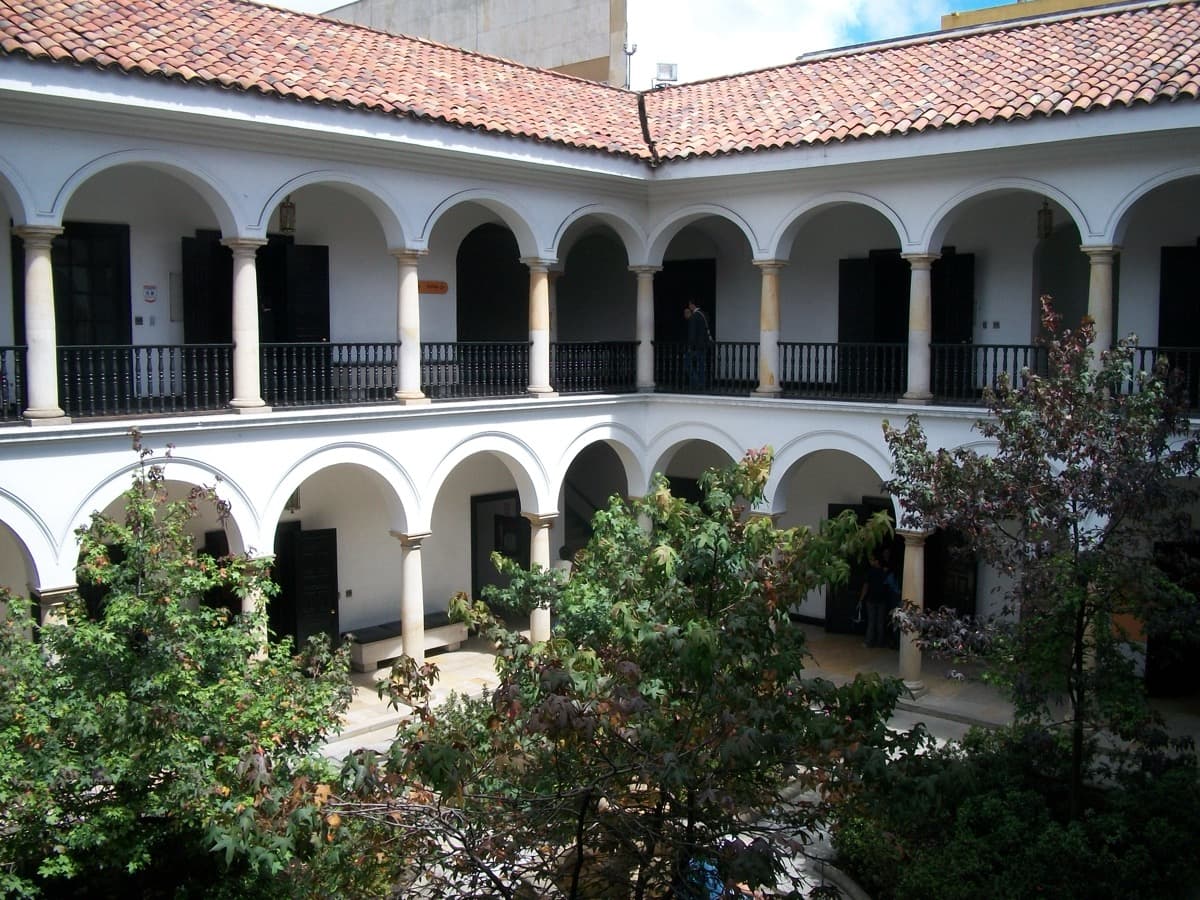
Museo Botero
Fernando Botero's extraordinary gift to Colombia — 200+ works including his own paintings and pieces by Picasso, Renoir, and Dalí.
- 7
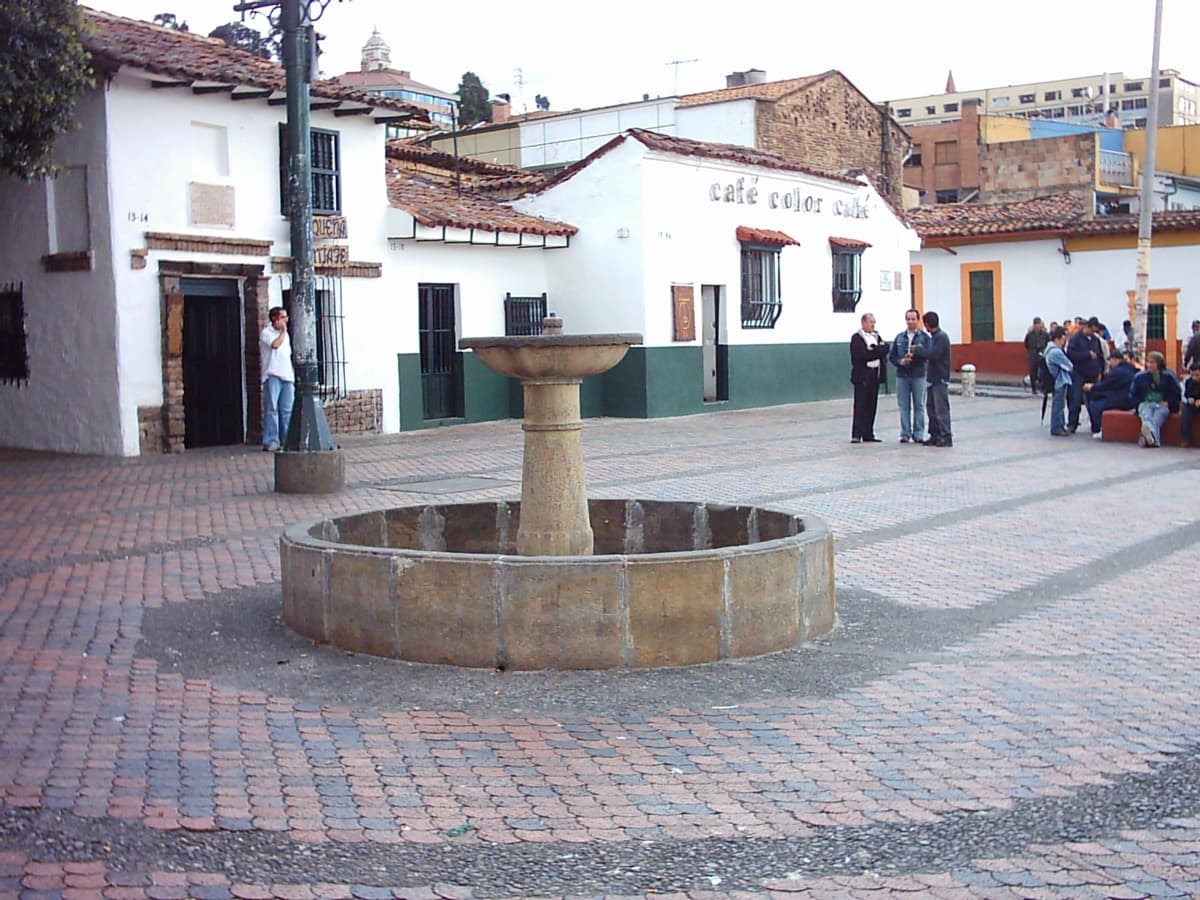
Plazoleta del Chorro de Quevedo
The traditional founding site of Bogotá, now a bohemian plaza alive with street art, chicha vendors, and storytellers.
Details
Best Time to Visit
Weekday mornings between 9:00 and 11:00 AM offer the best experience — museums are less crowded, the light is soft on the colonial facades, and the afternoon rain (common from March to May and September to November) hasn't arrived yet. Avoid Mondays when several museums are closed.
Pro Tips
- •Start early. Most museums open at 9:00 AM and the Gold Museum gets crowded by noon.
- •Bring a light rain jacket — Bogotá's afternoon showers are sudden and frequent, especially April through November.
- •The altitude of 2,640 meters is no joke. Walk slowly, stay hydrated, and don't be surprised if you feel short of breath on the uphill sections.
- •Try chicha at Chorro de Quevedo — it's a living piece of Muisca heritage. The cinnamon-topped version is the classic.
- •The Museo Botero and Gold Museum are both free. Go to Botero first when it's quiet, then Gold Museum after.
- •Download offline maps before arriving — cell service can be spotty in the narrow colonial streets.
Safety & Precautions
- •Keep valuables out of sight and use a cross-body bag. Petty theft can occur in crowded areas around Plaza de Bolívar and the Gold Museum.
- •Avoid walking the tour after dark. La Candelaria's side streets are poorly lit and safety decreases significantly at night.
- •Stay hydrated and take breaks. The combination of altitude (2,640m) and uphill walking can cause headaches and fatigue, especially on your first day in Bogotá.
- •Be cautious with street food and chicha if you have a sensitive stomach. Opt for sealed bottles of water over tap water.
- •Do not accept drinks, cigarettes, food or sweets from strangers, and never leave a drink unattended. Scopolamine spiking is a documented risk in Bogotá's social spots, including around Chorro de Quevedo.
- •Use ATMs inside a bank or mall during daylight, and book a ride through an app rather than hailing a taxi on the street. Street-hailed taxis are the main setting for forced-withdrawal robberies here.
Travel advisory: Reconsider Travel (Level 3).
Gallery
Related Reading
Go deeper on what you'll see, hear, and walk through.
Read the walk
The full story of Historic Heart, in words. Prefer to listen? Play it narrated, from home or on location.
Introduction
Bogotá is the seat of all power in Colombia. The president, the Supreme Court, the Catedral Primada, the mayor's office, the Capitolio Nacional, all within four hundred metres of Plaza de Bolívar. This is the most concentrated political, religious, and administrative real estate in the country.
And yet, the most famous things visitors come to see in this historic center are not the seats of power. They are a museum of pre-Columbian gold with fifty-five thousand pieces. They are a collection of paintings by a Colombian artist who lived most of his adult life in Paris and donated them all back to his nation. They are a bohemian plazoleta at the bottom of a narrow alley where the city was traditionally founded in fifteen thirty-eight, and where students still drink chicha and argue politics under the same archways. The capital of South America's third-largest country has spent nearly five hundred years being run from the Plaza de Bolívar, and what visitors come for, mostly, is everything that is not the Plaza de Bolívar. The paradox is the entire tour.
Over seven stops and roughly one hundred minutes you will walk both. The Plaza itself with all four powers lined up. The Casa del Florero, where the Grito de Independencia ignited on July twentieth of eighteen ten. The Catedral Primada and the older San Francisco church from fifteen fifty-seven. Then the pivot: the Museo del Oro, the Museo Botero, and the chicha plazoleta at the end.
The route is about three kilometres, mostly flat with a gentle uphill toward the end. Altitude here is two thousand six hundred and forty metres, and the air is thinner than you expect. Move at a slow pace. When you arrive at Plaza de Bolívar, begin with stop one.
1. Plaza de Bolívar
You're standing in Plaza de Bolívar, and everything around you is power. This single square holds more political weight per square meter than almost anywhere in Latin America. Look around, the four buildings that frame this plaza represent the four pillars of the Colombian state: the Cathedral for the church, Congress for the legislature, the Liévano Palace for the city, and the Palace of Justice for the courts.
Now look at the bronze figure in the center. That's Simón Bolívar, the liberator, cast in 1846 by Italian sculptor Pietro Tenerani. It was the first public statue of Bolívar anywhere in the Americas. He's dressed in military uniform, sword drawn, standing on a pedestal that has watched this plaza go through riots, celebrations, protests, and coups.
The building that will stop you cold is the Palace of Justice on the north side. On November 6th, 1985, guerrillas from the M-19 movement stormed the building and took over three hundred hostages, including the Supreme Court justices. The military response was devastating, tanks rolled into the plaza and fired into the building. Over a hundred people died, including eleven of the twenty-five justices. The building you see today was rebuilt after that siege.
Before the Spanish arrived, this area was a Muisca trading ground. The Muisca civilization had been here for centuries, and their gold craftsmanship was so extraordinary that it would eventually fill an entire museum a few blocks from here. But we'll get to that. For now, take in the weight of this plaza, it has been the stage for Colombian history since the very beginning.
2. Casa del Florero (Museo de la Independencia)
Now we step into the Casa del Florero. You're looking at the most important house in Colombian history, and the story of what happened here is almost too petty to believe. On July 20th, 1810, a group of Creole conspirators, people of Spanish descent born in the Americas, needed an excuse to start a public confrontation with the Spanish authorities. Their plan was beautifully absurd: they would walk into the shop of a Spanish merchant named José González Llorente and ask to borrow a flower vase for a banquet honoring a visiting dignitary.
They fully expected Llorente to refuse. And he did, though accounts differ on exactly how rudely. The conspirators then ran into the streets shouting that the Spanish were insulting the people of Bogotá. A crowd gathered. Tempers flared. By the end of the day, the Viceroy had been forced to sign a document establishing a local governing junta, the first step toward independence.
The actual vase, the florero, is inside this museum. It's surprisingly plain, a simple ceramic piece that you might walk past in a shop without noticing. But that unremarkable object became the trigger for a revolution that would eventually liberate five South American nations.
The museum now tells the full story of Colombian independence, from the Comunero revolt of 1781 to Bolívar's campaigns. But it all comes back to this building, this corner, and the audacity of men who turned a borrowed flower vase into a declaration of freedom.
3. Catedral Primada & Capilla del Sagrario
Step on toward the cathedral. This is the Catedral Primada de Colombia, the primary cathedral of the entire country, and the building you're looking at is actually the fourth church built on this exact spot. The first three were destroyed by earthquakes, because building a massive stone cathedral at two thousand six hundred meters elevation on seismically active ground is an act of either faith or stubbornness. Maybe both.
The current cathedral was completed in 1823, right in the middle of the independence wars, which tells you something about how important this building was to the city's identity. Step inside and look for the tomb of Gonzalo Jiménez de Quesada, the Spanish conquistador who founded Bogotá in 1538. Quesada was a lawyer by training, not a soldier, who somehow led an expedition of nine hundred men through the jungle and mountains, arriving in the Muisca highlands with only a hundred and sixty-six survivors. He found a civilization of sophisticated gold workers and emerald traders, claimed it all for Spain, and named the city Santa Fe.
Now walk next door to the Capilla del Sagrario. This smaller chapel, completed in 1689, is a jewel of colonial baroque architecture. The interior is covered in gilded woodwork and paintings by Gregorio Vásquez de Arce y Ceballos, considered the greatest painter of colonial Colombia. His work fills the walls with religious scenes rendered in a style that blends European baroque with something distinctly Andean.
Together, the cathedral and chapel represent three hundred years of Spanish colonial power concentrated in one corner of the plaza.
4. Iglesia de San Francisco
Walk on to the older church. You're standing before the Iglesia de San Francisco, and this is the oldest church still standing in Bogotá. Construction began in 1557, just nineteen years after the city was founded, and it took sixty-four years to finish, completed in 1621. That…
Full narration for this stop unlocks with the tour.
5. Museo del Oro (Gold Museum)
Welcome to the Museo del Oro, the Gold Museum, and there is nothing else like it on Earth. This museum holds over fifty-five thousand pieces of pre-Columbian gold, and what you're about to see will fundamentally change how you think about the civilizations that existed here…
Full narration for this stop unlocks with the tour.
6. Museo Botero
Step into the Botero collection. This museum exists because of one of the most generous acts in Latin American art history. In the year 2000, Fernando Botero, Colombia's most famous artist, the man who paints and sculpts those wonderfully rotund figures, donated two hundred and…
Full narration for this stop unlocks with the tour.
7. Plazoleta del Chorro de Quevedo
And for our final stop, we head to the founding plaza. You've made it to Chorro de Quevedo, and this unassuming little plaza is where the story of Bogotá begins, or so tradition claims. This is the spot where Gonzalo Jiménez de Quesada is said to have established the first…
Full narration for this stop unlocks with the tour.