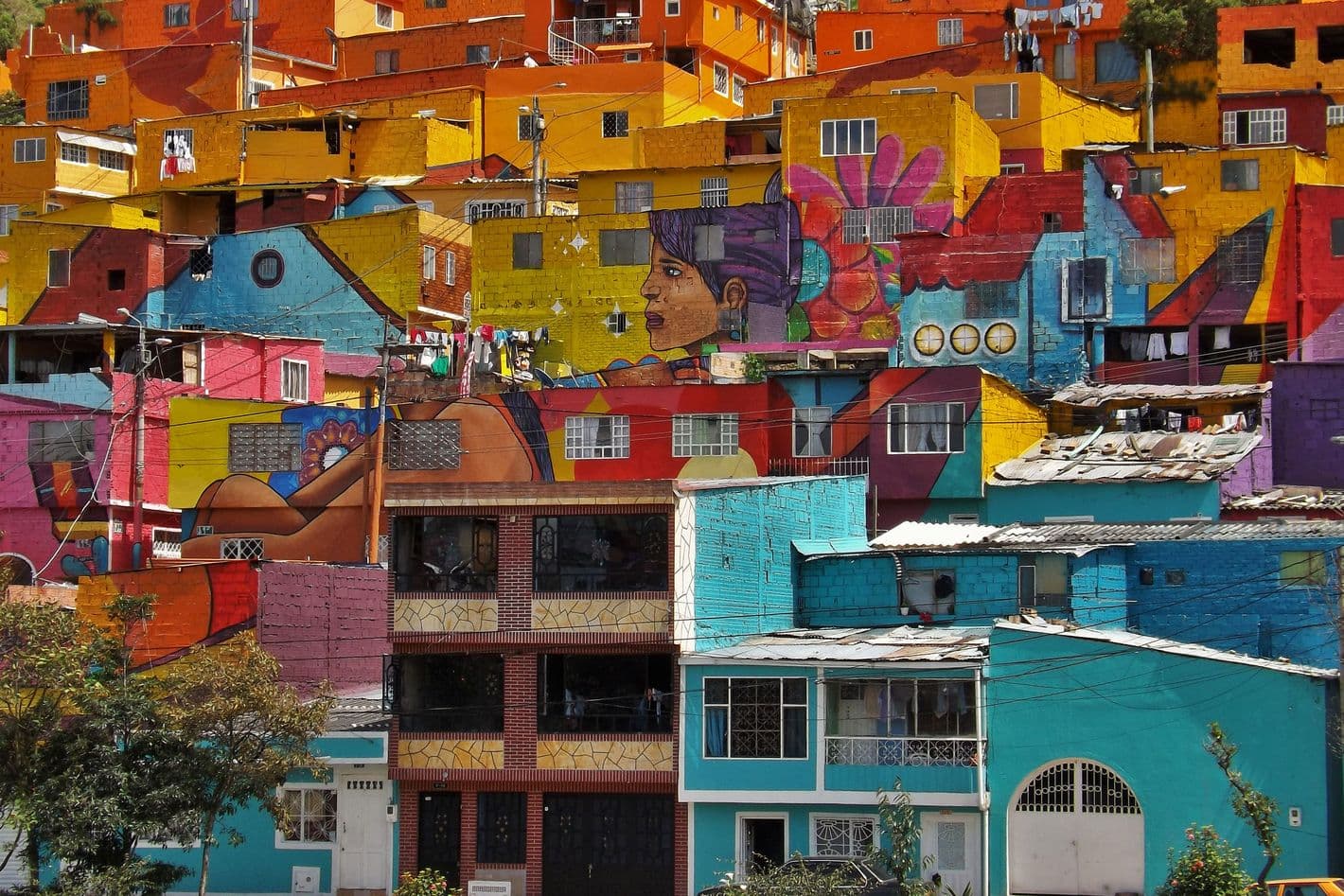
Explore the world-famous graffiti scene born from tragedy and defiance — from the colonial alleys of La Candelaria to the bohemian heights of La Macarena.
Start · Parque de los Periodistas
DirectionsStops
- 1
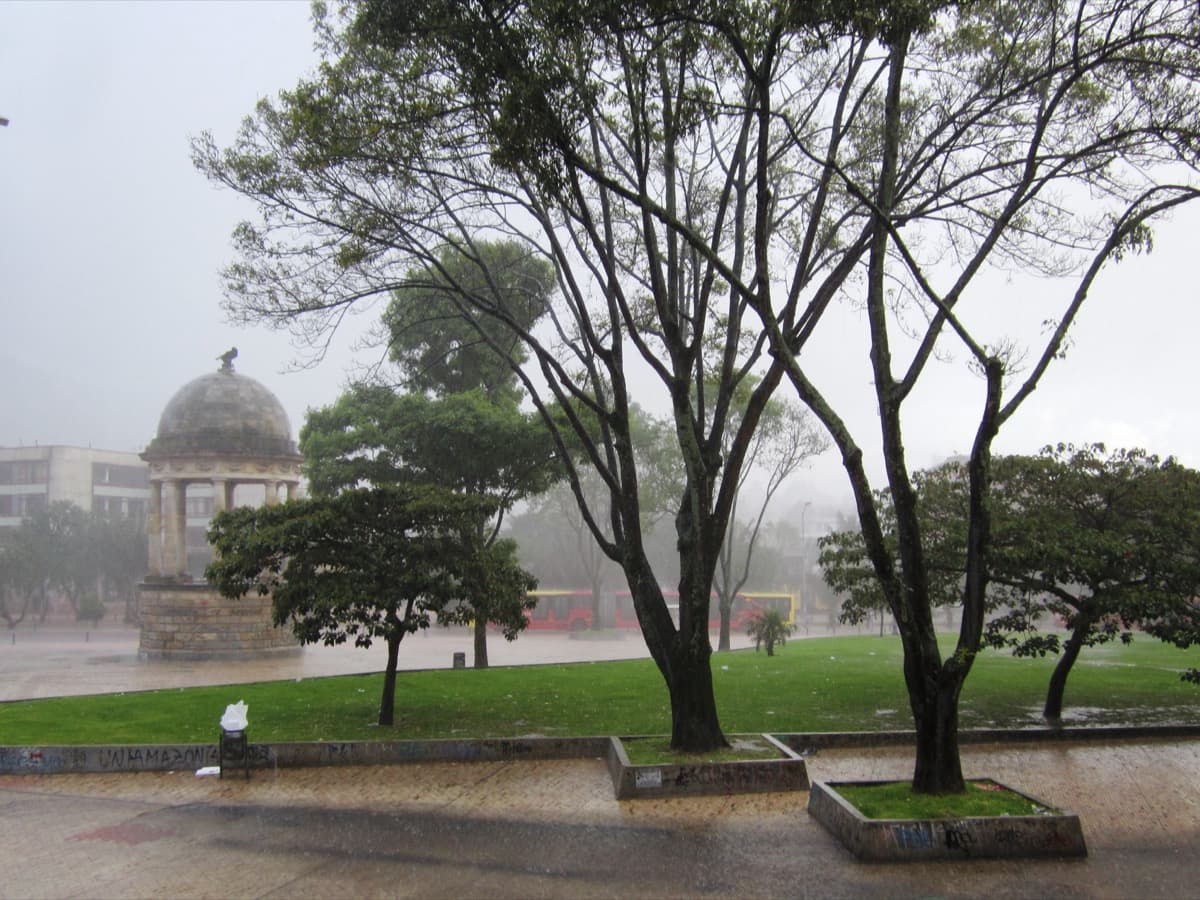
Parque de los Periodistas
The gateway to Bogotá's graffiti scene and the symbolic starting point for understanding how street art went from crime to culture.
- 2
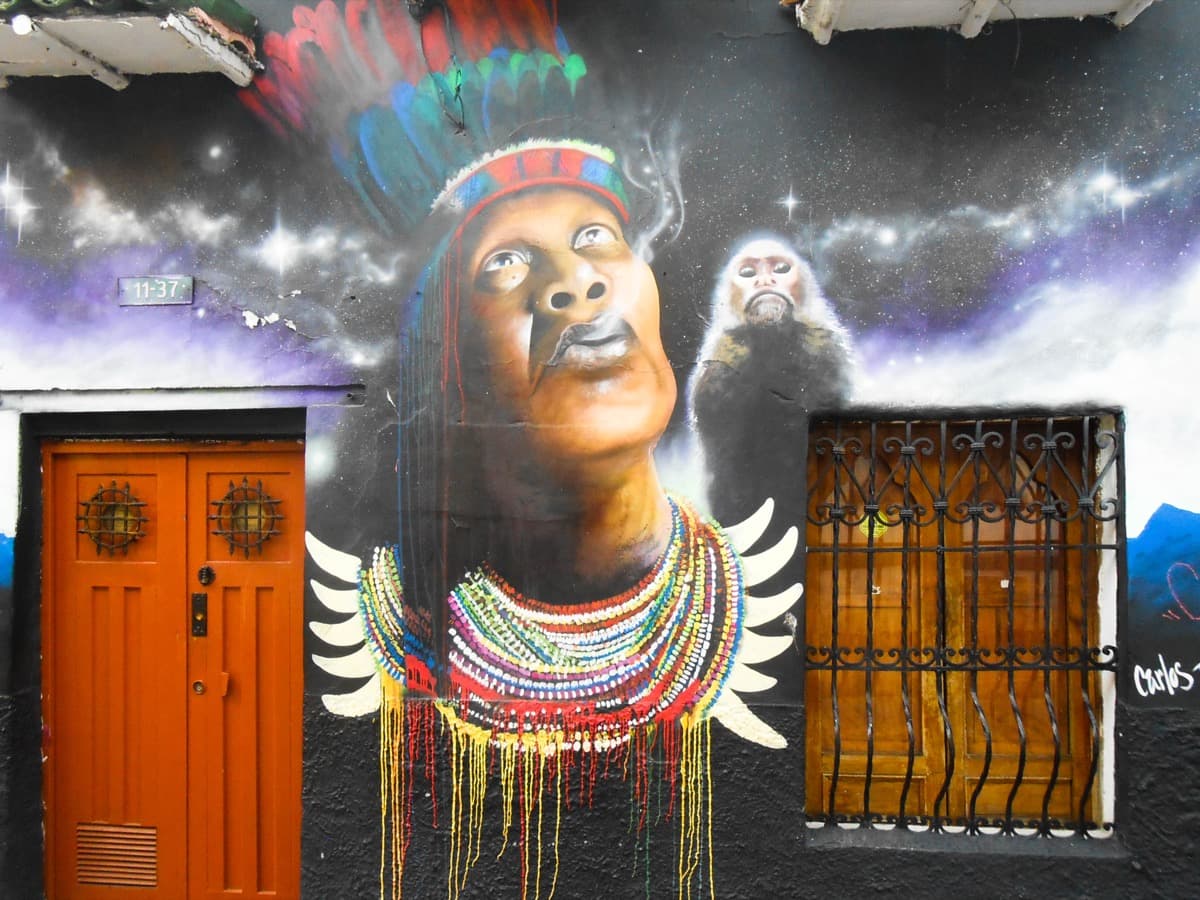
Calle 13 Mural Corridor
The densest concentration of street art in Bogotá, featuring works by the city's most celebrated artists.
- 3
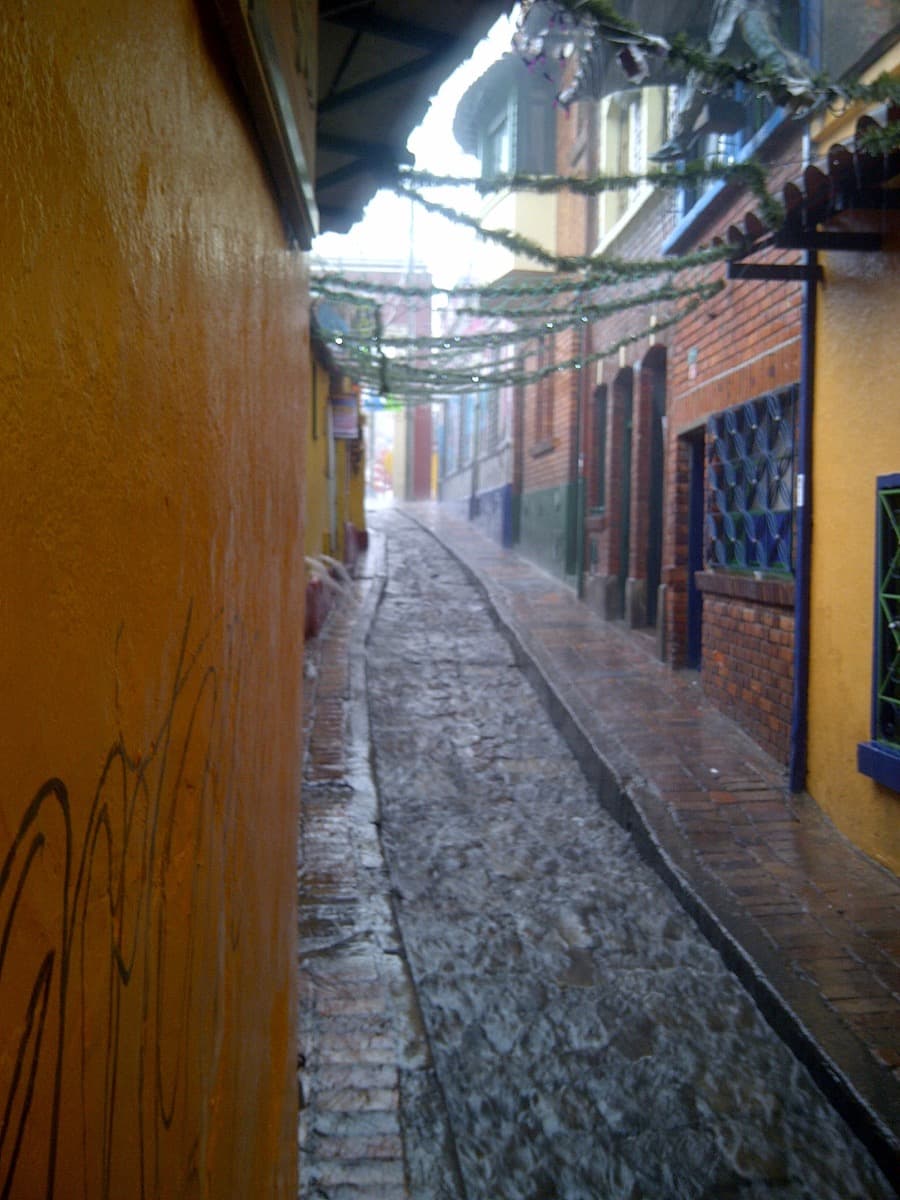
Callejón del Embudo
A narrowing cobblestone alley lined with chicha bars and murals — where pre-Columbian drinking culture meets contemporary street art.
- 4
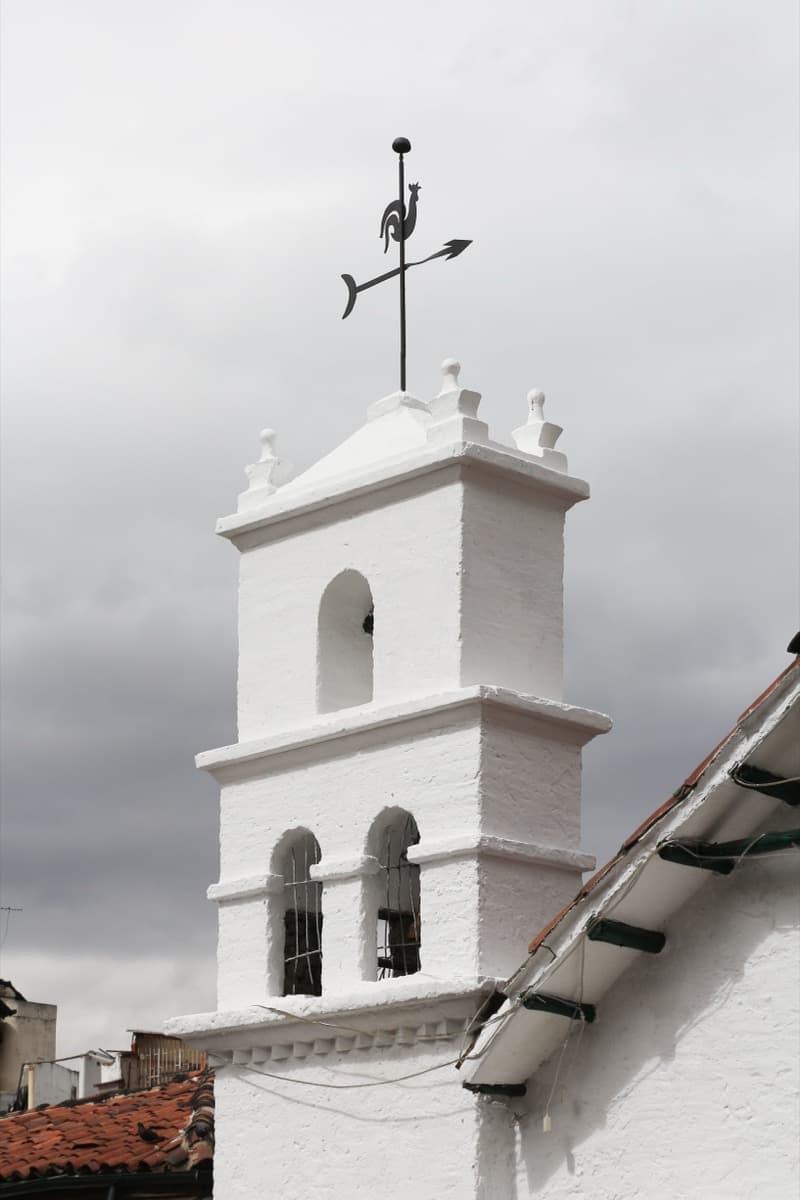
Chorro de Quevedo
The mythical founding site of Bogotá, now a rotating open-air gallery and weekend performance space at the heart of La Candelaria.
- 5
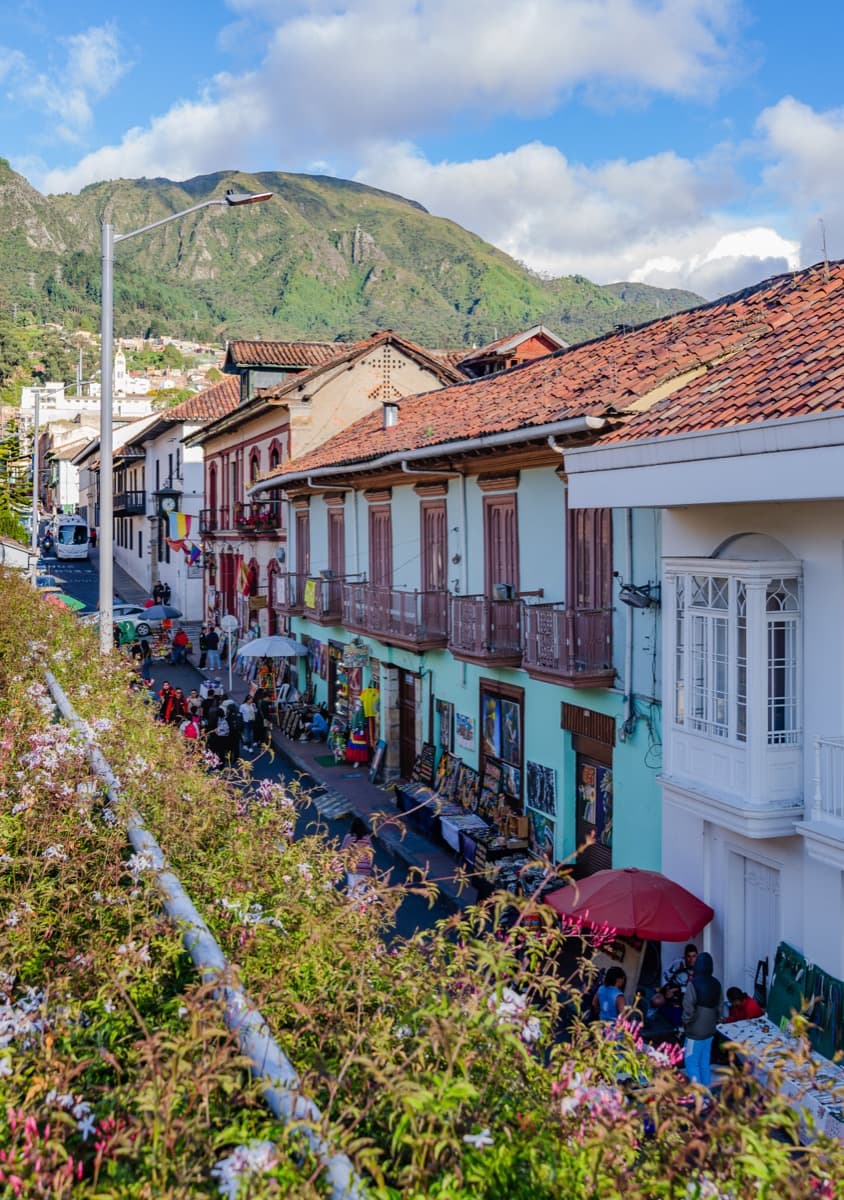
Centro Cultural Gabriel García Márquez
Rogelio Salmona's architectural masterpiece of exposed brick, geometric water features, and pre-Columbian spatial poetry.
- 6
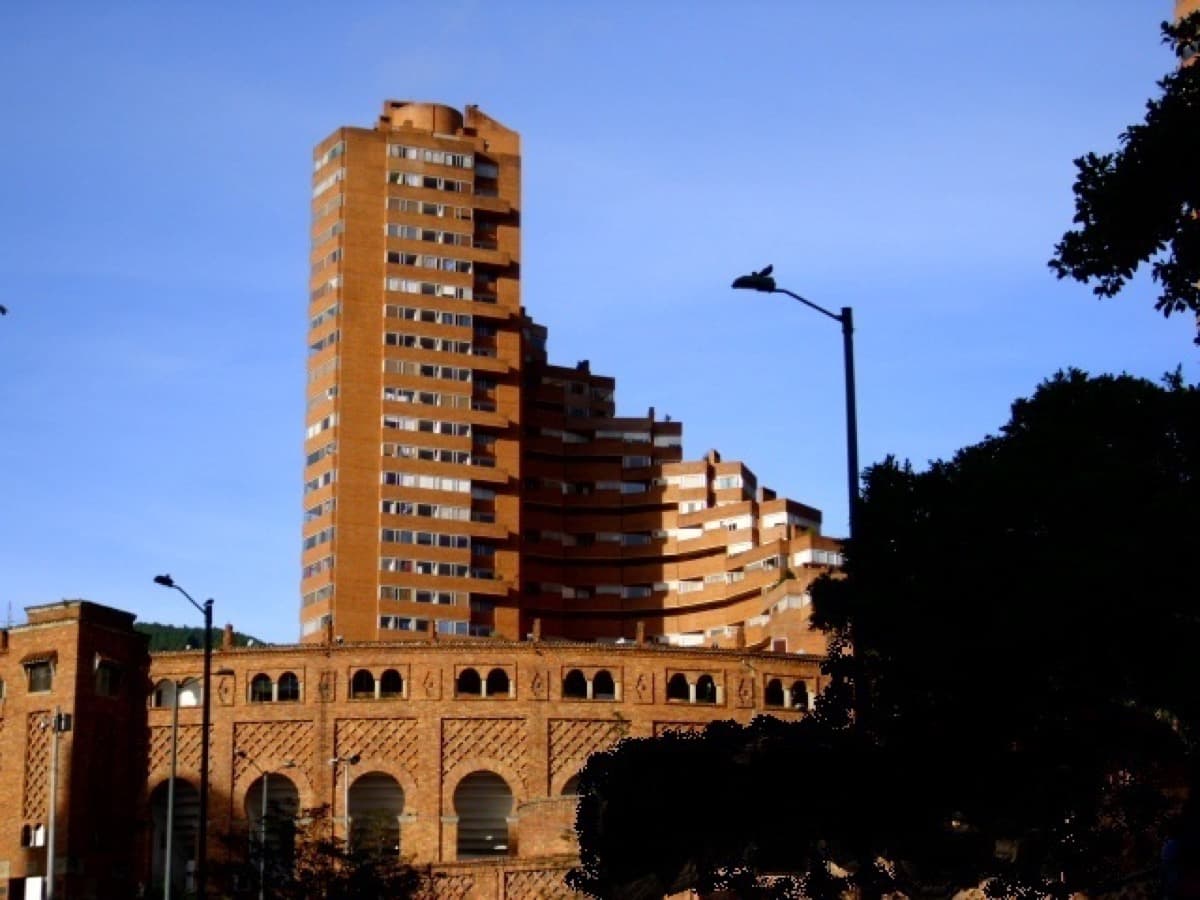
Torres del Parque
Salmona's residential masterpiece — three brick towers stepping up the Andean hillside beside the old bullring, bridging colonial Bogotá and the modern city.
- 7
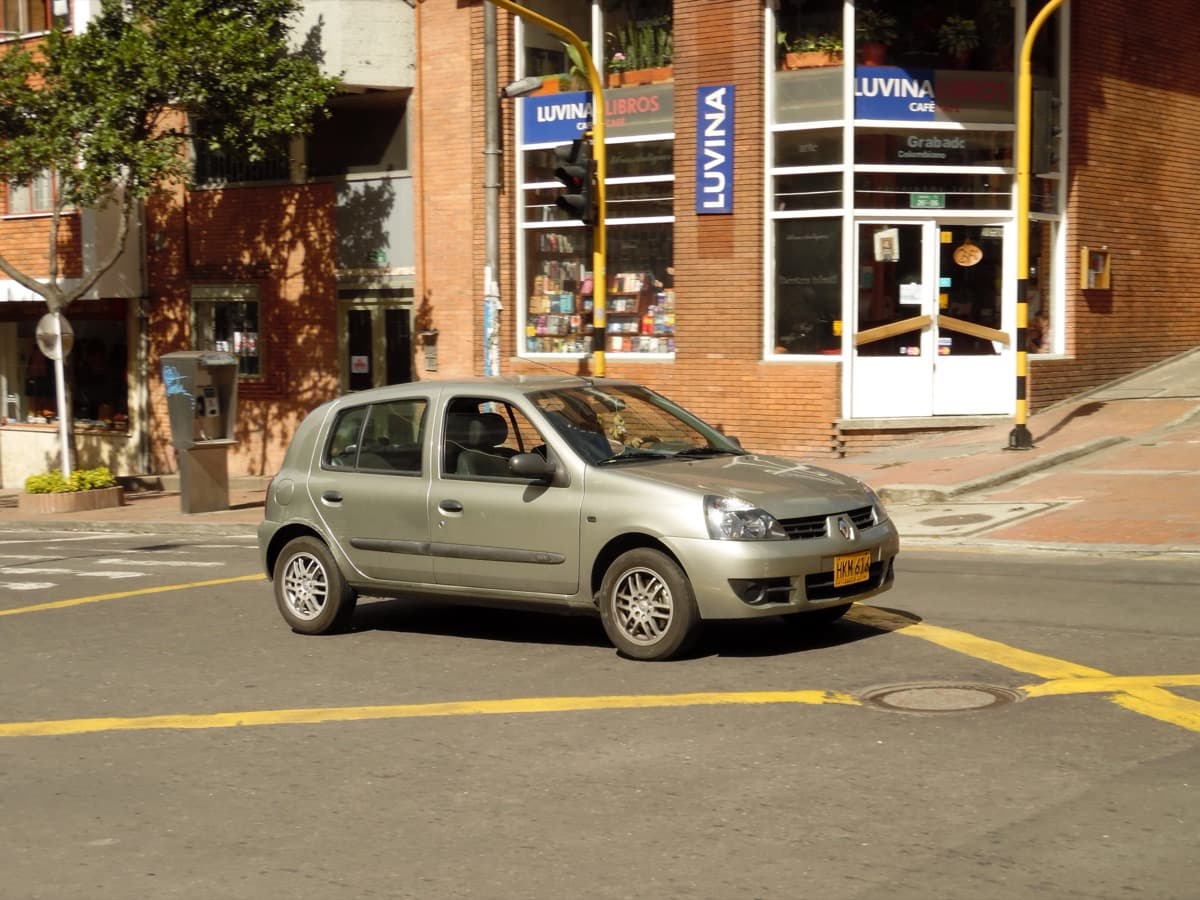
La Macarena
Bogotá's bohemian neighborhood pressed against the eastern hills — where galleries, restaurants, and curated street art mark the creative frontier.
Details
Best Time to Visit
Morning or late afternoon. Bogotá sits at 2,640 meters and afternoon rain showers are common year-round, typically hitting between 2-4 PM. Start by 9 AM or after 4 PM for the best light on the murals and the driest conditions.
Pro Tips
- •Photograph murals in the morning when east-facing walls in La Candelaria catch direct sunlight — by afternoon they're in deep shadow.
- •Bring a light rain jacket regardless of forecast. Bogotá's micro-weather can shift from clear to downpour in fifteen minutes.
- •Stop at a chicha bar in Callejón del Embudo but pace yourself — traditional chicha is deceptively strong at around 3-5% ABV and it's served in large cups.
- •Wear layers. At 2,640 meters, mornings start cool (around 8°C) but midday sun can push it to 20°C. The temperature swings catch tourists off guard.
- •Take the stairs to the rooftop terrace at the Centro Cultural Gabriel García Márquez — it's free, uncrowded, and offers one of the best panoramic views in the historic center.
Safety & Precautions
- •La Candelaria is generally safe during daylight but petty theft (phone snatching, pickpocketing) is common. Keep your phone in a front pocket and don't flash expensive cameras.
- •Altitude sickness is real at 2,640 meters. If you've just arrived from sea level, take the walk slowly and stay hydrated. Headaches and shortness of breath are normal for the first day or two.
- •Avoid walking between Torres del Parque and La Macarena after dark. The park area between them is poorly lit and isolated at night.
- •Some chicha bars serve homemade versions of varying quality. Stick to established bars with visible hygiene practices.
- •Accept only drinks you have watched being poured, and keep your own within sight. Politely declining drinks, food, or cigarettes offered by strangers is normal and expected here.
- •Use a ride app such as Uber, InDrive, or DiDi rather than hailing a taxi on the street, and withdraw cash from ATMs inside a bank or shopping mall during daylight.
Travel advisory: Reconsider Travel (Level 3).
Gallery
Related Reading
Go deeper on what you'll see, hear, and walk through.
Read the walk
The full story of Street Art & Bohemia, in words. Prefer to listen? Play it narrated, from home or on location.
Introduction
On the nineteenth of August, two thousand and eleven, a sixteen-year-old graffiti writer named Diego Felipe Becerra was tagging a highway underpass in north Bogotá when a police officer shot him in the back. He died at the scene. His tag was Tripido.
The city erupted. Marches, vigils, parliamentary inquiries. The officer was eventually convicted. Two years later, in two thousand and thirteen, the Distrito Capital of Bogotá passed Decreto Cero Setenta y Cinco, which legalized street art on private surfaces with the owner's consent. That single law, written in the wake of one death, transformed the city. Bogotá is now one of the densest, most legally protected, and most artistically ambitious street art cities in Latin America.
The smell in this neighborhood at eight in the morning is arepas and spray paint. You cannot walk a block in La Candelaria without seeing three murals, and most of them are signed. The artists have names. Toxicómano, DJ Lu, Stinkfish, Bastardilla. Their work covers the Calle Trece corridor, the Callejón del Embudo, the Centro Cultural Gabriel García Márquez. The murals are commentary on Colombia's armed conflict, on urban displacement, on indigenous rights, on the police shooting that started the whole legal regime. Street art in Bogotá is named, paid, displayed, often commissioned art that changed the visual identity of an entire historic center.
Over seven stops and about three point five kilometres in ninety minutes, you will walk the Tripido legacy: Calle Trece for density, the Embudo for narrow-scale political pieces, Chorro de Quevedo for the student conversations the murals reflect, two of Rogelio Salmona's brick masterpieces, and end in La Macarena. When you arrive at Parque de los Periodistas, begin with stop one.
1. Parque de los Periodistas
You're standing in Parque de los Periodistas, Journalists' Park, a small plaza that marks the northern entrance to La Candelaria. It's a fitting place to begin, because the story of Bogotá's street art is really a story about who gets to speak and who gets silenced.
On August 19th, 2011, a sixteen-year-old named Diego Felipe Becerra was painting his signature Felix the Cat on a highway underpass not far from here. Police officers spotted him. They shot him in the back. He died. The officers initially claimed he'd been robbing a bus, a lie that fell apart within days when security footage surfaced.
The outrage was enormous. Diego wasn't a vandal. He was a kid with a spray can and a cartoon cat. His death forced Bogotá to confront an uncomfortable question: why was painting a wall punishable by bullets? The protests that followed led directly to Decree 075 in 2013, which effectively decriminalized street art in designated areas of the city.
Look around you now. Every mural you'll see today exists in the space that Diego's death opened up. The artists working these walls know that history. Many of them knew Diego personally. His Felix the Cat still appears on walls throughout the city, not as graffiti anymore, but as a memorial.
From here, we'll head south into the densest concentration of street art in the Americas. Follow the narrow streets downhill.
2. Calle 13 Mural Corridor
Welcome to Calle 13, or Calle Trece, as locals say it. This is ground zero. More world-class street art per square meter than almost anywhere on Earth.
Let me point out three artists whose work dominates these walls. First, Toxicómano, short for Toxicómano Callejero, the Street Addict. His medium is the political stencil: razor-sharp images of soldiers, politicians, and indigenous leaders layered over each other in black and red. He's been active since the early 2000s, back when this work could get you arrested or worse. His pieces are angry, precise, and impossible to ignore.
Second, look for the dotwork portraits, faces built from thousands of tiny circles, almost like a newspaper photograph blown up to building scale. That's DJ Lu. His subjects are the faces Colombia's mainstream culture often overlooks: indigenous elders, Afro-Colombian women, campesinos from the countryside. Each portrait takes days to complete, dot by dot, usually without any preliminary sketch.
Third, the photorealistic faces, often children, often staring directly at you with unsettling intensity. That's Stinkfish, one of Colombia's most internationally recognized street artists. He photographs strangers on the street, then blows their faces up to three stories tall in explosions of color. His point is simple: every face deserves to be monumental.
Take your time here. These walls change constantly, artists paint over each other, new pieces appear overnight. What you're seeing today won't be here next month.
3. Callejón del Embudo
Step into the narrowing alley. You've just stepped into Callejón del Embudo, Funnel Alley. Look ahead and you'll see why: the walls on either side squeeze closer together as you walk, funneling you downhill toward a narrow exit. It's one of the oldest pedestrian passages in Bogotá, and right now, it smells like fermentation.
That smell is chicha, a thick, slightly sour corn beer that indigenous communities have been brewing in the Andes for at least a thousand years. The Muisca people who lived in this valley before the Spanish arrived drank chicha at every ceremony, every celebration, every political gathering. It was sacred.
So naturally, the Colombian government banned it. In 1948, under pressure from Bavaria, the German-founded brewery that had a near-monopoly on Colombian beer, chicha was declared a public health hazard and effectively outlawed. The official reason was hygiene. The real reason was money. Bavaria didn't want competition from a drink that people could make in their kitchens for almost nothing.
The ban lasted over forty years. Chicha didn't come back legally until 1991, when Colombia's new constitution recognized indigenous cultural rights. Today, these little bars along Funnel Alley are part of a deliberate cultural reclamation. Drinking chicha here isn't just having a beer, it's a political act.
The murals on these walls reflect that same energy: indigenous motifs, Muisca symbols, images of resistance. Notice how many of them incorporate corn imagery, it's not decoration, it's identity.
4. Chorro de Quevedo
Now we reach the founding plazoleta. This small, slightly chaotic plaza is Chorro de Quevedo, and according to local tradition, this is where Bogotá began. In 1538, the Spanish conquistador Gonzalo Jiménez de Quesada supposedly established his first settlement right here, on…
Full narration for this stop unlocks with the tour.
5. Centro Cultural Gabriel García Márquez
Step inside and feel the shift. After the chaotic energy of La Candelaria's painted walls, this building is a meditation in brick. You're standing in the Centro Cultural Gabriel García Márquez, designed by Rogelio Salmona, Colombia's greatest architect, and one of the most…
Full narration for this stop unlocks with the tour.
6. Torres del Parque
Look up. Three massive residential towers rise above you, stepping up the hillside in a cascade of terracotta brick. These are the Torres del Parque, the Park Towers, and they're widely considered Rogelio Salmona's masterpiece. Built between 1965 and 1970, these towers solved a…
Full narration for this stop unlocks with the tour.
7. La Macarena
And for our final stop, we walk into La Macarena. You've arrived in La Macarena, and you can feel the difference immediately. The streets are quieter. The restaurants have chalkboard menus and natural wine lists. The street art here is different too, more curated, more…
Full narration for this stop unlocks with the tour.