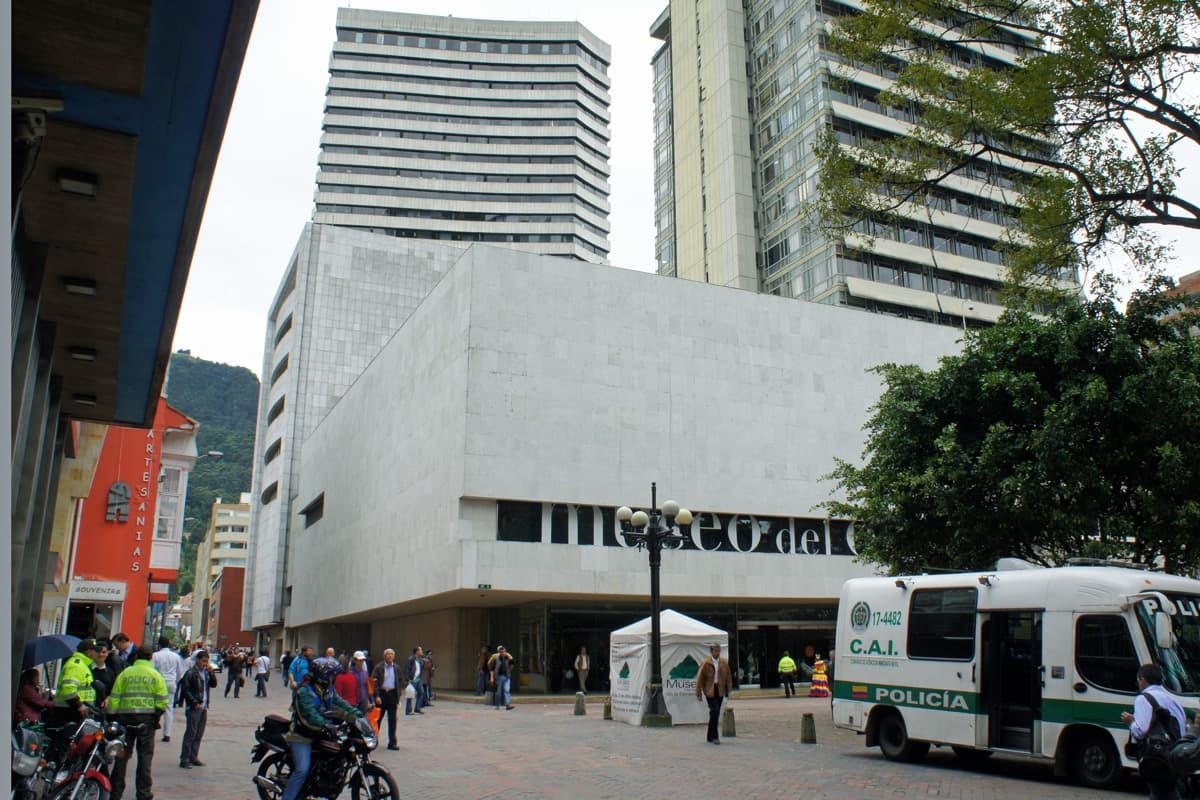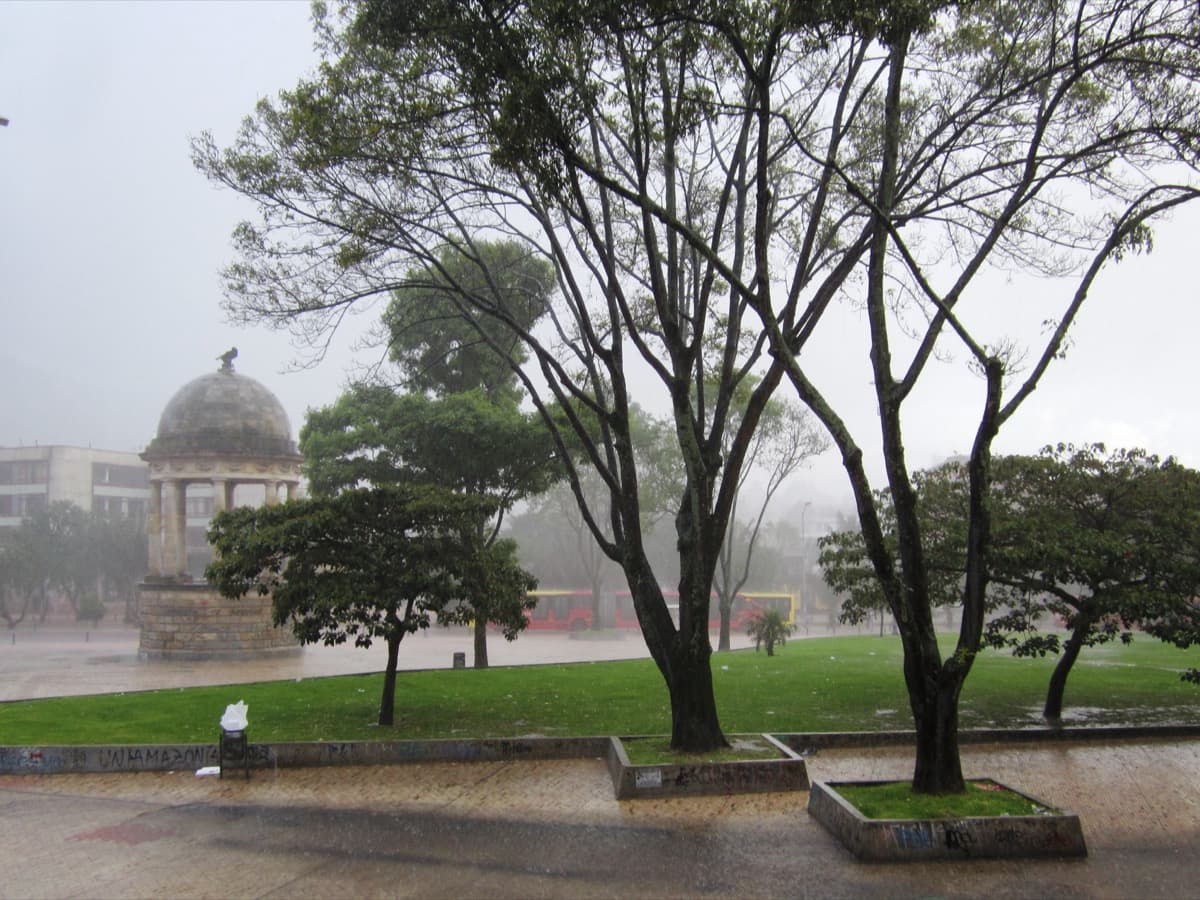
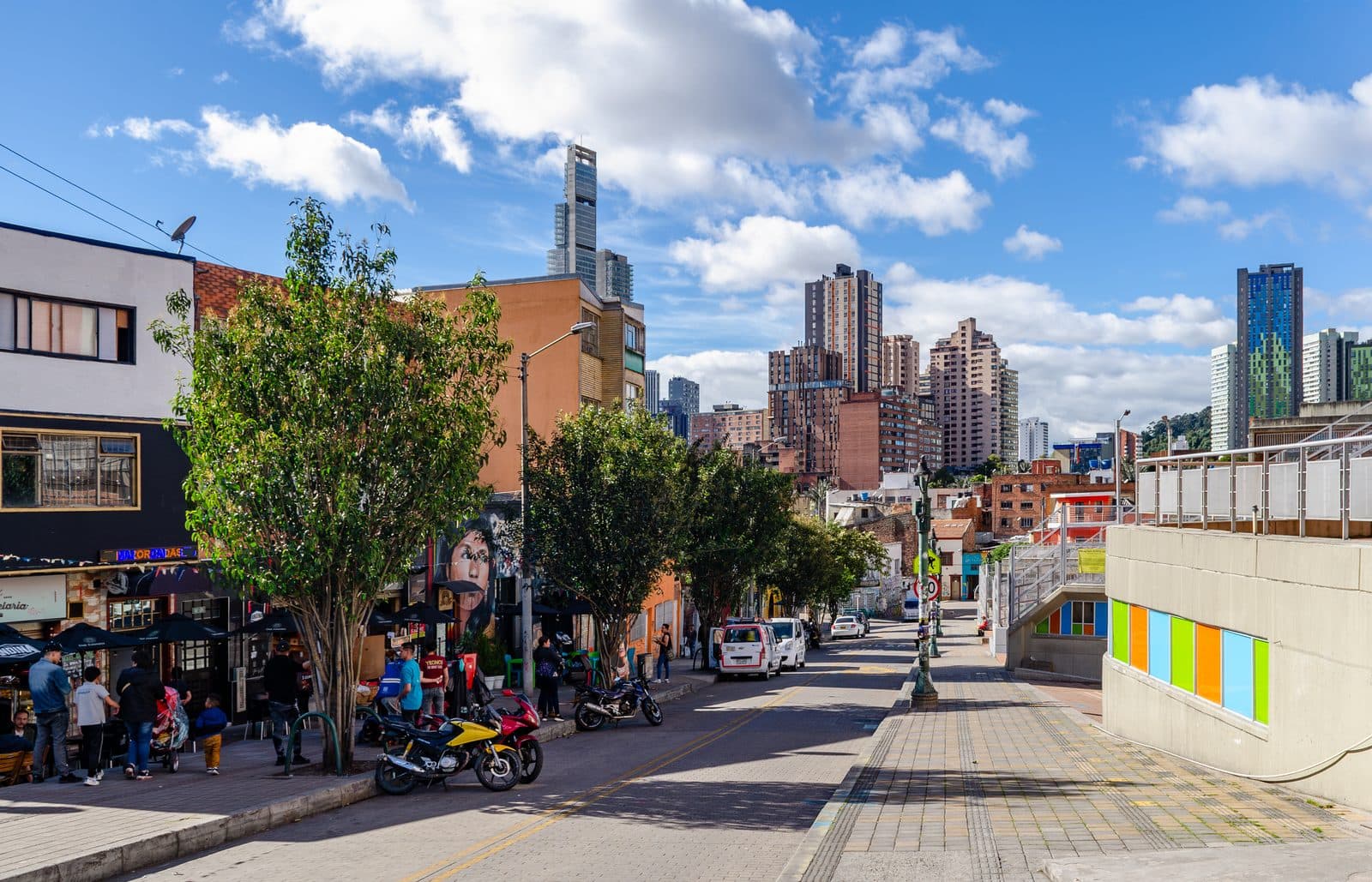
The Parque de los Periodistas is a small triangular plaza at the northern edge of La Candelaria, where the Avenida Jiménez meets the Carrera Tercera. There is a column in the middle with a Greek-revival statue at the top, dedicated in 1905 to commemorate press freedom in Colombia. Around the plaza are cafés, a Metro station entrance, and the building that houses the old offices of El Tiempo, the country's largest newspaper. On a normal weekday afternoon the park is busy with university students walking down from the Externado and the Universidad de la Salle, journalists going in and out of the press offices, and a steady current of foot traffic moving between La Candelaria and the modern Centro Internacional district to the north.
It is also the place where Bogotá's modern street-art movement is symbolically rooted. In 2011, this was where the marches for Diego Felipe Becerra began.
The night of August nineteenth, 2011
Diego Felipe Becerra was sixteen years old. He lived with his family in the northern part of the city, in the Suba neighborhood. He had been writing graffiti since he was twelve. His tag was Tripido. His best-known signature was a small drawing of Felix the Cat, sometimes solo, sometimes leaning against the letters of his name. He had painted Felix on walls across the city, with friends and alone, more or less constantly for the previous four years.
On the night of August nineteenth of 2011, Diego and two friends were painting on the side of a TransMilenio bus depot, near Calle 116 and Carrera 70, in the north of Bogotá. A police patrol noticed them. The friends ran. Diego, who had a backpack and could not run as fast, did not get away in time. An officer named Wilmer Antonio Alarcón shot him in the back with a service weapon. Diego was hit in the spine and died within minutes at the scene.
The officers on the scene radioed in that they had shot a fleeing bus robber. They moved Diego's body. They placed a knife near it. They told dispatch he had been part of an armed robbery and had drawn a weapon.
That account did not survive the first forty-eight hours. Security cameras from a gas station across the street captured the entire incident. The footage showed three teenagers painting a wall. There was no bus to rob. There was no knife. There was no weapon. The officers had killed a kid with a spray can and then constructed a cover story.
The footage circulated within days. The cover story collapsed in public. The officers involved were arrested. Wilmer Alarcón was eventually convicted of homicide and sentenced to thirty-seven years in prison. The conviction took years to finalize, and the family's lawyers had to fight every step.
How the park became the gathering point
Hear a stop from this walk
La Macarena
In the days after the death, public memorial demonstrations gathered in several places in Bogotá. The largest were at the Parque de los Periodistas. The location was chosen partly because of the press-freedom symbolism of the park itself, partly because it sits at the northern entrance to La Candelaria, where most of the graffiti scene was already concentrated, and partly because it was a logistically practical place to assemble before marching south through the colonial neighborhood.
The marches in the months after August 2011 used Diego's Felix the Cat as their primary symbol. Other writers across the city painted versions of Felix on walls as memorials. Some incorporated his tag, Tripido, into pieces that ran several stories tall. The image stopped being a personal tag and became a public mourning sign. Within a year, Felix the Cat in Diego's style was one of the most reproduced graffiti motifs in Bogotá. It still is. Walk most blocks of La Candelaria and you will see at least one version somewhere.
The parliamentary and municipal response moved with the marches. The death exposed a contradiction in Bogotá's policing of street art. Graffiti had been a misdemeanor offense, but the actual enforcement was wildly inconsistent. Some artists worked on public walls in broad daylight without ever being touched. Others, often the younger and less established, were beaten or arrested. A teenager had now been killed by the state for painting. The political pressure to formalize a regime that distinguished art from vandalism was overwhelming.
Decree 075
The Distrito Capital of Bogotá issued Decreto Cero Setenta y Cinco, Decree 075, in February of 2013, eighteen months after Diego's death. The decree did three things.
First, it explicitly decriminalized street art on private surfaces with the consent of the property owner. This had not been the legal standard before. The previous regime treated the painting itself as the offense regardless of whether the wall's owner objected.
Second, the decree created a registry of public surfaces where artists could apply for legal painting permits, with a defined process and a defined authority responsible for adjudicating applications. The mayor's office took on this function, working with the Bogotá Tourism Institute and a coalition of artists' collectives.
Third, the decree mandated police training on the new framework. This was the operational change. The reason Diego had been killed was not that graffiti was illegal in a strict sense, but that street-level officers treated any encounter with a graffiti writer as a confrontation with a criminal. The decree required that this stop. Police were trained to verify owner consent before intervening, to recognize designated legal-painting zones, and to treat artists as potential rights-bearers rather than as suspects on sight.
Bogotá became, with this decree, one of the first major Latin American cities to formally protect urban art at the municipal level. The decree was strengthened in subsequent administrations and remains in force.
What the park looks like now
Walk into the Parque de los Periodistas today and the death is not visually marked at the plaza level. There is no formal monument to Diego Felipe Becerra in the park itself. The 1905 press-freedom column is still the centerpiece. The benches are mostly used by university students and journalists on lunch.
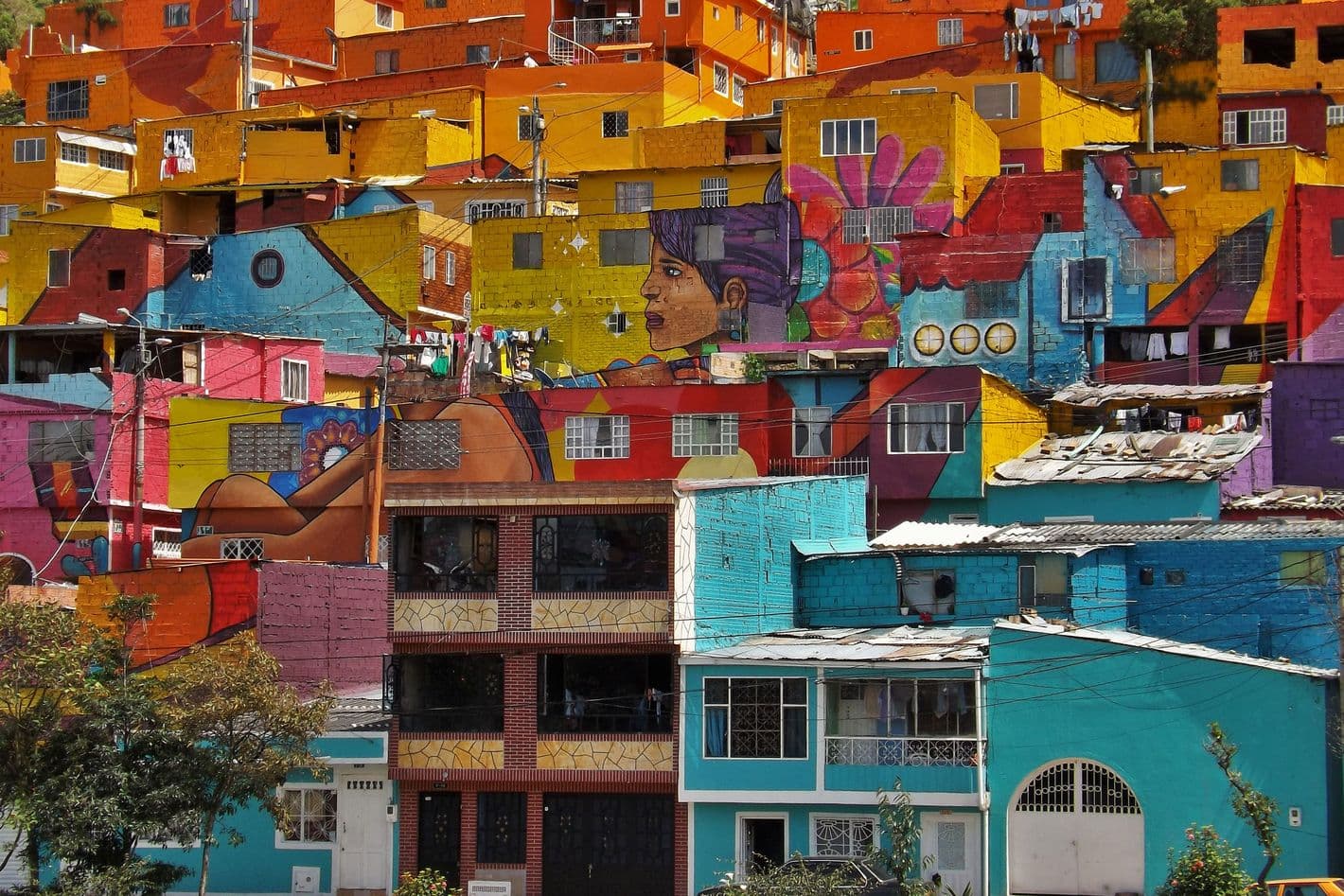
What you do see, on the walls of the surrounding streets within a hundred meters of the park, is the legacy: dense, finished, signed murals by named artists working in styles that the 2011 law made legally possible. The Calle Trece corridor, which begins a few blocks south of the park, is the densest concentration of contemporary street art in the Americas. The work runs from Toxicómano's political stencils to Stinkfish's photographic portraits to DJ Lu's Wayúu-inspired dotwork to Bastardilla's mythic female figures. Many of these artists were already working in 2011. Most of them knew Diego personally. The signed and protected work they produce now exists in the legal space his death opened.
A Felix the Cat shows up on most of these walls if you look. Sometimes it is small, painted in the corner of someone else's piece. Sometimes it is the entire wall, three stories of Felix leaning against Diego's name. Other artists have painted it for over a decade and will keep painting it.
Why the park is the right starting point
The street-art tour begins at the Parque de los Periodistas because the chain of cause that produced the painted city begins there. The decree, the regulated permits, the artist collectives, the international attention that brought commissioned work, the gentrification of La Macarena that followed the artists, the gallery shows that lifted the most successful of them into the international market: all of it traces back through Decree 075 to the marches that gathered in this small triangular plaza in late 2011.
It is a park named for press freedom, where the public processed a state killing of a young artist, and where the protests produced a law that made his medium legal. The chain holds. Stand in the center of the plaza, look at the press-freedom column, and walk south. Every signed wall you pass for the next two kilometers is part of what the death and the law made possible. Diego painted Felix the Cat. Most of the surfaces visible from here are signed by other people. Some of them still paint Felix anyway.
Colombia eSIM· 10% off with ROAMER10
Ready to experience it?
Street Art & Bohemia
90 min · 3.5 km · moderate
More from Bogota
Explore more at your own pace.
Best Self-Guided Walking Tours in Bogotá (2026)
Bogotá Travel Guide: How Many Days, Altitude, Getting Around, Safety (2026)
One Day in Bogotá: A Walkable La Candelaria Itinerary (2026)

What to Eat in Bogotá: A Colombian Food Guide (2026)
The Paradox of La Candelaria: Power, Gold, and Everything Visitors Came For