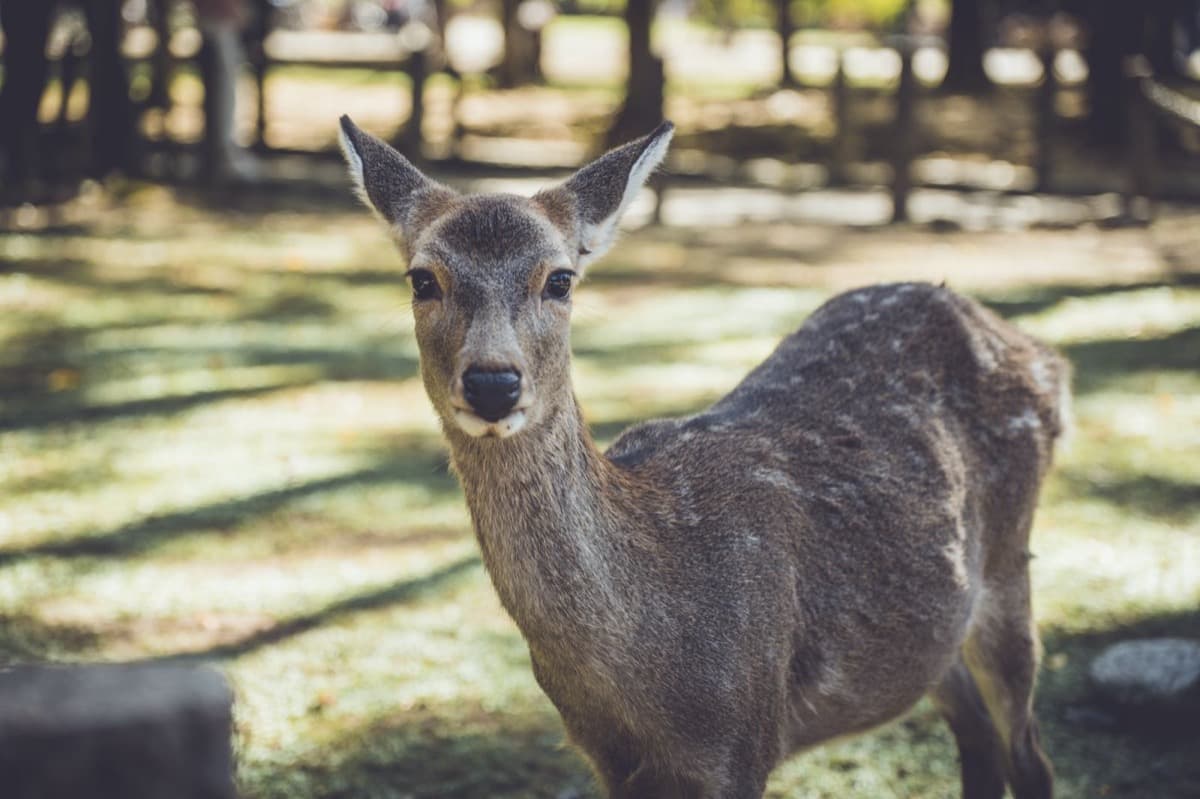
The deer that wander through Nara, bowing for crackers, dozing on temple steps, stopping traffic, are one of the strangest and most enchanting sights in Japan. It is tempting to see them as tame park animals or a tourist gimmick. They are neither. For more than a thousand years these deer have been regarded as sacred, divine messengers of the gods, and killing one was once a crime punishable by death. Understand the religious meaning, and the deer stop being a photo opportunity and become the living heart of what makes Nara sacred.
A god who arrived on a white deer
The story begins with a legend of arrival. According to tradition, the great Shinto deity Takemikazuchi came to Nara riding on the back of a white deer. In 768 he was enshrined, with three other gods, at Kasuga Taisha, the great shrine on the wooded slope of Mount Mikasa. Because the god had come on a deer, the deer of the surrounding forest were understood as the messengers of that god, sacred envoys of the kami of Kasuga. This is why the deer are not incidental to Nara. They are woven into the founding sacred story of the place, the living descendants, in belief, of the mount a god rode into the city.
That single legend explains everything that follows: the protection, the reverence, and the extraordinary lengths a whole society went to in order to keep the herd safe.
When killing a deer meant death
Hear a stop from this walk
Nigatsu-do Hall: Twelve Centuries of Unbroken Fire
The reverence was not gentle sentiment. It was law, enforced with the harshest penalty. From the time the deer were held divine, killing one was made punishable by death, and that remained the case for centuries. The last recorded execution for the breach of that law dates to 1637. During the Edo period, the Tokugawa shogunate maintained severe penalties for harming the deer, partly as a demonstration of the ruler's authority over life and death within the sacred city. For generations, to raise a hand against a deer of Nara was to gamble your own life. Few laws express the sacredness of an animal more absolutely.
That history is why the deer have never learned to fear the city. They have been protected, not hunted, for as long as anyone can trace, and they move through Nara as if they own it, because in a real sense the belief of the city has always said they do.
The bowing deer, and a word of caution
The deer's most famous trick is the bow. Many of them have learned to dip their heads before receiving the special deer crackers, the shika senbei, sold throughout the park, an astonishing bit of learned behavior that delights visitors. It is worth knowing the caution that comes with it: a bow from a human can be read by a deer as a challenge, and a deer may bow back and then move to headbutt. These are strong wild animals, not pets, however calm they seem. Feed them the crackers, enjoy the bow, but treat them with the respect their sacred status has always demanded.
Protected then, protected now
The old religious protection has a modern legal successor. In 1957 the deer of Nara were designated Natural Monuments by the Japanese government, and Kasuga Taisha formally renounced ownership of them, so that the herd is now protected as a national treasure of nature under the law for the protection of cultural properties. The line runs unbroken from the god on the white deer to a modern conservation statute: a thousand years of a city choosing to protect its herd. Roamer's Nara Park and Todai-ji walk moves among these deer on the way to the Great Buddha, and the companion walk Kasuga Taisha and the Sacred Forest reaches the shrine whose god the deer serve.
Reading it in place
Walk among the deer knowing what they are. Buy the crackers, offer a bow, and watch one bow back, but remember you are interacting with an animal a whole civilization once protected on pain of death. Look up toward Mount Mikasa and the Kasugayama primeval forest behind the shrine, the sacred wood the deer belong to. The herd is calmest and the light best in the early morning, before the day's crowds and crackers arrive.
The deer anchor Roamer's Nara Park and Todai-ji. To fit Nara into a day, see one day in Nara, and for the full set of routes, browse Nara walking tours.
Sources
- Wikipedia (Nara Park, Kasuga-taisha) and Nara tourism and heritage sources (Nippon.com, Visit Nara, Nara city guide): the deer as messengers of the Shinto gods of Kasuga, the legend of the deity Takemikazuchi arriving on a white deer and his enshrinement at Kasuga Taisha in 768, the killing of a deer historically punishable by death with the last recorded breach in 1637 and Tokugawa-era penalties, the learned bowing behavior and the caution that a bow can be read as a challenge, and the 1957 designation as Natural Monuments with Kasuga Taisha renouncing ownership.
- Roamer tour transcript, Nara Park and Todai-ji (nara-todaiji), fact-audited: the sacred deer as a herd a god protects.
Ready to experience it?
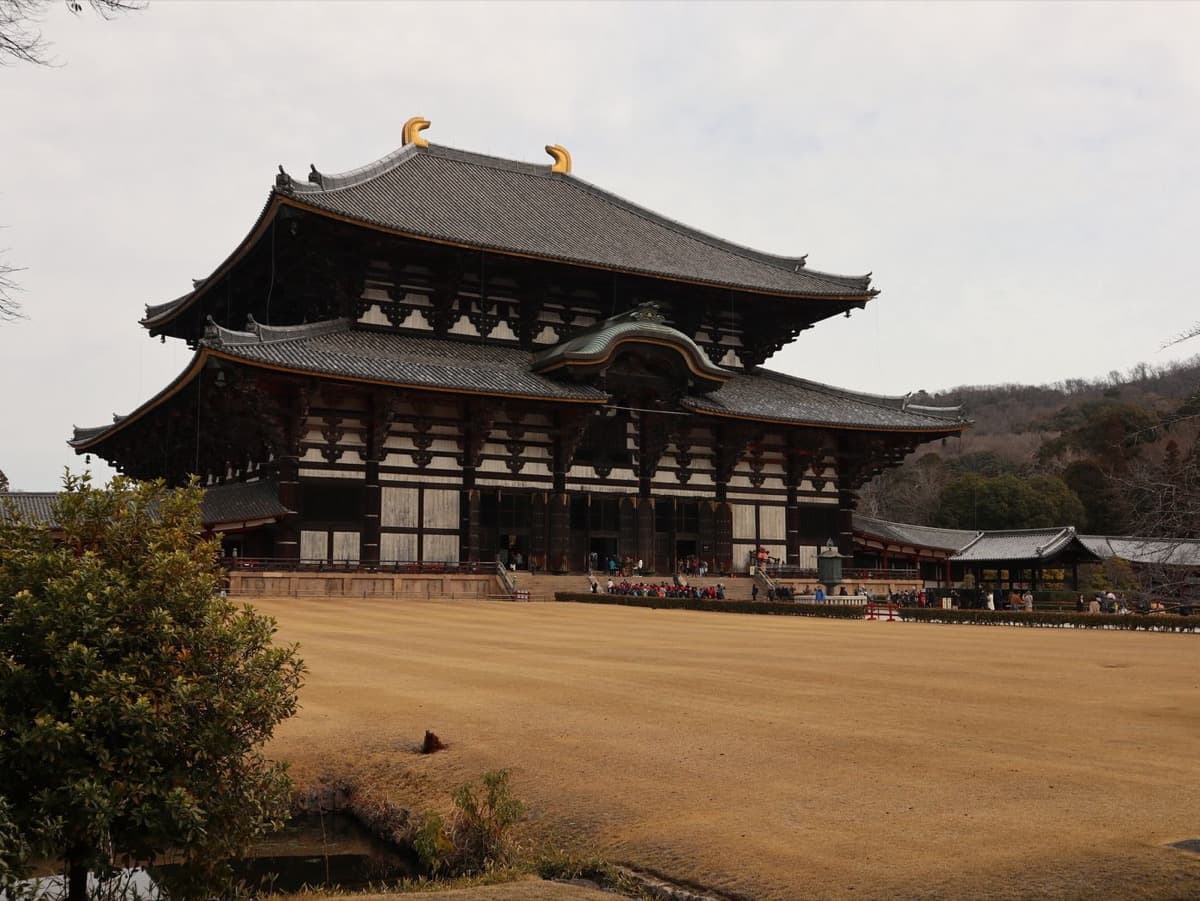
Nara Park and Todai-ji: The Great Buddha
95 min · 3 km · moderate
More from Nara
Explore more at your own pace.
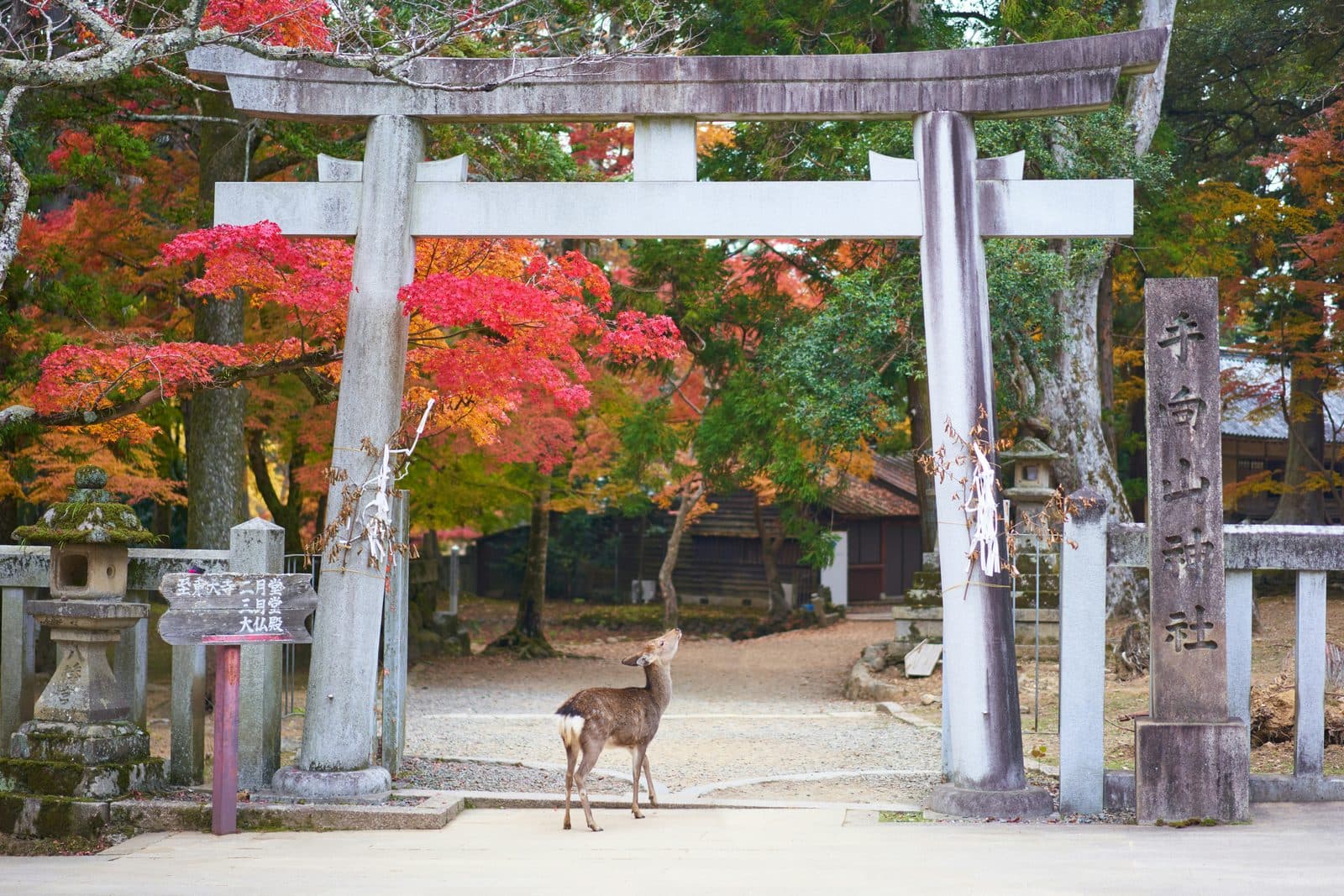
Nara Travel Guide: Day Trip from Kyoto or Osaka, the Deer, How Long You Need (2026)
One Day in Nara: The Perfect Walkable Day Trip (2026)

What to Eat in Nara: A Food Guide (2026)
Gango-ji: The Temple Older Than Nara That Naramachi Grew Around
Kofuku-ji's Five-Storey Pagoda: The Tower an Empress Ordered and Fire Kept Remaking