Nara Park and Todai-ji: The Great Buddha
95 min · 3 km · moderate
Nara food is the food of an old inland capital. This was Japan first great permanent city, set among mountains far from the sea, so its specialties are about keeping and refining: fish preserved for the journey over the hills, vegetables cured in the lees of sake, starch painstakingly refined from a mountain root, noodles born of clear water, and the very technique that turned cloudy brew into clear sake. Eat in Nara and you are tasting its geography and its age. This guide covers the dishes worth seeking out, and it pairs naturally with a slow walk on one of our Nara self-guided tours, especially the Naramachi merchant town, where much of this food lives.
The dishes to seek out
Kakinoha-zushi (persimmon-leaf sushi). Nara most iconic dish, and the one to try first. Small blocks of vinegared rice are topped with mackerel or salmon and wrapped in a persimmon leaf, then pressed. It was invented in the Yoshino mountains as a way to preserve fish carried inland from the coast in the days before refrigeration; the leaf has mild antibacterial properties and lends the rice a faint, clean fragrance. You unwrap the leaf and eat the sushi inside. Sold boxed all over Nara, it makes a perfect walking lunch.
Nara-zuke (sake-lees pickles). The pickle that carries the city name, with a tradition said to run back over a thousand years. Vegetables such as cucumber, daikon, and gourd are cured for months in sake lees, the fragrant paste left after pressing sake, turning deep amber and taking on a sweet, boozy, savoury depth. A small dish of Nara-zuke is a classic accompaniment, and it ties directly to the city sake history below.
Miwa somen. The Sakurai area of Nara is considered the birthplace of somen, the thread-fine wheat noodles, thanks to its clear water and dry breezes ideal for drying them. Miwa somen is prized for a chewy-yet-smooth texture and is eaten chilled in summer and in hot broth (nyumen) in the cooler months. It is a quiet, ancient Nara specialty that predates almost everything else on this list as an industry.
Yoshino kudzu sweets. From the Yoshino mountains comes kudzu, whose starch is refined by hand into a prized, translucent thickener. In Nara it becomes elegant sweets: silky kuzumochi and slippery, cold kuzukiri served with dark sugar syrup. It is one of the most refined, delicate things you can eat in the city.
Warabimochi. A soft, wobbly dessert made from bracken (warabi) starch and dusted with roasted soybean flour (kinako), often with dark sugar syrup. It is strongly associated with the Nara and Kansai region, and its cool, jelly-like texture is a summer favourite.
Mochi, pounded at speed. Freshly pounded rice mochi is a Nara treat with a show attached. Nakatanidou, near Sarusawa Pond, is famous for its high-speed mochi pounding, a blur of mallets and turning dough that draws a crowd, and the warm mugwort mochi filled with sweet red bean is the reward.
Nara and sake
Hear a stop from this walk
Nigatsu-do Hall: Twelve Centuries of Unbroken Fire
Nara deserves its own paragraph on sake, because it is widely regarded as the birthplace of refined Japanese sake. Around the fifteenth century, monks at Shoryaku-ji temple near Nara developed bodaimoto, an early, stable yeast-starter method that became a foundation of modern clear-sake brewing. That heritage lives on in a cluster of historic Nara breweries, and it is why the local Nara-zuke pickles, cured in sake lees, exist in the first place. A small pour of Nara-brewed sake alongside the local food closes a neat loop between the drink and the table.
Where to eat it
Most of these specialties concentrate in and around Naramachi, the old merchant quarter south of the park, where lattice-fronted shops sell kakinoha-zushi, pickles, kudzu sweets, and somen, and small restaurants serve them at a table. Nakatanidou and its mochi theatre sit up by Sarusawa Pond on the way in. Walking the Naramachi merchant town at an easy pace doubles as a food crawl, and the folk-charm lanes there tell you why this working town, not the temple grounds, is where Nara everyday flavours grew up.
Eat as you walk
The best way through this list is on foot, one district at a time: a box of kakinoha-zushi eaten on a bench in Nara Park among the deer, warm mochi from Nakatanidou by the pond, and kudzu sweets in a Naramachi tea house at the end. Route your day with the one day in Nara itinerary, plan the practical side with the Nara travel guide, and browse all Nara tours. Every tour is free to start: the introduction and first stop play in full, and every later stop plays a short preview before an optional purchase.
Frequently asked questions
- What food is Nara known for?
- Nara is known for kakinoha-zushi (pressed sushi wrapped in persimmon leaves), Nara-zuke (vegetables pickled in sake lees), Miwa somen (fine wheat noodles from Sakurai, considered the birthplace of somen), Yoshino kudzu sweets, and its famous freshly pounded mochi. Nara is also historically important as the birthplace of refined Japanese sake, a technique developed by monks at Shoryaku-ji temple.
- What is kakinoha-zushi?
- Kakinoha-zushi is Nara most iconic dish: small blocks of vinegared rice topped with mackerel or salmon and wrapped in a persimmon leaf. It was developed in the Yoshino mountains as a way to preserve fish carried inland from the coast, before refrigeration. The persimmon leaf is not eaten; it has mild antibacterial properties and lends the rice a subtle fragrance. You unwrap it and eat the pressed sushi inside.
- Why is Nara connected to sake?
- Nara is widely regarded as the birthplace of refined Japanese sake. Around the fifteenth century, monks at Shoryaku-ji temple near Nara developed bodaimoto, an early and stable yeast-starter method that laid the foundation for modern clear sake brewing. The technique is still honoured today, and Nara has a cluster of historic breweries, so Nara-made sake pairs naturally with the local pickles and food.
- What sweets should you try in Nara?
- Two above all. Yoshino kudzu sweets, made from kudzu starch laboriously refined in the Yoshino mountains, appear as silky, jelly-like kuzumochi and kuzukiri. And warabimochi, a soft bracken-starch dessert dusted with roasted soybean flour, is strongly associated with the region. For a bit of theatre, watch the famous high-speed mochi pounding at Nakatanidou near Sarusawa Pond.
Ready to experience it?
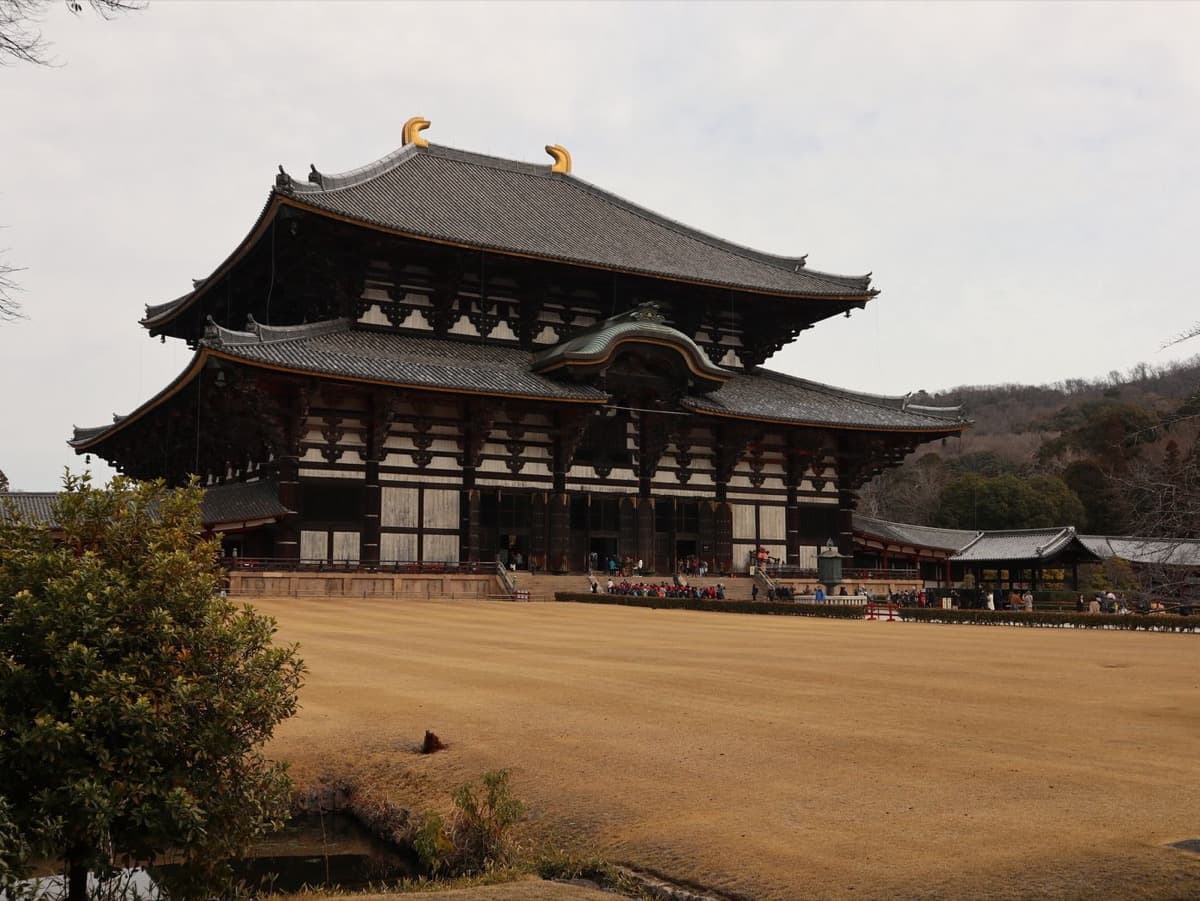
Nara Park and Todai-ji: The Great Buddha
95 min · 3 km · moderate
More from Nara
Explore more at your own pace.
Nara Travel Guide: Day Trip from Kyoto or Osaka, the Deer, How Long You Need (2026)
One Day in Nara: The Perfect Walkable Day Trip (2026)
Gango-ji: The Temple Older Than Nara That Naramachi Grew Around
Kofuku-ji's Five-Storey Pagoda: The Tower an Empress Ordered and Fire Kept Remaking
The Great Buddha of Nara Was Cast to Hold a Country Together