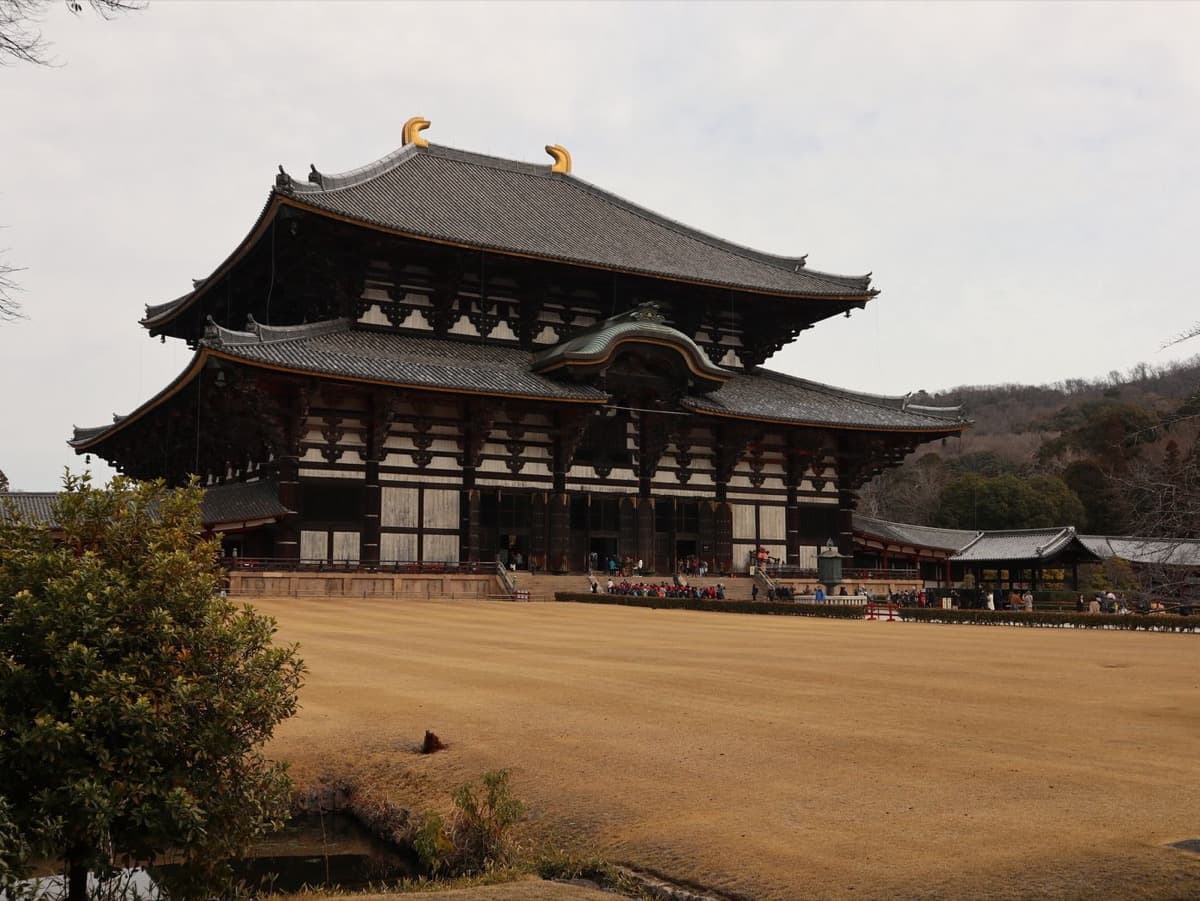
Cross Japan's first permanent capital on foot, from a clan's symbolic pagoda to a colossal bronze Buddha cast to bind a nation together, and meet the sacred wild deer protected here for more than a thousand years. Everything charming in Nara Park was once an instrument of power.
Start · Kofuku-ji Five-Storey Pagoda: The Clan That Rebuilt the Sky
DirectionsStops
- 1
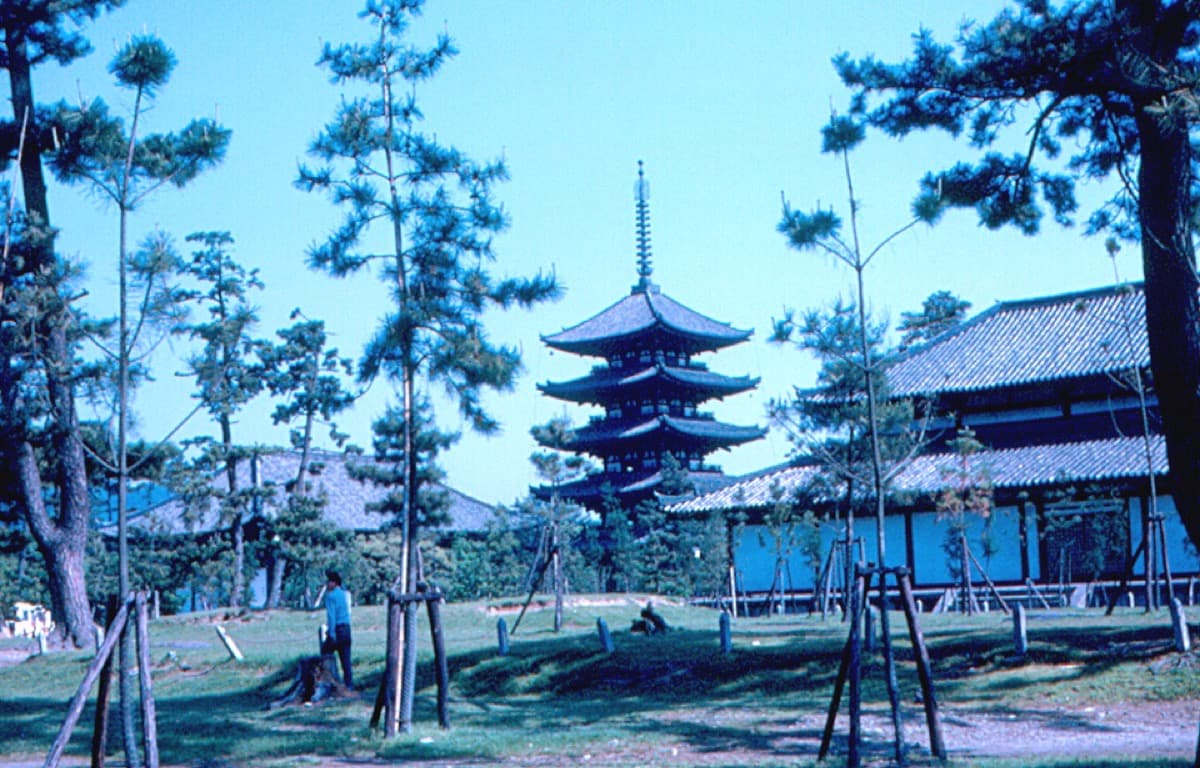
Kofuku-ji Five-Storey Pagoda: The Clan That Rebuilt the Sky
The enduring symbol of Nara, a fifty-metre pagoda rebuilt six times by the powerful Fujiwara clan and now hidden inside a full restoration.
- 2
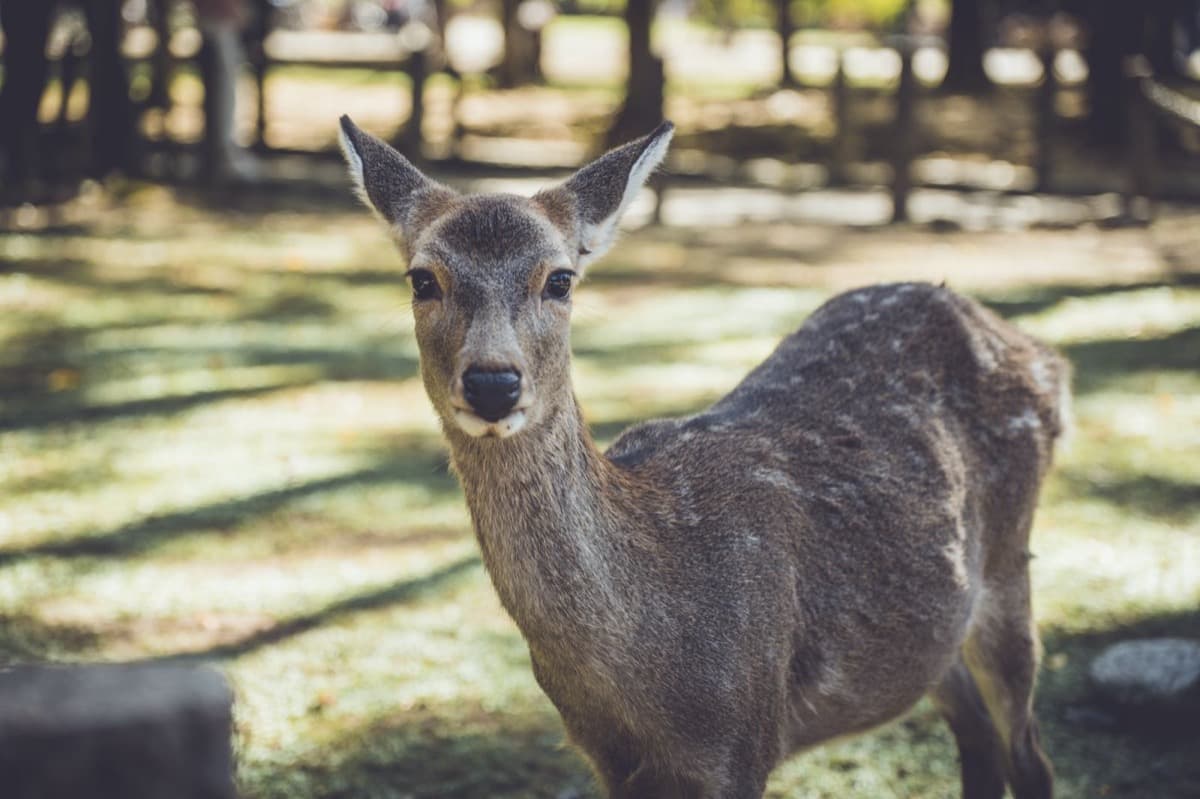
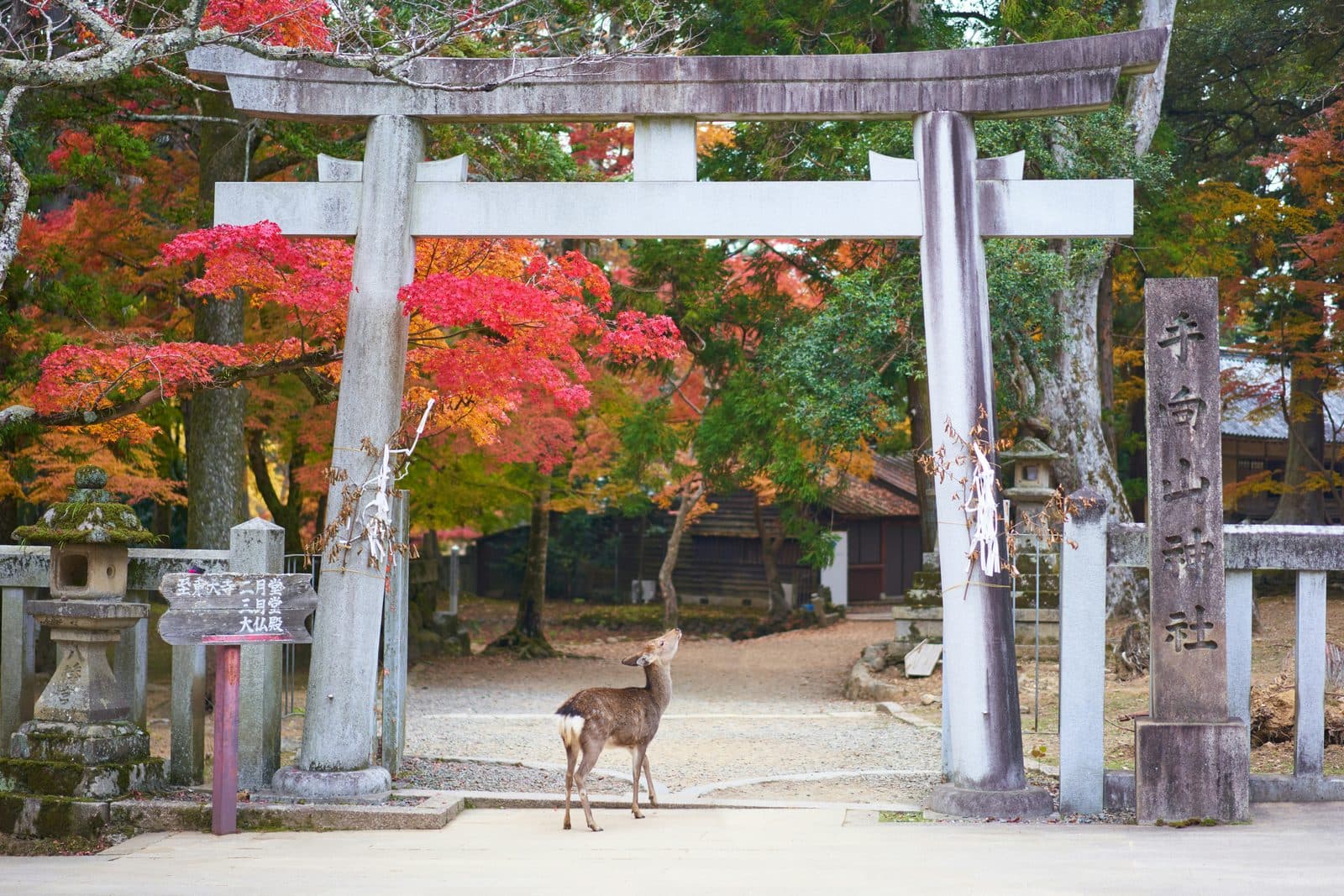
The Sacred Deer of Nara Park: A Herd a God Protects
More than a thousand wild sika deer roam the park freely, protected for over a thousand years as the sacred messengers of a Shinto god.
- 3
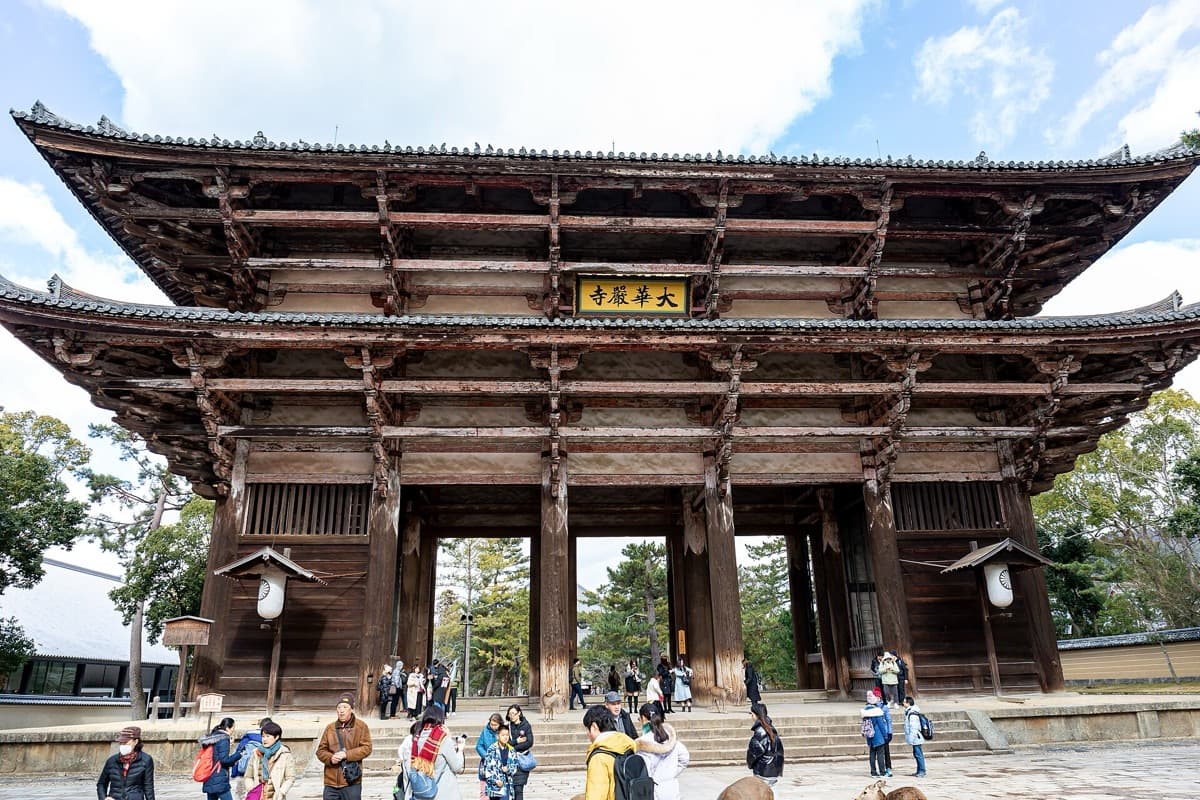
Nandaimon Great South Gate: Guardians Carved in Weeks
The towering main gate to Todai-ji, sheltering two eight-metre guardian kings carved by Unkei and Kaikei in about seventy days.
- 4
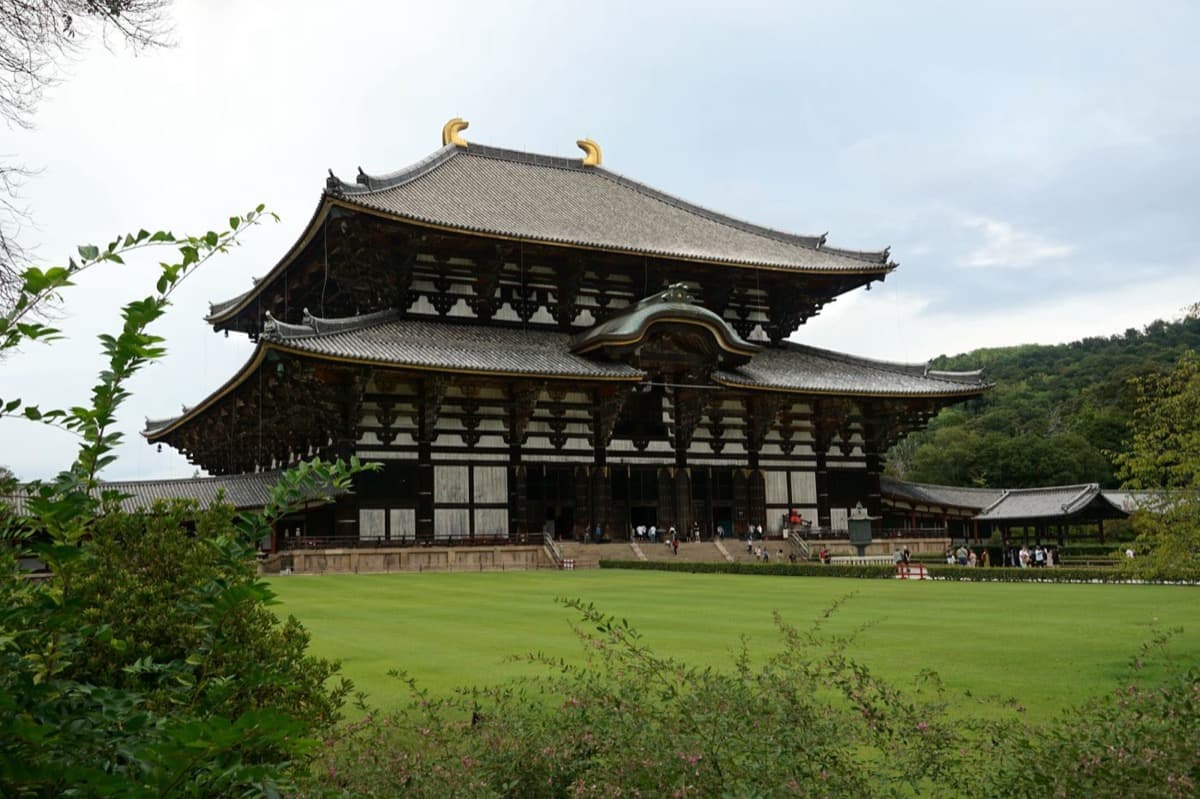
Todai-ji Daibutsuden: The Monumental Rebuild
One of the largest wooden buildings on earth, yet only about two-thirds the width of the eighth-century hall it replaced.
- 5
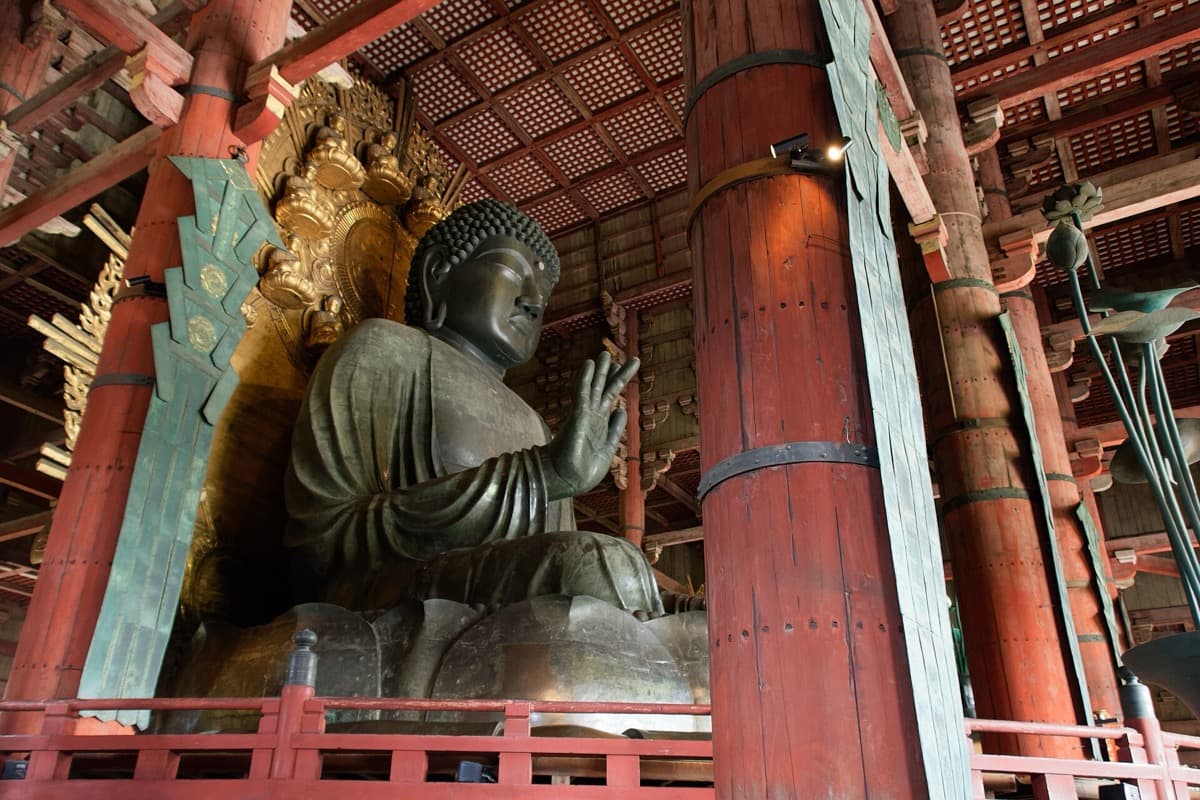
The Great Buddha: A Colossus Cast to Unify a Nation
A seated bronze Vairocana roughly fifteen metres tall, ordered by Emperor Shomu to bind a young country together through overwhelming scale.
- 6
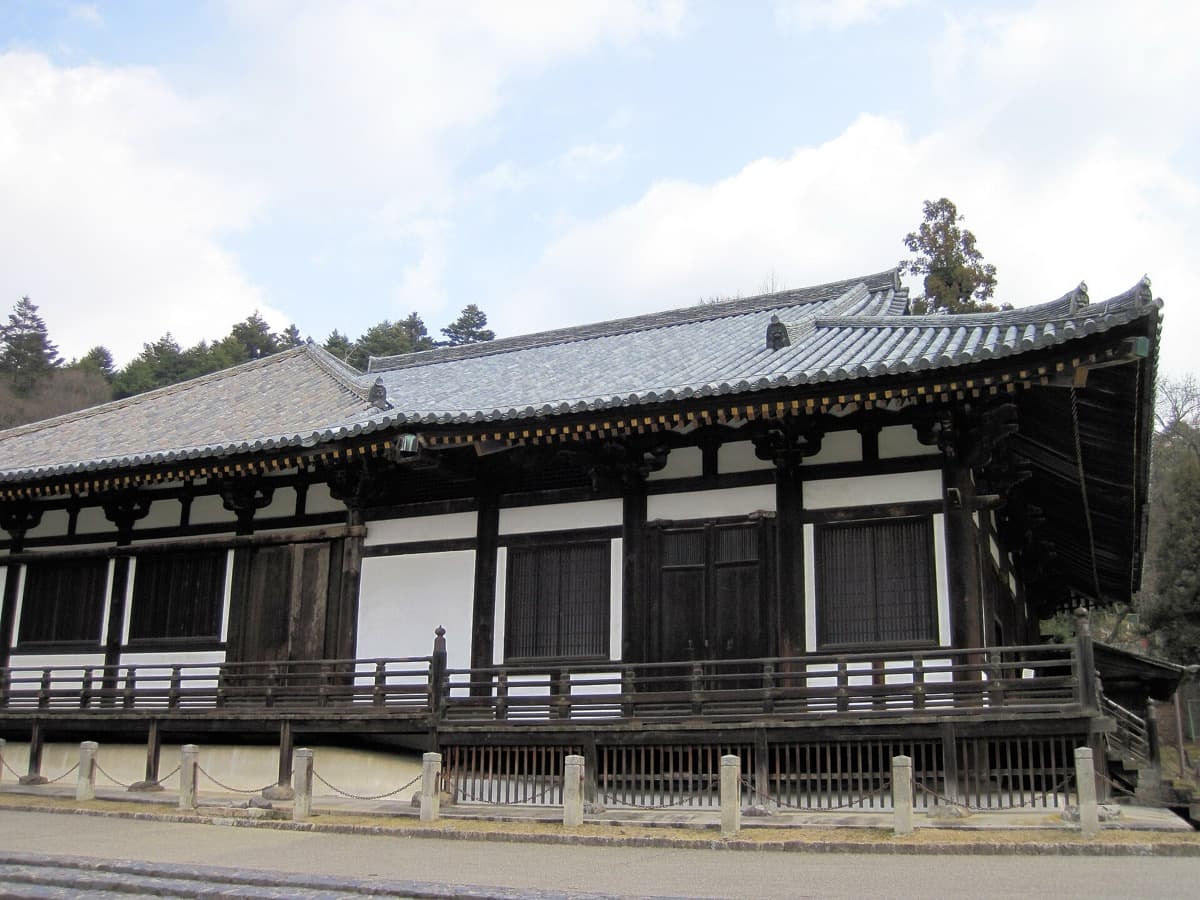
Hokke-do (Sangatsu-do): The Hall That Simply Endured
The oldest building in the entire Todai-ji complex, an eighth-century hall holding original Nara-period treasures.
- 7
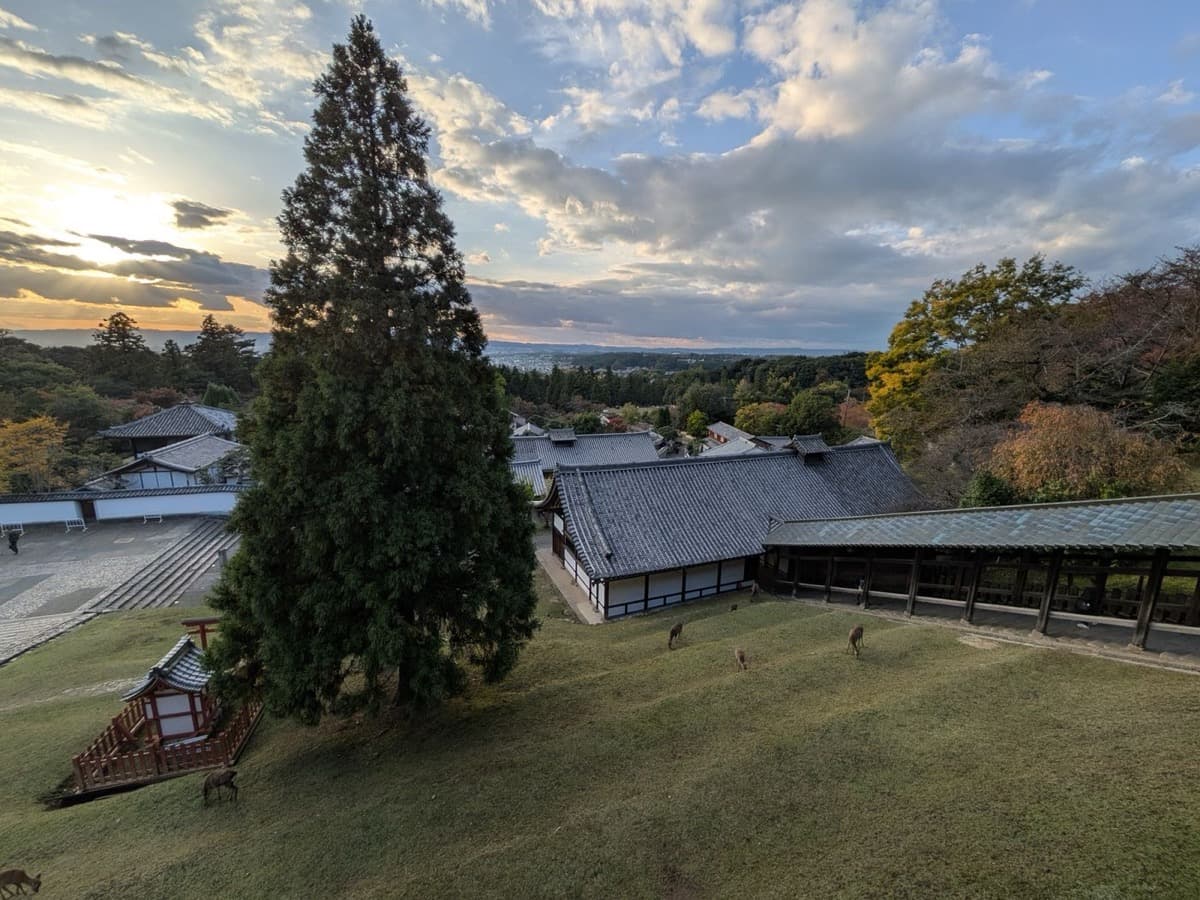
Nigatsu-do Hall: Twelve Centuries of Unbroken Fire
A hillside hall with a panoramic balcony over Nara, home to a fire-and-water rite performed every year since the eighth century.
Details
Best Time to Visit
Early morning is the reward here. Arrive soon after the Great Buddha Hall opens, around seven thirty to eight in the morning in the warmer months, and you can stand before the colossus in relative quiet before the tour groups arrive. The deer are active and hungry early too. Late afternoon works beautifully as well, when the light turns golden on the Nigatsu-do balcony and the crowds thin. Spring brings cherry blossom across the park and autumn brings fiery maples on the eastern hillside, though both draw larger crowds. If you can visit in early March, the Omizutori fire rite at Nigatsu-do is extraordinary, but expect dense evening crowds on the nights around March twelfth.
Pro Tips
- •The Daibutsuden and the Great Buddha share one ticket, eight hundred yen for adults and four hundred for children. The Hokke-do is a separate eight hundred yen. The Nandaimon gate, the Nigatsu-do balcony, the deer lawns and the Kofuku-ji grounds are all free to walk.
- •Walk the loop west to east as laid out here so you finish high on the Nigatsu-do balcony with the whole park below you. It gives you the best light and the best view to end on.
- •Buy deer crackers, the shika-senbei, only when you are ready to feed them right away. The moment you hold them the deer close in fast.
- •Many deer will bow their heads for a cracker, and a small bow back is part of the fun, but feed them promptly, since a bowing deer that waits too long may nudge or nibble.
- •The pagoda at Kofuku-ji is wrapped in scaffolding for restoration into the early twenty thirties, so do not expect to photograph its silhouette. Come for the story and the temple grounds instead.
- •Wear comfortable shoes. The park paths are gravel and the climb to the hillside halls is gentle but continuous, and the stone steps near Nigatsu-do can be uneven.
Safety & Precautions
- •The deer are wild animals, not pets. When you carry crackers they can become pushy, tugging at bags, clothing, maps and pockets. Keep food tucked away, hold your belongings close, and take special care with small children.
- •Temple halls keep set hours, and the Daibutsuden and Hokke-do both charge entry, so check closing times before you climb, especially in winter when the halls shut earlier. Carry cash for the eight hundred yen tickets.
- •Summers in Nara are hot and humid, and much of this walk crosses open lawns in full sun. Carry water, wear a hat, and pace yourself on the climb to the hillside halls.
- •The park is gravel underfoot with some uneven stone steps toward Nigatsu-do. Wear sturdy, comfortable shoes and watch your footing, particularly after rain.
Travel advisory: Exercise Normal Precautions (Level 1).
Gallery
Related Reading
Go deeper on what you'll see, hear, and walk through.
Overview
Best Self-Guided Walking Tours in Nara (2026)
3 min
Overview
Nara Travel Guide: Day Trip from Kyoto or Osaka, the Deer, How Long You Need (2026)
5 min
Overview
One Day in Nara: The Perfect Walkable Day Trip (2026)
5 min

Thematic
What to Eat in Nara: A Food Guide (2026)
4 min
Deep dive
Kofuku-ji's Five-Storey Pagoda: The Tower an Empress Ordered and Fire Kept Remaking
4 min
Deep dive
The Great Buddha of Nara Was Cast to Hold a Country Together
6 min
Deep dive
The Sacred Deer of Nara: Why a Whole City Protects Its Herd as Messengers of the Gods
5 min
Read the walk
The full story of Nara Park and Todai-ji: The Great Buddha, in words. Prefer to listen? Play it narrated, from home or on location.
Introduction
Two of the gentlest sights in Japan wait for you here, and both were once instruments of raw power. The tame bowing deer of Nara. The serene giant Buddha cast to overawe a nation. This walk keeps pulling the sweet surface back to show you what lies beneath it.
You are in Nara, Japan's first permanent capital, founded in seven hundred and ten and once called Heijo-kyo. Over about ninety minutes and roughly two kilometres, you will cross the park from west to east in seven stops, climbing gently from the open lawns to a wooded hillside.
You will begin at the tall pagoda that has stood as the symbol of the city for centuries. You will walk among a wild, sacred deer herd protected for more than a thousand years. You will pass beneath a towering gate guarded by two colossal kings, step into the Great Buddha Hall for the bronze colossus at its heart, then climb to the oldest building in the whole complex and finish on a balcony looking back over everything you have walked.
Move at your own pace. Every stop stands on its own, so linger where something grabs you and skip ahead when it does not. There is no group to keep up with and no schedule but your own. Wear shoes you can walk gravel in, and keep some water close in warm months.
When you arrive at the Kofuku-ji Five-Storey Pagoda, begin with stop one.
1. Kofuku-ji Five-Storey Pagoda: The Clan That Rebuilt the Sky
You are standing near the tall five-storey pagoda of Kofuku-ji, the temple of the powerful Fujiwara clan and for centuries the symbol of Nara itself. A word of honesty first. Right now the pagoda is wrapped inside scaffolding and a work shed. A full dismantling restoration began in July of twenty twenty three, the first major overhaul in about one hundred and twenty years, and it is expected to run into the early twenty thirties. So picture the tower rather than strain to see it.
And it is worth picturing. It rises about fifty metres, which makes it the second-tallest wooden pagoda in Japan, just under five metres shorter than the tallest, the pagoda of To-ji in Kyoto. It was first raised in seven hundred and thirty, at the order of Empress Komyo. What you would see today is not that first tower. This pagoda has burned down five times across its long life. The structure now hidden in scaffolding is the sixth, rebuilt in fourteen twenty six.
Think about what that means. Five fires, and five times the Fujiwara rebuilt it, each time stamping their authority back onto the skyline. A tower rebuilt six times is not really about wood and tile. It is a monument to persistence, to a clan that would not let its mark on the city disappear.
This is the western edge of the park and the start of your climb east. When you are ready, walk toward the open lawns, where the deer are waiting.
2. The Sacred Deer of Nara Park: A Herd a God Protects
The deer moving around you are not park pets, and they are not fenced. They are wild sika deer, somewhere between one thousand two hundred and one thousand three hundred of them, living freely across the roughly six hundred and sixty hectares of Nara Park. What lets a wild herd this size survive inside a city is not cuteness. It is a god.
For more than a thousand years these deer have been honored as the sacred messengers of Takemikazuchi, a Shinto deity enshrined at nearby Kasuga Taisha. Legend says the god arrived to protect the new capital riding a white deer. From then on the animals carried his authority, and for centuries harming one was a grave offense. Sacredness, here, worked as a kind of protection law.
That shield outlived the old religious order. In nineteen fifty seven the Japanese government designated the herd a natural monument, a protected national treasure, and Kasuga Taisha formally let go of its ownership. The population, then only about five hundred, has since grown into the low thousands.
Yes, they bow. They have learned that lowering their heads often earns a cracker from a visitor, and it is genuinely charming. But hold the deeper picture in mind while you watch. This is the gentlest thing in the whole park, a herd that will walk right up to you, and it exists only because power once made killing it unthinkable. Everything soft here has a hard root.
Give them space, keep your bags closed, and when you are ready, carry on toward the great gate rising ahead.
3. Nandaimon Great South Gate: Guardians Carved in Weeks
This gate is the Nandaimon, the Great South Gate, and it is built to make you feel small before you ever reach the temple. Step into its shadow and look up into the bays on either side. Two colossal guardian kings stare down at you, each carved from Japanese cypress and standing over eight metres tall.
They are the Nio, the kings who guard the entrance. One has his mouth open, forming the sound ah, the beginning. The other holds his mouth shut, forming the sound un, the end. Together they are beginning and end, the whole of things, muscled and snarling and frozen mid-roar.
Here is the detail that stops people. According to Todai-ji's own records, these two giants were carved in twelve hundred and three by the master sculptors Unkei and Kaikei, working with their workshop, and the immense pair was completed in about seventy days. Seventy days for two figures over eight metres tall, each assembled from many blocks of wood and full of ferocious motion. Both are national treasures and are counted among the finest sculptures of their age.
Think about why anyone would carve guardians this large, this fast, this fierce. This is the doorway to the state temple, the monument the eighth-century government built to hold a nation together. Even the welcome at the threshold was meant to overawe. The charm of this place keeps turning out to be power in disguise, and here the power is not hidden at all. It is snarling down at you from the rafters.
Walk through, and the Great Buddha Hall will open ahead of you.
4. Todai-ji Daibutsuden: The Monumental Rebuild
You are standing before the Daibutsuden, the Great Buddha Hall, and it is enormous: about fifty-seven metres wide, fifty metres deep, and forty-nine metres high. It was the largest wooden building in the world until nineteen ninety eight, and it remains one of the largest wooden…
Full narration for this stop unlocks with the tour.
5. The Great Buddha: A Colossus Cast to Unify a Nation
Here it is. The bronze figure seated before you is the Daibutsu, the Great Buddha, an image of Vairocana, the cosmic Buddha, known in Japanese as Rushana. It rises roughly fifteen metres, and it weighs an estimated two hundred and fifty tons. It is the largest bronze Buddha in…
Full narration for this stop unlocks with the tour.
6. Hokke-do (Sangatsu-do): The Hall That Simply Endured
You are standing before the Hokke-do, also called the Sangatsu-do, the Third-Month Hall. It looks modest next to the giant hall below, and that modesty is exactly the point. This is the oldest building in the entire Todai-ji complex. It was raised in the Nara period, in the…
Full narration for this stop unlocks with the tour.
7. Nigatsu-do Hall: Twelve Centuries of Unbroken Fire
You have reached Nigatsu-do, the Second-Month Hall, built out along the slope on tall wooden stilts, and its balcony is your reward. Step to the rail and look west. The whole walk lies below you: the great roof of the Buddha hall, the open lawns where the deer graze, the city of…
Full narration for this stop unlocks with the tour.