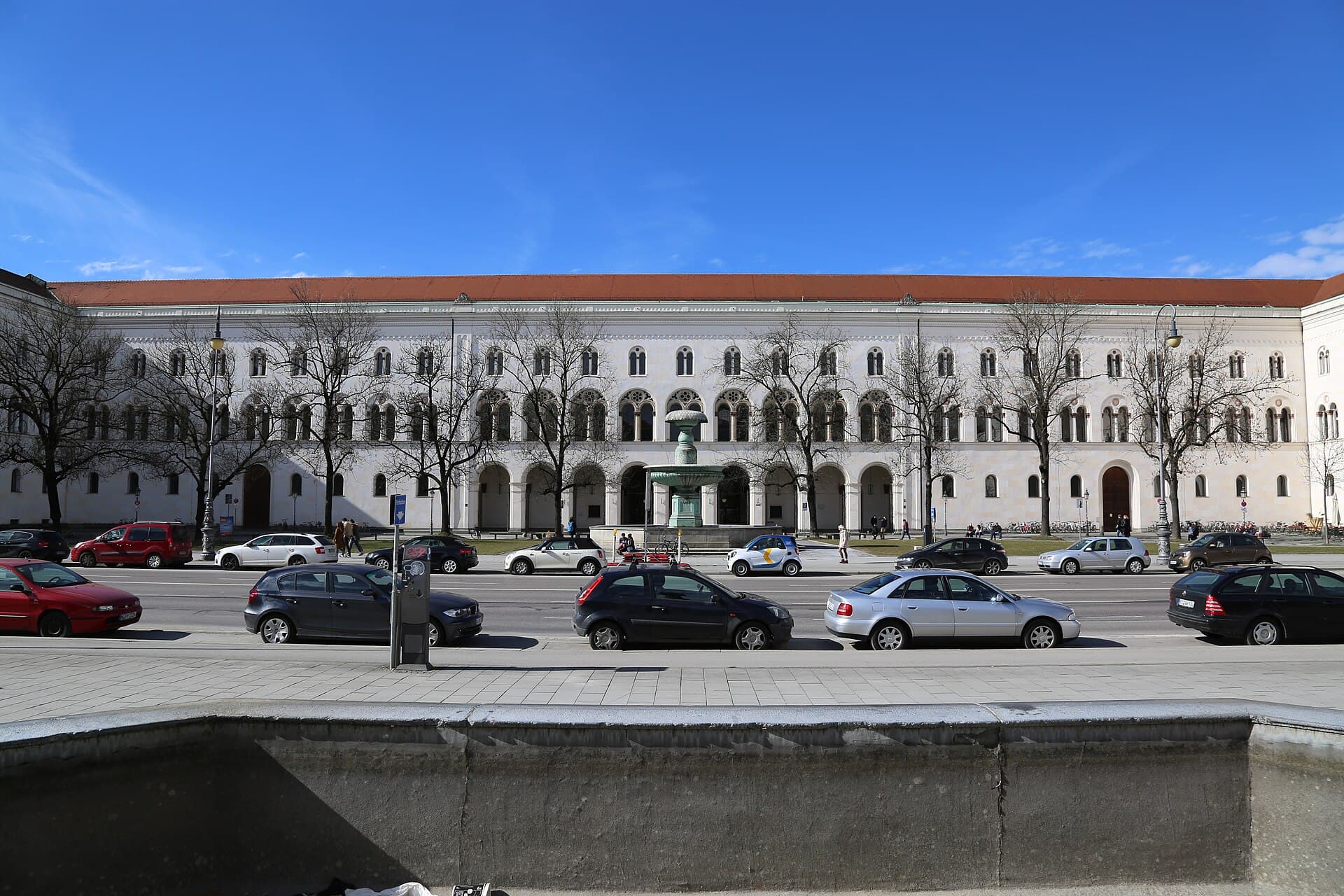
Geschwister-Scholl-Platz, the semi-circular square in front of Munich's main university building, is where a small group of students distributed leaflets against the regime and were executed for it. The square was renamed for two of them in 1946. It sits at the moral center of a walk that reckons with a hard paradox: the Nazis called Munich the Hauptstadt der Bewegung, the capital of their movement, and yet resistance lived in these same streets. Standing on this ground, where students chose openly to say no, is the way into understanding the whole city.
Six leaflets and four days
During the war, a handful of students at the Ludwig Maximilian University formed a non-violent resistance movement they called the Weisse Rose, the White Rose. Its core members were Hans Scholl, his sister Sophie Scholl, Christoph Probst, Alexander Schmorell, Willi Graf, and their professor Kurt Huber. They wrote and secretly distributed six leaflets, roughly fifteen thousand copies in all, denouncing the dictatorship and calling on Germans to resist.
On the eighteenth of February, 1943, Hans and Sophie Scholl carried copies of the sixth leaflet into this university and scattered them from an upper gallery into the central light-well, the Lichthof, below. A caretaker named Jakob Schmid saw them and called the Gestapo. Hans, Sophie, and Christoph Probst were tried before the People's Court under the judge Roland Freisler and executed at Munich-Stadelheim prison on the twenty-second of February, 1943, only four days after the leaflets fell. As Hans faced his death, he is reported to have called out, "Es lebe die Freiheit," long live freedom. Further members were executed later that year.
The speed of it is the part that stays with you. Four days from a scattered stack of paper to three graves. That was how the regime treated dissent, and the students knew the likely cost when they acted anyway.
Reading the pavement
Hear a stop from this walk
The Georg Elser Memorial
Look down at the stone in front of the university. Bronze casts of the leaflets are set into the pavement here, made by the artist Robert Schmidt-Matt and installed in 1990. They are easy to walk over without noticing, which is part of their quiet power. Inside the atrium, a memorial exhibition called the DenkStatte Weisse Rose was inaugurated in 2017. Both are free, and both reward standing still for a while.
The White Rose remains the most widely known student resistance of the Third Reich, and part of why the square became a place of remembrance rather than only of denunciation is that Munich chose, in 1946, to put the Scholls' name over its own front door. A university that had produced these students would carry them in its address from then on.
Why the square needs the rest of the walk
The White Rose is often told as a single, self-contained story of courage. It is more honest, and more useful, to set it inside the city that produced both the regime and its resisters. That is what the full self-guided route does, and it is why this square is a turning point rather than an endpoint.
The walk begins south of here, at the Feldherrnhalle on the Odeonsplatz, the grand loggia where the Beer Hall Putsch ended in gunfire on the ninth of November, 1923. Sixteen of the coup's followers and four policemen were killed. After 1933 the Nazis turned that spot into a shrine, posted an SS honour guard, and expected everyone who passed to raise the Hitler salute. Just behind it runs the Viscardigasse, a lane barely fifty metres long, where ordinary Munichers slipped past to avoid saluting. For that small daily act of avoidance the alley earned a mocking nickname, the Druckebergergasse, the shirkers' alley. In 1995 the sculptor Bruno Wank set a winding line of bronze into its cobbles. It traces the path people took to say no without saying a word.
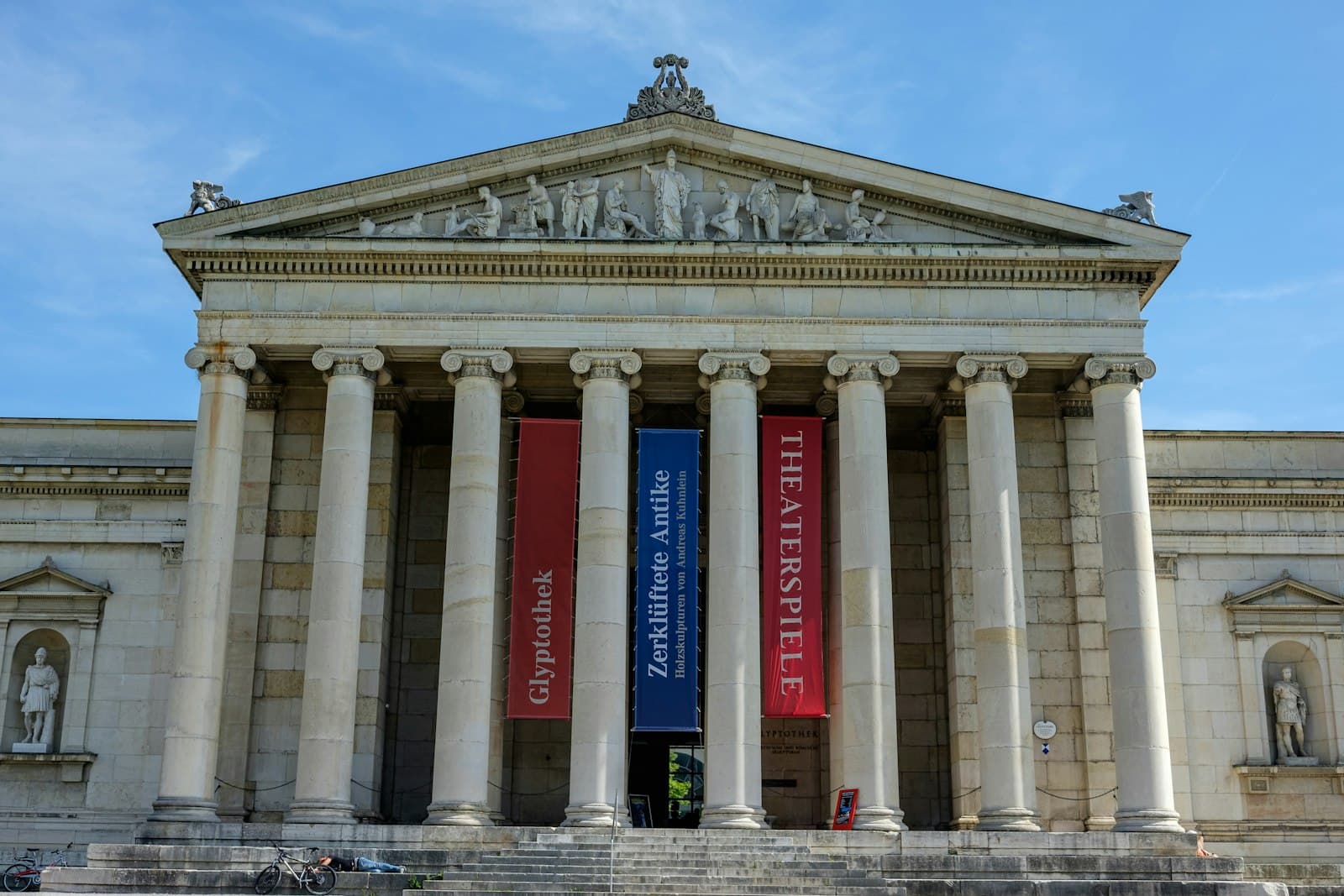
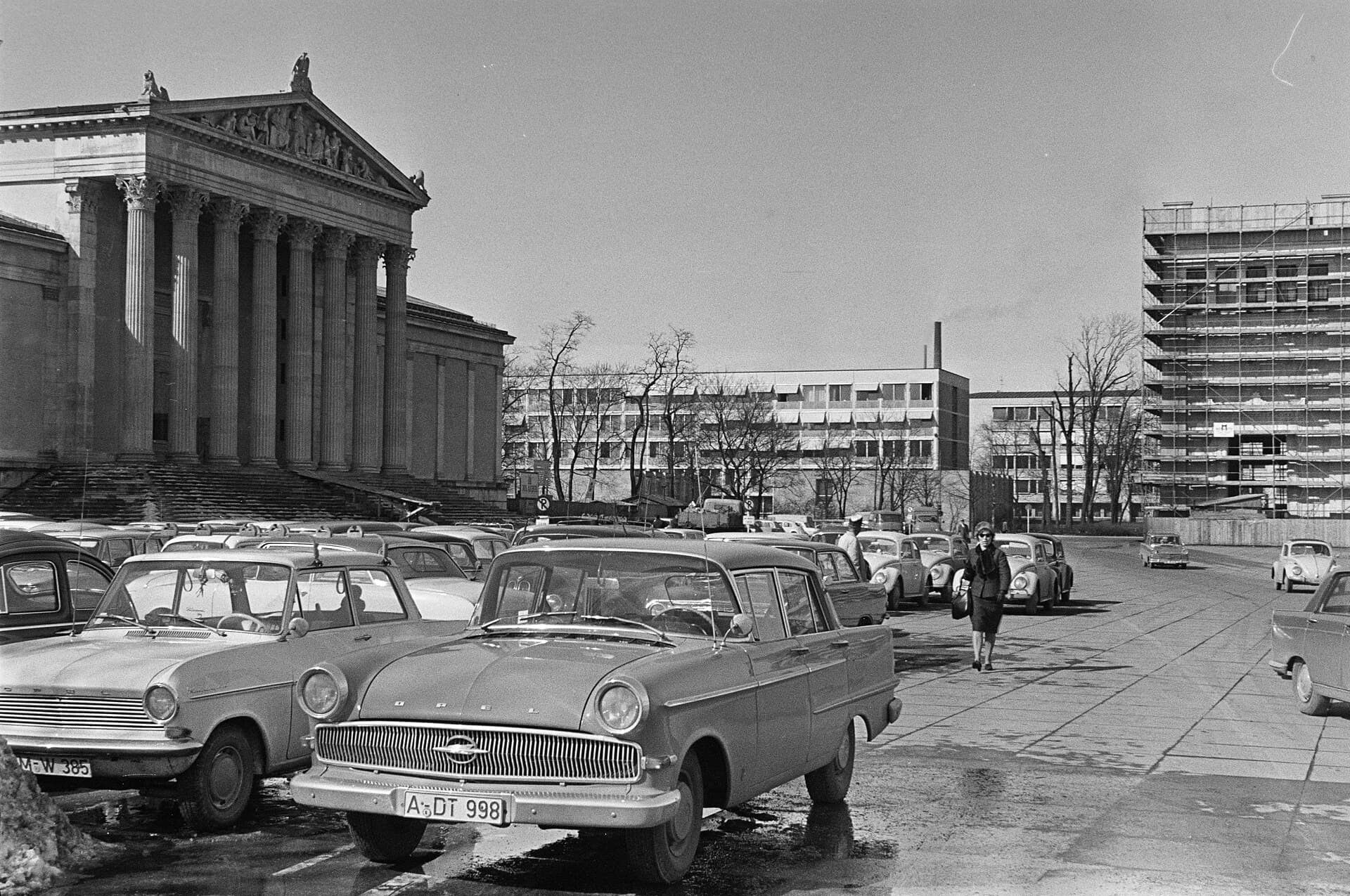
From there the route moves west to the Königsplatz, the neoclassical forum Ludwig the First built to make Munich a classical capital, which the Nazis paved with roughly twenty thousand granite slabs and used for rallies. On its northern edge stands the NS-Dokumentationszentrum, a plain white cube opened in 2015 on the footprint of the Brown House, the Nazi party's national headquarters from 1931. Admission is free, a deliberate choice so anyone can come and look at what the city did.
The White Rose stop answers all of it. A forced salute at the Feldherrnhalle. A quiet, cautious refusal in the alley. A ceremonial square seized as a parade ground. And then, at this university, a refusal that was neither quiet nor cautious, made openly by students who signed their conviction with their lives.
Two kinds of refusal
The walk does not end with the students. North of here is the Georg Elser Memorial on Georg-Elser-Platz, marking the carpenter who acted entirely alone. Elser built a time bomb and hid it in a pillar of the Burgerbraukeller, meaning to kill Hitler. On the eighth of November, 1939, it detonated exactly as planned, killing eight people, but Hitler had left early and survived. Elser was murdered at Dachau on the ninth of April, 1945, weeks before the war ended. Silke Wagner's 2009 memorial lights up each evening at twenty-one twenty, the exact minute the bomb went off.
Set the two side by side and the walk's argument comes into focus. The White Rose was a shared refusal, a circle of friends and a teacher who decided together. Elser's was a single man's refusal, unassisted and unrecognized for decades. Both belong to the same ground, and both sit within a city that was, at the same time, the self-declared capital of the movement.
What Munich chose to do afterward is the quiet resolution. It left the concrete foundations of two demolished Nazi honour temples grassed over on the Königsplatz rather than clearing them. It put a documentation centre, not a monument, on the Brown House site. It cast the White Rose leaflets in bronze in the university pavement. Each is a decision to show the history plainly, neither absolving the city nor performing its guilt.
That is why Geschwister-Scholl-Platz is the place to begin thinking about the whole route. Come here first if you like, then walk the arc from a forced salute, through a quiet refusal, to an open reckoning. You can see more Munich walking tours and plan a visit to Munich before you go. The full route runs about five kilometres and asks for roughly two hours, plus time to stand still, which this ground earns.
Sources
- White Rose, Wikipedia: overview of the movement, its members, the sixth-leaflet distribution, and the 1943 executions.
- DenkStatte Weisse Rose, Weisse Rose Stiftung: the memorial exhibition inside the university atrium, inaugurated in 2017.
- Feldherrnhalle and Beer Hall Putsch, Wikipedia: the 1923 coup, the casualty figures, and the Nazi shrine that followed.
-
- November 1939 memorial, Public Art München: Silke Wagner's Georg Elser memorial and its nightly illumination at 21:20.
- Munich Documentation Centre for the History of National Socialism (NS-Dokumentationszentrum), official site: the centre on the Brown House footprint and its free admission.
Ready to experience it?
Königsplatz: The Movement and the Rose
120 min · 4.9 km · moderate
More from Munich
Explore more at your own pace.
The City the Monks Named: How Munich Turns Privilege Into Public Life
Alter Hof: Where a Burned Bridge Founded Munich
The Chinese Tower Beer Garden: Munich's Whole Idea in One Clearing
Hofbräuhaus am Platzl: How a Duke's Private Brewery Became Munich's Public Beer Hall
Königsplatz, Munich: The Athens on the Isar the Nazis Paved in Granite