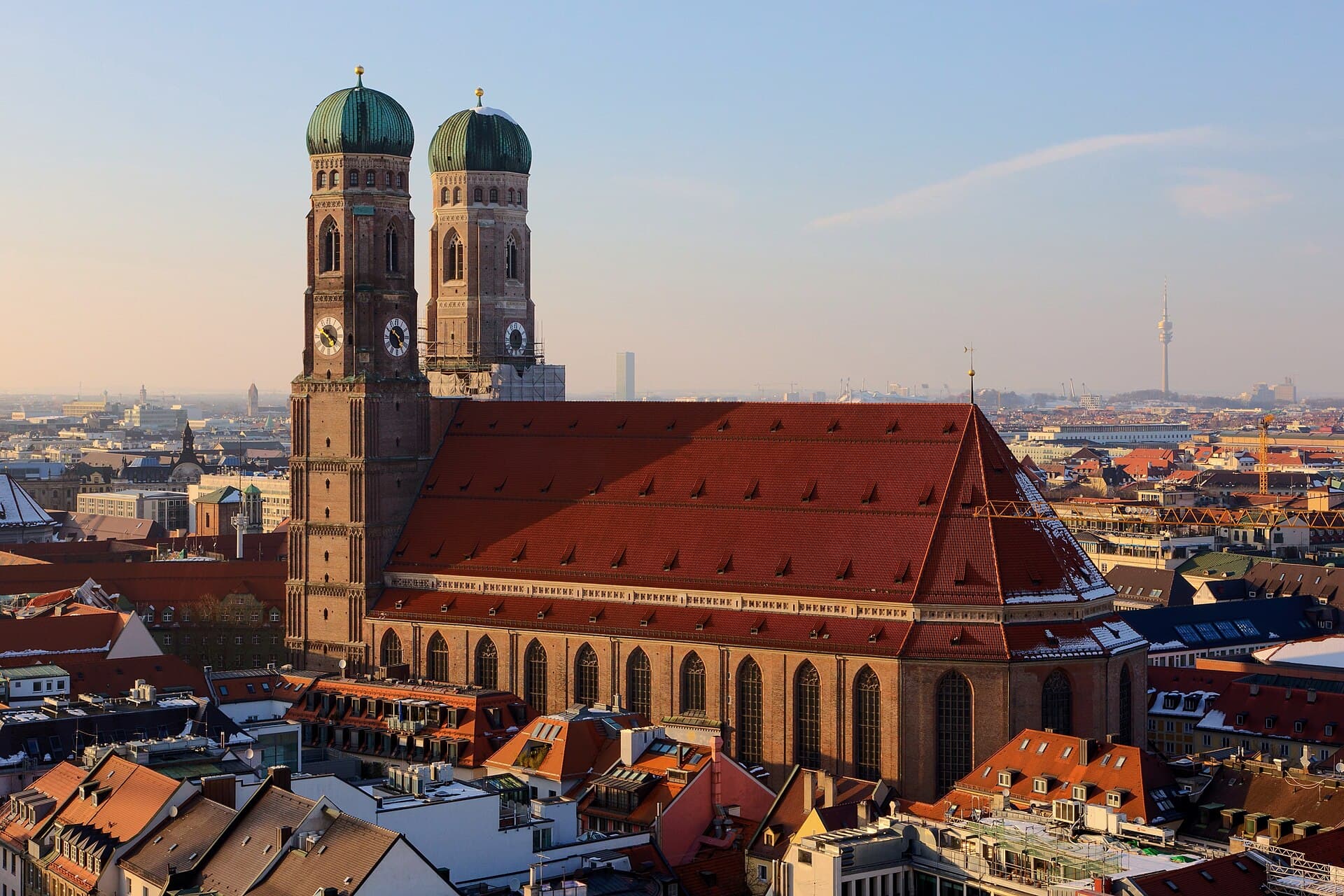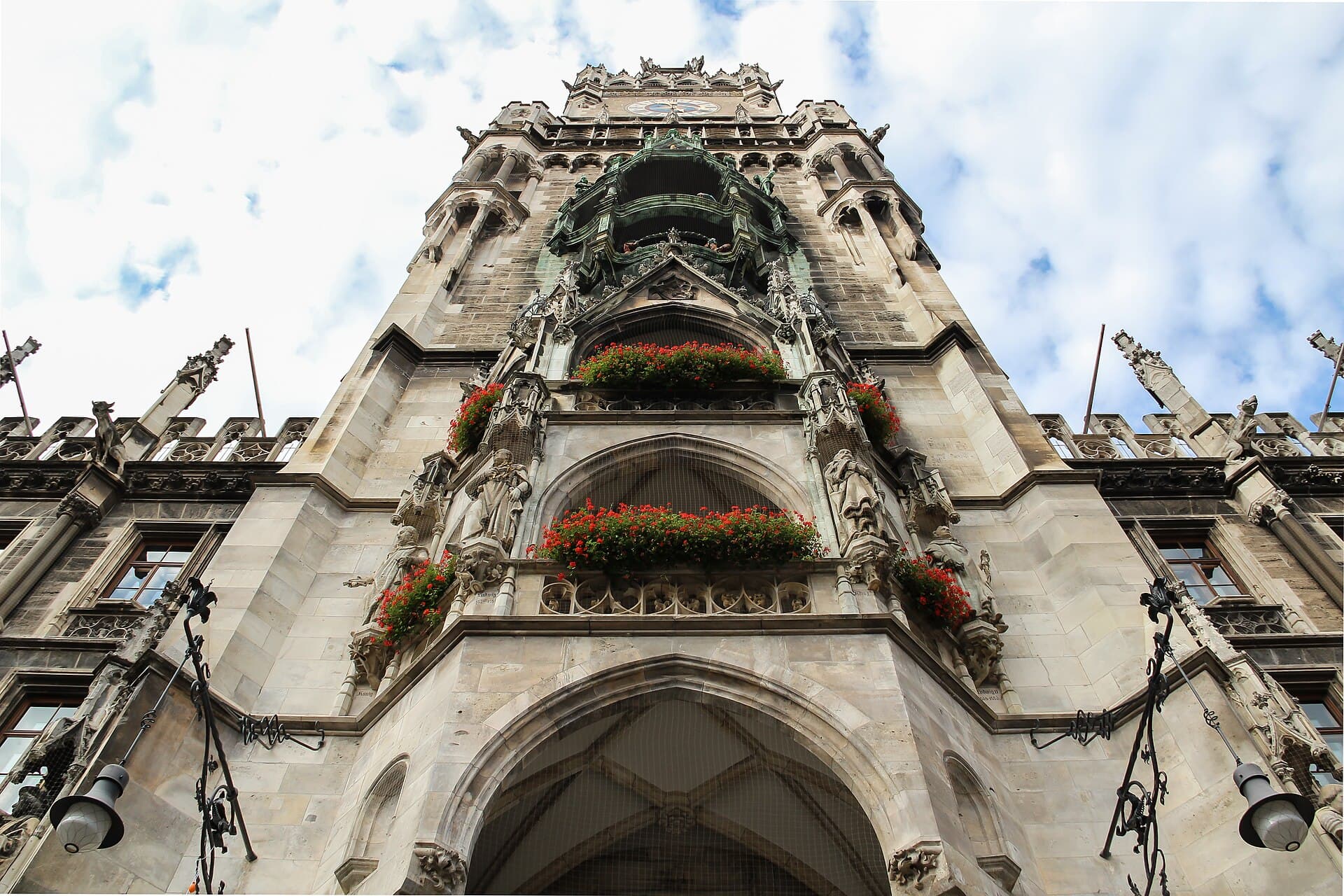
Munich's compact, flat historic center can be walked in one day across three acts. The morning covers the Altstadt around Marienplatz, the Glockenspiel, St. Peter's tower, and the Frauenkirche. Midday moves through the Viktualienmarkt, the Hofbrauhaus, and the Englischer Garten. The afternoon closes in the royal and university quarter around Odeonsplatz, Königsplatz, and the NS-Dokumentationszentrum.
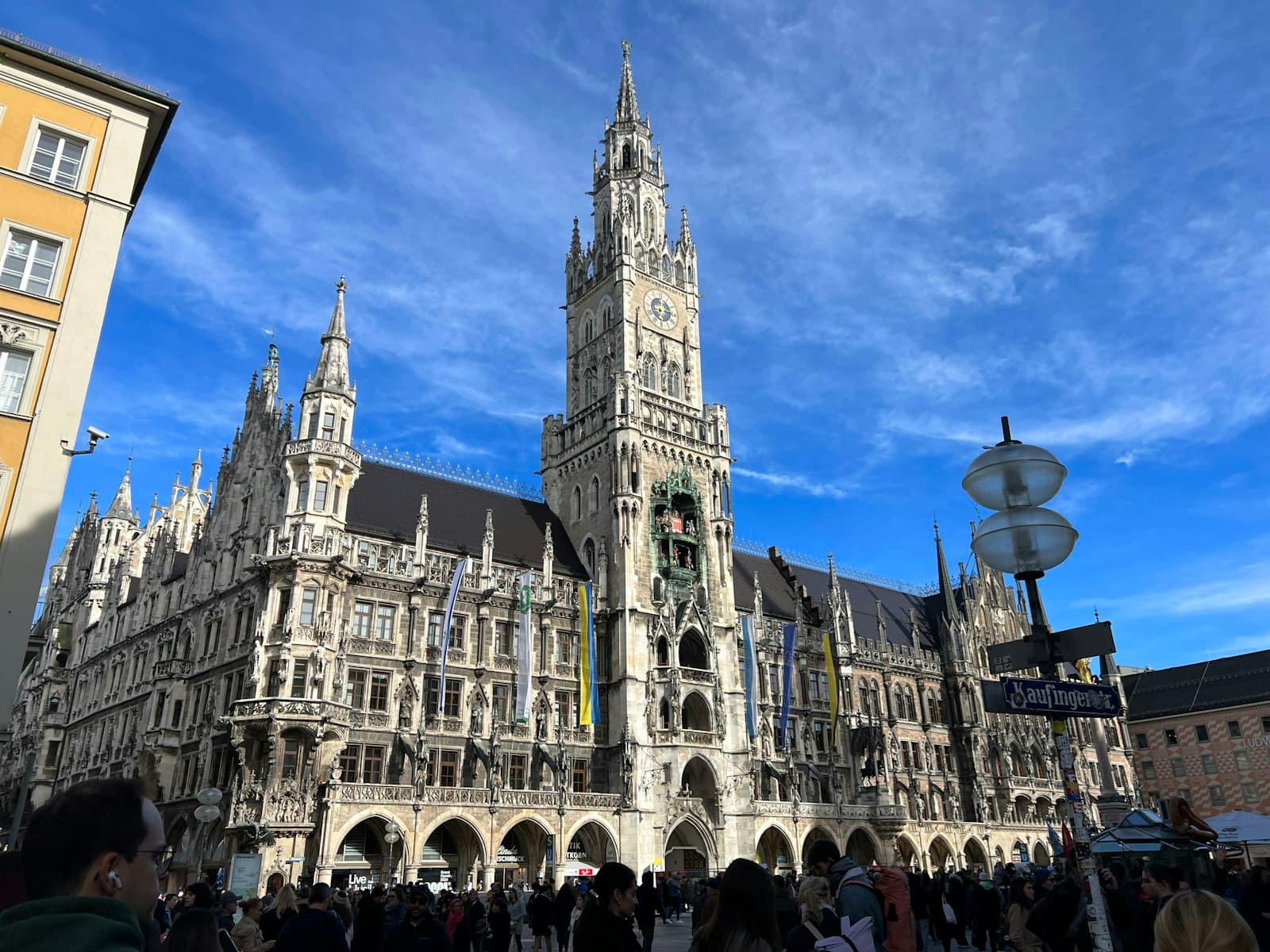
Altstadt: The City the Monks Named
90 min · 2.4 km · easy
Munich rewards one unhurried day on foot: start in the Altstadt at Marienplatz, follow the medieval core to the beer halls and the Englischer Garten by midday, and close in the royal and university quarter where the city reckons with its Nazi years and its resistance. The historic center is compact and mostly flat, so you can walk the whole arc without transit, timing each leg to when things actually open. This guide sets the morning-to-evening route, flags the hours and small fees that matter, and hands each stretch to a self-guided Munich walking tour you can play at your own pace.
The three tours that anchor this day cover the origin story of the Altstadt, the beer and leisure tradition out to the great park, and the sober history of the movement and the resistance. You can walk all three in a full day, or pick the one that fits your afternoon. Compare them on the Munich walking tours hub.
The short answer: one day, three acts
One good day in Munich breaks into three walkable acts. Spend the morning in the Altstadt around Marienplatz (roughly 2.4 kilometers, easy, about ninety minutes at a slow pace). Give the middle of the day to the beer and park tradition, from the old-town halls out to the Englischer Garten (a longer, level walk of about 8.5 kilometers if you go the full distance, or a shorter loop if you turn back at the park). Close the day in the royal and university quarter, a reflective route of about 4.9 kilometers through Odeonsplatz, Königsplatz, and the university. Everything below is timed so you hit each place when it is open.
If you land that morning, the airport connects to the center by S-Bahn: the S8 reaches Marienplatz in about 38 minutes, and the S1 and S8 together give roughly a train every ten minutes. That drops you at the exact spot the day begins. For transit tickets, best time to visit, safety, and costs, the Munich travel guide covers the planning questions this itinerary does not.
Morning: the Altstadt and the Glockenspiel
Hear a stop from this walk
Marienplatz and the Mariensaeule
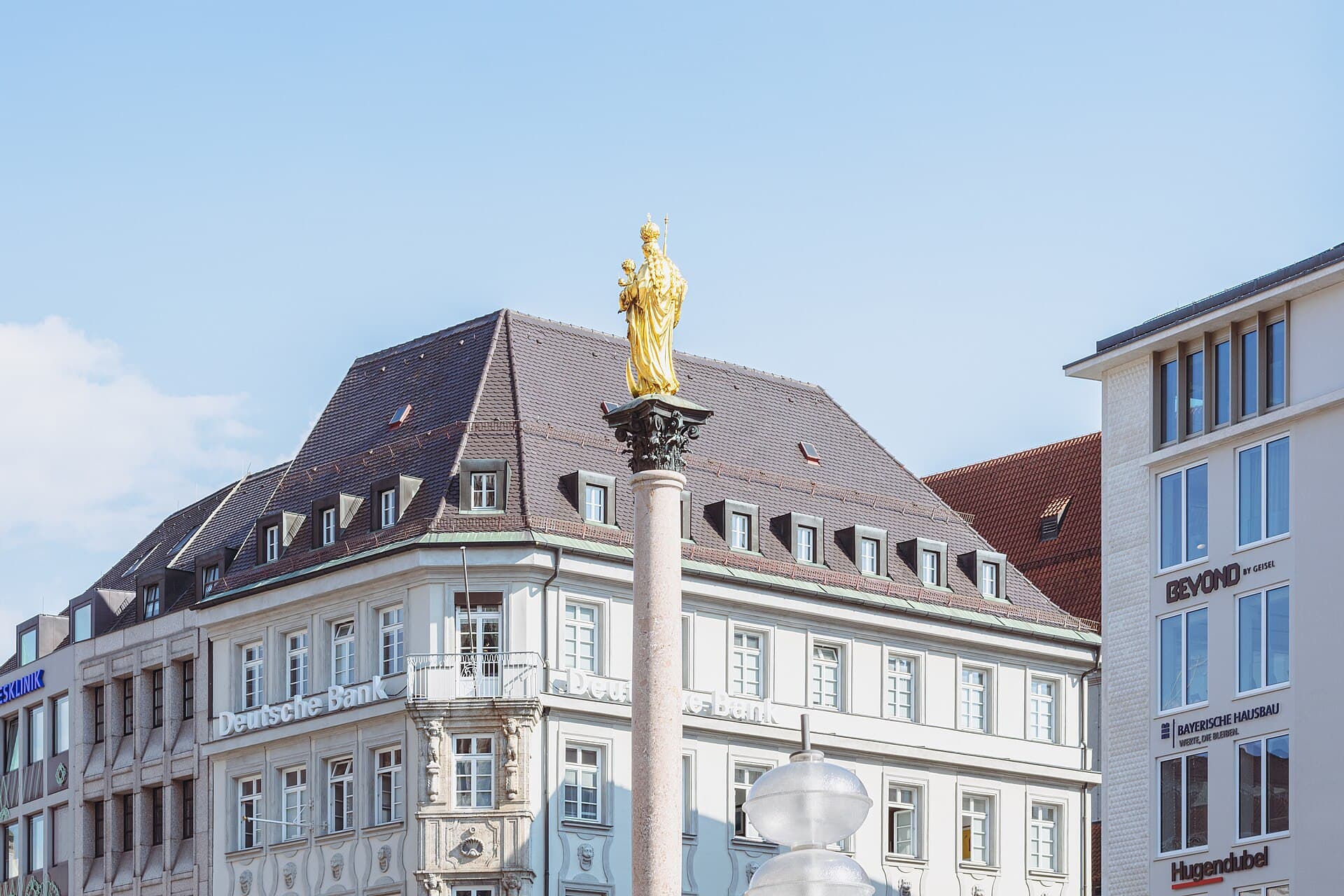
Begin at Marienplatz, the square that was the whole point of Munich's founding. This has been the central market since the town began in the year eleven fifty-eight, and the golden figure at the center, the Mariensäule, was raised in sixteen thirty-eight by Elector Maximilian the First in thanksgiving that Munich was spared destruction during the Thirty Years War. Time your arrival for the Glockenspiel in the New Town Hall tower: the full show plays daily at 11:00 and at 12:00, with an extra performance at 17:00 from March through October. Arrive ten to fifteen minutes early for a clear view, because the square fills.
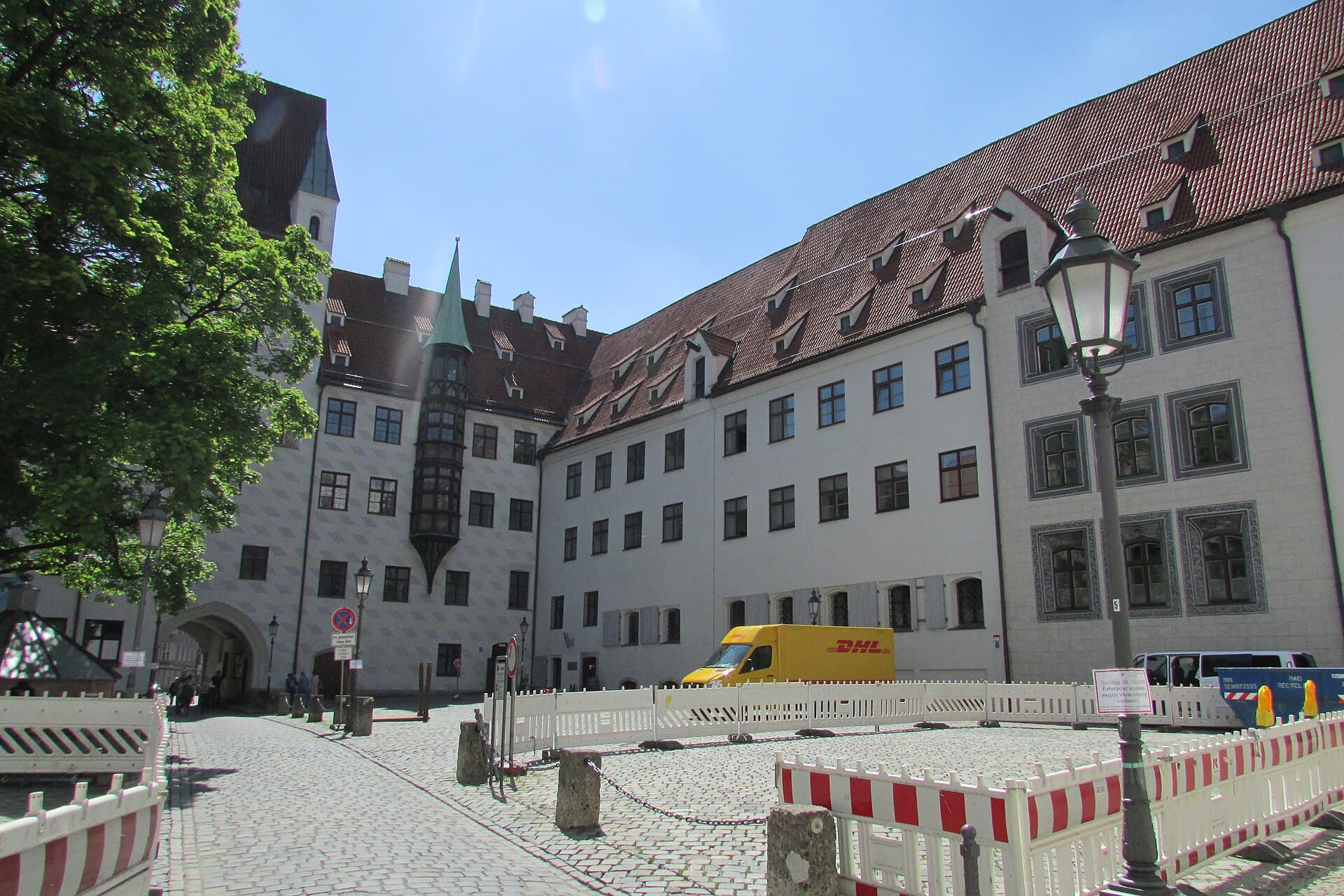
From the square, the medieval core is a few minutes' walk in any direction. Climb the tower of St. Peter's Church, the parish church locals call Alter Peter, for the best rooftop view over the old town. The church itself is free to enter. The tower is a separate climb of roughly three hundred steps with no lift, for a small fee (around five euros), so save it for when your legs are fresh. A short walk northwest brings you to the Frauenkirche, the brick cathedral whose twin green domes still rule the skyline by city rule. The church is free. Its south tower reopened in 2022 after a long renovation and can be climbed by a mix of lift and stairs for a modest ticket. Nearby, the Alter Hof, the old imperial residence courtyard, is a quiet detour with a free basement exhibition. This whole morning is the ground the origin tour reads stop by stop, from the founding market square to the Gothic Sendlinger Tor at the edge of the old walled town.
Midday: markets, beer halls, and the Englischer Garten
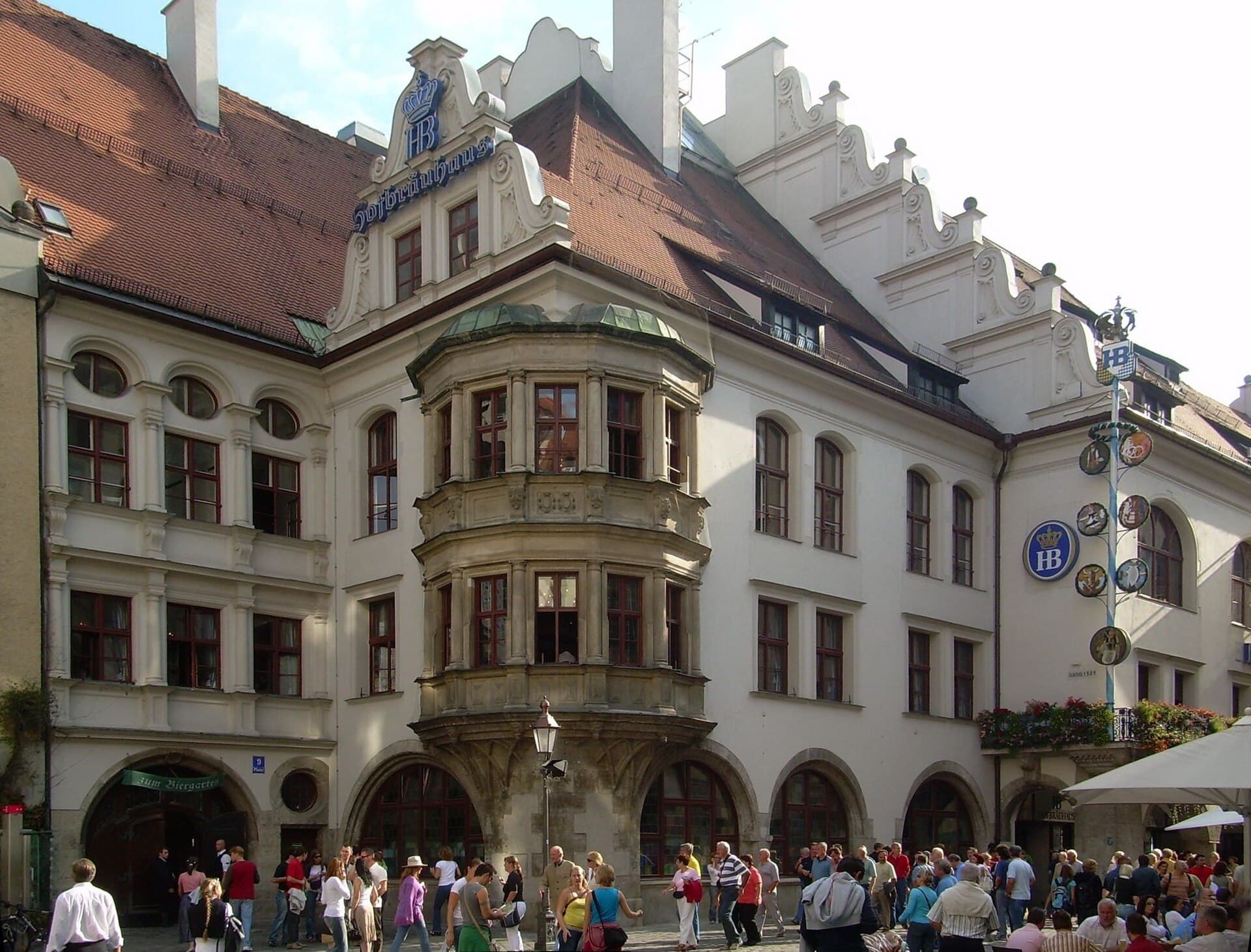
Break for food at the Viktualienmarkt, the open-air market just south of Marienplatz. Note the timing: the market runs Monday through Saturday, roughly 08:00 to 20:00 depending on the stall, and is closed on Sundays and public holidays, though the beer garden may open on a fine Sunday. If you are here on a Sunday, plan lunch elsewhere. From the market it is a short walk to the Hofbrauhaus am Platzl, the historic state beer hall. The brewery behind it was founded in fifteen eighty-nine as the court brewery, and the general public was not admitted until eighteen twenty-eight, under King Ludwig the First. It is free to step inside; food and beer are extra. If you want to know what to order at the market stalls or in the halls, see what to eat in Munich.
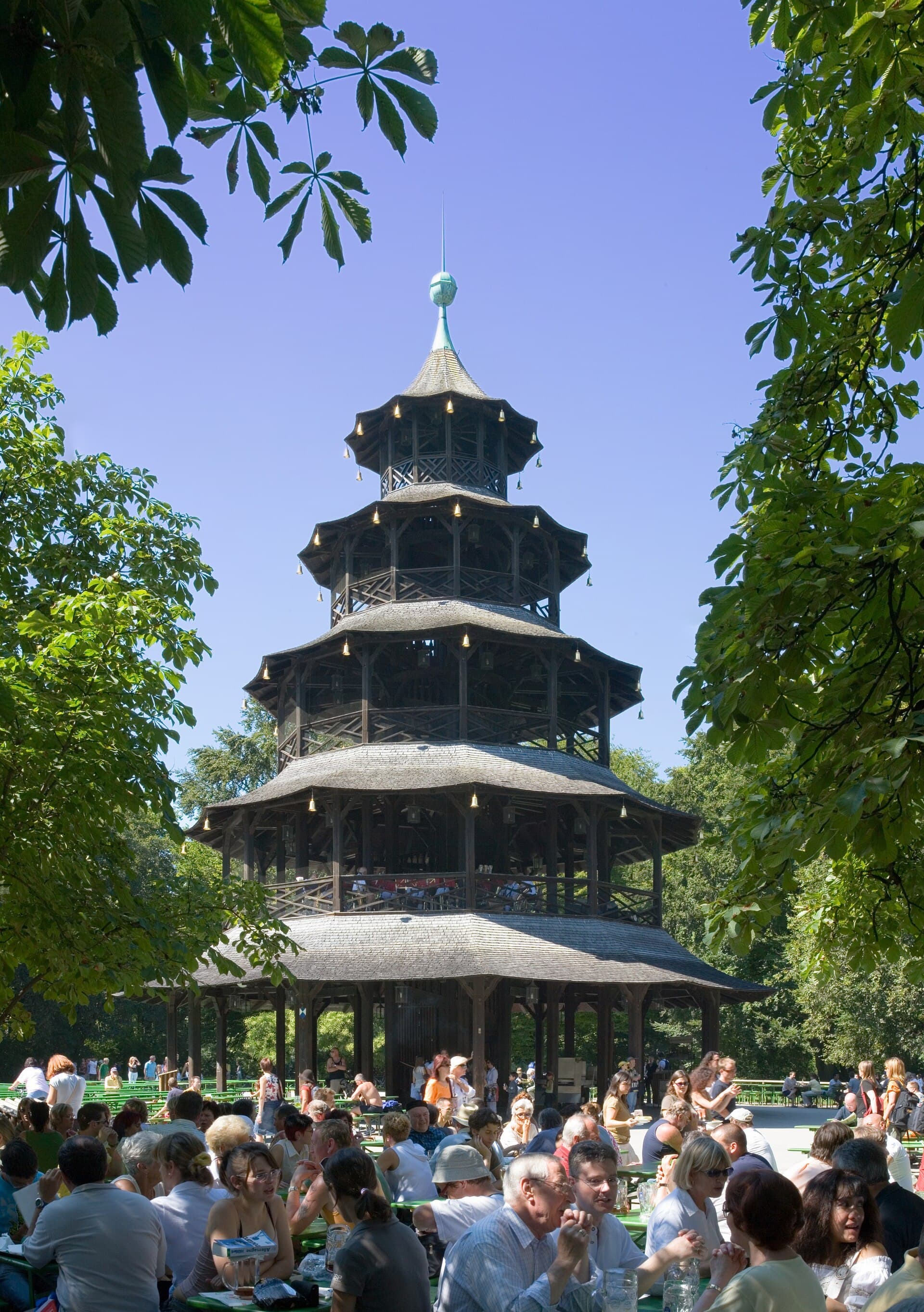
After lunch, walk north into the Englischer Garten, one of the largest urban parks in Europe and free to enter. Watch the river surfers ride the Eisbach standing wave near the park's southern edge, then continue to the beer garden at the Chinesischer Turm, the Chinese Tower. Beer gardens here run on an old royal compromise: you can bring your own bread and cheese and simply buy the beer. Most beer gardens are seasonal, at their best from late spring through early autumn, so in winter expect many to be closed and lean on the indoor halls instead. This leg is the spine of the beer and leisure walk, which runs the full arc out to the Theresienwiese, the meadow where Oktoberfest began.
Afternoon and evening: the royal quarter and a reckoning
Give the late afternoon to the royal and university quarter, a quieter and more serious walk. Start at the Feldherrnhalle on Odeonsplatz, the open loggia built between eighteen forty-one and eighteen forty-four for King Ludwig the First and modeled on the Loggia dei Lanzi in Florence. On the ninth of November, nineteen twenty-three, the Beer Hall Putsch ended right here, and the Nazis later turned the spot into a shrine that was removed at the war's end in the spring of nineteen forty-five. Behind it, the small alley of the Viscardigasse carries brass paving that marks the path people used to slip around the compulsory salute.
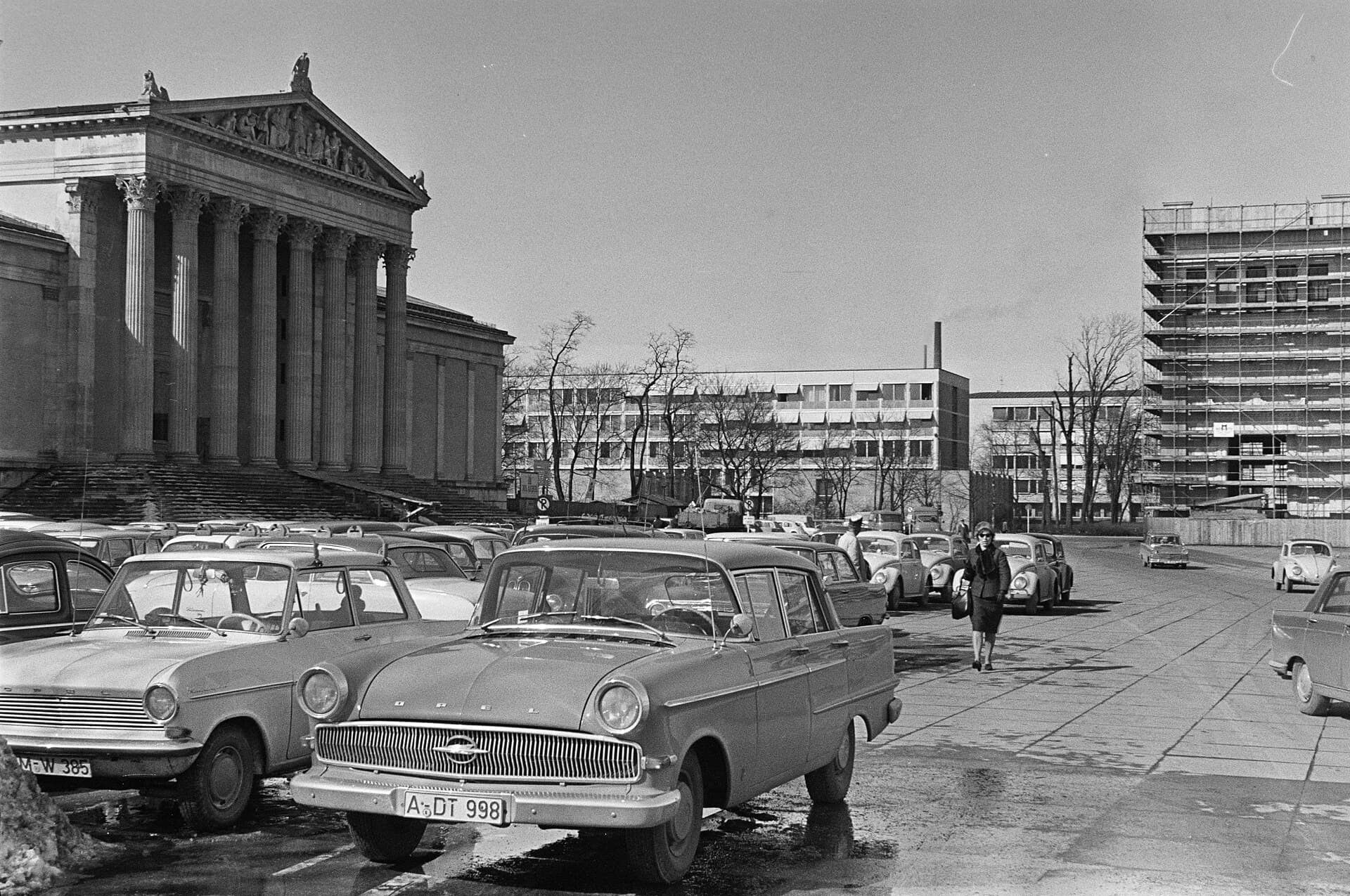
Walk west to Königsplatz, the neoclassical forum the party used for its rallies, and step into the NS-Dokumentationszentrum, the documentation center that names the city's role out loud. Admission is free, and it is open Tuesday through Sunday, roughly 10:00 to 19:00, closed on Mondays. Give yourself real time inside; it is a demanding, honest museum. From there, walk north to Geschwister-Scholl-Platz at the university, where the students of the White Rose paid with their lives, and to the outdoor memorial for Georg Elser, the lone carpenter who tried to stop the war early. This is the ground the reckoning and resistance walk holds, two truths at once, at a pace that lets you stop and stand still.
How to plan one day in Munich on foot
The simplest way to plan this day is to treat it as one continuous walk that you pace yourself, not a schedule you have to keep. The three acts above run in a natural line, so you can start whenever you arrive, linger where a place holds you, and cut a leg short if your legs give out. There is no fixed departure time, no group to keep up with, and no guide to tip. The only real constraints are opening hours, which is why each stretch is timed to when things are actually open.
A calm way to do it is to let a self-guided audio tour narrate the streets as you go. Roamer's Munich walks are GPS-triggered, so the story for each stop plays as you reach it, and you can start any tour for free (the introduction and first stop play in full, and every later stop plays a short preview before anything is asked of you). Narration is available in English and Spanish, it works on iPhone and on any mobile browser including Android, and you can download a tour over wifi to play it offline as you walk. If you decide to keep going, a single tour is $4.99 for lifetime access, a 7-day pass is $12.99, and a 30-day pass is $19.99. Because it is English narration, note that the walk suits any visitor at their own pace, and searchers looking for a plan in another language will still find the route clear on the ground. Start free from /explore and pick the act that fits your day.
Practical notes for the day
Wear comfortable shoes; the Altstadt is cobbled and the full beer and park loop is long. Nearly every place on this route is a free public square, church nave, market, or park, with small fees only for the tower climbs and no charge at all for the NS-Dokumentationszentrum. Munich is a calm, walkable city by day and evening; use ordinary care in crowds around Marienplatz and on packed transit, and keep an eye on your bag at the busy market, the same sense you would use in any large European city. If a leg runs long, the U-Bahn and S-Bahn are frequent and easy, and Marienplatz sits on the main line back to the airport.
To let the streets tell their own story as you walk, open the matching self-guided tour on your phone and play it stop by stop. Browse the full set on the Munich walking tours page or start from the Munich city page.
Sources
Frequently asked questions
- What are the Glockenspiel times at Marienplatz in Munich?
- The full Rathaus-Glockenspiel in the New Town Hall tower plays daily at 11:00 and at 12:00 year-round, with an additional performance at 17:00 from March through October. Arrive about ten to fifteen minutes early for a clear view, since the square gets crowded. A shorter evening figure sequence plays at 21:00.
- Can you see Munich in one day on foot?
- Yes. Munich's historic center is compact and mostly flat, so you can walk the main sights in a day without transit. A good plan is the Altstadt around Marienplatz in the morning, the beer halls and Englischer Garten around midday, and the royal and university quarter in the afternoon and evening. Save the tower climbs for when your legs are fresh.
- Is the NS-Dokumentationszentrum in Munich free, and when is it open?
- Admission to the NS-Dokumentationszentrum is free. It is open Tuesday through Sunday, roughly 10:00 to 19:00, and closed on Mondays unless a public holiday falls on a Monday. Give yourself real time inside, since it is a demanding and detailed museum about the city's Nazi history.
- How much does it cost to climb St. Peter's tower (Alter Peter) in Munich?
- The church of St. Peter is free to enter, but the tower is a separate climb of roughly three hundred steps with no lift for a small fee, around five euros for an adult. Reduced tickets are cheaper. It rewards you with one of the best rooftop views over the old town.
- How do you get from Munich Airport to Marienplatz?
- Take the S-Bahn. The S8 reaches Marienplatz in about 38 minutes and the S1 takes a bit longer, and together they run roughly every ten minutes for most of the day. Marienplatz sits on the main line, so the same trains take you back to the airport at the end of the day.
- Is the Viktualienmarkt open on Sundays?
- No. The Viktualienmarkt is closed on Sundays and public holidays. Its stalls generally run Monday through Saturday, roughly 08:00 to 20:00, though individual traders set their own hours and some close earlier in winter. On a fine Sunday the market's beer garden may still open even when the stalls do not.
- Can you see Munich in one day?
- Yes. Munich's historic center is compact and mostly flat, so one unhurried day on foot covers the main sights without transit. A good rhythm is the Altstadt around Marienplatz in the morning, the beer halls and Englischer Garten around midday, and the royal and university quarter in the afternoon and evening. This walk suits any visitor at any pace.
- What should you see in Munich in one day?
- With one day, focus on the core: Marienplatz and the Glockenspiel, the tower of Saint Peter's for the rooftop view, the Frauenkirche, and the Viktualienmarkt for food. Around midday add the Hofbrauhaus and a walk into the Englischer Garten, then close in the royal and university quarter around Odeonsplatz and Konigsplatz. Pick the acts that fit your day rather than rushing all of them.
- Is one day enough in Munich?
- One day is enough to see the historic center well on foot, since the Altstadt is small and mostly flat. It is not enough for the big museums or a day trip toward the Alps, so if those matter to you, plan a second day. For the squares, churches, market, and park at a calm pace, a single day works.
- Is Munich walkable?
- Yes. Munich's historic center is one of the easiest European city cores to cover on foot: compact, mostly flat, and largely pedestrian around Marienplatz. You can walk the main sights without a train. Wear comfortable shoes, since the Altstadt is cobbled, and watch for cyclists and trams that move fast beside the pavement.
- How do you spend a day in Munich?
- Break the day into three walkable acts: the Altstadt and Glockenspiel in the morning, markets, beer halls, and the Englischer Garten around midday, and the reflective royal and university quarter in the afternoon and evening. Time each leg to when places actually open, save the tower climbs for when your legs are fresh, and let a self-guided audio tour narrate the streets as you walk.
Ready to experience it?
Altstadt: The City the Monks Named
90 min · 2.4 km · easy
More from Munich
Explore more at your own pace.
The City the Monks Named: How Munich Turns Privilege Into Public Life
Alter Hof: Where a Burned Bridge Founded Munich
The Chinese Tower Beer Garden: Munich's Whole Idea in One Clearing
Hofbräuhaus am Platzl: How a Duke's Private Brewery Became Munich's Public Beer Hall
Königsplatz, Munich: The Athens on the Isar the Nazis Paved in Granite