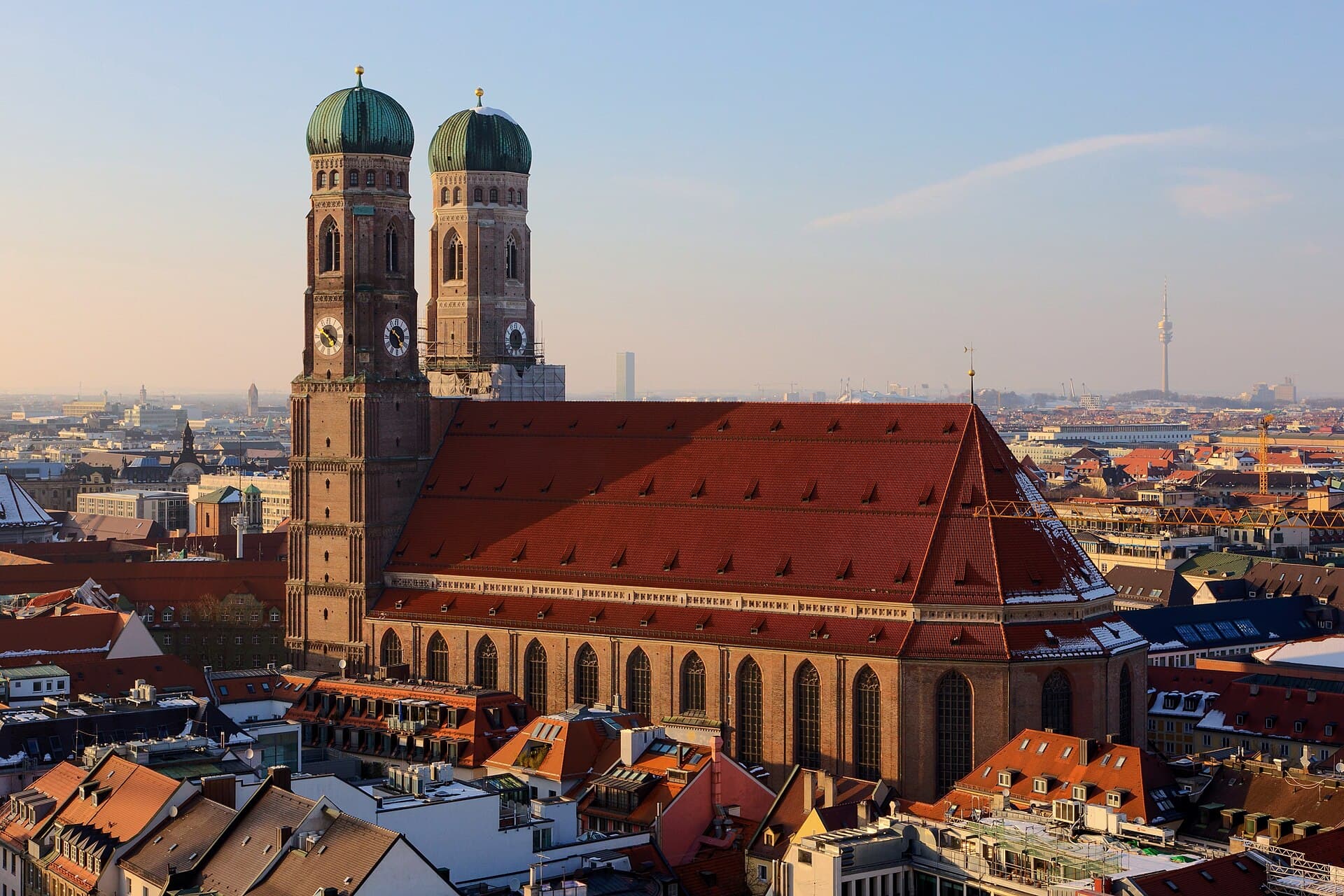
Two brick towers capped with green domes rise over the Munich Altstadt, and the reason they still dominate the view is not an accident of age but a decision the city keeps making. The Frauenkirche, formally the Dom zu Unserer Lieben Frau, the Cathedral of Our Lady, is a late-Gothic brick church whose twin towers reach just under ninety-nine metres. A Munich city law limits new buildings within the city to ninety-nine metres, precisely so nothing outgrows the cathedral on the skyline. Stand in front of it and you are looking at a building the city has legally agreed to keep as its ceiling. That is the one thing to understand here: the Frauenkirche is not the tallest structure Munich could build. It is the tallest Munich has chosen to allow.
A brick cathedral built in twenty years
The church was raised between 1468 and 1488 by the architect Joerg von Halsbach, and the speed matters. Twenty years is fast for a Gothic cathedral of this size, and the result reads as a single, disciplined idea rather than a centuries-long accretion of styles. The building stretches about one hundred and nine metres in length. Halsbach worked in brick, not the pale carved stone people expect from Gothic churches farther west, because brick was the local material and the practical one. The exterior is plain to the point of severity. There is no lace of stone tracery climbing the towers, no crowd of statues in niches. What you get instead is mass, repetition, and height, a church that states its scale without decorating it.
Halsbach is not a name confined to this one building. He also reshaped the nearby Altes Rathaus, the Old Town Hall on Marienplatz, in late-Gothic style around 1470 to 1480. So the same hand that governs the cathedral's silhouette also touched the medieval town hall a few minutes' walk east. If you take the full Altstadt walk, you are effectively reading one architect's fingerprints across the medieval core.
The domes that do not match, and became the symbol anyway
Hear a stop from this walk
Marienplatz and the Mariensaeule
The most recognizable feature of the Frauenkirche is the pair of green copper domes, the Welsche Hauben, added around 1525 in a Renaissance style. Look carefully and you will notice they do not belong to the Gothic body beneath them. The towers rise as plain Gothic brick, then stop and switch idioms entirely, capped by rounded, almost bulbous forms that come from a different architectural language altogether. By the strict logic of style, this is a mismatch. A purist would call it a compromise.
And yet these are exactly the shapes that became Munich's emblem. When the city protects its skyline by law, it is protecting these domes, added decades after Halsbach finished the walls, not the Gothic towers as originally imagined. There is a lesson in that worth carrying past the cathedral: what becomes a city's symbol is rarely the pure original vision. It is the accretion, the later addition, the thing that was pragmatic in its moment and grew iconic through familiarity. The green domes are what a Munich resident pictures when they picture home.
The Devil's Footstep, told plainly as legend
Just inside the entrance is a dark mark in the floor that visitors crowd around: the Teufelstritt, the Devil's Footstep. The story says the devil was tricked into believing the church had been built with no windows, and stamped his foot in triumph at the flaw, leaving the print. It is a good tale, and it is only a tale. There is no documented history behind it, and it is worth telling apart from the verified facts so the fun of the legend does not quietly become a claim about the past. The founding walk this cathedral belongs to is built on the same discipline: it separates what the records support from what tradition merely repeats.
While standing at that spot, one more caution about superlatives. The Frauenkirche is often described as the largest hall church in the world, a claim commonly stated for the cathedral. By measured volume it is frequently ranked second rather than first, so the superlative is one to repeat carefully rather than assert as settled fact.
Why this cathedral anchors the old town
The Frauenkirche is the seat of the Archdiocese of Munich and Freising, which places it at the center of the church hierarchy that shaped medieval Bavaria. That connection reaches back into Munich's founding itself. The city takes its name from a monastic settlement, the market by the monks, and a monk remains the city emblem, the Muenchner Kindl. A cathedral of Our Lady presiding over the skyline is not decoration laid on top of that story. It is the story continued in brick.
The church is free to enter. Step inside and look down the tall brick nave, and the plainness of the exterior resolves into something else: a long, high, unbroken interior where the eye runs straight to the far end with nothing to stop it. The severity outside becomes clarity inside. That contrast, austere shell and soaring hall, is the thing worth feeling in person, and it is why a photograph of the domes never quite captures the building. The domes are the emblem. The nave is the experience.
Walk it in sequence
The Frauenkirche is the fifth stop on Roamer's self-guided audio walk of Munich's founding core, "The City the Monks Named," which threads Marienplatz, the two town halls, Saint Peter's on the founding hill, this cathedral, the first ducal court at the Alter Hof, and the medieval Sendlinger Tor into a single ninety-minute route of a little over two kilometres. Reaching the cathedral after the founding hill lets you read it in context: the monastic name, the ducal ambition, and then the great church that crowns both. For more routes through the old town, see Munich walking tours, and for the wider city, Munich. Walk it at your own pace, and let the scale of the nave settle on you before you move on to the ducal court.
Sources
- Frauenkirche, Munich (Wikipedia): primary reference for the 1468 to 1488 construction, architect Joerg von Halsbach, the Welsche Hauben domes, and the height figures.
- Roamer tour transcript, "The City the Monks Named" (fact-audited, audit score 96): source for the ninety-nine-metre city law, the Devil's Footstep legend, and the cathedral's role in the founding-walk sequence.
- Old Town Hall, Munich (Wikipedia): confirms Joerg von Halsbach's late-Gothic redesign of the Altes Rathaus, tying the same architect to two stops on the walk.
- Archdiocese of Munich and Freising: context for the cathedral's status as the archdiocesan seat.
Ready to experience it?
Altstadt: The City the Monks Named
90 min · 2.4 km · easy
More from Munich
Explore more at your own pace.
Munich Travel Guide: Days, Transport, Timing, Safety, and Budget
The City the Monks Named: How Munich Turns Privilege Into Public Life
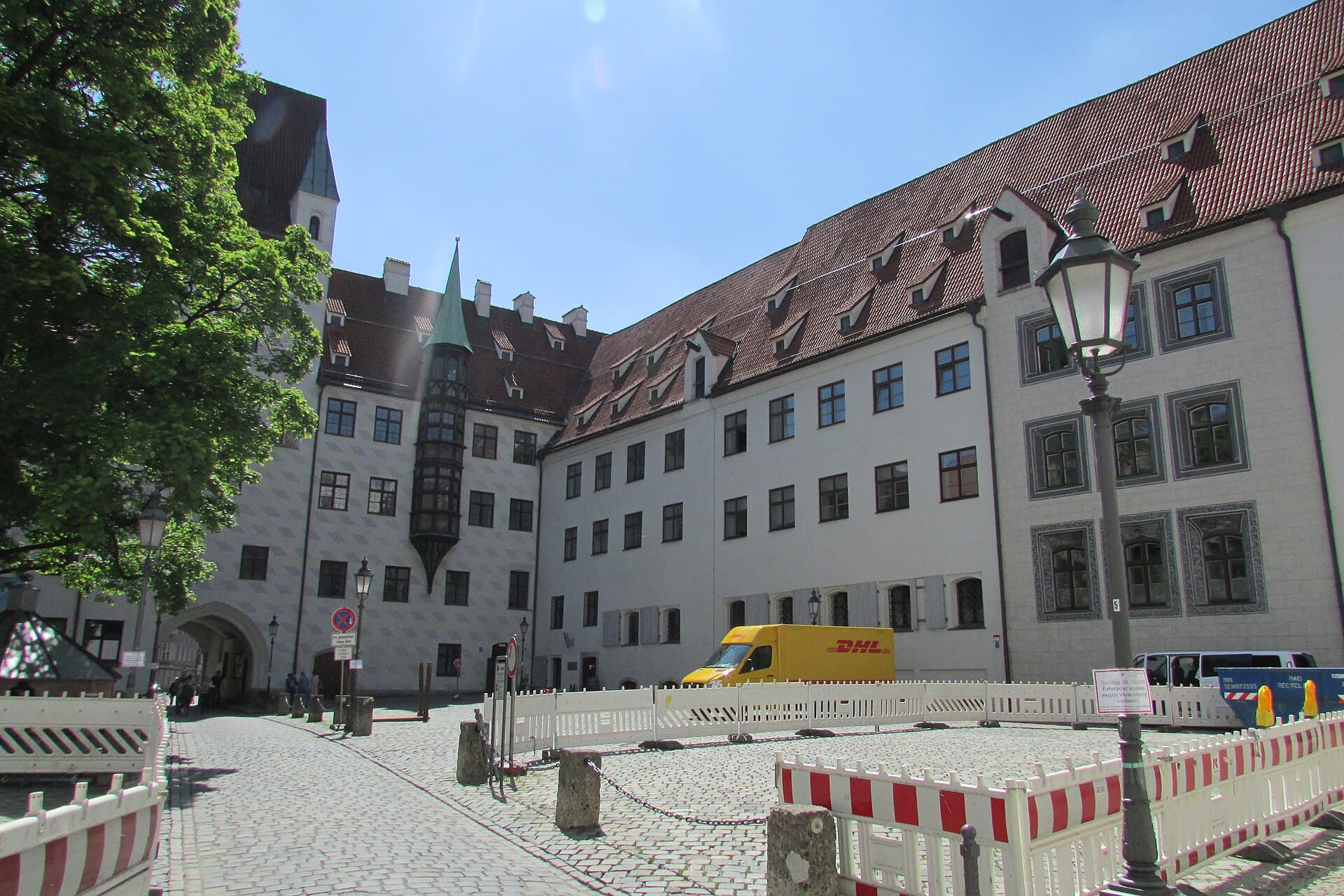
Alter Hof: Where a Burned Bridge Founded Munich
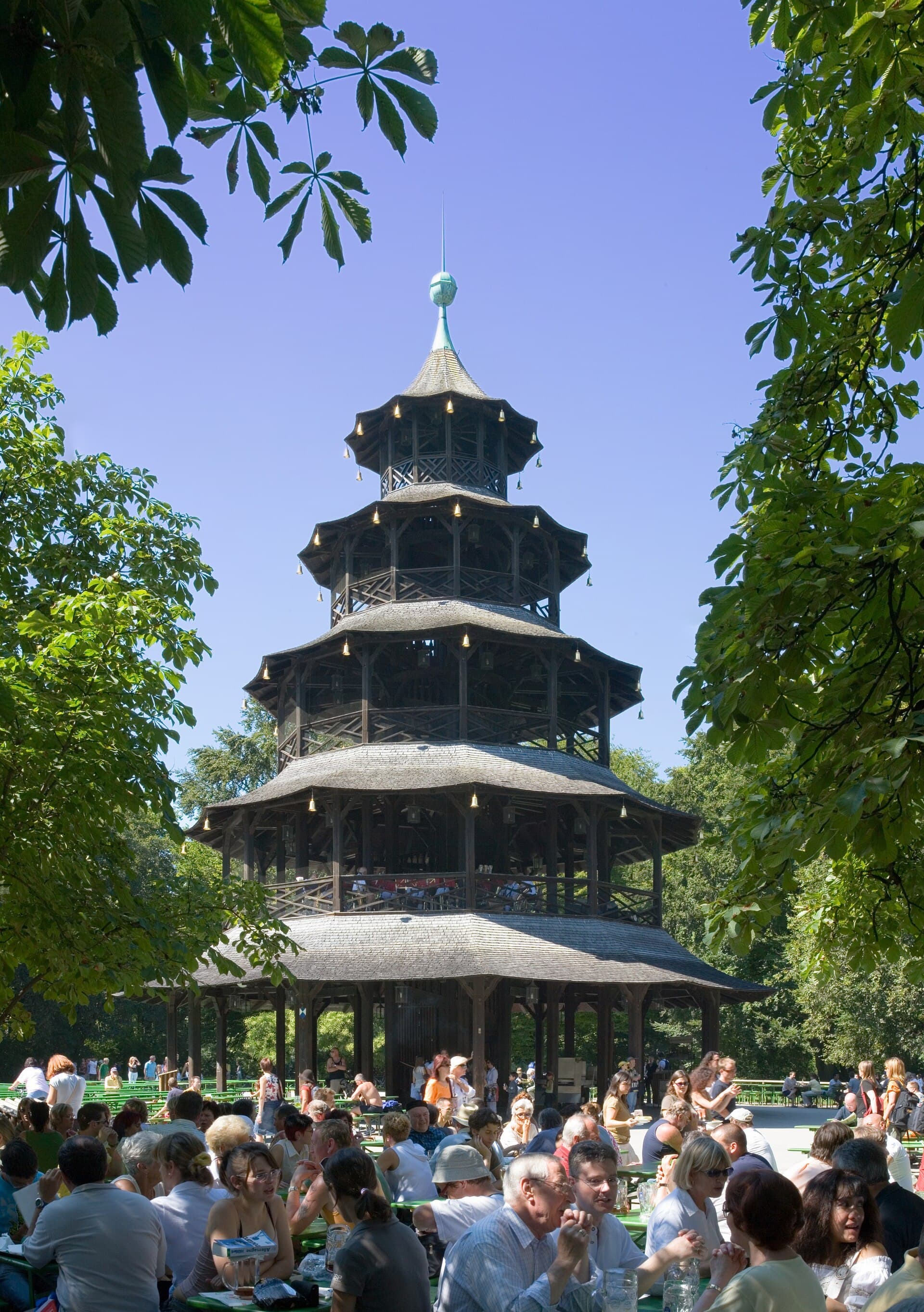
The Chinese Tower Beer Garden: Munich's Whole Idea in One Clearing
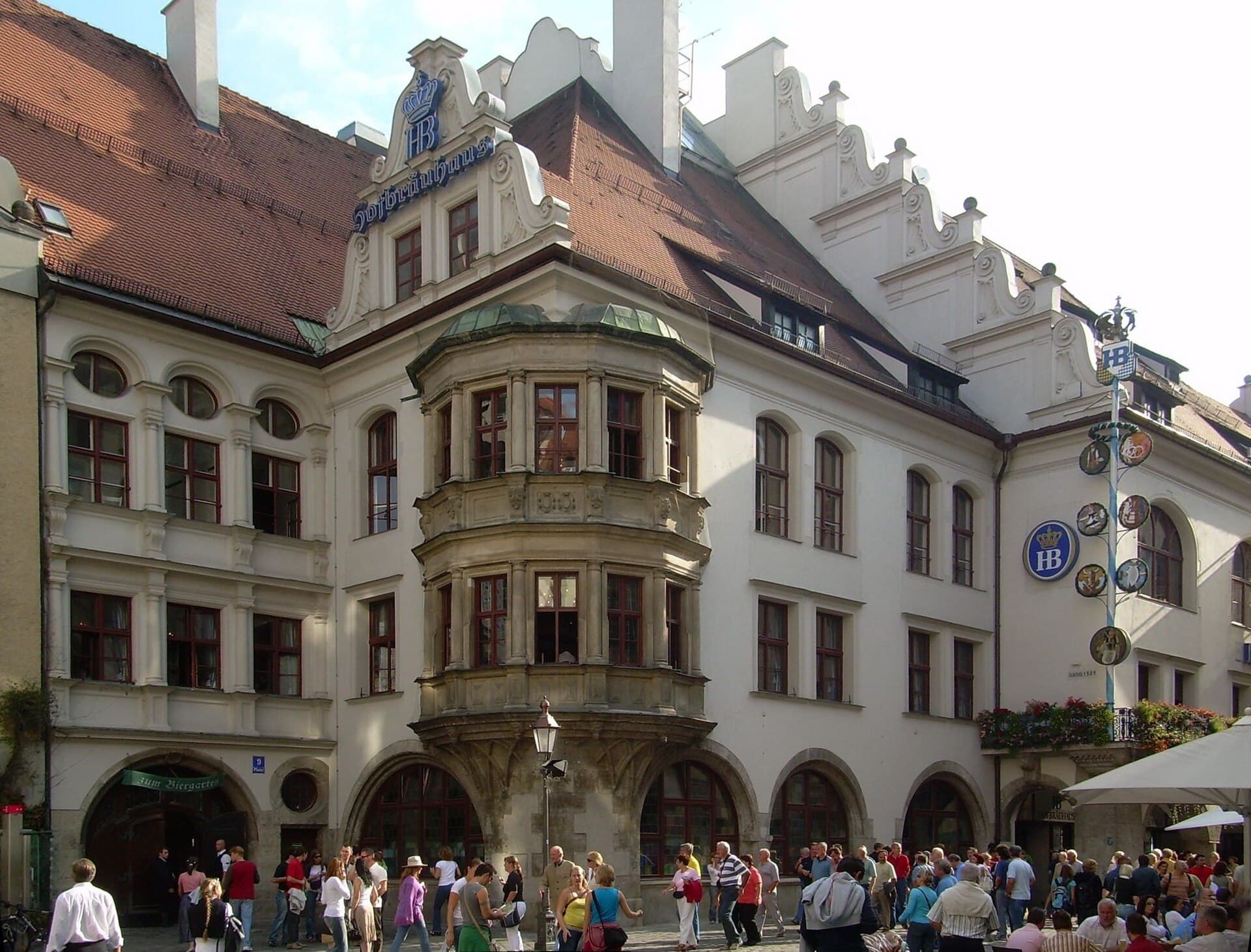
Hofbräuhaus am Platzl: How a Duke's Private Brewery Became Munich's Public Beer Hall