Altstadt: The City the Monks Named
90 min · 2.4 km · easy
Munich carries a monk in its name because a duke stole a salt road to make it. In the year eleven fifty-eight, Henry the Lion burned a bishop's toll bridge over the Isar near Foehring, rerouted the lucrative salt trade to his own market, and the Emperor Frederick Barbarossa made the seizure official at Augsburg, naming the disputed place the market by the monks. From that single commercial coup grew the capital of Bavaria: a walled old town under twin cathedral domes, a royal quarter of Greek-temple squares, and a civic habit, practiced for centuries, of turning what belonged to rulers into what belongs to everyone. Roamer's three Munich walks read that arc as one continuous story. The city that a merchant's ambition founded became a city that opens its beer, its parks, and even its hardest history to the public.
A monastery's name wrapped around a merchant's coup
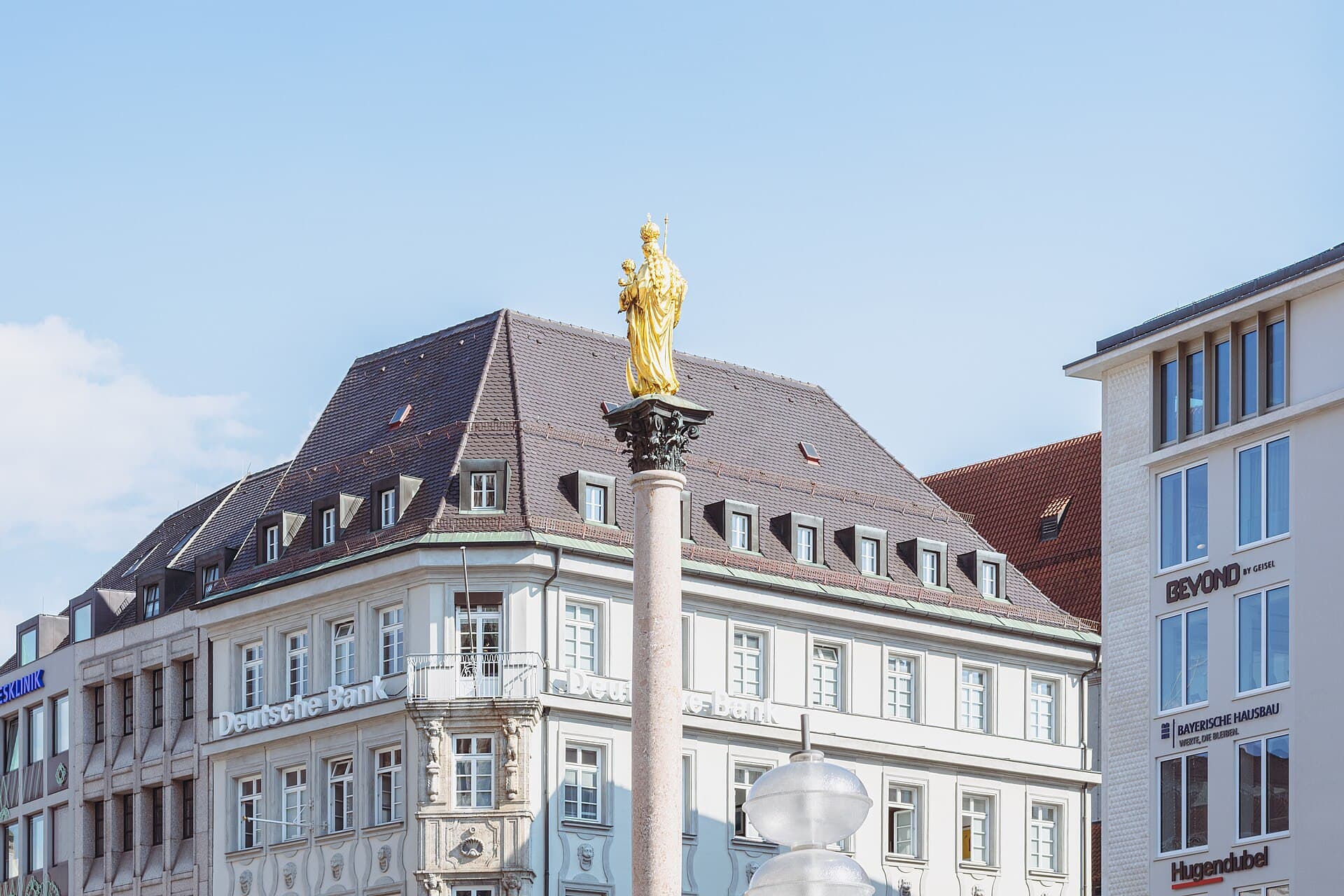
The founding walk begins where the whole point was, on the market square. The City the Monks Named reads the medieval town outward from Marienplatz, which stayed simply the Markt, the market, until the ninth of October, eighteen fifty-four, when the grain trade moved and the square took the name of the golden Virgin raised at its centre. That column, the Mariensaeule, was erected in sixteen thirty-eight by Elector Maximilian the First in thanksgiving that Munich was spared during the Swedish occupation of the Thirty Years War.
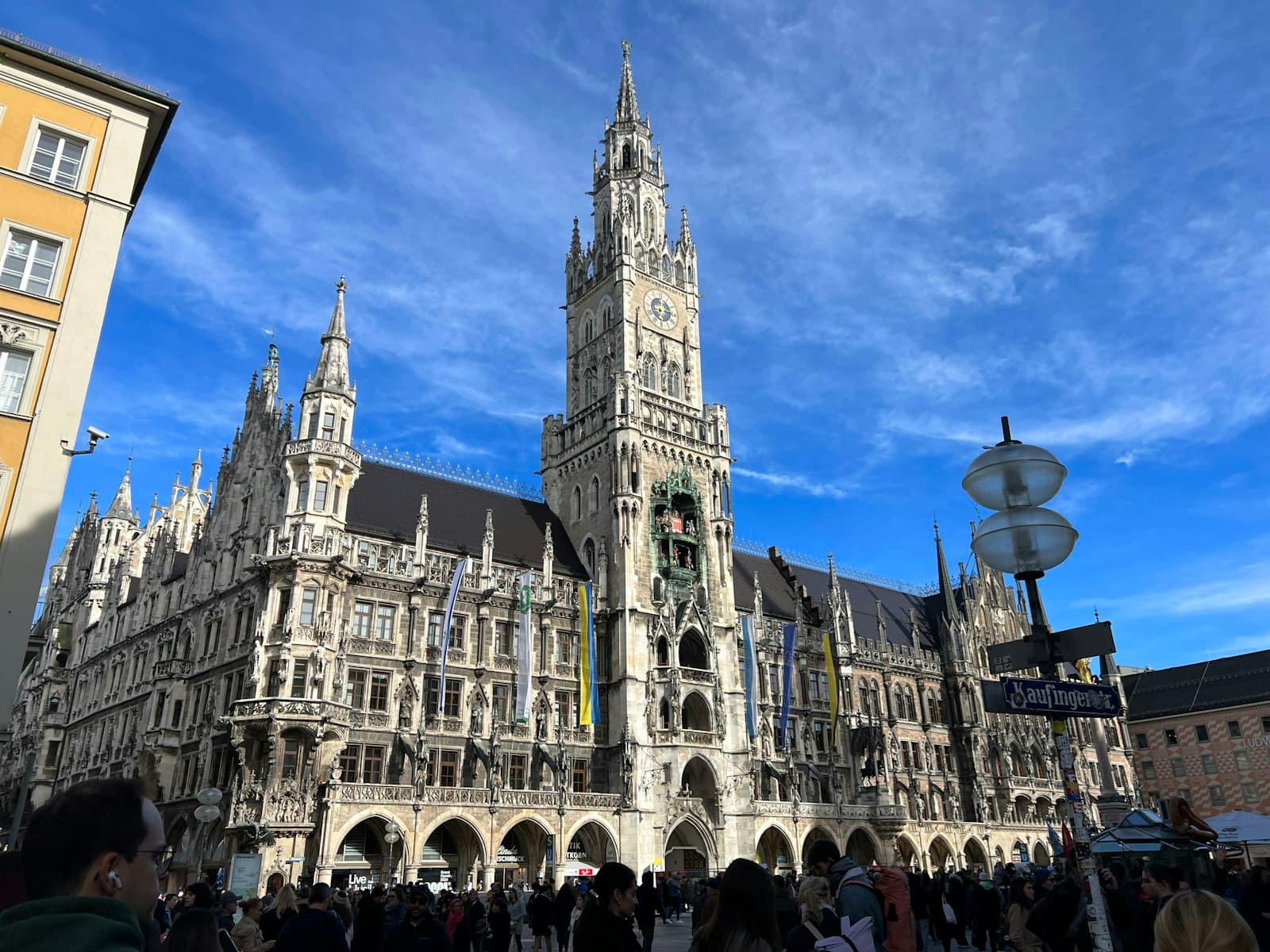
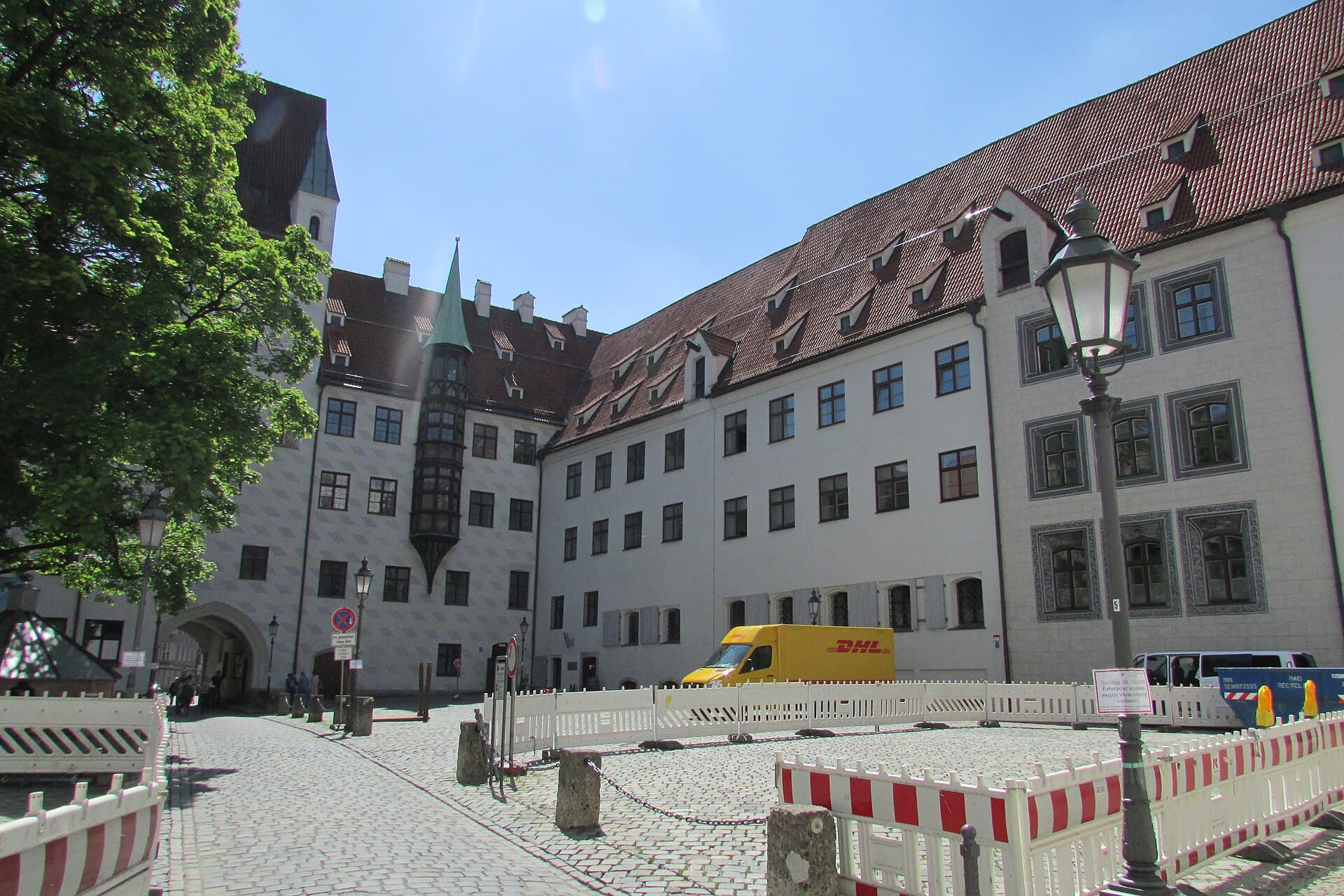
The walk holds a running tension between what looks old and what is old. The pinnacled Neues Rathaus on the north side is neo-Gothic, designed by Georg von Hauberrisser and completed around nineteen oh six, a growing city dressing its government in the armor of the Middle Ages. Face it across the square and the smaller Altes Rathaus is genuinely medieval, its tower built around the Talburgtor, an actual gate in Munich's first town wall. The founding hill itself is the Petersbergl, where monks are recorded to have lived in the eighth century, three centuries before the market existed. Saint Peter's Church, Alter Peter, still climbs above it. And the twin green domes of the Frauenkirche, the Welsche Hauben added around fifteen twenty-five, matter so much that a city law limits new buildings to ninety-nine metres to keep the cathedral dominant. The Alter Hof, first fortified Wittelsbach court, is where the salt-road story is told in full, and the Sendlinger Tor, one of three surviving Gothic gates, marks how far the walled town once reached. Everything on the walk sat inside those walls, and it all grew from one act of ambition.
The art of turning privilege into public leisure
Hear a stop from this walk
Marienplatz and the Mariensaeule
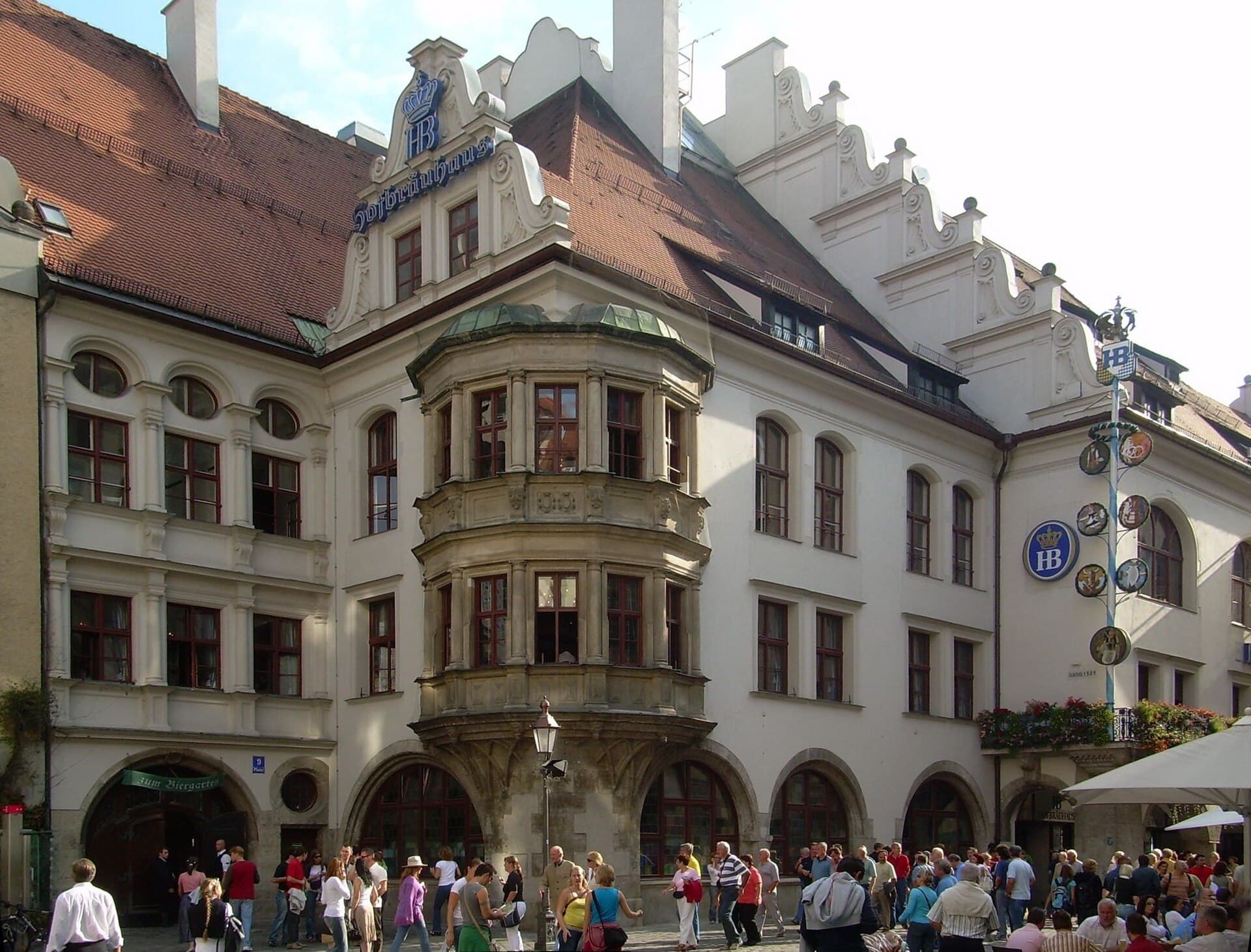
The same civic gesture drives the second walk, and this one has a genius no other city shares. The Art of the Beer Garden traces a single repeated move: rulers who kept handing their own privileges to ordinary people. The Hofbraeuhaus began in fifteen eighty-nine as Duke Wilhelm the Fifth's court brewery, closed to the public until King Ludwig the First admitted the general public in eighteen twenty-eight. The Viktualienmarkt moved from Marienplatz by decree of King Maximilian the First Joseph dated the second of May, eighteen oh seven, when the main square grew too small for the produce trade. Even the beer in every mug carries a ducal standard: the Reinheitsgebot, proclaimed on the twenty-third of April, fifteen sixteen, in Ingolstadt by the dukes Wilhelm the Fourth and Ludwig the Tenth, permitting water, barley, and hops.
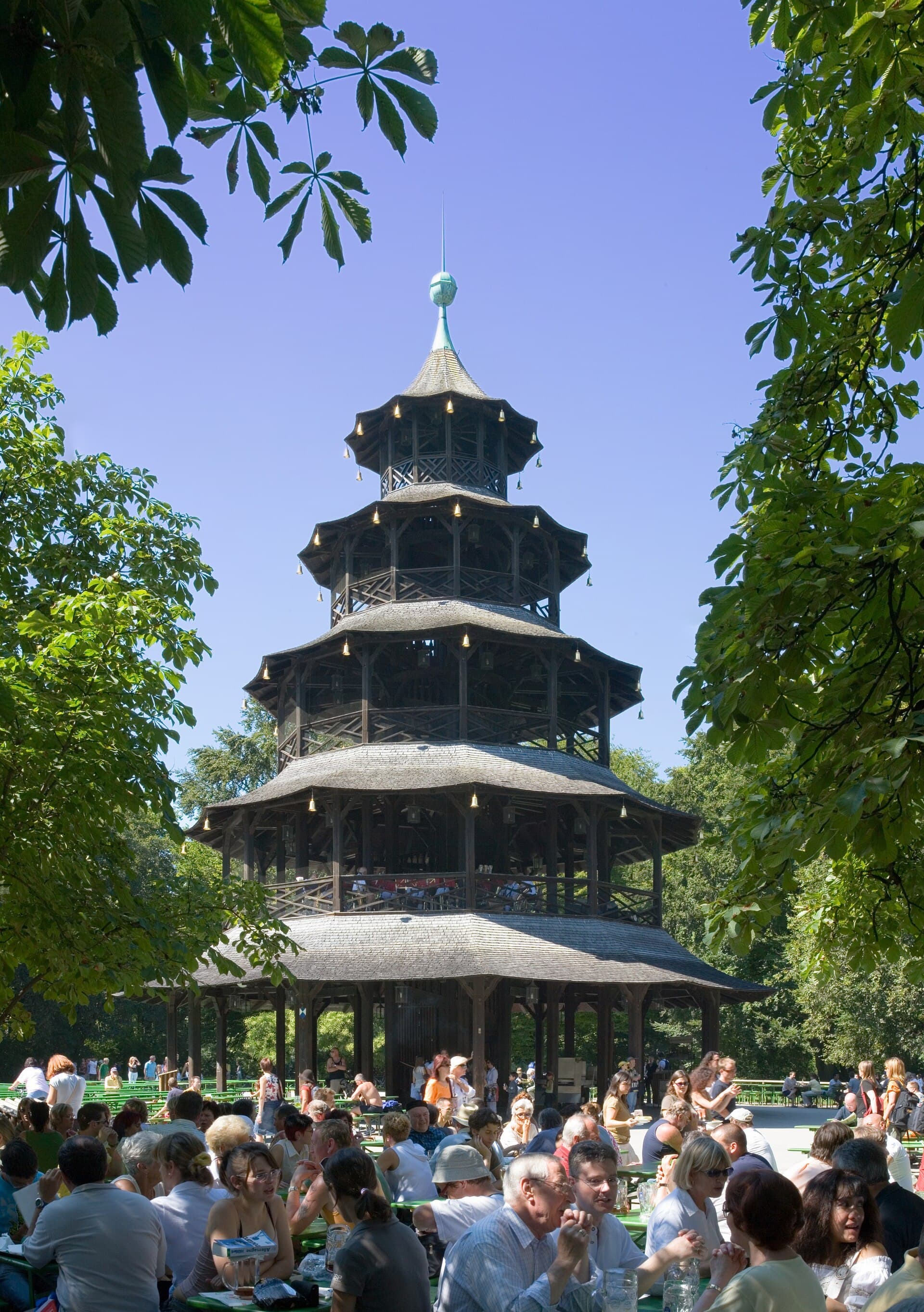
Then the privileges open at the scale of a whole landscape. The Englischer Garten, laid out from seventeen eighty-nine on the initiative of Sir Benjamin Thompson, later Count Rumford, turned a royal hunting ground into one of the world's largest urban parks by a decree of Elector Charles Theodore on the thirteenth of August, seventeen eighty-nine. Under the Chinesischer Turm, a wooden pagoda modeled on one at Kew Gardens, a beer garden of roughly seven thousand seats still lets you spread your own bread and cheese on a shared bench and buy only the beer. That compromise traces to a decree of King Maximilian the First Joseph on the fourth of January, eighteen twelve, restricting the food breweries could sell, born from the riverbank cellars that Munich cooled with horse-chestnut shade. The meadow completes the pattern: the Theresienwiese, named for Princess Therese of Saxe-Hildburghausen, hosted the first Oktoberfest on the twelfth of October, eighteen ten, to celebrate her wedding to the future King Ludwig the First. A royal wedding field became everyone's festival ground.
Two truths held in one frame
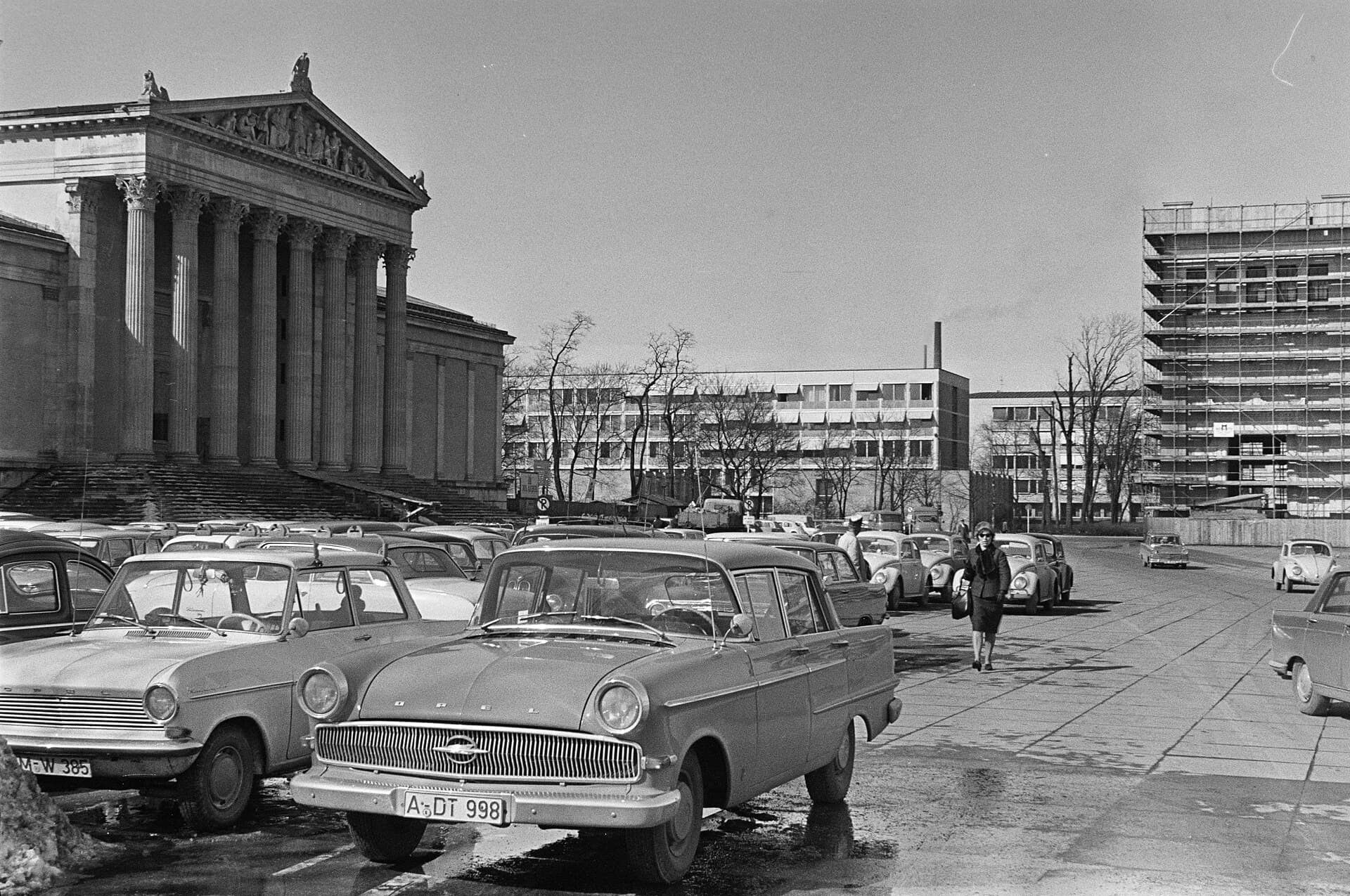
The third walk is where Munich's leisure and grandeur meet their darkest inheritance, and reckon with it soberly. The Movement and the Rose reads the royal and university quarter the Nazis called the Hauptstadt der Bewegung, the Capital of the Movement, alongside the ground where refusal quietly lived. The party was born here. The Feldherrnhalle, Ludwig the First's loggia modeled on the Loggia dei Lanzi in Florence, became the shrine where the Beer Hall Putsch of the ninth of November, nineteen twenty-three, ended in gunfire that killed sixteen followers and four policemen, and where a Hitler salute was later made compulsory. On the Koenigsplatz, the square Ludwig built as an Athens on the Isar, the regime paved the grass with roughly twenty thousand granite slabs and raised two Temples of Honour, whose concrete foundations Munich deliberately left in place after the American army demolished them in nineteen forty-seven.
Against that, the walk sets the quiet no and the open one. Ordinary Munichers slipped down the Viscardigasse, the shirkers' alley, to avoid the compulsory salute, a path now traced by Bruno Wank's bronze line. At the Ludwig Maximilian University, the students of the Weisse Rose, Hans and Sophie Scholl among them, distributed roughly fifteen thousand copies of six leaflets and were executed at Munich-Stadelheim on the twenty-second of February, nineteen forty-three, four days after Hans and Sophie scattered the sixth leaflet in the Lichthof. A lone carpenter, Georg Elser, came within minutes of killing Hitler with a bomb on the eighth of November, nineteen thirty-nine, and was murdered at Dachau on the ninth of April, nineteen forty-five. Where the party headquarters, the Braunes Haus, once stood, the NS-Dokumentationszentrum opened in two thousand fifteen and names the city's guilt out loud. Munich did not erase these sites and did not glorify them. It documented them.
One city, three angles
Read together, the three walks describe a single arc. A duke burns a bridge to found a market, a dynasty and its parliament of squares grow inside the walls, rulers open their brewery and park and meadow to the whole city, and that same city, having been the birthplace of a movement and the home of those who resisted it, chooses to remember honestly. The through-line is a place that keeps handing the private over to the public, whether that is a salt toll made into a market, a hunting ground made into a lawn, or a history made into a reckoning open to anyone. Start where any of the three walks begins, and you are reading the same city from a different door. Compare the full set of routes on Munich walking tours and pick the door that fits your day.
Sources
- Roamer tour, The City the Monks Named (Altstadt origins walk), stop transcripts and historical context.
- Roamer tour, The Art of the Beer Garden (Munich beer and leisure walk), stop transcripts and historical context.
- Roamer tour, The Movement and the Rose (Munich reckoning and resistance walk), stop transcripts and historical context.
- Wikipedia, entries for Munich, Marienplatz, Frauenkirche, Hofbraeuhaus am Platzl, Englischer Garten, Reinheitsgebot, Oktoberfest, and the White Rose, cited within the tour fact audits.
- oktoberfest.de, for the six Munich breweries that pour at the festival, cited within the tour fact audit.
Frequently asked questions
- Why is Munich named after monks?
- The name Muenchen comes from a settlement recorded as the place by the monks, tied to monks who lived on the Petersbergl hill in the eighth century. When Duke Henry the Lion seized the salt road in eleven fifty-eight, Emperor Frederick Barbarossa's arbitration at Augsburg named the market forum apud Munichen, the market by the monks. A monk, the Muenchner Kindl, remains the city emblem.
- How was Munich founded?
- In eleven fifty-eight, Duke Henry the Lion burned the bishop of Freising's toll bridge over the Isar near Foehring to reroute the lucrative salt trade to his own market. Emperor Frederick Barbarossa settled the dispute at Augsburg on the fourteenth of June, eleven fifty-eight, in Henry's favour, and the bishop was compensated with a third of the market's income.
- Why can you bring your own food to a Munich beer garden?
- A decree of King Maximilian the First Joseph on the fourth of January, eighteen twelve, let brewers serve beer from their cellars but restricted the food they could sell, after smaller breweries complained. Patrons responded by bringing their own bread and cheese. That compromise became the enduring tradition: spread your own food on a shared bench and buy only the beer.
- What is the White Rose and where can you see its memorial in Munich?
- The Weisse Rose was a non-violent student resistance group at the Ludwig Maximilian University, including Hans and Sophie Scholl, that distributed roughly fifteen thousand leaflets against the Nazi regime. Hans and Sophie were arrested after scattering the sixth leaflet and executed on the twenty-second of February, nineteen forty-three. Bronze casts of the leaflets are set into the pavement on the Geschwister-Scholl-Platz.
- Why did the Nazis call Munich the Capital of the Movement?
- The Nazi party was born in Munich, and the Beer Hall Putsch of nineteen twenty-three began the founding myth there. In nineteen thirty-five the regime gave Munich the official title Hauptstadt der Bewegung, the Capital of the Movement. The NS-Dokumentationszentrum, built on the site of the former party headquarters, now examines what carrying that title meant.
Ready to experience it?
Altstadt: The City the Monks Named
90 min · 2.4 km · easy
More from Munich
Explore more at your own pace.
Munich Travel Guide: Days, Transport, Timing, Safety, and Budget
Alter Hof: Where a Burned Bridge Founded Munich
The Chinese Tower Beer Garden: Munich's Whole Idea in One Clearing
Hofbräuhaus am Platzl: How a Duke's Private Brewery Became Munich's Public Beer Hall
Königsplatz, Munich: The Athens on the Isar the Nazis Paved in Granite