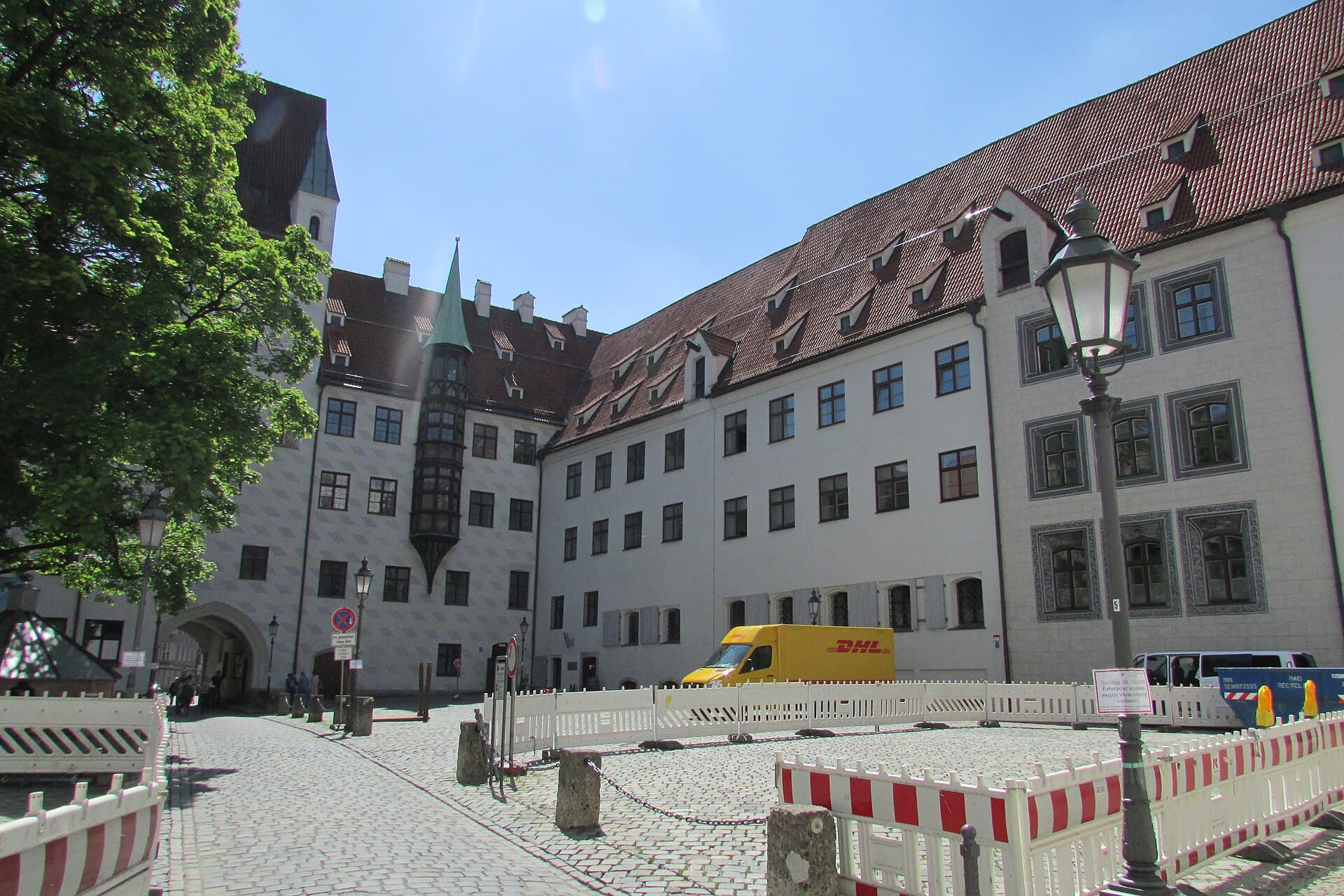
Munich was founded in 1158 when Duke Henry the Lion burned a bishop's toll bridge over the Isar to seize the salt trade, and the Alter Hof, the Old Court, is the courtyard where that commercial coup first hardened into ducal power. Stand in this quiet enclosed yard, a short walk from the market square where the money changed hands, and you are standing at the point where a duke's ambition stopped being a gamble and became a dynasty. The founding of the city is not an abstraction here. It is walls, a bay window, and a name that a monk still carries on the civic emblem.
A courtyard that holds the whole story
The Alter Hof was the first fortified residence of the Wittelsbach dynasty inside the old town. That fact alone makes it the natural place to tell the founding in full, because a founding is only as real as the power that follows it. A market can be seized in an afternoon. Keeping it takes generations, and the Wittelsbachs kept Bavaria for centuries. After the first partition of Bavaria in 1255, the Alter Hof became the residence of Ludwig the Second, Duke of Bavaria. Under his son, Ludwig the Fourth, known as Louis the Bavarian, who rose to become Holy Roman Emperor, this same court served for a time as an imperial residence. So the yard you are looking at climbed from ducal seat to the seat of an emperor within three generations.
Look for the decorated bay window on the Burgstock wing, the surviving late-Gothic corner of the complex. Locals call it the Affentuermchen, the little monkey tower, and it carries a legend of its own. The exhibition in the free basement lays out this imperial history where it actually happened, which is a rarer thing than it sounds. Most founding stories are told on a plaque bolted to a much later building. Here the walls did some of the work themselves.
The burned bridge
Hear a stop from this walk
Marienplatz and the Mariensaeule
Now the founding itself, which the Old Court exists to explain. According to the city's own history, Munich was founded in the year 1158 by Henry the Lion, in German Heinrich der Loewe, Duke of Saxony and Bavaria. He burned the bishop of Freising's bridge and toll station over the Isar, near a place called Foehring, to take control of the salt trade and reroute it to his own market. That market is the square, Marienplatz, where the walking tour begins. The whole town grew outward from that trading ground.
The bishop, understandably, objected. The dispute went to Emperor Frederick Barbarossa, who settled it at Augsburg on the fourteenth of June, 1158, in Henry's favour. In the arbitration the disputed place is named forum apud Munichen, the market by the monks. The bishop of Freising was not left with nothing: he was compensated with a third of the market's income, which tells you how valuable a salt toll was in the twelfth century. This is the tension the tour holds from the first stop to the last. A monastery's name, from an early settlement of monks, wrapped itself around a merchant's coup. The monk, the Muenchner Kindl, remains the emblem of the city to this day, standing in for a founding that was anything but pious.
Why the anchor makes the whole route legible
The reason the Alter Hof works so well as the heart of this walk is that every other stop is a consequence of what was decided here. The market square exists because a duke wanted the salt road. The two town halls facing each other, one genuinely medieval and one a neo-Gothic building completed only around 1906, exist because a town needs to govern itself once it grows rich. Saint Peter's Church sits on the Petersbergl, the founding hill where monks are recorded to have lived in the eighth century, before the town existed, which is the literal root of the name Munich. The Frauenkirche, the brick cathedral whose green domes are still protected by a city law limiting buildings within the city to ninety-nine metres, rose because a rich town builds tall. And the walk ends at the Sendlinger Tor, one of only three surviving medieval Gothic gates, marking the southern edge of how far the walled town once reached under Ludwig the Bavarian. Everything on the route sat inside those walls. It all traces back to 1158.
This is why the Old Court is the way into the tour rather than a detour within it. Read the founding here first, in the courtyard where the Wittelsbachs put down stone, and the rest of the Altstadt stops being a list of pretty buildings and becomes a single argument unfolding across roughly two and a half kilometres. A city that was seized, then defended, then decorated, then governed, then walled.
Walking it at your own pace
The route is about ninety minutes of unhurried walking on cobbles and busy squares, seven stops, and every one of them is free to stand at. The Alter Hof courtyard and its basement exhibition cost nothing. Saint Peter's and the Frauenkirche are free to enter, and if your legs are willing, Alter Peter climbs 306 steps with no elevator to a view that reaches the Alps on a clear day. There is no schedule to keep and no group to follow. Linger in the Old Court, read the founding, then let the walk carry you back out to the market that started it. For the full set of routes through the city, see our guide to Munich walking tours, and for everything else worth walking in the city, start with Munich.
The audio tour tells this in order, stop by stop, and names where every fact comes from and what is history versus what is legend. But the single thing to carry into the Alter Hof is this: you are standing where a duke who burned a bridge became a dynasty that named a city after the monks he displaced.
Sources
- Alter Hof, Wikipedia. Wittelsbach court history, the Burgstock wing and its bay window, and the Old Court's role as ducal and imperial residence.
- Augsburg Decision, Wikipedia. Frederick Barbarossa's arbitration of the fourteenth of June, 1158, naming forum apud Munichen and compensating the bishop of Freising.
- Marienplatz, Wikipedia. The founding market square, its history as the Markt and Schranne, and the 1854 renaming.
- Frauenkirche, Munich, Wikipedia. The late-Gothic cathedral, its Renaissance domes, and the ninety-nine-metre height rule protecting the skyline.
- St. Peter's Church, Munich, Wikipedia. The Petersbergl, the eighth-century monastic presence, and the tower known as Alter Peter.
Ready to experience it?
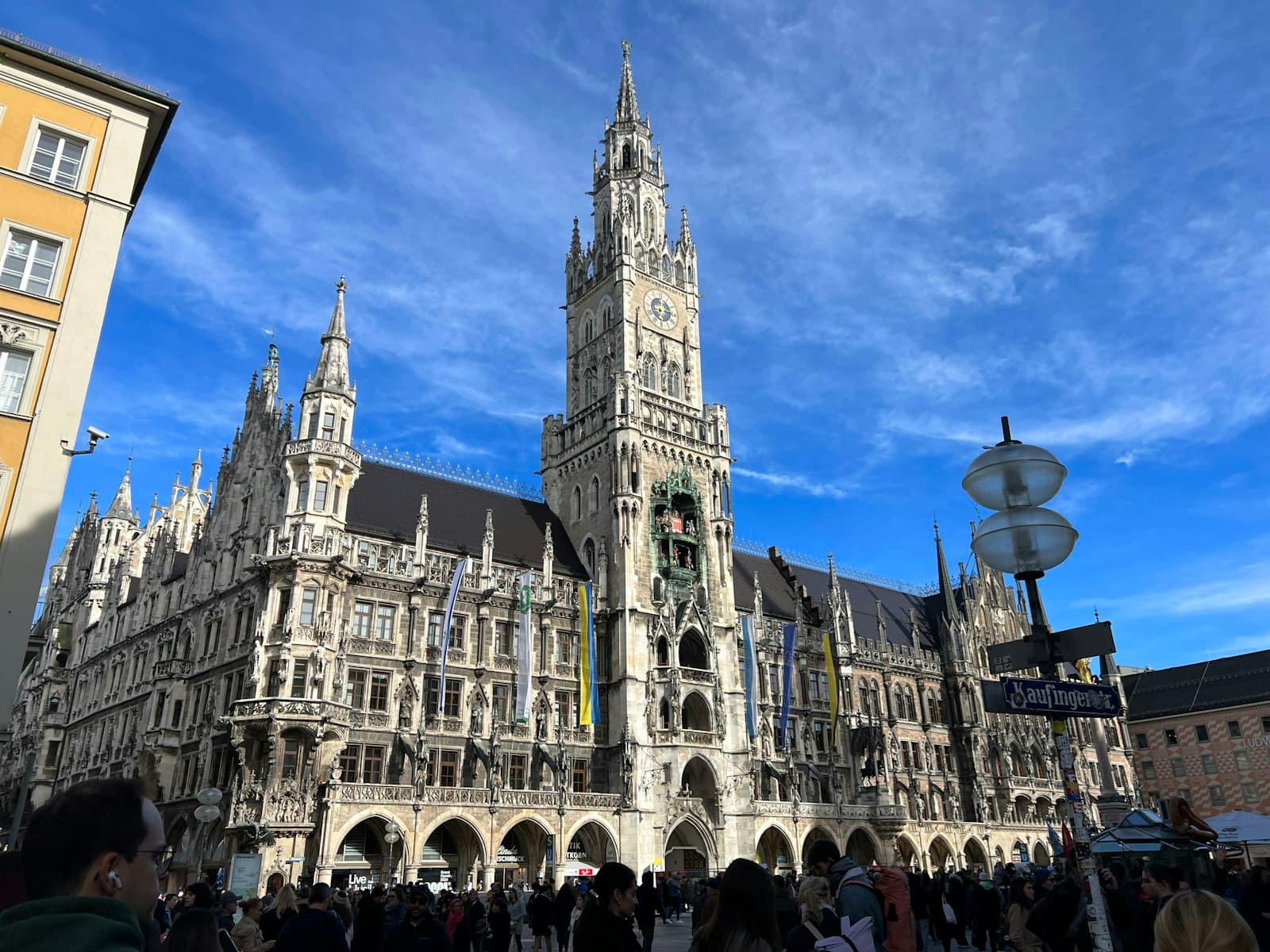
Altstadt: The City the Monks Named
90 min · 2.4 km · easy
More from Munich
Explore more at your own pace.
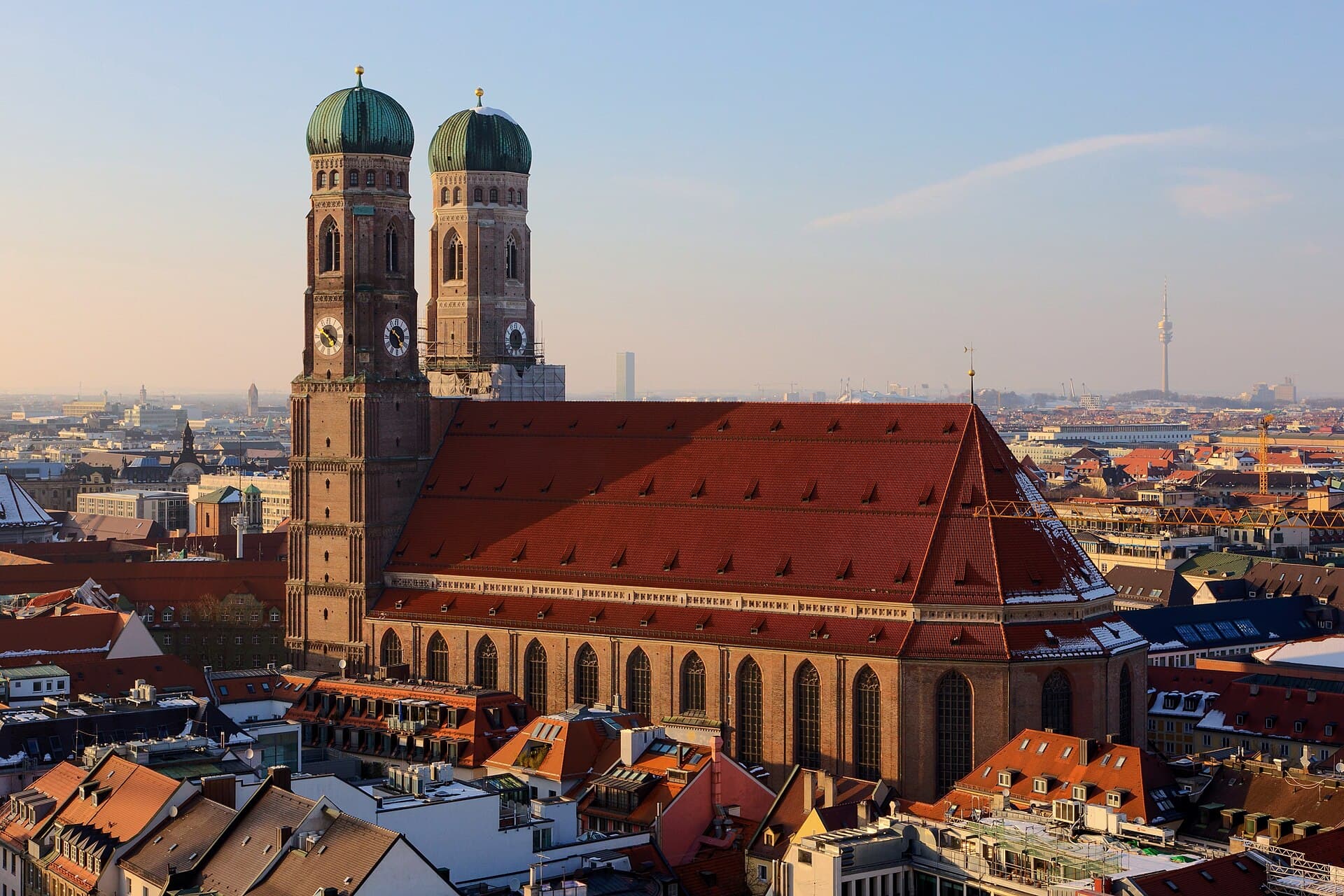
Munich Travel Guide: Days, Transport, Timing, Safety, and Budget
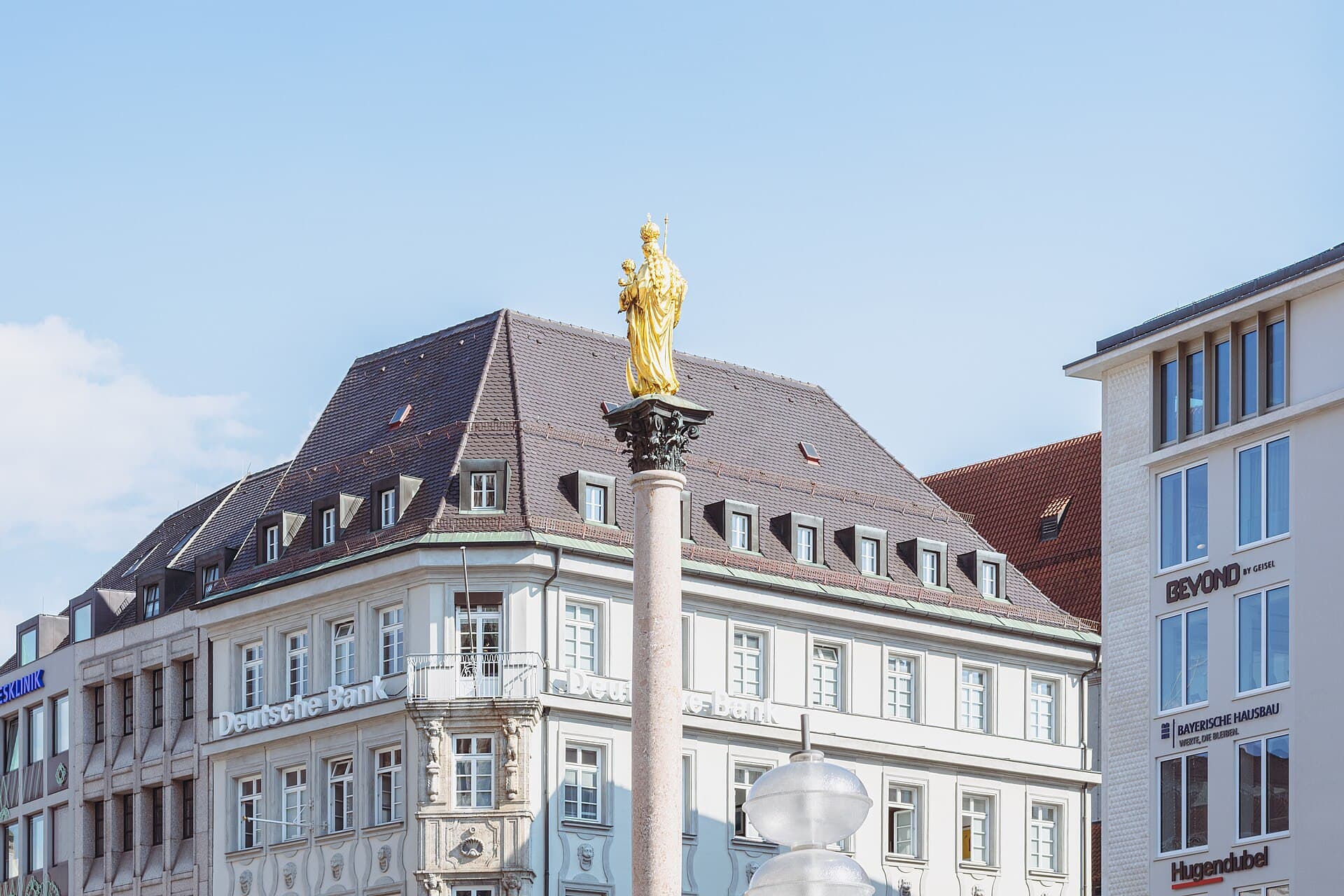
The City the Monks Named: How Munich Turns Privilege Into Public Life
The Chinese Tower Beer Garden: Munich's Whole Idea in One Clearing
Hofbräuhaus am Platzl: How a Duke's Private Brewery Became Munich's Public Beer Hall
Königsplatz, Munich: The Athens on the Isar the Nazis Paved in Granite