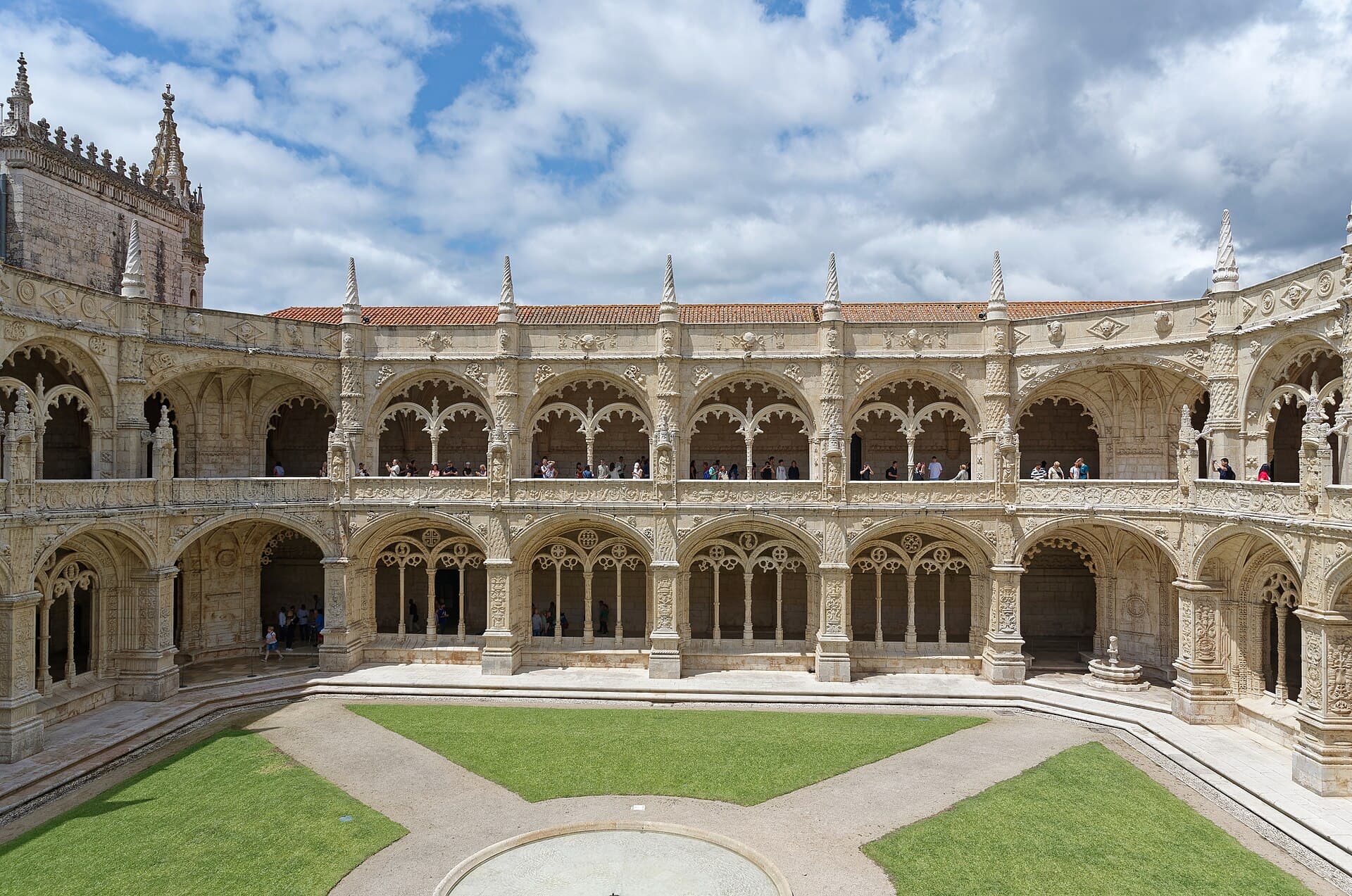
Belem is remembered as a place of departures, the riverbank where Portuguese ships left to open the sea route to India and came back with the pepper and spice that paid for a monastery. The National Coach Museum tells the other half of that story. Here the wealth the ocean route generated has come home and turned into pure spectacle: rooms of gilded, carved, theatrical coaches built to carry monarchs through ceremony. If the great monastery a few hundred metres away shows you empire flowing in as a tax on the spice trade, these coaches show you the same wealth flowing back out again as display. This is the empire read from its downstream end, wealth rendered as gold leaf on a wheel.
A museum a queen built for the crown
The collection was created on the twenty-third of May, nineteen oh-five, at the initiative of Queen Amelia of Orleans and Braganza, wife of King Carlos the First. That founding date matters, because it places the museum near the very end of the Portuguese monarchy: the dynasty that owned these coaches had only a few years left before the republic of nineteen ten swept it away. Queen Amelia gathered up the ceremonial vehicles of the royal houses and gave them a permanent home while the throne that used them was still, just barely, standing.
She chose a fitting shell. The coaches were installed in the former Royal Riding School, a building whose construction began around seventeen eighty-seven, on the orders of the future King John the Sixth, as part of the royal palace complex here at Belem. A riding school was exactly the right container: a long, high hall built for horses and the grandeur of the mounted court, now holding the carriages those horses once pulled. The setting is not incidental decoration. It is part of the argument the museum makes. You are standing inside the machinery of royal ceremony, looking at the objects that machinery produced.
What the coaches actually are
Hear a stop from this walk
Torre de Belem: The True Doorway
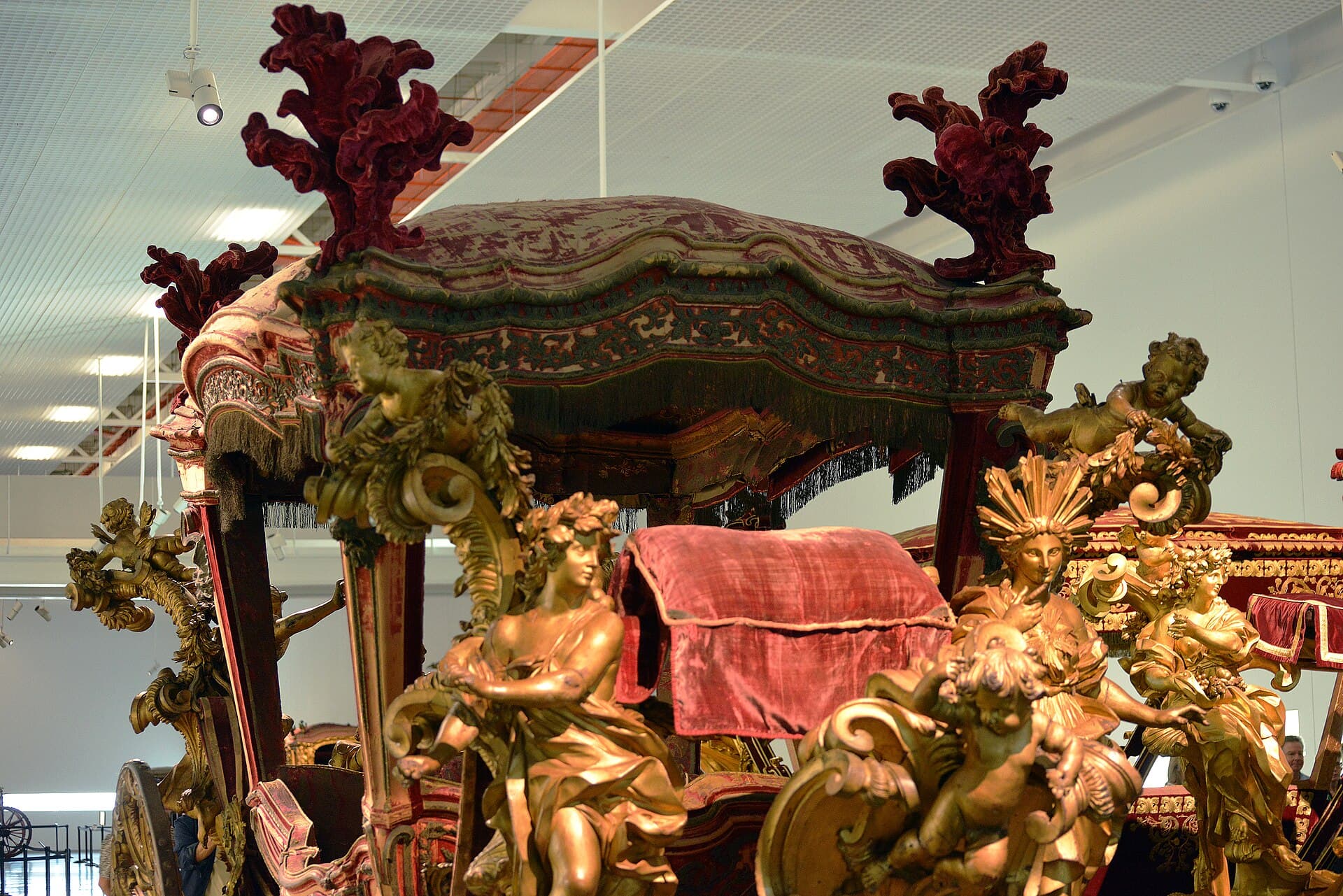
The collection runs to roughly nine thousand objects and covers the ceremonial and gala vehicles of the Portuguese royal houses from the sixteenth century to the nineteenth. These are not everyday transport. They are the state made mobile: coaches whose entire purpose was to be seen, to carry a monarch or an ambassador slowly through a crowd so that power could be witnessed. The carving is deep, the gilding heavy, the allegory dense. Every surface is working to say something about the crown that commissioned it.
The centerpieces are the coaches of a single diplomatic event. In seventeen sixteen, King John the Fifth sent a lavish embassy to Rome, led by the Marquis of Fontes, to the court of Pope Clement the Eleventh. The procession that entered Rome was designed to overwhelm, and three of its grandest coaches survive here. The most famous is the Coach of the Oceans. Its carved figures include allegories of the Atlantic and Indian oceans, a direct reference to the rounding of the Cape of Good Hope, which is to say a reference to the very voyages that made Portugal rich enough to build coaches like this. Stand in front of it and the loop closes on itself: a ship route turned into a fortune, a fortune turned into a gilded carriage, and the carriage carved with the image of the ocean that started the whole cycle. Baroque Portugal telling Rome, in wood and gold, exactly where its money came from.
The one thing to understand standing here
If you take a single idea from this room, take this. Everything in Belem is about the ocean, but the ocean itself is out of sight from inside this hall. What you actually see are the consequences. A country that had little sent ships south around Africa, opened a route no European power had held before, and grew wealthy on the trade that route carried. The coaches are what that wealth looked like once it had come all the way home and settled into ceremony. They are the empire at rest, polished and preserved, long after the ships that funded it had rotted. The pepper is gone. The gold leaf on the wheel remains.
That is why the museum earns its place on a walk about departures. It is the return leg. The monastery shows you the money arriving. The coach museum shows you the money spent, the same fortune converted from a five percent tax on spice into the visible grandeur of a court.
The old shell and the new one
There is a second, quieter story built into the site: the museum now occupies two buildings from two very different centuries. The original riding school, begun around seventeen eighty-seven, still stands and still holds part of the collection. But in twenty fifteen a new building opened across the road, designed by the Brazilian architect Paulo Mendes da Rocha, a Pritzker laureate, working with the Portuguese architect Ricardo Bak Gordon. It is a deliberately raw, concrete, modern box, and the contrast is the point. The gilded coaches of a vanished monarchy now sit inside stripped, contemporary architecture, an eighteenth-century object and a twenty-first-century container in dialogue.
The pairing clearly draws people. In twenty sixteen the National Coach Museum was the most-visited national museum in Portugal, recording 382,593 visitors that year. For a collection of horse-drawn carriages, that is a remarkable pull, and it says something about how completely these objects have crossed over from royal function into national heritage. Nobody arrives to ride in them. They arrive to read them.
Walk the riverbank that paid for all this
The coach museum makes the most sense as one stop in a longer line, because Belem is a single argument told across several monuments: the monastery the spice trade built, the church of departures with its famous and disputed tombs, the ceremonial square staged in the twentieth century, and the tower that was the true doorway to three oceans. Seen in that sequence, the coaches stop being merely beautiful and become the payoff, the wealth of the voyages made visible.
The self-guided Belem audio walk links this museum to those neighbours, so you can stand in front of the Coach of the Oceans and then follow the same story down to the water where the ships actually left. If you want the wider context first, browse our guide to Lisbon walking tours, or start from the city page for Lisbon and pick the Belem route from there. The museum sits about halfway along the walk, on the landward side, an easy detour off the riverbank.
Sources
- National Coach Museum, Wikipedia. Founding by Queen Amelia in 1905, the 1787 Royal Riding School begun under the future King John the Sixth, the roughly 9,000-object collection, the 1716 embassy coaches, the 2015 Paulo Mendes da Rocha building, and the 382,593 visitors in 2016.
- Museus e Monumentos de Portugal (official). Overview of the National Coach Museum collection and its ceremonial vehicles, including the Coach of the Oceans from the 1716 embassy.
- Roamer, "The Threshold of the Ocean" (Belem tour, fact-audited). Primary source for the museum's role in the Belem narrative and the connected monuments.
Ready to experience it?
Belém: The Threshold of the Ocean
105 min · 3.2 km · easy
More from Lisbon
Explore more at your own pace.
Lisbon Rebuilt by Reason: Three Answers to Catastrophe
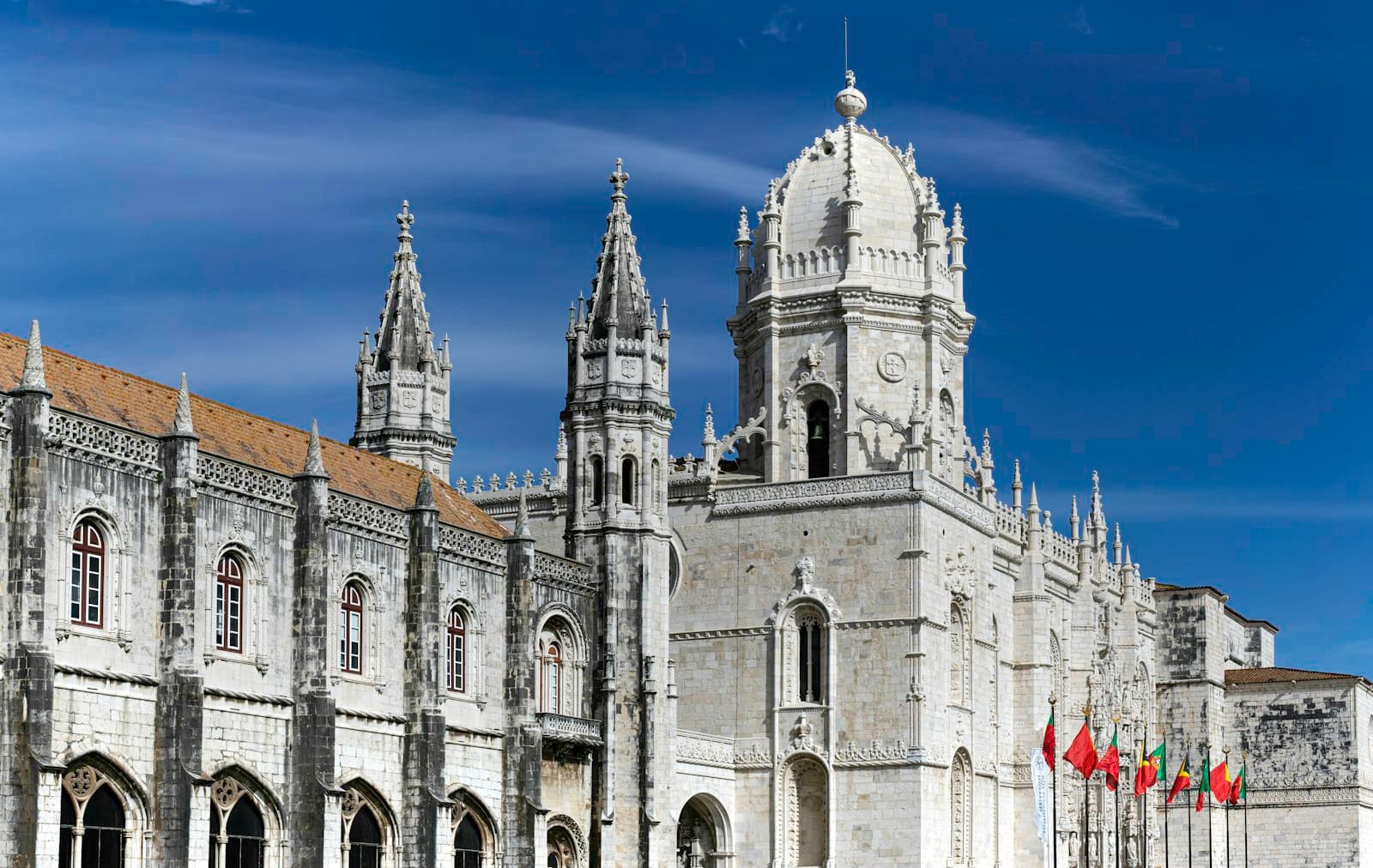
Jeronimos Monastery: How a Tax on Pepper Built Lisbon's Belem
Portas do Sol: The Terrace on Lisbon's Vanished Moorish Wall
The Hidden Cage Under Rua Augusta: How Lisbon Engineered Its Downtown to Shake and Not Fall
Castelo de Sao Jorge: The Lisbon Hilltop Every Ruler Fortified