Amman Citadel: The Hill Where Philadelphia Rose
150 min · 2 km · moderate
Amman is a capital built in layers, one civilization stacked on the last across a ring of steep limestone hills, and you can read that whole layered life on foot at your own unhurried pace: the ancient crown of the Citadel, the living downtown of Al-Balad, and the young stone quarter of Jabal Amman. The hills carry the story in sequence. The city began as Rabbath-Ammon, capital of the Ammonites, was renamed Philadelphia in the Greco-Roman age, and settled back into Amman, the modern Arabic form of ancient Ammon, when Arab Muslims took the region. Three self-guided walks trace that arc: one climbs the oldest hill, one crowds into the working souk below it, and one follows the ridge where a small town became a capital in barely a generation.
One hilltop, four cities stacked
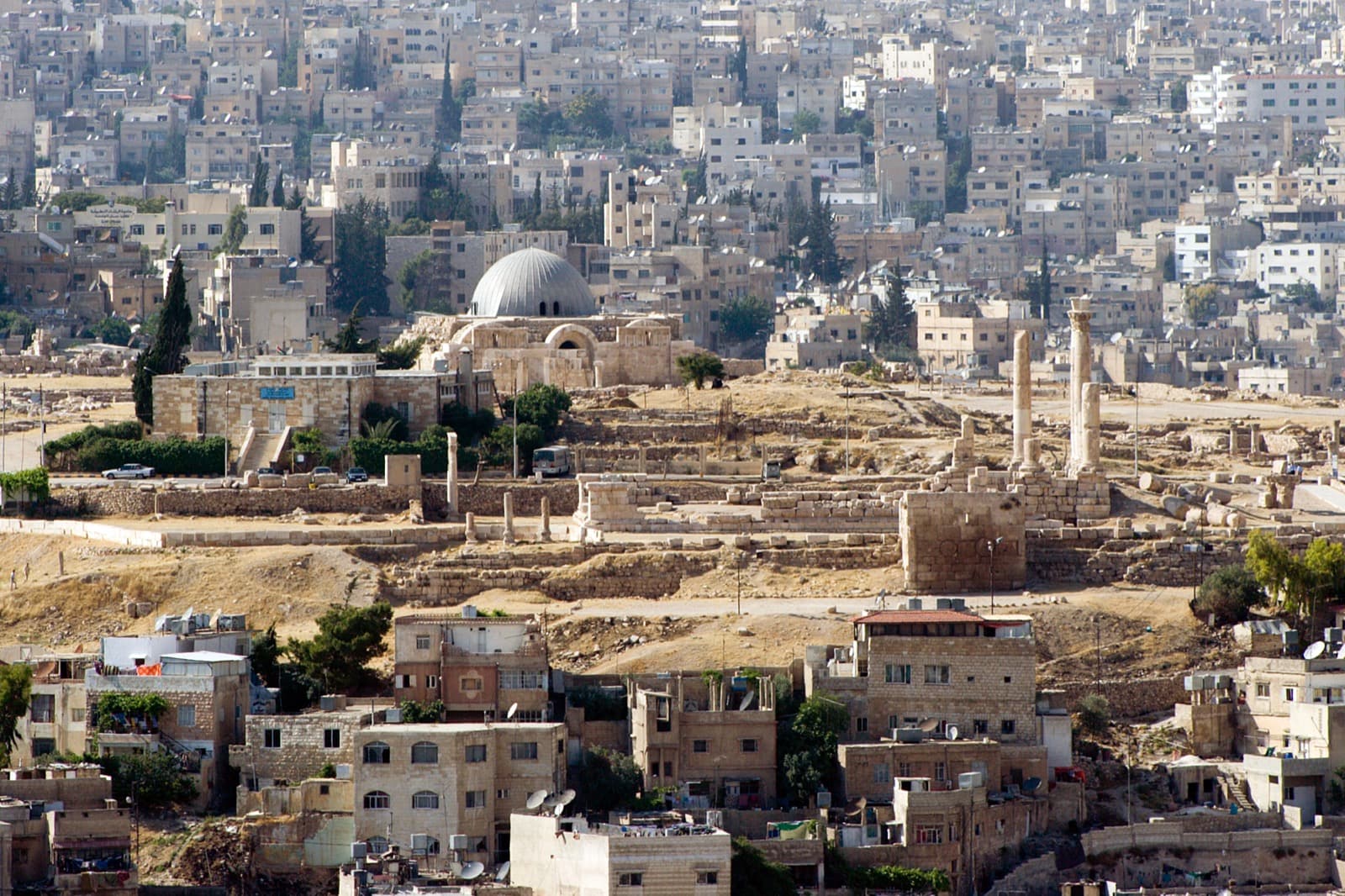
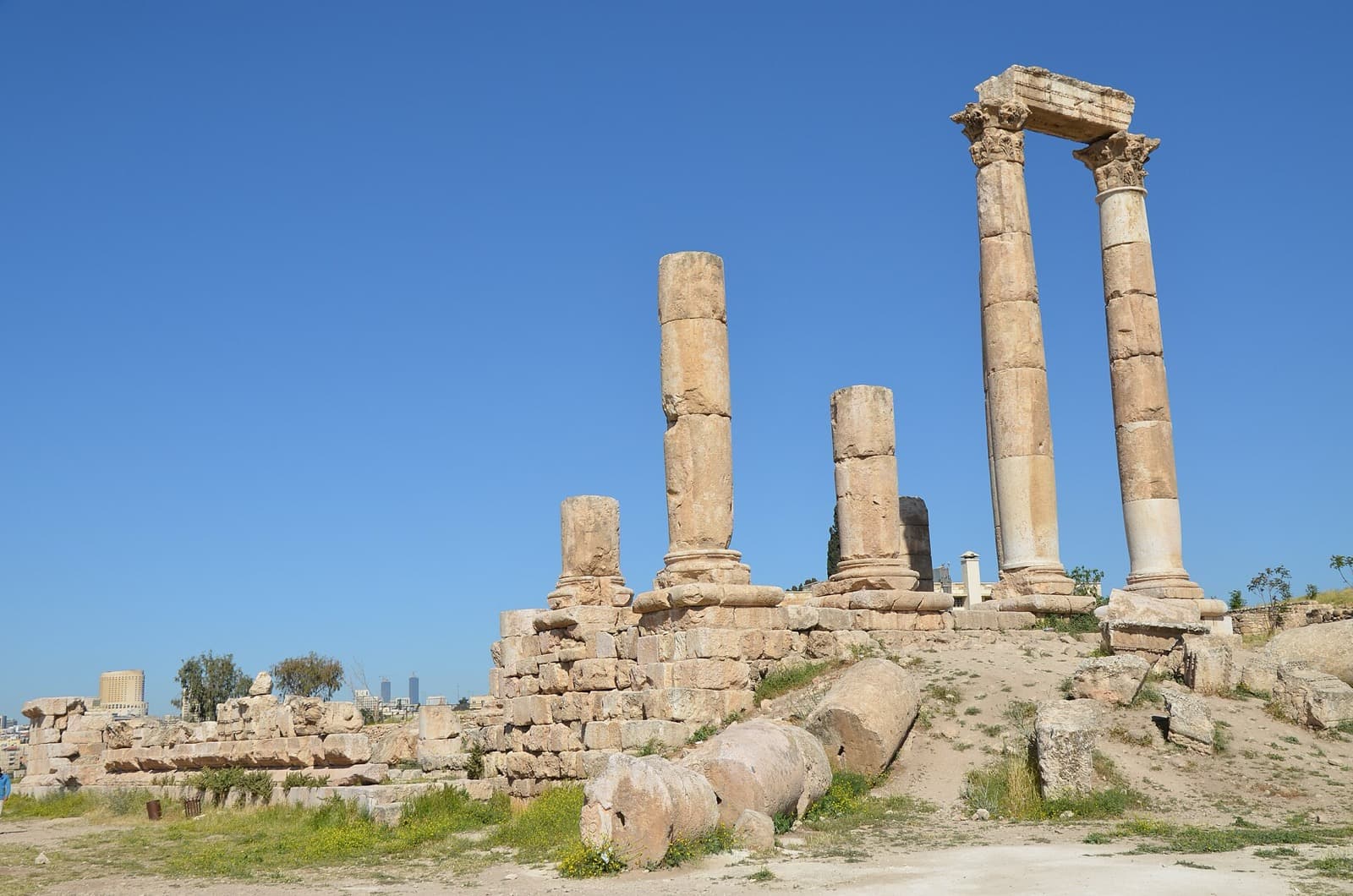
Start where Amman is oldest. The Amman Citadel walk climbs Jabal al-Qala, a hill people have lived on since the Neolithic, fortified in the Bronze Age around eighteen hundred B C, and made the capital of the Ammonite kingdom in the Iron Age. What crowns it now is Rome. The Temple of Hercules was built between one hundred sixty-one and one hundred sixty-six A D under the governor Geminius Marcianus, in the reign of Marcus Aurelius, its six portico columns each about thirteen and a half metres tall. Near them lies the strangest survivor on the hill: a hand with three fingers and an elbow, all that remains of a marble figure thought to have stood around thirteen metres, probably felled by one of the earthquakes that recur here.
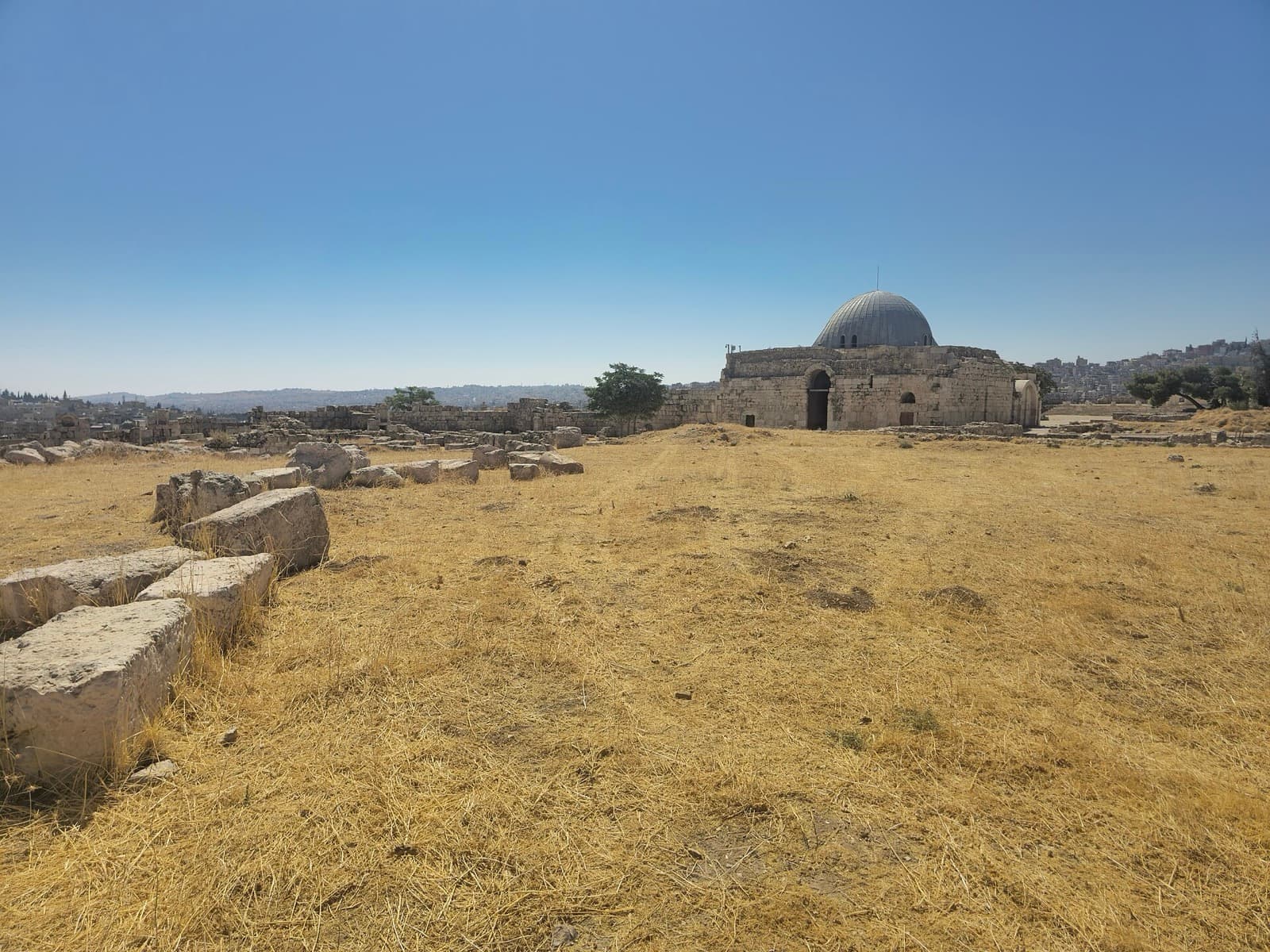
A few steps away the layers change dynasty. A Byzantine church of the sixth century still stands on recycled columns, its Corinthian capitals lifted straight from the Temple of Hercules next door, an older city quarried to raise a newer one. North of it, the Umayyads built a governor's palace, probably under the caliph Hisham (who ruled from seven hundred twenty-four to seven hundred forty-three), laid directly on top of the Roman and Byzantine city. Its almost-square audience hall, about twenty-five by twenty-six metres, doubled as the monumental gateway; the stone dome you see is a modern wooden reconstruction added in nineteen ninety-eight to suggest the lost roof. Duck into the small Jordan Archaeological Museum, founded here in nineteen fifty-one, and you meet the oldest faces of all: the Ain Ghazal statues, shaped from lime plaster over bundled reeds between about seven thousand two hundred and six thousand two hundred fifty B C, their eyes outlined with bitumen carried from the Dead Sea. Rome, Byzantium, Islam, and the deep Neolithic, all on one crown.
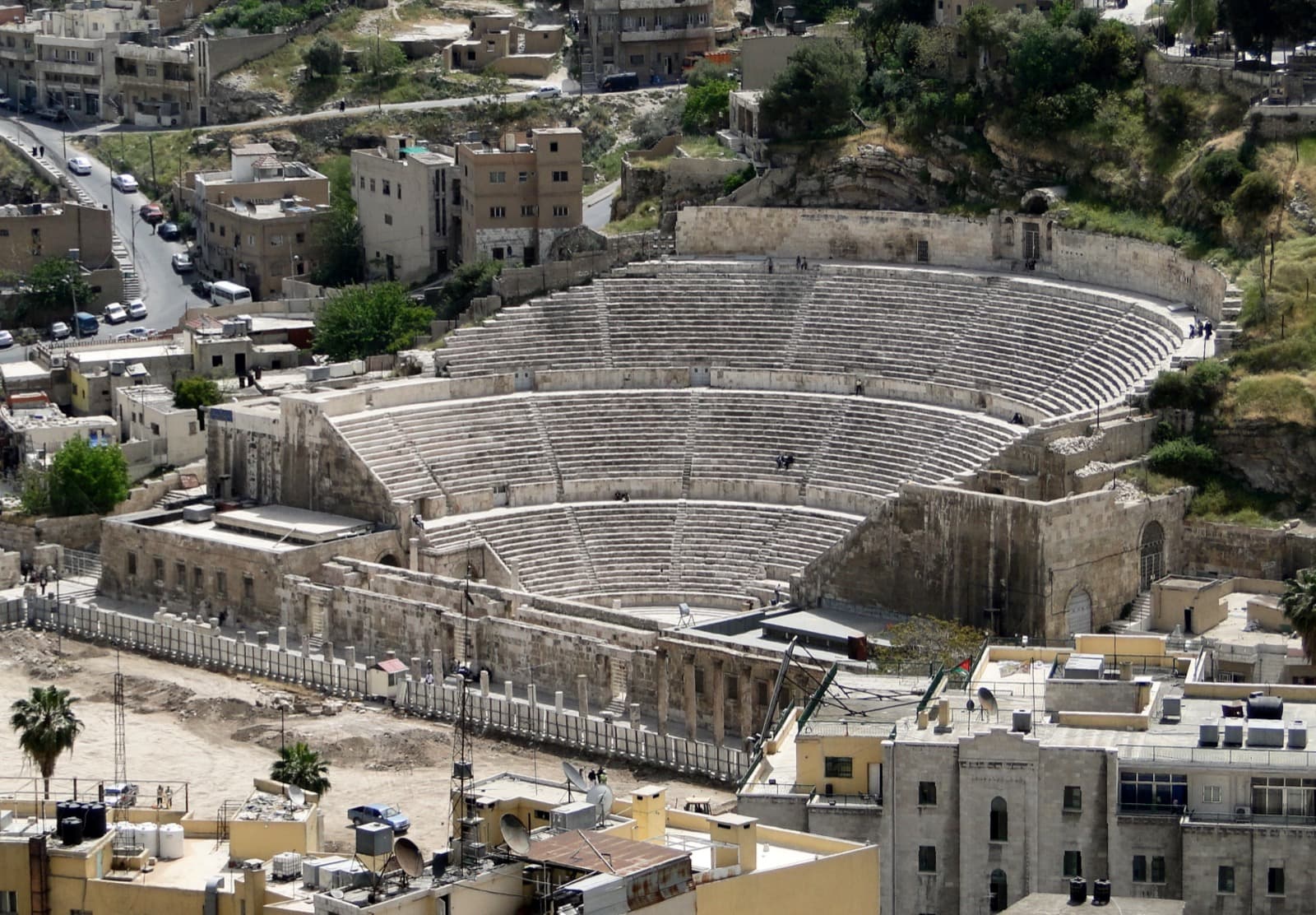
The valley below is not a pleasant walk, so the tour crosses by a short taxi (a few minutes, a few dinars) down to the Roman Theatre, cut into a north-facing slope on purpose so its audience of about six thousand sat in afternoon shade. A Greek inscription records that it honoured the emperor Antoninus Pius, who reigned from one hundred thirty-eight to one hundred sixty-one, and it still hosts concerts and a book fair today. Beside it the little Odeon, seating about five hundred, sits by a curved row of columns that is nearly all that survives of the Forum of Philadelphia. That taxi is not a flaw in the walk. It is how you cross the ancient city on your own clock, no group van, no schedule.
The souk that sits on Roman Philadelphia
Hear a stop from this walk
The Temple of Hercules: The Roman Crown of the Oldest Hill
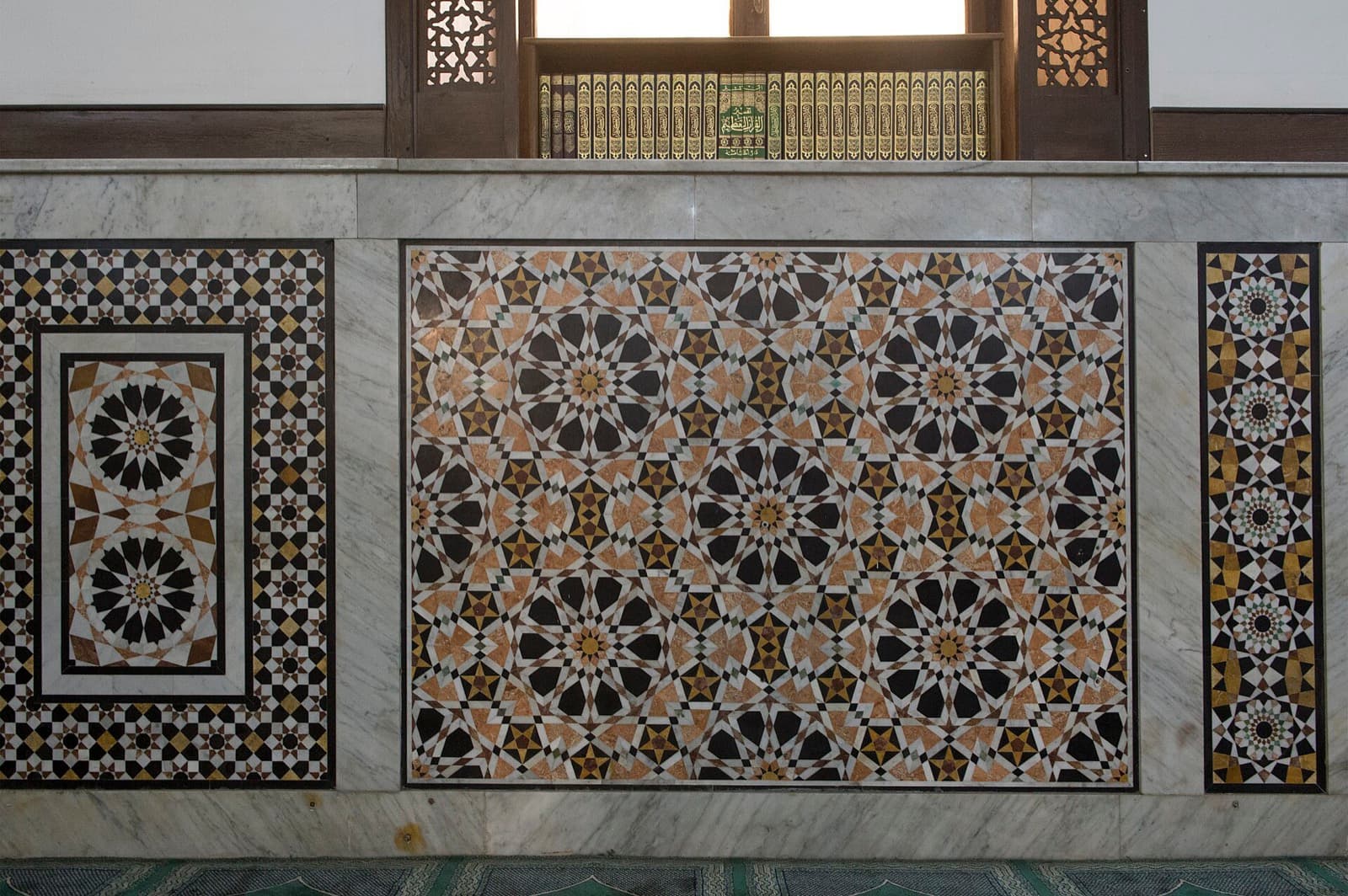
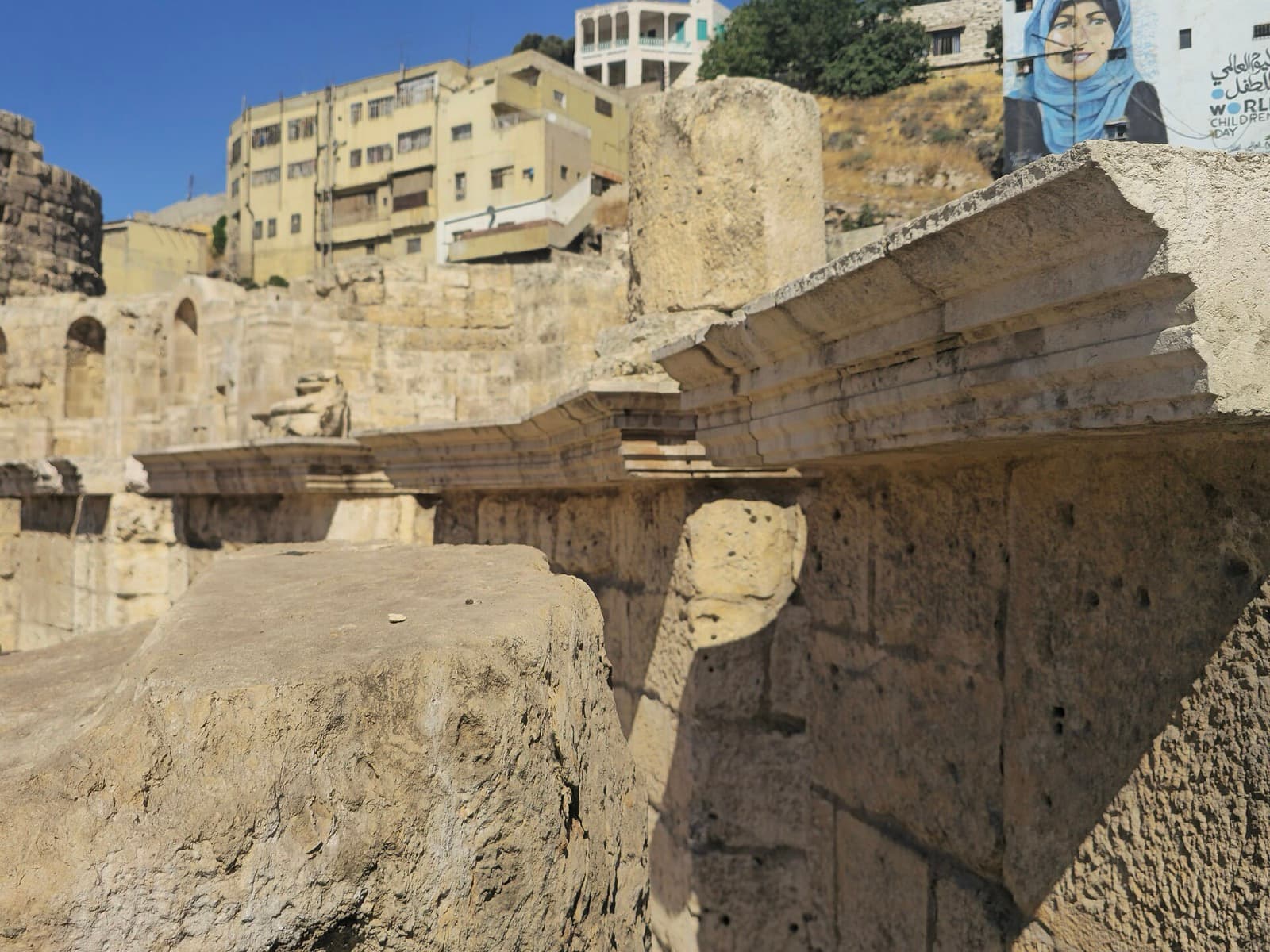
Down in the valley, the Downtown Al-Balad walk reads the living present sitting directly on all that depth. The Nymphaeum, a monumental Roman public fountain from the end of the second century, stands marooned and half-excavated with the modern souk crowding right up to it; its pool once held about six hundred square metres of water, three metres deep, cleaned and partly restored in a project around twenty fifteen funded by the United States embassy. A short way on, the pink-and-white Grand Husseini Mosque marks the turn from Roman to Islamic Amman: ordered rebuilt by Abdullah the First and completed in nineteen twenty-four, it stands over an earlier mosque of the seventh century and, beneath that, a recorded Byzantine cathedral, cathedral to mosque to mosque in one place.
Above the ruins runs the ordinary business of a city. The gold souk is a whole lane of jewellers where wedding and dowry gold is weighed out on the scales by the gram; the spice and produce lanes pile up zaatar, sumac, and cardamom beside roasting coffee. And King Faisal Street is where the modern capital was born: it began as Municipality Street, dated by a municipal building of nineteen oh nine, became the main thoroughfare after Amman was made capital of the Emirate of Transjordan in nineteen twenty-one, and saw Jordan's independence declared in this downtown in nineteen forty-six. The walk closes at Duke's Diwan, a stone townhouse built in nineteen twenty-four that served as Amman's first post office, then the Finance Ministry, then the Haifa Hotel for about fifty years, and was rescued as a free cultural salon in two thousand and one. Six close stops, all on foot, no taxi to arrange.
The hill where old Amman climbed
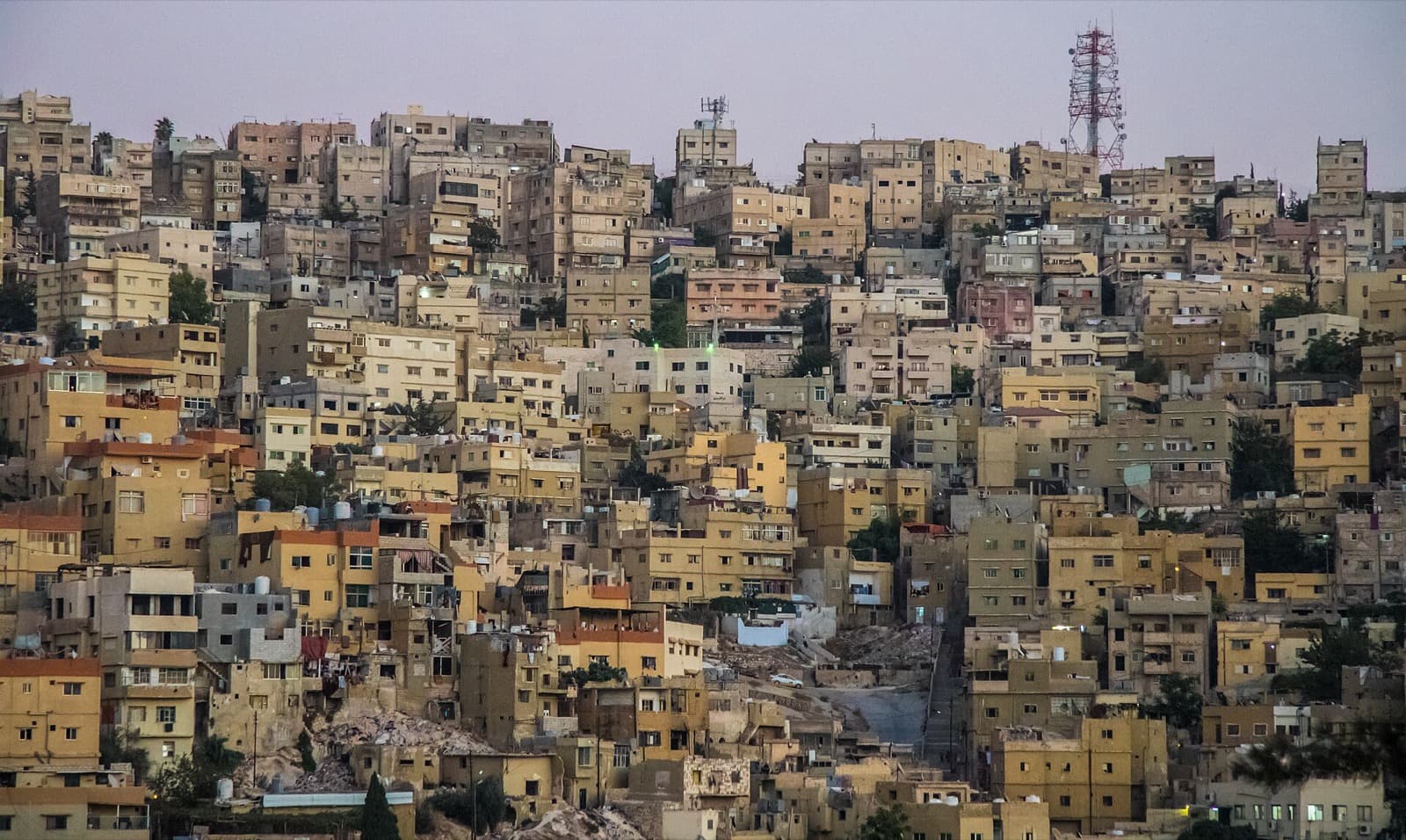
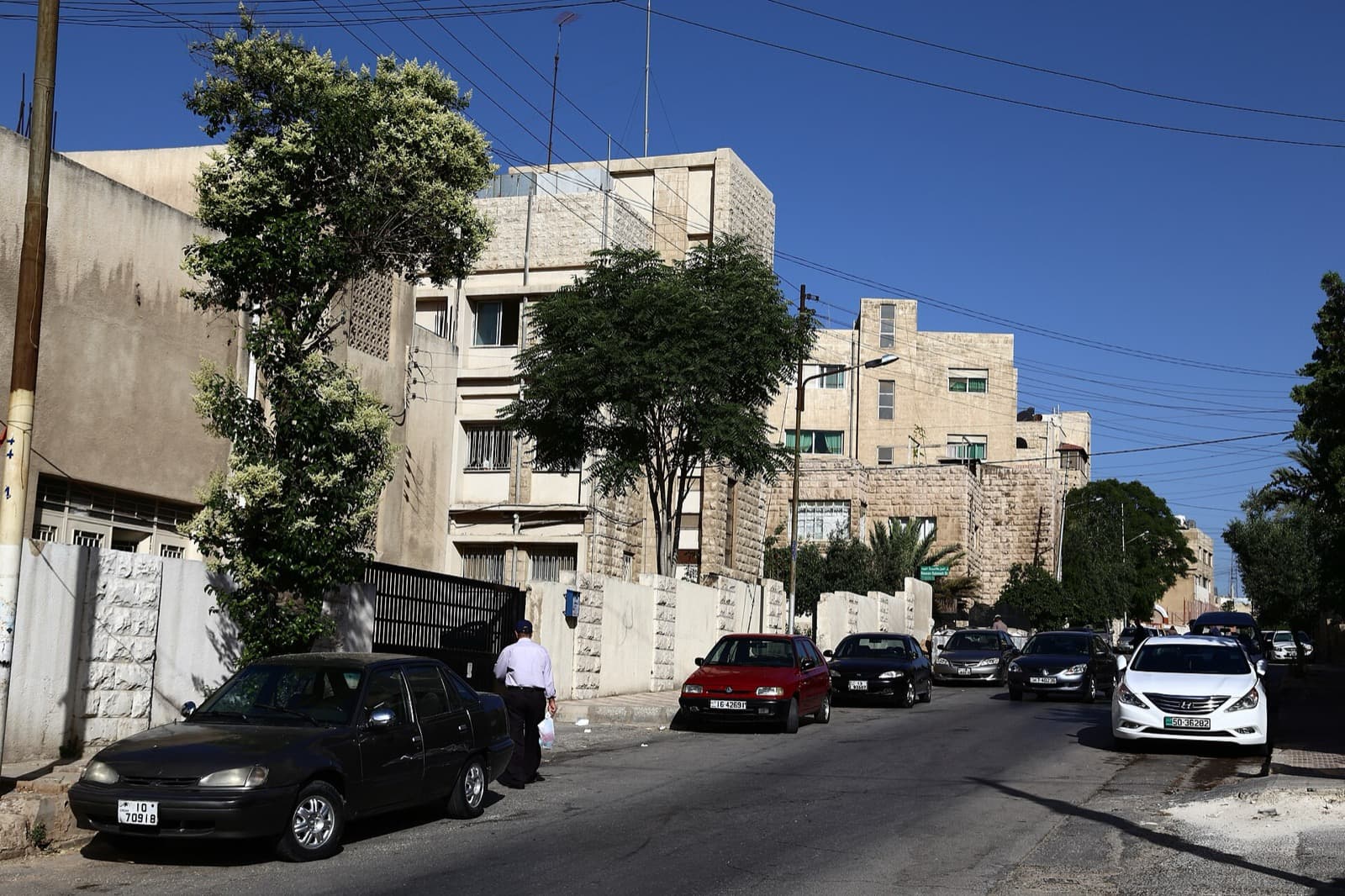
The third walk reads the youngest layer. The Rainbow Street and Jabal Amman walk follows the ridge of one of the seven original hills, the grandest of the first hillside suburbs the crowded downtown valley pushed the city up onto in the nineteen twenties. The numbered traffic circles, First through eighth, still serve as the hill's informal address system, and in two thousand and five the Greater Amman Municipality formally recognized Jabal Amman as a heritage attraction point. Rainbow Street, officially Abu Bakr al-Siddiq Street, took its everyday name from a mid-century cinema and is now the quarter's front porch, lined with restored limestone houses of the nineteen twenties, thirties, and forties: pale stone, arched windows, twin staircases, semicircular porches.
From the terrace of the Wild Jordan Center (home of the Royal Society for the Conservation of Nature, founded nineteen sixty-six, in a building designed by Ammar Khammash that opened in two thousand and three) the whole arc lines up in a single glance, the ancient Citadel hill facing you across the valley. The old public stairways, like the Al-Kalha stairs of the nineteen twenties, were the hill's first roads down to the market, now painted with murals. And the Jordan River Foundation, founded in nineteen ninety-five and chaired by Queen Rania al-Abdullah, keeps Bedouin weaving and embroidery alive in a nineteen thirty-six house on the street.
Read the hilltop, the downtown, and the heritage quarter in any order, and you have read a capital that has been building on itself for thousands of years. Solo, at your own pace, with no group van and no schedule, is the way a stacked city is best understood. Browse all three routes on the Amman walking tours hub and set your own clock.
Sources
Frequently asked questions
- What was Amman called in ancient times?
- Amman began as Rabbath-Ammon, the capital of the Ammonite kingdom. In the Greco-Roman period it was renamed Philadelphia and became one of the cities of the Decapolis. The modern name Amman descends from the ancient name Ammon, which returned to use after the Arab Muslim conquest of the region.
- What can you see on the Amman Citadel?
- The Citadel, on the hill of Jabal al-Qala, stacks several civilizations on one crown. You can see the Roman Temple of Hercules, built between one hundred sixty-one and one hundred sixty-six A D, a sixth-century Byzantine church on recycled columns, an eighth-century Umayyad palace with a reconstructed dome added in nineteen ninety-eight, and the Jordan Archaeological Museum, founded in nineteen fifty-one, which has displayed the Neolithic Ain Ghazal statues.
- Is the Amman Roman Theatre still used today?
- Yes. The second-century Roman Theatre, cut into a north-facing slope so its audience of about six thousand sat in afternoon shade, is still a working venue. It hosts concerts, ceremonies, and a book fair nearly two thousand years after it was carved. A Greek inscription records that it honoured the emperor Antoninus Pius, who reigned from one hundred thirty-eight to one hundred sixty-one.
- What is Al-Balad in Amman?
- Al-Balad is the old downtown of Amman, its name meaning the centre of the town. It holds the city's oldest central markets, including the gold souk where wedding and dowry gold is weighed out and the spice and produce lanes piled with zaatar, sumac, and cardamom. Beneath the working souk lie the Roman Nymphaeum fountain and the layered site of the Grand Husseini Mosque, completed in nineteen twenty-four.
- Why is Jabal Amman important?
- Jabal Amman is one of the seven original hills of the city and became the grandest of its first hillside suburbs after Amman became the capital in the nineteen twenties. Its ridge, marked by numbered traffic circles, carries the stone villas of the young capital along Rainbow Street. In two thousand and five the Greater Amman Municipality formally recognized Jabal Amman as a heritage attraction point.
Ready to experience it?
Amman Citadel: The Hill Where Philadelphia Rose
150 min · 2 km · moderate
More from Amman
Explore more at your own pace.
Amman Travel Guide: Days, Season, Getting Around, Safety, and Budget
Rainbow Street and the Hill Where Amman Grew Up
The Grand Husseini Mosque: The Door Into Downtown Amman's Al-Balad
The Al-Kalha Stairs: Amman's Roads Before the Roads
The Roman Nymphaeum of Amman: A Marooned Fountain in the Souk