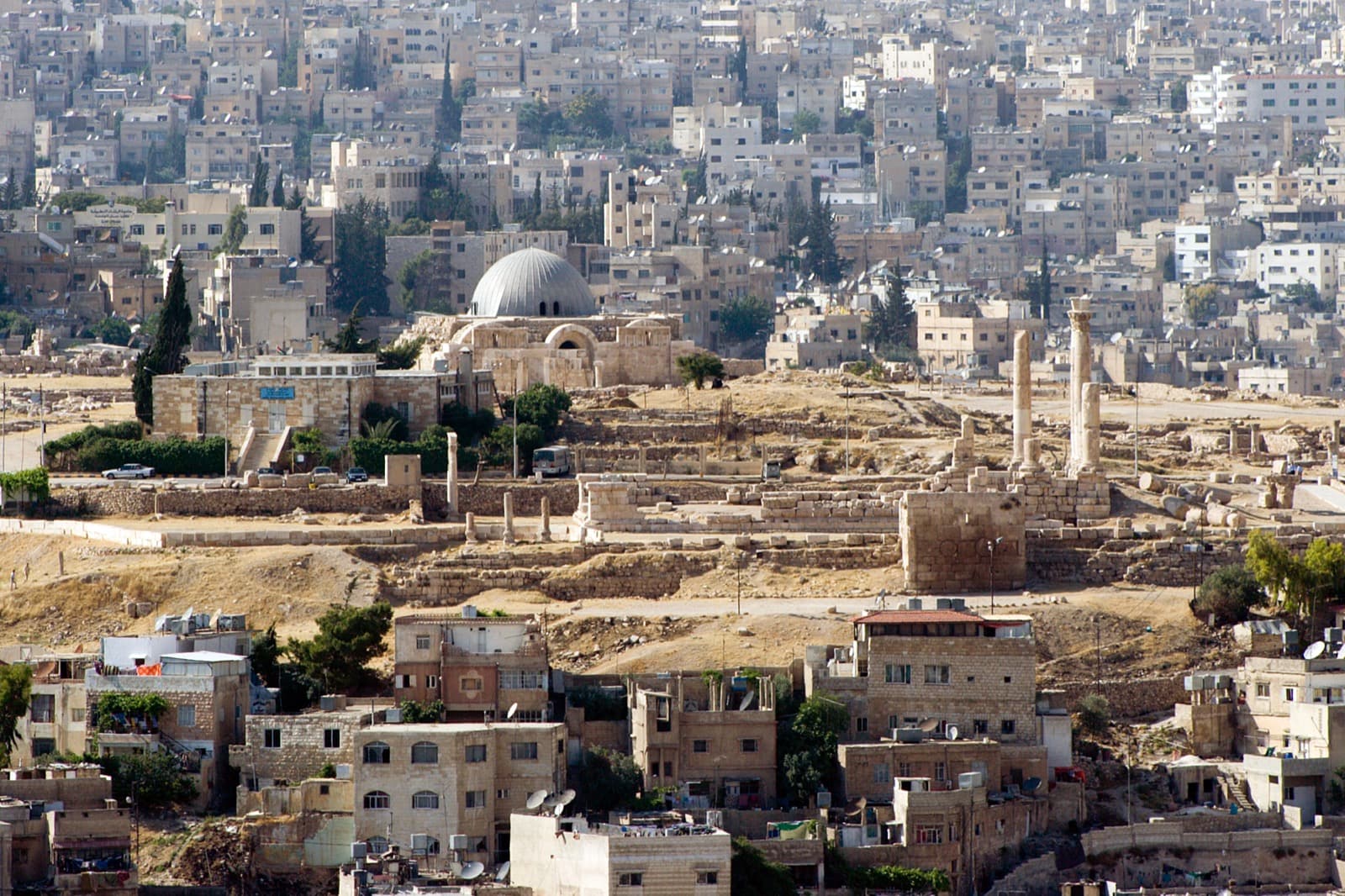
Climb one of the oldest inhabited hills on earth, where a Roman temple, an Umayyad palace, and a Byzantine church stack Ammon, Rome, and Islam on a single crown, then take a short taxi down to the theatre of Roman Philadelphia below.
Start · The Temple of Hercules: The Roman Crown of the Oldest Hill
DirectionsStops
- 1
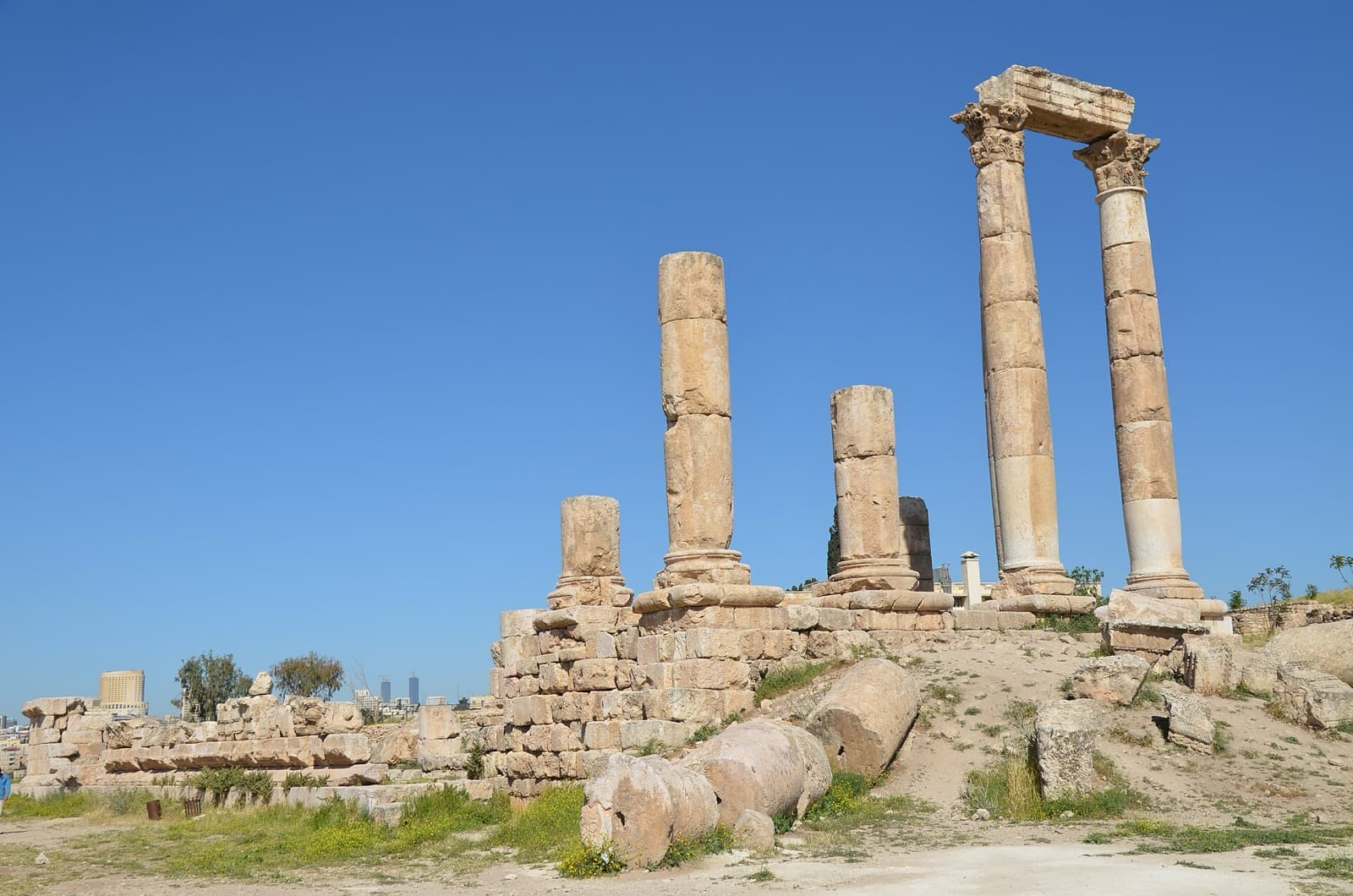
The Temple of Hercules: The Roman Crown of the Oldest Hill
The most significant Roman structure on the Citadel, a great temple whose six tall columns crown a hill that people have lived on since the Neolithic.
- 2
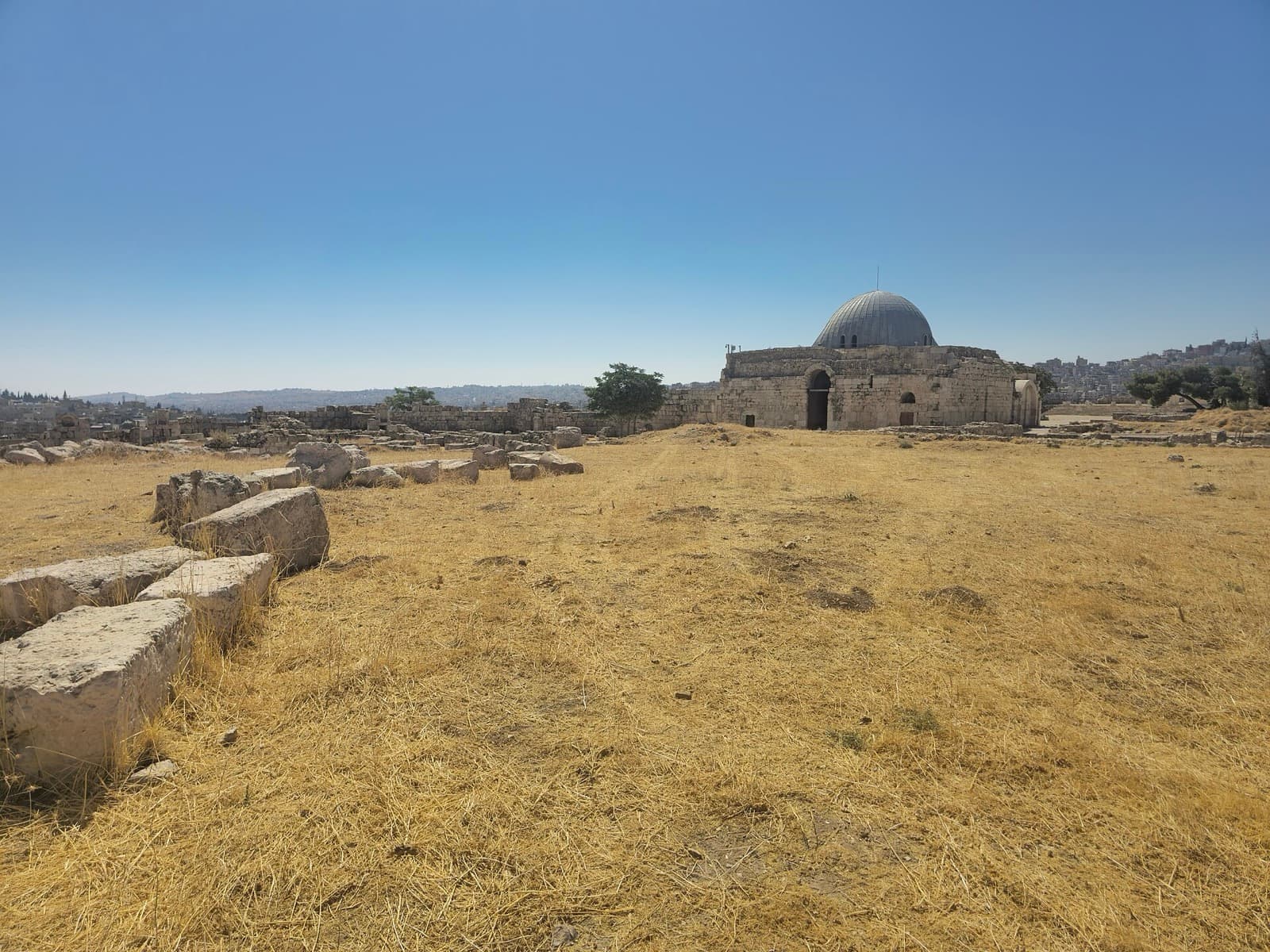
The Umayyad Palace: An Islamic Court on a Roman Hill
An eighth-century Umayyad governor's palace built on top of the Roman and Byzantine city, centred on a domed audience hall that also served as a grand gateway.
- 3

The Byzantine Church and the Citadel Walls: A Hill Walled and Rewalled
A sixth-century Byzantine basilica that recycled Roman columns from the Temple of Hercules, standing among walls raised and rebuilt across three thousand years.
- 4
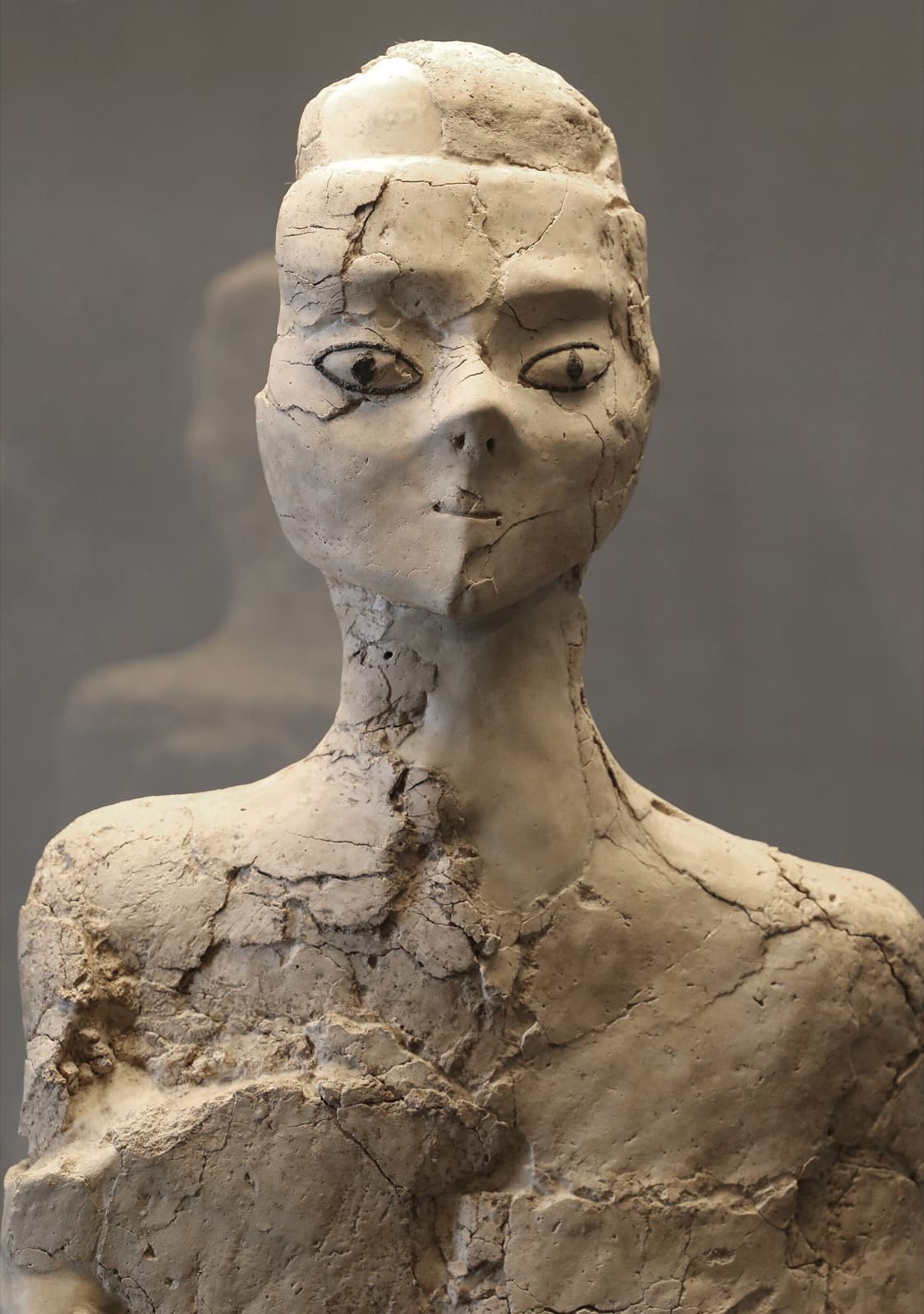
The Jordan Archaeological Museum: The Oldest Faces on the Hill
A compact museum, founded in nineteen fifty-one, that has displayed the Ain Ghazal statues, some of the oldest large images of the human figure ever made.
- 5
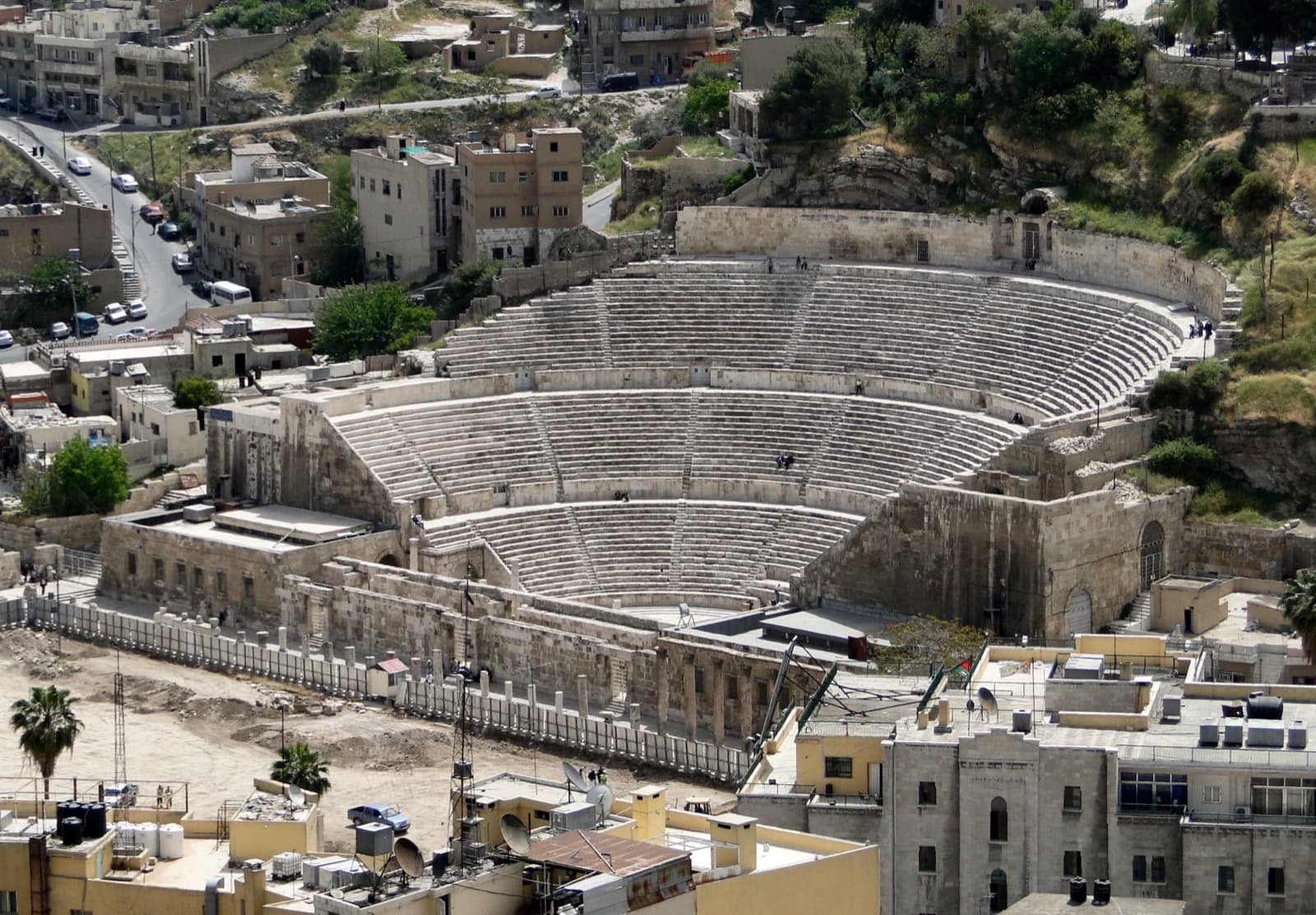
The Roman Theatre: Six Thousand Seats Cut Into the Slope
A vast second-century theatre carved into a hillside in the downtown, seating about six thousand and still hosting performances today, reached by a short taxi from the Citadel.
- 6
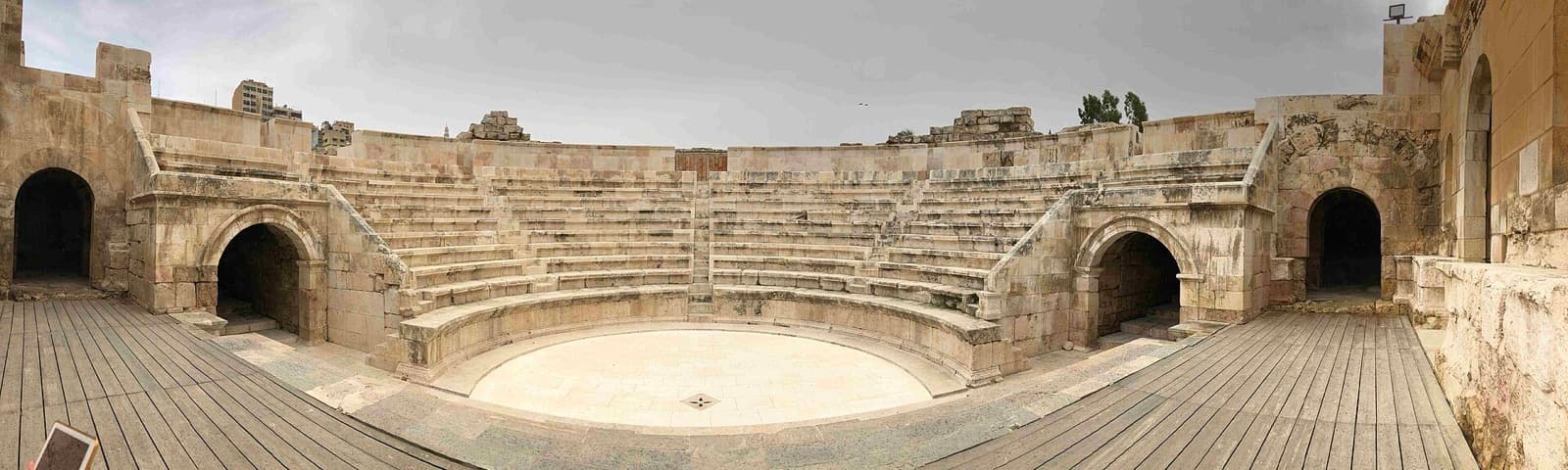
The Odeon and the Forum: A Little Concert Hall and a Vanished Square
A small roofed council hall seating about five hundred beside a curved row of columns, all that survives of the once-vast forum of Roman Philadelphia.
Details
Best Time to Visit
Early morning or the last two hours before closing, when the sun is lower and the exposed Citadel hilltop is cooler. Spring and autumn are the kindest seasons in Amman; midday summer sun on the hill is fierce.
Pro Tips
- •Buy the Amman Citadel ticket, about three Jordanian dinars, at the entrance; it also covers the Jordan Archaeological Museum. The Roman Theatre downtown is a separate ticket of about two dinars that includes its two folklore museums.
- •If you are seeing more of the country, the Jordan Pass covers entry to both the Citadel and the Roman Theatre and many other sites, and can save you money and queuing.
- •For the taxi between the hilltop Citadel and the downtown theatre, agree the fare before you set off or ask the driver to run the meter; it is only a few minutes and a few dinars.
- •Carry small cash in Jordanian dinars for tickets, the taxi, and water; not every counter takes cards.
- •Go early or late to avoid the harshest sun on the exposed hilltop and to share the site with fewer tour groups.
- •Wear modest clothing that covers shoulders and knees, especially before walking down through Al-Balad past the Grand Husseini Mosque.
Safety & Precautions
- •The hilltop Citadel and the downtown Roman Theatre are genuinely a short taxi ride apart across the valley, not a comfortable walk; plan for that transfer and agree the fare in advance.
- •The Citadel is open and exposed with little shade; bring sun protection, a hat, and water, as the sun on the hill is strong for much of the year.
- •The ground is uneven, with ancient stone, steps, and low ruins; wear sturdy shoes and watch your footing, especially near unfenced edges and the theatre's steep seating.
- •Friday and daily prayer times change the rhythm downtown; dress modestly near the Grand Husseini Mosque, defer to worshippers, and expect some quieter streets around midday prayers.
Travel advisory: Reconsider Travel (Level 3).
Gallery
Related Reading
Go deeper on what you'll see, hear, and walk through.
Overview
Amman Travel Guide: Days, Season, Getting Around, Safety, and Budget
7 min

Overview
Best Self-Guided Walking Tours in Amman (2026)
3 min
Overview
One Day in Amman: A Walkable Morning-to-Evening Itinerary
7 min
Thematic
Amman in Layers: How Three Hills Hold One City's Long Life
6 min
Companion
The Umayyad Palace on Amman's Citadel: A Caliph's Court on a Roman Hill
6 min
Deep dive
The Roman Theatre of Amman: Six Thousand Seats Cut for Shade
6 min
Read
What to Eat in Amman: Dishes, Origins, and How to Order
7 min
Read the walk
The full story of Amman Citadel: The Hill Where Philadelphia Rose, in words. Prefer to listen? Play it narrated, from home or on location.
Introduction
The Amman Citadel rises on a hilltop above the heart of Amman, in Jordan, and it holds one of the longest human stories on earth. People have lived on this hill, called Jabal al-Qala, since the Neolithic, through the Ammonite kingdom, through Rome, Byzantium, and the Umayyads. This tour has six stops and takes about two and a half hours, covering roughly two kilometres of walking split across two places a hill apart. On the hilltop you will read four layers of the ancient city: a Roman temple, an eighth-century Umayyad palace, a sixth-century Byzantine church with its rebuilt walls, and a small museum holding some of the oldest human statues ever made. Then, because the downtown lies across the valley below and is not a pleasant walk, you will take a short taxi, a few minutes and a few dinars, down to Al-Balad, the old town, to finish at the Roman Theatre and the little Odeon beside the columns of a vanished forum. That taxi is not a flaw. It is how you cross the ancient city on your own terms, your own clock, no group van, no schedule. This is a marquee site, so expect guides, carriage touts, and stall-holders near the entrances. None of that steers you here. You linger where you like, skip what you like, and move when you are ready. Small cash in Jordanian dinars is handy, the sun on the exposed hilltop is strong, and modest dress is wise near the mosques below. When you arrive at the Temple of Hercules on the Citadel hilltop, begin with stop one.
1. The Temple of Hercules: The Roman Crown of the Oldest Hill
You are standing on Jabal al-Qala, one of the oldest continuously inhabited places on earth. People fortified this hill in the Bronze Age, around eighteen hundred B C, and in the Iron Age it became the capital of the Ammonite kingdom. The Romans arrived later, and what crowns the hill now is their great temple, commonly called the Temple of Hercules. It was built between one hundred and sixty-one and one hundred and sixty-six A D, under the Roman governor Geminius Marcianus, in the reign of the emperor Marcus Aurelius, who ruled from one hundred and sixty-one to one hundred and eighty. Six portico columns still stand, each about thirteen and a half metres tall, on a podium roughly forty-three by twenty-seven metres. Look closely at the ground near the columns and you will find the strangest survivor: fragments of a colossal marble statue, a hand with three fingers and an elbow, all that remains of a figure estimated at around thirteen metres tall, probably felled by one of the earthquakes that have shaken this region for millennia. That single hand tells you the scale the Romans built to on this hill. This is a marquee stop, so guides and groups pass through, but nothing here is on a clock but yours. Stand at the western edge by the columns and you can see clear across the valley to the downtown, Al-Balad, where the rest of Roman Philadelphia waits. Amman was Philadelphia then, one of the cities the Romans knew across this land. Take your time with the temple. The oldest hill has been holding this view for a very long time.
2. The Umayyad Palace: An Islamic Court on a Roman Hill
Walking north across the hilltop, the layers change dynasty. Here, on the north terrace, the Umayyads built a palace complex, probably in the reign of the caliph Hisham, who ruled from seven hundred and twenty-four to seven hundred and forty-three. It rose as an administrative centre and a governor's residence, laid straight on top of the older Roman and Byzantine city, so you are now walking on Islam stacked on Rome stacked on the Ammonite hill. The building in front of you is the audience hall, and it doubled as a monumental gateway into the complex. It is almost square, about twenty-five by twenty-six metres, built in a Greek-cross plan, with four niches in each arm arranged around a central domed space. The stone dome you see is modern: a wooden dome was placed over it in nineteen ninety-eight to suggest the original roof and to host cultural events, since the windowsills showed the hall was always meant to be covered. Beyond the hall once ran a central plaza and a colonnaded street lined with residential units, and a great cistern fed the baths and latrines below. The Arabic word for such a palace is qasr, meaning a palace or castle. After the Umayyad period the whole hilltop was largely abandoned for nearly a thousand years, which is part of why so much survived to be read. Move at your pace here. There is no group forming up behind you. The court of a caliph's governor stood on this exact terrace, and the hill simply absorbed it into its long stack of cities.
3. The Byzantine Church and the Citadel Walls: A Hill Walled and Rewalled
Between the temple and the palace stands the clearest proof of how this hill recycles itself. Here rose a Byzantine church in the sixth century, a basilica with a central nave and two side aisles. A few of its columns are still standing, and if you look at their capitals you are…
Full narration for this stop unlocks with the tour.
4. The Jordan Archaeological Museum: The Oldest Faces on the Hill
Step out of the sun and into the small museum near the ruins. The Jordan Archaeological Museum was established here on the Citadel in nineteen fifty-one, long the country's principal home for antiquities. Its fame rests on some of the oldest faces humans ever made: the Ain…
Full narration for this stop unlocks with the tour.
5. The Roman Theatre: Six Thousand Seats Cut Into the Slope
From the Citadel you now cross the ancient city the easy way, by a short taxi down into Al-Balad, the downtown. It is only a few minutes and a few dinars, no group van, no waiting, just you crossing the valley on your own clock, and it saves you a hard trudge down and up the…
Full narration for this stop unlocks with the tour.
6. The Odeon and the Forum: A Little Concert Hall and a Vanished Square
A short walk from the great theatre, across Hashemite Plaza, sits its little sister. The Odeon is a small Roman performance and council hall, built in the second century A D at the same time as the larger theatre, seating about five hundred. Where the great theatre was open to…
Full narration for this stop unlocks with the tour.