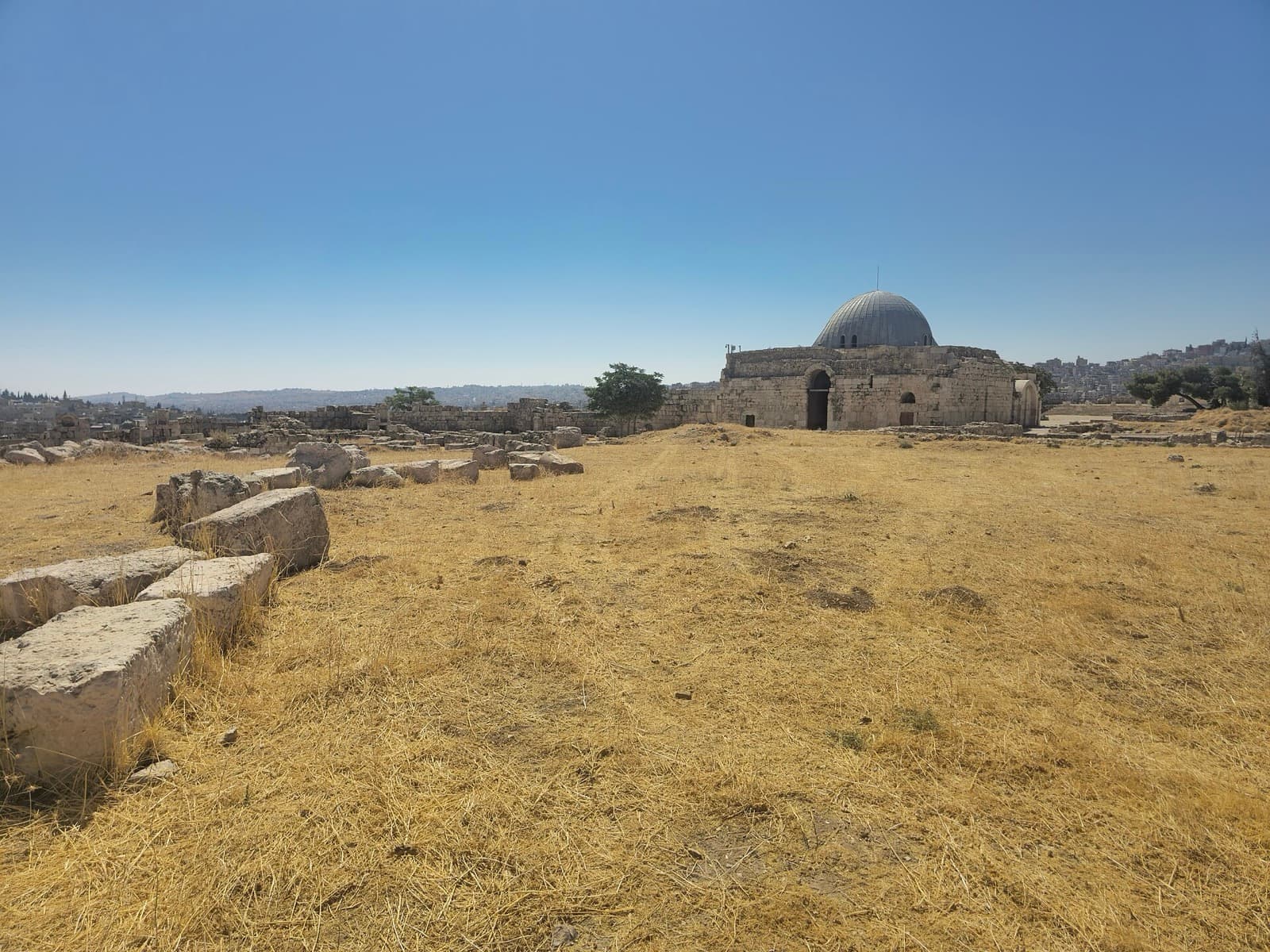
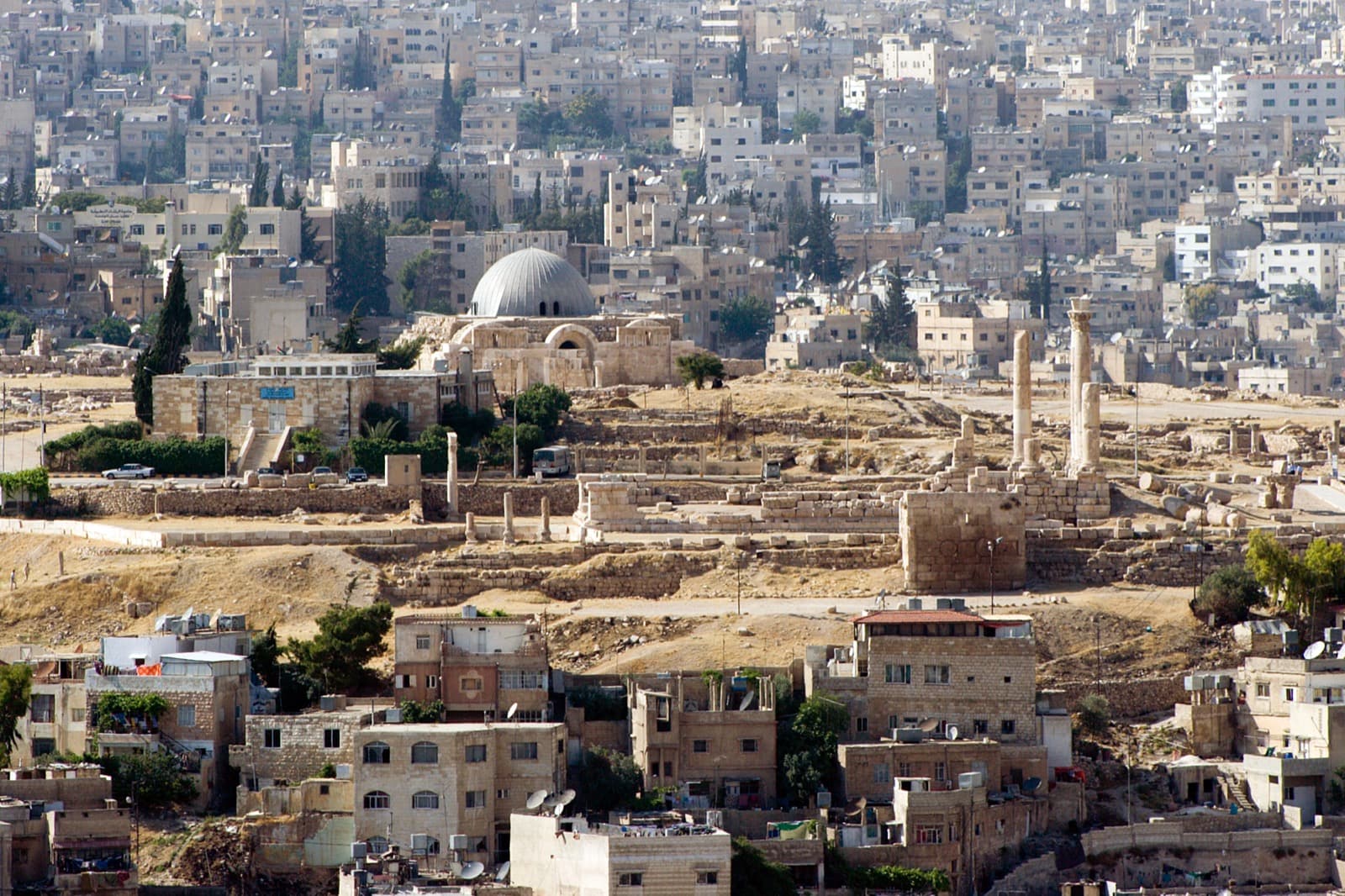
On the north terrace of the Amman Citadel stands an almost-square stone hall with a dome, and it sits directly on top of the Roman and Byzantine city beneath it. This is the Umayyad Palace, an eighth-century governor's residence and administrative seat, and it is the single clearest place to read how one hill absorbed Ammon, Rome, Byzantium, and Islam into a stacked crown. Walk north across the hilltop and the dynasty simply changes under your feet. That layering is the argument of the whole tour, and the palace is where the argument becomes something you can stand inside.
A hall that was also a gate
The Umayyads governed a vast early Islamic empire, and this hilltop complex served as their court in Amman, probably raised in the reign of the caliph Hisham, who ruled from seven hundred and twenty-four to seven hundred and forty-three. The building you meet first is the audience hall, and it did double duty as the monumental gateway into the whole compound. That detail carries weight. A visitor did not pass through a plain entrance and then reach the seat of authority somewhere deeper inside. The gate and the seat of authority were the same room, so you met the caliph's governor and his power in a single step.
The hall is almost square, roughly twenty-five by twenty-six metres, laid out on a Greek-cross plan with four niches in each arm arranged around a central domed space. The stone dome overhead is not ancient. A wooden dome was placed over the hall in nineteen ninety-eight to suggest the original roof and to let the space host cultural events, and the reasoning was archaeological rather than decorative: the windowsills showed the hall was always meant to be covered. So what you see is a careful reconstruction that evokes the original without pretending to be it, which is honest work and worth knowing before you look up.
Islam stacked on Rome stacked on the hill
Hear a stop from this walk
The Temple of Hercules: The Roman Crown of the Oldest Hill
The Umayyad builders did not clear the ground before them. They laid their palace straight on top of the older Roman and Byzantine city, reusing its foundations rather than sweeping them away. Beyond the audience hall once ran a central plaza and a colonnaded street lined with residential units, and a great cistern fed the baths and latrines below, because a fortified hill with no spring survives only if it can hoard the rain. This is the practical texture of a working court: water storage, plumbing, streets, and residences, all fitted onto Roman bones.
Then the story does something strange. After the Umayyad period, the whole hilltop was largely abandoned for nearly a thousand years. That long emptiness is part of why so much survived to be read. Nobody quarried this court into oblivion the way later cities so often cannibalize their predecessors. The hill went quiet and kept its layers, which is exactly why a modern walk here can move from a Roman temple to an Islamic hall to a Byzantine church in a few hundred paces. If you want the wider context of the city that grew back around it, the Amman city page is a good place to start.
Reading the whole crown from one terrace
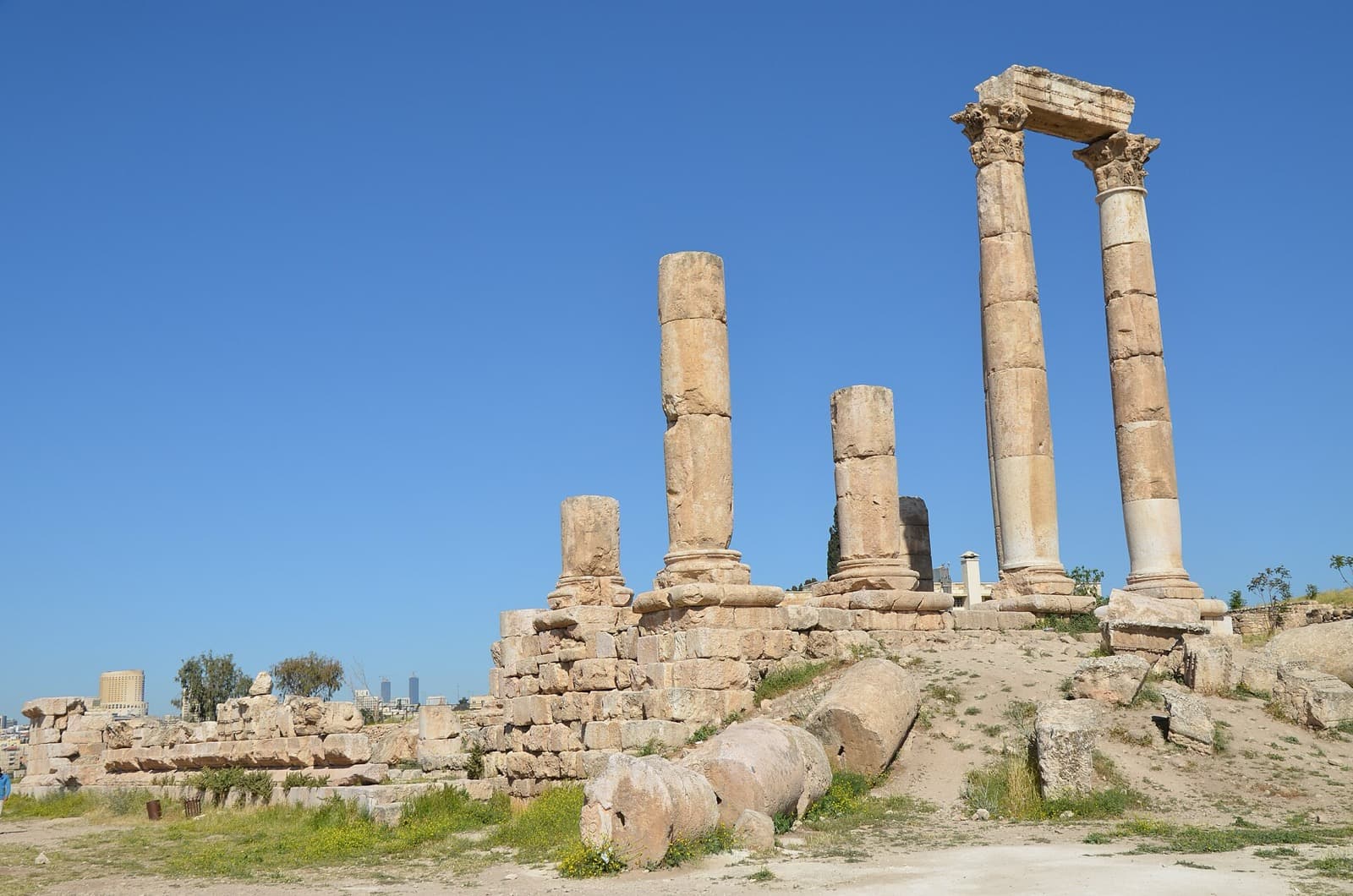
Stand on the palace terrace and you can trace the tour's full sweep without moving far. Just south, six columns of the Temple of Hercules crown the hill, built between one hundred and sixty-one and one hundred and sixty-six A D under the Roman governor Geminius Marcianus, in the reign of Marcus Aurelius. Near those columns lie fragments of a colossal marble statue, a hand with three fingers and an elbow, all that remains of a figure thought to have stood around thirteen metres tall, probably felled by one of the earthquakes that have shaken this region for millennia. That single hand tells you the scale Rome built to here.
Between temple and palace stands a sixth-century Byzantine church whose builders lifted Corinthian capitals straight from the Temple of Hercules and set them to work again in a Christian basilica. It is the whole hill in one detail: an older city quarried to raise a newer one. The walls and terraces around all of this were raised and rebuilt across three thousand years, from the Bronze Age around eighteen hundred B C, through the Iron Age Ammonite kingdom, Romans, Byzantines, and Umayyads, down to an Ayyubid watchtower added around twelve hundred and twenty.
Nearby, the Jordan Archaeological Museum, established on the Citadel in nineteen fifty-one, holds some of the oldest faces humans ever made. The Ain Ghazal statues were created between about seven thousand two hundred and six thousand two hundred and fifty B C, shaped from lime plaster over bundles of reeds, their eyes outlined with bitumen carried from the Dead Sea. To stand in front of one is to meet a face made more than nine thousand years ago. After a caliph's hall and a Roman temple, the museum turns you back to the very beginning of the hill's human story.
Then down to Philadelphia
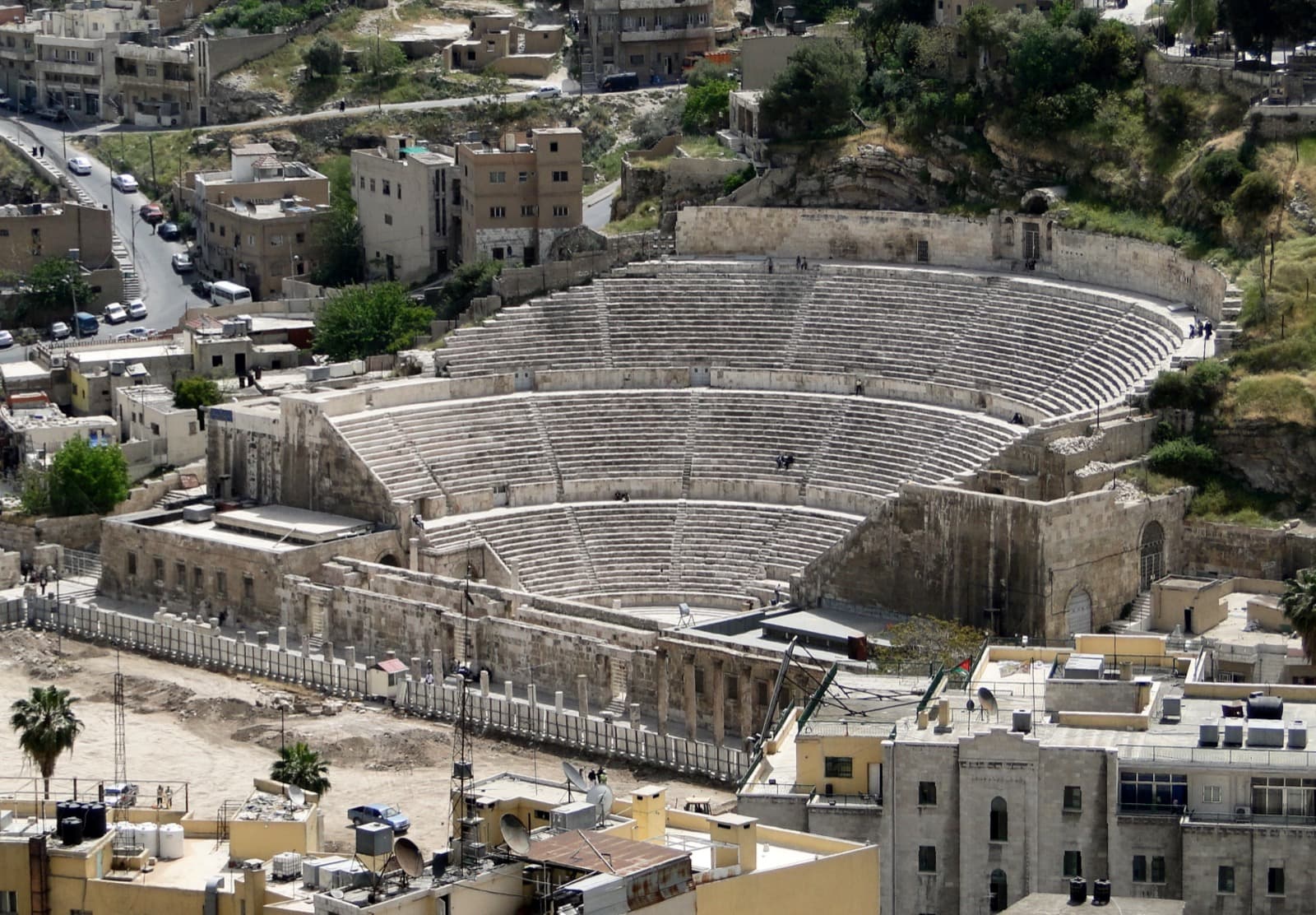
The tour does not end on the crown. Amman was Philadelphia in the Roman period, and the rest of that city waits across the valley in the downtown, Al-Balad. A short taxi, a few minutes and a few dinars, carries you down to the Roman Theatre, cut steeply into a north-facing slope so its audience of about six thousand sat in shade through the afternoon. A surviving Greek inscription indicates it was raised in honour of the emperor Antoninus Pius, who reigned from one hundred and thirty-eight to one hundred and sixty-one, and it still hosts concerts and ceremonies today. Beside it, the small Odeon seated about five hundred under a roof, and a curved row of columns is nearly all that survives of the Forum of Philadelphia, once a square of roughly one hundred by fifty metres.
That taxi is not a compromise. It is how you cross the ancient city on your own clock, no group van, no schedule, lingering on the palace terrace as long as you like and taking a Roman seat below when you are ready. This is a marquee hill, so expect guides and stall-holders near the entrances, but nothing here is on anyone's clock but yours. The full route, both levels and all six stops, is laid out in our guide to Amman walking tours. Start on the terrace where a caliph's court still stands on Roman ground, and let the hill tell you the rest.
Sources
- Amman Citadel, Wikipedia: overview of Jabal al-Qala, its occupation layers, and the Umayyad, Roman, and Byzantine structures on the hill.
- Umayyad Palace at Amman, Archnet: architectural description of the audience hall, its Greek-cross plan, and the wider palace complex.
- Ayn Ghazal statues, Wikipedia: dates, materials, and discovery of the Neolithic plaster figures held in the Citadel museum.
- Roman Theatre (Amman), Wikipedia: dedication to Antoninus Pius, seating capacity, and the theatre's north-facing construction.
- Britannica, Ain Ghazal: background on the Neolithic settlement near Amman and its plaster statuary.
Ready to experience it?
Amman Citadel: The Hill Where Philadelphia Rose
150 min · 2 km · moderate
More from Amman
Explore more at your own pace.
Amman Travel Guide: Days, Season, Getting Around, Safety, and Budget
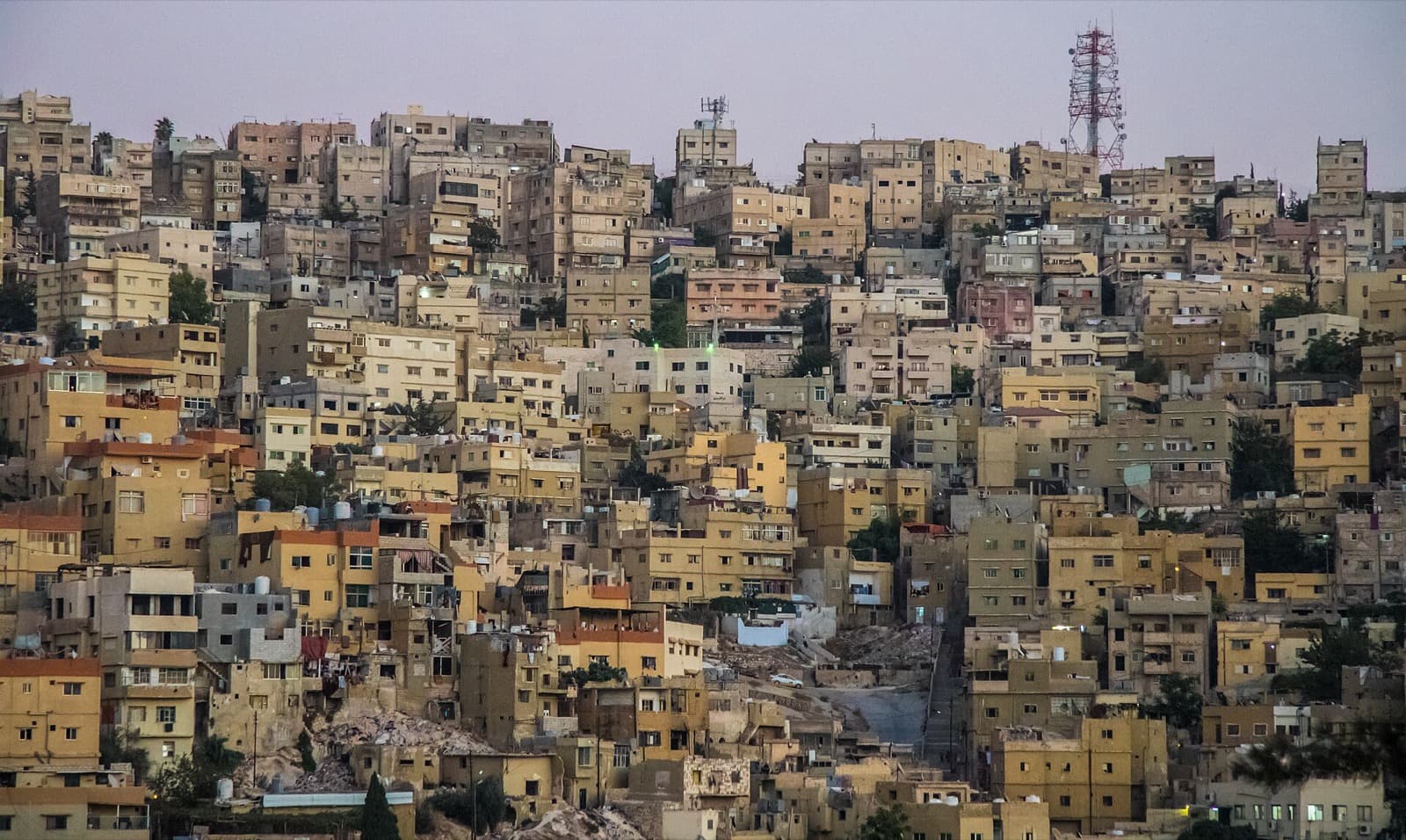
Rainbow Street and the Hill Where Amman Grew Up
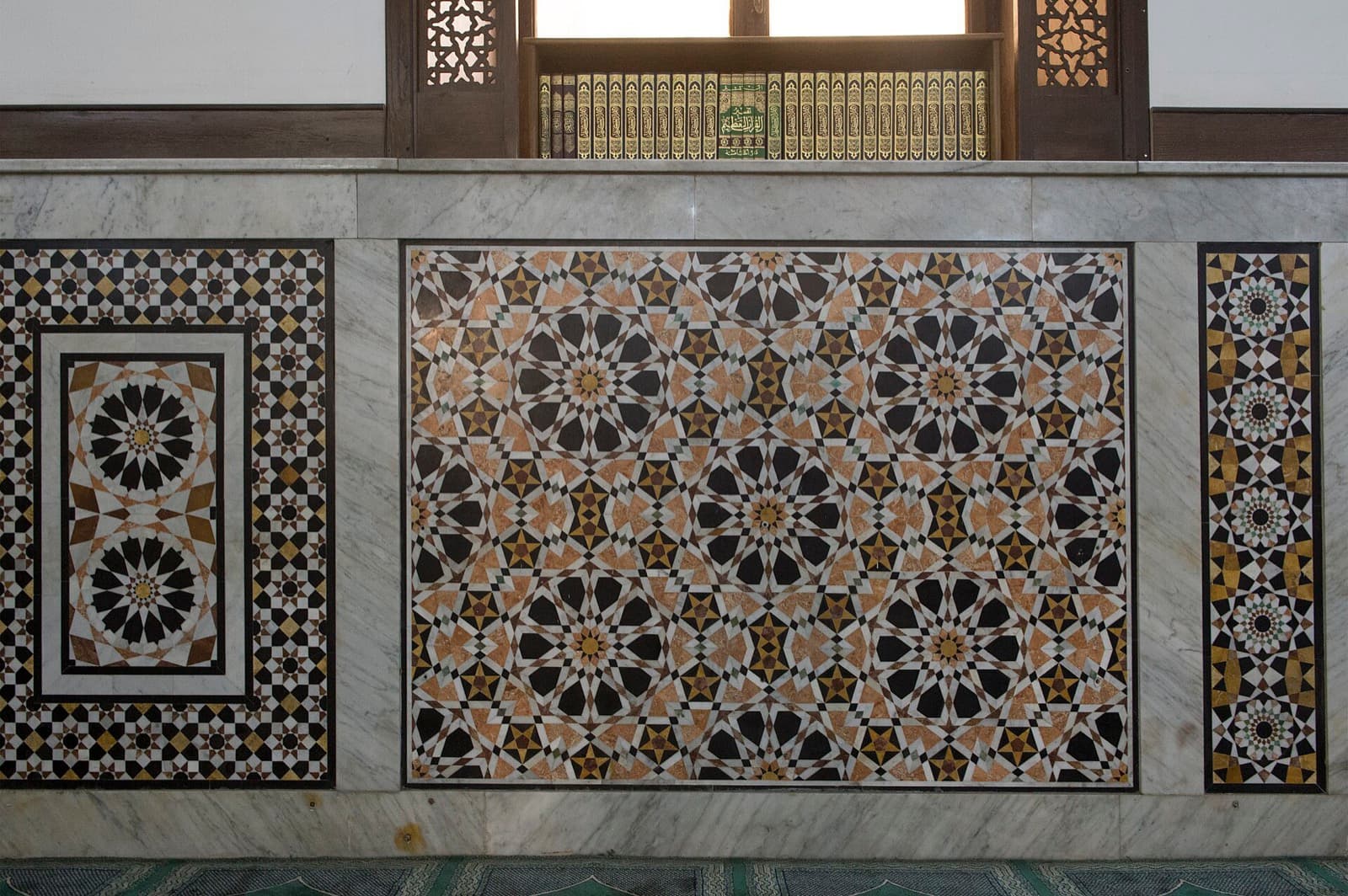
The Grand Husseini Mosque: The Door Into Downtown Amman's Al-Balad
The Al-Kalha Stairs: Amman's Roads Before the Roads
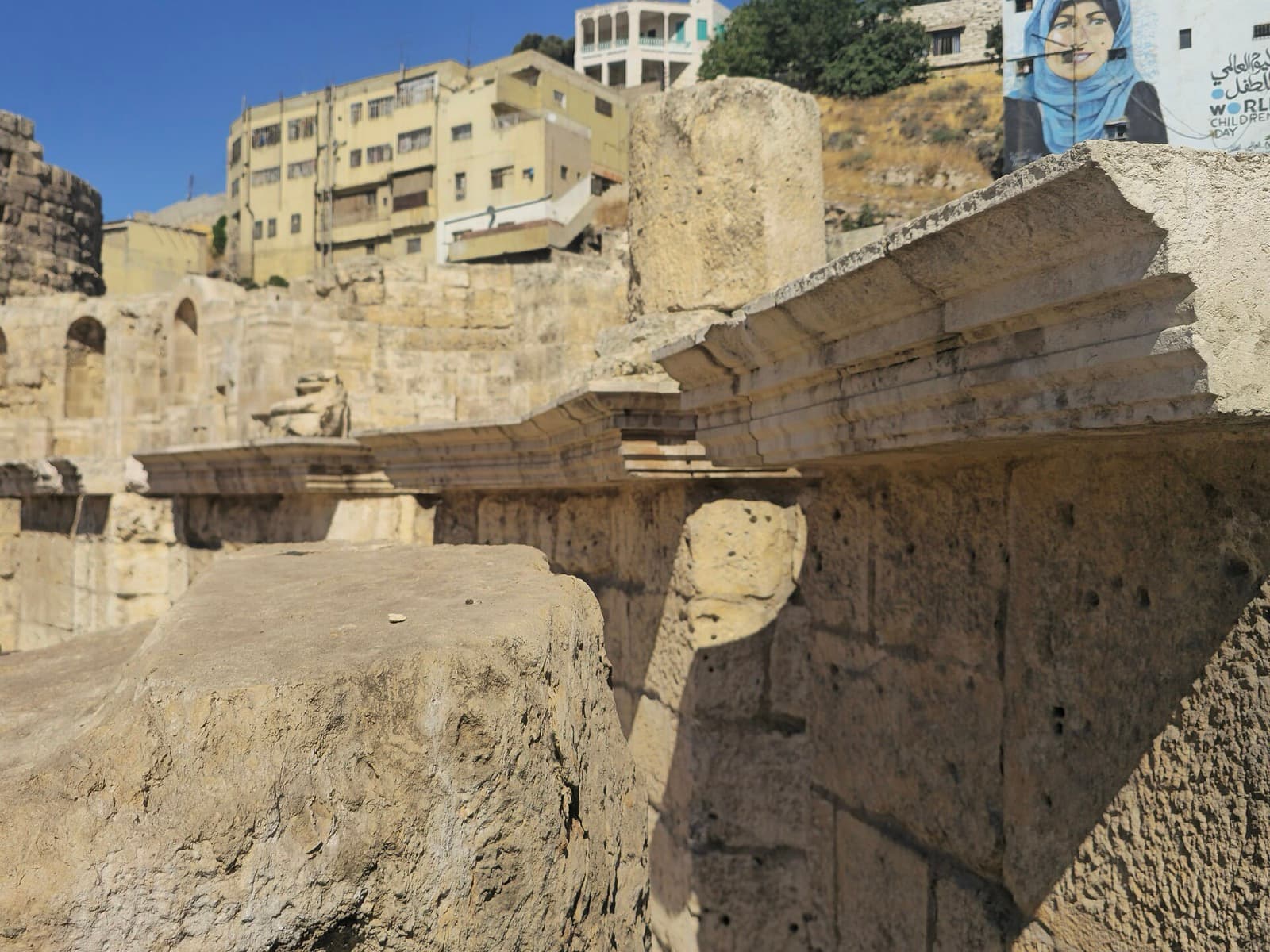
The Roman Nymphaeum of Amman: A Marooned Fountain in the Souk