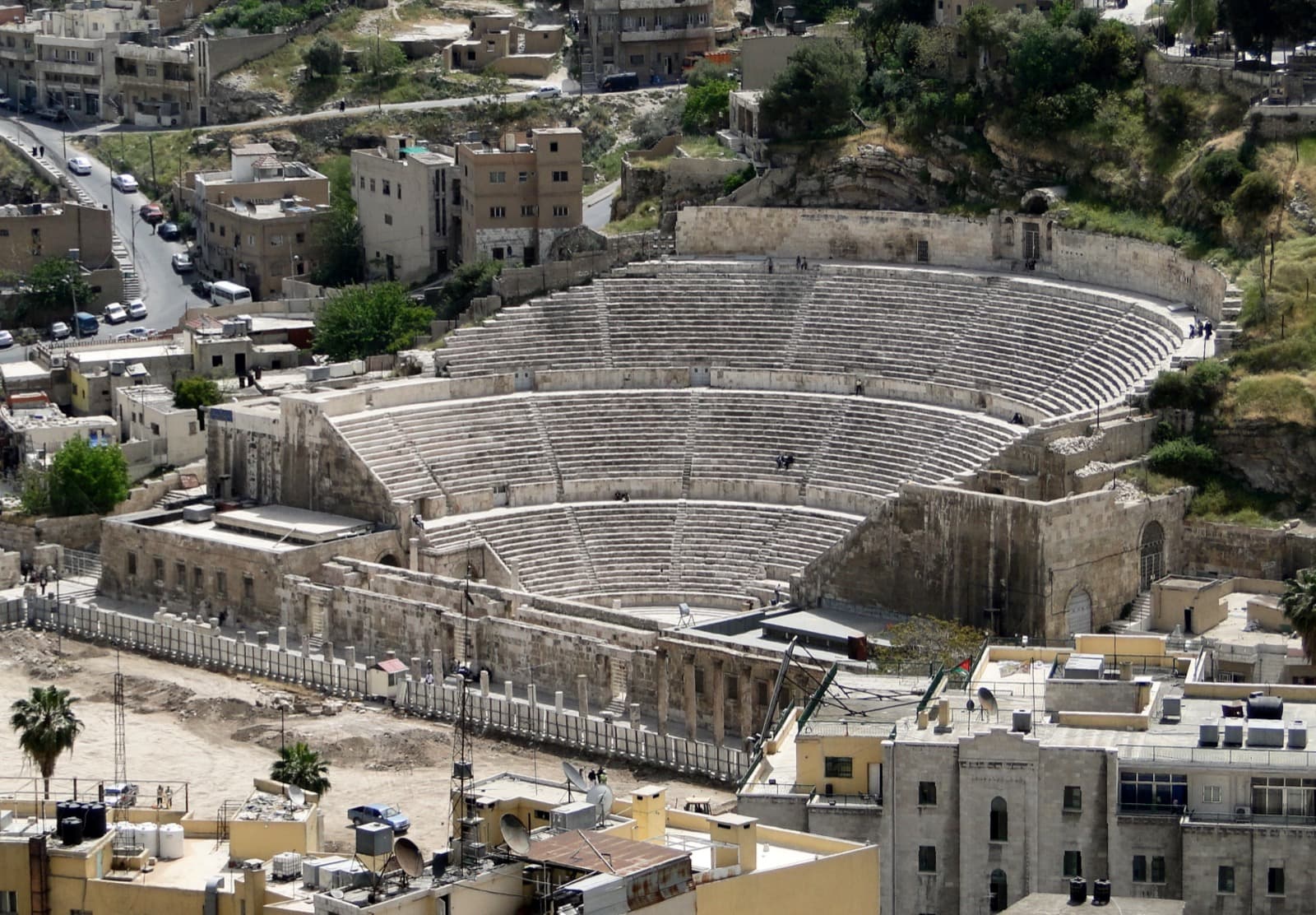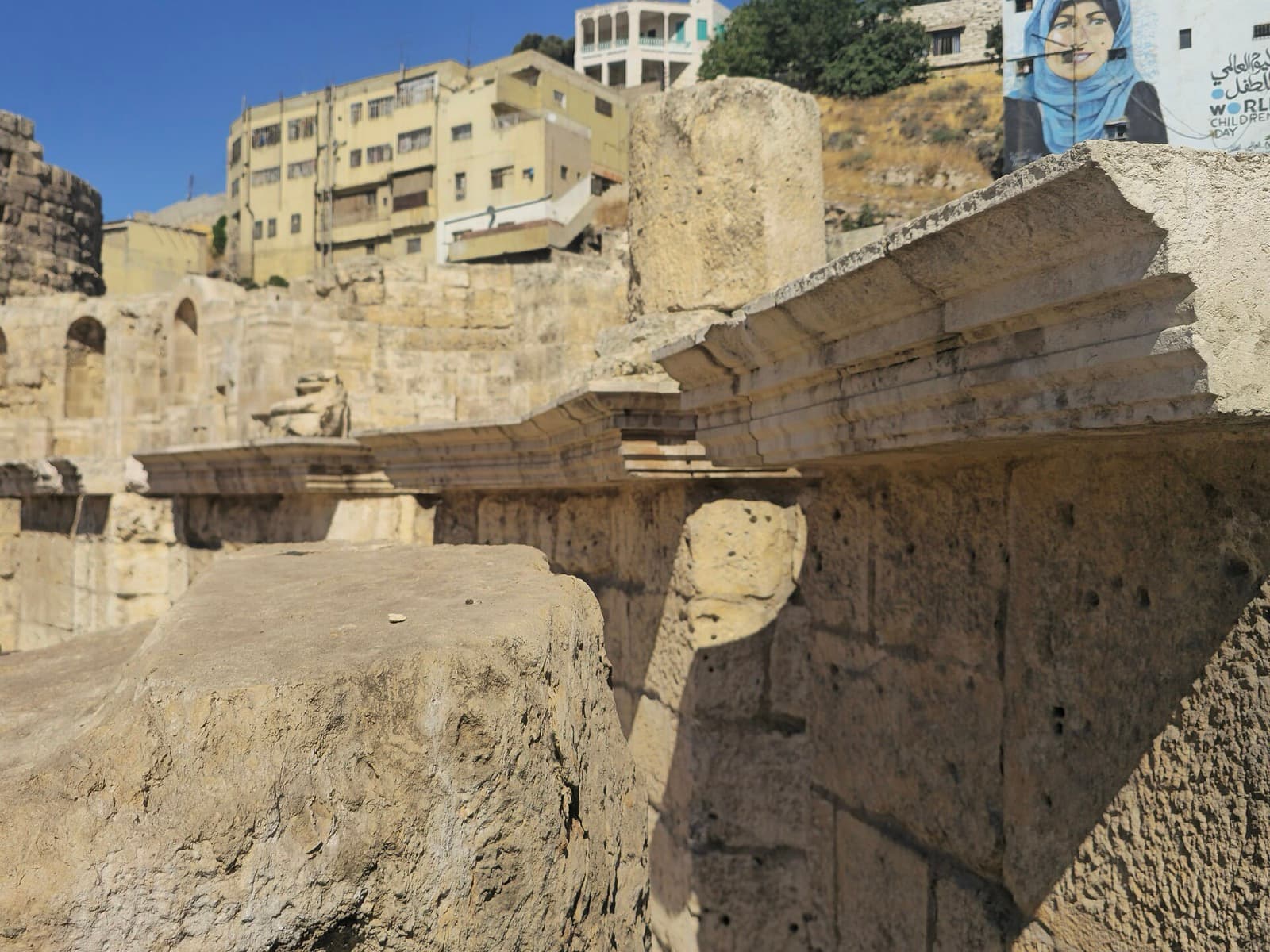
The Roman Nymphaeum of Amman is a monumental public fountain of ancient Philadelphia, marooned and half-recovered in the middle of the modern downtown souk. Stand in front of it on Quraysh Street and it takes a moment to register what you are seeing, because the working market crowds right up to the carved stone, and the traffic and shopfronts leave the Roman city almost no breathing room. That crowding is the whole point. Read the fountain slowly and the ancient town rises up under the ordinary one, which is exactly what the rest of Al-Balad keeps doing.
What you are actually looking at
A nymphaeum is a grand fountain built in honor of the water nymphs, and this one belonged to a city the Romans called Philadelphia, one of the cities of the Decapolis. The record dates it to the second century, to the end of the second century. So the stone in front of you is roughly eighteen hundred years old, older than almost anything else you will pass on this walk except the layers hidden beneath the mosque a few lanes away.
To read the ruin properly, picture it whole. It was a half-octagonal building, symmetrical, faced with carved stone and Corinthian columns. Its upper level opened into deep apses, roughly twelve meters high, set with two rows of niches that once held statues, and a columned gallery ran across the front. What survives now is a partly recovered fragment of that, so the trick when you are standing there is to mentally rebuild the missing height and the vanished statues, and to imagine the whole facade dressed and gleaming rather than eroded and open to the sky.
The thing to understand: this was about water
Hear a stop from this walk
The Nymphaeum: The Roman Fountain in the Souk
Below all that architecture, there was water, and that is the single idea to carry away from this stop. The pool held about six hundred square meters and was roughly three meters deep, refilled continuously, fed by the springs and streams that watered the ancient town. That is a serious body of water in a dry country, and it was not decorative in a trivial sense. A nymphaeum was a civic statement about a city's command of its own water supply, put on display at the busiest point in town.
And it genuinely was the busiest point. This was where the Roman city's main streets met, near where its water gathered, so the fountain sat at a true crossroads of both traffic and springs. When you look at how the modern souk still funnels people past this spot, you are watching the same logic play out that put the fountain here in the first place. The geography that made this a Roman crossroads is the same geography that made it a market crossroads. The city changed languages and religions and rulers, but the water and the streets stayed put.
Lost, then found again
For a long time the Nymphaeum lay buried and forgotten under the growing town. That is worth pausing on, because it explains why the ruin looks the way it does, hemmed in and half-excavated rather than cleared and landscaped like a formal archaeological park. The modern downtown grew up over and around it before anyone treated it as a monument to protect.
A restoration around twenty fifteen changed that. It was funded by the United States embassy and carried out with Jordanian university archaeology students, who cleaned the monument stone by stone and replaced the worst of the eroded blocks. So what you see today is a deliberately recovered ruin, a compromise between the ancient fountain and the living city that had swallowed it. That compromise is honest in a way a fully cleared site would not be. The market did not politely retreat; the fountain was recovered inside the market, which is a truer picture of how history actually sits in a place people never stopped using.
How to read it standing there
There is no ticket and no one hurrying you, and that is the quiet luxury of arriving on your own. You can stand as long as you like, and you should, because the Nymphaeum rewards patience more than a photograph. Give yourself a minute to separate the Roman stone from the modern shopfronts pressing against it. Find the apses and the niches. Register the depth of the missing pool. Then, and this is the part a rushed visit misses entirely, listen. The sound of the souk around you is not a distraction from the ruin. It is the continuation of the same crossroads that the fountain was built to serve.
This is why doing Al-Balad at your own pace pays off so plainly here. A group tour would march you past the Nymphaeum in a couple of minutes on its way to the next checkbox, and you would leave with a photo and no sense of what the thing meant. Alone, you set the rhythm. You can let the Roman city surface slowly, then carry that way of seeing into the rest of the walk, where the same trick keeps working: an early Islamic mosque built over a Byzantine cathedral, a street where the modern capital was born, lanes of gold and spice piled on top of all that depth.
Walk it yourself
The Nymphaeum is stop one of a six-stop, roughly one-kilometer loop through the old downtown, all on flat lanes, all on foot, no taxi to arrange. From here the route runs to the pink-and-white Grand Husseini Mosque at the crossroads, along the gold souk where wedding gold is still weighed out by the gram, into the spice and produce lanes thick with zaatar and cardamom, out onto King Faisal Street where Jordan's independence was declared, and finally into a hushed restored salon that remembers the small town Amman was a century ago.
If you want to see how the Nymphaeum fits into that larger picture, the self-guided Amman walking tours collection lays out the downtown route and the others, and the Amman city page gathers everything worth reading before you go. Arrive at the fountain on Quraysh Street, give it the time the market never will, and let the Roman city rise up under the modern one.
Sources
- Nymphaeum (Amman), Wikipedia. Encyclopedia entry documenting the second-century date, the six-hundred-square-meter pool three meters deep and continuously refilled, the location at the crossing of Quraysh and Ibn al-Atheer streets, and the September twenty fifteen restoration funded by the United States embassy with University of Jordan, Petra University and Hashemite University archaeology students.
- Roman Nymphaeum, Art Destination Jordan (universes.art). Architectural record of the half-octagonal, symmetrical form, the three apses with two rows of niches for statues, the roughly twelve-meter apse height, and the columned gallery of Corinthian order.
- Philadelphia (Amman), Wikipedia. Background on Amman's Greco-Roman name and its place among the cities of the Decapolis.
- Roamer tour, "Downtown Amman: The Living Heart of Al-Balad." Fact-audited stop transcript for the Nymphaeum and the wider six-stop Al-Balad route.
Ready to experience it?
Downtown Amman: The Living Heart of Al-Balad
90 min · 1 km · easy
More from Amman
Explore more at your own pace.
Amman Travel Guide: Days, Season, Getting Around, Safety, and Budget
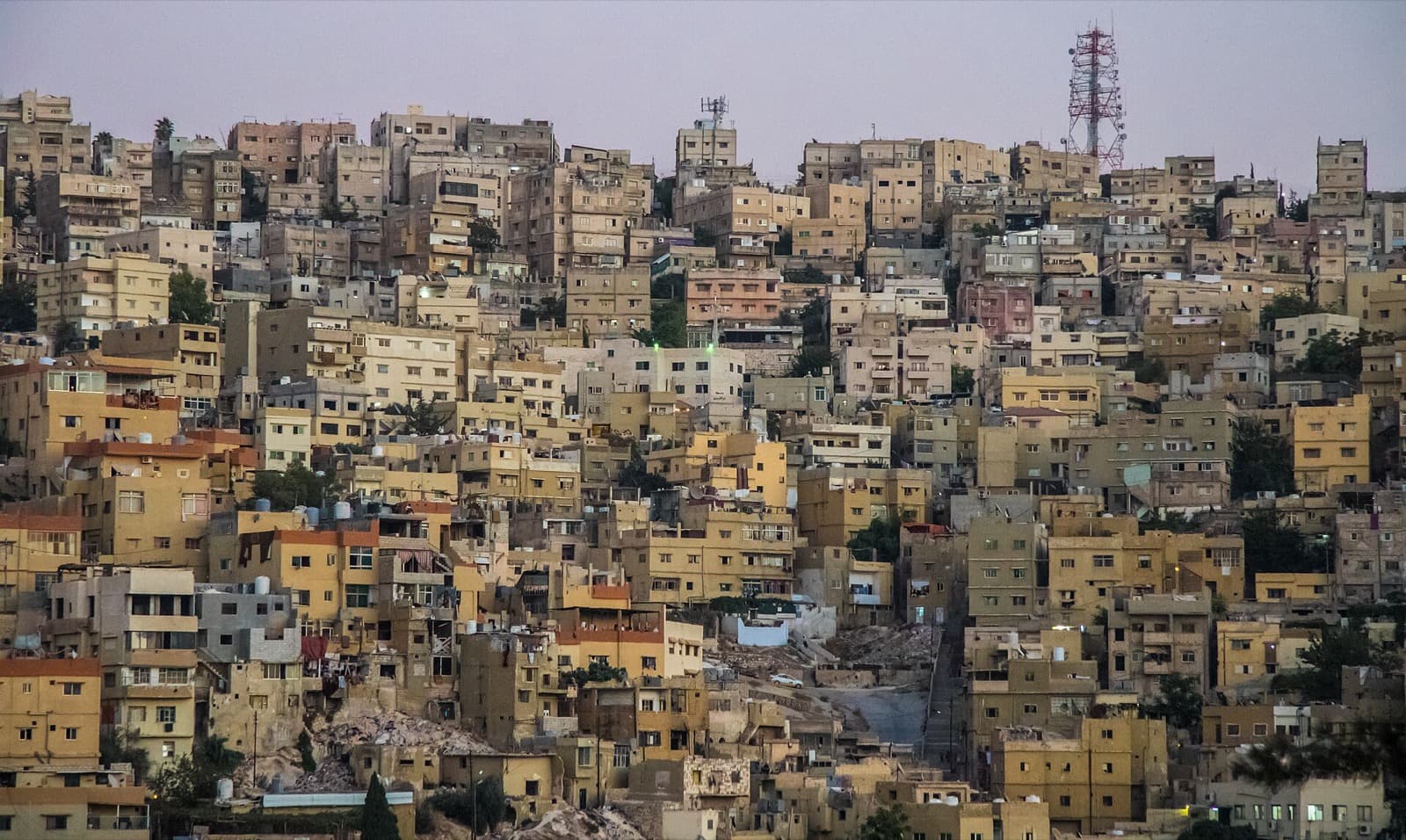
Rainbow Street and the Hill Where Amman Grew Up
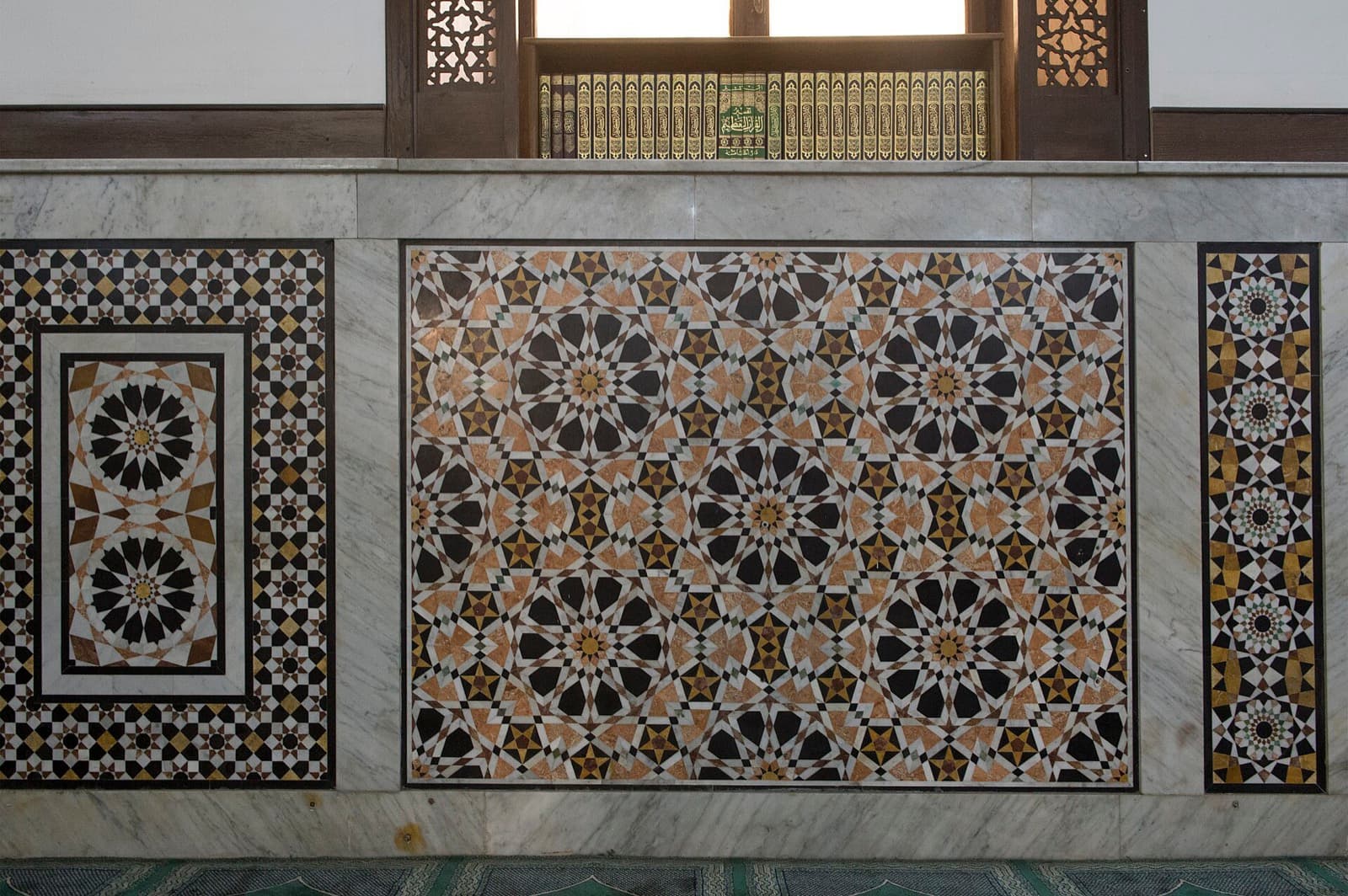
The Grand Husseini Mosque: The Door Into Downtown Amman's Al-Balad
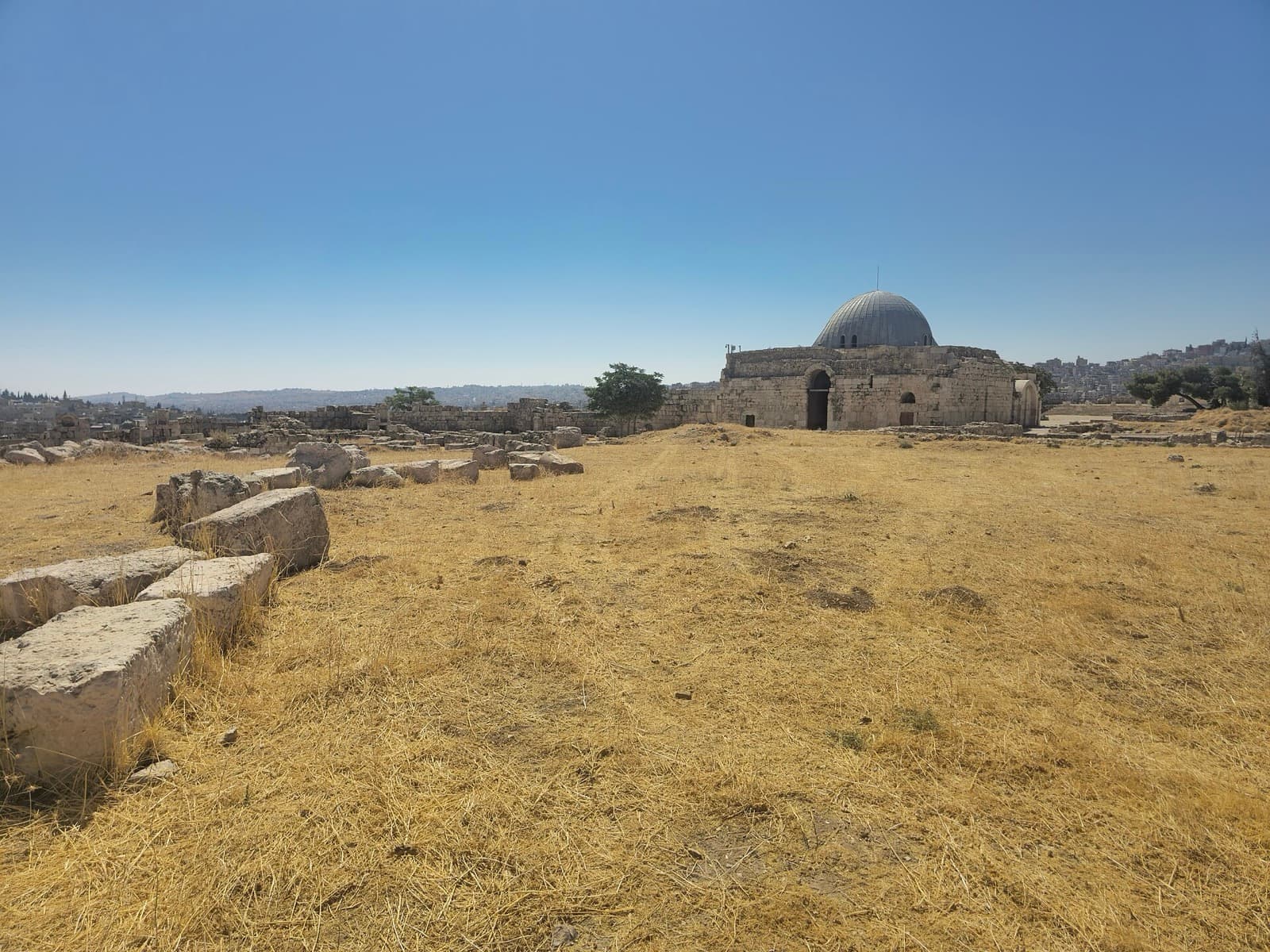
The Umayyad Palace on Amman's Citadel: A Caliph's Court on a Roman Hill
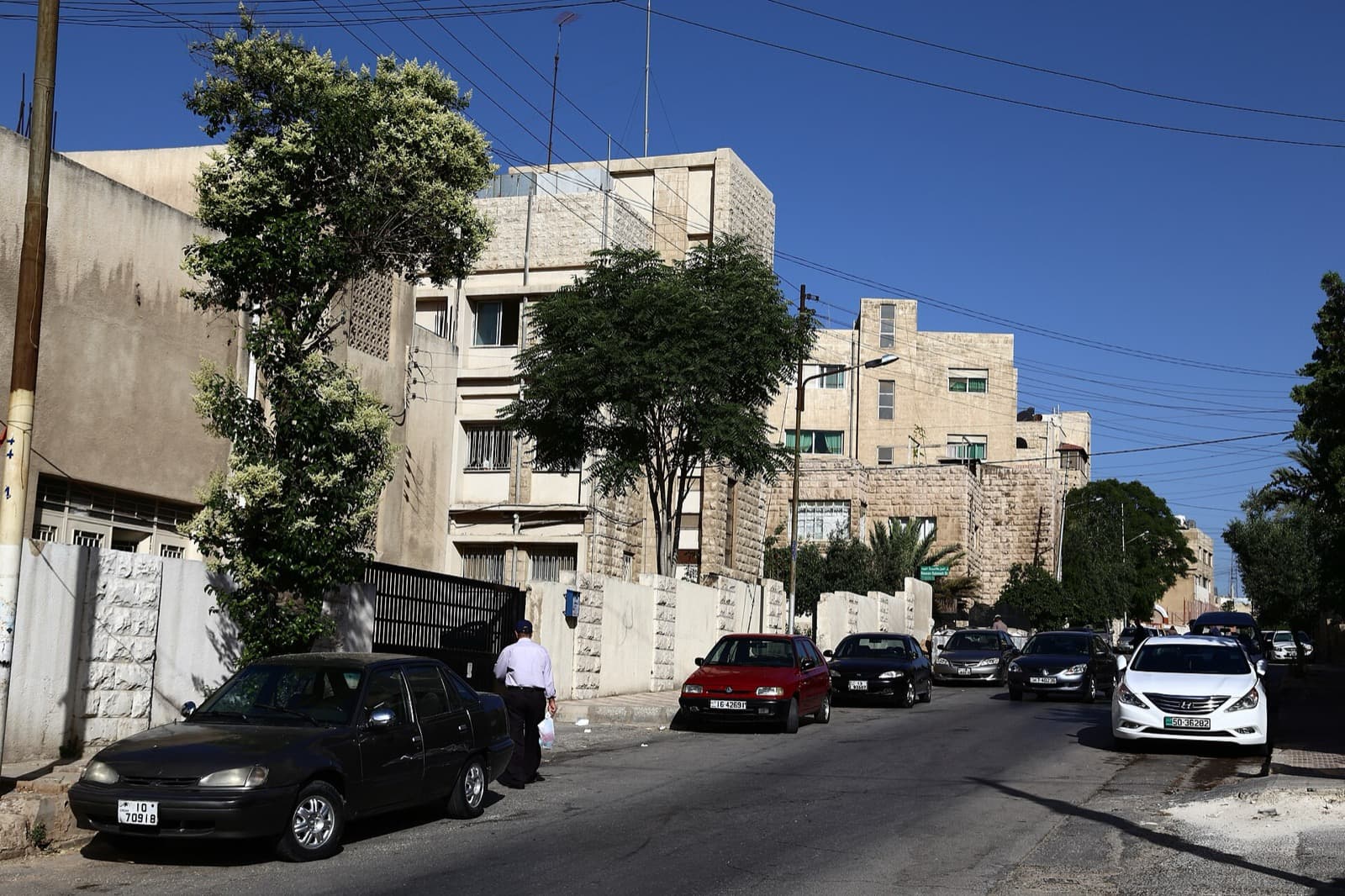
The Al-Kalha Stairs: Amman's Roads Before the Roads