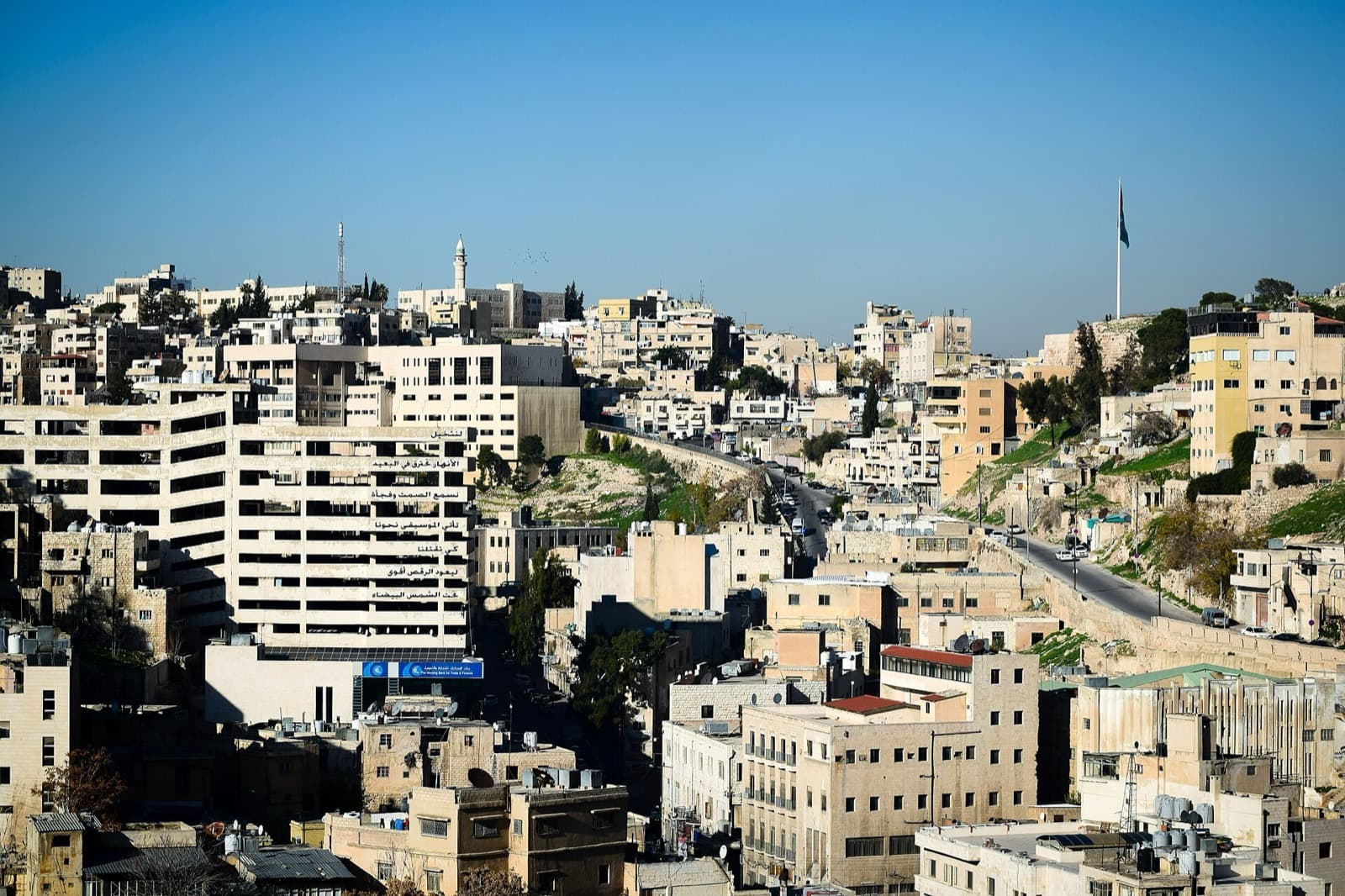
Below Amman's ancient hills, the downtown called Al-Balad crowds a marooned Roman fountain, a pink-and-white mosque, and lanes of gold, spice and coffee into one loud, living market. Read it at your own pace, market by market.
Start · The Nymphaeum: The Roman Fountain in the Souk
DirectionsStops
- 1
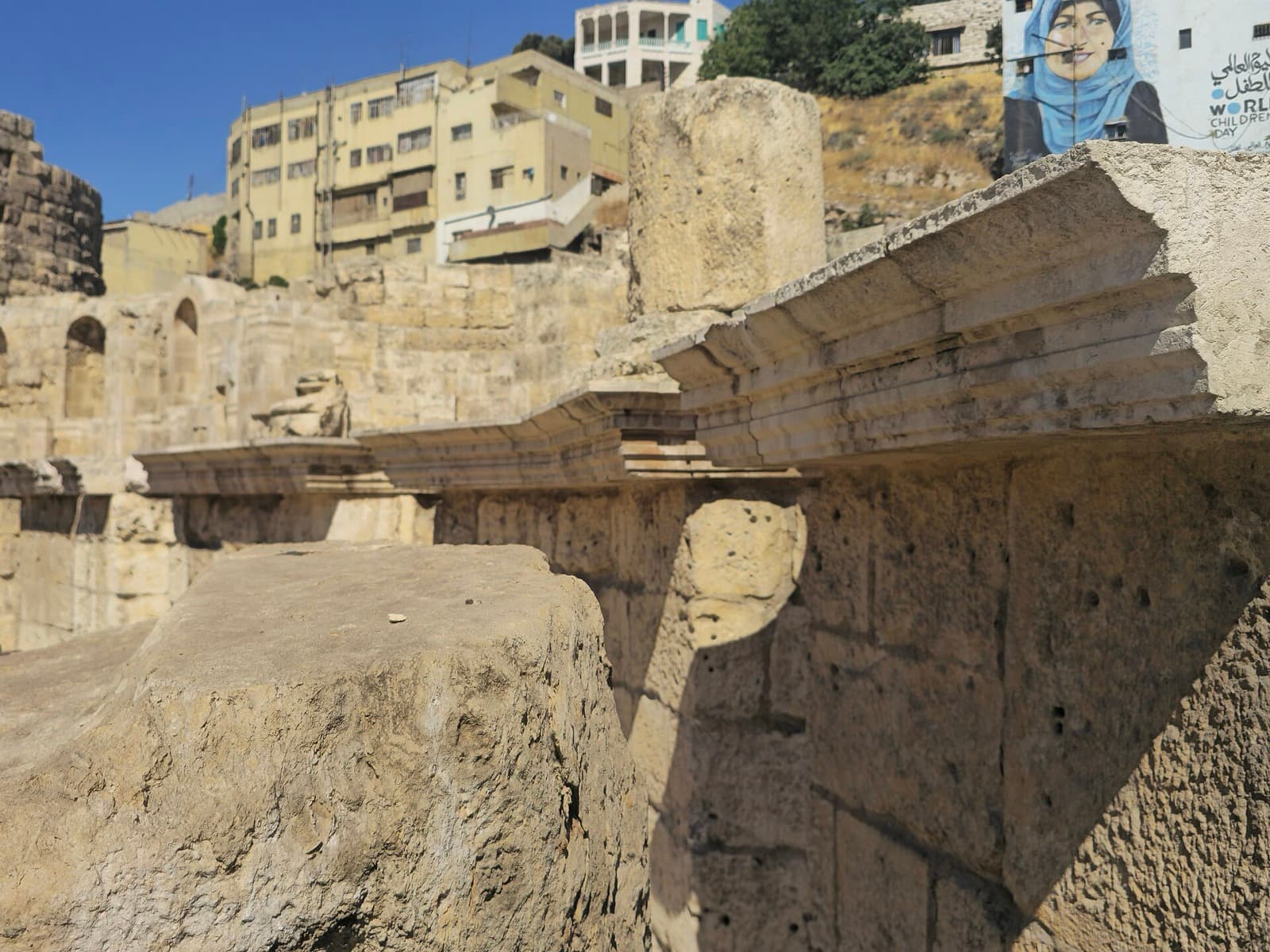
The Nymphaeum: The Roman Fountain in the Souk
A monumental Roman public fountain of ancient Philadelphia, from the second century, marooned and half-excavated in the middle of the modern downtown.
- 2
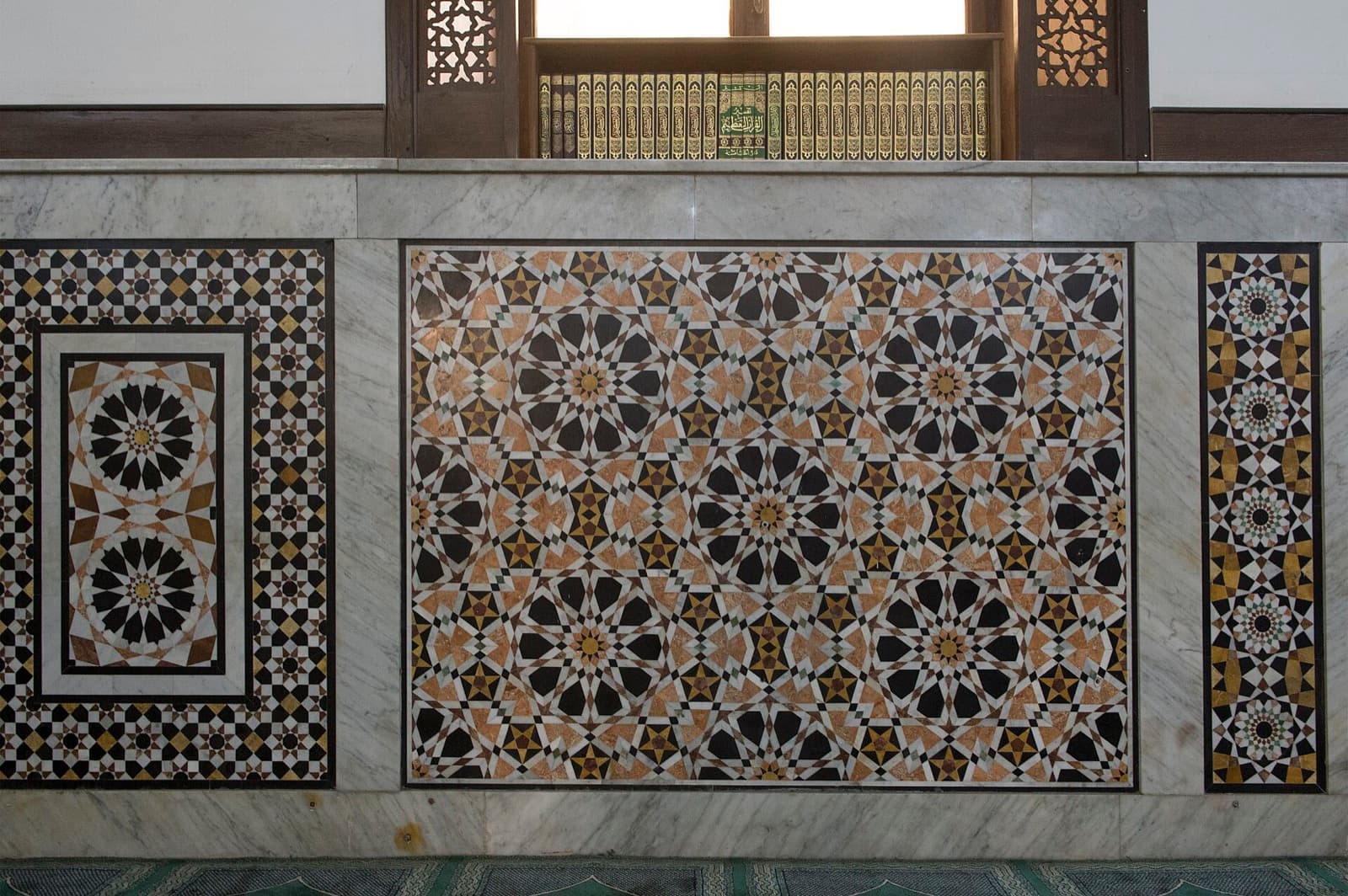
The Grand Husseini Mosque: The Pink Mosque at the Crossroads
The historic congregational Friday mosque of downtown, in pink-and-white Ottoman-style stone, standing over far older Islamic and Byzantine layers.
- 3
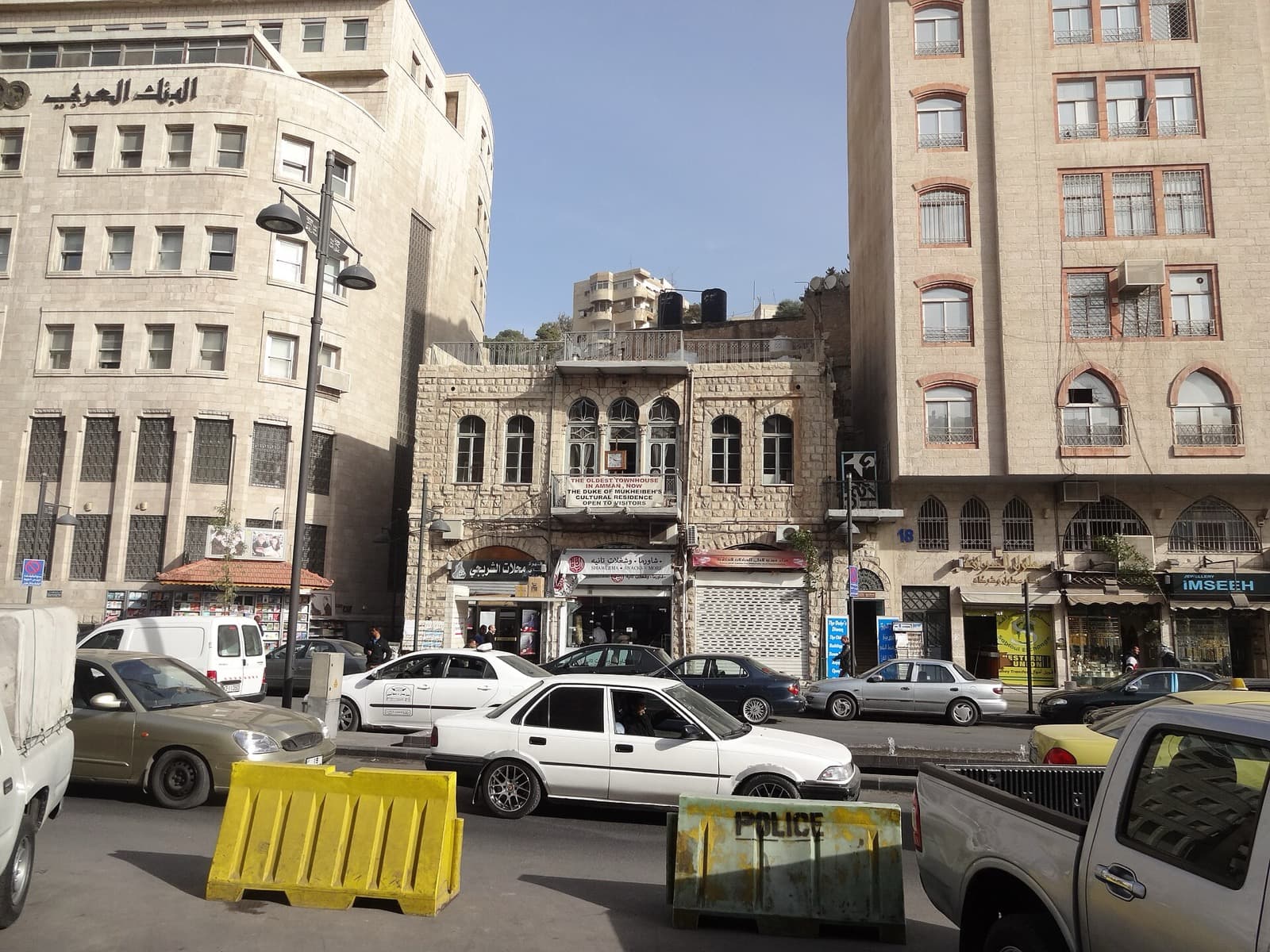
The Gold Souk: The Street Where a Marriage Is Weighed Out
The downtown's traditional jewellers' market, a lane of dozens of shops where Ammanis buy wedding and dowry gold, weighed out on the scales.
- 4
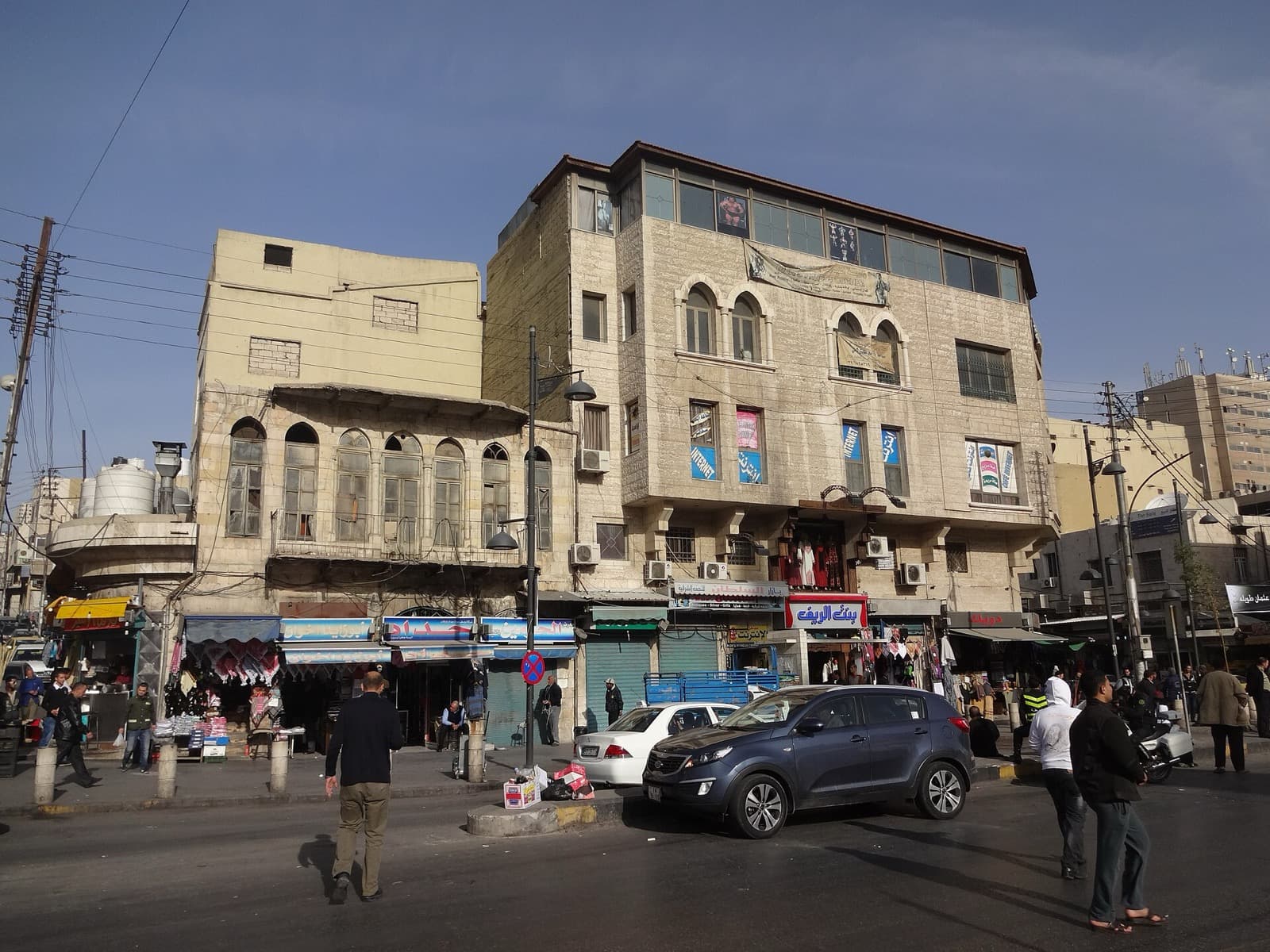
The Spice and Produce Souks: Lanes of Zaatar and Cardamom
The oldest central food markets of Al-Balad, where spice and herb stalls pile up zaatar, sumac and cardamom beside pyramids of produce.
- 5
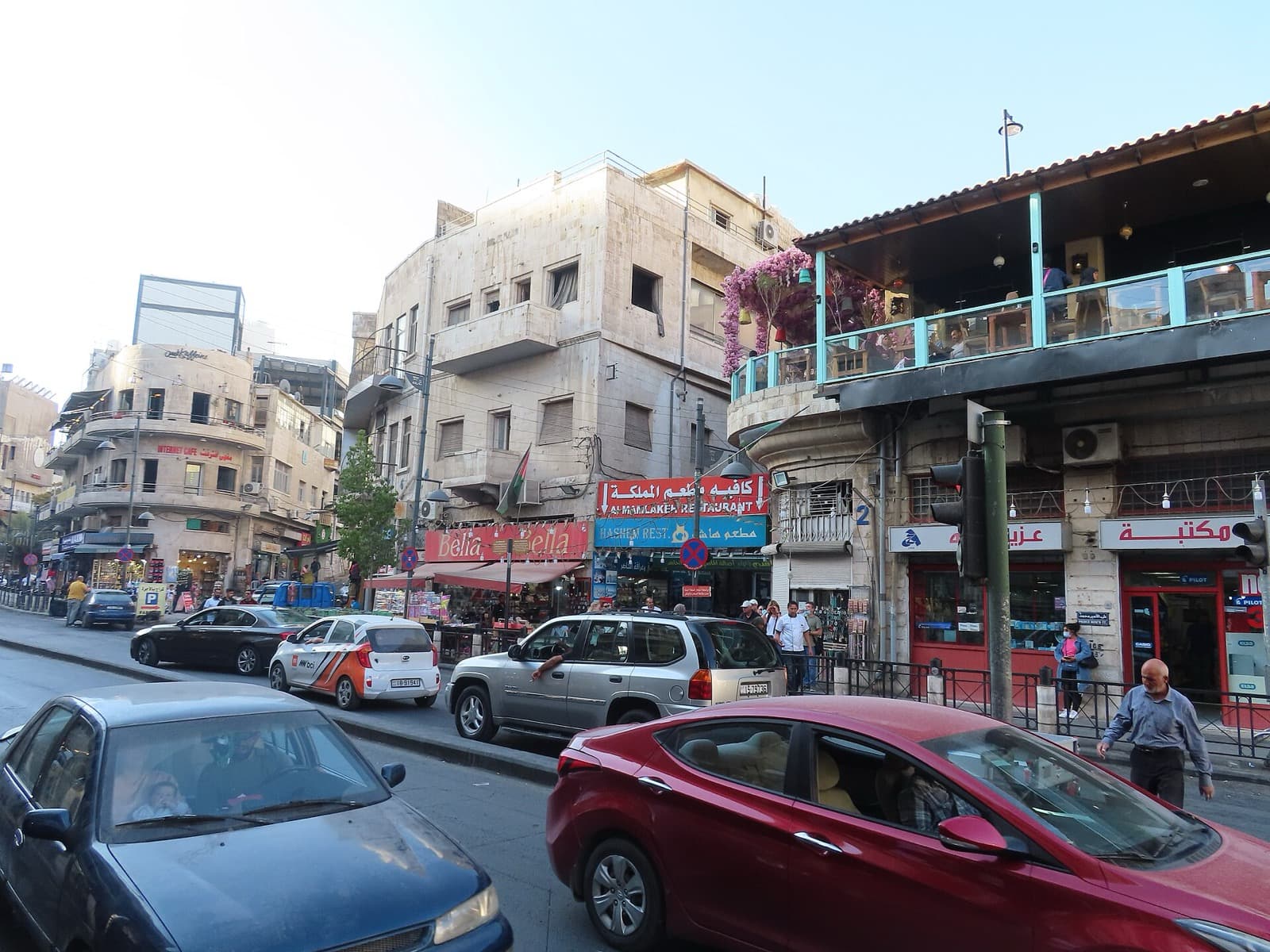
King Faisal Street: The Street Where the Capital Was Born
The historic spine of early modern downtown, once Municipality Street, where the young capital gathered its first hotels, cinemas and cafes.
- 6
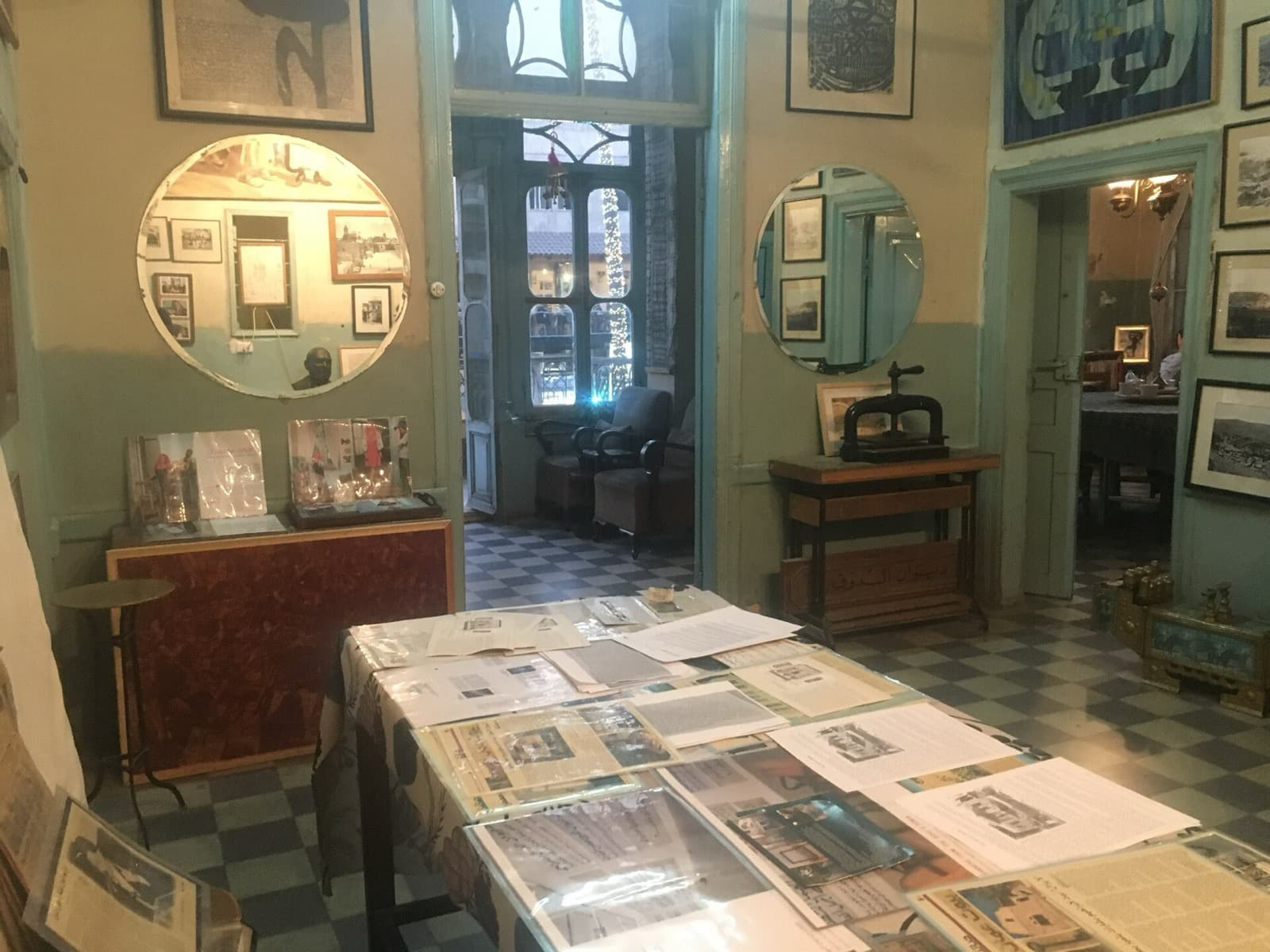
Duke's Diwan: The Salon That Remembers the Town
A restored nineteen twenty-four stone townhouse at twelve King Faisal Street, once Amman's first post office, now a free cultural salon.
Details
Best Time to Visit
Mid-morning to early afternoon on a weekday, when the souks are fully open and busy but not yet at their most crowded. The downtown is loud and generous in daylight; spice and gold windows and produce lanes are all trading. Avoid the Friday midday prayer window if you want the Grand Husseini Mosque plaza calmer, since Friday and prayer times change the whole rhythm of Al-Balad. Late afternoon light is lovely on the pink mosque and the old stone shopfronts of King Faisal Street.
Pro Tips
- •The six stops are close together and all on foot, so no taxi is needed for this walk. Wear comfortable shoes for flat but uneven market lanes and worn stone.
- •Carry small cash in Jordanian dinars. The gold, spice and produce souks are cash-friendly, and small notes make buying a bag of zaatar or a coffee easy.
- •At the gold and spice souks there is no pressure to buy. Browse the whole run of windows or lanes at your own pace, then step out; a friendly no is entirely normal.
- •Kunafa, the downtown's syrupy cheese sweet, and cardamom coffee are best treated as living traditions to sample as you go rather than a single famous shop to hunt down.
- •Duke's Diwan keeps informal hours, so it may or may not be open when you arrive. Treat finding it open as a bonus rather than a fixed booking.
- •The market lanes are dense and can feel loud and close. If it gets to be too much, step out to King Faisal Street to breathe and rejoin the route when you are ready.
Safety & Precautions
- •The Grand Husseini Mosque is a working congregational mosque. Dress modestly, read it chiefly from the exterior and plaza, and defer to prayer times; any interior look is at the mosque's discretion and only outside prayer.
- •Friday and the daily prayer times change the pace of the whole downtown, with some shops shut and the mosque plaza busiest at Friday midday. Plan your timing around this.
- •The souks are crowded and full of vendors and the natural pull of a busy market. Keep valuables secure and close, stay aware in the tightest lanes, and set your own pace rather than being steered.
- •Summer sun can be strong even in the shaded lanes. Carry water, and note that market stone and steps can be uneven, so watch your footing.
- •Expect confident vendors, occasional unofficial guides, and prices quoted well above the going rate, especially for gold and souvenirs. A friendly, firm no is enough, there is no obligation to buy or to hire anyone, and comparing a few shops keeps you on fair ground. For taxis to or from downtown, use the meter or agree the fare before you get in, or take a ride-hailing app so the price is fixed.
Travel advisory: Reconsider Travel (Level 3).
Gallery
Related Reading
Go deeper on what you'll see, hear, and walk through.
Overview
Amman Travel Guide: Days, Season, Getting Around, Safety, and Budget
7 min

Overview
Best Self-Guided Walking Tours in Amman (2026)
3 min

Overview
One Day in Amman: A Walkable Morning-to-Evening Itinerary
7 min
Thematic
Amman in Layers: How Three Hills Hold One City's Long Life
6 min
Thematic
Best Culture Walking Tours in Amman (2026)
2 min
Companion
The Grand Husseini Mosque: The Door Into Downtown Amman's Al-Balad
7 min
Deep dive
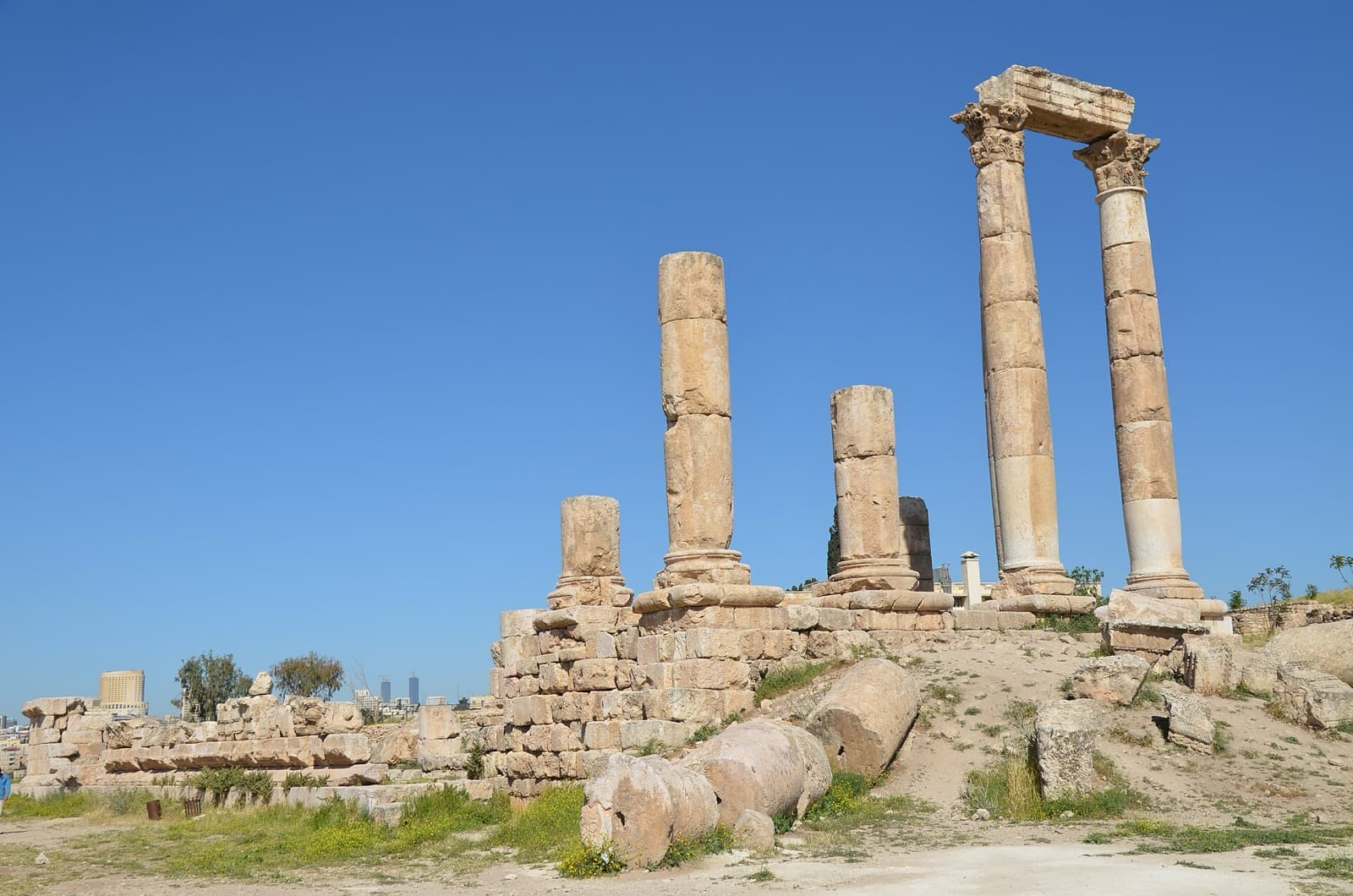
The Roman Nymphaeum of Amman: A Marooned Fountain in the Souk
6 min
Read
What to Eat in Amman: Dishes, Origins, and How to Order
7 min
Read the walk
The full story of Downtown Amman: The Living Heart of Al-Balad, in words. Prefer to listen? Play it narrated, from home or on location.
Introduction
Al-Balad is the old downtown of Amman, the loud and generous heart of Jordan's capital, and this walk reads it at your own pace across six stops over about ninety minutes and roughly one kilometre of easy, flat lanes. Underneath the ordinary working souk lies a startling depth of history: a grand Roman fountain from the city once called Philadelphia, an early Islamic mosque built over a Byzantine cathedral, and a street where the modern capital was really born. Above it, and around you, is a living market where a wedding's gold is still weighed out today, sacks of zaatar and cardamom perfume the air, and coffee roasts beside trays of syrupy sweets. That density is exactly why doing this alone pays off. A group tour would march you through in twenty minutes. On your own quiet map you set the rhythm, lingering at the gold windows, wandering into the spice lanes, sitting with a coffee, skipping a stop if you like. No guide steering you, no schedule, no tip pressure. The six stops sit close together, all on foot, so there is no taxi to arrange and no van waiting. You will move from a marooned Roman fountain to the pink mosque at the crossroads, along the street of gold and into the spice and produce souks, then out onto King Faisal Street and finally into a quiet restored salon that still remembers the small town Amman was a century ago. When you arrive at the Nymphaeum on Quraysh Street, begin with stop one.
1. The Nymphaeum: The Roman Fountain in the Souk
Standing here, it takes a moment to understand what you are looking at, because the modern souk crowds right up to it. This is the Nymphaeum, a monumental Roman public fountain, and it belongs to a city the Romans called Philadelphia, one of the cities of the Decapolis. The record dates it to the second century, to the end of the second century, and its name tells you its purpose: a nymphaeum is a grand fountain built in honour of the water nymphs. Picture it whole. A half-octagonal building, symmetrical, faced with carved stone and Corinthian columns, its upper level opening into deep apses, roughly twelve metres high, set with two rows of niches that once held statues, a columned gallery running across the front. And below all that, water. The pool held about six hundred square metres, three metres deep, refilled continuously, fed by the springs and streams that watered the ancient town. This was where the Roman city's main streets met, near where its water gathered, so the fountain sat at a true crossroads of both traffic and springs. For a long time it lay buried and forgotten under the growing town. A restoration around twenty fifteen, funded by the United States embassy and worked by Jordanian archaeology students, cleaned it stone by stone and replaced the worst of the eroded blocks, so what you see now is a partly recovered ruin hemmed in by traffic and shopfronts. Take your time with it. There is no ticket and no one hurrying you, and that is the quiet luxury of arriving alone: you can stand as long as you like and let the Roman city rise up under the modern one, which is exactly what the rest of this walk will keep doing.
2. The Grand Husseini Mosque: The Pink Mosque at the Crossroads
A short way on, the lanes open at a crossroads and there it is, unmistakable in pink-and-white stone: the Grand Husseini Mosque, also called the King Hussein Mosque. This is the historic congregational Friday mosque of the downtown, and for about a century it has been one of the great gathering points of Al-Balad, a place people meet as much as pray. The building you see was ordered rebuilt by Abdullah the First, then Emir of Transjordan, and completed in nineteen twenty-four, in an Ottoman style, its warm pink stone banded with white. He named it for his father, Sharif Hussein bin Ali, who led the Great Arab Revolt, and it is remembered as one of the young Kingdom's first major building projects, coming before the big markets and the hillside villas. Now the layers. The mosque stands on the site of a far older one. Tradition holds that a mosque of the seventh century stood here, said to date to around the year six hundred and forty and attributed to the caliph Umar ibn al-Khattab, though that attribution is tradition rather than settled archaeology, so hold it lightly. Beneath even that, the record notes a Byzantine cathedral. So this single spot marks the turn from Roman Amman to Islamic Amman, cathedral to mosque to mosque, stacked in place. This is a working house of worship, so read it chiefly from the busy plaza and the exterior. If you wish to look inside, that is at the mosque's discretion and only outside prayer times, and modest dress is expected of everyone. There is no rush and no group forming up: watch the crossroads for a while, the way the whole downtown seems to flow past its steps.
3. The Gold Souk: The Street Where a Marriage Is Weighed Out
Turn off King Faisal Street and the light changes, because the windows here are full of gold. This is the gold souk, known in the downtown as Souq al-Dahab, the gold market, dahab being the word for gold. The old jewellers' trade also gives it the name Souk al-Sagha, from the…
Full narration for this stop unlocks with the tour.
4. The Spice and Produce Souks: Lanes of Zaatar and Cardamom
Now follow your nose, because this is the sensory heart of the walk. Al-Balad, whose name simply means the centre of the town, the old town, holds Amman's oldest central markets, and among them are the food lanes: the produce souks and the spice and herb stalls. The smell…
Full narration for this stop unlocks with the tour.
5. King Faisal Street: The Street Where the Capital Was Born
Step out onto King Faisal Street and you are standing on the spine of the modern city. This is where the capital was really born. It began as Municipality Street, and the record marks its start with the first municipal building, put up in nineteen oh nine. When Amman became the…
Full narration for this stop unlocks with the tour.
6. Duke's Diwan: The Salon That Remembers the Town
The walk resolves quietly, at number twelve King Faisal Street, in a building that has quietly outlived almost everything around it. This is Duke's Diwan, and it was built in nineteen twenty-four by Abdul Rahman Madi, which makes it one of the city's oldest buildings and a rare…
Full narration for this stop unlocks with the tour.