Long before roads climbed the seven hills of Amman, people did, and they did it on stone stairs. The Al-Kalha Stairs are the most famous survivor of that older city: a steep public stairway that predates the ridge roads, built in the nineteen twenties when Amman was still a small town, and now painted bright with murals and lined with cafes and cultural spaces. On the Rainbow Street and Jabal Amman walk they stand as the emblem of an idea most visitors miss entirely. Amman was a pedestrian city first, stitched together vertically by flights of steps, and the stairs are the clearest physical record of how ordinary people actually moved between the valley market below and the hillside neighborhoods above.
What the Al-Kalha Stairs actually are
They are a public stairway, not a monument, and that distinction is the whole point. Across the historic quarter of Amman, long flights of stone steps drop steeply from the ridgelines toward the valley floor. Before cars and paved circles arrived, these staircases were the roads. They were how a family carried the day's shopping up from the downtown souk, how children got to school, how neighbors on one hill reached neighbors on the next. The Al-Kalha Stairs are the best known of this whole class of hillside stairway, a working shortcut that happened to become a landmark.
There is one precise thing to understand while standing in front of them, and it corrects a common assumption. The Al-Kalha Stairs do not actually descend from Rainbow Street itself. They connect the downtown, along King Hussein Street, with Jabal al-Weibdeh, the hill immediately next to Jabal Amman. According to the Center for the Study of the Built Environment, which documents the stairway, they link King Hussein Street below to Nimr al-Idwan Street near Darat al-Funun, the well known arts center on Jabal al-Weibdeh. So the stairs belong to the same family of hillside staircases the tour follows, but they sit one hill over. On this walk they are the perfect representative of the type rather than a stop on Rainbow Street's own doorstep, and knowing that keeps your mental map of the city honest.
Where the name comes from
Hear a stop from this walk
The Craft Heritage of the Hill: Where Old Amman Keeps Its Handmade Things
The name has a small, human story behind it, and it is the kind of detail that turns a set of steps into a place. The Center for the Study of the Built Environment records that the stairway was originally called the al-Manha Stair, named after a family who lived in a house bordering the steps. Starting in the nineteen thirties, it took on the name it carries today, al-Kalha, after the al-Kalha Restaurant that once sat at the base of the stairs. The restaurant has since moved on, but the name stuck, which is how much of Amman works. Places here are remembered by the businesses, families, and gathering spots that once anchored them, long after the original reason has vanished. The circles that give Rainbow Street its addresses follow the same logic, numbered rather than named, informal rather than official.
Why the stairs matter now
The stairs have a second life today, and it is worth pausing over. Many of the old stairways of the hillside quarter have been reclaimed as public art and public space. Their steps and retaining walls are painted with bright, colorful murals by local street artists, some flights shaded by rows of hanging umbrellas. The Al-Kalha Stairs are now home to spaces for art and culture, with shops and small institutions along the climb. The Center for the Study of the Built Environment lists current tenants that include a nonprofit communal restaurant and a space called Jadal for Art and Culture, which gives you a sense of the register: not a tourist attraction dressed up for photographs, but a genuinely used piece of the city that people work in, eat in, and pass through every day.
That transformation carries a quiet argument about heritage. A staircase is infrastructure, the least glamorous thing a city builds. When Amman chose to keep, paint, and reactivate these particular steps rather than demolish or ignore them, it was preserving the everyday texture of the old town, the routes ordinary people walked, not just the grand limestone villas of merchants and officials. Standing at the top, you are looking at how the historic hill actually functioned as a place to live, measured in more than a hundred steps between one street and the next.
The one thing to understand standing here
If you take a single idea away from the Al-Kalha Stairs, let it be this: Amman is a vertical city, and it was walked before it was driven. The valley downtown, Al-Balad, sits low in a fold of the land, and the neighborhoods rose up the surrounding slopes. The only way to knit those two elevations together, for decades, was on foot, on stone. The stairs make that geography visible in a way no map or photograph does. Descend a flight, feel the pitch of it in your knees, and you understand the daily effort that shaped this city long before the numbered traffic circles turned the hilltops into an address system. The murals are the delightful surface. The gradient is the history.
You can experience the stairs however suits you. Pick your way down a long flight to feel how steeply the hill falls toward the valley, or simply stand at the top and take in the colors, the umbrellas, and the drop. There is no group hurrying you and no schedule but your own, which is exactly how a place like this rewards you.
Walk it yourself
The Al-Kalha Stairs are one stop on a wider hillside walk through old Amman, from the First Circle along the restored heritage spine of Rainbow Street, past century-old limestone villas, a terrace view across the valley to the ancient Citadel, and the craft houses where Bedouin and rural weaving is still made and sold. The full self-guided audio route lets you climb the ridge at your own unhurried pace, lingering at whichever facade, stairway, or viewpoint holds you. To plan the day, browse more Amman walking tours, and see what else is worth your feet in Amman.
Sources
- Center for the Study of the Built Environment, "Al-Kalha Stairs" (csbe.org): primary documentation of the stairway's 1920s construction, the al-Manha to al-Kalha name change from the 1930s, its King Hussein Street to Jabal al-Weibdeh connection, and current cultural tenants.
- Roamer tour transcript, "Rainbow Street: Old Amman on the First Circle": fact-audited walking narrative for the stairs and the surrounding Jabal Amman quarter.
- Wikipedia, "Jabal Amman": background on the seven hills of Amman, the hillside suburb's development after the nineteen twenties, and the numbered traffic circle address system.
- Wikipedia, "Rainbow Street": context on the heritage spine of Jabal Amman and its restored stone houses, cafes, and craft shops.
Ready to experience it?
Rainbow Street: Old Amman on the First Circle
90 min · 1.5 km · moderate
More from Amman
Explore more at your own pace.
Amman Travel Guide: Days, Season, Getting Around, Safety, and Budget
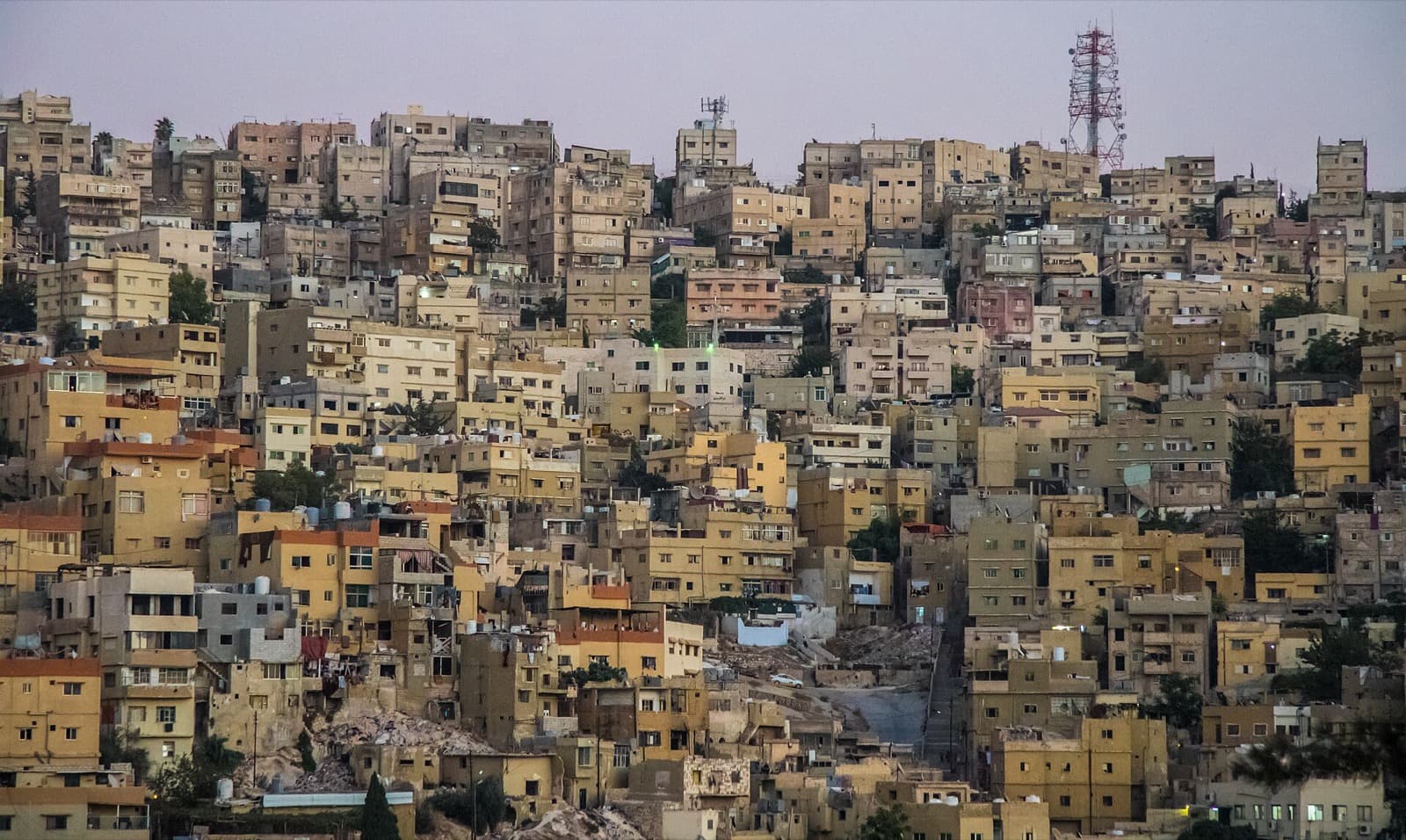
Rainbow Street and the Hill Where Amman Grew Up
The Grand Husseini Mosque: The Door Into Downtown Amman's Al-Balad
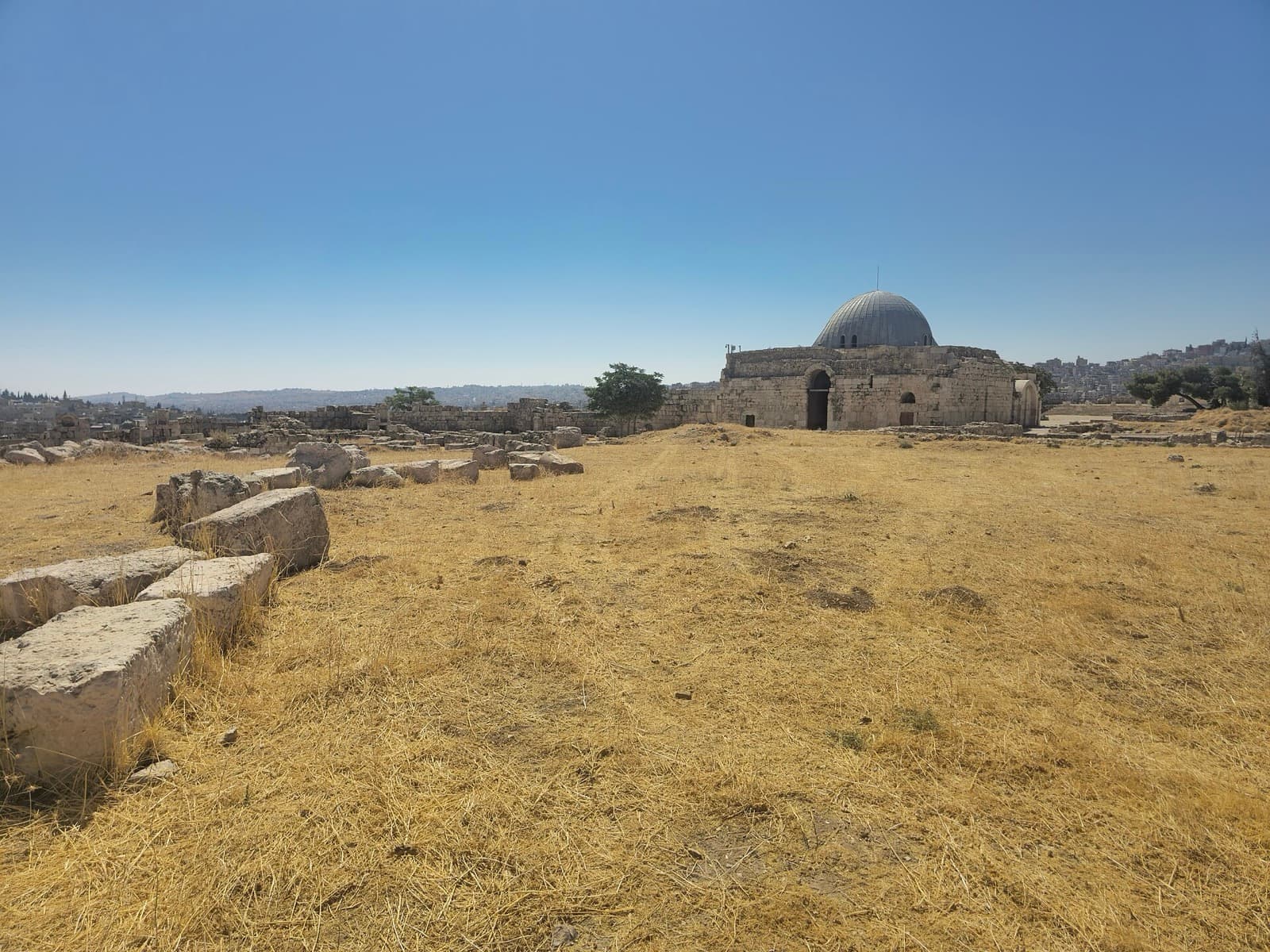
The Umayyad Palace on Amman's Citadel: A Caliph's Court on a Roman Hill
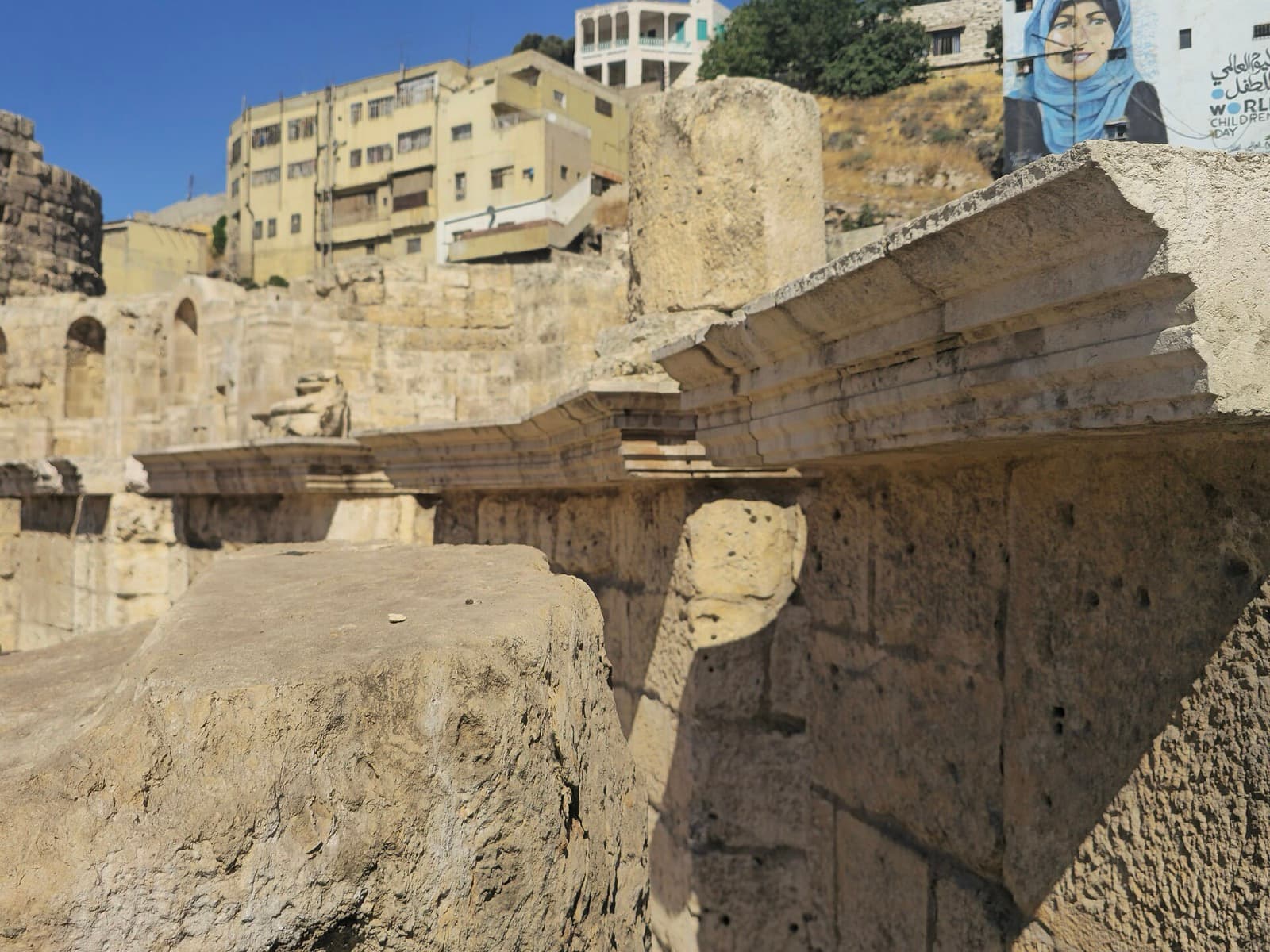
The Roman Nymphaeum of Amman: A Marooned Fountain in the Souk