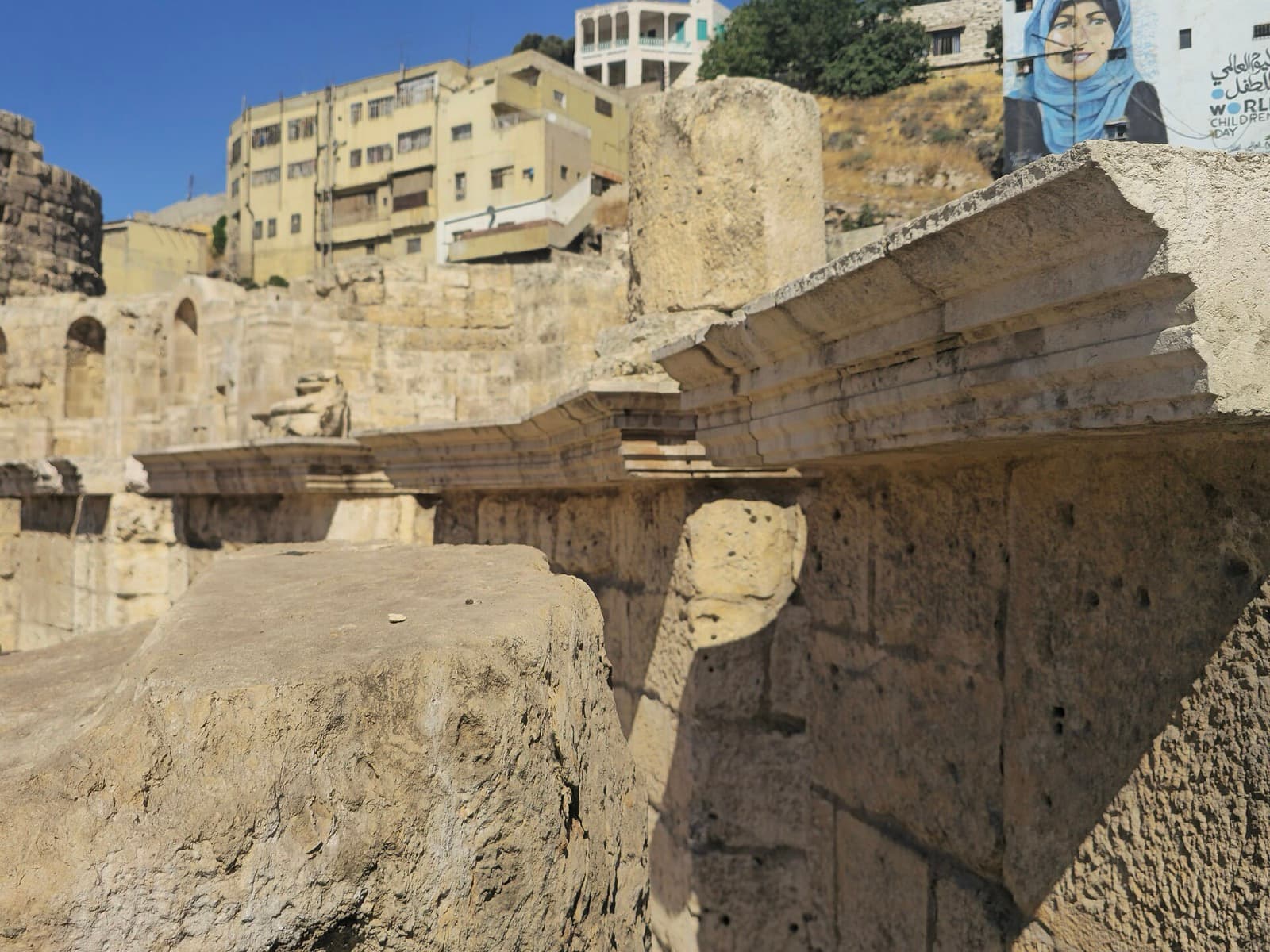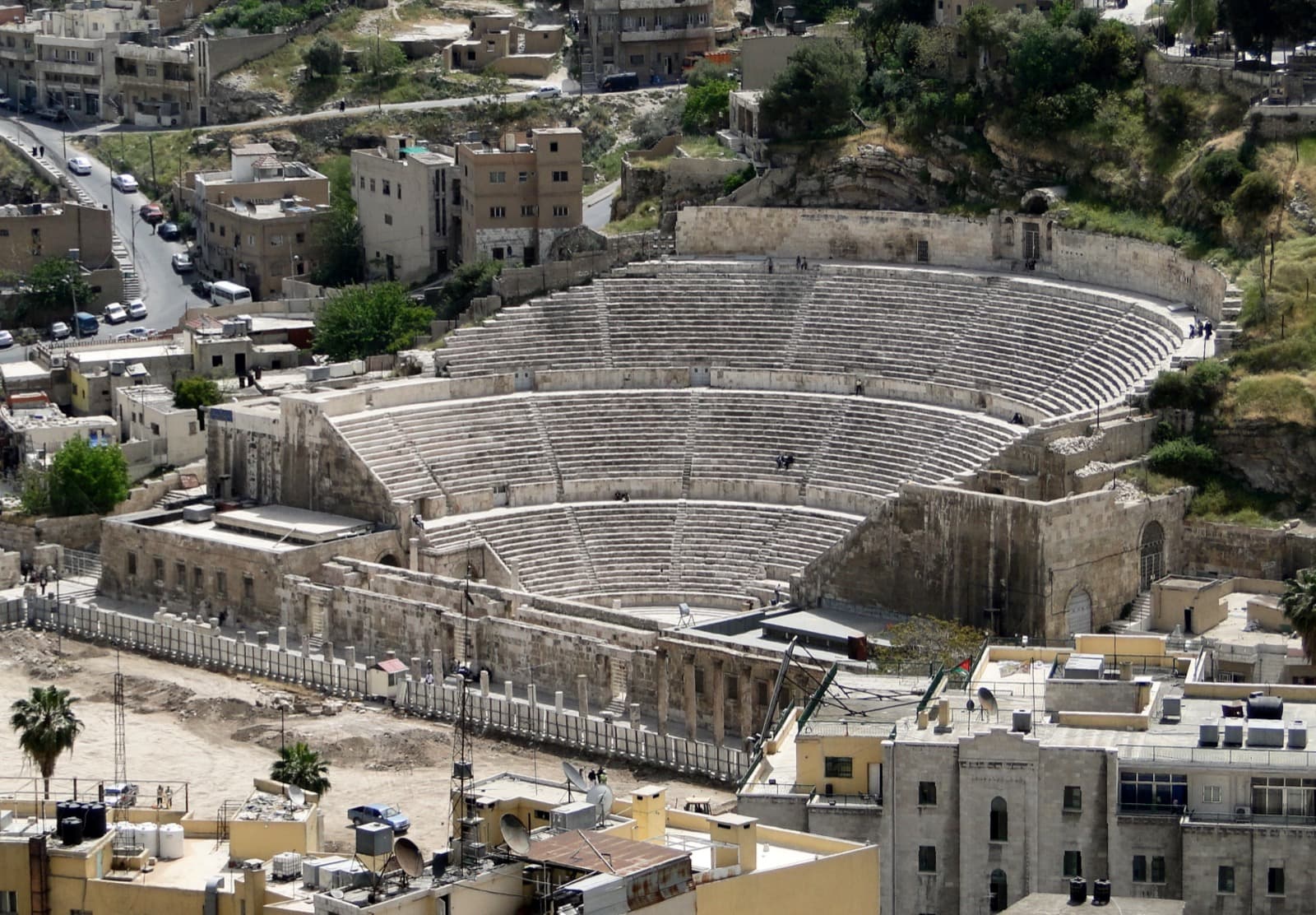
The Roman Theatre of Amman is a second-century auditorium cut into a north-facing slope so that its audience of about six thousand sat in shade, and nearly two thousand years later it is still a working venue. That single design decision, orienting the whole bowl of seats away from the afternoon sun, tells you how carefully Roman engineers built for the climate of a hot inland city. Most visitors read the theatre as a photogenic ruin. It is better understood as a piece of working infrastructure that has simply never stopped doing its job.
A city called Philadelphia
Amman was not always Amman. In the Roman period the city was called Philadelphia, one of the cities the Romans knew across this stretch of the ancient world. The theatre served that Roman Philadelphia, and it was built in the second century A D. A surviving Greek inscription indicates it was raised in honour of the emperor Antoninus Pius, who reigned from one hundred and thirty-eight to one hundred and sixty-one. That dedication places the theatre squarely in the confident middle decades of the Roman Empire, when provincial cities competed to furnish themselves with the full civic kit: temples, forums, colonnaded streets, and a theatre large enough to gather the whole population.
The theatre sits in Al-Balad, the downtown, cut steeply into the north slope of a hill that faces the Citadel across the valley. If you have climbed the Citadel first, you will already have looked down on this bowl of seats from the Temple of Hercules. From street level the relationship reverses: the theatre climbs above you, tier after tier of stone, and the Citadel hill rises again beyond it. The two monuments watch each other across the old city.
Why the seats face north
Hear a stop from this walk
The Temple of Hercules: The Roman Crown of the Oldest Hill
The most important thing to understand while standing in front of the theatre is that its orientation was a choice, not an accident of the terrain. Roman builders cut the seating into a north-facing slope on purpose. In this climate the afternoon sun is fierce, and a south-facing bowl would have baked its spectators through every performance. By carving the tiers into the shaded northern flank of the hill, the engineers kept roughly six thousand people out of the direct sun through the long afternoon.
That is a considerable crowd. Six thousand seats meant the theatre could hold a large share of the ancient city at once, which tells you something about the role such a building played. A Roman theatre was not only a place for drama. It was where the population assembled, where the city saw itself gathered in one place, ranked up the hillside in the steep geometry of the seating. Climb the tiers slowly if your footing is sure, or simply sit low down where a citizen of Philadelphia once sat, and the scale registers in your legs before it registers in your head.
A ruin that never went silent
The rarest thing about the Roman Theatre is that it is not a silent ruin. It is still used today for cultural events, from a book fair to concerts and public ceremonies. The stone keeps doing exactly what it was carved to do: gather an audience, throw a voice up the slope, and hold a crowd in shade. Very few Roman monuments anywhere have kept their original function this continuously, and it makes the theatre one of the most vivid living Roman structures in the country. When you sit in it, you are not looking at a fossil. You are using the building.
That continuity also explains why the theatre reads so cleanly. The steep rake of the seats, the deep central bowl, the stage area at the base: the plan a Roman architect drew is still legible because the structure was never allowed to collapse into rubble and pasture. It was restored and kept in service, so the logic of the design survives intact.
The forum that vanished
The theatre did not stand alone. It faced the space where the old Roman forum of Philadelphia once spread, the civic heart of the downtown city. A short walk away, across what is now Hashemite Plaza, sits the theatre's small sister, the Odeon, a roofed council and performance hall built at the same time in the second century and seating about five hundred. Beside it runs a curved row of columns, nearly all that survives of the colonnade that once flanked the great forum. Stand between the little roofed hall and those surviving columns and you have both halves of the Roman city's public life in one glance: the intimate concert hall on one side, the huge open square, now reduced to a curved line of stone, on the other. The modern downtown has grown over almost everything else. The theatre and that fragment of colonnade are what remain above ground of Philadelphia's civic centre.
Standing in front of it
The one thing to carry away, standing at the base of the seats, is the deliberateness of the whole thing. The north-facing cut, the six thousand seats, the pairing with the roofed Odeon and the open forum: this was a fully planned civic quarter, engineered for both spectacle and comfort in a difficult climate. What looks at first like a scenic backdrop for the downtown is in fact the most complete surviving piece of the ancient city, and the only one still in daily use.
The Roman Theatre is the fifth stop on a self-guided walk that begins on the Citadel hilltop, where a Roman temple, an Umayyad palace, and a Byzantine church stack three civilizations on a single crown, then drops by a short taxi down into Al-Balad to finish at the theatre, the Odeon, and the ghost of the forum. Walking the two levels in sequence is the clearest way to read the whole ancient city, from the hill that has been inhabited since the Neolithic to the theatre still filling with an audience today. You can plan the route through our guide to Amman walking tours, and see how the theatre fits the wider city on the Amman page.
Sources
- Roman Theatre (Amman), Wikipedia: overview of the second-century date, the Antoninus Pius dedication, the roughly six thousand seats, the north-facing orientation, and continued modern use.
- Odeon Theater (Amman), Wikipedia: the second-century date, the roughly five hundred seats, and the likely wooden roof or fabric awning of the small hall beside the theatre.
- Lonely Planet, Roman Theatre, Amman: visitor-facing description of the theatre's setting in the downtown and its two folklore museums.
- Amman Citadel, Wikipedia: context for Jabal al-Qala and the layered Roman, Byzantine, and Umayyad city that the theatre's Philadelphia belonged to.
- Roamer tour, "Amman Citadel: The Hill Where Philadelphia Rose": fact-audited on-site narration for the theatre, Odeon, and forum stops used throughout this article.
Ready to experience it?
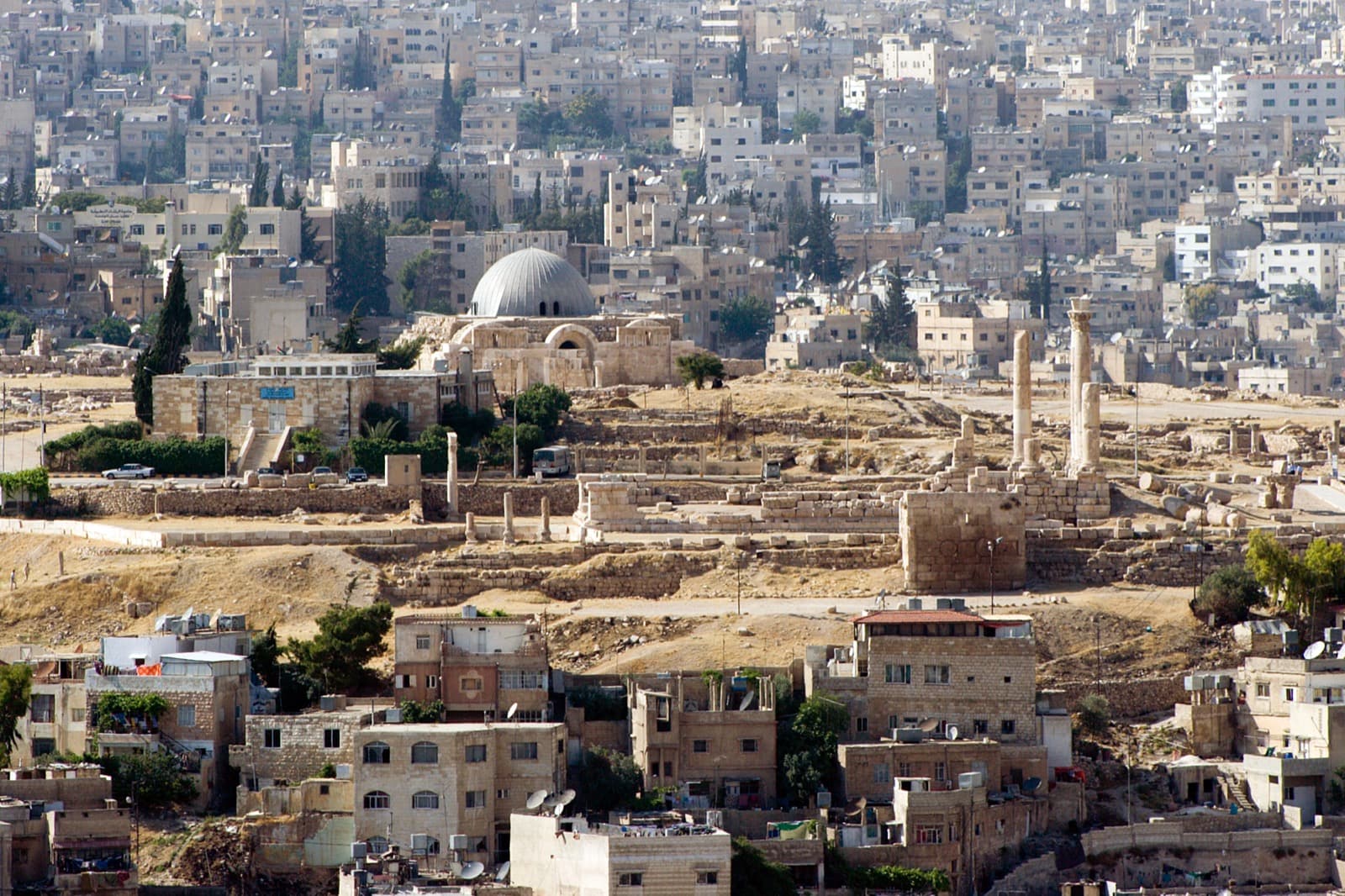
Amman Citadel: The Hill Where Philadelphia Rose
150 min · 2 km · moderate
More from Amman
Explore more at your own pace.
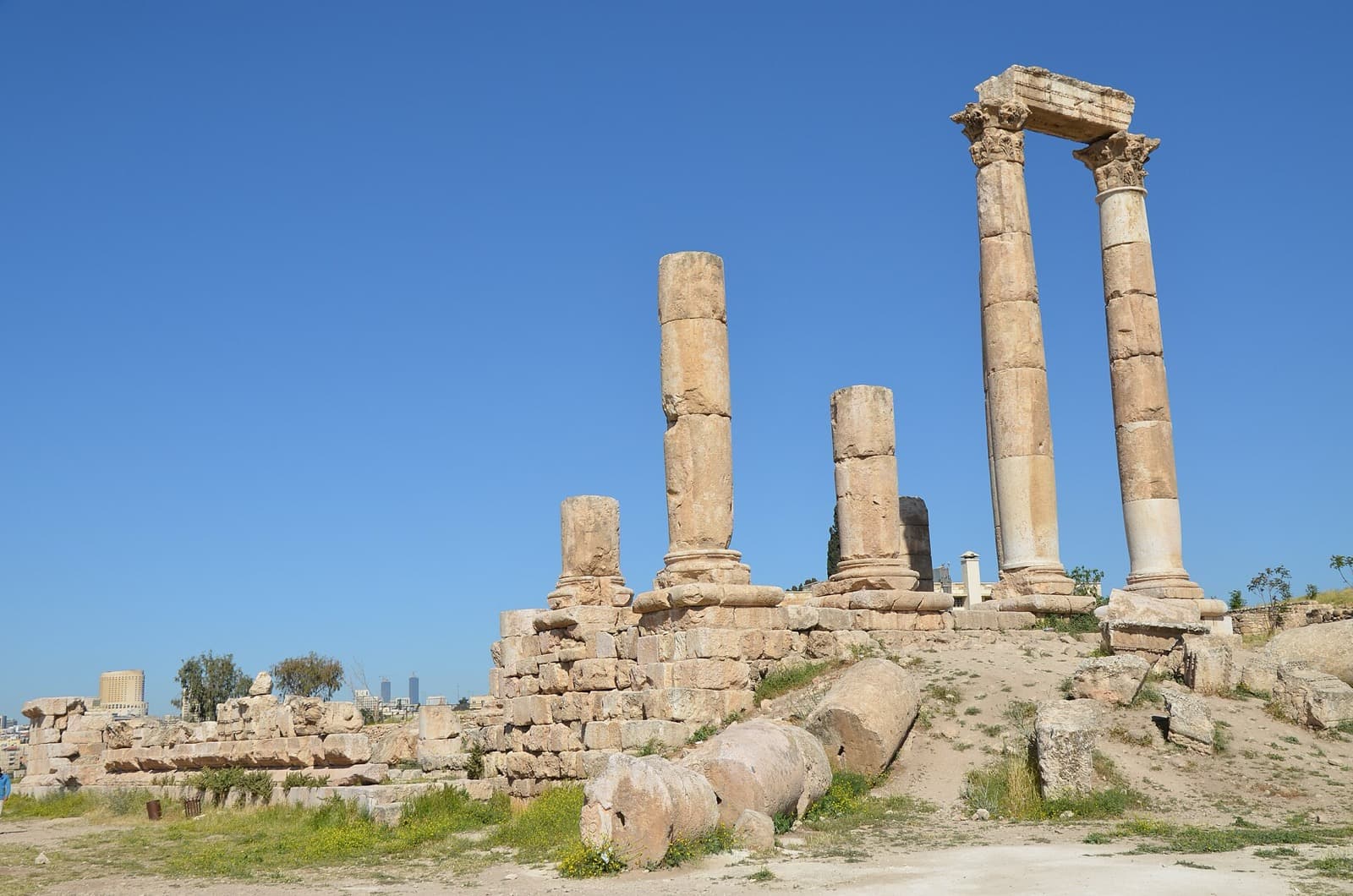
Amman Travel Guide: Days, Season, Getting Around, Safety, and Budget
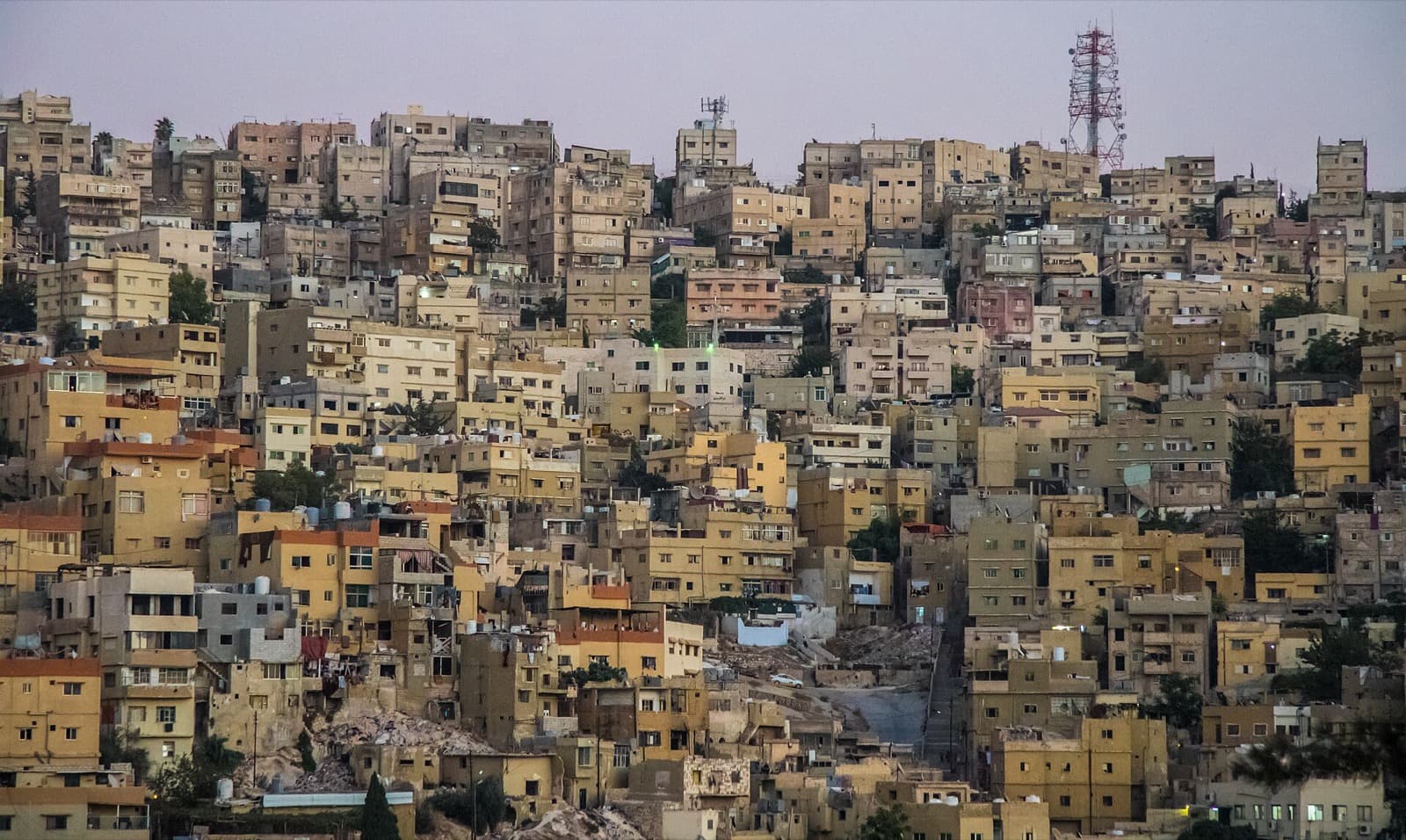
Rainbow Street and the Hill Where Amman Grew Up
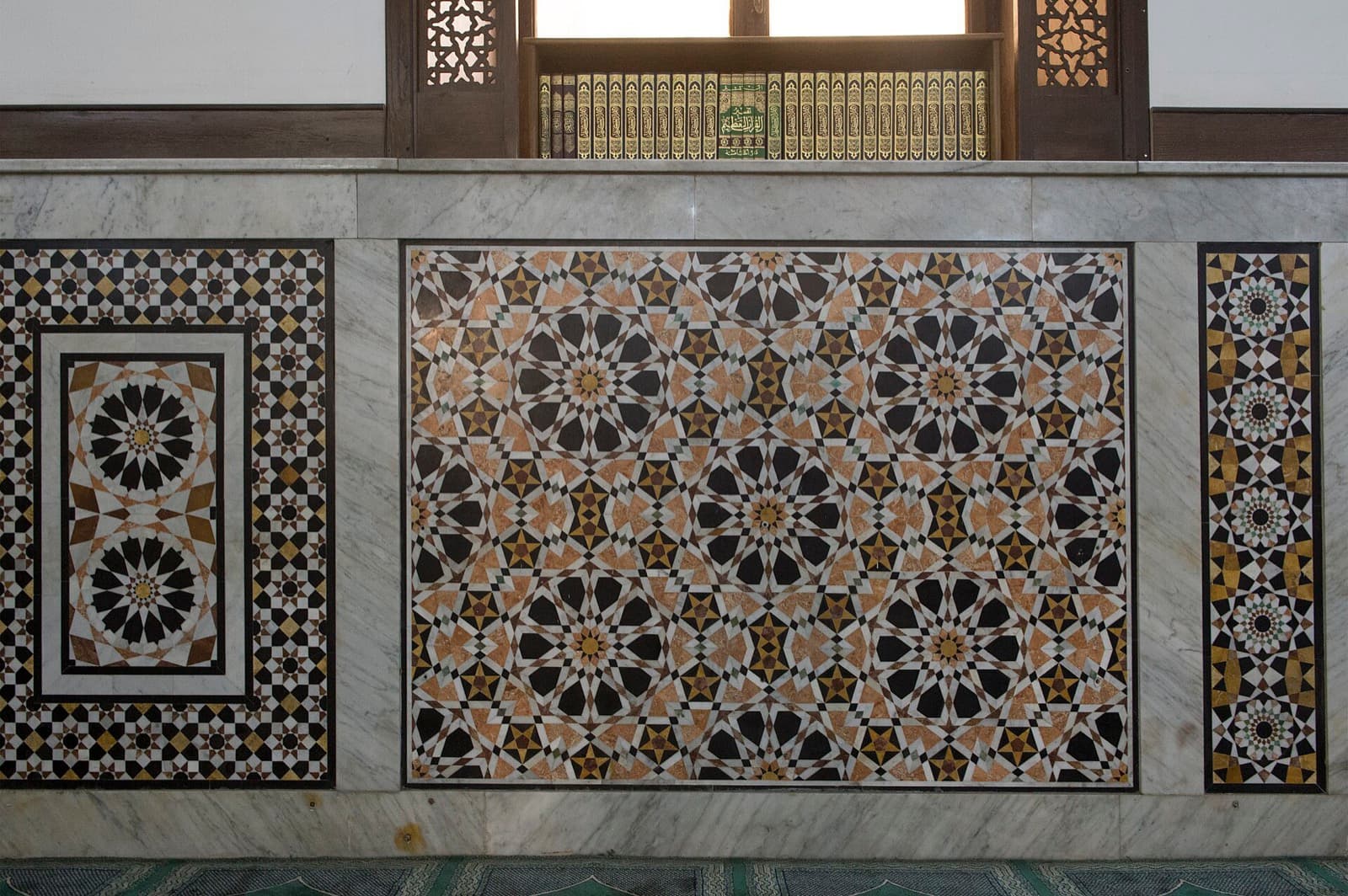
The Grand Husseini Mosque: The Door Into Downtown Amman's Al-Balad
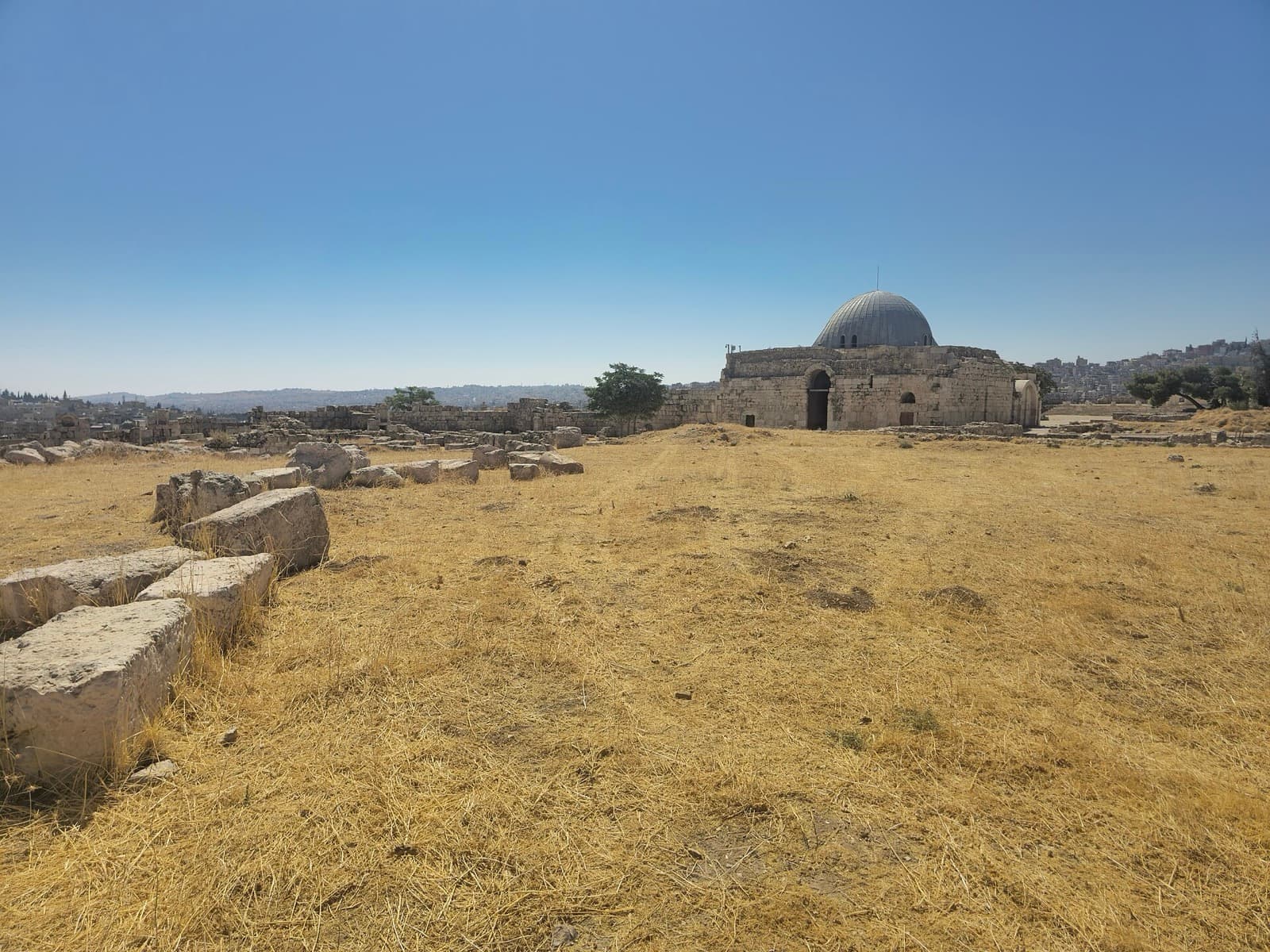
The Umayyad Palace on Amman's Citadel: A Caliph's Court on a Roman Hill
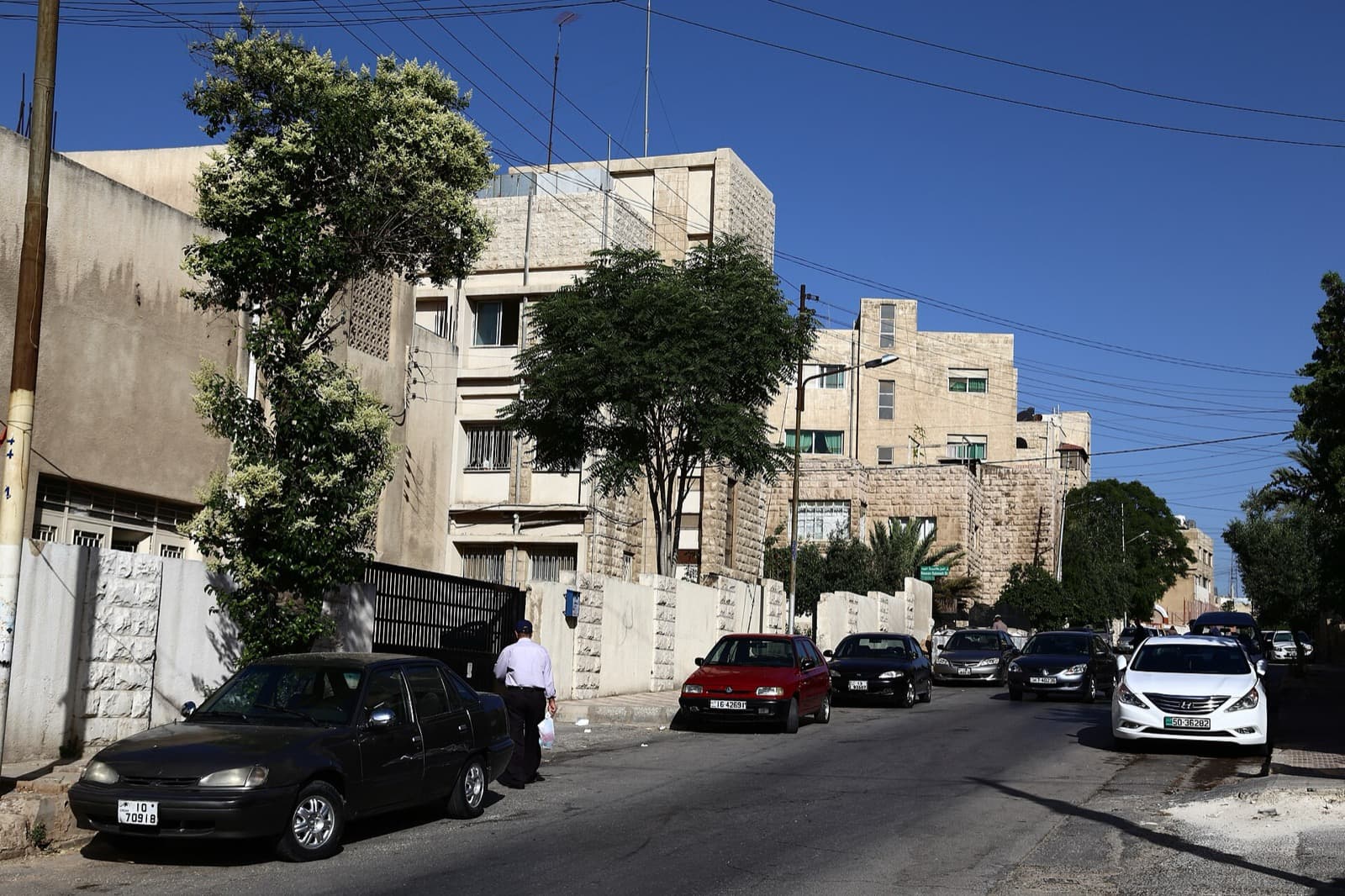
The Al-Kalha Stairs: Amman's Roads Before the Roads