Rainbow Street is the way into a bigger story: the limestone ridge of Jabal Amman, the hill the young capital climbed out of its downtown valley in the nineteen twenties, and later chose to keep the best of what it built. Most people arrive on Rainbow Street for a coffee and a view and leave without knowing they walked the heritage spine of Amman's first stone suburb. This is a short, unhurried walk that turns that stretch of stone into a legible neighborhood: six stops, roughly one and a half kilometers, about ninety minutes if you do not linger, and yours to stretch as long as you like.
Start where the city started climbing
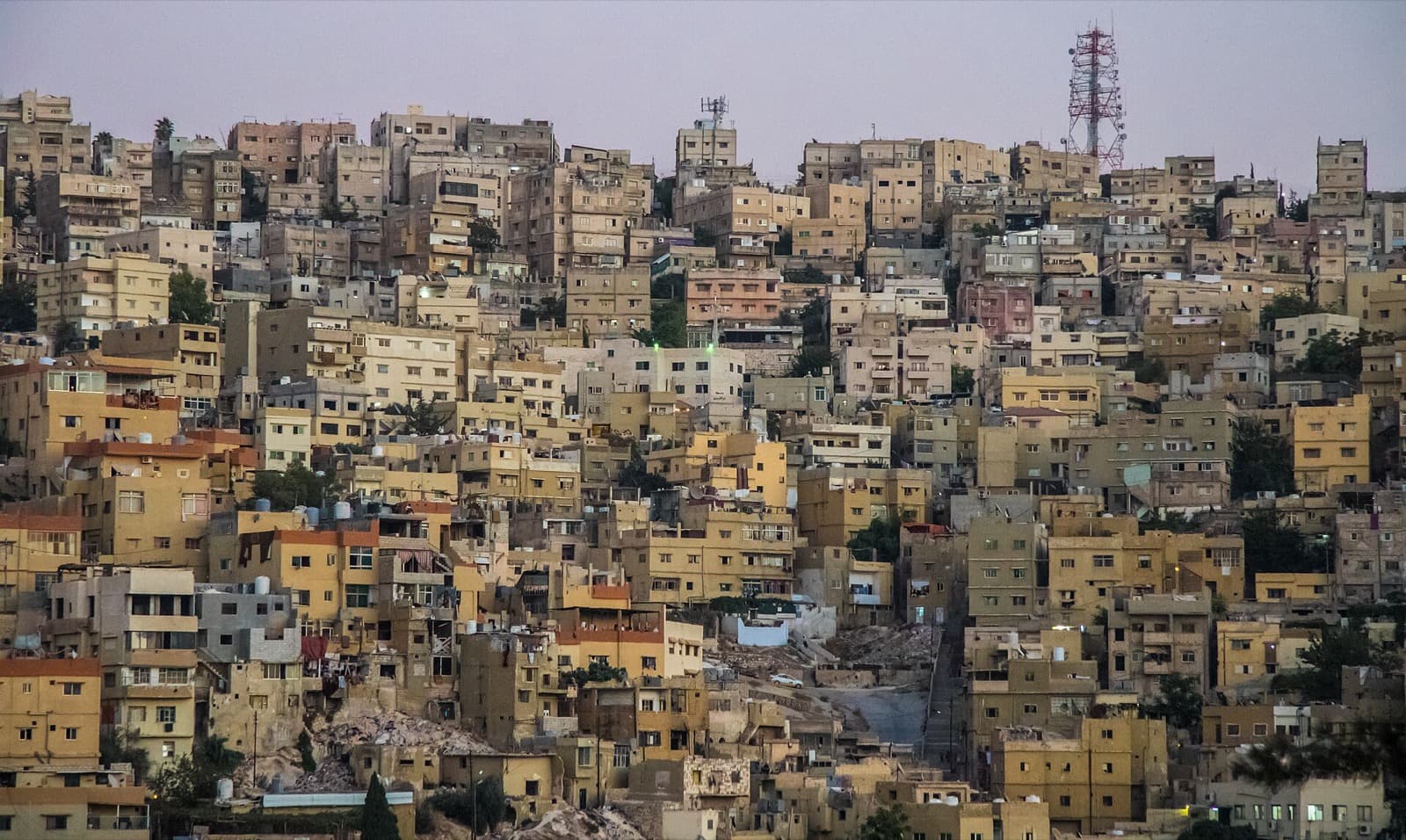
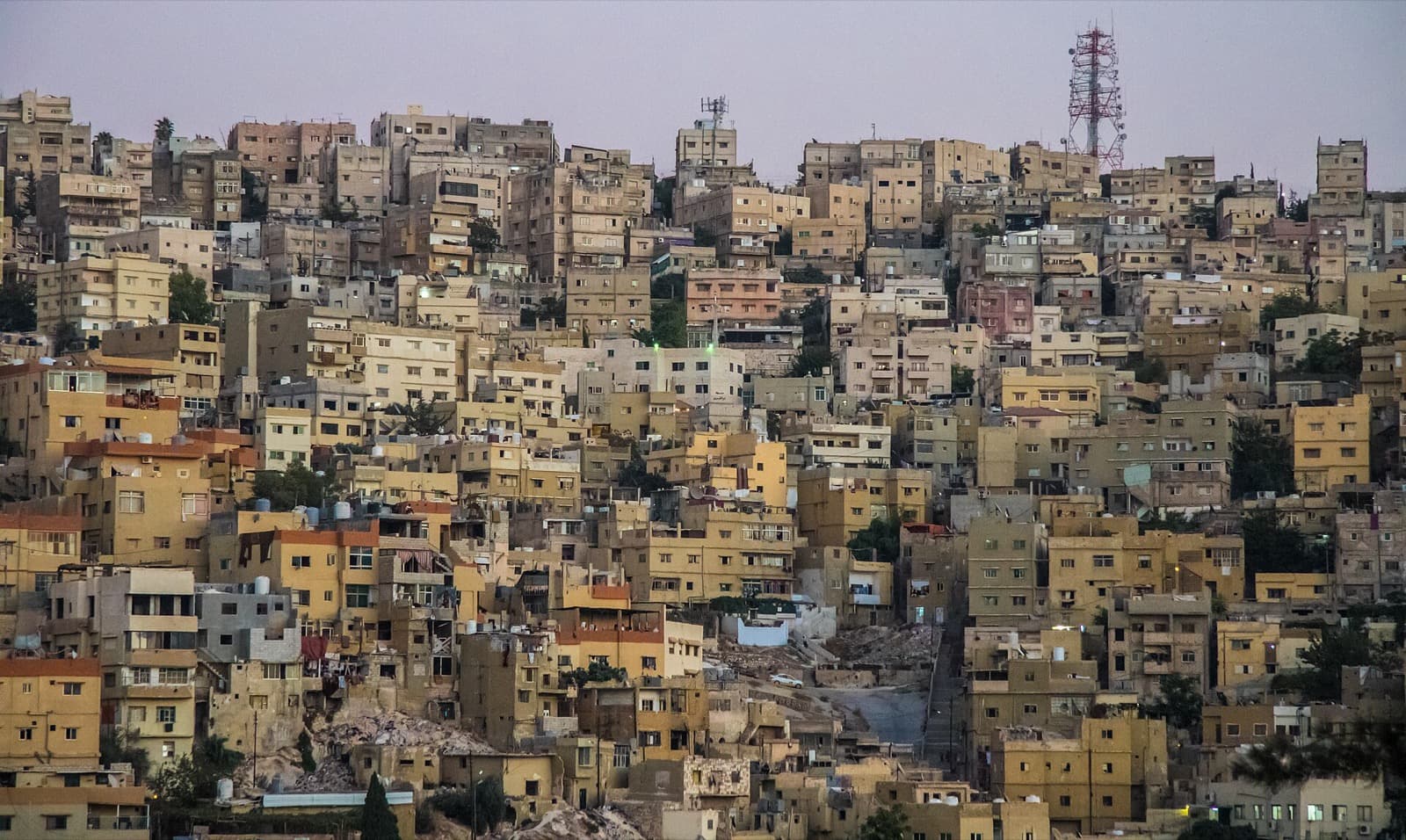
Amman is built on hills, and Jabal Amman is one of the seven that first made up the town. For a long time it was wooded outback above the market. Then, in the nineteen twenties, Amman became the capital, the downtown valley grew crowded, and the city began to climb. Royalty, wealthy families, army officers and politicians moved up onto the ridge and built stone villas along a road marked by numbered traffic circles. Those circles became the hill's informal address system, and for decades Ammanis gave directions by them rather than by street names: the First Circle, the Second, on east to west all the way to the eighth.
You begin at the First Circle, in Arabic the Dawar al-Awwal, the traditional head of the whole neighborhood and the point where Rainbow Street starts. Below on one side lies Al-Balad, the downtown valley market this hill was built to look down upon. All around rise the pale limestone facades of a century ago. In the year two thousand and five, the Greater Amman Municipality formally recognized Jabal Amman as a heritage attraction point and set out to preserve the historic hill, which is why so much of what you will see is still standing.
The old cinema street, reborn as a front porch
Hear a stop from this walk
The Craft Heritage of the Hill: Where Old Amman Keeps Its Handmade Things
Rainbow Street's official name is Abu Bakr al-Siddiq Street, but nobody calls it that. The everyday name comes from a mid-twentieth-century cinema, the Rainbow, whose glow once drew crowds here. Sources disagree on exactly when that picture house opened, so it is honest to leave it as a mid-century detail rather than pin a year on it. The street runs east from the First Circle toward Mango Street, threading through the historic quarter just above the valley. Its restored stone houses, with their old balconies and arched windows kept intact, now hold cafes, galleries and craft shops. On a good evening it is something like the city's front porch, where families and students drift past and an hour goes easily.
Time your visit to what you want. Through the summer, an open-air market called Souk Jara spreads along a nearby stretch on Fridays, with stalls of crafts, food and secondhand finds; the exact opening and closing weeks shift year to year, so check the current season before you count on it. On a quiet weekday morning the street belongs to whoever is walking it slowly. Late afternoon into early evening is the loveliest hour on the hill, when the limestone warms to gold. The whole appeal of walking this on your own is that there is no group to keep up with and no schedule but your own.
Read the houses, then find the view
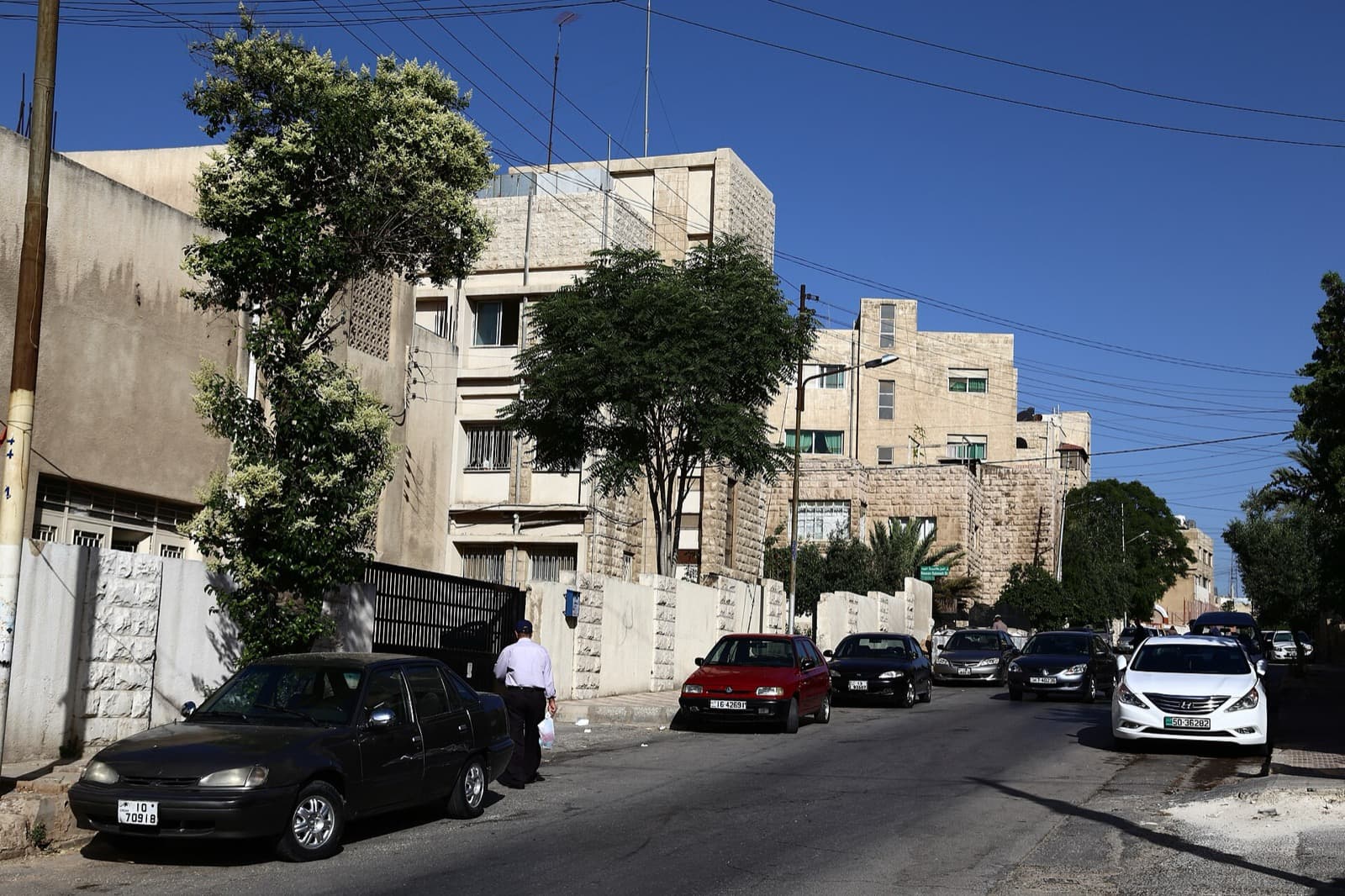
Step onto the quiet lanes on either side of Rainbow Street and you reach the heart of what the hill is famous for: the villas of the nineteen twenties, thirties and forties. Documentation projects that studied these houses, spanning the nineteen twenties to the nineteen sixties, note a recognizable style: pale limestone elevations, arched windows, twin staircases and rounded, semicircular entrance porches drawn from Mediterranean architecture. A good anchor stands near the corner of Rainbow and Mango Streets, the al-Mufti House, built in the late nineteen twenties by the architect Umar Hikmat, a Circassian, and later sold to Said al-Mufti, a Circassian politician who became mayor of Amman. Several of these houses have since been restored into cultural centers, so a door you pass may open onto a gallery rather than a private home.
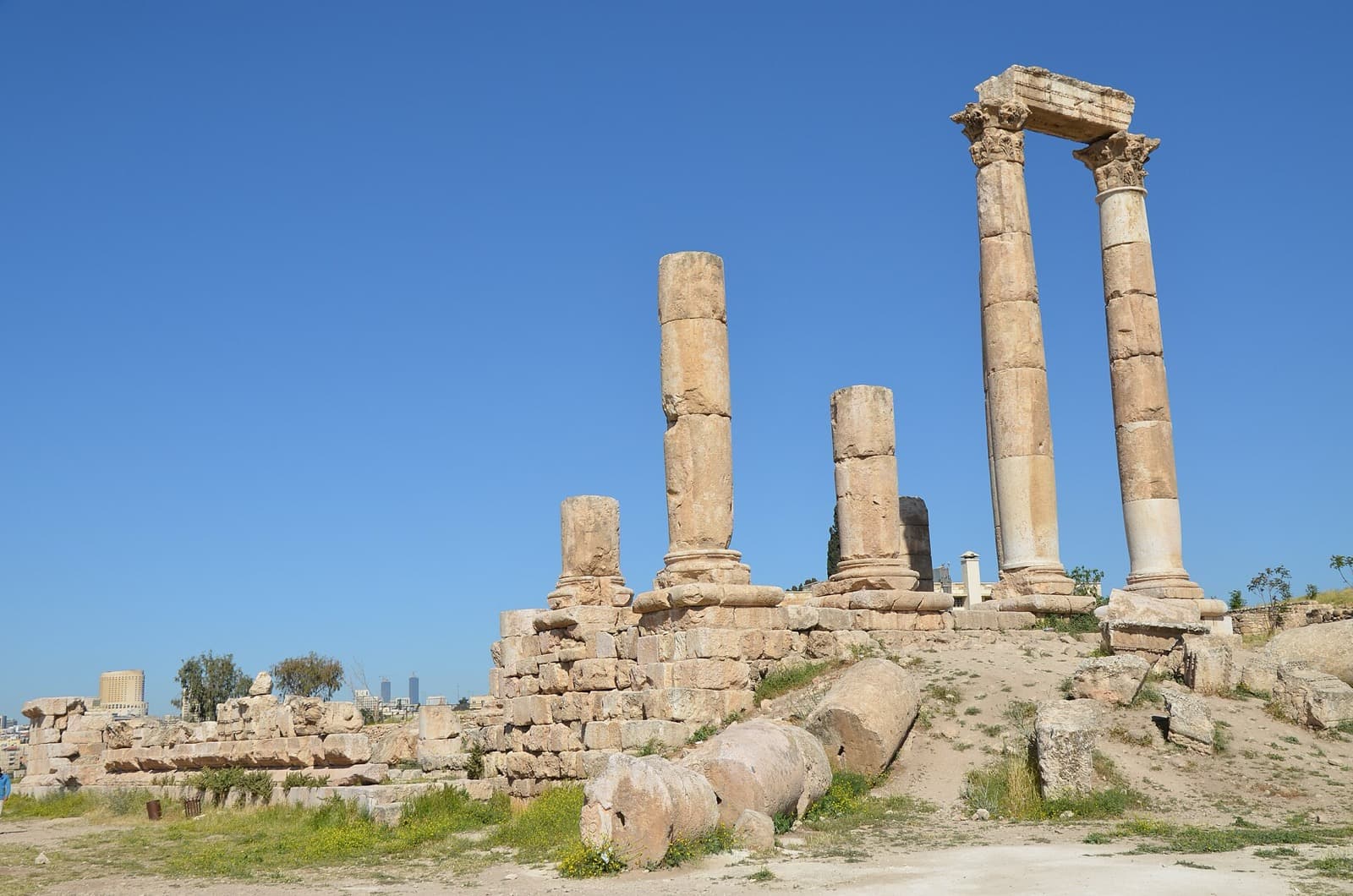
For the view, the walk brings you to the Wild Jordan Center, the terrace of the whole route. It is the nature center of the Royal Society for the Conservation of Nature, an independent national organization founded in nineteen sixty-six that manages a network of reserves across the country, among them Dana, Mujib, Ajloun and Azraq. The building opened in two thousand and three, designed by the Jordanian architect Ammar Khammash, and sits at the edge of the hill by the First Circle. From its railing the ancient Amman Citadel, Jabal al-Qala, lines up across the valley on its own high hill, beside the tall Raghadan flagpole, above the downtown. The Citadel is thousands of years older than the limestone suburb behind you, and from this one balcony you hold both in a single glance.
Stairs, murals, and handmade things
Before roads climbed these hills, people did, on stairs. Long public stairways drop steeply from the ridge toward the valley, the original pedestrian roads that carried families down to the market and back up with the day's shopping. The most famous is the Al-Kalha stairs, dating to the nineteen twenties and named for a restaurant once at their foot, a name in use since the nineteen thirties. To be precise, Al-Kalha connects the downtown on King Hussein Street with the adjacent hill of Jabal al-Weibdeh rather than descending from Rainbow Street itself, but it is the perfect emblem of the type. Many of these stairways now wear bright murals by local street artists, some shaded by hanging umbrellas.
The walk ends where the hill keeps its handmade things. The Jordan River Foundation, a non-profit founded in nineteen ninety-five and chaired by Queen Rania al-Abdullah, runs its showroom in a house built in nineteen thirty-six by Salim al-Odat, which the Foundation bought and renovated in nineteen ninety-four. Inside are embroidery, handwoven rugs and Jordanian handicraft made by rural women, including Bedouin weaving from the Bani Hamida project near Madaba. These are not souvenirs invented for visitors. They are skills carried through generations, and a real livelihood, heritage and income woven together on the hill.
That is the argument the whole route makes: a city climbed a hill a century ago and chose, later, to keep the best of it. Rainbow Street is the doorway. To browse the full set of routes across the city, see Amman walking tours, and for planning the wider visit, start with Amman. Wear shoes with grip, carry a little cash in dinars, and let the ridge unfold at your own clock.
Sources
- Wikipedia, "Jabal Amman": background on the hill, its numbering, and its recognition as a heritage attraction point in 2005.
- Wikipedia, "Rainbow Street": the street's official name, cinema origin, and route from the First Circle to Mango Street.
- Wikipedia, "Al-Mufti House": architect Umar Hikmat, the al-Mufti family, and the house's location and heritage.
- Royal Society for the Conservation of Nature and Wild Jordan: founding in 1966, reserves managed, and the Wild Jordan Center by Ammar Khammash, opened in 2003.
- Wikipedia, "Jordan River Foundation": the non-profit's founding, its Rainbow Street showroom, and the Bani Hamida weaving project near Madaba.
Ready to experience it?
Rainbow Street: Old Amman on the First Circle
90 min · 1.5 km · moderate
More from Amman
Explore more at your own pace.
Amman Travel Guide: Days, Season, Getting Around, Safety, and Budget
The Grand Husseini Mosque: The Door Into Downtown Amman's Al-Balad
The Umayyad Palace on Amman's Citadel: A Caliph's Court on a Roman Hill
The Al-Kalha Stairs: Amman's Roads Before the Roads
The Roman Nymphaeum of Amman: A Marooned Fountain in the Souk