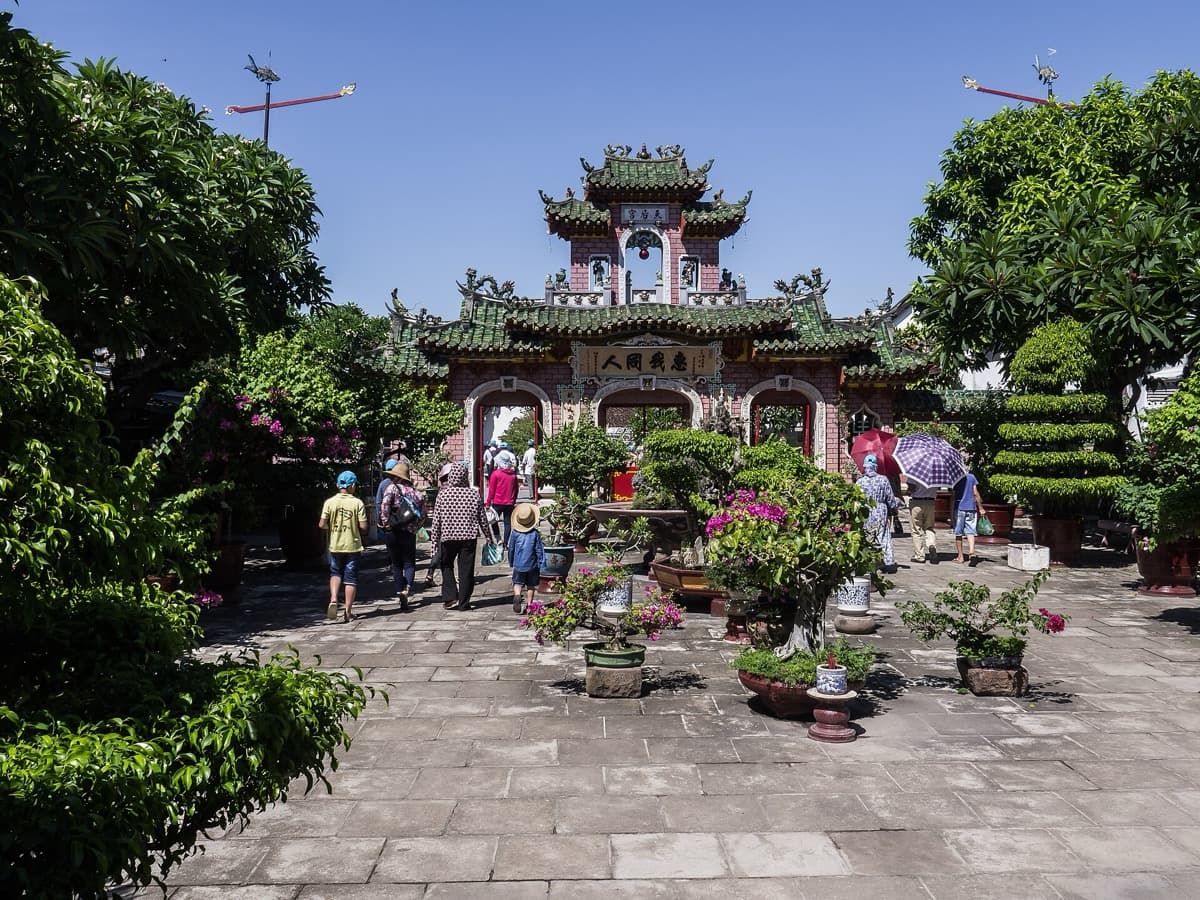
Most towns you visit are the survivors of their own success. They kept growing, kept building, kept knocking down last century to make room for this one, so the past reaches you in fragments: one medieval wall here, one baroque facade there, embedded in a modern city that grew over them. Hoi An is the opposite. It is a town that reaches you almost whole, because at a certain point it simply stopped.
The walk across the old merchant port is the story of that stopping. Six stops run about a kilometre from the Japanese covered bridge in the west to the riverfront quay in the east, and the argument they build is counterintuitive: the thing that ruined Hoi An is the thing that saved it. To understand the town, you have to understand why the trade left and why its departure was a gift.
The port at its height
From the fifteen hundreds through the seventeen hundreds, this was one of Southeast Asia's great international harbors. The Europeans called it Faifo. Japanese and Chinese merchants settled here under the tolerant Nguyễn lords of central Vietnam, and ships came for silk, ceramics, and spices. The scale was serious. Between 1600 and 1635, at least seventy red-seal ships, the licensed Japanese trading vessels of the era, sailed to Hoi An, and by around 1617 a distinct Japanese quarter had formed in the town. Japanese records even preserve the story of the Nagasaki merchant Araki Sotaro, who in 1619 married a Vietnamese woman of the Nguyễn lord's household. This was not a sleepy backwater. It was a node in a trading web that reached Japan, China, the Philippines, India, and Europe.
You can still read that height in two buildings a block apart. Phùng Hưng, built around 1780, is a tall timber merchant home whose narrow street frontage opens into a long, deep interior, the tube-house style that Hoi An perfected because harbor frontage was too valuable to waste. Look up inside it and you will find a trapdoor set into the ceiling, the hatch through which the family hoisted goods to the dry upper floor whenever the Thu Bồn flooded. Tấn Ký, dated to the 1740s and home to seven generations of the Lê family, is said to have been built without a single iron nail, its beams locked together by carved joinery alone. Both houses blend Vietnamese, Chinese, and Japanese design under one roof. These were not museums when they went up. They were working homes, warehouses, and flood defenses, all in one deep, narrow volume of wood.
The cargo made tangible
Hear a stop from this walk
Bach Dang Riverfront: The Water That Made and Unmade the Town
Between the houses sits the proof of what the whole enterprise was for. The Museum of Trade Ceramics, in a restored timber house on Trần Phú Street whose design has been compared to the merchant homes of Kyoto, holds nearly three hundred and seventy ceramic pieces spanning roughly the ninth to the nineteenth centuries. Some were dug from the ground. Others came off the sea floor, recovered from shipwrecks near the Cham Islands offshore in what has been described as one of the largest underwater excavations in Vietnam's history.
Every glazed bowl and jar in that collection is evidence of a route: a pot made in one country, loaded at a port across Asia, carried past Hoi An, and in some cases lost when a ship went down. The ceramics are the tour's fulcrum. The bridge shows you who met here. The houses show you how they lived. The ceramics show you what it was all for. Goods, moving by water, making a small river town rich enough to build in hardwood and stone.
The commerce that never left
At the eastern end of the old town the streets suddenly get loud. This is Hoi An Central Market, Chợ Hội An, founded on this riverside block in the early seventeen hundreds as a distribution hub for foreign goods, exactly when the harbor was at its height. It is the one place on the walk where the port is not preserved but simply still alive. The seafood runs along the river side where the boats land the catch, the fruit and vegetables spread along the Bạch Đằng side, and the silk and spices are the direct descendants of the cargo you just saw in the museum, the same categories of goods, still changing hands.
The market matters because it is the exception that proves the rule. Everything else on the walk is a fossil, beautifully frozen. The market is the living tissue. It is the proof that Hoi An was never only a monument. It was a place where people came to buy and sell, and in this one noisy block they still do. That same living instinct, the town's refusal to stop trading even after the ships were gone, is what eventually turned Hoi An into the lantern economy described in how a dead port learned to glow.
The water that made and unmade the town
End on the water, and the whole story turns. Bạch Đằng runs the length of the old town's southern edge along the Thu Bồn. Wooden boats still tie up here, just as trading boats once unloaded silk and ceramics onto this bank. The paved quay was built up in 1872, during the French colonial period, and was long known as the Fujian Quay, after the Fujian Chinese traders who worked the waterfront.
Then the river did the thing rivers do. According to the traditional account, the harbor mouth silted. The channel grew too shallow for the big trading vessels, and during the nineteenth century they moved north to the deeper harbor at Da Nang, about thirty kilometres away. The port stagnated and declined. And here is the twist that makes this town extraordinary: that decline is exactly why everything survived. No new money arrived to knock down the old merchant houses and build modern ones. The boomtown froze, and the fossil is what you have been walking through all day.
This is the paradox worth carrying out of the old town. Prosperity is normally the friend of preservation only in the sense that rich cities can afford to restore. But active prosperity is preservation's true enemy, because a growing economy always wants the land the old buildings sit on. Hoi An escaped that pressure by failing. A dead harbor cannot generate redevelopment. So the same silt that ended the town's career as a port is what spared its timber houses from the wrecking ball, and in 1999 UNESCO could inscribe a fifteen-hundreds harbor still standing almost whole.
Why the walk ends where it does
There is a reason the route runs west to east and finishes at the river. The Japanese covered bridge at the western threshold is where two foreign communities met and agreed to build something in the middle, the origin of the town, and it has its own longer story in the little bridge that became a nation's emblem. The quay at the eastern end is where the town's life came in and, eventually, went out. Walk between them and you trace the full arc: arrival, wealth, the cargo, the living market, and finally the water that gave the town everything and then quietly took its trade away.
Stand on the quay and look at the Thu Bồn. The same water that carried the ships in, then silted and let them leave, is the reason a five-hundred-year-old harbor is standing around you. The river gave the town its life, took away its trade, and, by taking it, saved it whole. That is the sentence the whole walk exists to teach, and once you have read the port this way, the assembly halls a few streets north read as the next chapter: not what the town traded, but who the trade brought, and why they never fully went home.
Ready to experience it?
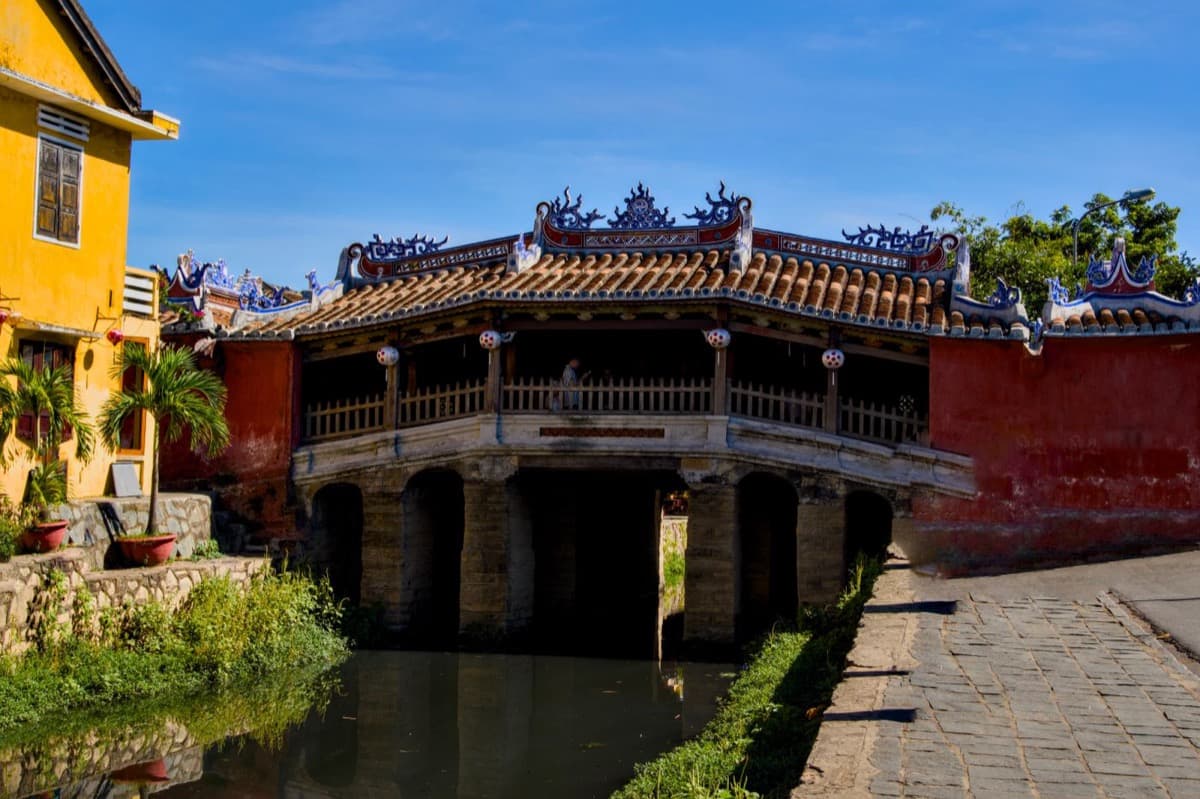
Ancient Town: The Port That Time Forgot
80 min · 1 km · easy
More from Hoi An
Explore more at your own pace.
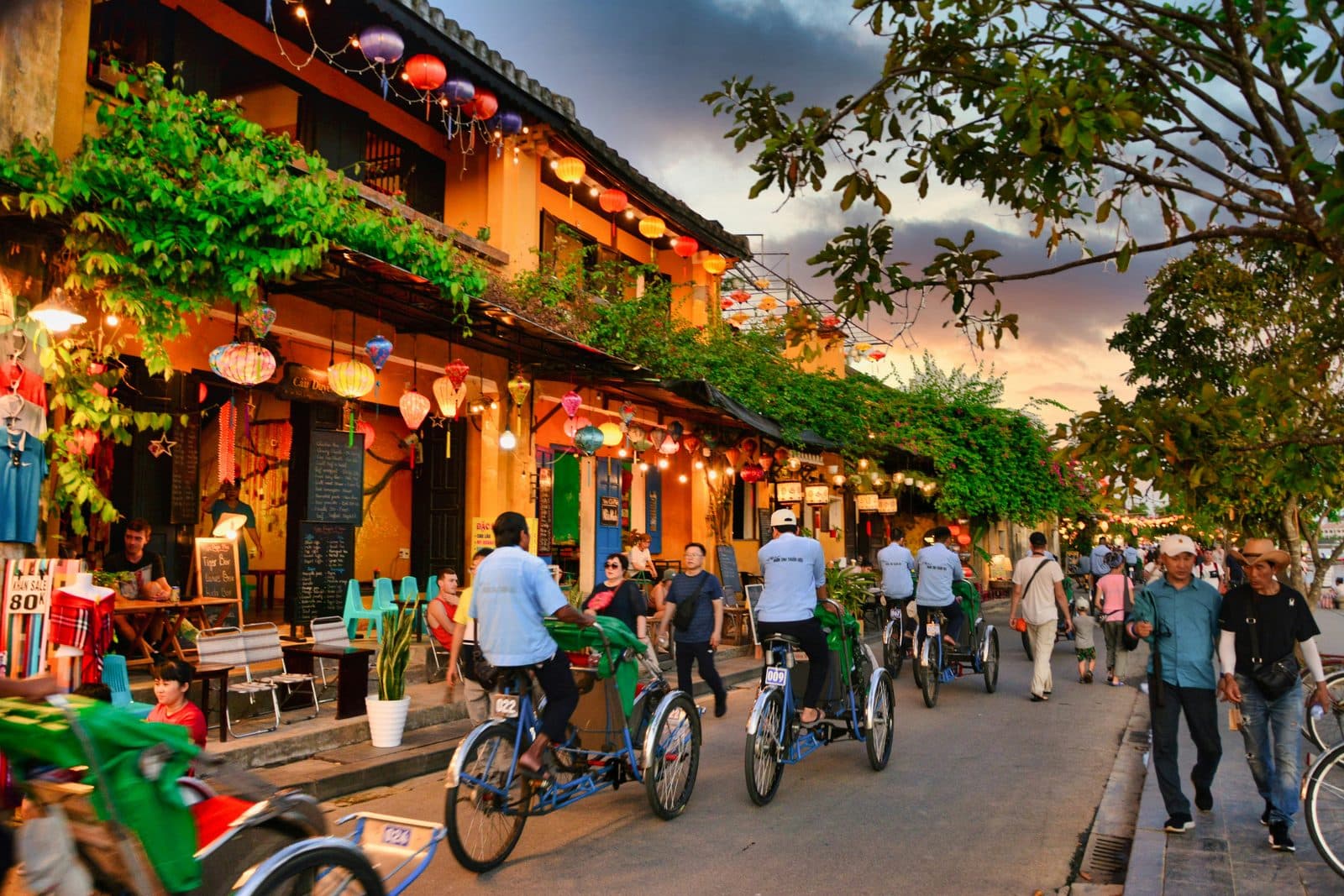
Hoi An Travel Guide: How Many Days, Getting Around, When to Go (2026)
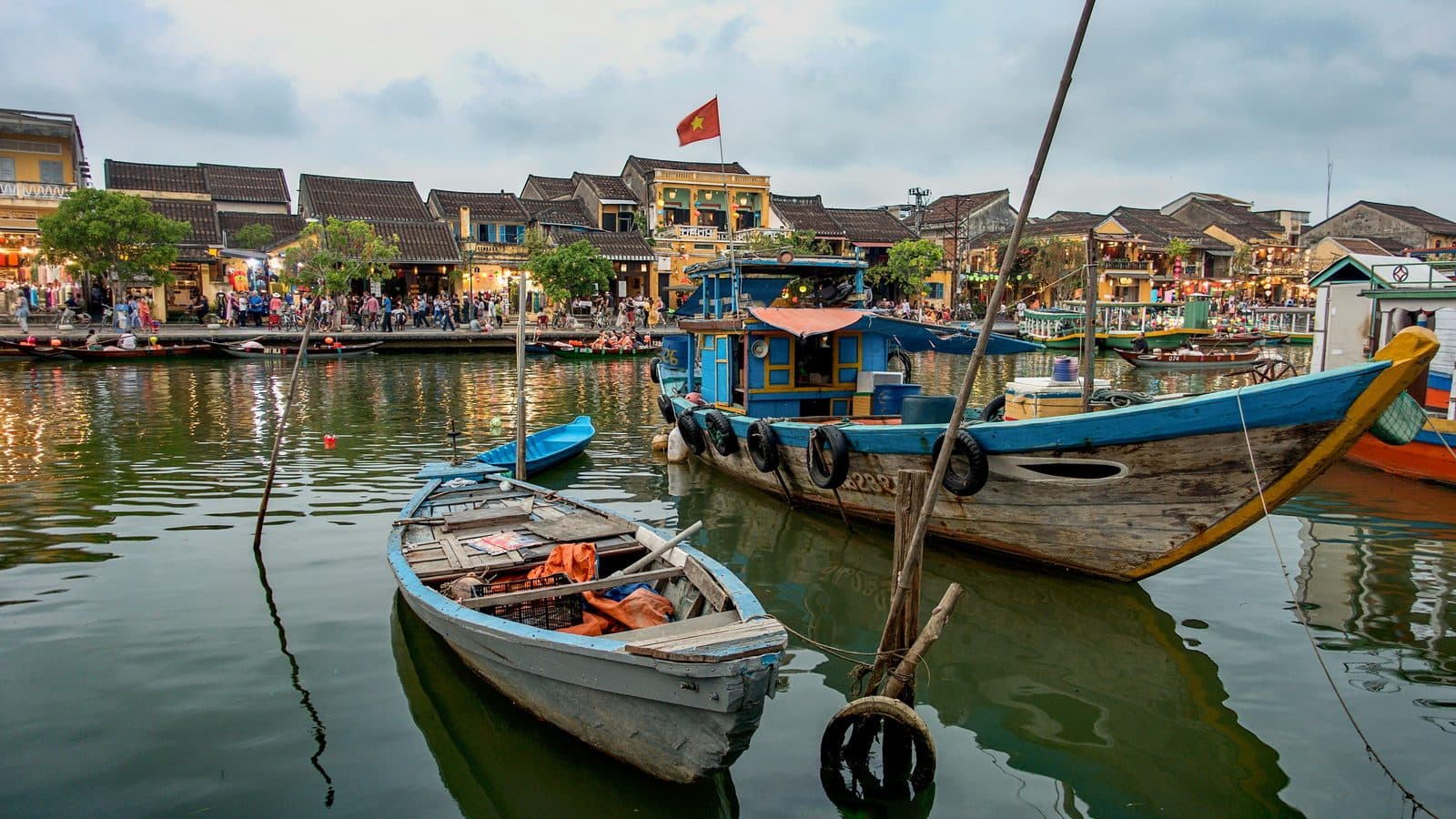
How to See Hoi An: The Town That Failure Saved
One Day in Hoi An: A Walkable Ancient Town Itinerary (2026)
What to Eat in Hoi An: A Food Guide (2026)
A Map of Who Fled Where: Reading Hoi An's Assembly Halls