The first thing anyone tells you about Hoi An is the lanterns. Photographs of the old town at night, silk lanterns glowing red and gold over the lanes and doubling themselves in the black river, are the reason a great many people come. It is easy to assume you are looking at something ancient, a survival from the trading centuries lit up for your benefit.
You are not, and the truth is more interesting than the postcard. The evening glow of Hoi An is a modern reinvention. It is what a dead port did after its ships were gone. Deprived of cargo, the town turned the things it had left, its silk, its river, and its lantern craft, into a nightly performance of light, and the beauty you walk through at dusk is the sound of a forgotten economy learning to earn its living again from its own preserved past. To walk the lantern route is to watch obsolescence become preservation, and preservation become spectacle.
Light that is made, not hung
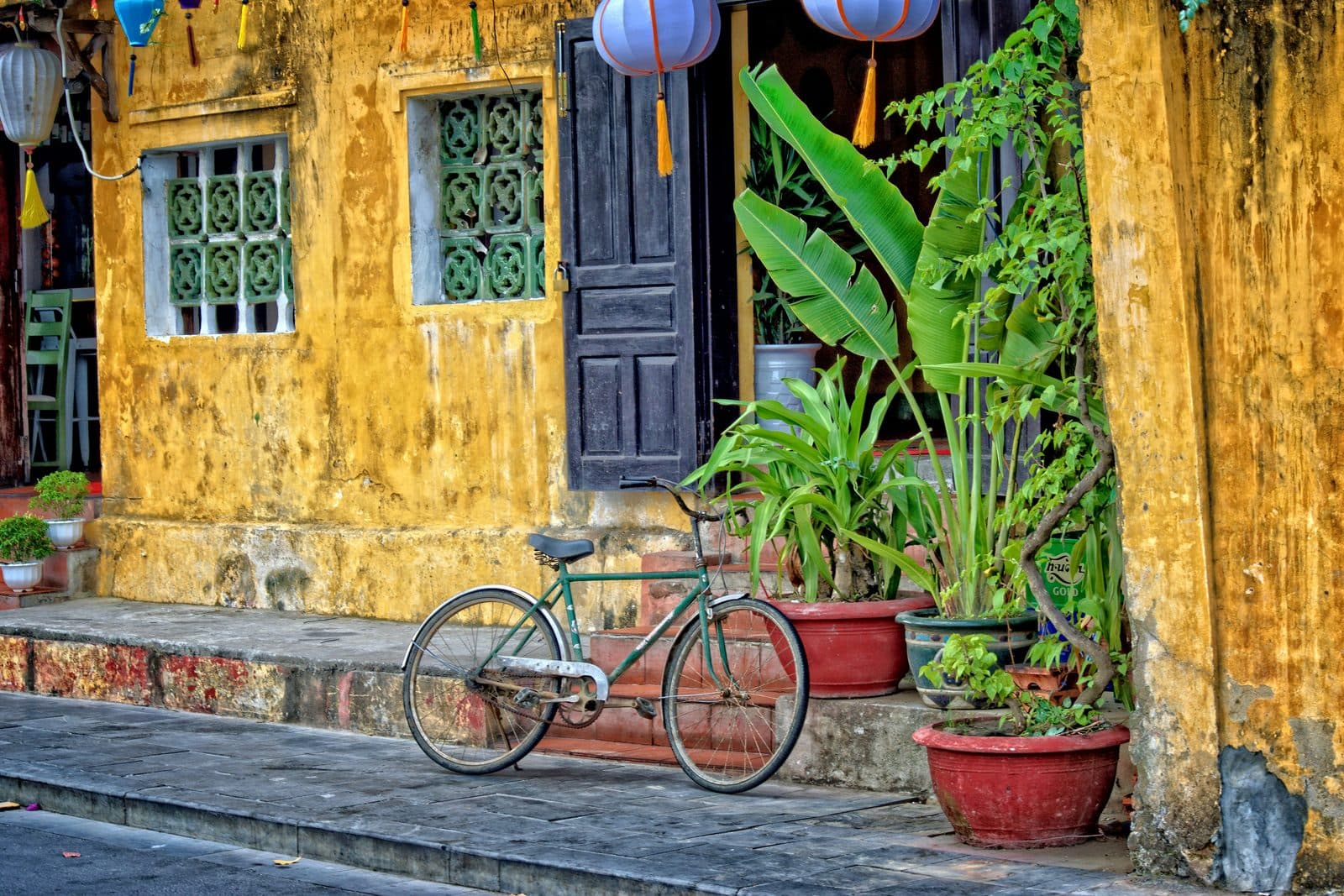
Start by looking up. The street above you is a ceiling of silk, red and gold and lotus pink, round and teardrop and long as a fish. It helps to know these lanterns are made, not merely hung. Each begins as bamboo. The strips are soaked in salt water for about ten days so termites will leave them alone, then dried, split, and bent into a ribbed frame, and only then is the silk stretched over the bones and glued taut so the color glows when a light sits inside.
The habit of hanging lanterns arrived with the seventeenth-century merchants, the Chinese and Japanese traders who lit them before their houses, and local hands learned to make their own. Then, for a long stretch, the craft nearly faded with the town. It came roaring back in the 1990s as travelers returned, and one figure from that revival is worth carrying with you. A maker named Huỳnh Văn Ba is locally credited as the first to build a collapsible lantern, folding flat like an umbrella, after a foreign visitor could not fit a rigid one into her luggage. He spent about six months getting the hinge right, based on the structure of an umbrella. He is the only lantern maker the Vietnamese state has honored as a Merited Artisan, and he worked at the craft into his nineties. In 2011 Hoi An's lantern making was recognized as National Intangible Cultural Heritage. The beauty over your head did not happen by accident. It is a living, salt-soaked, hand-bent trade.
The cargo that stayed home
Hear a stop from this walk
Hoi An Riverside at Night: The Whole Story in Light
Walk the commercial spine and notice the shop windows: bolts of silk, tailors' dummies, tape measures. This is the same trade that built the town, wearing new clothes. In the sixteenth and seventeenth centuries, according to UNESCO, Hoi An was one of the most important international ports in Southeast Asia, and silk, ceramics, and spices changed hands right here. Merchants sailed in from Japan and China, with Portuguese and Dutch traders arriving too, and they needed things made fast: clothing for the voyage home, cloth by the bolt. Out of that pressure grew a local habit of cutting and stitching quickly and well, a skill that never left, which is why Hoi An is known the world over today for made-to-measure tailoring.
Here is the rhyme at the center of the whole walk. The silk that once left on ships to distant markets now does two things instead. It dresses the travelers who come to be measured, and it covers the lanterns glowing overhead. The cargo did not disappear. It stayed home and became atmosphere. That silk was one strand of a port whose full trading story is laid out in the harbor that failure saved. Here, on the lantern walk, you are watching what became of it.
The village beneath the trade
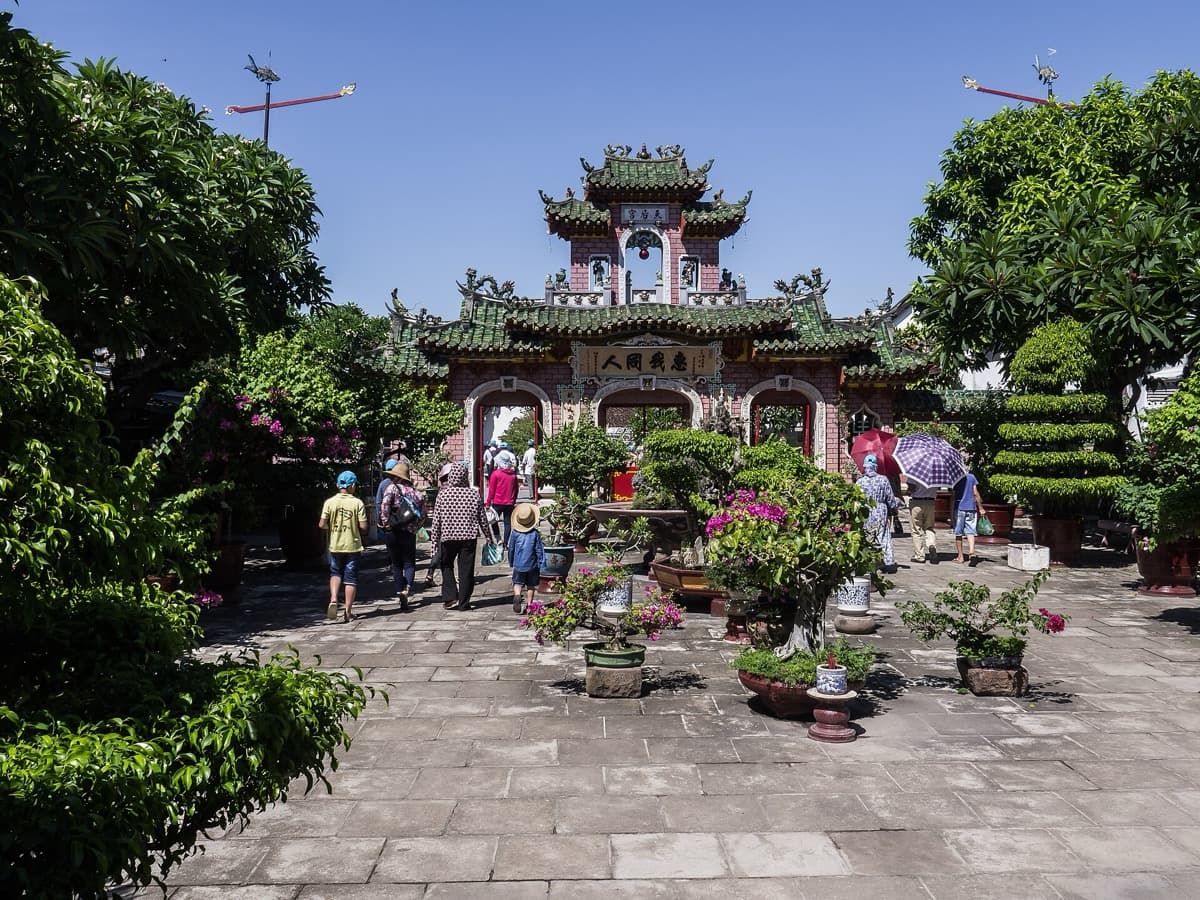
At the western edge of the old town, where the shops thin out, stands a quieter building with a tiled roof and a courtyard: the Cẩm Phố Communal House, or Đình Cẩm Phố. To understand why it matters, notice what it is not. The famous halls along the main streets are assembly halls, built by Chinese trading congregations for their own communities, and their migration story is told in the map of who fled where. This is a đình, a Vietnamese village communal house, and it belongs to the local people who lived here long before the town became a light show.
Inside, the village honors its tutelary spirit, the Thành Hoàng, along with its founding ancestors and the river and water deities that mattered so much to a town built on a floodplain. Its origins trace to around the end of the fifteenth century. It was restored to its present form in 1817 under King Gia Long, restored again in 1897, and ranked a national relic in 1991. Stand in the courtyard a moment. All the glamour you have been walking through, the silk, the lanterns, the foreign merchant houses, was the surface of this place, the international trade that made it rich and famous. Underneath was always a Vietnamese village, worshipping its own spirits and tending its own dead. The port came and went. The village stayed.
The water that made and unmade the port
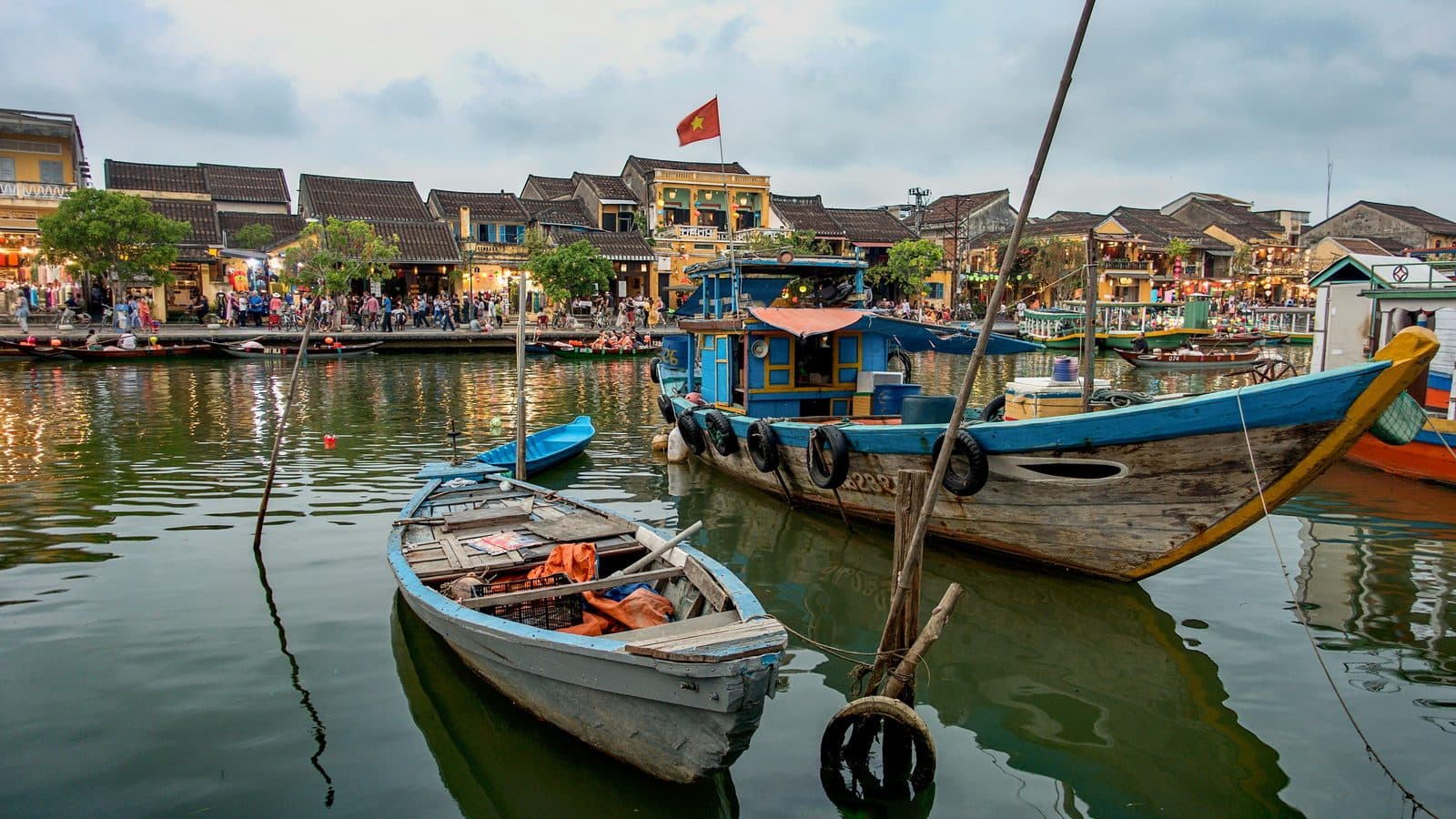
Come down to the water. This is the Thu Bồn, or rather the branch that fronts the town, called the Hoài, and it is the reason Hoi An exists and the reason it nearly disappeared. Long before the merchant ships, this valley was a cultural heart of the Champa kingdom, from around the year 700 until the Vietnamese conquest of 1471, and a Cham port once stood at the river mouth near Cửa Đại. In the trading centuries the water was the highway. Everything moved on it. Then, in the eighteen hundreds, the river silted, the channel grew too shallow for the big ships, trade shifted north to the deeper harbor at Da Nang, and Hoi An was left poor and frozen in time. That failure is why the old town still stands.
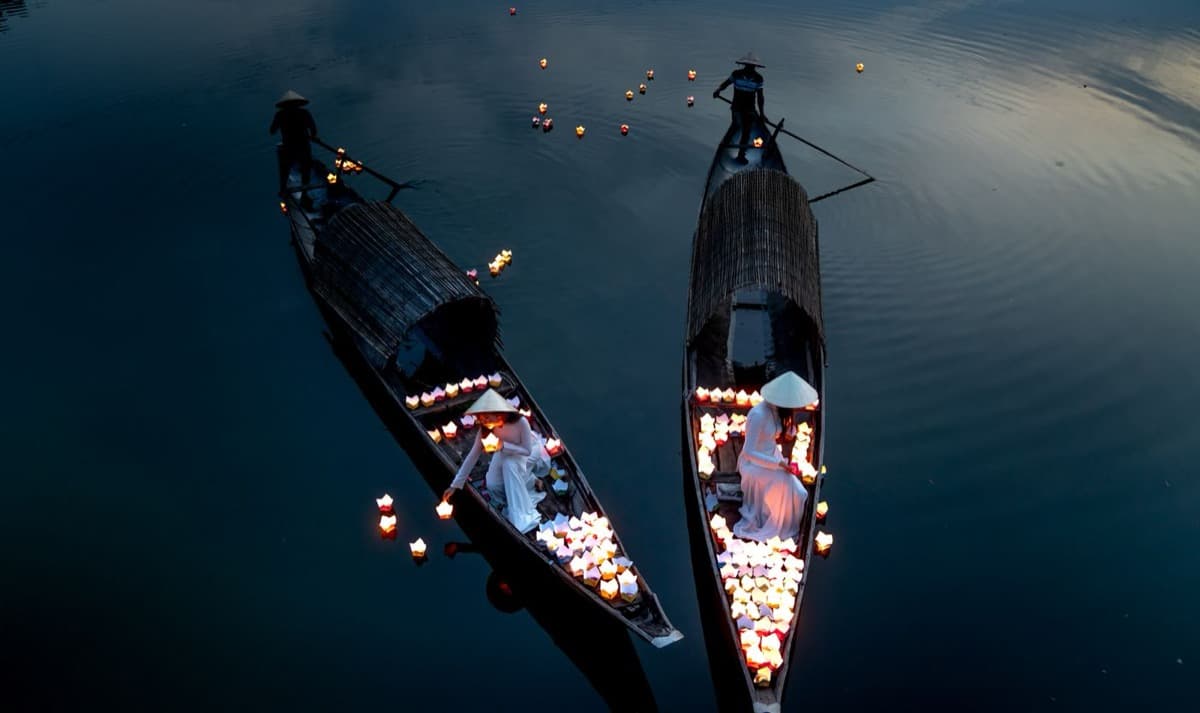
Now watch what the same water carries tonight. Wooden sampans, rowed by women standing at the stern, slide out with lanterns on their prows, and travelers set small paper lanterns adrift on the current, each one a wish let go. It is worth being honest about this: the floating of candle boats is a custom of the present, a tourist-era ritual, not an ancient rite, and it is lovelier for being honest about that. The river that once carried cargo out to the world now carries little flames of light in slow circles.
Commerce reborn as spectacle
Cross the footbridge to the islet of An Hội, and the light changes character. On the town side, the glow is heritage. Here, along Nguyễn Hoàng Street, it is a market again. The Hoi An Night Market runs most evenings, roughly five to ten, with something like a hundred and fifty stalls, and what they sell, more than anything, is light. Walls of silk lanterns hang in tiers, switched on so you can see the color before you buy, and between them are crafts and the smell of grilled skewers and sweet corn.
Think about what you are seeing. For centuries the merchant instinct of this town was to buy and sell across oceans. The ships are gone, but the instinct stayed, and it found a new cargo. The thing being traded now, hand to hand, glowing in stacks, is the lantern itself, the very symbol of the town turned back into a good for sale. It is loud and bright and a little touristy, and that is exactly the point. The market never really left Hoi An. It just changed what filled the stalls.
The whole story in light
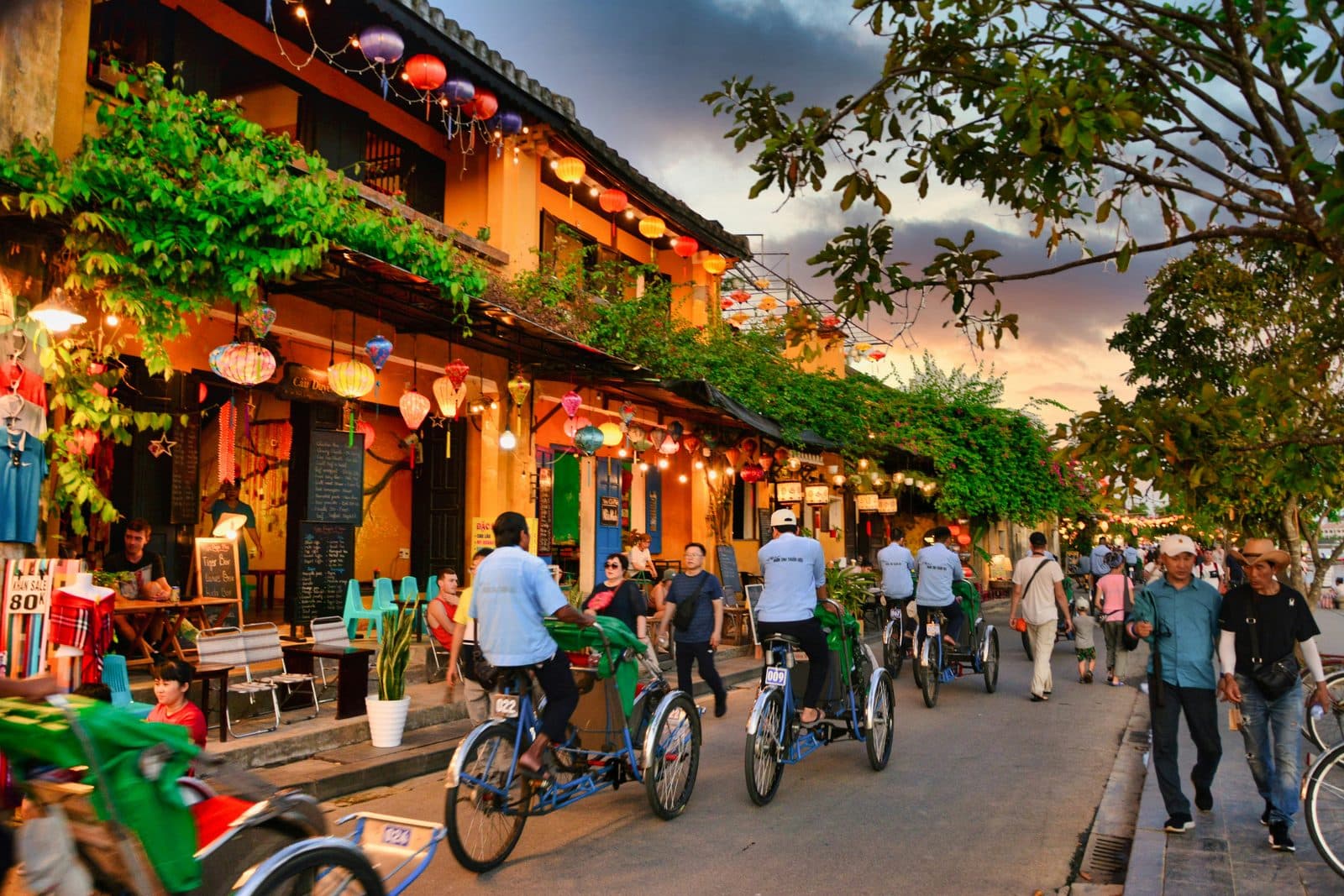
End on the old quay, with the Bạch Đằng riverfront and Nguyễn Thái Học Street at your back, among the streets that formed the commercial core of the trading town. Look at the water. The lanterns strung along the eaves and the boats on the river double themselves in the black surface, so the town appears to float in its own reflection. This exact quay is where cargo once came ashore and where silk was loaded onto ships bound for distant markets. Now it is a promenade of glowing silk, the same material, the same skill, doing the opposite job. It once meant departure. Now it means stay a while.
Since 1998 the municipal government has hosted a Full Moon celebration on the fourteenth night of each lunar month, roughly five to ten in the evening, when the electric street lighting is dimmed and the town is lit only by silk lanterns. If you time your visit to a full moon night, you are seeing the purest version of the idea. Either way the thesis is complete. A deepwater port lost its river and its ships. What looked like ruin kept the town whole. And a poor, forgotten place learned to rebuild its economy on the beauty of its own past. Obsolescence became preservation. Preservation became light. Stand on the quay and let it shine.
Ready to experience it?
Lantern Town: Lanterns on the Thu Bon
75 min · 1.7 km · easy
More from Hoi An
Explore more at your own pace.
Hoi An Travel Guide: How Many Days, Getting Around, When to Go (2026)
How to See Hoi An: The Town That Failure Saved
One Day in Hoi An: A Walkable Ancient Town Itinerary (2026)

What to Eat in Hoi An: A Food Guide (2026)
A Map of Who Fled Where: Reading Hoi An's Assembly Halls