Ancient Town: The Port That Time Forgot
80 min · 1 km · easy
Hoi An food is a fingerprint of the trading port that made it. Centuries as an international harbor, where Chinese, Japanese, and later French influences met local central-Vietnamese cooking, left the town a cuisine unlike anywhere else in the country. The clearest proof is cao lau, a noodle so tied to one local well that cooks who move away say they cannot make it the same. Eat well in Hoi An and you are tasting dishes you literally cannot get the same way elsewhere. This guide covers the specialties worth seeking out and where the food culture actually lives, and it pairs naturally with a slow walk on one of our Hoi An self-guided tours.
The dishes to seek out
Cao lau. The signature dish, and the one you must try. Thick, chewy noodles slicked in a little savory sauce, topped with slices of char siu-style pork, fresh greens and herbs, and crisp fried croutons. What makes it special is local: the noodle dough is traditionally kneaded with mineral-rich water from the ancient Ba Le well in Hoi An, which gives it a firmness ordinary rice noodles lack. It is found nowhere else in Vietnam in the same form.
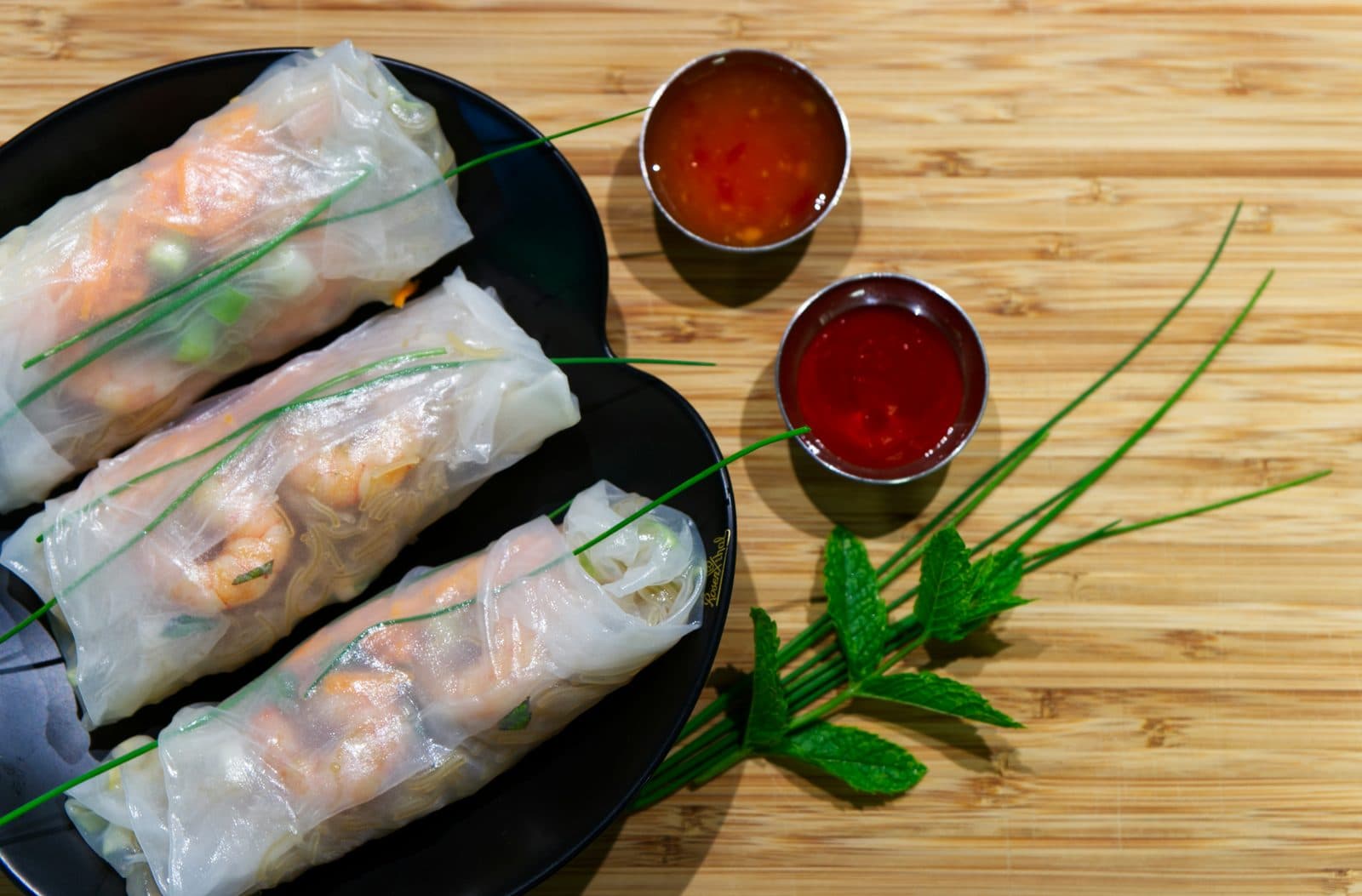
White rose dumplings (banh bao banh vac). A local delicacy of translucent, ultra-thin rice-paper dumplings pinched into shapes that resemble blooming white roses, filled with seasoned shrimp (and a pork version) and scattered with crisp fried shallots. Traditionally made by a single Hoi An family whose restaurant is named for the dish.
Banh mi. Vietnam's famous baguette sandwich reaches a peak in Hoi An, where the French bread, Chinese-style meats, pate, pickled vegetables, herbs, and chili come together so well that the town's banh mi shops draw pilgrims. Banh Mi Phuong and Madam Khanh, "The Banh Mi Queen," are the two names everyone trades.
Com ga Hoi An. The town's version of chicken rice: rice cooked in chicken broth and turmeric until fragrant and golden, topped with shredded poached chicken, herbs, and pickled vegetables, with a bowl of broth on the side. Simple, local, and everywhere.
Mi quang. The signature noodle of the wider Quang Nam region around Hoi An: flat turmeric-tinted noodles under just a shallow pool of intense broth, with pork and shrimp, peanuts, herbs, and a shard of sesame rice cracker on top. Less soup than a dressed noodle, and unmistakably central Vietnamese.
Where the food culture lives
Hear a stop from this walk
Bach Dang Riverfront: The Water That Made and Unmade the Town
The banh mi institutions. For the sandwich, join the line at Banh Mi Phuong or Madam Khanh, both long-running family shops near the Ancient Town that built their fame one baguette at a time.
The market and street stalls. The Hoi An Central Market and the small shops around it are where cao lau, com ga, and mi quang are cheapest and most local. The market is a stop on the merchant-port walk, so it doubles as a lunch break mid-tour. For the story of the commerce that never left these stalls, see the companion piece on how failure saved the town.
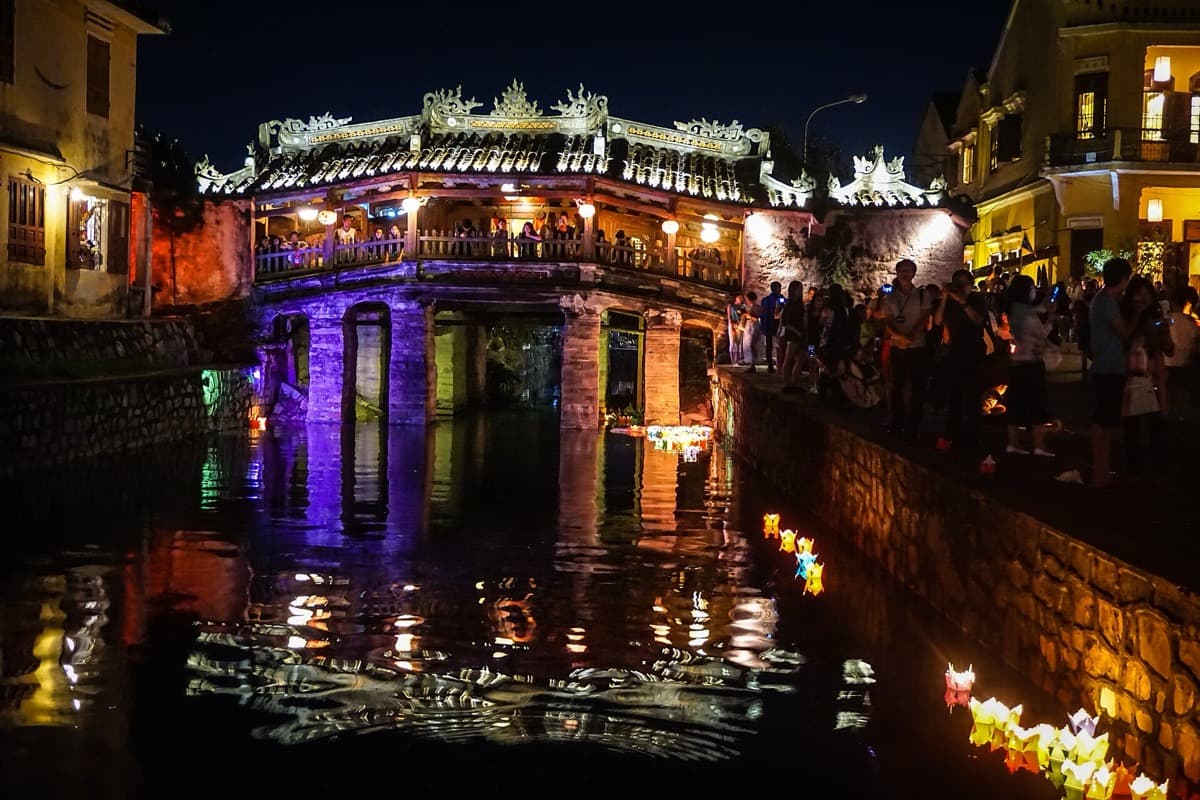
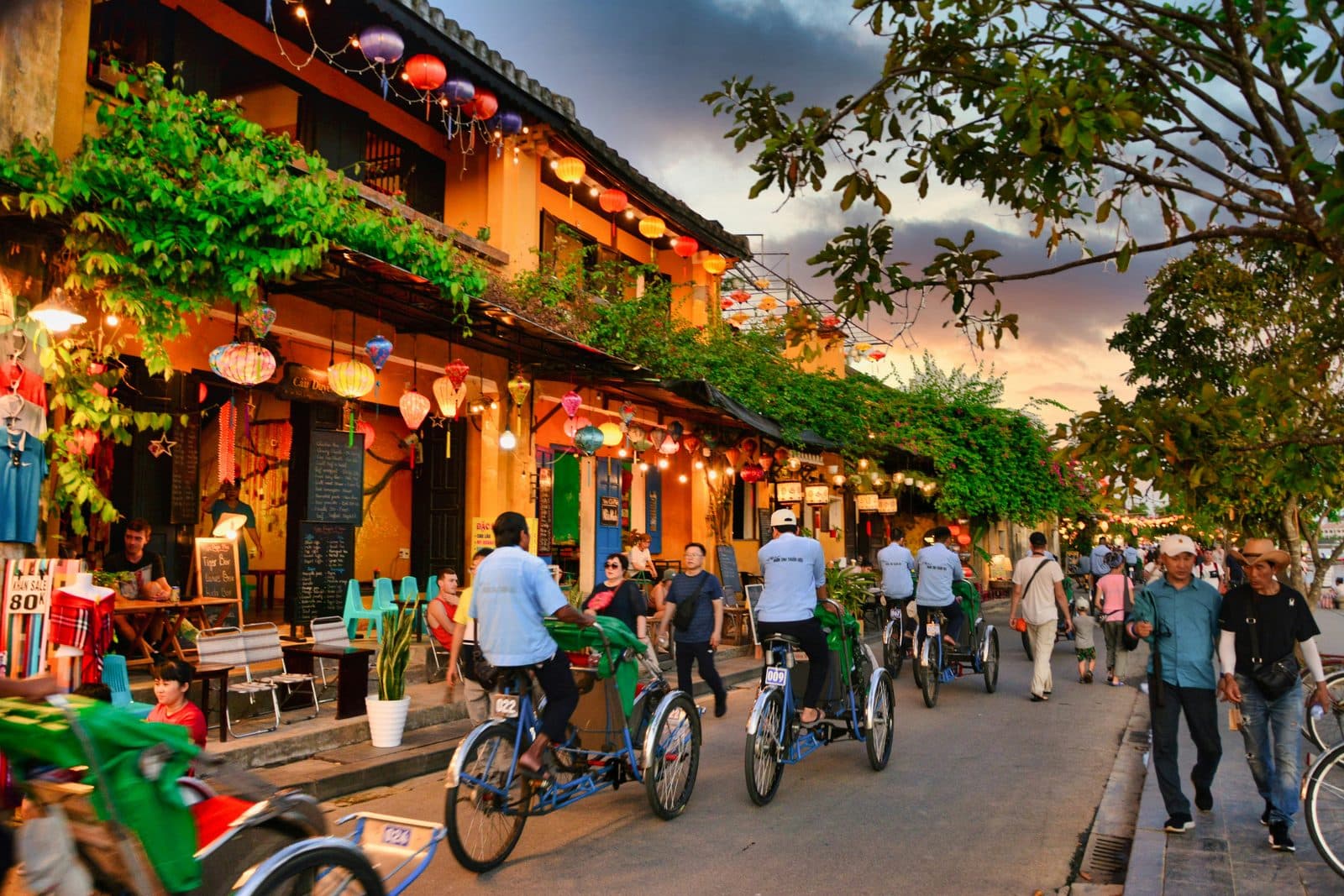
The riverside and night market. As the lanterns come on, the An Hoi night market and the riverfront fill with grilled skewers, sweet chè, and street snacks. Walk the lantern river at night and it doubles as your route to dinner, past food stalls glowing under silk lanterns.
The white rose source. For the dumplings, the White Rose restaurant run by the family credited with the recipe is the place to taste them at the source, and many town restaurants buy their dumplings from the same kitchen.
Eat as you walk
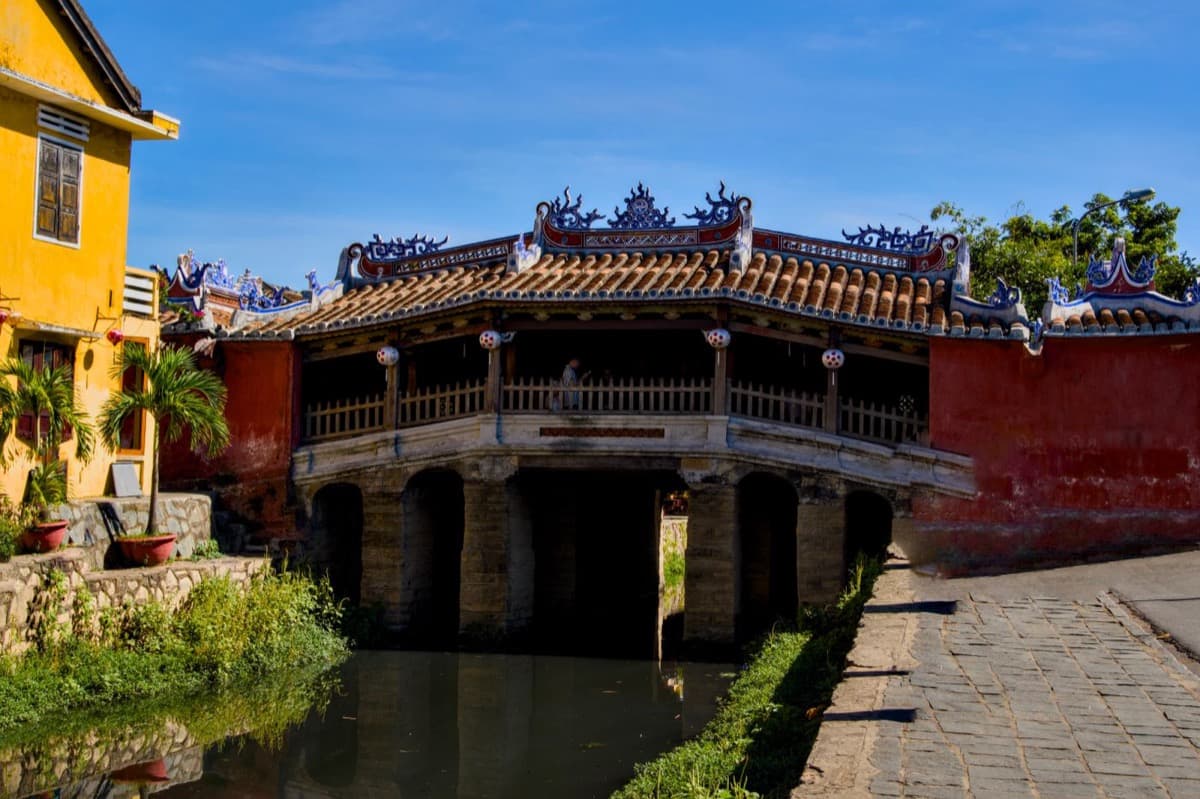
The best way to work through this list is on foot, one district at a time. Pair a morning at the covered bridge and old houses with a cao lau lunch, an afternoon of tailors with a banh mi on the go, and a lantern-lit evening with skewers and chè from the night market. Route your day with the one day in Hoi An itinerary, plan the practical side with the Hoi An travel guide, and browse all Hoi An tours. Every tour is free to start: the introduction and first stop play in full, and every later stop plays a short preview before an optional purchase.
Frequently asked questions
- What food is Hoi An known for?
- Hoi An is known for a handful of hyper-local dishes. The signature is cao lau, thick chewy noodles with slices of pork, greens, and crisp croutons, a dish found nowhere else in Vietnam. Alongside it are white rose dumplings (banh bao banh vac), delicate shrimp dumplings folded to look like blooming flowers; a banh mi so good it made the town internationally famous; com ga Hoi An, the local turmeric chicken rice; and mi quang, the turmeric-tinted noodle bowl of the wider central-Vietnam region.
- Why is cao lau unique to Hoi An?
- Cao lau depends on local ingredients that are hard to reproduce elsewhere. Traditionally, the noodle dough is kneaded with mineral-rich water drawn from the ancient Ba Le well in Hoi An, which gives the noodles their firm, chewy texture, and the ash used to treat the dough is said to come from local trees. Many cooks who left Hoi An found they could not make the same noodle without that well water, which is why cao lau is considered a genuine Hoi An specialty rather than a Vietnamese dish you find countrywide.
- Where should you eat in Hoi An?
- For the famous banh mi, the best-known spots are Banh Mi Phuong and Madam Khanh, "The Banh Mi Queen," both institutions with long lines. For white rose dumplings, the White Rose restaurant run by the family credited with the dish is the source. For cao lau, com ga, and mi quang, the small shops and market stalls around the Ancient Town and the central market are the local move. Morning Glory is a well-known sit-down restaurant covering the classics for those who want an English menu.
- Is Hoi An good for vegetarians?
- Yes. Central Vietnamese cooking leans heavily on herbs, greens, rice, and noodles, and Hoi An has a strong cafe and restaurant scene with many vegetarian and vegan options, partly reflecting Vietnam Buddhist tradition. Vegetarian versions of cao lau and mi quang are common, and market stalls offer plenty of vegetable-forward dishes. Just note that fish sauce and shrimp paste are common seasonings, so confirm when you order strictly plant-based.
Ready to experience it?
Ancient Town: The Port That Time Forgot
80 min · 1 km · easy
More from Hoi An
Explore more at your own pace.
Hoi An Travel Guide: How Many Days, Getting Around, When to Go (2026)
How to See Hoi An: The Town That Failure Saved
One Day in Hoi An: A Walkable Ancient Town Itinerary (2026)
A Map of Who Fled Where: Reading Hoi An's Assembly Halls
The Fujian Assembly Hall: A Cathedral Built by Refugees to the Sea That Carried Them