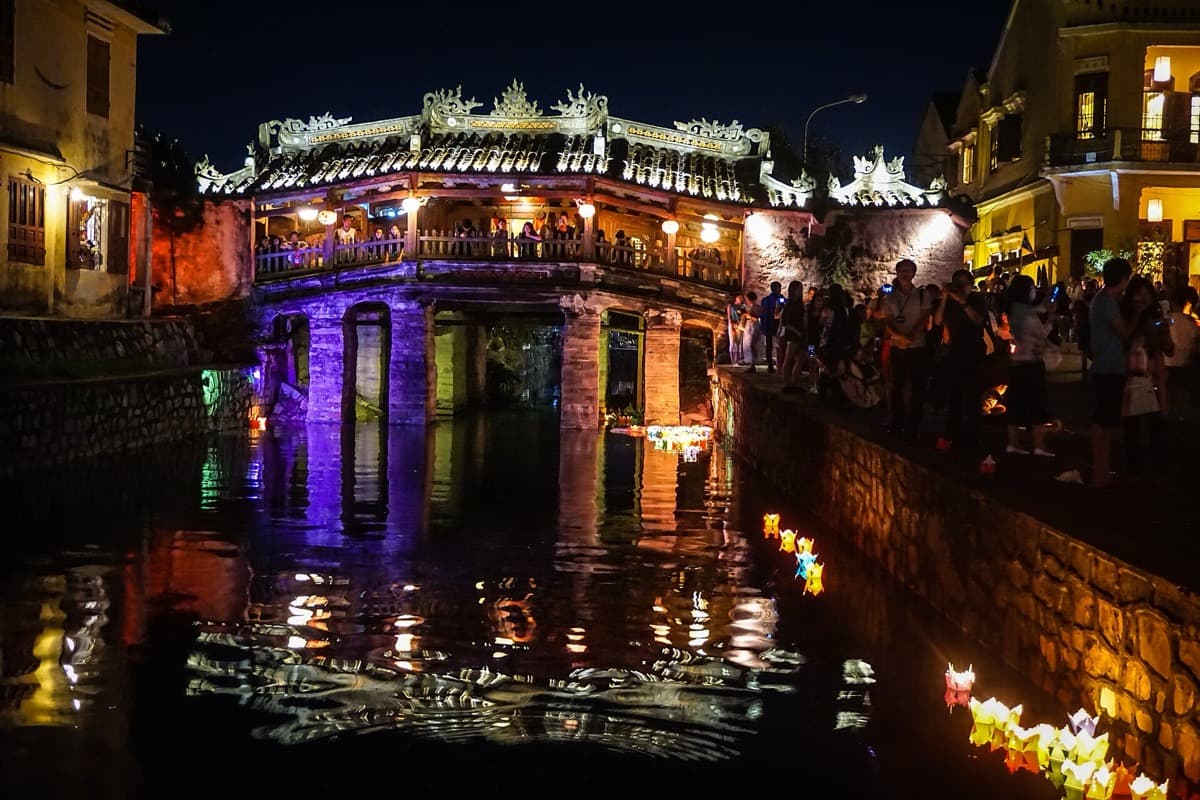
Walk east along Trần Phú Street as it becomes Nguyễn Duy Hiệu, and you pass a row of ornate buildings that look, at a glance, like a sequence of temples. Incense, sea goddesses, deified generals, dragon-carved beams. Most visitors read them exactly that way, as a string of pretty shrines, and photograph them without noticing that they are looking at something stranger and more specific.
They are called hội quán, assembly halls, and their real subject is not religion. It is migration. Each hall was built by a different regional Chinese community, keyed to a specific hometown across the water, and read together they are a map of who fled where. The walk down this one street is a walk through a scattered merchant world organized not by nation but by dialect and home village. If the merchant port tells you what Hoi An traded, the assembly halls tell you who the trade brought, and why so many of them never fully went home.
What a hoi quan actually was
Start at the western end of the street, at the Cantonese hall, Quảng Triệu, built by overseas Chinese from the Guangdong region. It reads as a temple. Its real job was closer to an embassy. A hội quán was where a regional community gathered, and it was part temple, yes, but also a bank, a courtroom for settling disputes, a burial society, and a place to hear news from home and worship in your own dialect. Think of it as a hometown club for people a very long way from their hometown.
One detail at the Cantonese hall holds the whole idea. Many of the building's components were prefabricated in China and shipped across the sea to be assembled here. These migrants did not just carry their gods. They carried their carpenters and their carved beams, and reassembled a piece of home on a foreign riverbank. The dedication tells a story too: the hall first honored Thiên Hậu, the sea goddess who protected the crossing, and only later, around 1911, shifted its main altar to Quan Công, a general deified as the model of loyalty and honest dealing. The founding dates in the records disagree, so do not trust any single year quoted on a plaque. What matters is the function. A temple on the surface. An immigrant institution underneath.
The exile that built them all
Hear a stop from this walk
Chaozhou Assembly Hall (Trieu Chau): Homesickness Carved in Wood
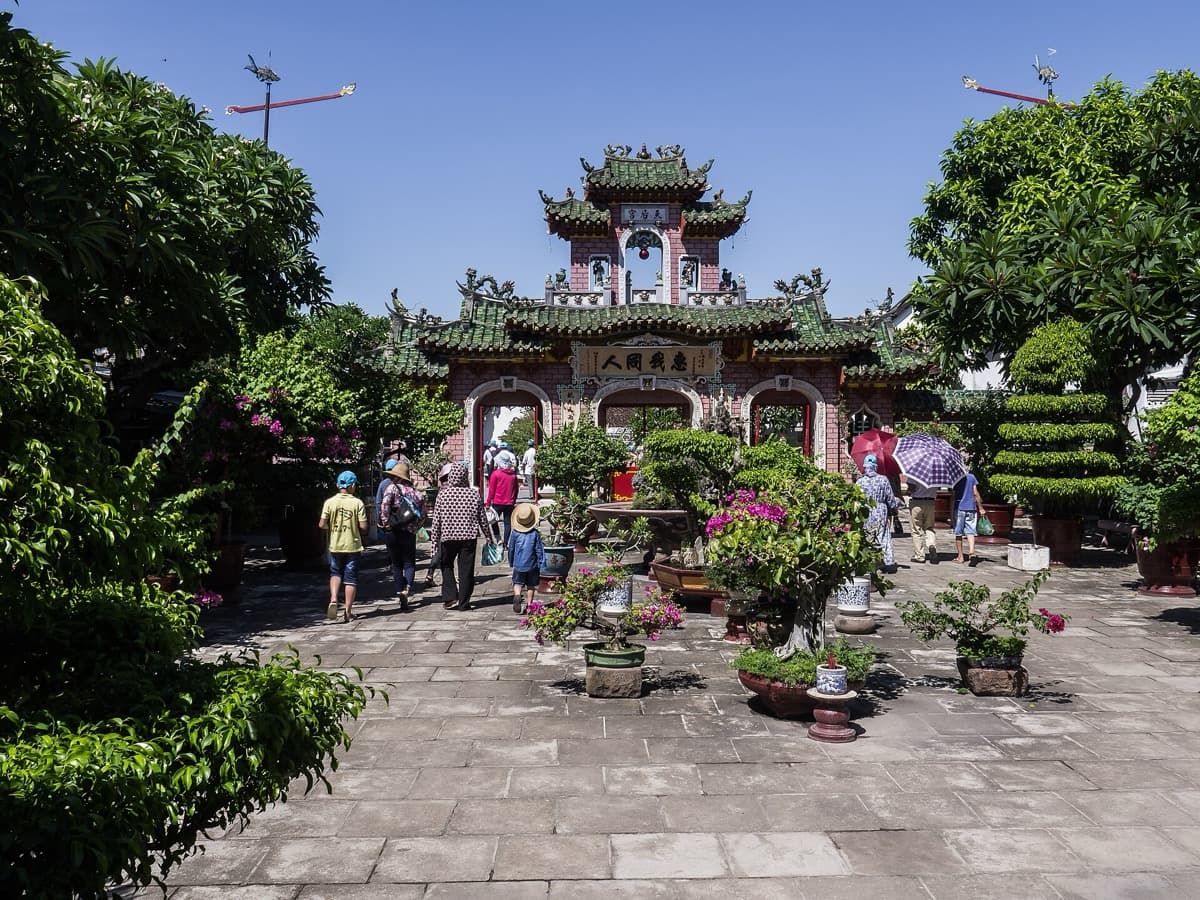
Every hall on this street shares one origin story, and it is written most plainly at the Fujian hall, Phúc Kiến, the grandest and largest of them all, spread across roughly two thousand square metres in a three-section layout. In the middle of the sixteen hundreds, the Ming dynasty fell to the Qing. Loyalists and traders who would not live under the new rulers fled south by sea. The Nguyễn lords of central Vietnam let them settle, and out of that settlement grew a community known as Minh Hương, Chinese who worshipped and eventually intermarried alongside the Vietnamese.
This is why the deity on the Fujian altar matters so much. The hall is dedicated to Thiên Hậu, also known as Mazu, the goddess who protects sailors on the open ocean. Picture what that meant. These were people whose entire history in this country began with a dangerous crossing, many of them refugees who never fully went home. The goddess on the altar is the one they believed carried them across alive. The biggest, most beautiful building on the street was raised by exiles, to thank the goddess of the sea for their survival. The Fujian hall is rich enough to deserve its own account, and it has one in the refugees' cathedral.
The seam that held the fracture together
If the row of separate halls tells you the quarter was split by hometown, one building tells you the other half of the truth. The Trung Hoa hall, whose name Ngũ Bang means Five Congregations, is the shared hall of all the Chinese communities together: the Fujian, the Chaozhou, the Cantonese, the Hainanese, and the Hakka. Merchants from all five contributed to build it, commonly dated to 1741, and it was a neutral meeting place open to any Chinese resident regardless of where their family had sailed from. It also served, and still serves, as a school teaching Chinese language and culture, with classes held there to this day.
Here is the tension worth holding. On this street each community kept to its own hall, its own dialect, its own patron deity. But to the Vietnamese state, and to business rivals, it was sometimes useful to be simply Chinese, one people. This hall is where that happened. Five communities, each guarding its hometown identity, and one community, meeting under a single roof when unity served them better. The halls on either side are the fracture. This one is the seam.
The god who kept merchants honest
Step out of the row of regional halls for a moment at Quan Công Temple, Chùa Ông, founded in 1653 during the height of Hoi An's trading era and credited to the Fujian community. It is not a hometown hall for one group. It is a temple to Quan Công, whose Chinese name is Guan Yu, a real general who lived from 162 to 220 in the age of the Three Kingdoms and was raised over the centuries into a god of loyalty, bravery, integrity, and justice.
Now think about what those qualities meant in a port full of foreign merchants, contracts, and cash. Legend holds that Chinese merchants came here to sign their loan agreements in front of the deity, because no one dared commit fraud in his presence. In a marketplace with no shared courts and no common government to trust, a god became the guarantee. Honesty was enforced not by law but by the fear of standing before Quan Công with a lie on the page. The temple sits directly across from the old market, which is fitting: commerce on one side of the street, and on the other, the god who kept commerce honest.
Grief turned into architecture
The darkest memory the diaspora carries is built into the Hainan hall, Hải Nam, and it is made entirely of grief. In 1851, one hundred and eight Hainanese merchants were killed by imperial naval forces off the coast of Quảng Nam, accused of being pirates. Their ships were seized, and one hundred and eight men were gone in a single act of injustice. The dead were later found innocent and formally exonerated. The Vietnamese emperor Tự Đức honored them and is credited with funding this memorial hall in their name, and the one hundred and eight victims were posthumously ranked as deities, raised from wronged merchants to protective spirits.
This is not a hometown clubhouse like the others. It is a tomb without bodies, a place where a community turned an unbearable loss into something permanent and honored. The records disagree on exactly when the physical building went up, but anchor yourself on the date that matters, 1851, and on the fact that a state eventually admitted it had been wrong.
Homesickness carved in wood
The walk ends at the eastern edge with the Chaozhou hall, Triều Châu, built by merchants from the Chaozhou region, a people also known as the Teochew, and commonly dated to 1845. It shares the same origin as every hall you have passed. But this one turns the diaspora's story into something you can feel with your eyes. The Teochew were famous carvers, and here they poured that skill into the beams, the doors, the windows, and the altars: dragons and phoenixes, flowers, and creatures of the sea, worked with astonishing precision.
Consider what those carvings are. They are the sea, the animals, and the emblems of a homeland these people had left, rendered in wood by hands that ached for it. Homesickness became craftsmanship. It is a fitting close, because it names the emotion running under the whole street. Every one of these halls is a building made by people far from home, trying to feel a little less far.
How to read the street
Walk it west to east, from the Cantonese hall to the Chaozhou hall, so the story builds in order: from the plain hall that teaches you these are embassies, to the seam where five communities became one, to the grandest hall and its sea goddess, to the god who kept merchants honest, to the memorial for the drowned, and finally to the longing carved in wood. Most of the halls are covered by the single Hội An old town ticket, and two of them, the Hainan and Trung Hoa halls, are frequently open without a stub. Dress to cover your shoulders and knees, because these are active places of worship where locals still come to pray.
And carry one idea out with you. The lanterns and tailors that most people come to Hoi An for, and that light up the evening river walk, are the surface of this town. The assembly halls are the deeper layer underneath, the record of the human beings the trade actually moved. A port is not just cargo and quays. It is the people the cargo brought, and the homes they tried to rebuild on the far side of a dangerous sea.
Ready to experience it?
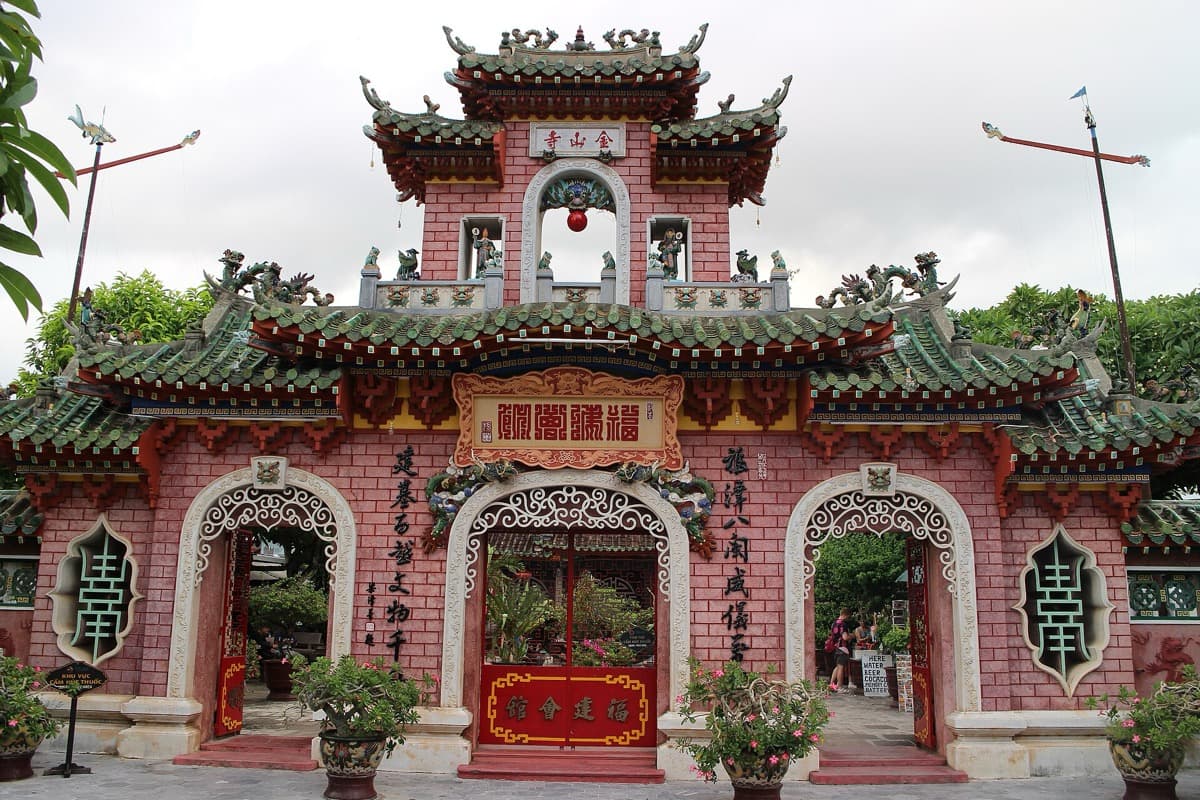
Assembly Halls: The Halls of the Overseas Chinese
75 min · 1 km · easy
More from Hoi An
Explore more at your own pace.
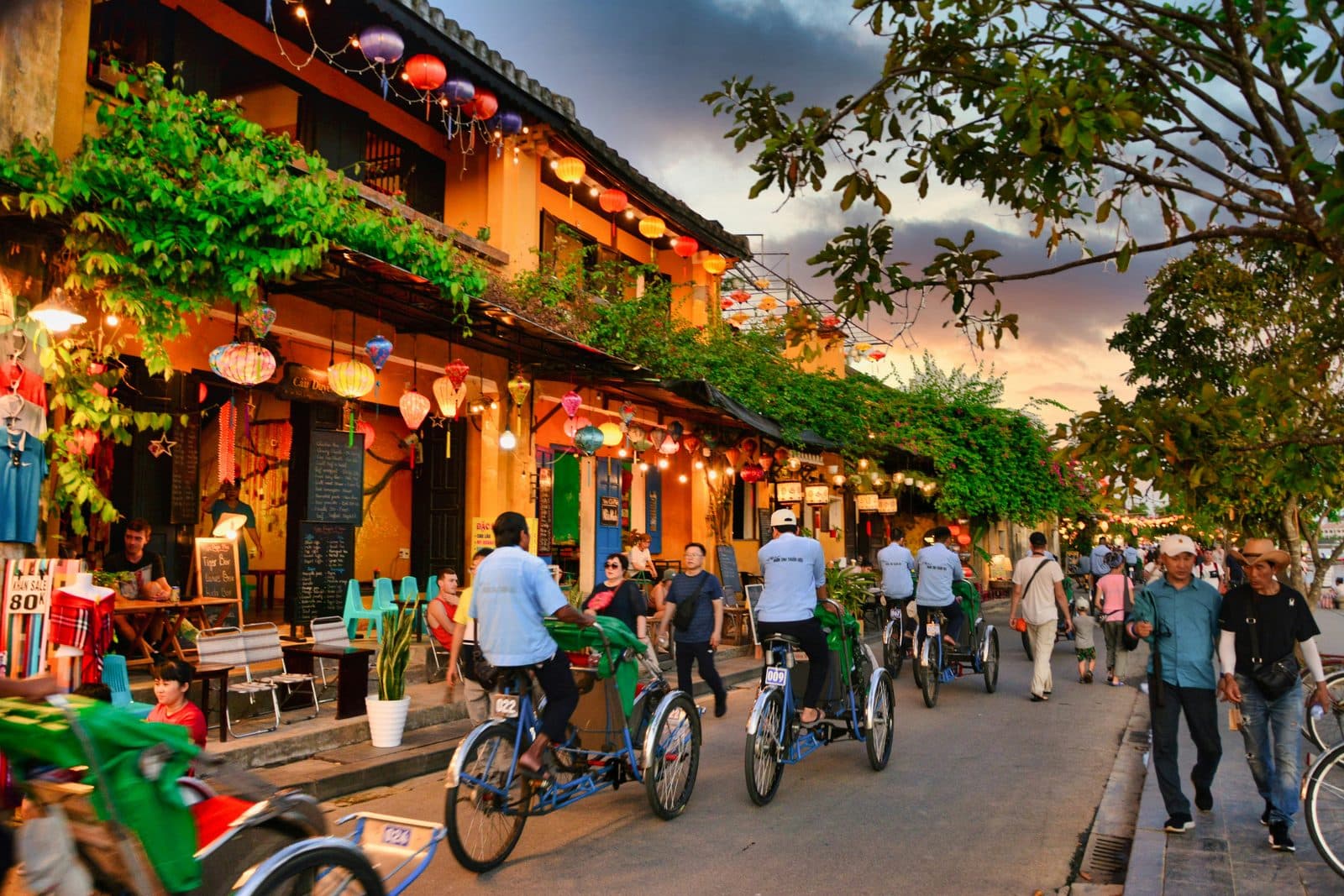
Hoi An Travel Guide: How Many Days, Getting Around, When to Go (2026)
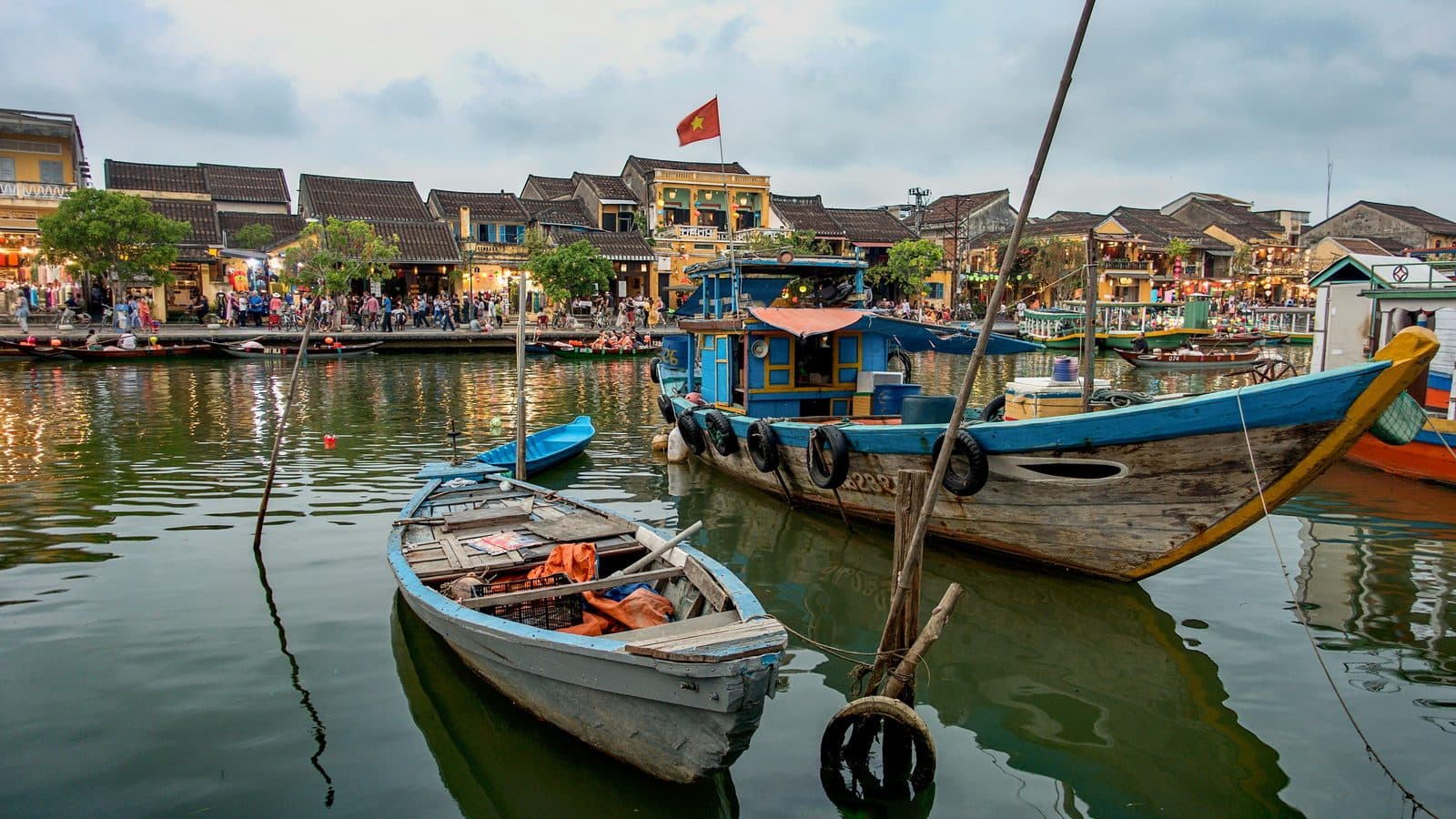
How to See Hoi An: The Town That Failure Saved
One Day in Hoi An: A Walkable Ancient Town Itinerary (2026)
What to Eat in Hoi An: A Food Guide (2026)
The Fujian Assembly Hall: A Cathedral Built by Refugees to the Sea That Carried Them