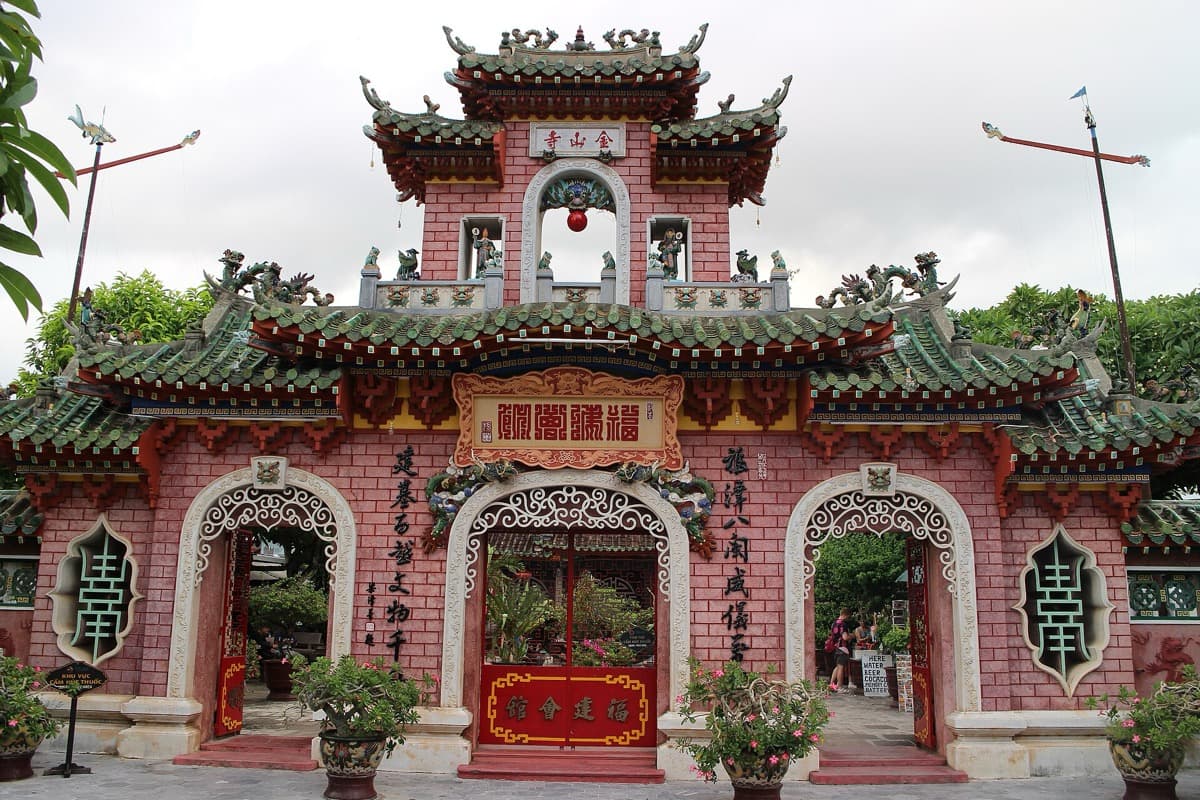
A slow walk down one old street in Hoi An, reading five homesick Chinese communities in the temples they built to feel less far from home. Part temple, part clan clubhouse, part immigrant bank, these assembly halls are a map of who fled where.
Start · Cantonese Assembly Hall (Quang Trieu): The Hometown Embassy
DirectionsStops
- 1
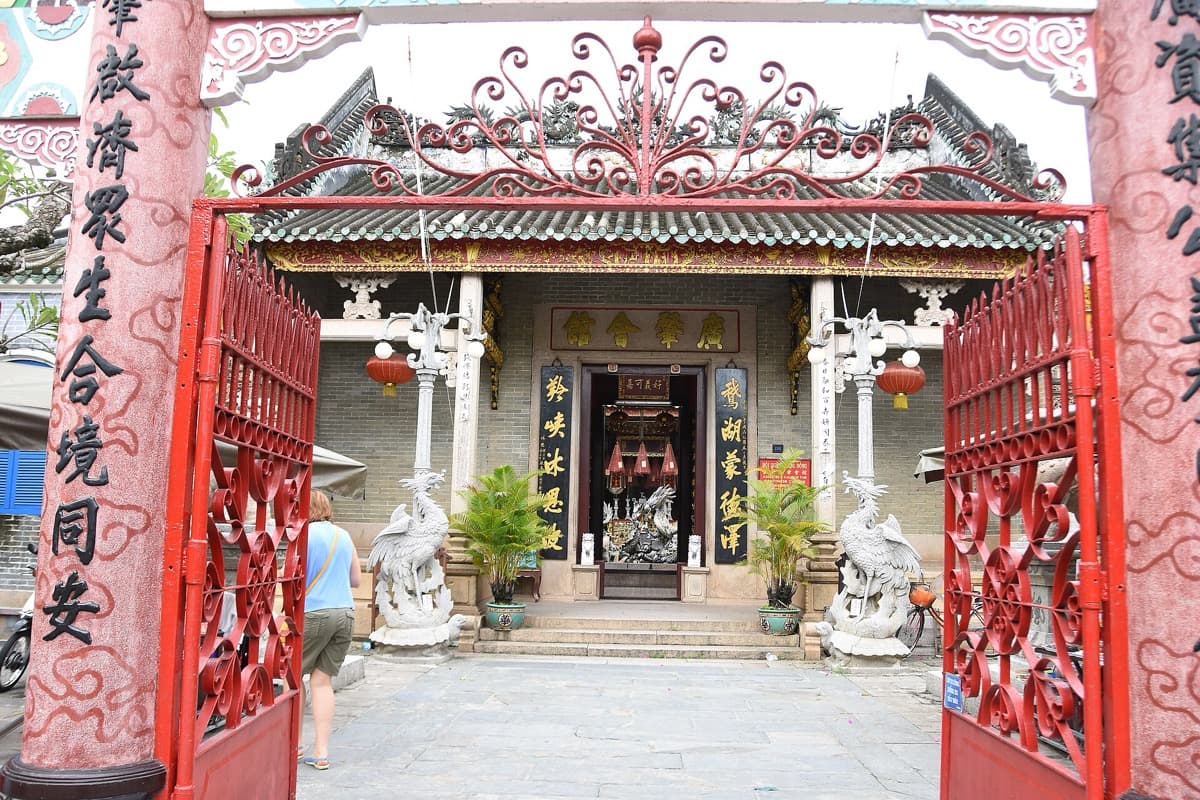
Cantonese Assembly Hall (Quang Trieu): The Hometown Embassy
The hall built by settlers from the Guangdong region, and the place to learn what a hoi quan really was.
- 2
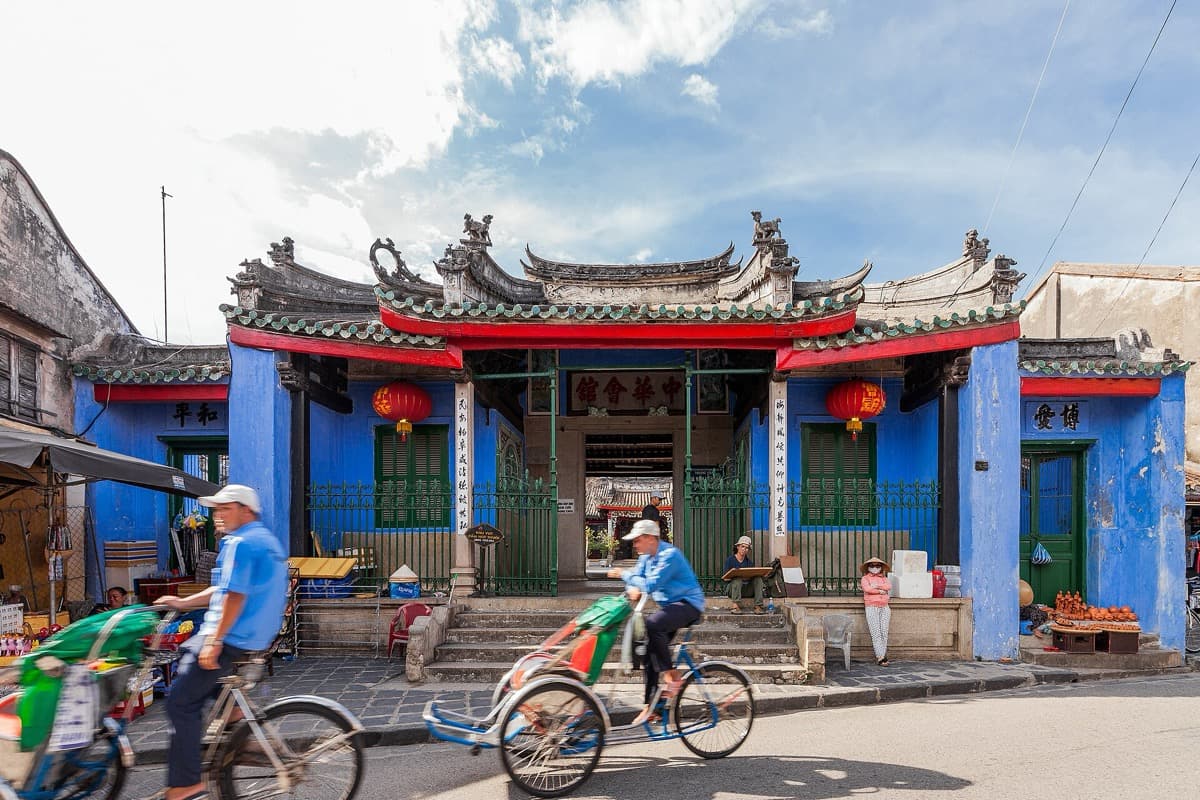
Trung Hoa Assembly Hall (Ngu Bang): Where the Five Became One
The joint hall of all the Chinese congregations, and the counterweight to the story of a fractured quarter.
- 3
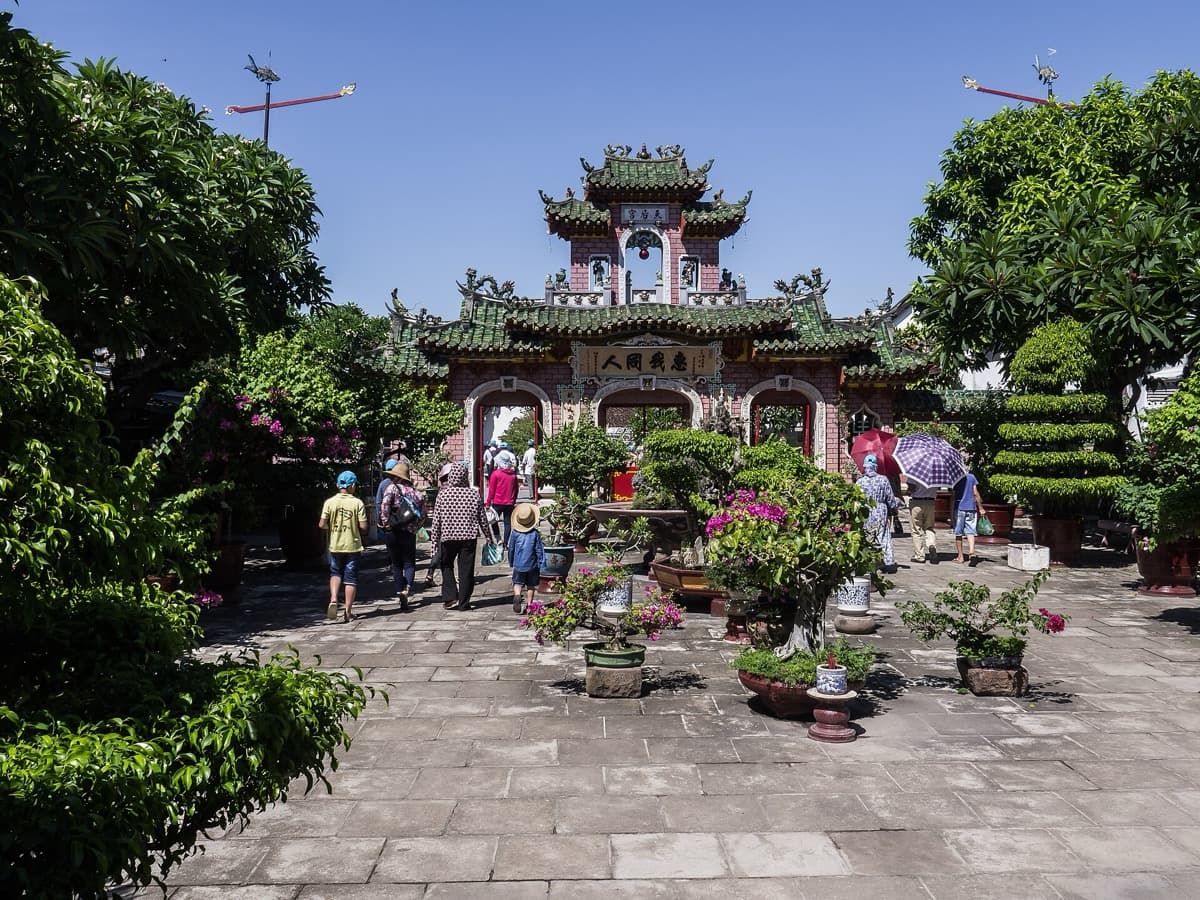
Fujian Assembly Hall (Phuc Kien): The Sea Goddess and the Crossing
The grandest of the halls, where the refugee-origin story is clearest and a sea goddess protects the voyage that stranded them.
- 4
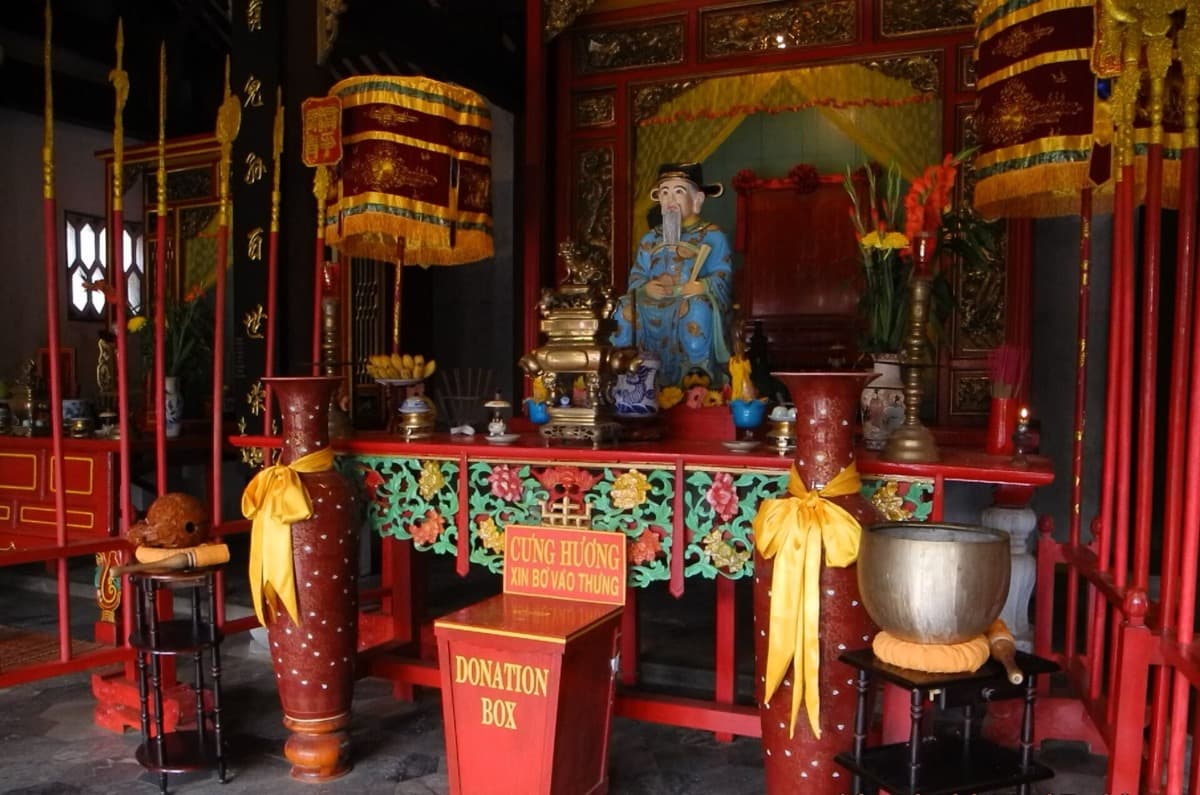
Quan Cong Temple (Chua Ong): The God Who Kept Merchants Honest
A standalone temple to a deified general of loyalty and integrity, and the anchor of trust in the old marketplace.
- 5
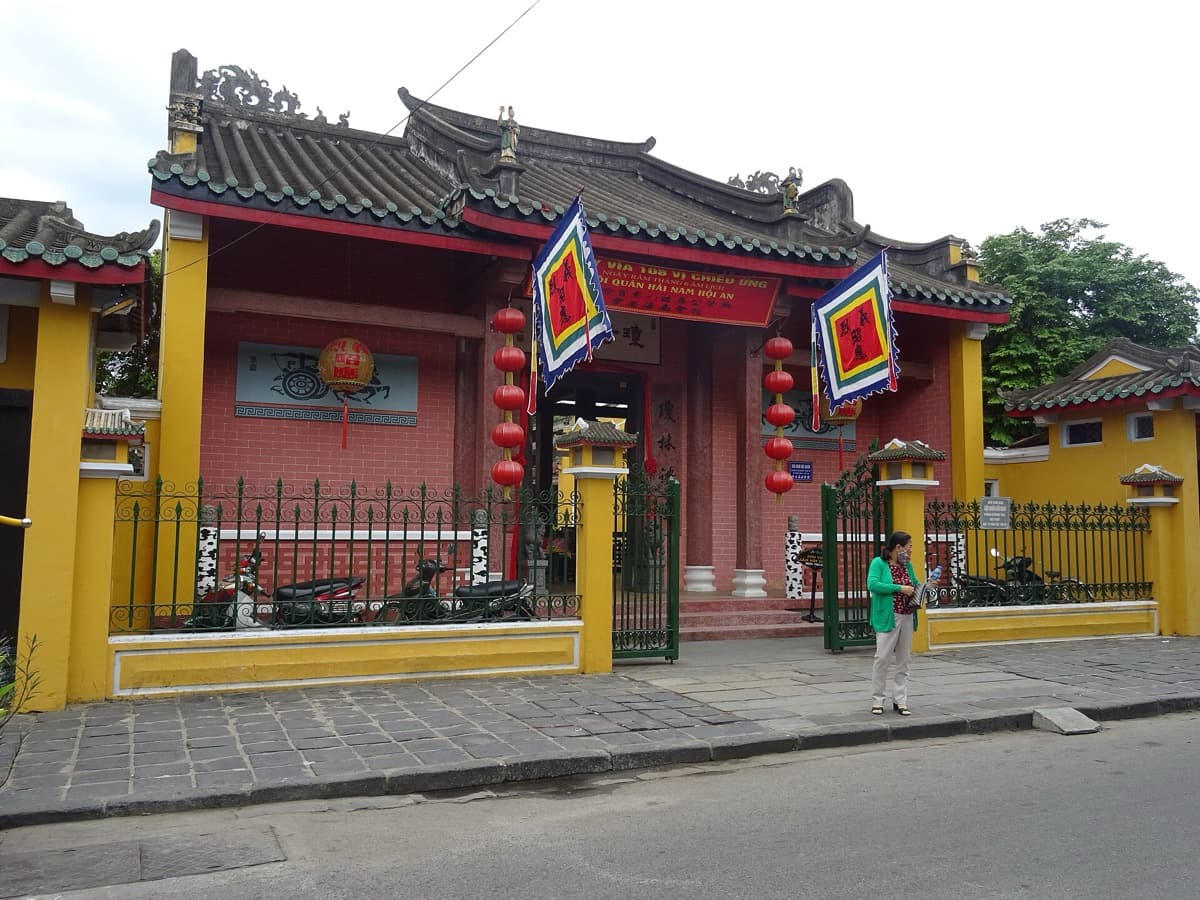
Hainan Assembly Hall (Hai Nam): Grief Turned Into Architecture
The hall built in memory of one hundred and eight Hainanese merchants killed in a single tragedy in the year eighteen fifty-one.
- 6
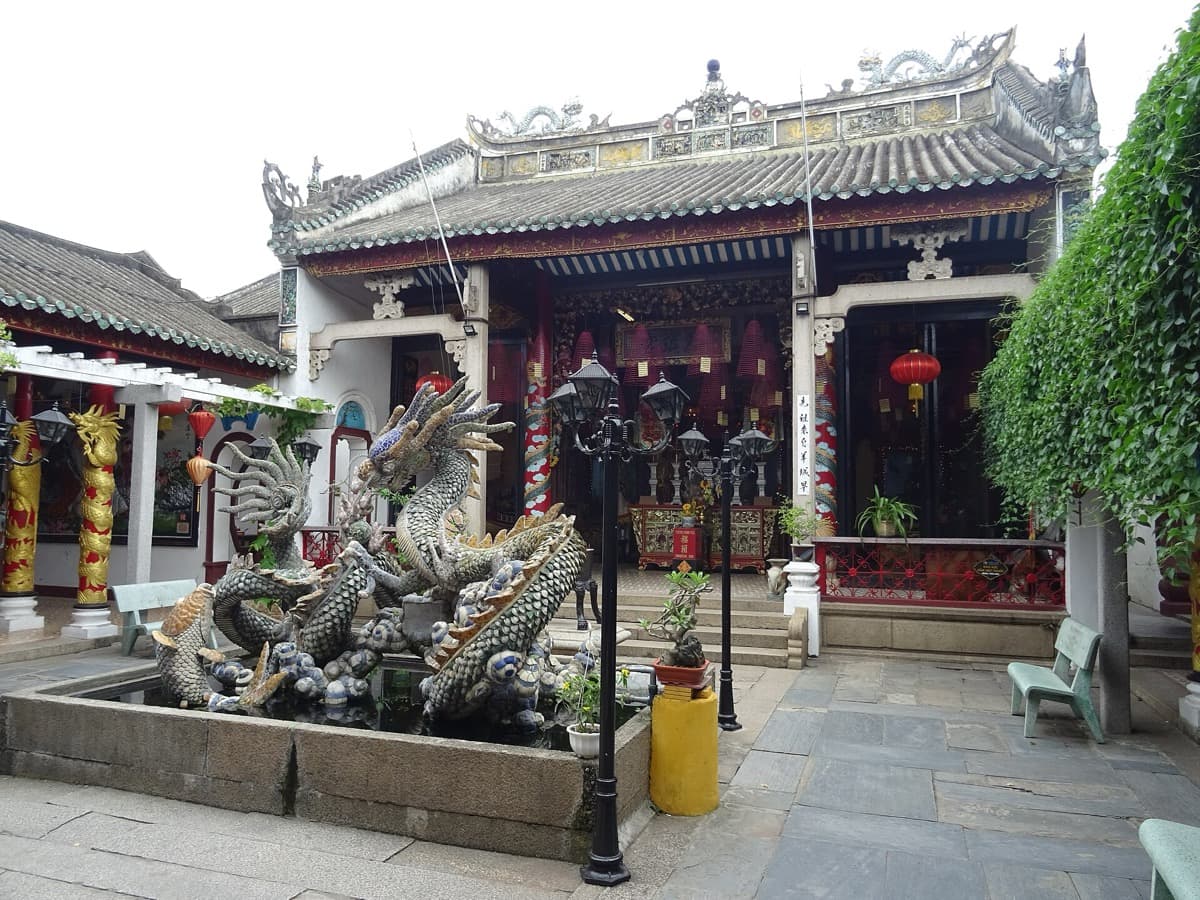
Chaozhou Assembly Hall (Trieu Chau): Homesickness Carved in Wood
The final hall, built by Chaozhou merchants and renowned for woodcarving so fine it turns longing into art.
Details
Best Time to Visit
Early morning, from around eight to ten, or late afternoon toward dusk. The midday heat on the central coast of Vietnam is intense, and the halls offer welcome shade, but the light and the crowds are gentler at the edges of the day. If you can, aim for a weekday, when the Old Town's foot traffic is lighter and you can linger in the courtyards without a queue. The dry season, roughly February through August, is the most reliable window for comfortable walking.
Pro Tips
- •Most of the halls and the Quan Cong temple are covered by the single Hoi An Old Town ticket, which costs one hundred and twenty thousand Vietnamese dong, about five US dollars. It gives you five tear-off stubs to spend at your choice of roughly twenty-two sites, and it stays valid for ten days.
- •Two of the stops on this walk, the Hainan and Trung Hoa halls, are frequently open without a stub, so save your stubs for the grander ticketed halls like Fujian.
- •Walk the street from west to east, starting at the Cantonese hall and finishing at the Chaozhou hall, so the story builds in the order the stops are written.
- •Wear something that covers your shoulders and knees, since these are active places of worship where locals still come to pray and light incense.
- •Slow down inside the Fujian and Chaozhou halls and look up. The finest detail, the carved beams and painted ceilings, is easy to miss at eye level.
- •Carry small dong notes in cash. Some sites and the market opposite the Quan Cong temple are easier with change than with cards.
Safety & Precautions
- •The heat and humidity on Vietnam's central coast can be draining. Carry water, take shade breaks in the courtyards, and pace yourself rather than rushing all six stops at once.
- •Hoi An sits low on the Thu Bon river and floods regularly in the rainy season, roughly October through December. Streets near the water can be under water during heavy rain, so check local conditions before setting out and avoid the riverbanks during flooding.
- •These are working temples and memorial halls, not museums. Keep your voice low, do not point your feet at altars, ask before photographing people at prayer, and never touch the incense or offerings.
- •If you take a boat on the Thu Bon river as part of your day, agree the fare before you step aboard rather than after, so the price is set from the start. Insist on a life jacket, avoid overloaded boats, and skip river trips entirely during high water or after heavy rain.
Travel advisory: Exercise Normal Precautions (Level 1).
Gallery
Related Reading
Go deeper on what you'll see, hear, and walk through.
Overview
Best Self-Guided Walking Tours in Hoi An (2026)
4 min
Overview
Hoi An Travel Guide: How Many Days, Getting Around, When to Go (2026)
4 min
Overview
How to See Hoi An: The Town That Failure Saved
7 min
Overview
One Day in Hoi An: A Walkable Ancient Town Itinerary (2026)
6 min
Thematic
Best Culture Walking Tours in Hoi An (2026)
2 min
Companion
A Map of Who Fled Where: Reading Hoi An's Assembly Halls
8 min
Deep dive
The Fujian Assembly Hall: A Cathedral Built by Refugees to the Sea That Carried Them
5 min
Read the walk
The full story of Assembly Halls: The Halls of the Overseas Chinese, in words. Prefer to listen? Play it narrated, from home or on location.
Introduction
Hoi An sits on the central coast of Vietnam, on the banks of the Thu Bon river, and for centuries it was one of Southeast Asia's great trading ports. Today its Old Town is listed by UNESCO as a rare, well-preserved example of that world. Most people walk it looking at lanterns and tailors. This walk follows a quieter thread. Along one street you will pass a row of ornate buildings that look like temples, full of incense, sea goddesses, and deified generals. They are called hoi quan, assembly halls, and their real story is not religion. It is migration. When the Ming dynasty fell to the Qing in the middle of the sixteen hundreds, waves of Chinese refugees and traders sailed south and settled here under the tolerant Nguyen lords, forming a community known as Minh Huong. Each region built its own hall, keyed to a specific hometown across the water. Read together, they are a map of who fled where, and of a merchant world organized not by nation but by dialect and home village. This tour has six stops. It runs about ninety minutes at an easy pace and covers roughly one kilometre, mostly flat, along Tran Phu as it becomes Nguyen Duy Hieu. Each stop stands on its own, so linger or skip as you like. You will move from one regional hall, to the pattern behind them all, to the grief and the artistry underneath. When you arrive at the Cantonese Assembly Hall, known as Quang Trieu, at one hundred and seventy-six Tran Phu, begin with stop one.
1. Cantonese Assembly Hall (Quang Trieu): The Hometown Embassy
Start here, at the west end of the street, and let this building rewrite what you think you are looking at. It reads as a temple. Its real job was closer to an embassy. This is the Cantonese hall, Quang Trieu, built by overseas Chinese from the Guangdong region, the area around the city once called Canton. A hoi quan, an assembly hall, was where a regional community gathered. It was part temple, yes, but also a bank, a courtroom for settling disputes, a burial society, and a place to hear news from home and worship in your own dialect. Think of it as a hometown club for people a very long way from their hometown. Look closely at the craftsmanship, because it holds a clue. Multiple accounts note that many of the building's components were prefabricated in China and shipped across the sea to be assembled here. These migrants did not just carry their gods. They carried their carpenters and their carved beams. The dedication inside also tells you something. Sources say the hall first honored Thien Hau, the sea goddess who protected the crossing, and only later, around nineteen eleven, shifted its main altar to Quan Cong, a general deified as the model of loyalty and honest dealing. Founding dates vary in the records, so do not trust any single year you see quoted. What matters is the function. Each community that arrived built one of these. As you walk east, you will pass five more, and the pattern will start to speak. This one is your key. A temple on the surface, an immigrant institution underneath.
2. Trung Hoa Assembly Hall (Ngu Bang): Where the Five Became One
If the last stop showed you that Hoi An's Chinese quarter was split by hometown, this one shows you the other half of the truth. Its name, Ngu Bang, means Five Congregations, and it is the shared hall of all the Chinese communities together. Not Cantonese, not Fujian, but everyone. The five groups were the Fujian, the Chaozhou, the Cantonese from Guangdong, the Hainanese, and the Hakka people known as Jia Ying. Merchants from all five contributed to build it, commonly dated to the year seventeen forty-one, which makes it nearly three centuries old. You will often recognize it by its distinctive blue walls. Here is the interesting tension. On the street you just walked, each community kept to its own hall, its own dialect, its own patron deity. But to the Vietnamese state, and to business rivals, it was sometimes useful to be simply Chinese, one people. This hall is where that happened. It was a neutral meeting place open to any Chinese resident regardless of where their family had sailed from, and it also served, and still serves, as a school teaching Chinese language and traditional culture. Chinese classes are held here to this day. Like several of the halls, it also honors Thien Hau, the sea goddess who watched over the crossing that brought all five groups to this river. So hold both ideas at once as you continue. Five communities, each guarding its own hometown identity, and one community, meeting under this roof when unity served them better. The halls on either side of this one are the fracture. This is the seam that held them together.
3. Fujian Assembly Hall (Phuc Kien): The Sea Goddess and the Crossing
This is the grandest and largest of all the halls, and it is where the whole tour's story is written most plainly. The Fujian hall, Phuc Kien, was built and used by the community from Fujian province, sometimes called the Hokkien. It spreads across roughly two thousand square…
Full narration for this stop unlocks with the tour.
4. Quan Cong Temple (Chua Ong): The God Who Kept Merchants Honest
Step out of the row of regional halls for a moment, because this building is different. It is not a hometown hall for one community. It is a temple, called Chua Ong or the Quan Cong temple, and it was founded in the year sixteen fifty-three, during the height of Hoi An's trading…
Full narration for this stop unlocks with the tour.
5. Hainan Assembly Hall (Hai Nam): Grief Turned Into Architecture
This hall is the darkest memory the diaspora carries, and it is built entirely out of grief. It belongs to the Hainanese community, the people from Hainan island, and it was raised in memory of a single catastrophe. In the year eighteen fifty-one, one hundred and eight Hainanese…
Full narration for this stop unlocks with the tour.
6. Chaozhou Assembly Hall (Trieu Chau): Homesickness Carved in Wood
End your walk here, at the east edge of the Old Town, where the street has become Nguyen Duy Hieu. This is the Chaozhou hall, Trieu Chau, built by merchants from the Chaozhou region of Guangdong, a people also known as the Teochew. It is commonly dated to the year eighteen…
Full narration for this stop unlocks with the tour.