Ancient Town: The Port That Time Forgot
80 min · 1 km · easy
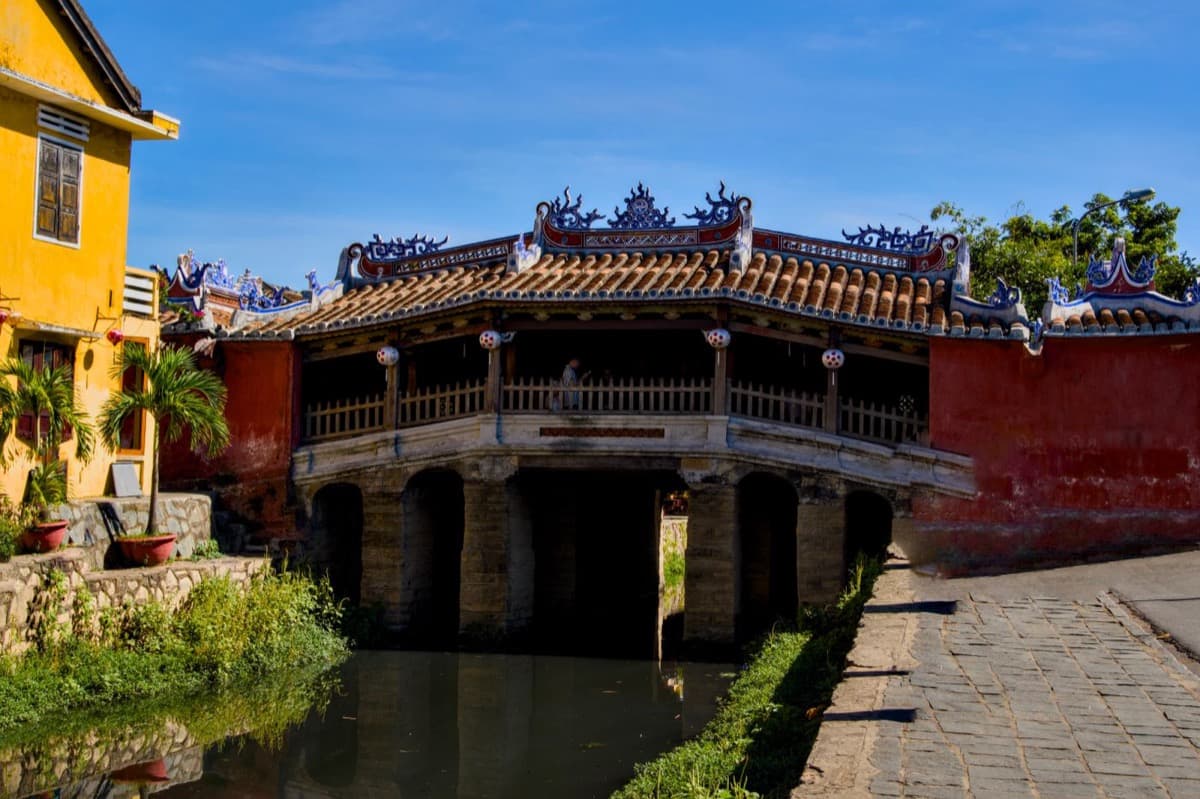
Hoi An sits on the central coast of Vietnam, on the banks of the Thu Bồn river, about thirty kilometres south of Da Nang. It is small. You can walk the whole of the old town end to end in twenty minutes, and the entire historic core covers only a few hundred metres of yellow-walled shophouses, timber merchant homes, ornate temples, and a single covered footbridge. On first encounter it reads like a film set, too pretty and too intact to be real.
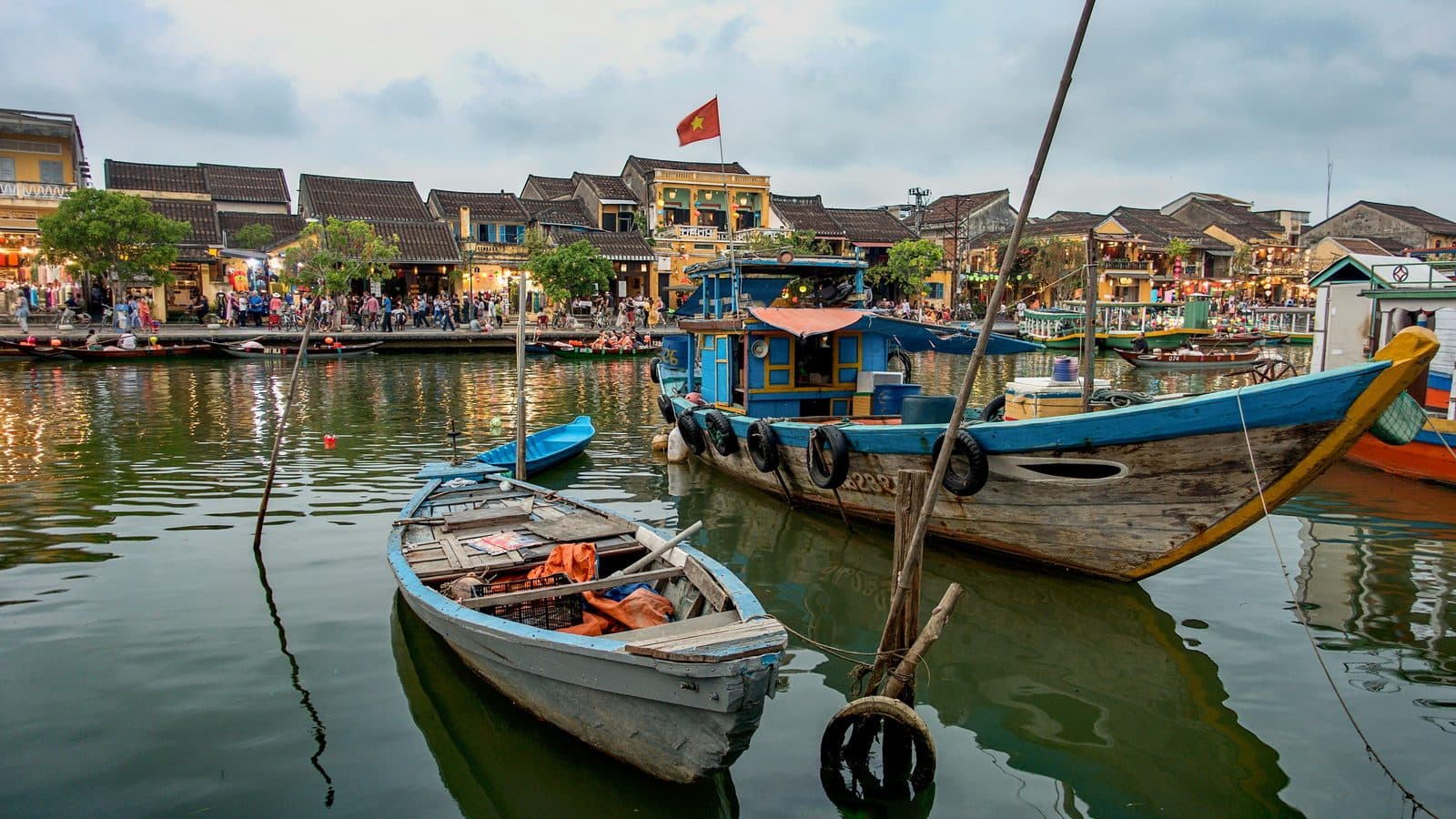
It is real, and the reason it looks that way is the most important fact about the place. Hoi An is one of those rare towns that got rich, got abandoned, and got saved by the same water. From the fifteen hundreds through the seventeen hundreds this was one of Southeast Asia's great international harbors, a port the Europeans called Faifo, where Japanese and Chinese merchants settled and ships came for silk, ceramics, and spices. Then the harbor mouth silted, the big trading vessels moved north to the deeper harbor at Da Nang, and the boomtown simply froze. The wealth that would have demolished the old houses and built new ones never came. So the merchant homes, the assembly halls, the covered bridge, and the riverfront stayed almost exactly as they were. In 1999 UNESCO inscribed Hoi An Ancient Town as a World Heritage Site, calling it an exceptionally well-preserved example of a Southeast Asian trading port.
That is the paradox at the center of the town. Prosperity would have rebuilt Hoi An. Failure preserved it. Hold that idea and the whole place organizes itself.
The town is a fossil, and fossils are legible
Most historic cities are palimpsests. Each generation tears down and builds over the last, so the past survives only in fragments. Hoi An is different because its history stopped. When the ships left, roughly two centuries of construction stopped with them, and what remains is a coherent snapshot of a working port at the age of sail rather than a jumble of eras stacked on each other.
This is why the town rewards slow reading. The narrow-fronted, deep-bodied merchant houses are the tube-house style, built that way because street frontage on the harbor was expensive and families stretched their homes backward. The trapdoors set into their ceilings are flood defenses, hatches through which trading families hoisted their goods to the dry upper floor when the Thu Bồn rose. The blend of Vietnamese, Chinese, and Japanese carpentry under a single roof is the signature of a place where three merchant cultures lived on the same street. None of this is decoration. It is a functioning port preserved in hardwood, and once you know what you are looking at, the buildings start to talk.
Three ways to walk the same story
Hear a stop from this walk
Bach Dang Riverfront: The Water That Made and Unmade the Town
There is no single correct route through Hoi An, but three threads hold the whole town together, and each is a way of asking the same question: what does a place do after the thing that made it disappears?
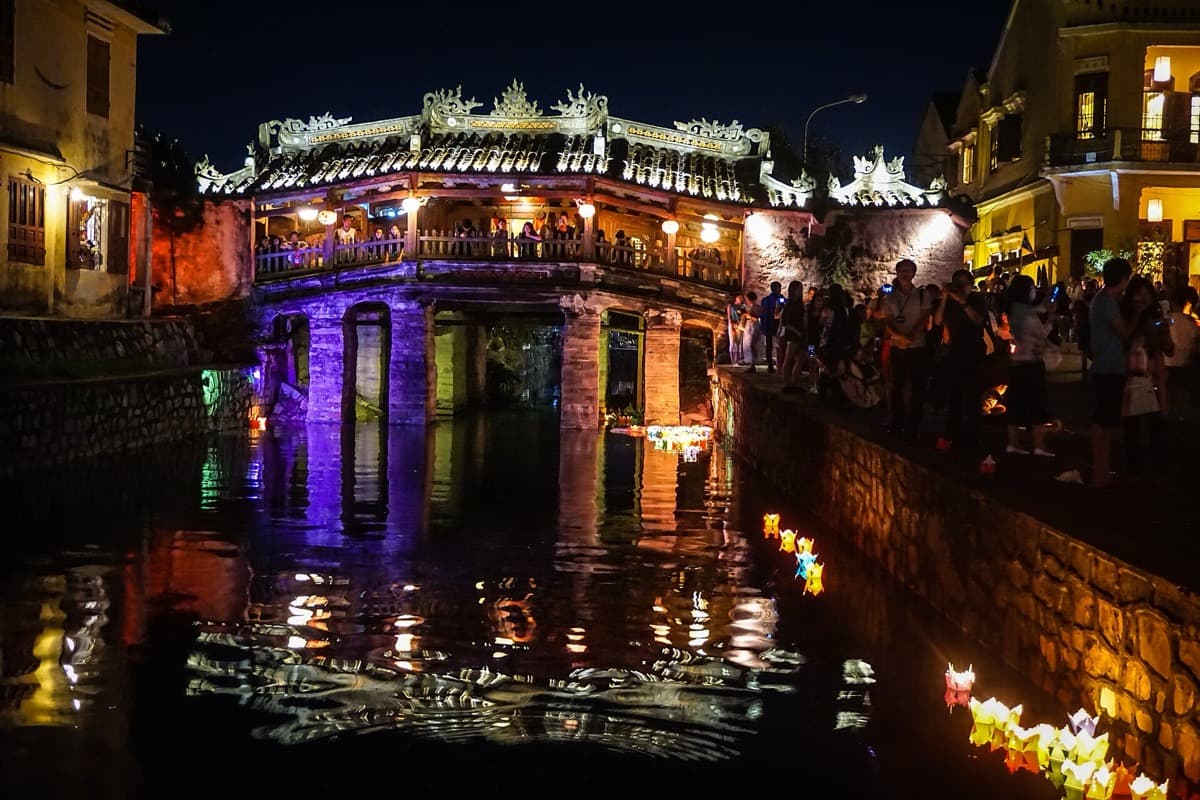
The first thread is the port itself. Walk it and you read the bones of the trade: the Japanese covered bridge at the western threshold, the preserved merchant houses of Phùng Hưng and Tấn Ký, the ceramics that were the actual cargo, the market that never stopped, and the Thu Bồn quay where it all came ashore. This is the origin story, and it is laid out in the harbor that failure saved. Start here if you want to understand why the town exists at all.
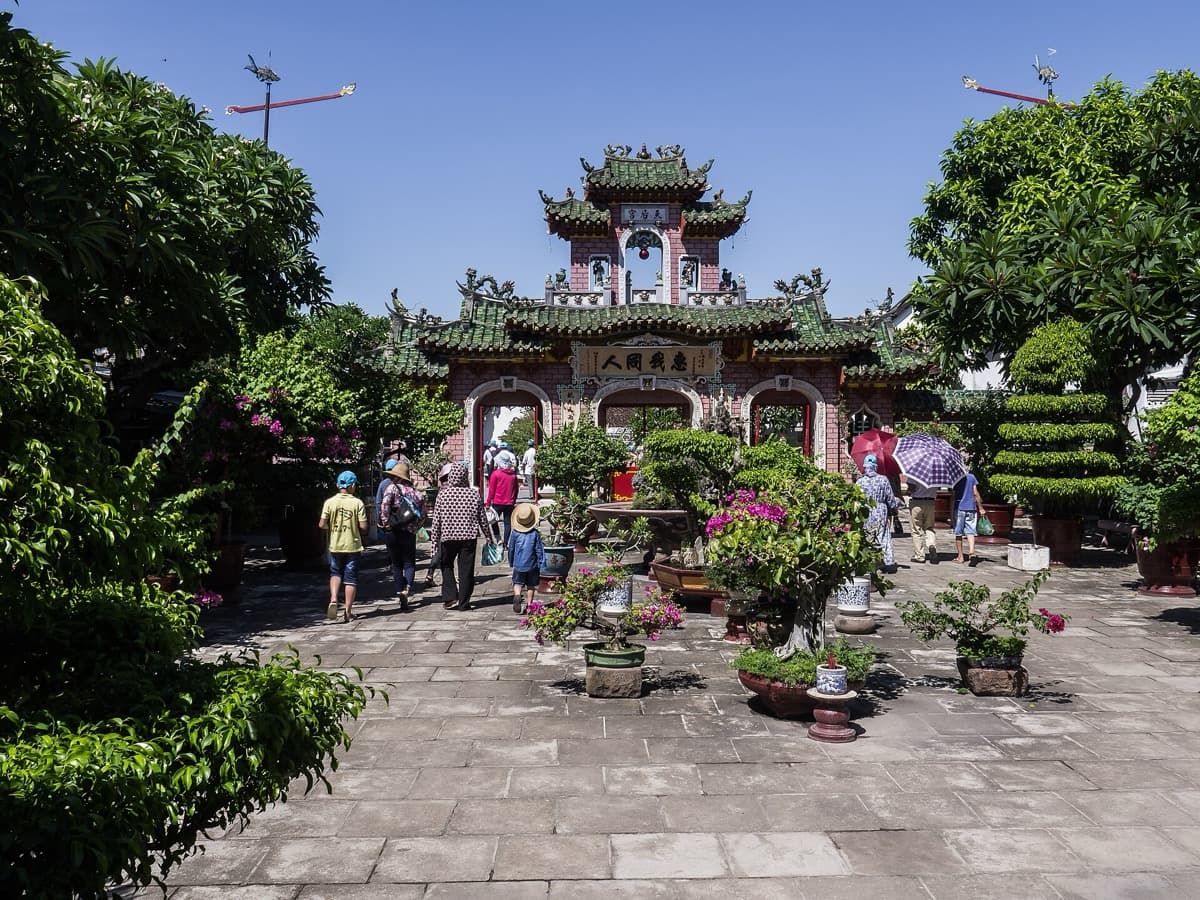
The second thread is the immigrants who built it. Along one street stands a row of ornate buildings that look like temples but were really something closer to embassies. They are called hội quán, assembly halls, and each was raised by a different regional Chinese community that fled south after the Ming dynasty fell to the Qing in the middle of the sixteen hundreds. Read together they are a map of who fled where, a merchant world organized not by nation but by dialect and home village. This is the town's hidden social layer, and it is the most human story Hoi An tells.
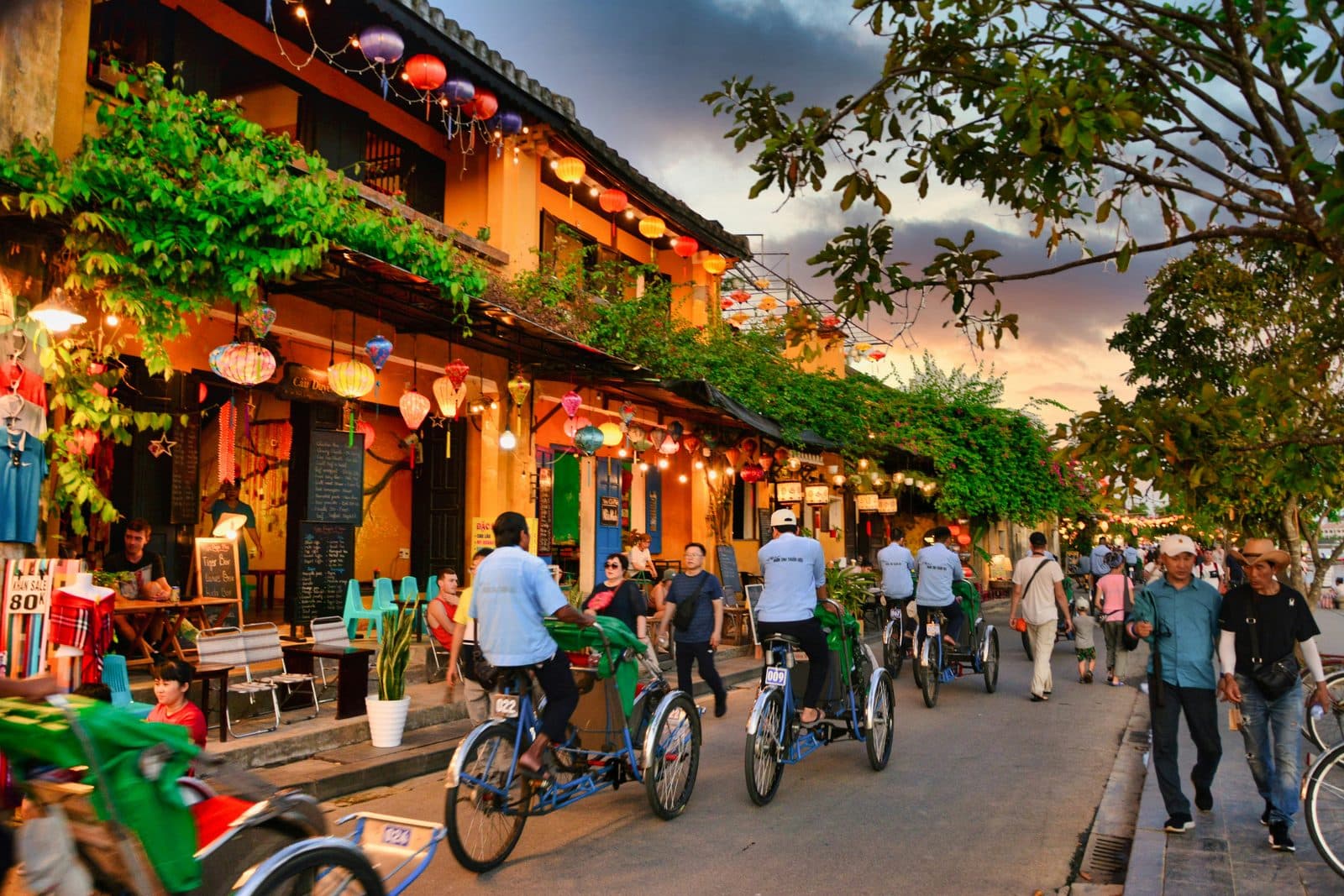
The third thread is what the town became after the trade died. Deprived of cargo, Hoi An turned its silk, its river, and its lantern craft into a nightly performance of light, and today the evening old town glows with hand-made bamboo-and-silk lanterns reflected in the black water. That transformation, obsolescence turned into preservation and preservation turned into spectacle, is the subject of how a dead port learned to glow. Walk this one at dusk.
The three threads cross constantly. The Thu Bồn quay is the last stop of the port walk and the last stop of the lantern walk, read once by daylight and once by candlelight. The Fujian community that predominated in the trading port is the same community that built the grandest assembly hall. The silk that once sailed away as cargo now dresses the tailors' windows and covers the lanterns overhead. You are not choosing between three towns. You are choosing where to stand while you look at one.
The deeper past under the port
It is worth remembering that the merchant port was not the beginning. Long before the Japanese and Chinese sails arrived, the Thu Bồn valley was a cultural heartland of the Champa kingdom, from around the year 700 until the Vietnamese conquest of 1471, and a Cham port stood at the river mouth near Cửa Đại. The temple sanctuary of Mỹ Sơn, upstream and also a UNESCO site, was the religious center of that world. The river that later carried silk had carried Cham cinnamon, agarwood, and ivory down from the highlands for centuries before Faifo had a name. Hoi An is the most recent chapter of a very old trading valley, not the first.
How to actually do it
A few practical things make the difference between seeing Hoi An and only photographing it.
The old town runs on a combined heritage ticket, around one hundred twenty thousand đồng, which admits you to a choice of ticketed sites: the covered bridge, the old houses, the Museum of Trade Ceramics, and several assembly halls. The market and the open riverfront are free. Buy the ticket at a booth near the entrances.
Go early or go late. Central Vietnam is hot and humid, the midday crowds are heavy, and the town is at its best in the quiet of early morning, when the merchant houses are nearly empty, and again at dusk, when the lanterns come on and the river fills with light. If you can, plan around the fourteenth night of the lunar month, when the municipal Full Moon program dims the electric street lighting and the town glows only by silk lantern.
Wear light clothes, carry water, watch your footing on the old timber floors, and remember that the temples and merchant houses are working heritage sites where people still pray. And check the season: the Thu Bồn floods, roughly September through December, and the riverfront streets can go underwater.
Then pick a thread and walk. Whichever you choose, you are reading the same sentence. A port lost its river and its ships. What looked like ruin kept the town whole. And a forgotten place learned to rebuild its life on the beauty of its own preserved past.
Frequently asked questions
- How many self-guided walking tours does Roamer have in Hoi An?
- 3 tours: hoi-an-assembly-halls, hoi-an-lantern-town, hoi-an-ancient-town. Every tour is free to preview.
- How much do the Hoi An tours cost?
- Free to preview, then $4.99 per tour for lifetime access. A 30-day pass covering every tour in every city is $19.99, and a 7-day pass is $12.99.
- Do the Hoi An tours work offline?
- Yes. Download a tour in the Roamer app before you go and it plays with no signal, which is ideal when travelling without mobile data.
Ready to experience it?
Ancient Town: The Port That Time Forgot
80 min · 1 km · easy
More from Hoi An
Explore more at your own pace.
Hoi An Travel Guide: How Many Days, Getting Around, When to Go (2026)
One Day in Hoi An: A Walkable Ancient Town Itinerary (2026)

What to Eat in Hoi An: A Food Guide (2026)
A Map of Who Fled Where: Reading Hoi An's Assembly Halls
The Fujian Assembly Hall: A Cathedral Built by Refugees to the Sea That Carried Them