City Walls: The Unbroken Ring
90 min · 1.9 km · moderate
A small merchant republic stayed free for centuries by law, trade, and diplomacy rather than a standing army, and you can still walk that whole survival strategy in Dubrovnik, on the Adriatic coast of Croatia. The old Republic of Ragusa wedged itself between Venice and the Ottoman Empire with no standing army of its own. It fought when it had to, with militia and hired troops, but instead of keeping soldiers it raised walls, wrote its rules into stone, and out-thought the powers around it. Three walks read that story from three angles: the nearly two-kilometre ring of ramparts that was never taken by assault in the Republic's lifetime, the Old Town inside the walls where the constitution of the city is carved clause by clause, and the sea and the mountain beyond the gates where the story runs from a global merchant fleet all the way to the siege of nineteen ninety-one. Start with the Dubrovnik walking tours hub, then follow the through-line below.
The wall was the last argument, not the first
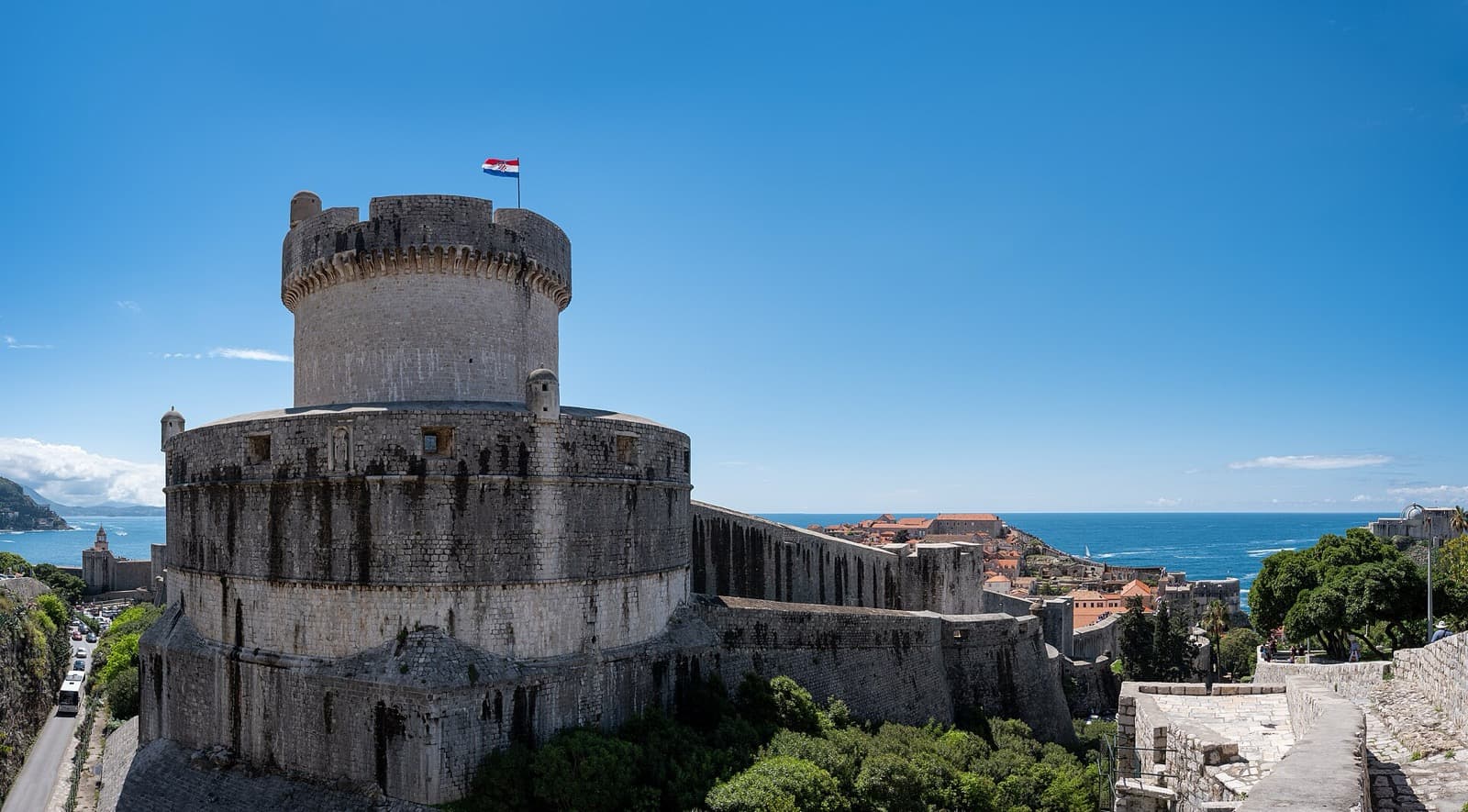
Walk the ramparts and the paradox announces itself. This city had almost no standing army, yet it built a formidable landward corner and then leaned harder on diplomacy so it would rarely have to use it. On The Unbroken Ring you climb from the Pile Gate, where a drawbridge once crossed a dry moat and Saint Blaise, the city's patron, watches over the entrance. The route passes the Minceta, the round tower crowning the highest landward corner, rebuilt to a model by the Florentine Michelozzo from fourteen sixty-one and given its crowning battlements late in the fifteenth century by Paskoje Milicevic; Juraj Dalmatinac, known in English as George the Dalmatian, is only thought to have worked on it, since no record of his work there survives. That corner became the emblem of a city never taken by assault in its republican era.
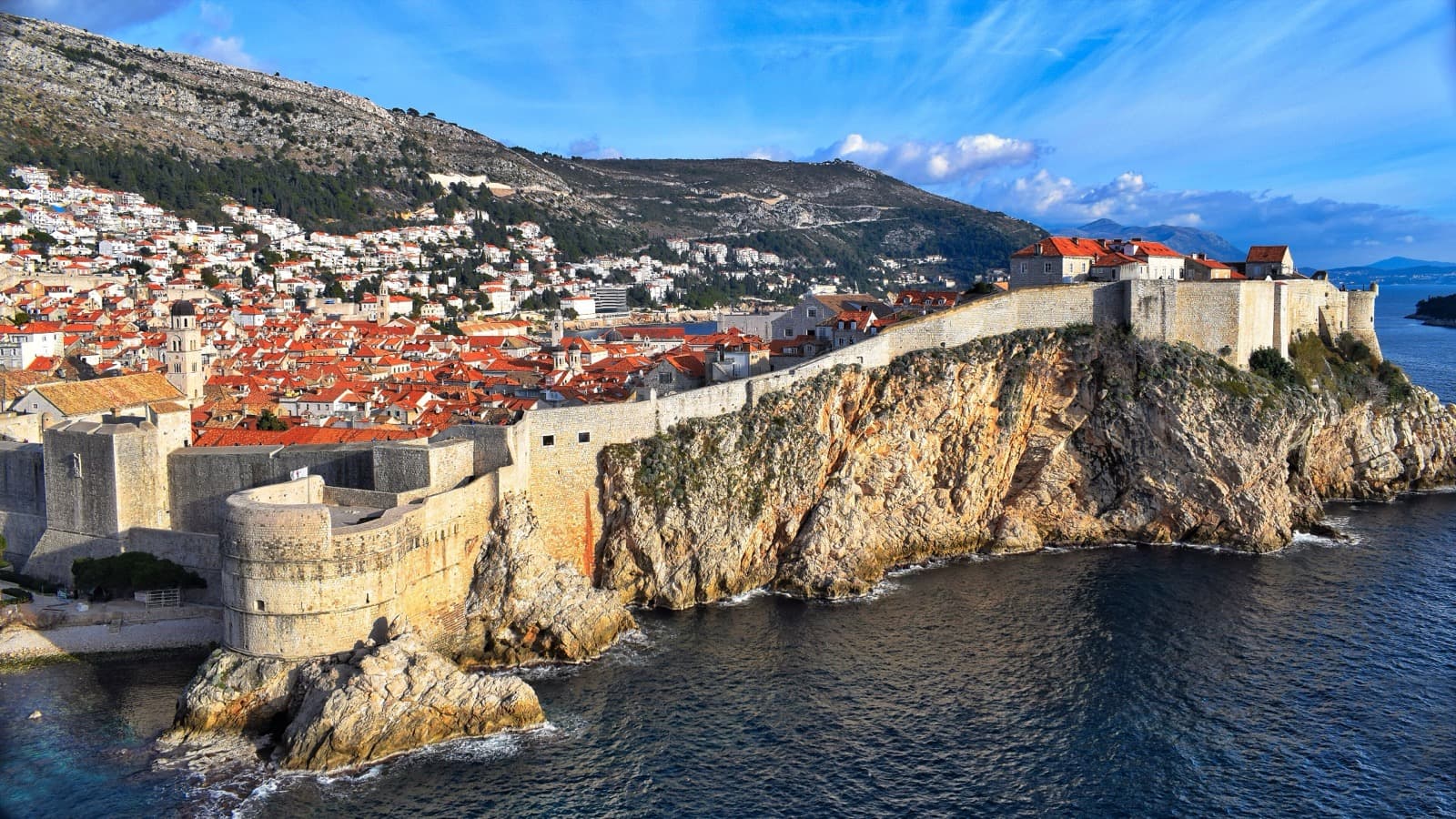
The defences are a whole system, not a single line: gates behind bridges behind detached forts. At the eastern Ploce Gate stands the Revelin, a large free-standing fortress whose present form was begun in fifteen thirty-nine to the design of the engineer Antonio Ferramolino of Bergamo, and which after the 1667 earthquake held the state treasury and sessions of the government. Round toward the water, the Fort of Saint John guards the old port, which was closed at night by a chain stretched across the harbour mouth, from Saint Luke's tower to the Mul tower that is now Saint John's fort. The walk resolves at Fort Bokar, begun in fourteen sixty-one and finished in its present form in fifteen seventy, one of the earliest forts in Europe designed around cannon chambers and built to guard the sea approach to the western walls, looking across to Fort Lovrijenac. Over Lovrijenac's gate is cut a single line of Latin, Non bene pro toto libertas venditur auro, freedom is not sold well for all the gold. That word, Libertas, also flew on a Ragusan flag and was struck on its silver coins, and the Republic meant it in deeds of its own kind: it banned the trade in slaves in fourteen sixteen, and from fourteen fifty-eight it paid tribute to the Ottoman sultan while balancing the great powers against one another.
The constitution written along one street
Hear a stop from this walk
Bokar and Lovrijenac: freedom over the gate
If the walls are the argument of last resort, the streets inside them are the argument itself, carved in stone. Old Town: Inside Dubrovnik's Walls walks twelve stops over about a kilometre in 75 minutes, from the Brsalje terrace between Bokar and Lovrijenac to the top of the Jesuit Stairs. Just inside the Pile Gate it meets the water: in fourteen thirty-six the government contracted two masters, Onofrio della Cava and Andreuzo de Bulbito, to bring water about twelve kilometres from the springs at Šumet to the Great Onofrio Fountain, a sixteen-sided reservoir that still gives water today. A few steps on, the Franciscan monastery holds a pharmacy the friars date to thirteen seventeen and describe as one of the oldest in Europe, beside a fourteenth-century cloister by Mihoje Brajkov of Bar that came through the great earthquake of sixteen sixty-seven.
The Stradun itself is the seam of the city, a shallow arm of the sea filled in between the tenth and eleventh centuries, then rebuilt after the sixteen sixty-seven earthquake in one uniform style. At the eastern end, Orlando's Column, raised in fourteen eighteen with a knight carved by Bonino of Milan, doubled as the city's ruler: the knight's forearm gave the Ragusan ell, the lakat, about fifty-one centimetres, a public standard for measuring cloth. Sponza Palace, designed by Paskoje Milicevic, who died a few months after work began in 1516, and built by the Korčula stonemasons Nikola and Josip Andrijić by around 1520 to 1522, came through the earthquake standing, one of the few great buildings that did. It was the customs house and over the centuries also held the mint, the treasury, a bank and schools, and it now holds the Dubrovnik State Archives. The clearest clause of all sits in the Rector's Palace, seat of an elected Rector who served a single month at a time and had to live in the palace during it, so no one man could gather power. Above the door of the Great Council hall beside it stood the inscription Obliti privatorum publica curate, forget private affairs and attend to the public good. Further on, the Cathedral of the Assumption was rebuilt in Roman Baroque from the early sixteen seventies to seventeen thirteen after the earthquake destroyed the Romanesque basilica, and the walk ends by climbing the Jesuit Stairs.
Beyond the gates: the fleet, the quarantine, and the mountain
The postcard is the wall, but the Republic lived by the sea. Beyond the Walls begins at the Old City Port, where galleys were built under the great Gothic arches of the Arsenal, three of which still survive. Inside the Fort of Saint John, the Maritime Museum tells the story of a merchant fleet that in the sixteenth century counted one hundred and seventy to two hundred larger ships, with consuls in more than sixty Mediterranean ports. The English word argosy, meaning a large merchant ship, is commonly traced by dictionaries to the Italian for a vessel of Ragusa, first recorded in the fifteen seventies; Shakespeare later put argosies into The Merchant of Venice.
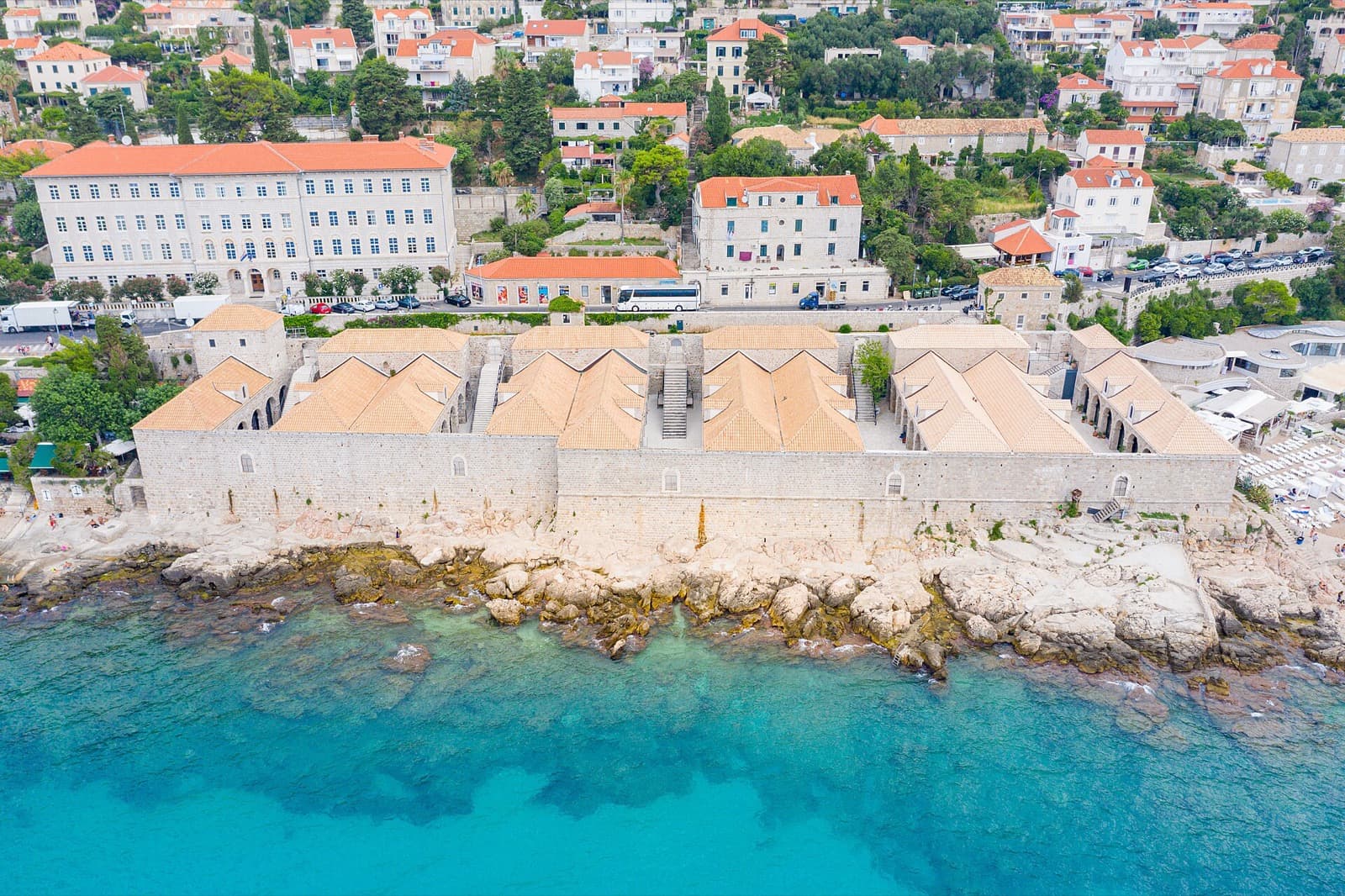
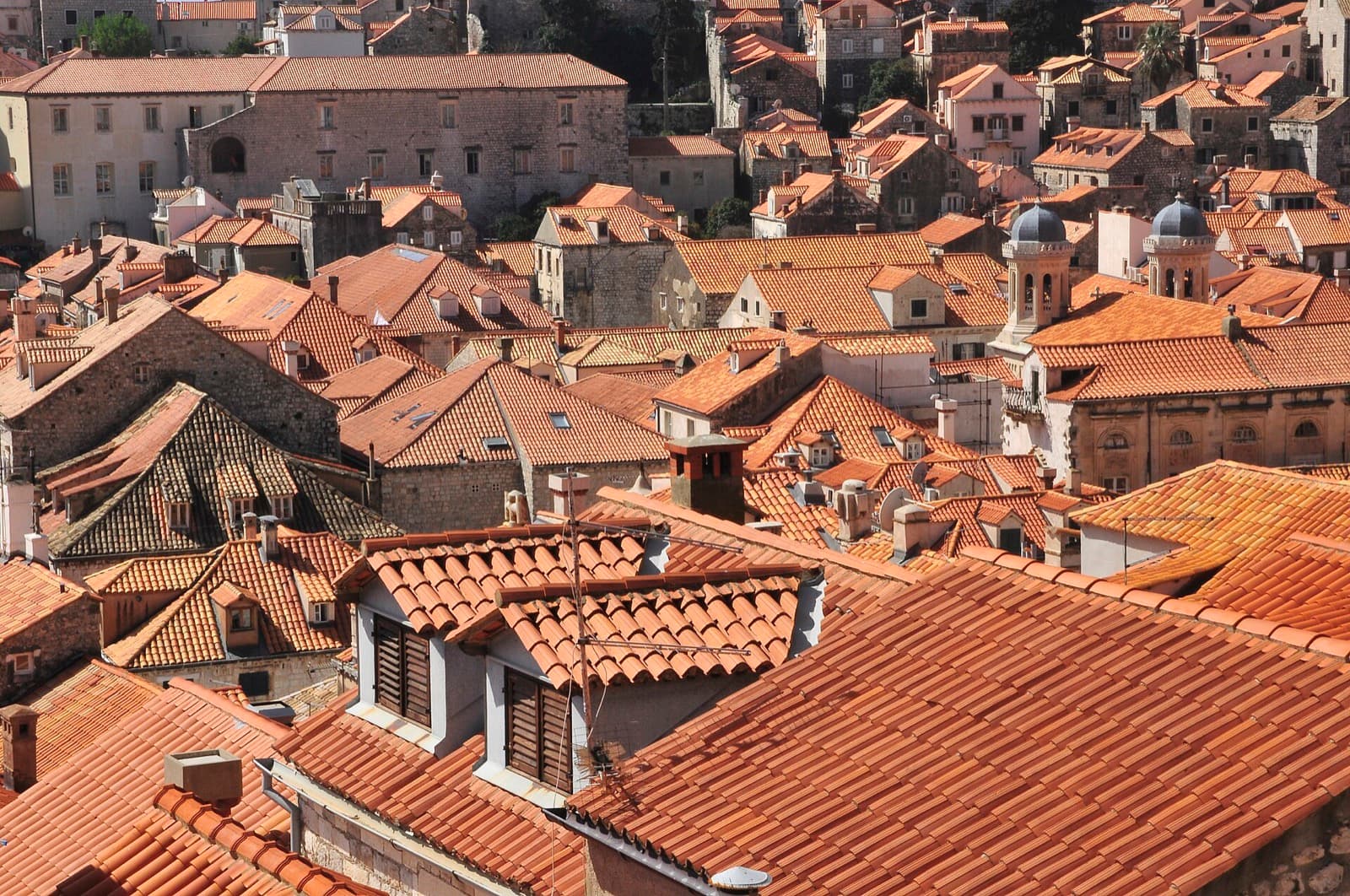
Just outside the Ploce Gate stand the Lazareti, plain quarantine houses completed in sixteen forty-two that mark one of the most important places in the history of public health. In thirteen seventy-seven the Great Council of Ragusa ordained that arrivals from plague-infected areas spend a month in isolation before entering; the span later became forty days, and from that forty we get the word quarantine. A trading city that could not close its harbour and could not let plague in with the cargo invented a third way. The walk climbs at the end to Mount Srd, four hundred and twelve metres high, crowned by Fort Imperial, begun by the French in eighteen oh six and finished in eighteen twelve. During the siege of nineteen ninety-one and nineteen ninety-two the Yugoslav People's Army shelled the Old City; official City of Dubrovnik figures record that of eight hundred and twenty-four buildings, five hundred and ninety-four were damaged, and roughly two thousand projectiles struck the town. UNESCO placed the Old Town on its World Heritage in Danger list and removed it in nineteen ninety-eight after restoration. Look down over the landward walls on any of these walks and you see the proof: bright new roof tiles scattered among the weathered ones, each patch a roof rebuilt after the siege. Fort Imperial now holds the museum Dubrovnik in the Homeland War, and standing at its parapet the whole through-line settles: the wall, the street, the sea, the mountain, and the one word the whole system was built to protect.
Sources
- Croatian Encyclopedia, "Dubrovačka Republika" and "Dubrovnik": tribute from 1458, neutrality, the wars of 1359 to 1362 and 1370 to 1371, the fleet and consuls, the surrender of 1806 and the end of the Republic in 1808, and the siege of 1991 to 1992.
- Society of Friends of Dubrovnik Antiquities (citywallsdubrovnik.hr), "The City Walls", "Western Outer Wall" and "Lovrjenac Fortress": the walls, Minčeta, Bokar, Lovrijenac and its inscription.
- Dubrovnik Tourist Board: Bokar, Revelin, the Placa and the Church of St. Blaise.
- Leksikon Marina Držića, "Zastava", "Placa", "Orlando", "Sponza", "Knez" and "Karantena": the Libertas flag, the Stradun, Orlando's ell, Sponza, the one-month rector and the 1377 quarantine ordinance.
- HRT Radio Dubrovnik, "Gradoplov" (23 November 2019): the harbour chain and the Kaše breakwater.
- Renata Novak Klemenčič, "Velika česma u Dubrovniku", Kolo 2/2008: the aqueduct contract.
- Franciscan monastery of Dubrovnik (malabraca.com): the pharmacy and cloister.
- Diocese of Dubrovnik and Croatian Encyclopedia, "Katičić, Ilija": the cathedral.
- City of Dubrovnik, "The destruction and restoration of Dubrovnik 1991-2000", and the Institute for the Restoration of Dubrovnik (zod.hr): damage figures, restoration and the World Heritage in Danger listing.
- Online Etymology Dictionary, "argosy": derivation from Ragusea, a vessel of Ragusa.
Frequently asked questions
- What was the Republic of Ragusa?
- Ragusa was the small merchant city-state centered on what is now Dubrovnik, on the Adriatic coast of Croatia. It stayed independent for centuries wedged between Venice and the Ottoman Empire, paying tribute to the Ottoman sultan from fourteen fifty-eight while balancing the great powers. Its watchword was Libertas, meaning freedom: the word appears on a Ragusan flag and on its silver coins, and over the gate of Fort Lovrijenac in the line Non bene pro toto libertas venditur auro.
- How long are the Dubrovnik city walls and were they ever taken?
- The wall walk runs a little more than one and nine-tenths kilometres, roughly a mile and a fifth, in a one-way circuit around the old town. The ring was never taken by assault during the Republic's lifetime: in 1806 the city surrendered to the French without a fight. Its strongest point is the Minceta tower, rebuilt to a model by Michelozzo from fourteen sixty-one; the crowning battlements were added by Paskoje Milicevic late in the fifteenth century, and Juraj Dalmatinac is only thought to have worked on it.
- Did Dubrovnik really invent quarantine?
- In thirteen seventy-seven the Great Council of Ragusa ordained that arrivals from plague-infected areas spend a month in isolation before entering the city, one of the earliest institutional quarantine measures documented anywhere. The standard span later became forty days, which gave the word quarantine. You can see the surviving Lazareti quarantine houses, completed in sixteen forty-two, just outside the Ploce Gate.
- What happened to Dubrovnik during the siege of the early nineteen nineties?
- During the Homeland War the Yugoslav People's Army besieged and shelled Dubrovnik in nineteen ninety-one and nineteen ninety-two. Official City of Dubrovnik figures record that of eight hundred and twenty-four buildings in the walled Old City, five hundred and ninety-four were damaged, with roughly two thousand projectiles striking the town. UNESCO placed the Old Town on its World Heritage in Danger list and removed it in nineteen ninety-eight after restoration; the mismatched bright roof tiles mark the roofs rebuilt afterward.
- Where does the word argosy come from?
- The English word argosy, meaning a large merchant ship or a rich fleet, is commonly traced by dictionaries to the Italian phrase for a vessel of Ragusa. Dictionaries date it to the fifteen seventies. Shakespeare later used the word in The Merchant of Venice, and in the sixteenth century the Dubrovnik merchant fleet counted one hundred and seventy to two hundred larger ships, reaching England and Flanders, Syria and Egypt.
Ready to experience it?
City Walls: The Unbroken Ring
90 min · 1.9 km · moderate
More from Dubrovnik
Explore more at your own pace.
Minceta Tower and the Strategy Written Into Dubrovnik's Walls
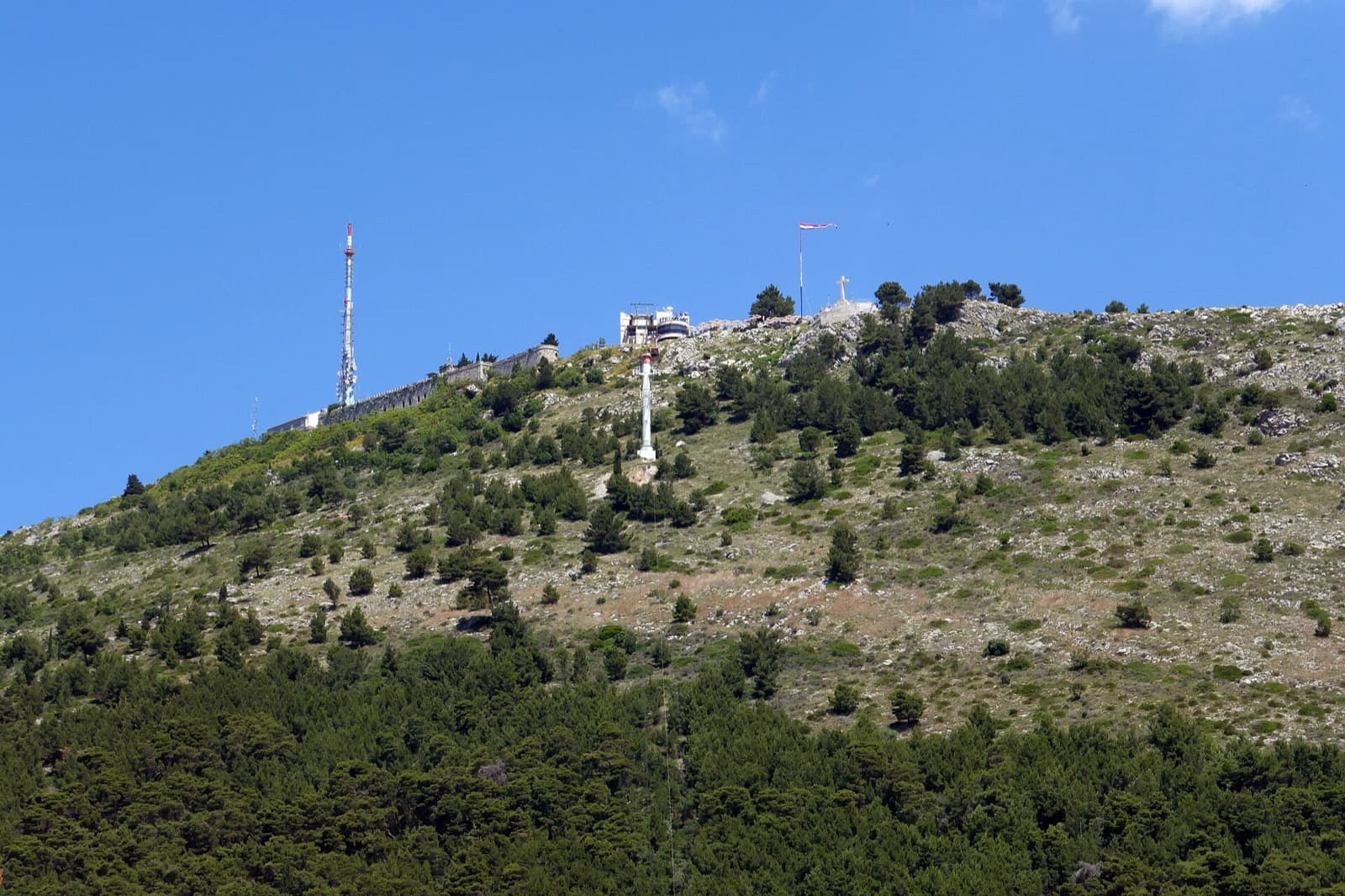
Mount Srd and Fort Imperial: How Dubrovnik's Mountain Fort Explains the Whole City
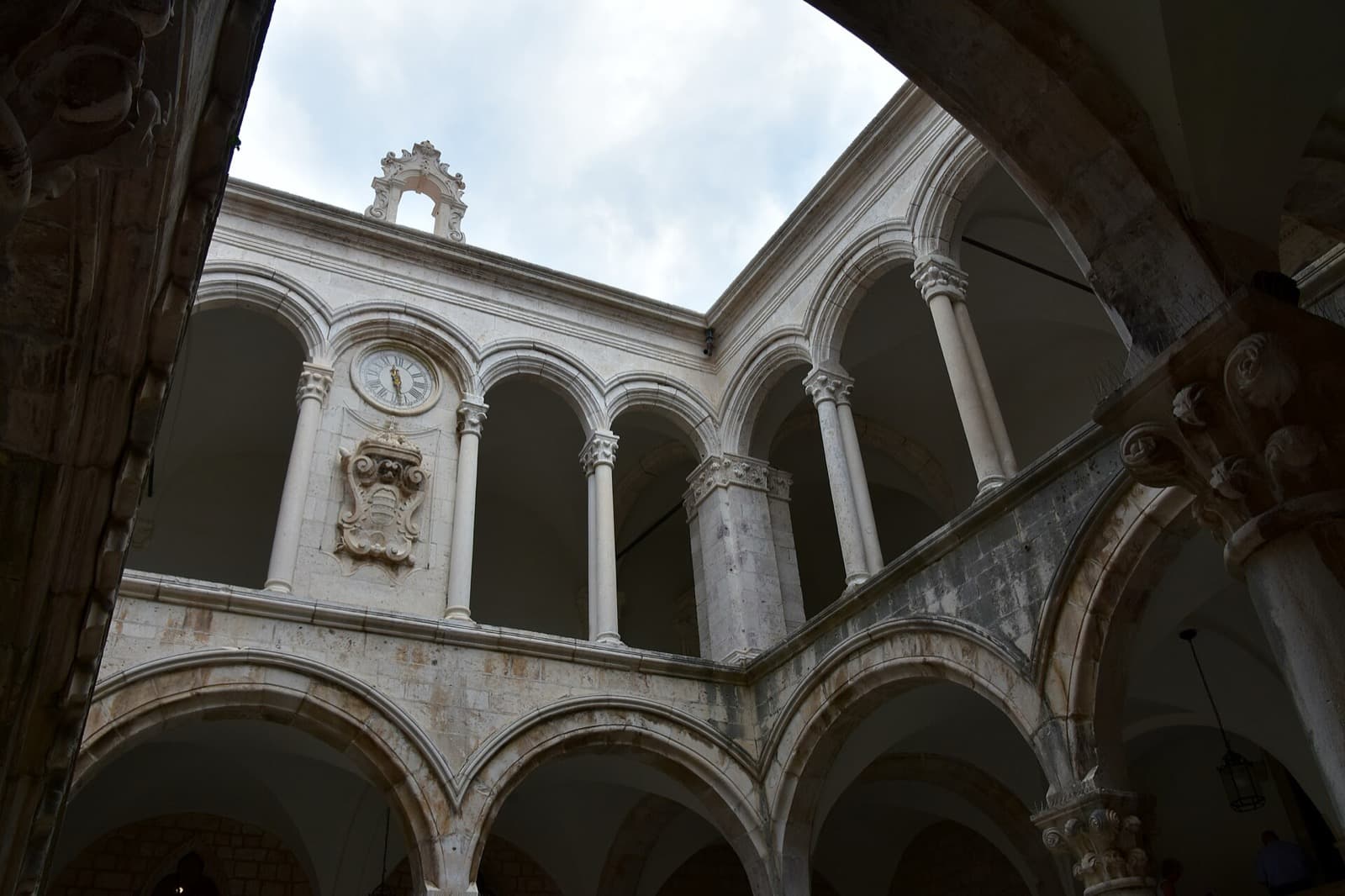
The Rector Who Ruled Dubrovnik for One Month
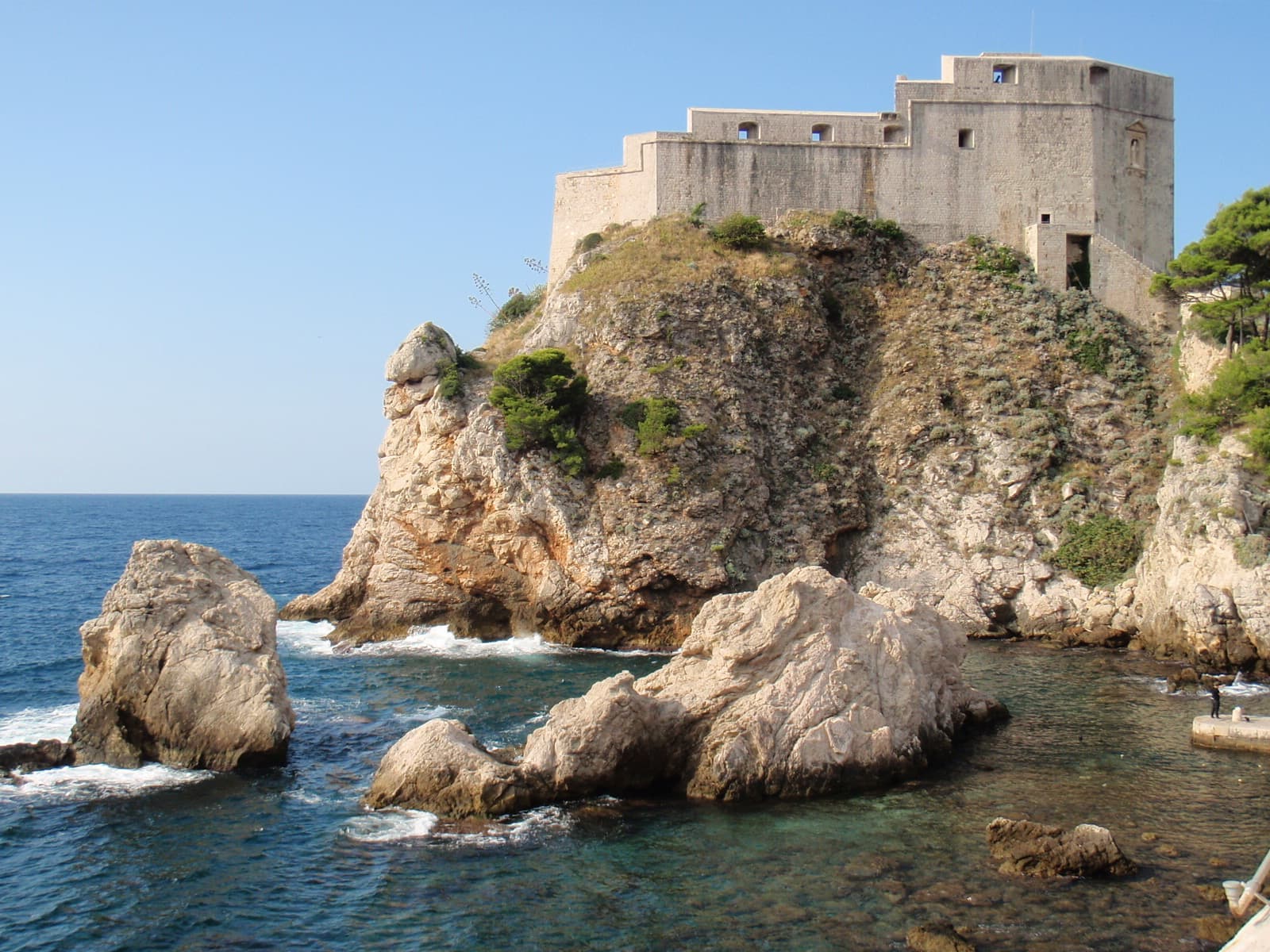
Bokar and Lovrijenac: The Forts That Guarded Dubrovnik's Freedom
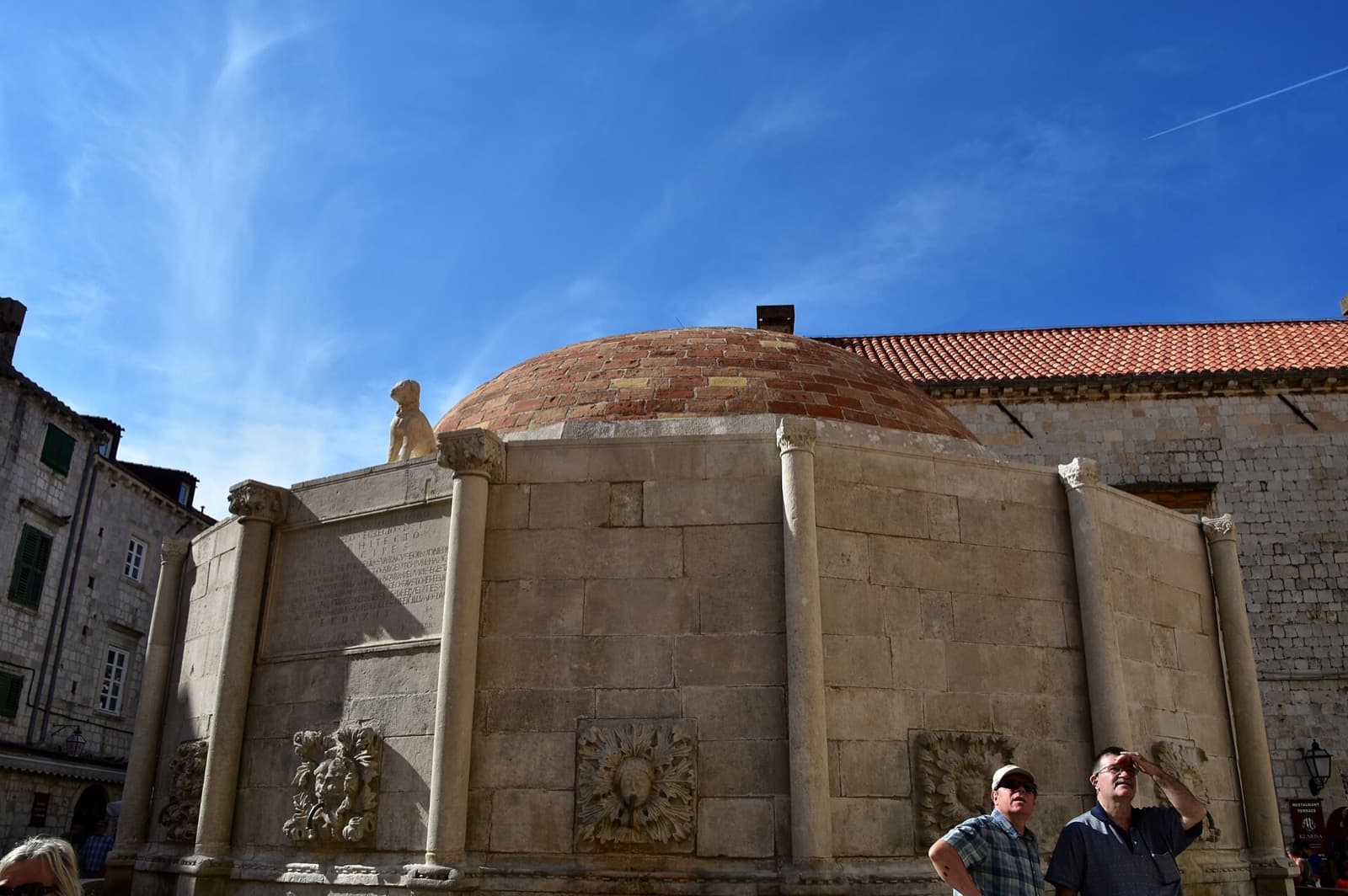
The Great Onofrio Fountain: Water as an Act of Government