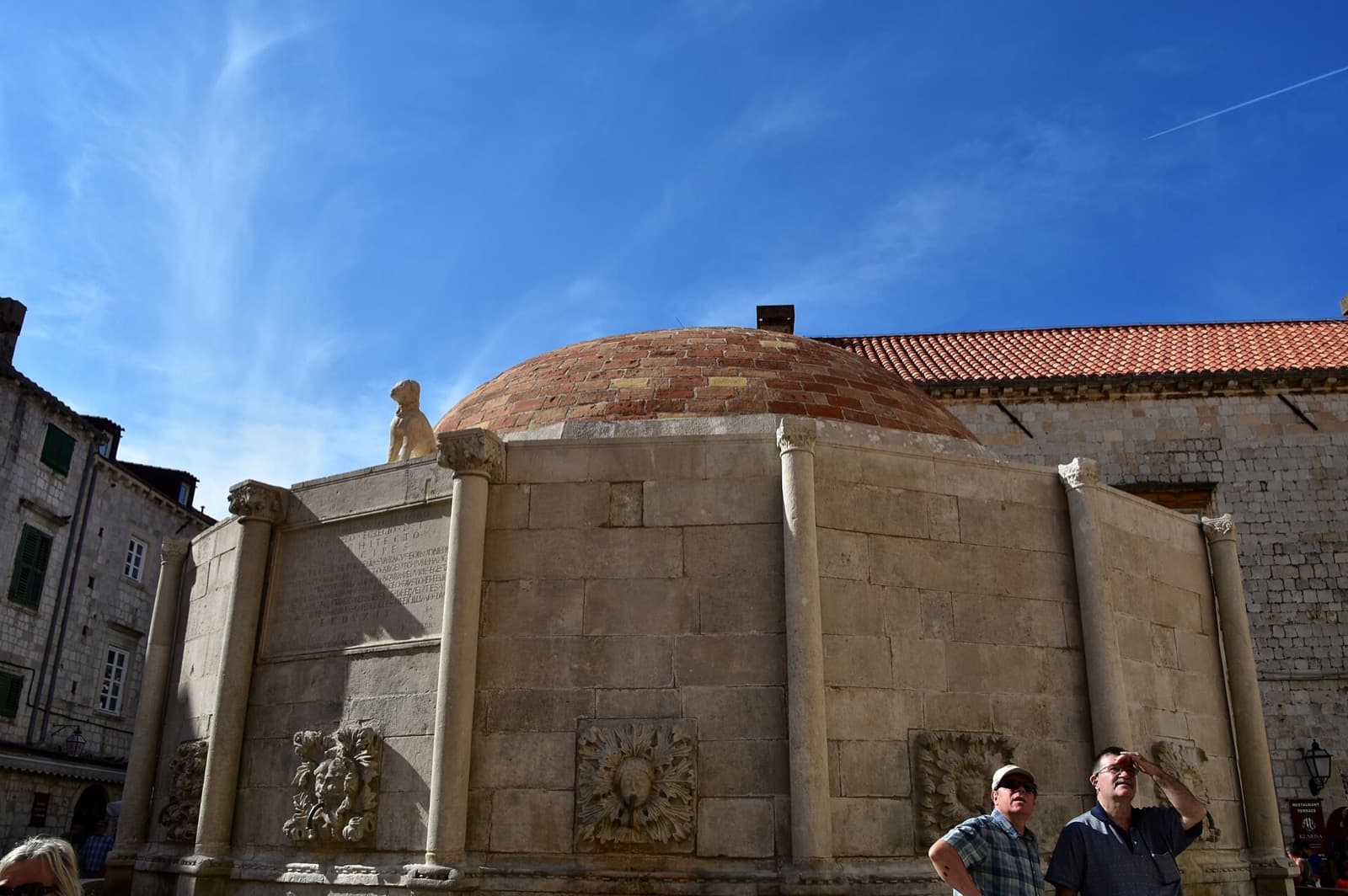
Walk through the Pile Gate at the western end of Dubrovnik's old town and the first thing the city hands you is water. The Great Onofrio Fountain, a sixteen-sided domed stone cistern set just inside the wall, is not an ornament placed to greet visitors. It is the terminus of an aqueduct the Republic of Ragusa built as one of its great works of public engineering, and it still gives water today. Understanding that one fact, that shared water was a public undertaking, changes how you read everything else along the street beyond it.
Water brought twelve kilometres
On 20 June 1436 the government of Ragusa, the merchant state that governed this city from the fourteenth century to 1808, contracted two masters to build an aqueduct: Onofrio della Cava, from the Kingdom of Naples, and Andreuzo de Bulbito of Tramonti. The contract asked them to bring water from springs at Šumet, about twelve kilometres away, into the city and to set up one or two fountains there. Plague halted the work in 1437. The water arrived in the late 1430s, and the fountain was finished in the early 1440s. This fountain is where the water arrived, and where anyone could take it.
That word "anyone" is the whole point. This was not a private well behind a nobleman's wall or a cistern reserved for a palace. It was a public terminus, engineered at public expense, placed just inside the city's oldest gate where anyone could draw from it. A small state wedged between Venice and the Ottoman Empire, with no standing army, chose to spend heavily on making sure its people could drink, and treated water as essential infrastructure rather than as a monument.
Stand in front of the fountain and you are standing at the end of a twelve-kilometre argument about what a government is for. The Ragusans could have built a triumphal arch. They built a water supply.
Reading the stone
Hear a stop from this walk
Luža Square: Orlando, Sponza and the Bell Tower
Look closely at the structure. It is a sixteen-sided reservoir of pale stone under a dome. Each of the sixteen faces carries a carved masked face, a mascaron, with a spout running from its mouth. Some of the heads were replaced in later centuries. For centuries the people of Dubrovnik drew their household water here, cupping their hands or filling jugs at those spouts. The habit has not fully ended. The fountain still gives water today, now fed through the modern supply, and there is no better way to grasp what it meant than to drink from it yourself. That is exactly what it was made for.
Notice, too, how plain the top looks. It was not always this way. The original carried a brick dome crowned with a column, a basin and a jet of water, ringed by carved animal figures. The great earthquake of 1667 damaged it, and the dome was never rebuilt in its original form. The lower body survives almost entirely as built; it is the crown that was lost. The restraint you see up top is not the republic's original taste. It is what was left after disaster, and then kept.
That distinction matters because it repeats everywhere in the old town. Much of what looks serenely ancient in Dubrovnik is in fact a careful rebuild, restraint chosen after force. The fountain is the first place on the street where you can read that pattern, and once you have seen it here you will see it again at the friary church, along the matched houses of the Stradun, and at the cathedral rebuilt after the earthquake.
The first clause of a constitution written in stone
It helps to think of the old town not as a collection of pretty buildings but as a legal document you can walk through, one clause at a time. On that reading, the Great Onofrio Fountain is the opening clause. Water for all, engineered at public cost, placed where everyone passes.
The clauses that follow build on it in the same spirit. A few steps along the main street stands the Franciscan monastery, whose pharmacy the friars date to 1317, the year they moved inside the walls, and describe as one of the oldest in Europe and probably the oldest in continuous operation. That is public health, centuries before the phrase existed: medicine made a shared thing, just as water was. Further on, a stone knight on Orlando's Column, raised in 1418, lent his carved forearm to the city's ell, its official measure of length. Shared measure, in public, for honest trade. Near the end of the walk, the Rector's Palace housed a head of state who served a single month at a time and had to live in the palace for that month, able to go home only to visit a sick relative or attend a wedding, a deliberate check against any one man gathering power.
Water, medicine, honest measure, rotating power. A little republic that kept no standing army chose to out-organise its neighbours, and it wrote the results into stone where they could not be quietly revised. The fountain is the first line of that document. Everything downstream on the street is commentary on the same idea, that a state survives by serving the people who live in it.
What to understand standing in front of it
If you take one thing from this stop, take this: the fountain is a rule you can touch. It looks like plumbing, and it is plumbing, but it is also the physical form of a decision about how power should behave. A government proved its character not with a statue of a prince but with cold water free to anyone who walked through the gate. That the water still flows, after an aqueduct built in the fifteenth century and an earthquake that took the fountain's crown, is the quiet proof that the decision was a good one.
So drink, if you like, then turn and look down the Stradun. The polished limestone street runs the length of the old town toward a small square of law, ledgers, and memory. You have just read the first clause. The rest of the republic is waiting to be read, one stop at a time.
The Great Onofrio Fountain is the second stop on the self-guided Old Town: Inside Dubrovnik's Walls audio walk, twelve stops over about a kilometre in 75 minutes, from the Brsalje terrace to the top of the Jesuit Stairs. If you are still planning, browse more Dubrovnik walking tours or start from the Dubrovnik city page.
Sources
- Renata Novak Klemenčič, "Velika česma u Dubrovniku", Kolo 2/2008 (Matica hrvatska): the 1436 aqueduct contract with Onofrio della Cava and Andreuzo de Bulbito, the twelve kilometres from Šumet, the building chronology, the sixteen-sided reservoir and its replaced heads, and the lost upper fountain.
- Proleksis encyclopedia (Miroslav Krleža Lexicographic Institute), "Onofrio di Giordano della Cava": his origin at Cava, near Salerno, and his works in Dubrovnik.
- Dubrovnik Tourist Board, "Great Onofrio Fountain": the sixteen mascarons and the dome damaged in 1667 and never rebuilt in its original form.
- Franciscan monastery of Dubrovnik (malabraca.com), "Muzej": the pharmacy's founding year and its standing among the oldest in Europe.
- Croatian Encyclopedia, "Rolandovi stupovi", and Leksikon Marina Držića, "Knez" (Damir Grubiša): Orlando's ell and the one-month rector.
Ready to experience it?
Old Town: Inside Dubrovnik's Walls
75 min · 0.9 km · moderate
More from Dubrovnik
Explore more at your own pace.
Dubrovnik: the free city the Republic of Ragusa built
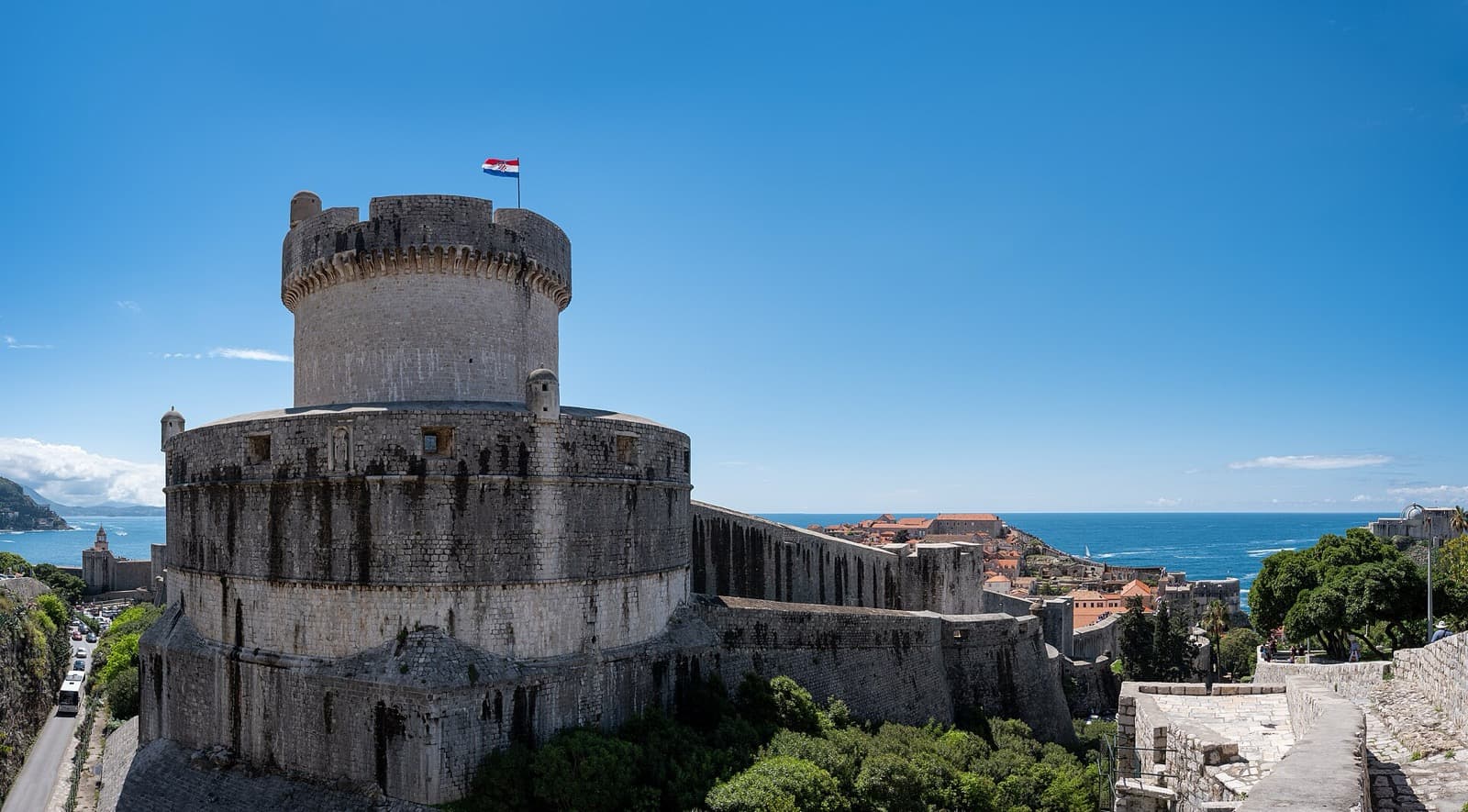
Minceta Tower and the Strategy Written Into Dubrovnik's Walls
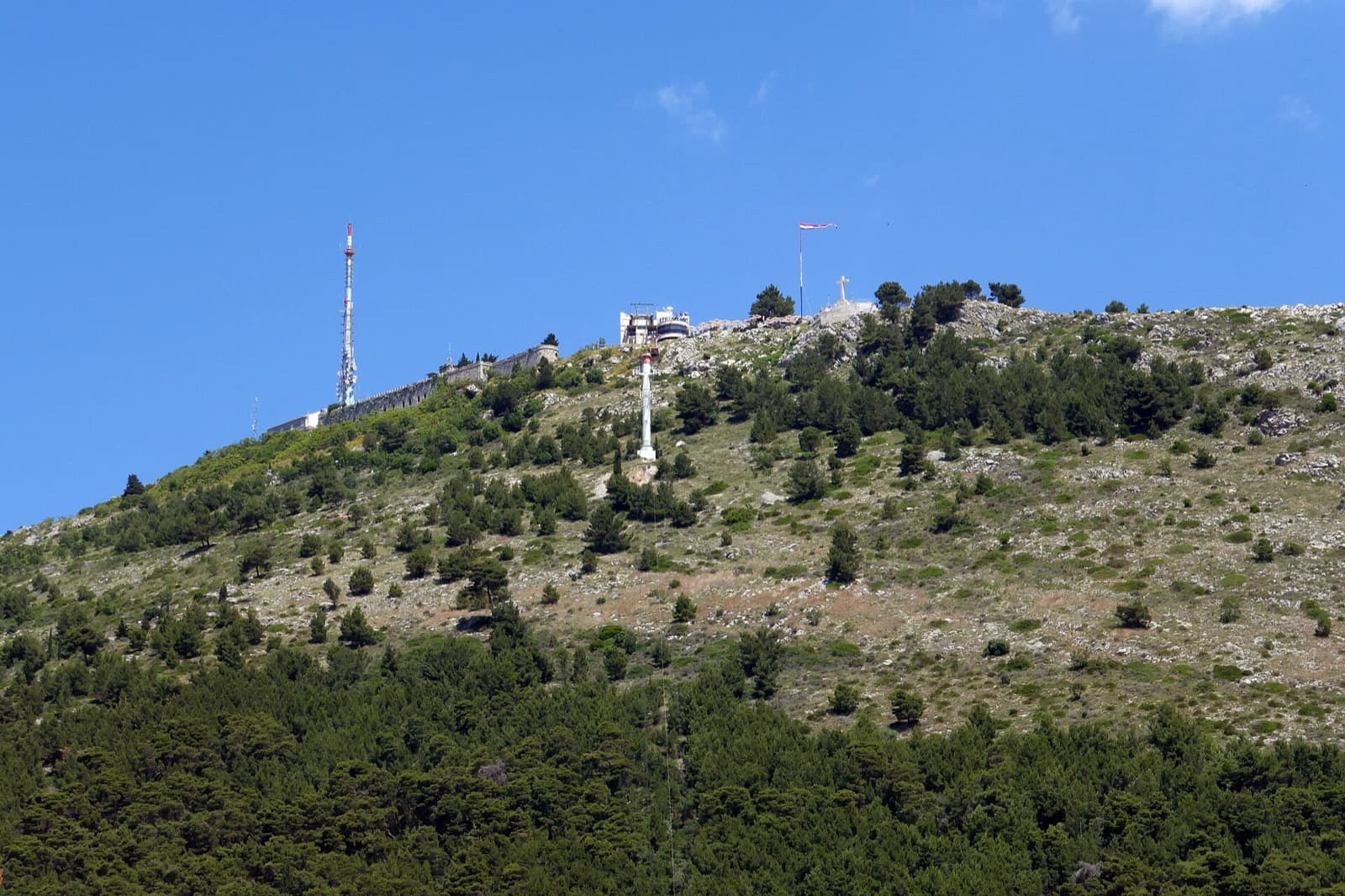
Mount Srd and Fort Imperial: How Dubrovnik's Mountain Fort Explains the Whole City
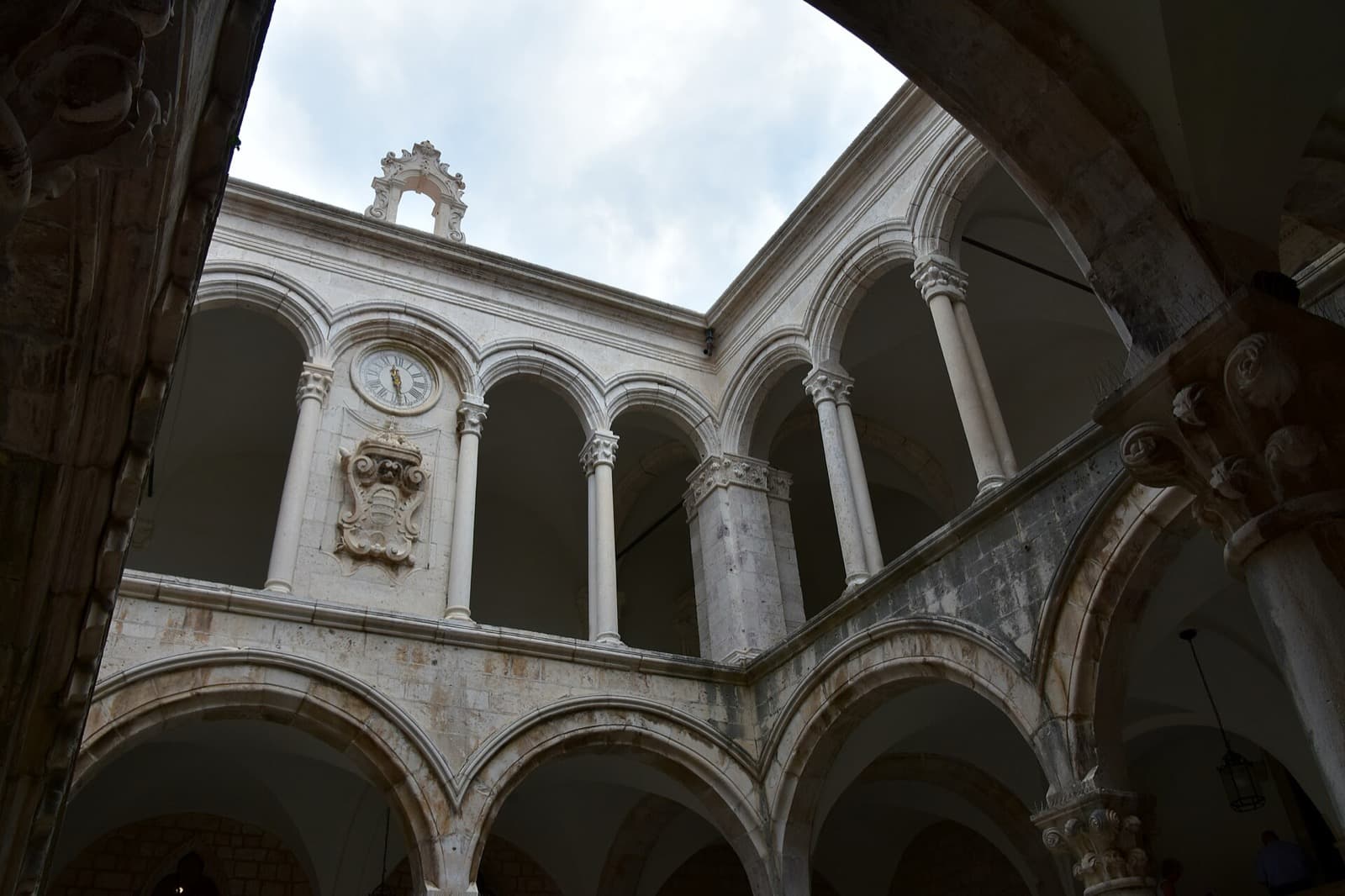
The Rector Who Ruled Dubrovnik for One Month
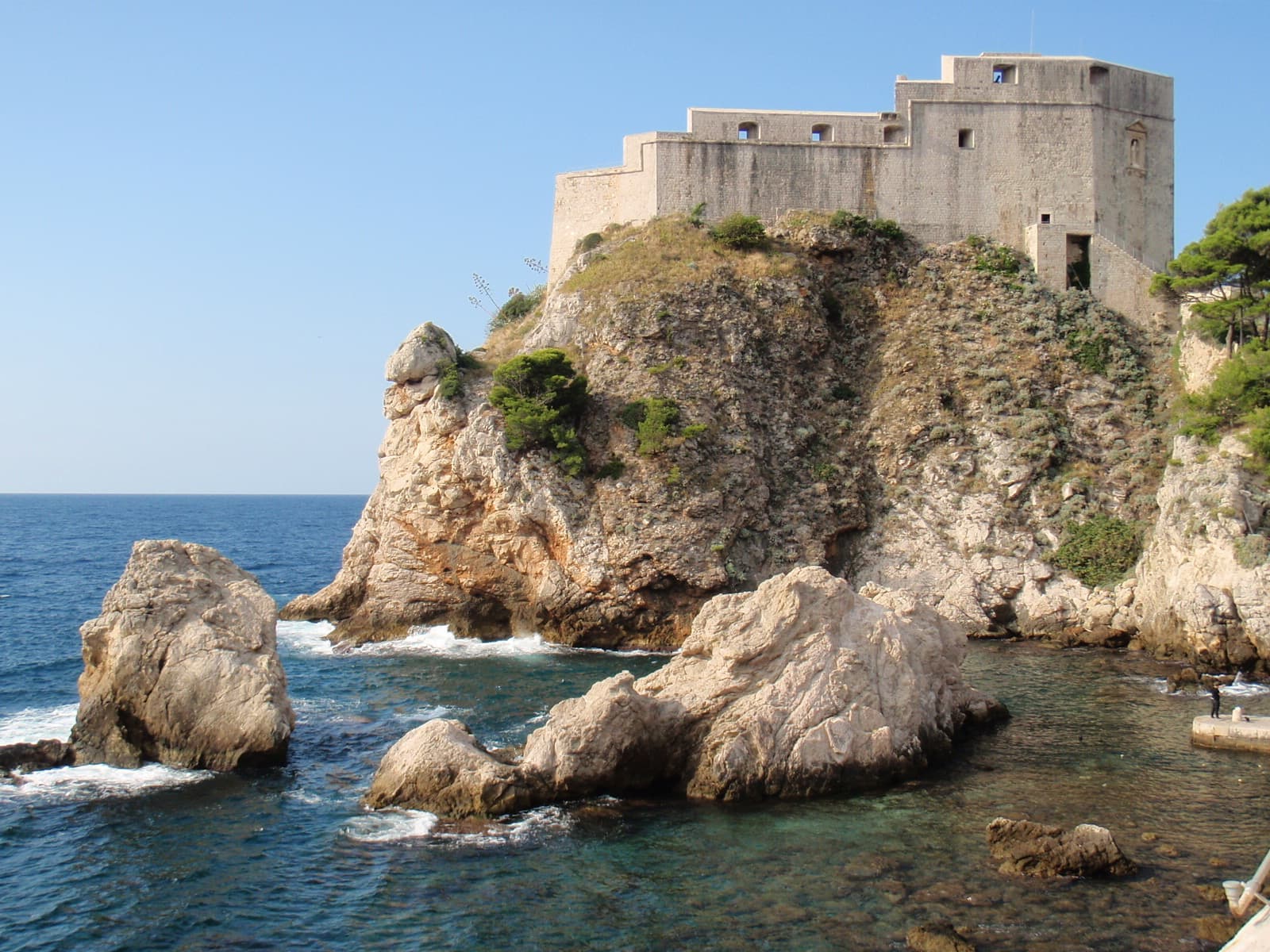
Bokar and Lovrijenac: The Forts That Guarded Dubrovnik's Freedom