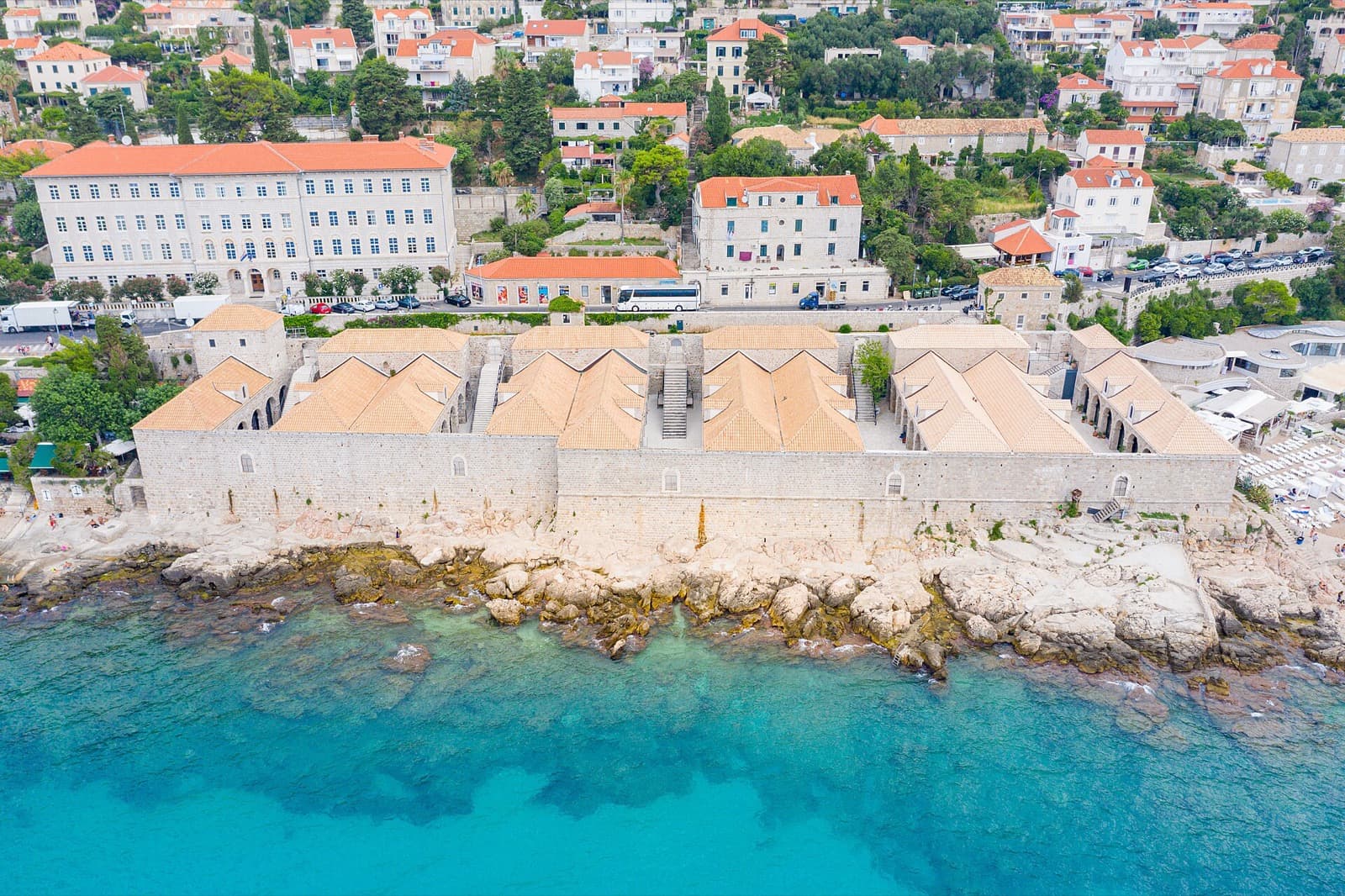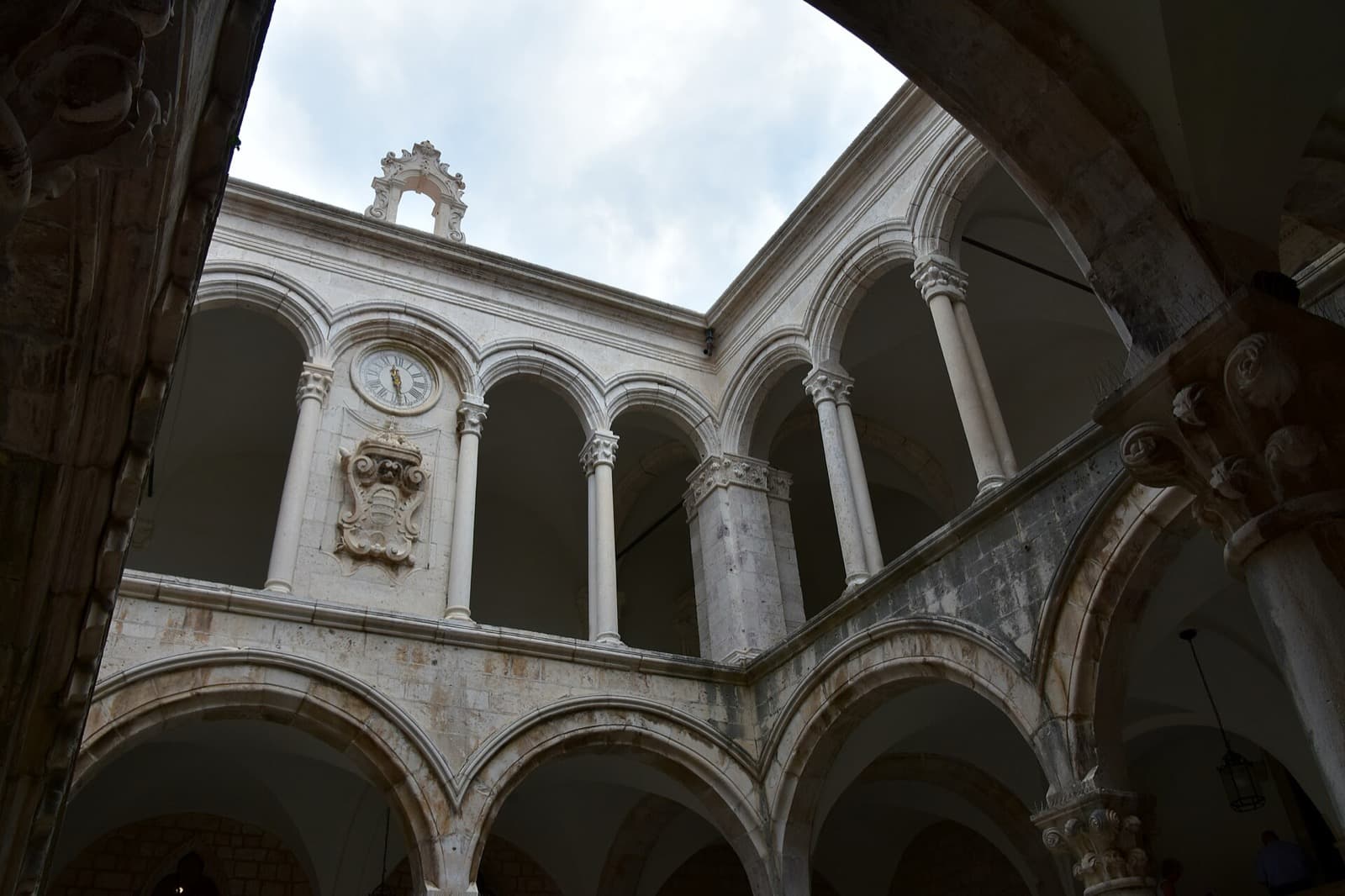
The Rector's Palace in Dubrovnik encoded a republic that feared a single powerful man more than it feared its neighbors. The elected head of the Republic of Ragusa, the Rector, governed for a term of one month, and for that month he had to live in this Gothic-Renaissance building. He could go home only to visit a sick relative or attend a wedding, and in public he was always accompanied by his escort of eight. Then he stepped down, and another nobleman took his place. Reading that one rule is how you learn to read the rest of Dubrovnik's old town, because the whole walled town was built the same way: not as decoration, but as a constitution carved into stone, one clause at a time.
A ruler on a one-month clock
Start with the strangeness of the arrangement. Most medieval states organized themselves around a person who ruled for life and then handed power to a son. Ragusa did the opposite. From 1358 until the fall of the Republic it handed its highest office to a nobleman for one month, restricted his movement, barred him from re-election for two years, and then rotated him out. The historian of the office, Damir Grubiša, gives the purpose as preventing corruption and keeping too much power from gathering in one person, and writes that over the centuries there was no attempt to seize power.
The buildings made the philosophy visible. Above the door of the Great Council hall, which stood beside the palace, a Latin inscription gave its order: Obliti privatorum publica curate. Forget private affairs, attend to the public good. The Austrians covered it with lime in the nineteenth century and it was found again in 1902. The words were not invented here: the historian Nella Lonza traced the same maxim to the council hall of Basel, where Holbein painted it in the 1520s. But Ragusa put it over the door of its own government, and that sentence is the thesis of the entire old town. Once you have read it here, you start seeing the same instruction everywhere along the street outside.
The palace itself carries the marks of a hard history. It blew up twice. On 10 August 1435 gunpowder stored in its armoury exploded and fire followed, and the restoration went to Onofrio della Cava, the same master who had brought the city its water. On 8 August 1463 a second gunpowder explosion wrecked part of the south and west wings, and among the dead was Nikola Držić, grandfather of the playwright Marin Držić. The Florentine architect Michelozzo, already in the Republic's service on the walls, offered a design for the rebuilding, but on 5 May 1464 the Great Council did not accept it, and the palace was restored to Onofrio's earlier model. The 1667 earthquake brought down its galleries and much of its upper floor, and it was rebuilt keeping its Gothic and Renaissance look. Since 1950 the building has housed the Cultural History Museum, run by Dubrovnik Museums. This same republic banned the slave trade in fourteen sixteen and ordered one of Europe's earliest quarantines in thirteen seventy-seven. Restraint, made into policy.
The same rule, written along the whole street
Hear a stop from this walk
Luža Square: Orlando, Sponza and the Bell Tower
Once you understand the one-month Rector, the rest of the Dubrovnik walking tours through the old town read like clauses in a single document, and each stop on the walk adds another.
Just inside the Pile Gate, at the western end, stands the Great Onofrio Fountain. In fourteen thirty-six the government contracted two masters, Onofrio della Cava and Andreuzo de Bulbito, to bring water about twelve kilometers from the springs at Šumet into the town; the water arrived in the late 1430s and the fountain was finished in the early 1440s. It is a sixteen-sided domed reservoir, each face carved with a masked spout, and it still gives water today. That is one clause: shared water.
A few steps on, the Franciscan monastery holds a pharmacy that the friars date to thirteen seventeen and describe as one of the oldest in Europe. Its fourteenth-century cloister, the work of Mihoje Brajkov of Bar, came through the 1667 earthquake; it was the fire that followed that took the friars' church. Public medicine is the next clause. Water, then medicine, from a republic that kept no standing army but chose to keep its people alive.
Stop in the middle of the Stradun and look down at the polished limestone. This street was once a shallow arm of the sea, filled in between the tenth and eleventh centuries to join the first settlement to the mainland. You are standing on the seam. Look up and notice how uniform the houses are: matched fronts, the same restrained pattern block after block. After the sixteen sixty-seven earthquake the Stradun was rebuilt in one uniform Baroque style. During the siege of nineteen ninety-one and ninety-two the old town was shelled, and of its eight hundred and twenty-four buildings, five hundred and ninety-four were damaged. Much of what looks ancient is careful repair.
Where the street opens into Luza Square stands Orlando's Column, raised in fourteen eighteen, with a knight carved by Bonino of Milan. The length of the knight's forearm was the Ragusan ell, the official measure of length, about fifty-one centimeters; the city's ell for cloth was marked on the column. Beside it, Sponza Palace was designed by Paskoje Milicevic, who died in 1516 a few months after work began; the Korčula stonemasons Nikola and Josip Andrijić built it by around 1520 to 1522. It was the customs house, and over the centuries it also held the mint, the treasury, a bank and the armory. It came through the sixteen sixty-seven earthquake standing, one of the few buildings that did, and now holds the Dubrovnik State Archives. If Orlando was the law, Sponza was the ledger.
Where the walk resolves
Facing Orlando's Column, the Church of Saint Blaise, built from seventeen oh six to seventeen fifteen, holds a silver statue of the city's patron, the one thing pulled unharmed from the fire of seventeen oh six that destroyed the church before it. In his hand he holds a model of the city itself, showing Dubrovnik's historic architecture. A saint carrying the shape of an earlier Dubrovnik: that is the memory all the mechanisms were built to protect.
Just south of the Rector's Palace stands the Cathedral of the Assumption, rebuilt in Roman Baroque from the early sixteen seventies to seventeen thirteen, to a design by Andrea Buffalini of Urbino, after the earthquake destroyed the basilica before it. An inventory of 1945 numbered one hundred and eighty-two reliquaries in its treasury, and one hundred and sixty-one survive today, among them the head and arm reliquaries of Saint Blaise. Above its main altar hangs a polyptych of the Assumption by Titian and his workshop. After catastrophe, the city rebuilt. Restraint outlasting force is the last clause of the document.
The Rector's Palace is the place where the argument becomes explicit, carved for the ruler himself to read. Everything else along the street is that same idea in a different material: water, medicine, measure, ledger, memory. Walk the twelve stops of Old Town: Inside Dubrovnik's Walls in order, about a kilometre in 75 minutes from the Brsalje terrace to the top of the Jesuit Stairs, and you read the whole small constitution of a republic inside its walls. Plan the route through Dubrovnik for early morning or the last hours before sunset, when the polished stone glows and the crowds thin, and let the palace teach you how to see the rest.
Sources
- Leksikon Marina Držića, "Knez" (Damir Grubiša) and "Knežev dvor" (Tonko Marunčić): the one-month term from 1358, the limits on the rector's movement, the 1435 and 1463 gunpowder explosions, Onofrio della Cava's restoration, the Great Council's refusal of Michelozzo's design on 5 May 1464, and the Obliti inscription over the Great Council door.
- Nella Lonza, "Obliti privatorum publica curate: preci i srodnici jedne političke maksime", Anali Dubrovnik 44 (2006): the maxim's origins outside Dubrovnik.
- Matica hrvatska, Vijenac 372 (Tin Pongrac, 2008): the rector's residence and escort.
- Dubrovnik Museums (dumus.hr): the Rector's Palace and the Cultural History Museum.
- Renata Novak Klemenčič, "Velika česma u Dubrovniku", Kolo 2/2008: the 1436 aqueduct contract.
- Franciscan monastery of Dubrovnik (malabraca.com) and Croatian Encyclopedia, "Mihoje Brajkov iz Bara": the pharmacy, the cloister and the fire after 1667.
- Leksikon Marina Držića, "Placa", and Dubrovnik Tourist Board, "Placa": the filled-in channel and the uniform rebuilding after 1667.
- City of Dubrovnik, "The destruction and restoration of Dubrovnik 1991-2000": the damage figures.
- Croatian Encyclopedia, "Bonino da Milano", "Rolandovi stupovi" and "Gropelli, Marino"; Leksikon Marina Držića, "Orlando" and "Sponza"; State Archives in Dubrovnik, "Palača Sponza": Orlando, the ell, Sponza and the Church of Saint Blaise.
- Dubrovnik Tourist Board, "Church of St. Blaise": the fire of 1706 and the silver statue with its model of the city.
- Diocese of Dubrovnik, "Župa Velike Gospe" and "Tizianov poliptih u dubrovačkoj katedrali"; Croatian Encyclopedia, "Katičić, Ilija": the cathedral, its treasury and the Titian polyptych.
- Leksikon Marina Držića, "Karantena" (Tatjana Buklijaš): the quarantine ordinance of 1377.
Ready to experience it?
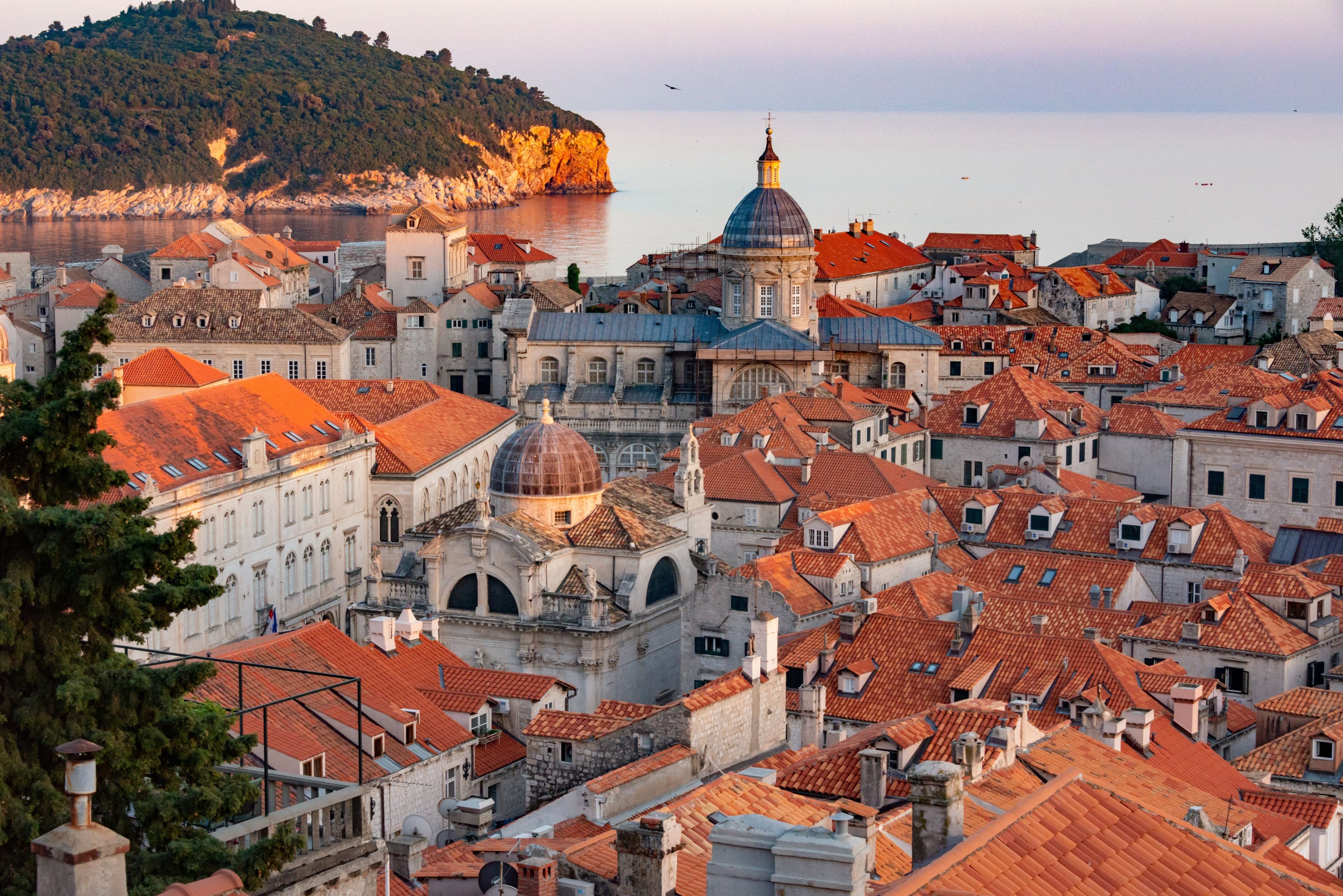
Old Town: Inside Dubrovnik's Walls
75 min · 0.9 km · moderate
More from Dubrovnik
Explore more at your own pace.
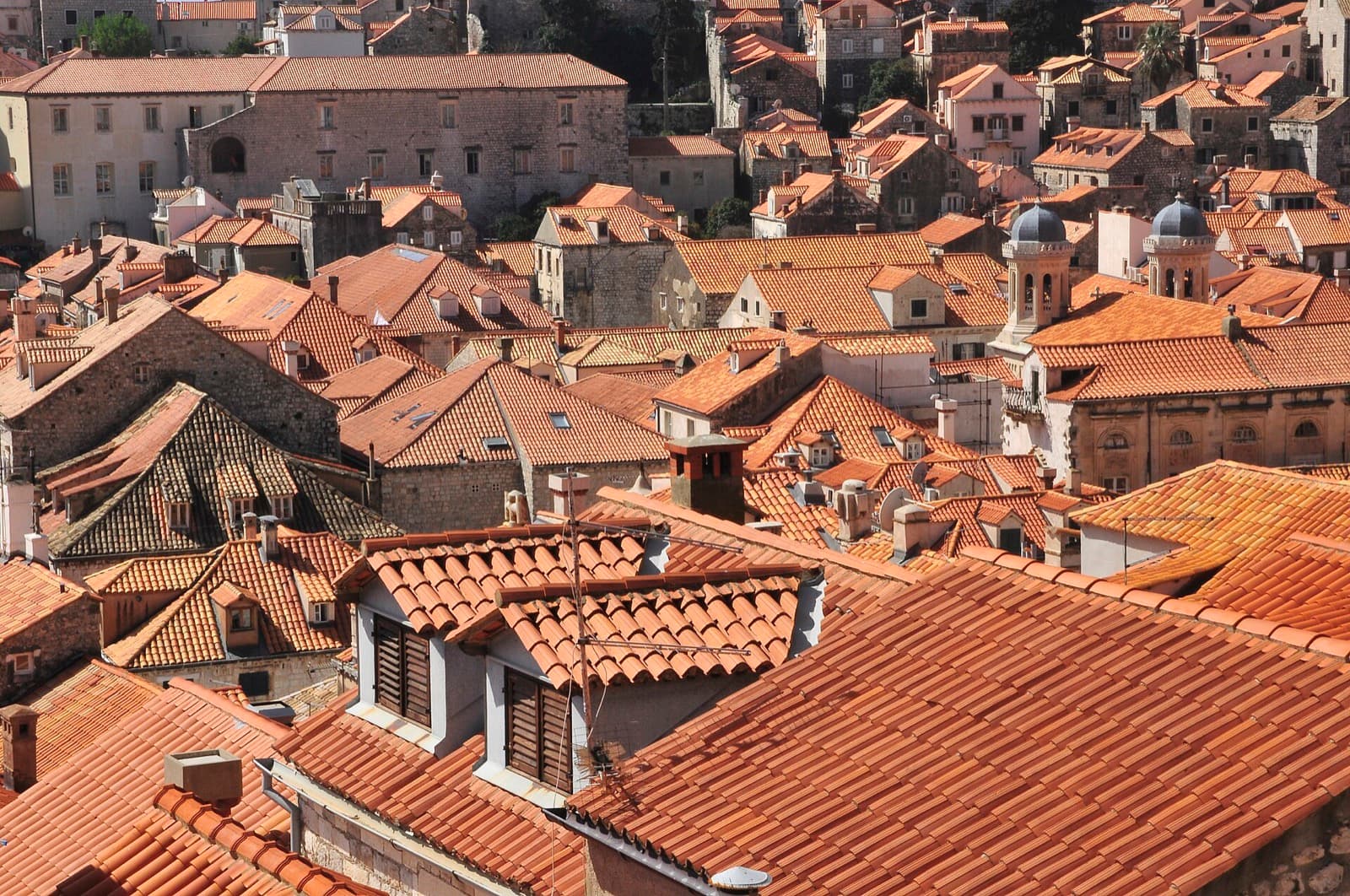
Dubrovnik: the free city the Republic of Ragusa built
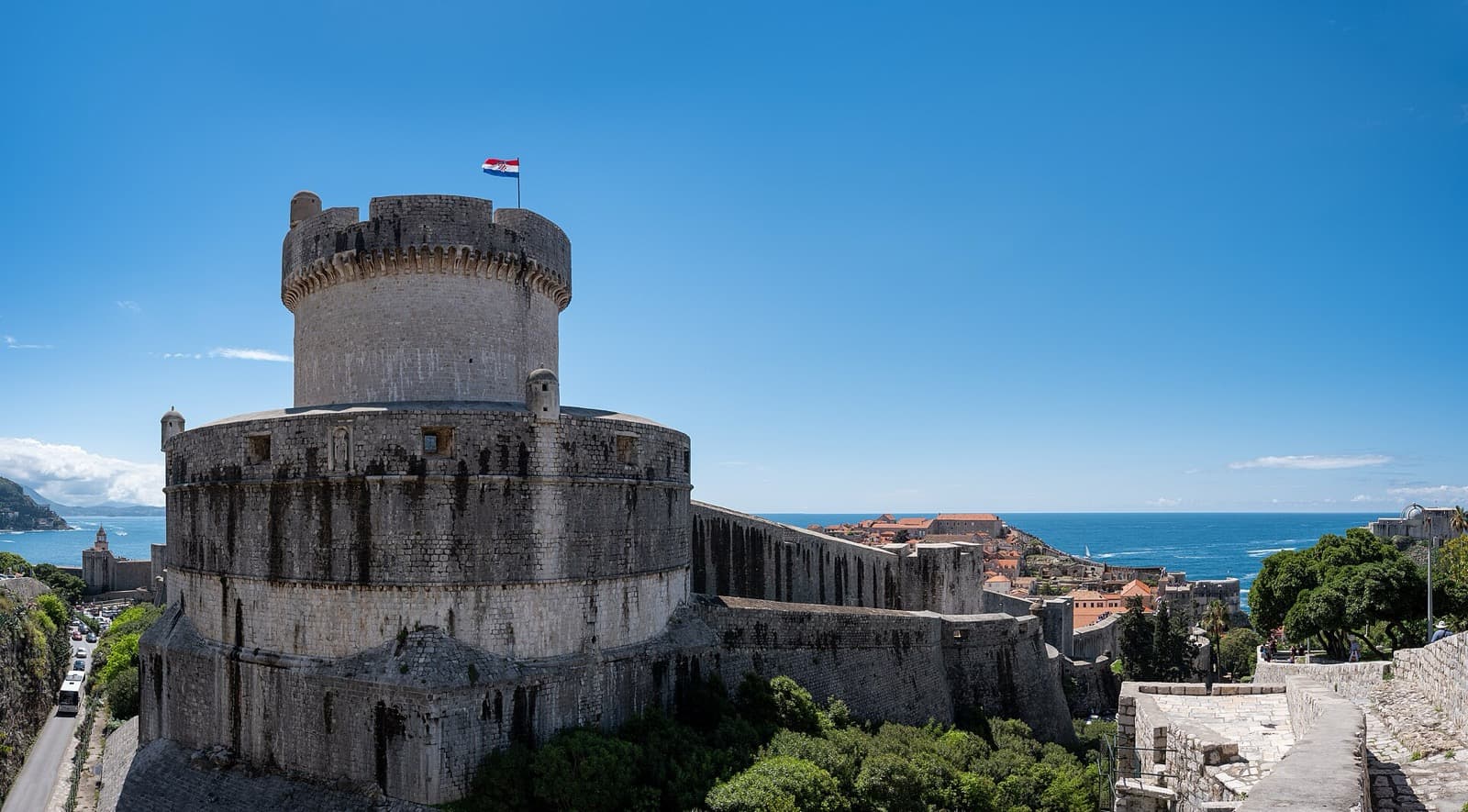
Minceta Tower and the Strategy Written Into Dubrovnik's Walls
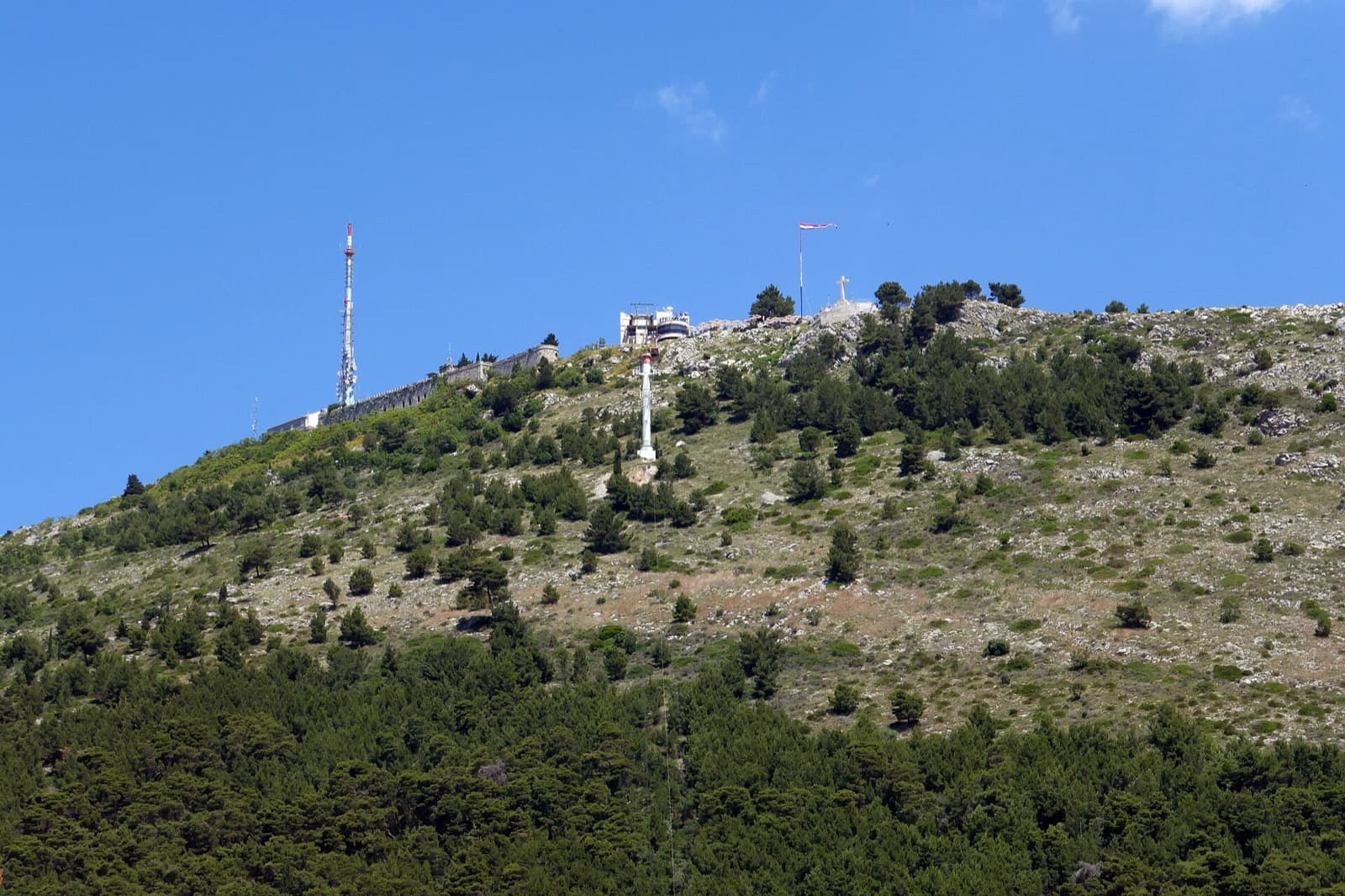
Mount Srd and Fort Imperial: How Dubrovnik's Mountain Fort Explains the Whole City
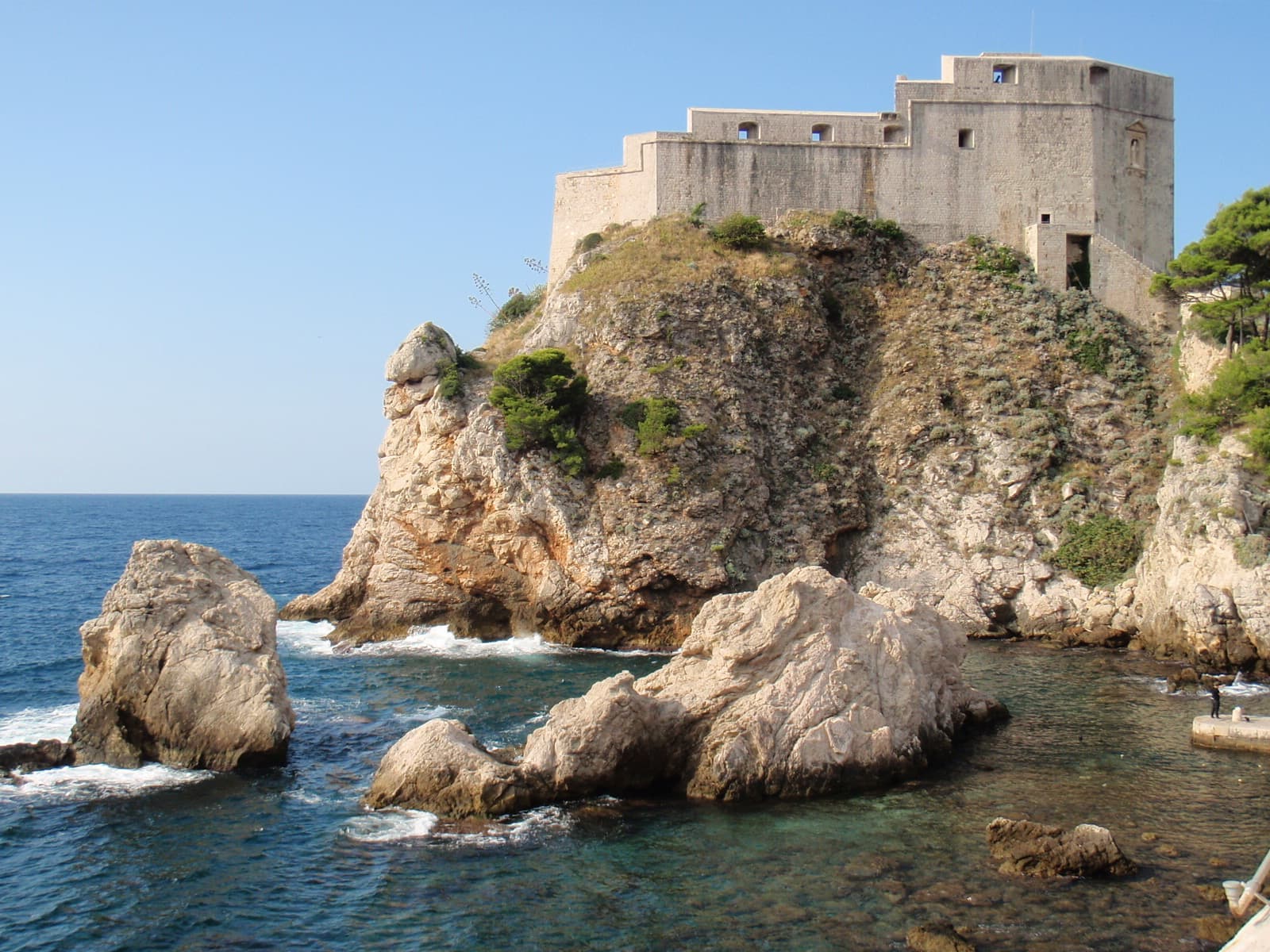
Bokar and Lovrijenac: The Forts That Guarded Dubrovnik's Freedom
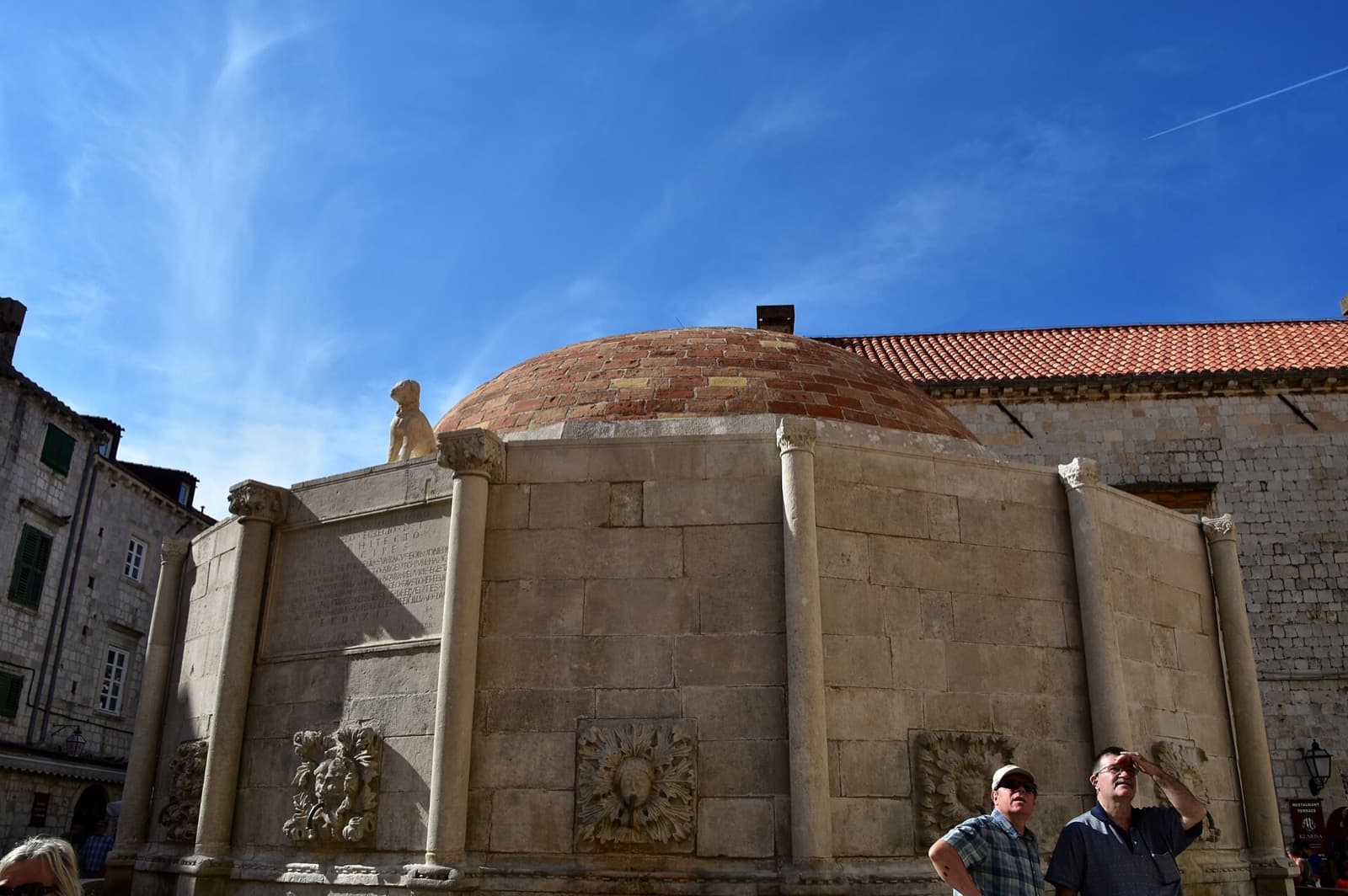
The Great Onofrio Fountain: Water as an Act of Government