Old Port and Mount Srd: Beyond the Walls
160 min · 3 km · challenging
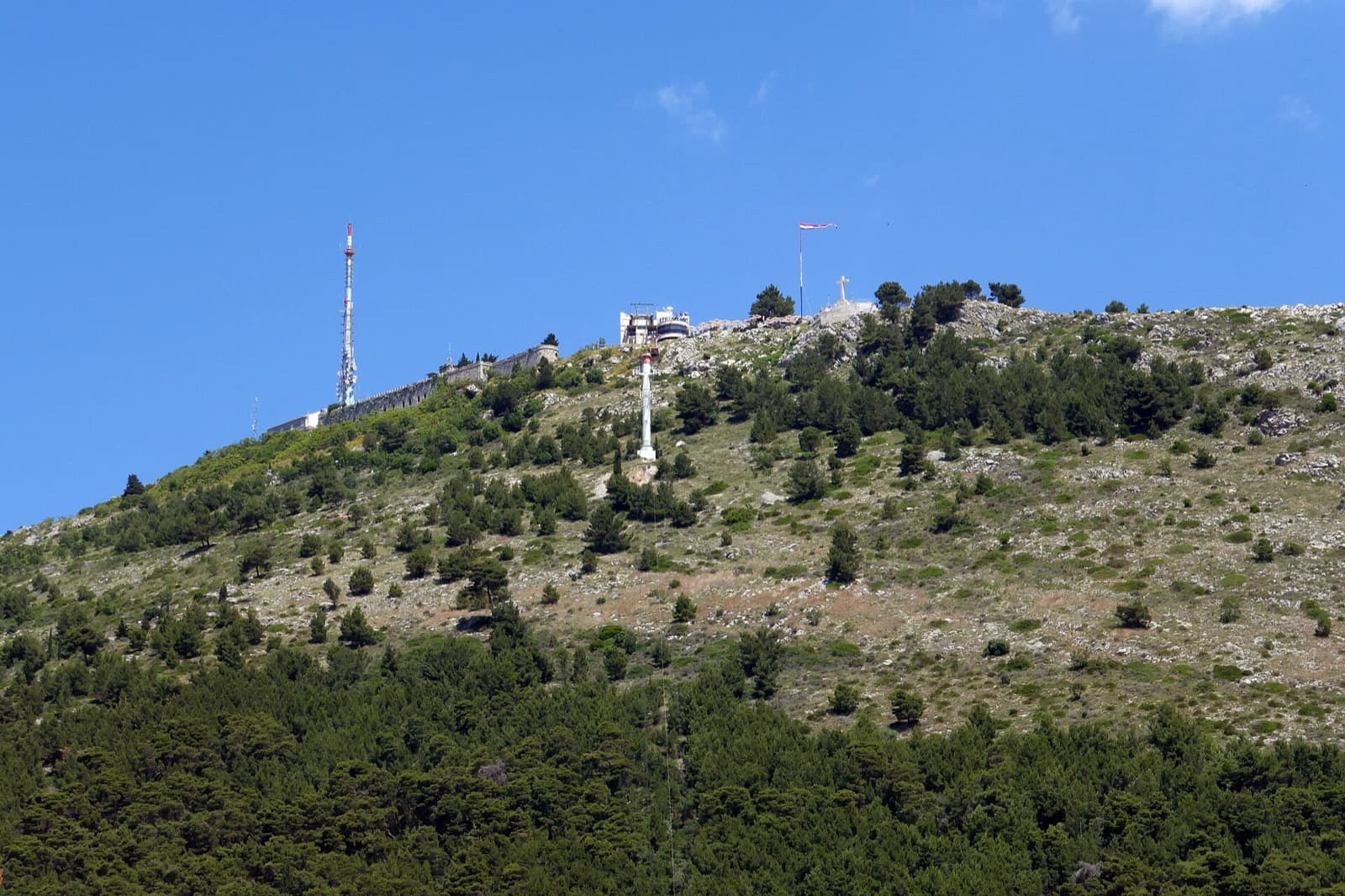
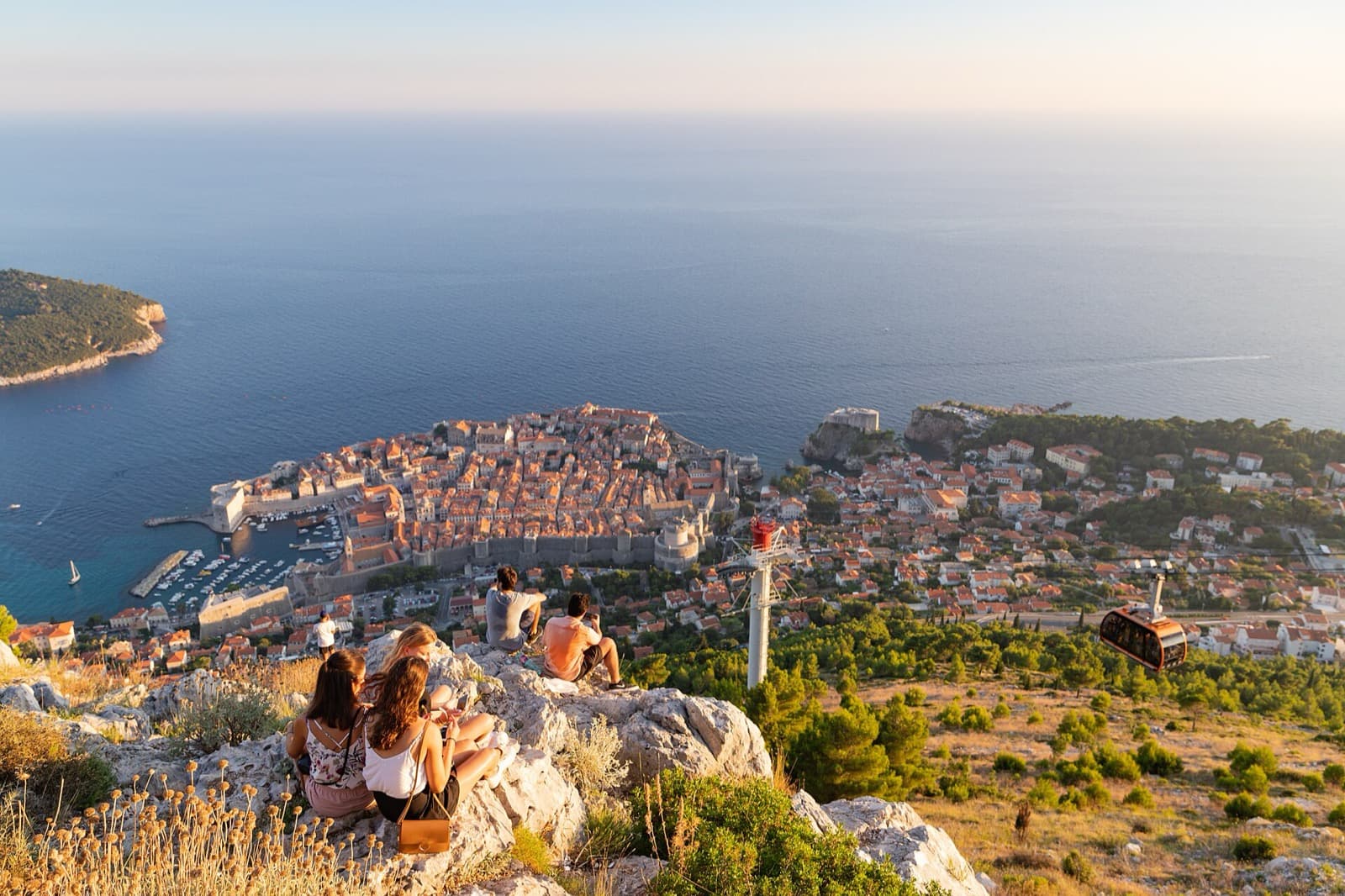
Fort Imperial crowns Mount Srd, 412 metres high, directly above Dubrovnik's Old Town, and from its parapet the walled city looks like a small stone crown dropped on the shore. That view is the reason to make this fort the way into the rest of the city. The Homeland War Museum inside the fort, the siege it commemorates, and the whole coast laid out below give you the one thing the postcard never does: an answer to what all those famous walls were actually protecting. They were protecting a working harbour, a global merchant fleet, and a public-health idea born of trade. Stand up here first in your imagination, and every stop down below stops being scenery and starts being evidence.
The fort that watched the war
Fort Imperial was built by the French, under Napoleon: begun in 1806, the year they occupied the city, and finished in 1812. For most of its life it was a piece of military furniture, a strongpoint on a bare mountain. Then, in living memory, it became decisive. During the Homeland War, the Yugoslav People's Army besieged and shelled Dubrovnik across 1991 and 1992, and Mount Srd, with Fort Imperial at its summit, was a key Croatian strongpoint held against the assault. If the mountain had fallen, the city below had no shield.
The figures kept by the City of Dubrovnik are exact and sobering, and they are worth carrying with you before you go. Of the 824 buildings inside the walled Old City, 594 were damaged, roughly 72 percent. Around 2,000 projectiles struck the Old City, and nine buildings burned to the ground. On the sixth of December 1991, the heaviest single day, more than 600 projectiles fell on the Old City. The city's survey counts 76 direct hits on the City Walls. UNESCO placed the Old Town on its World Heritage in Danger list in 1991, and after restoration the site was removed from that list in 1998.
Getting up there is part of the experience. You can ride the cable car or climb the steep switchback path on foot. Either way, Fort Imperial now holds the exhibition Dubrovnik in the Homeland War 1991 to 1995, and the exhibits reward a slow, quiet visit. Give this stop unhurried time. It is the emotional weight of the whole walk, and it deserves the silence.
Why the mountain explains the harbour
Hear a stop from this walk
Mount Srd, Fort Imperial and the Homeland War: the whole coast below
From that height, the logic of the older city becomes legible. The walls were never the point. What they enclosed was a body: a port, a fleet, and the institutions that kept both alive. The full tour on the Dubrovnik walking tours hub, called Beyond the Walls, works backward and forward from Mount Srd, tracing the Republic of Ragusa from the water it lived by to the mountain that watched over it.
Begin, as the walk does, at the Old City Port on the eastern shore. This was the working end of Dubrovnik, the part the postcard crops out. The harbour was sheltered by a breakwater called the Kase, built from 1485 to the plans of the engineer Paskoje Milicevic, of huge stone blocks laid over wooden foundations without mortar, to protect the port from south-easterly winds and waves. The harbour could be closed like a strongbox: at night a chain was stretched across its mouth, from Saint Luke's tower to the Mul tower that is now Saint John's fort, and the new breakwater let the chain be shorter. Nearby stands the Arsenal, built in the late twelfth century and enlarged in the fifteenth; the Republic opened its shipyard at Gruz in 1525. Three of its great arches survive, a fourth long since walled in. This was the engine room of a maritime power.
The next stop puts that power into scale. The Fort of Saint John, begun in 1346, guards the port entrance and now houses an aquarium on its ground floor and the Maritime Museum, run by Dubrovnik Museums, above it. The museum tells the story of a fleet that in the sixteenth century counted 170 to 200 larger ships and about 4,000 seamen, reaching England and Flanders, Syria and Egypt. Here is the detail that lingers: dictionaries trace the English word argosy, meaning a large merchant ship or a rich fleet, to the Italian phrase for a vessel of Ragusa, first recorded in the 1570s, and Shakespeare later put argosies into The Merchant of Venice. A ship type so tied to this one harbour that it became a word.
Trade that invented public health
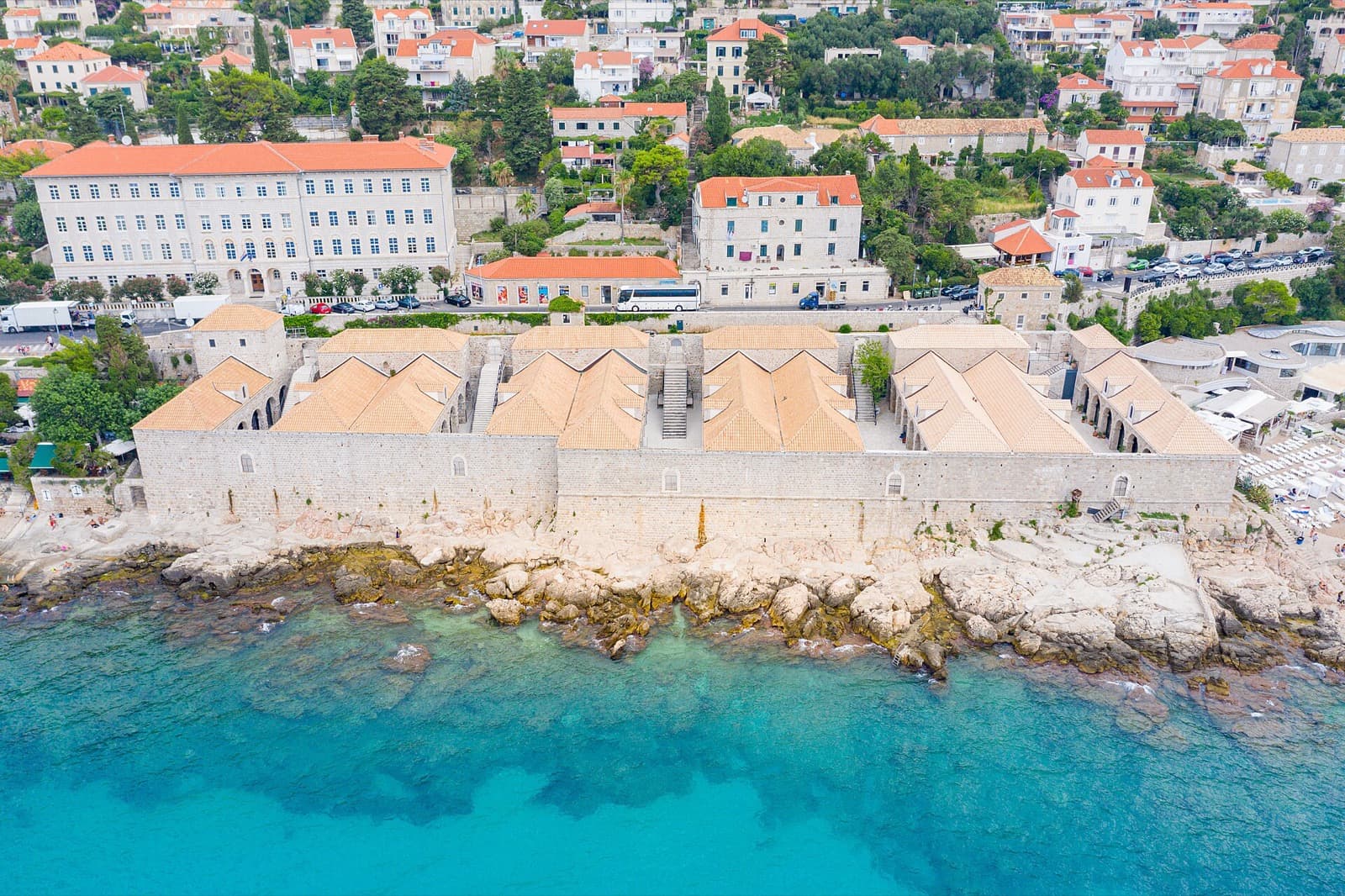
Just outside the Ploce Gate stands the most quietly important place on the route: the Lazareti, a long row of plain stone quarantine houses. In 1377 the Great Council of Ragusa ordained that anyone arriving from a plague-infected area spend a month in isolation before entering the city. Later the standard span became forty days, and from that forty we get the word quarantine. It was one of the earliest institutional quarantine measures documented anywhere.
The invention was pure trade logic. A merchant city could not survive by closing its harbour, and it could not survive by letting plague in with the cargo. So it built a third path: hold the ships, goods, and people at arm's length for a set span of days and let time do the sorting. The surviving Ploce complex, with five halls for goods and five buildings for travellers, was completed in 1642 and is now used for cultural events. From Mount Srd you cannot see the courtyards clearly, but you can see why they mattered. Everything the Republic did, from the chained harbour to the quarantine, was one long negotiation to keep the sea lanes open and the city alive.
Walking the argument
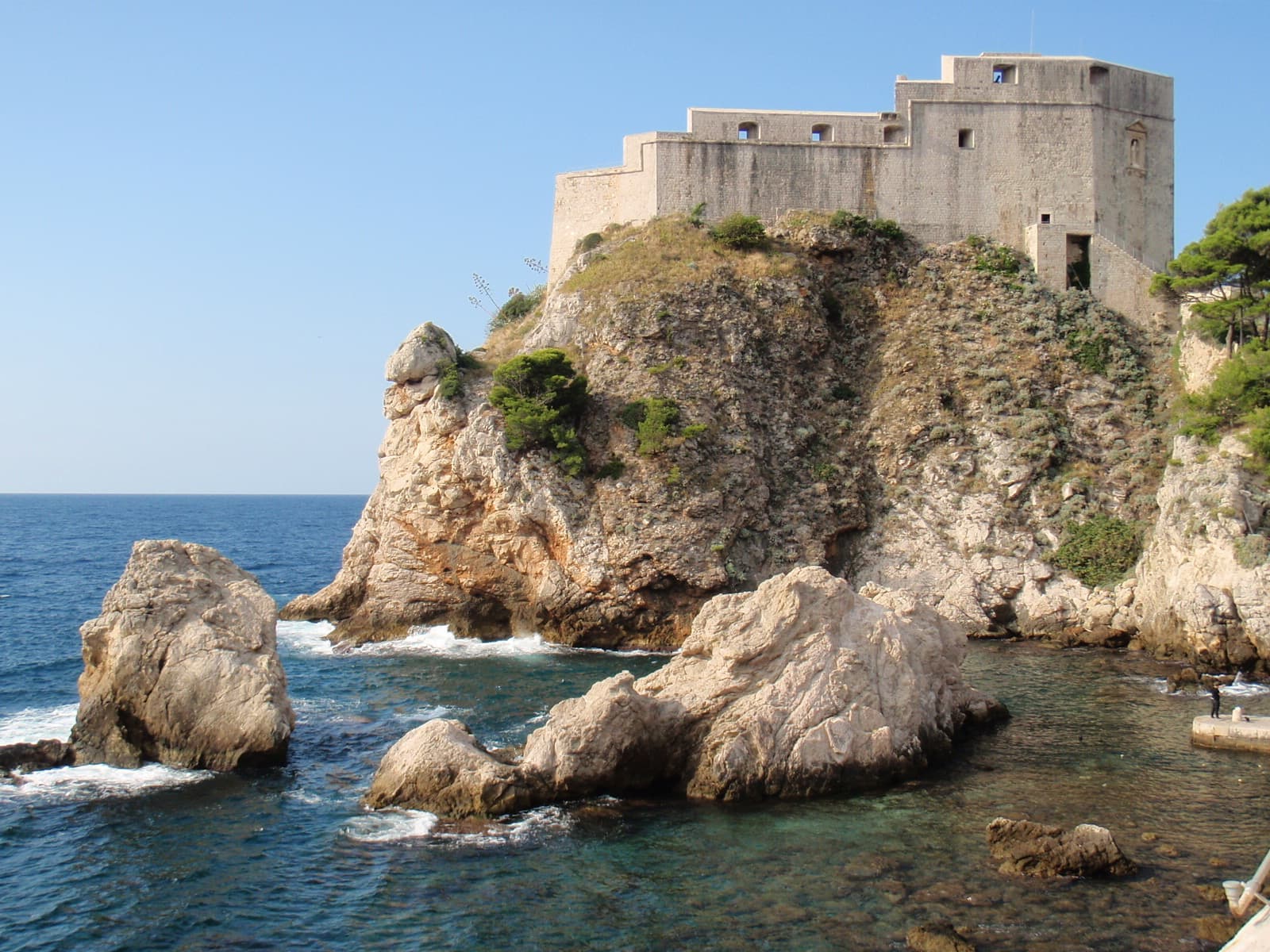
The route also gathers the city's other faces. Fort Lovrijenac stands free on a rock 37 metres high outside the Pile Gate, carrying the Republic's carved creed, Non bene pro toto libertas venditur auro, liberty is not well sold for all the gold. The Jesuit Stairs, a Baroque stairway of 1738 that the art historian Katarina Horvat-Levaj describes as designed after Rome's Spanish Steps, and which archival research attributes to Pietro Passalacqua, climb to the Church of Saint Ignatius. Each stop is short and skippable, and the whole loop covers about three kilometres over roughly two and a half hours.
You can see the mountain and the city on the Dubrovnik city page and plan your own pace from there. The tour is designed for solo walking with no group and no schedule, which is exactly the register the last stop needs. Reach Mount Srd for late afternoon, check the cable car's final descent time, and carry a layer against the summit wind. Then stand at the parapet, look down at the healed city, and let the walk settle. This is what the wall protected.
Sources
- City of Dubrovnik, "The Destruction and Restoration of Dubrovnik 1991-2000": the official building-damage figures cited above (824 buildings, 594 damaged, roughly 72 percent, about 2,000 projectiles, nine burned, the sixth of December 1991, and the hits on the City Walls).
- Institute for the Restoration of Dubrovnik (zod.hr): the World Heritage in Danger listing from 1991 to 1998.
- Proleksis encyclopedia, "Dubrovnik": the height of Srd.
- Dubrovnik Cable Car (dubrovnikcablecar.com), "Museum": the exhibition Dubrovnik in the Homeland War 1991-1995 in Fort Imperial.
- HRT Radio Dubrovnik, "Gradoplov" (23 November 2019), and Croatian Encyclopedia, "Miličević, Paskoje Mihov": the Kaše breakwater and the harbour chain.
- Dubrovnik Tourist Board, "The City Harbour" and "St John's Fort": the Kaše's construction, the Arsenal, the fort, the aquarium and the Maritime Museum.
- Croatian Encyclopedia, "Dubrovnik": the Gruž shipyard of 1525 and the sixteenth-century fleet.
- Leksikon Marina Držića, "Karantena" (Tatjana Buklijaš): the 1377 ordinance and the Ploče lazaretto of 1642.
- Online Etymology Dictionary, "argosy": derivation from a ship of Ragusa, first recorded in the 1570s.
- Society of Friends of Dubrovnik Antiquities (citywallsdubrovnik.hr), "Lovrjenac Fortress": the fort's 37-metre rock and its inscription.
- Katarina Horvat-Levaj, Discover Baroque Art (Museum With No Frontiers), and Vladimir Marković, "Pietro Passalacqua u Dubrovniku", Peristil 24 (1981): the Jesuit Stairs.
Ready to experience it?
Old Port and Mount Srd: Beyond the Walls
160 min · 3 km · challenging
More from Dubrovnik
Explore more at your own pace.
Dubrovnik: the free city the Republic of Ragusa built
Minceta Tower and the Strategy Written Into Dubrovnik's Walls
The Rector Who Ruled Dubrovnik for One Month
Bokar and Lovrijenac: The Forts That Guarded Dubrovnik's Freedom
The Great Onofrio Fountain: Water as an Act of Government