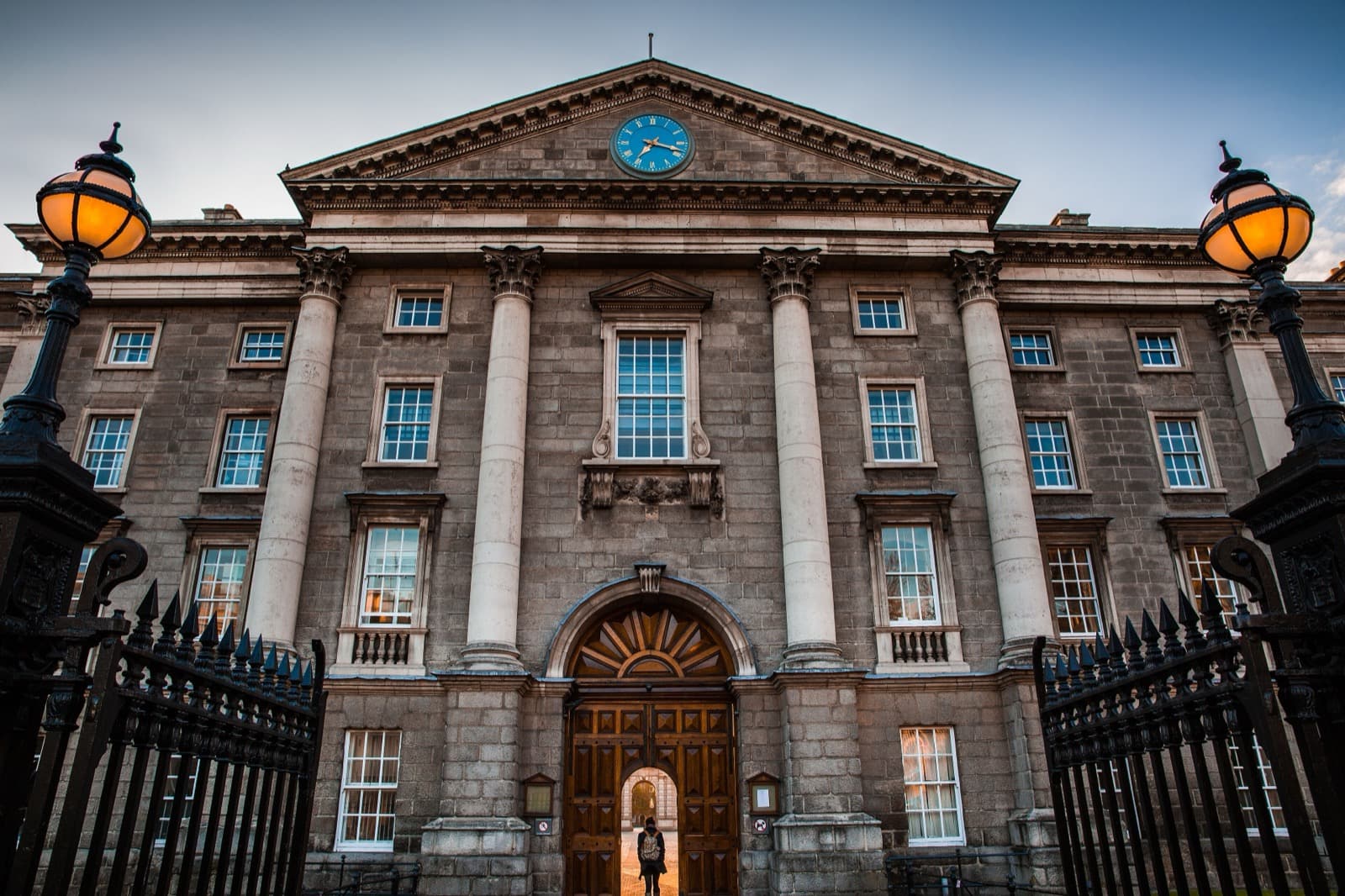
Stand at the front gate of Trinity College on College Green and you are standing at the deepest root of Georgian Dublin. This is Ireland's oldest university, founded by royal charter of Queen Elizabeth the First in 1592, and behind the arch it guards, in the Old Library, a small gospel book written close to the year 800. The gate is a threshold in the literal sense: pass through it and the noise of the modern street gives way to calm cobbled squares gathered around a bell tower. The one thing to understand while you stand here is that this single institution holds together two Dublins, an ancient native Ireland of monks and gold and a confident eighteenth-century city of brick and order, and the walk beyond the gate reads the second while the Old Library keeps the first.
A university four centuries in the making
Trinity was conceived as the single college of a would-be University of Dublin, an outpost of learning tied to the Crown and the established church. It rose on the site of a former priory, on land given by the city, and grew inward rather than outward, gathering into the quiet squares you can see through the arch. That inward-facing plan is worth pausing on. Most of Dublin's Georgian grandeur, the squares and terraces you will meet later on the walk, turns its face to the street. Trinity turns its back to it. The campus is a walled world of its own, and the front gate is the one controlled point where the city and the college meet.
Take the squares at your own pace once you are through. There is no need to hurry. The confident stone facade on College Green was built to impress a passing public, but the real life of the place happens in the cobbled courts beyond, on nobody's schedule but the college's own.
The Old Library and the Long Room
Hear a stop from this walk
Leinster House and the National Museum: The Duke's Mansion and Ireland's Gold
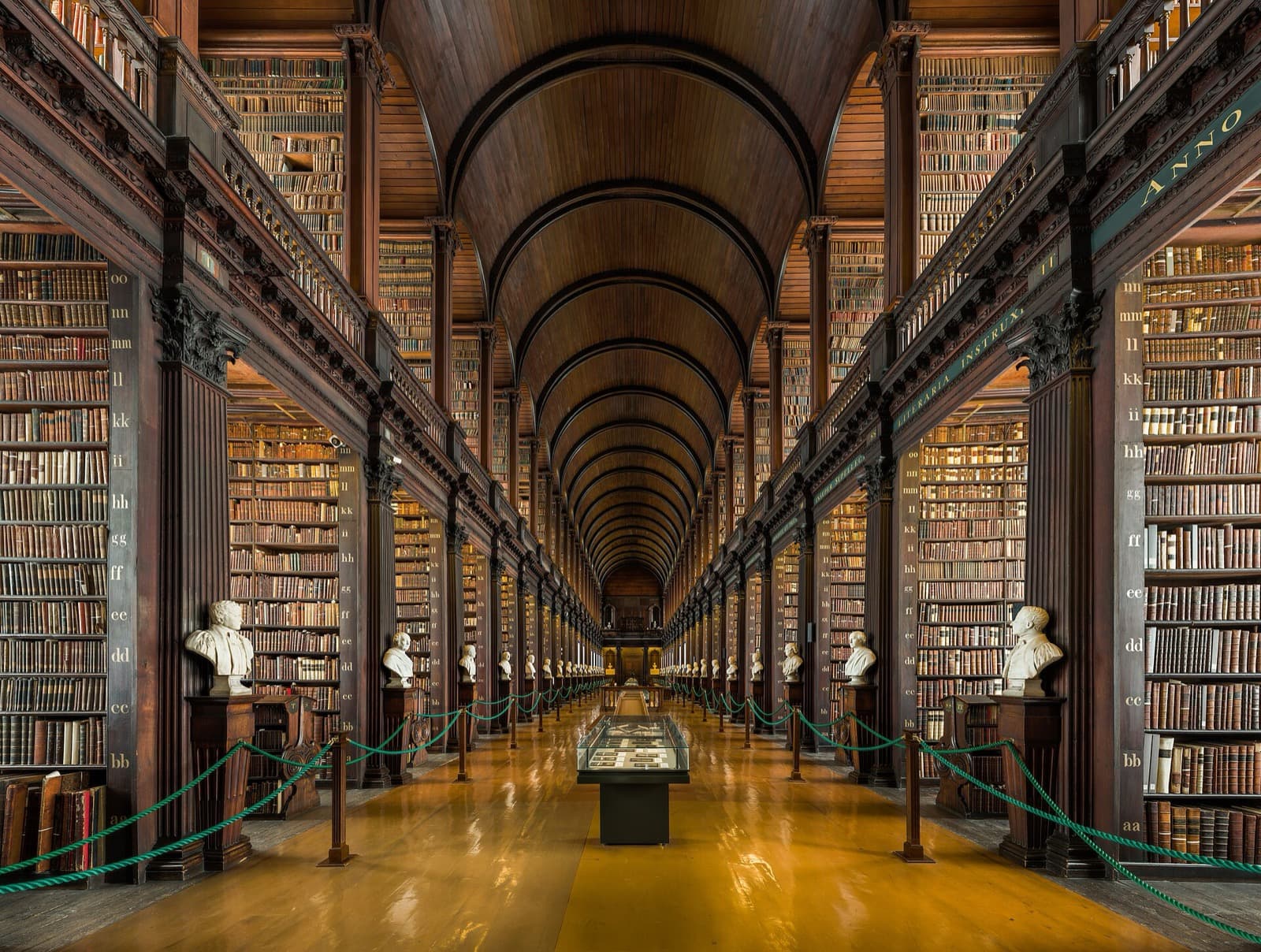
The treasure lies in the Old Library, begun around 1712. Its upper hall, the Long Room, runs nearly 65 metres and normally holds about 200,000 of the library's oldest books beneath a barrel-vaulted ceiling, lined with marble busts. That ceiling is not original. It was raised in 1860 to make room for more books, replacing a flat roof that had run out of space. The collection of busts that lines the hall began earlier still, in 1743, with a commission to the sculptor Peter Scheemakers. Reading those two dates together tells you something true about the place: it is a working library that kept outgrowing itself, adjusting its own architecture over centuries to hold ever more of the written word.
The Long Room is one of the most photographed interiors in Europe, and it deserves the attention. But the front gate is the better place to grasp what it means, because from here you can picture the hall stretching away above you before you ever join a queue to enter it.
The Book of Kells
In the Old Library sits the college's greatest possession, the Book of Kells. It was written close to the year 800, the four Gospels in Latin, and its text is based on the Vulgate that Saint Jerome had completed in 384, more than four centuries before the manuscript itself was made. The book was produced by monks working in the Insular tradition that flourished across Ireland and Britain, and it survived Viking raids, relocation, and centuries of handling before coming to rest in Dublin.
For most of its life the manuscript had nothing to do with Trinity. It was kept for centuries at the monastery of Kells in County Meath, and it reached the college only in 1661, arriving through Henry Jones, then Bishop of Meath. Trinity College's own library records it as one of the finest achievements of early medieval Irish art. That is the quiet paradox of the front gate. The university is a creation of the sixteenth-century Crown, a colonial and Enlightenment institution, yet the object it is now most famous for is a product of an older, native Irish golden age the Georgian city admired but did not make.
Why this gate is the right place to begin
The Book of Kells runs on timed-entry queues, walked in groups, and the paid indoor visit is best treated as a separate errand from the outdoor walk. Here is the advantage of arriving on foot and alone. You can stand in the cobbled square, picture the Long Room and the little gospel book at the heart of it, and read them in your own imagination before you ever join a line. The grounds themselves are free to enter in daylight hours, so nothing about pausing here costs anything but time.
The gate also frames the whole route that follows. From College Green the walk passes the domed former Parliament House across the way, the world's first purpose-built two-chamber parliament, begun in 1729 and later sold to the Bank of Ireland. It climbs Grafton Street to Saint Stephen's Green, crosses to the Georgian townhouses of Newman House where the young James Joyce studied, and opens at last into Merrion Square, the finest surviving set-piece of painted doors and fanlights. The walk ends at Leinster House, a duke's mansion turned parliament, beside the National Museum and its Tara Brooch. That closing rhymes deliberately with this beginning: the gold and the metalwork there belong to the same golden age that produced the Book of Kells you stood before at the gate.
So the front gate is not just a starting point. It is the thesis of the entire walk in one facade. An ancient Ireland kept indoors, a Georgian city built outward, and a threshold between them where you get to choose your own pace.
When you are ready, walk it. This deep dive is the first stop on the self-guided dublin-trinity-georgian tour, a gentle, level route of about two hours through the ordered Dublin of the seventeen hundreds. For the full set of routes across the city, see our guide to Dublin walking tours, then let the door, the fanlight and the square teach you their grammar at whatever pace you please.
Sources
- Trinity College Dublin, Old Library and Long Room (tcd.ie): official record of the Old Library, the Long Room dimensions and the Book of Kells.
- Encyclopaedia Britannica, "Trinity College Dublin": founding by royal charter of Elizabeth the First in 1592 and institutional history.
- Trinity College Dublin Library, Book of Kells: manuscript dating (close to 800), its Kells provenance and 1661 arrival, and its place in early medieval Irish art.
- National Museum of Ireland, Archaeology: the Tara Brooch, Ardagh Chalice and the Insular golden age that the walk's closing stop connects back to the Book of Kells.
Ready to experience it?
Trinity College: The Book and the Georgian City
110 min · 3.4 km · easy
More from Dublin
Explore more at your own pace.
Dublin in Layers: The Viking Town Beneath the Georgian Mask
Dublin Castle and the Black Pool: A Medieval City Under the Georgian Mask
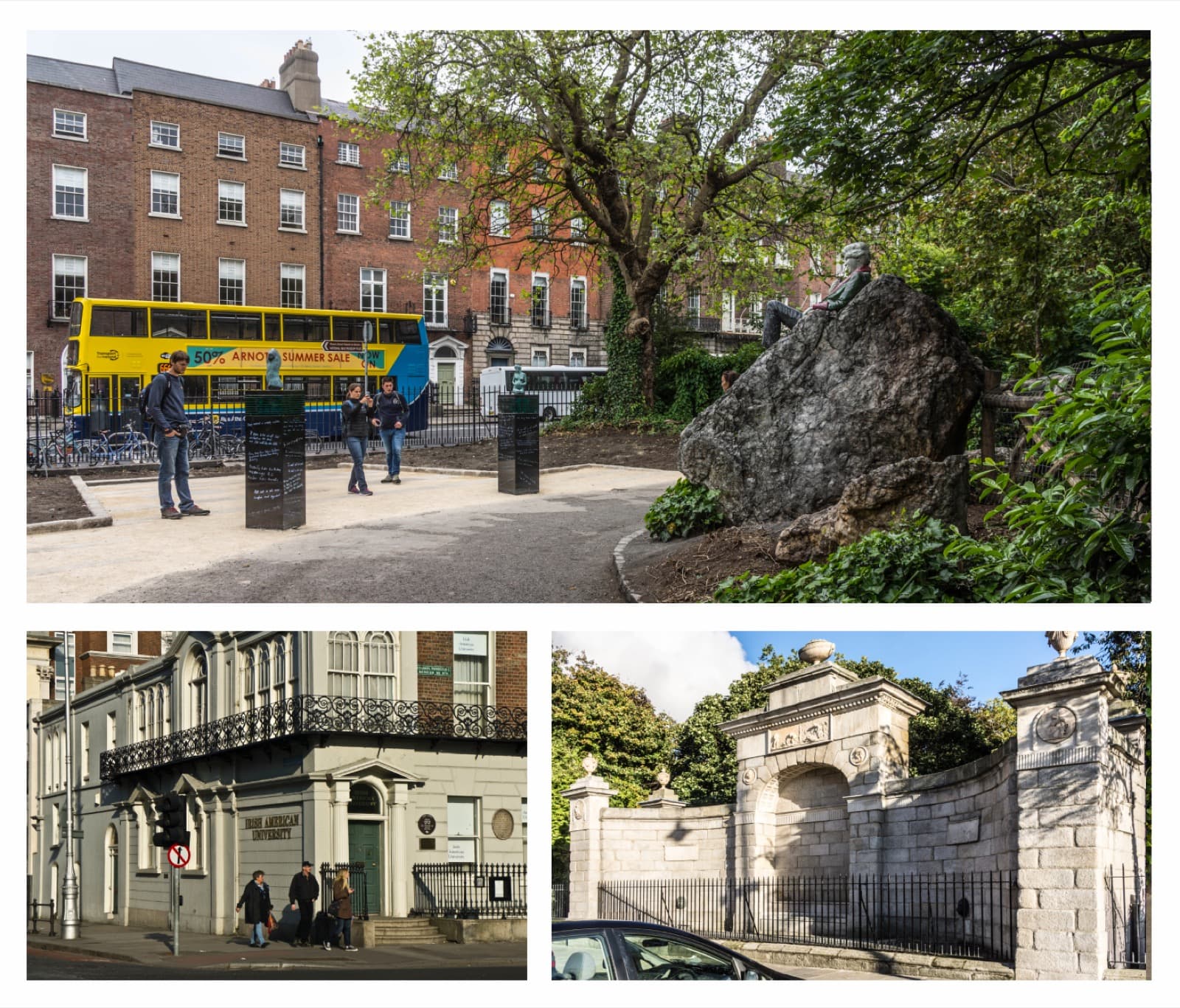
Merrion Square and the Grammar of Georgian Dublin
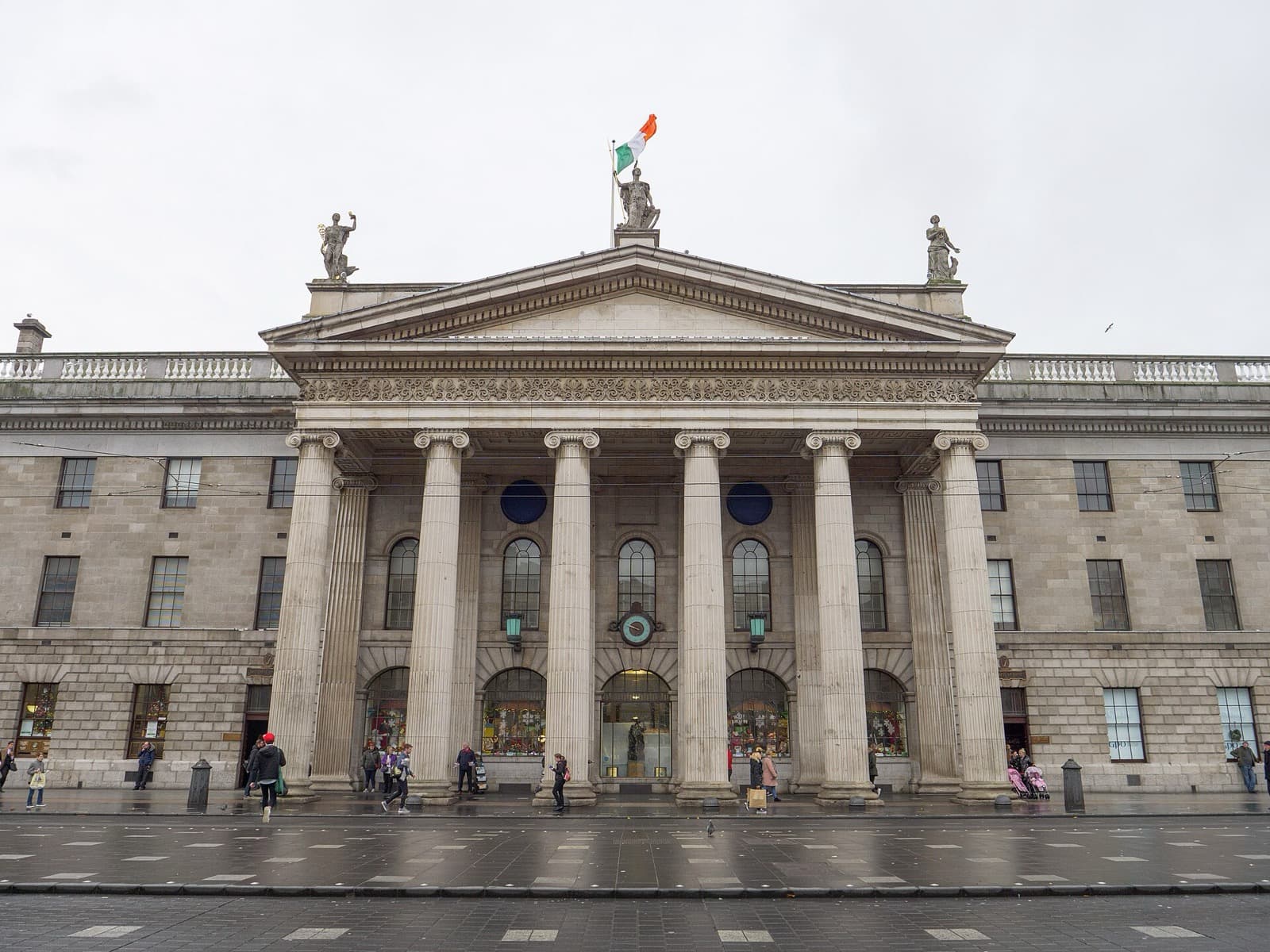
The GPO on O'Connell Street: How One Post Office Became the Birthplace of a Republic
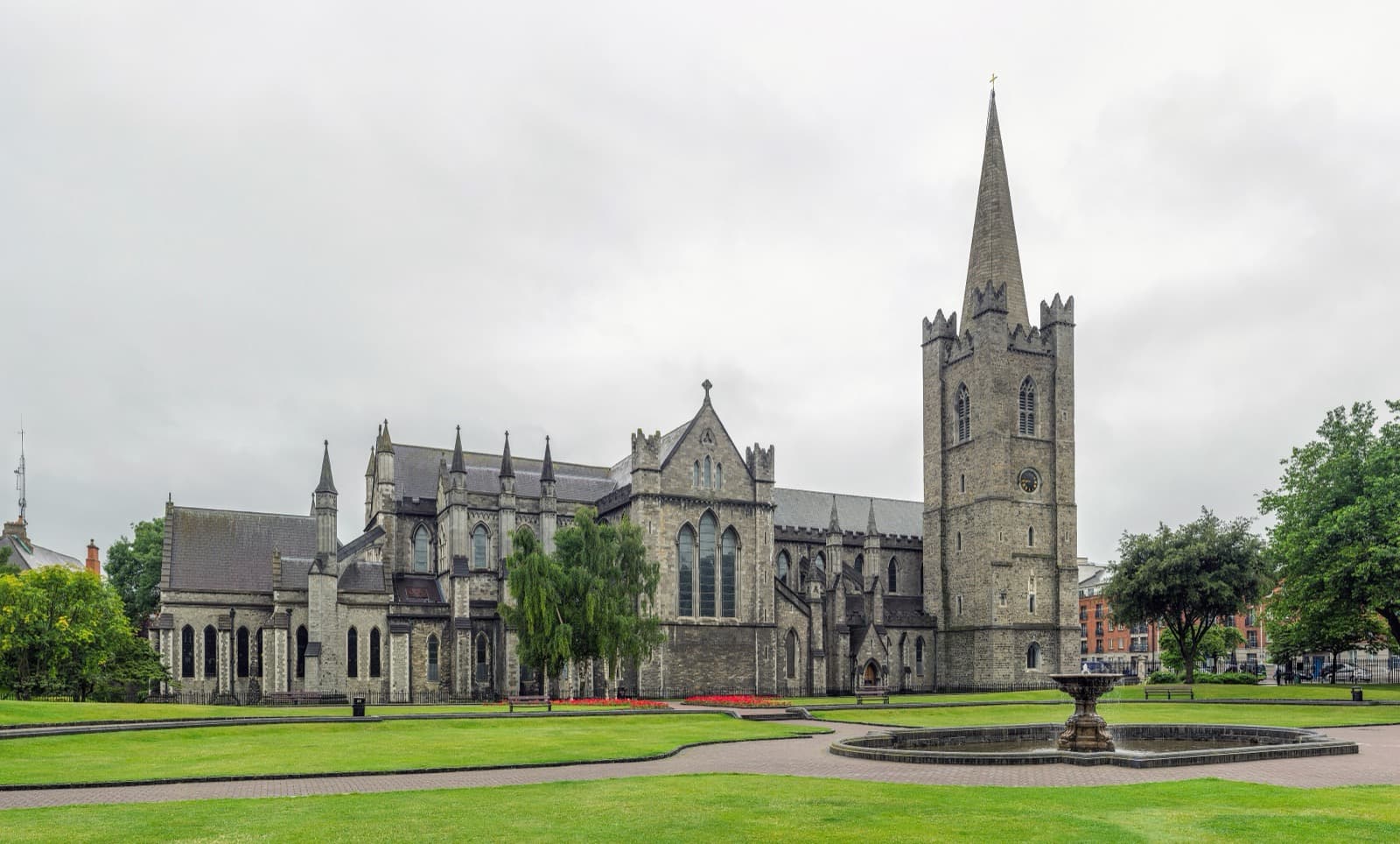
Saint Patrick's Cathedral, Dublin: Swift's Furious Epitaph