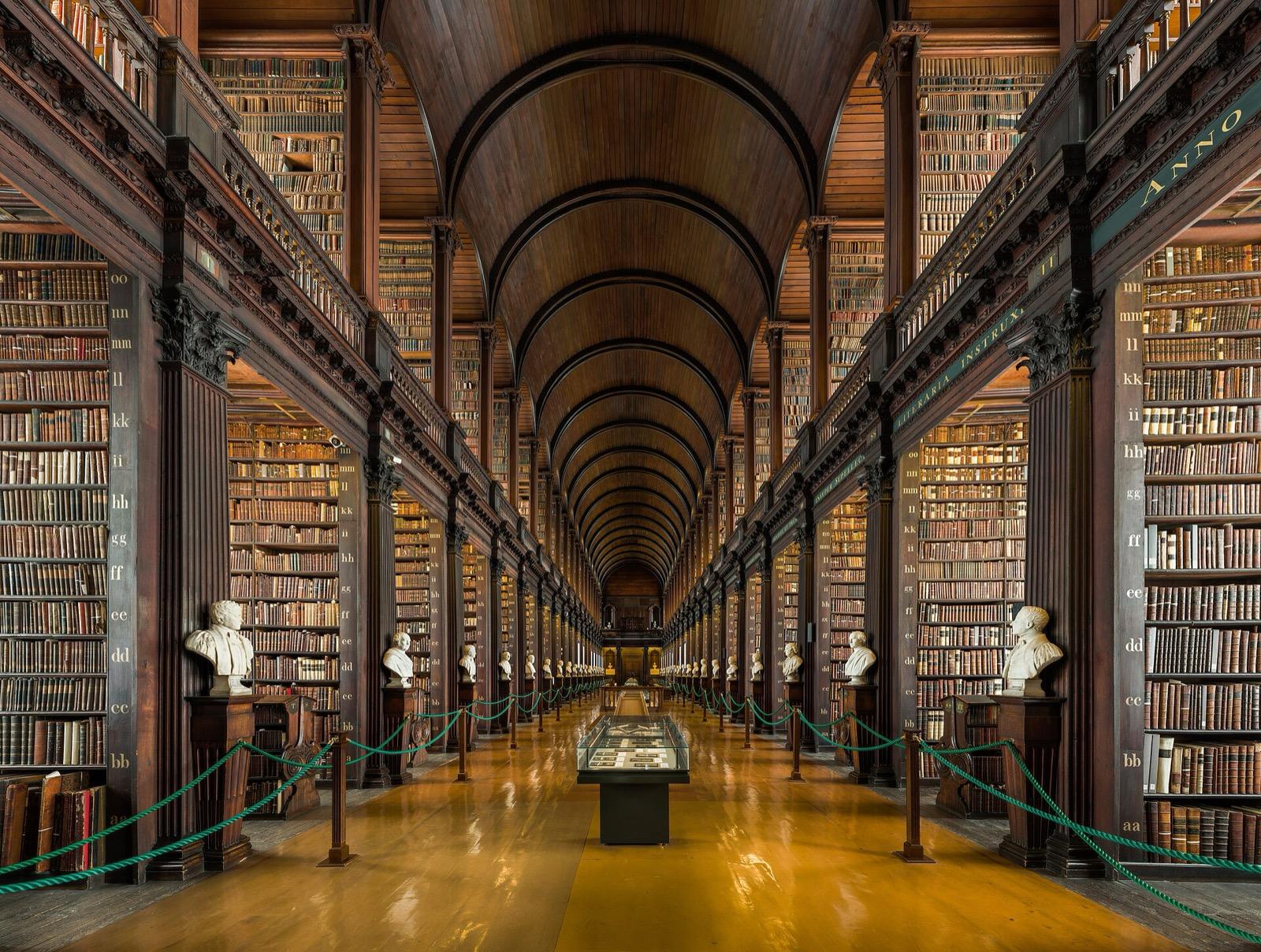
A walk through the ordered, confident Dublin of the seventeen hundreds, from the Book of Kells at Trinity College out to the painted doors of Merrion Square, at your own unhurried pace.
Start · Trinity College and the Book of Kells
DirectionsStops
- 1
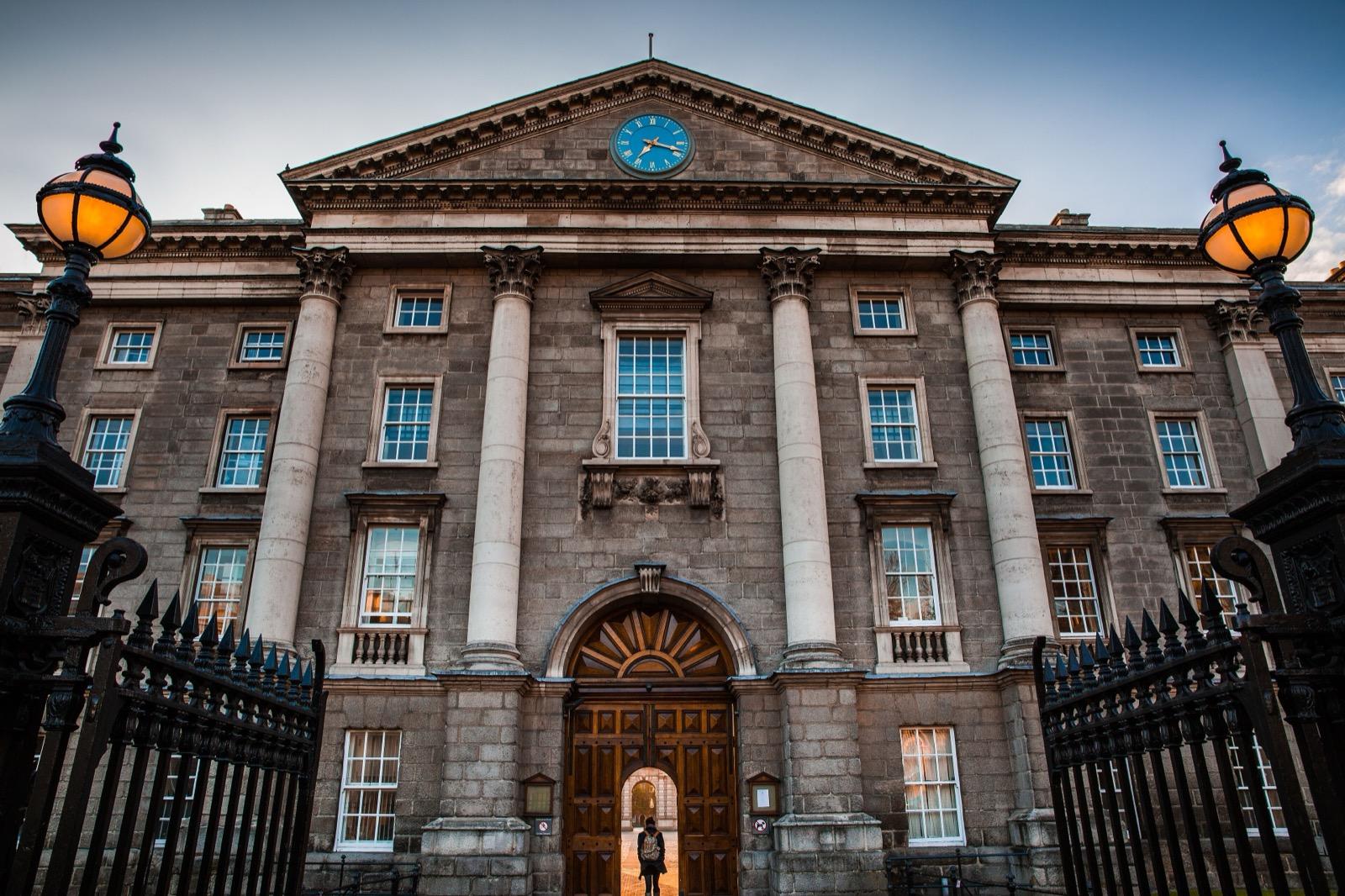
Trinity College and the Book of Kells
Ireland's oldest university, four centuries in the making, whose Old Library guards a little gospel book made around the year eight hundred.
- 2
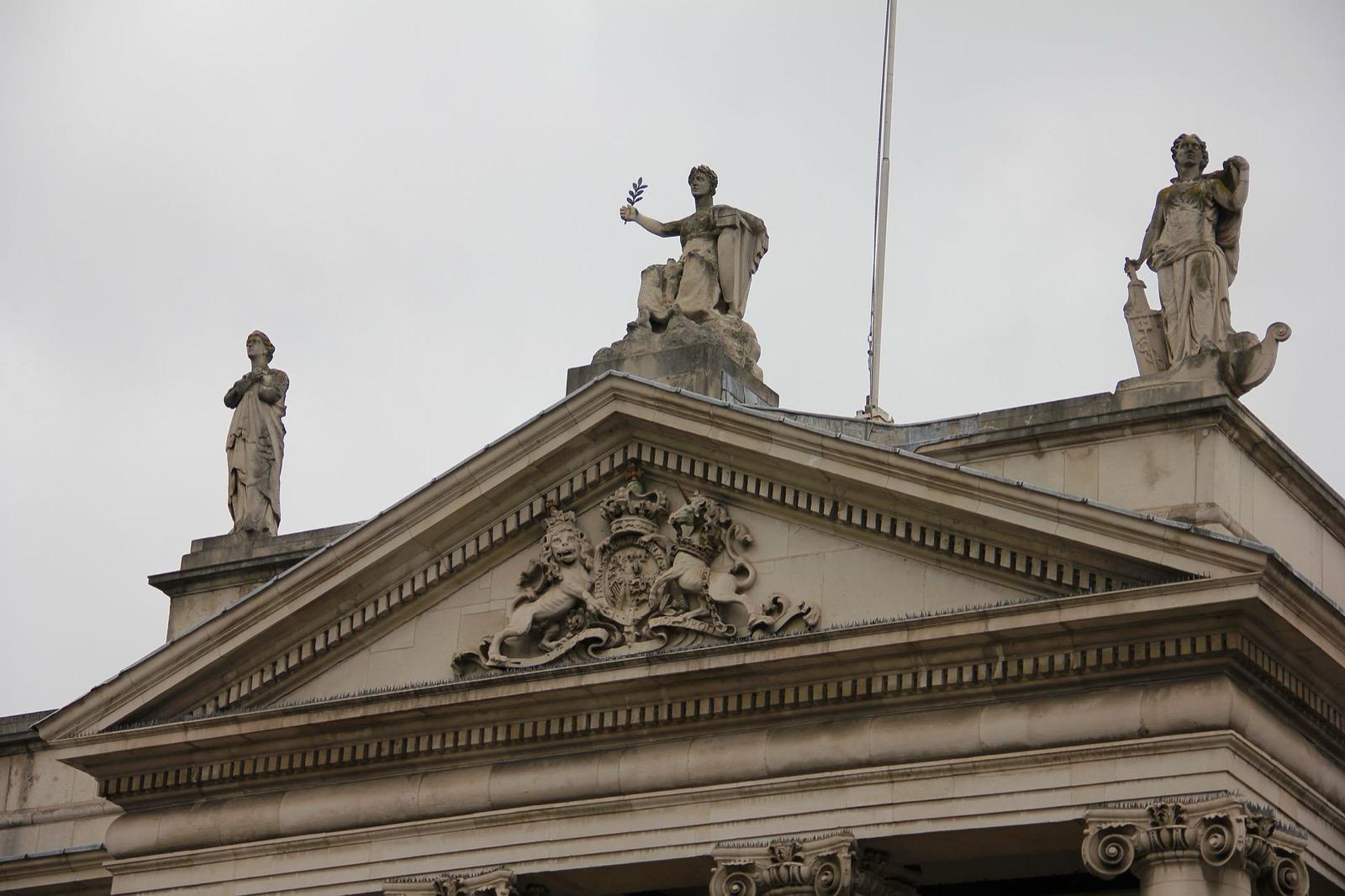
College Green: The World's First Purpose-Built Parliament
The great curved colonnade of the former Parliament House, the first building anywhere designed to hold a two-chamber legislature, closed by union and sold to a bank.
- 3
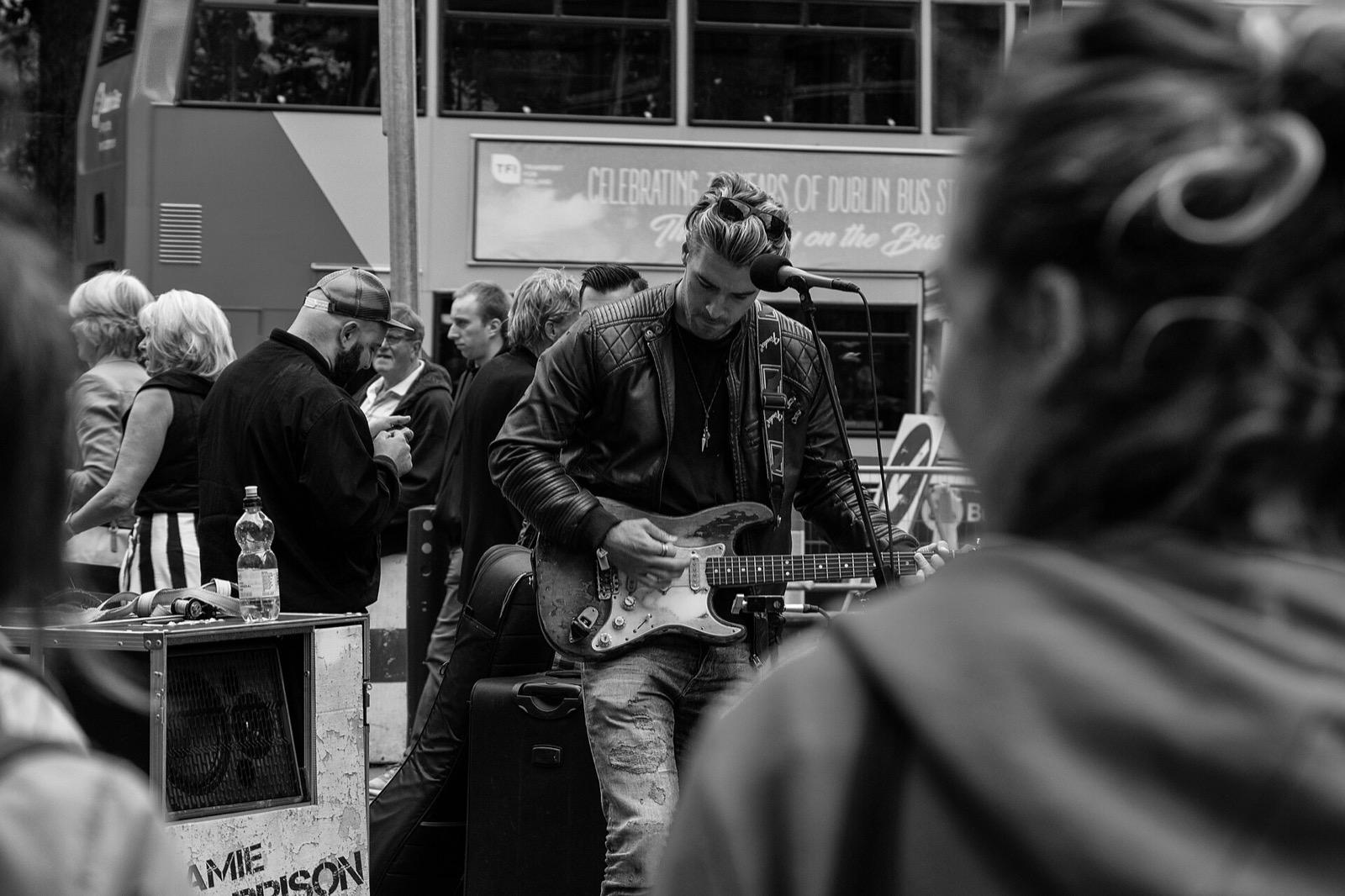
Grafton Street and Molly Malone: The Singing Street
Dublin's fashionable pedestrian spine, alive with buskers, watched over by the bronze figure of a fishmonger who lives only in a song.
- 4
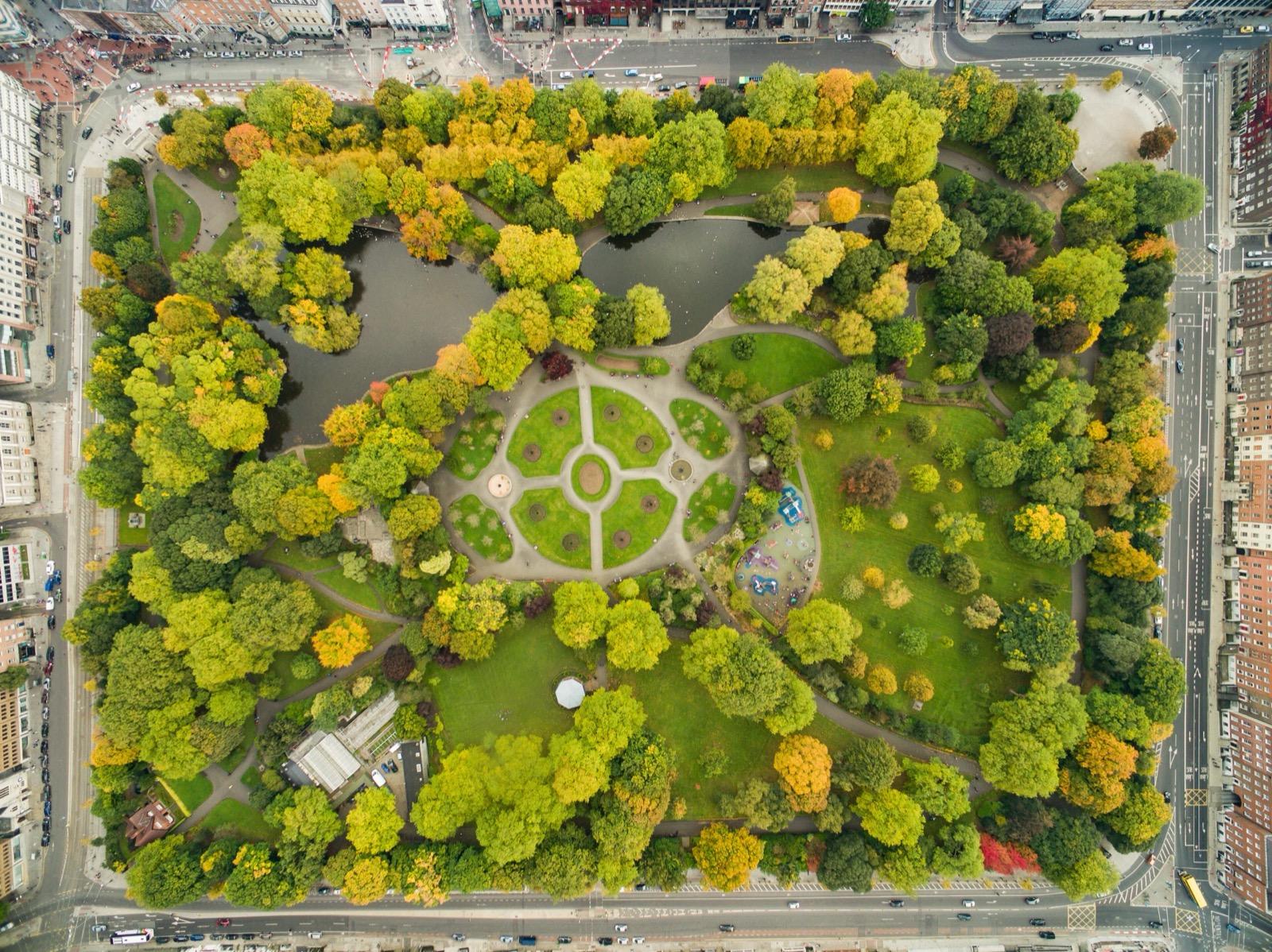
Saint Stephen's Green: The Square and the Rising
A Victorian public park given to the people by a Guinness, where the ordered green gave way for a week in nineteen sixteen to the trenches of a rising.
- 5
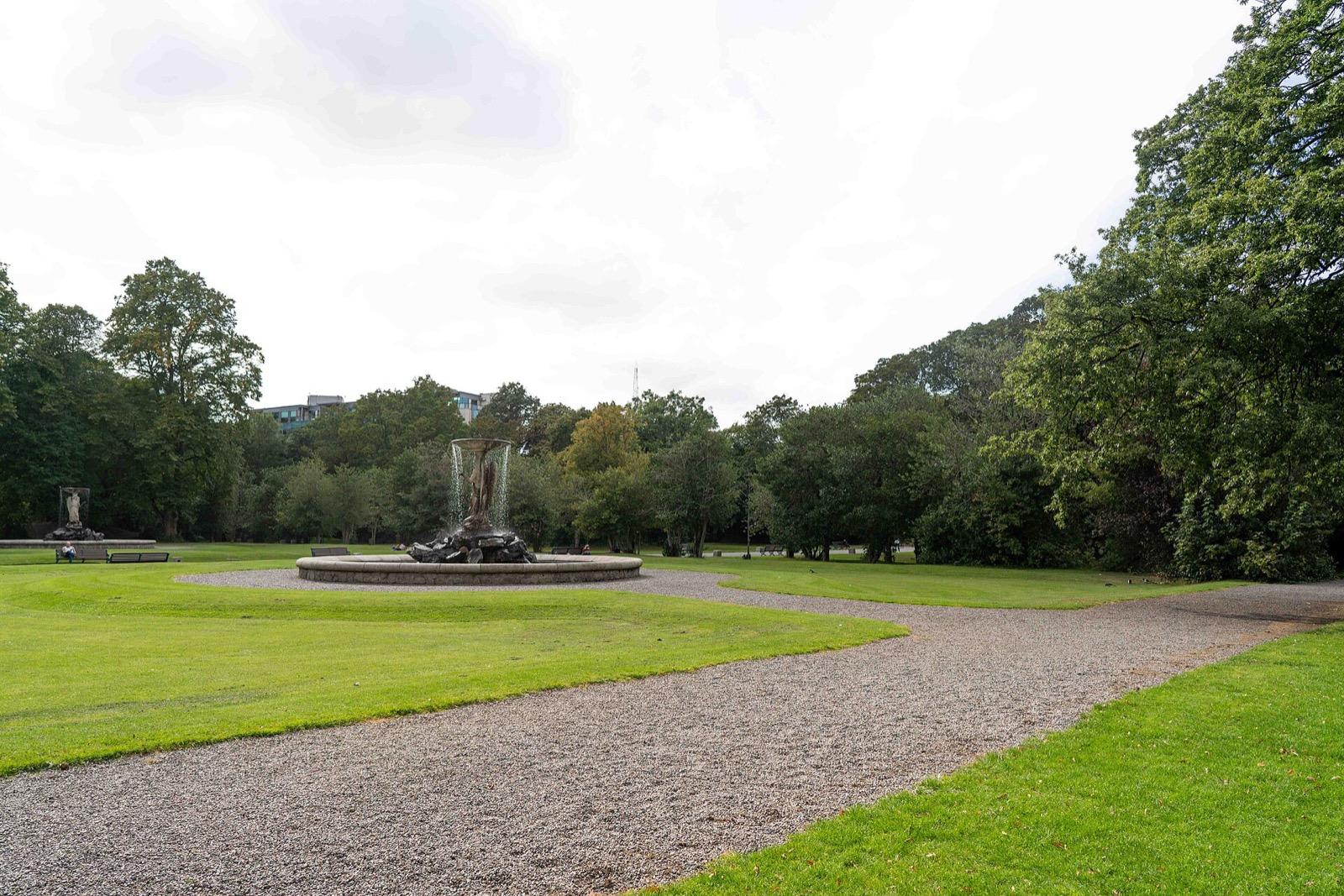
Newman House: A Catholic University on the Green
A pair of grand Georgian townhouses on the south side of the Green where a Catholic university rose in the age of Newman, Hopkins and the young Joyce.
- 6
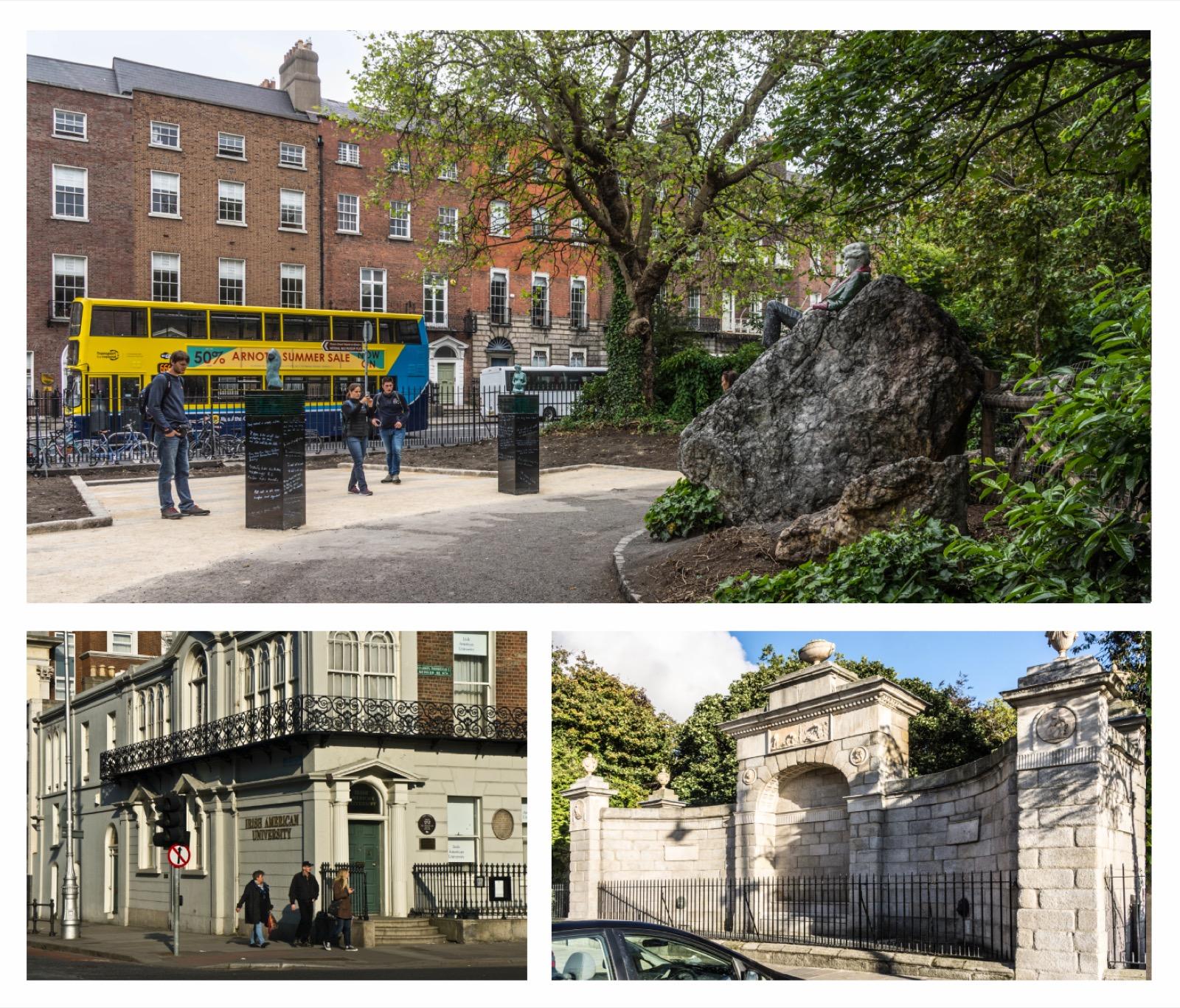
Merrion Square: The Great Square of Painted Doors
The finest and best-preserved of Dublin's Georgian squares, three sides of red-brick terraces with fanlit painted doors, where Oscar Wilde grew up.
- 7
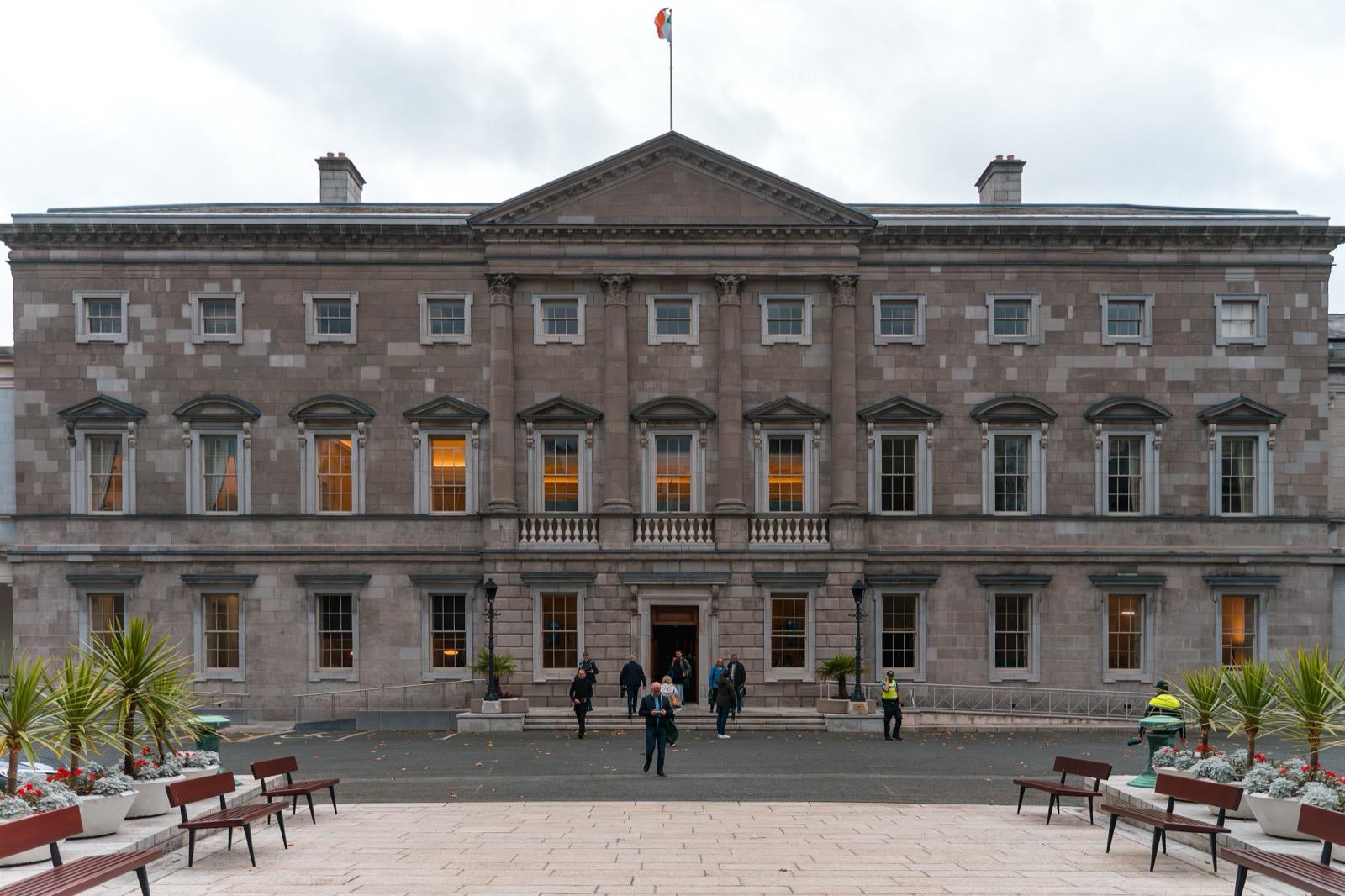
Leinster House and the National Museum: The Duke's Mansion and Ireland's Gold
A great ducal mansion that became the seat of Ireland's parliament, beside a museum holding the Tara Brooch and the treasures of Ireland's own golden age.
Details
Best Time to Visit
Late morning on a weekday is ideal: the Georgian squares and Merrion Square are quiet and beautifully lit, and Grafton Street is lively with buskers without the weekend crush. Spring and early autumn give the softest light on the brick and the best chance of dry weather, though Dublin's sky changes quickly in any season. If you plan to go inside the Old Library to see the Book of Kells, book a timed slot in advance and aim for an early or late entry to avoid the midday queues.
Pro Tips
- •The Book of Kells and Old Library run on timed-entry tickets that sell out; book online ahead of time and treat the paid indoor visit as a separate errand from this outdoor walk, which you can do entirely for free.
- •Saint Stephen's Green, Merrion Square park and the Trinity grounds are all free to enter in daylight hours, so you can pace the whole route without spending anything.
- •Do the walk in the order given: it is built as a story, moving from the deepest root at Trinity out to the fullest Georgian set-piece at Merrion Square and closing on the rhyme between the Book of Kells and Ireland's ancient gold.
- •Give yourself permission to stop under the doorways on Merrion Square. Reading a single fanlit door slowly is the whole point of the walk, and no group will move you along.
- •The National Museum of Ireland, Archaeology, is free to enter, so if you have energy at the end, step inside to see the Tara Brooch and the Ardagh Chalice and let the walk's opening and closing images meet.
- •Grafton Street is a pedestrian spine best enjoyed unhurried; pause for the buskers, then carry on, rather than treating it as a corridor to rush through.
Safety & Precautions
- •This is a level city walk on pavement of about two and a half kilometres, with some cobbles in the Trinity squares that can be uneven underfoot; wear comfortable, sensible shoes.
- •Dublin weather changes fast in any season, so carry a light waterproof or umbrella even on a bright morning, and be ready for wind in the open squares.
- •Keep valuables discreet and stay aware of your surroundings on the busy central streets, especially in the crowds around Grafton Street; ordinary city-centre street-awareness is all that is needed.
- •Please keep a respectful, quiet manner in the Old Library and when standing where the Easter Rising is remembered on Saint Stephen's Green, and note that some sites such as the Book of Kells charge entry in euro.
Travel advisory: Exercise Normal Precautions (Level 1).
Gallery
Related Reading
Go deeper on what you'll see, hear, and walk through.
Overview
Best Self-Guided Walking Tours in Dublin (2026)
4 min
Overview
Dublin Travel Guide: Days, Transport, Weather, Safety, and Budget
7 min
Overview
One Day in Dublin: A Walkable Morning-to-Evening Itinerary
9 min
Thematic
Best History Walking Tours in Dublin (2026)
2 min
Thematic
Dublin in Layers: The Viking Town Beneath the Georgian Mask
7 min
Companion
Merrion Square and the Grammar of Georgian Dublin
7 min
Deep dive
Trinity College Front Gate: Where a City Learned to Read Itself
6 min
Read
What to Eat in Dublin: Coddle, Boxty, and How to Order Like a Local
7 min
Read the walk
The full story of Trinity College: The Book and the Georgian City, in words. Prefer to listen? Play it narrated, from home or on location.
Introduction
In the seventeen hundreds Dublin, in Ireland, remade itself as one of the great Georgian cities of Europe, a capital of wide streets, brick terraces, fanlit doors and elegant squares. This walk of seven stops reads that ordered city like a text, teaching you to see the door, the fanlight, the terrace and the square as the recurring units of a single grammar, until by the end you can read the whole city fluently. It begins where learning met empire, at Trinity College, whose Old Library holds the Book of Kells, the masterpiece of early medieval Irish art. From there it passes the domed former Parliament House, the first purpose-built two-chamber parliament anywhere, up the shopping spine of Grafton Street to Saint Stephen's Green, then east into Merrion Square, the finest surviving Georgian set-piece, ringed by the doors and the cultural institutions of the nation. It ends at the duke's mansion that became the parliament, beside the museum of Ireland's own gold. Expect a gentle, level walk of about two hours over roughly three and a half kilometres, on pavement with some cobbles at Trinity. The whole thing is yours to pace. Linger under a fanlit doorway as long as you like, sit on the Green, and let the city unfold on your own clock, with no group at your shoulder and no schedule steering you. When you arrive at the front gate of Trinity College on College Green, begin with stop one.
1. Trinity College and the Book of Kells
You are standing at the front gate of Trinity College, the deepest root of this walk and one of the oldest institutions in the country. Trinity was founded by royal charter of Queen Elizabeth the First in fifteen ninety-two, which makes it Ireland's oldest university. It rose on the site of a former priory, on land given by the city, and grew inward into the calm cobbled squares you can see through the arch, gathered around a bell tower at the campus heart. Take the squares at your own pace. There is no need to hurry through them. The treasure lies in the Old Library, begun around seventeen twelve. Its upper hall, the Long Room, runs nearly sixty-five metres and normally holds about two hundred thousand of the library's oldest books beneath a barrel-vaulted ceiling that was raised in eighteen sixty, lined with marble busts. And in the Old Library sits the college's greatest possession, the Book of Kells. It was written close to the year eight hundred, the four Gospels in Latin, based on the text that Saint Jerome had completed in three eighty-four. For centuries it was kept at the monastery of Kells in County Meath, and it reached Trinity in sixteen sixty-one. Trinity College's own library records it as one of the finest achievements of early medieval Irish art. The Book runs on timed-entry queues, walked in groups. So here is the quiet advantage of doing this alone. You can stand in the cobbled square, picture the Long Room stretching away above you, and read the book in your own imagination before you ever join a line, on nobody's clock but yours.
2. College Green: The World's First Purpose-Built Parliament
Just outside the Trinity gates, across the open space of College Green, stands a long curved colonnade of pale stone. This was the Parliament House, and it carries one of the quiet firsts of European architecture. College Green was a medieval common, a place of assembly, and here in seventeen twenty-nine the foundation stone of a new parliament was laid. The design was by Edward Lovett Pearce, and the building was the world's first purpose-built two-chamber parliament house, the first structure anywhere raised specifically to hold a legislature of two chambers. An octagonal main hall housed the House of Commons; a separate chamber to the east held the House of Lords. For most of the seventeen hundreds this was the seat of the Parliament of Ireland, and it was the confident heart of the Georgian city rising around it. Then the order proved less permanent than the stone. The parliament held its final session in the summer of eighteen hundred, and under the Act of Union of eighteen hundred it ceased on the first day of eighteen oh one, folded into the parliament at Westminster. The building was sold. In eighteen oh three the Bank of Ireland acquired it, and a working bank it has remained. So the world's first purpose-built parliament was shut down within a single lifetime of its founding and became a place to keep money. Stand in the Green and take the measure of that. The grandeur is real, and so is the fragility. You can read both in one facade, on your own time, before you move on.
3. Grafton Street and Molly Malone: The Singing Street
From College Green the city opens into Grafton Street, Dublin's busy pedestrian shopping spine, running south toward Saint Stephen's Green. For a long time this has been the most fashionable street in the city, and it is nearly always alive with buskers, a musician on every corner, so that the street itself seems to sing. Near its top, just off to the side on Suffolk Street, stands a bronze woman with a cart of shellfish. This is Molly Malone. And here it matters to be honest about what she is. Molly Malone is not a documented historical person. She is the heroine of a song, the ballad often called Cockles and Mussels, that begins in Dublin's fair city, published by at least eighteen seventy-six. The song made her Dublin's unofficial anthem, a fishmonger wheeling her barrow through streets broad and narrow, crying her wares. There is no real evidence that any such woman ever lived. A later claim that a certain Mary Malone died in sixteen ninety-nine is unsubstantiated. So she is a folk figure, a ghost of a song given a body in bronze. The statue is the work of the Dublin sculptor Jeanne Rynhart, unveiled for the city's millennium celebrations in nineteen eighty-eight, and moved to its present spot in twenty fourteen. It is a lovely thing to stand and watch: the living street of musicians and shoppers, and at the head of it the fishmonger who exists only because a city loved a song enough to sing it for a hundred and fifty years. Take the street slowly. Let a busker finish before you walk on.
4. Saint Stephen's Green: The Square and the Rising
At the head of Grafton Street opens Saint Stephen's Green, a public park of about twenty-two acres ringed by Georgian houses and clubs. Its ponds and tree-lined walks look timeless, but the park in its present form is Victorian. It was laid out and officially re-opened to the…
Full narration for this stop unlocks with the tour.
5. Newman House: A Catholic University on the Green
On the south side of the Green stands a pair of tall, dignified Georgian townhouses known together as Newman House. The older, at number eighty-five, was built in seventeen thirty-eight, and it carries fine stucco plasterwork by the Lafranchini brothers. Its neighbour, number…
Full narration for this stop unlocks with the tour.
6. Merrion Square: The Great Square of Painted Doors
East of the Green, through quiet Georgian streets, opens Merrion Square, the finest and best-preserved of Dublin's Georgian squares, and the climax of everything this walk has taught you to read. It was laid out from seventeen sixty-two for the Fitzwilliam estate, and three of…
Full narration for this stop unlocks with the tour.
7. Leinster House and the National Museum: The Duke's Mansion and Ireland's Gold
The walk ends a short step from Merrion Square, around on Kildare Street, at Leinster House. This great Georgian mansion was built between seventeen forty-five and seventeen forty-eight for James FitzGerald, Earl of Kildare, to a design by the architect Richard Cassels. When…
Full narration for this stop unlocks with the tour.