Medieval Dublin: The City Behind the Georgian Mask
90 min · 2.2 km · moderate
You can see Dublin's best on foot in one day because the medieval core, the Georgian squares, and the O'Connell Street of 1916 all sit inside a compact, flat, walkable center: start the morning at Dublin Castle and the two medieval cathedrals, cross to Trinity College and the Georgian squares by midday, then walk O'Connell Street and the river in the afternoon and evening. The full route covers roughly eight kilometers of level pavement (about five miles), almost none of it uphill, and every stop can be enjoyed from the street for free, with paid interiors optional. This guide sets out the order, the walking times, the current 2026 opening hours and ticket needs, and where each leg lines up with a self-guided Dublin walking tour you can start on your phone.
The plan below assumes you begin near the medieval quarter around mid-morning and finish along the Liffey at dusk. If you are arriving that morning, note that Dublin Airport has no rail or tram link: the Aircoach and Airlink express coaches run to O'Connell Street and the O'Connell Bridge area, and city bus routes 16 and 41 reach O'Connell Street for a low flat fare with a Leap card. From there the whole itinerary is walkable, so you can leave the bus or tram behind for the rest of the day.
Morning: the medieval city under the Georgian mask (roughly 9:45am to 12:30pm)
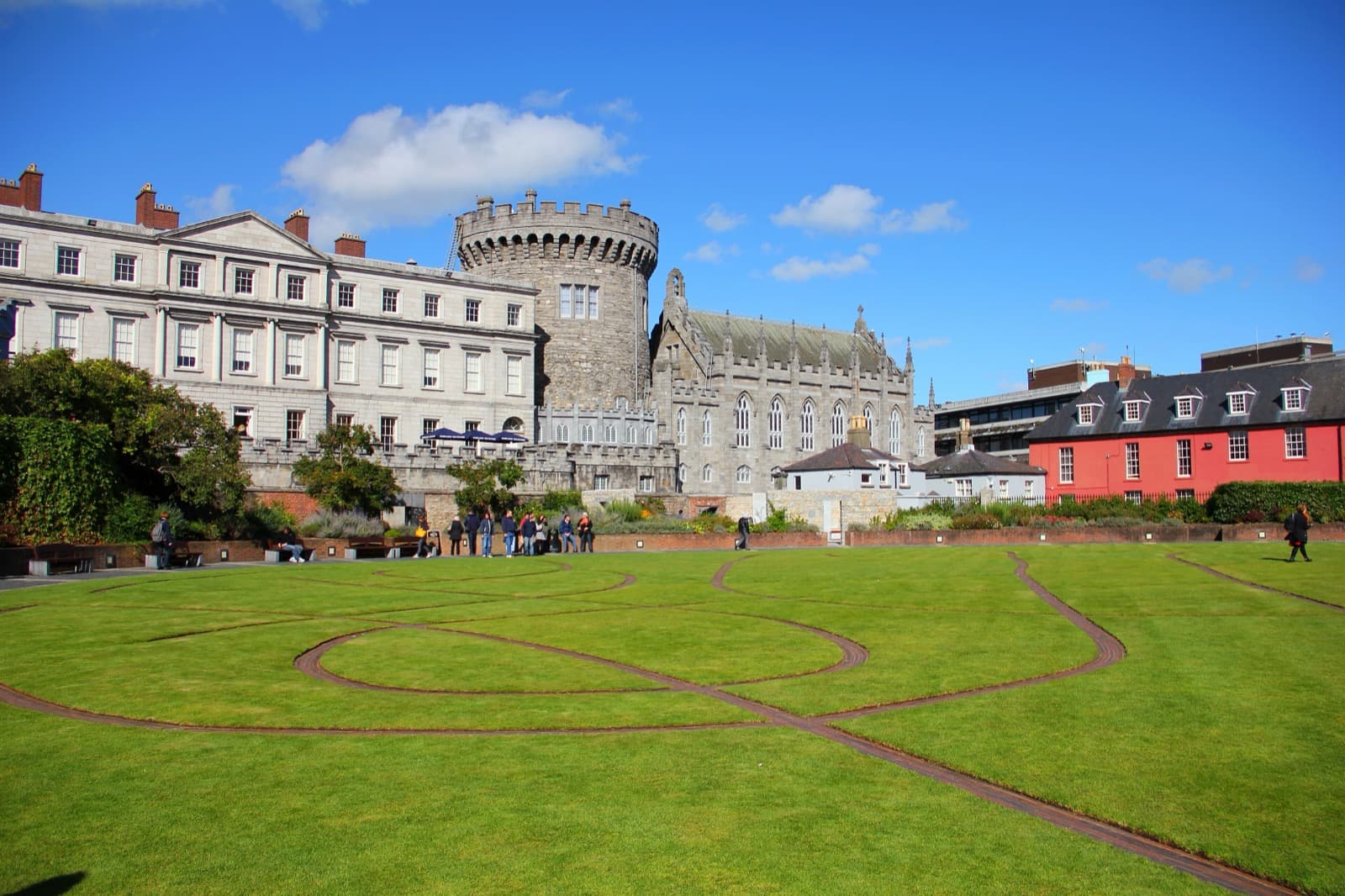
Begin at Dublin Castle, raised over the dark pool, the Dubh Linn, that gave the city its English name. Its Record Tower, dating from about 1228, is the only surviving medieval element of the whole complex, and the castle was formally handed to Michael Collins and the Provisional Government in January 1922 after close to seven hundred years as the seat of English and then British rule.
Important seasonal note: Dublin Castle is closed to visitors from May 5 to December 31, 2026, while Ireland hosts the Presidency of the European Union. During that window the State Apartments, Chapel Royal, and, from mid-June, the whole campus are shut to the public. If you are visiting in that period, read the castle from Dame Street and the outside and give your interior time to the cathedrals instead. Outside the closure, self-guided entry is a small fee (around 8 euro for adults, under-12s free), open daily from 9:45am with last admission at 5:15pm, and the courtyards are free to walk.
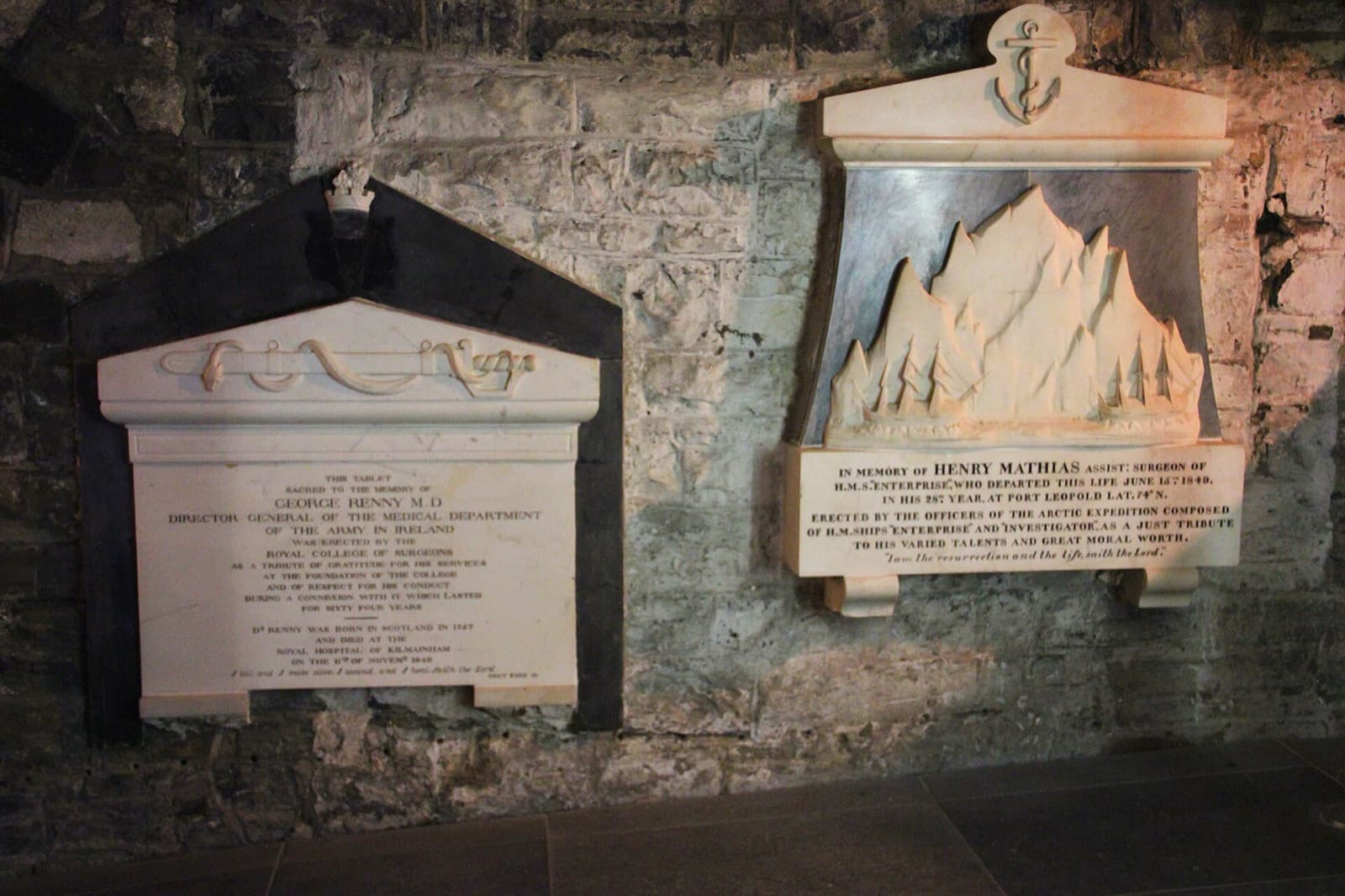
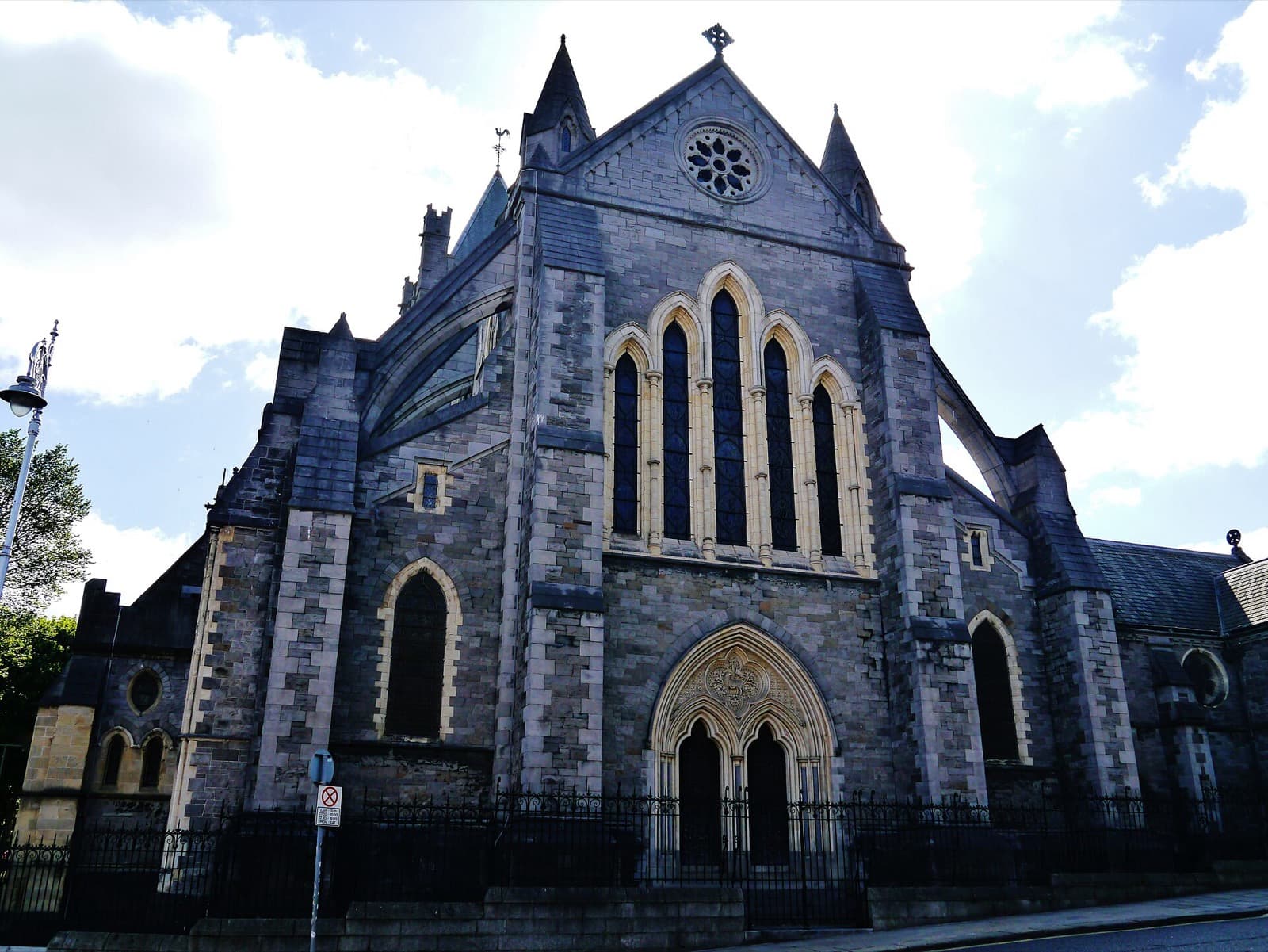
From the castle it is a two-minute walk to City Hall, the neo-classical rotunda built as the merchants' Royal Exchange and renamed City Hall by Dublin Corporation in 1852. The domed rotunda is free to enter; a small charge applies to the basement exhibition. Then walk about five minutes west to Christ Church Cathedral, the older of Dublin's two medieval cathedrals, Norse-founded and Norman-rebuilt, whose crypt from the early 1170s is the largest cathedral crypt in Britain or Ireland. Adult admission is around 12 euro, open Monday to Saturday from 9:30am (Sunday hours are short, roughly 12:30pm to 2:30pm), with last admission about 45 minutes before closing. Head down into the crypt for the medieval stonework and the mummified cat and rat that James Joyce name-checked in Finnegans Wake.
Beside Christ Church, linked by a covered stone bridge over Winetavern Street, sits Dublinia, a reconstruction of the Viking and medieval town, open from 10:00am (last admission 4:00pm in winter, 5:00pm in summer), adult admission around 16 euro. Walk down to Wood Quay right after, where the great 1970s excavation uncovered the timber Viking town before the civic offices were built over it. It is free, a public quay and a place of documented heritage loss rather than a spectacle. Loop back through Saint Audoen's, Dublin's only surviving medieval parish church, beside the last medieval city gate; it is free, managed by the Office of Public Works. Close the morning at Saint Patrick's Cathedral, the largest and tallest church in Ireland, where Jonathan Swift served as dean from 1713 to 1745 and lies buried beneath a Latin epitaph he wrote himself. Adult admission is around 11.50 euro; it is open to visitors Monday to Friday 9am to 5pm, with longer Saturday hours and short Sunday visiting windows.
This entire morning maps to the self-guided medieval old town tour, a 2.2 kilometer loop of about ninety minutes of walking, with GPS-triggered audio at each of these stops so you move at your own pace and skip any interior you would rather not pay for.
Midday: Trinity College and the Georgian squares (roughly 12:30pm to 3:30pm)
Hear a stop from this walk
Saint Patrick's Cathedral: Swift Under His Own Epitaph
Walk about fifteen minutes east from the cathedrals to Trinity College, Ireland's oldest university, whose Old Library holds the Book of Kells, a gospel manuscript made close to the year 800. The grounds are free to wander. The Book of Kells and Old Library run on timed-entry tickets that sell out in summer, so book online ahead at the university's official site; adult admission is roughly 21.50 to 25 euro. One current caveat worth knowing: the Old Library is under a major conservation program, and while the Long Room stays open through 2027, most of its books have been temporarily removed, so the famous shelves look emptier than the postcards.
From Trinity's front gate, College Green faces the curved colonnade of the former Parliament House, begun in 1729 and the first building in the world purpose-built to house a two-chamber parliament. The Bank of Ireland bought it in 1803, and the old House of Lords chamber can sometimes still be viewed free during banking hours. Stroll up pedestrian Grafton Street, pausing at the bronze Molly Malone, a figure who exists only in a song and was sculpted by Jeanne Rynhart for the city's 1988 millennium. Grafton Street feeds into Saint Stephen's Green, the Victorian public park re-opened in 1880 at the expense of Arthur Guinness, Lord Ardilaun, and one of the outposts of the 1916 Rising, where rebels briefly dug trenches into the lawns. The park is free in daylight hours.
Continue to Newman House on the south side of the Green, where the Catholic University of Ireland opened in 1854 and where the young James Joyce later studied. Then walk east to Merrion Square, laid out from 1762 and considered the finest and best-preserved of Dublin's Georgian squares, where Oscar Wilde grew up at number one and his reclining statue by Danny Osborne lounges in the park. Finish at Leinster House and the free National Museum of Ireland, Archaeology, which holds the Tara Brooch and the Ardagh Chalice, the same Insular golden age that produced the Book of Kells. The museum is free, generally open Tuesday to Saturday 10am to 5pm and Sunday 1pm to 5pm, with limited or no Monday hours (check ahead), so it is a strong, no-cost end to the leg.
This midday stretch is the self-guided Trinity and Georgian tour, an easy 3.4 kilometer walk of about 110 minutes, built so you can linger under a single fanlit door as long as you like with no group moving you along.
Afternoon and evening: O'Connell Street and the Rising of 1916 (roughly 3:30pm to dusk)
Cross the Liffey north to O'Connell Street, Dublin's grandest boulevard, and stand at the General Post Office, the granite-fronted building that became the headquarters of the Easter Rising, where Patrick Pearse read the Proclamation of the Irish Republic in 1916. The original 1818 facade survived the fires; look for the marks of the fighting. The street itself is free, and the GPO's museum charges entry in euro if you want the fuller story.
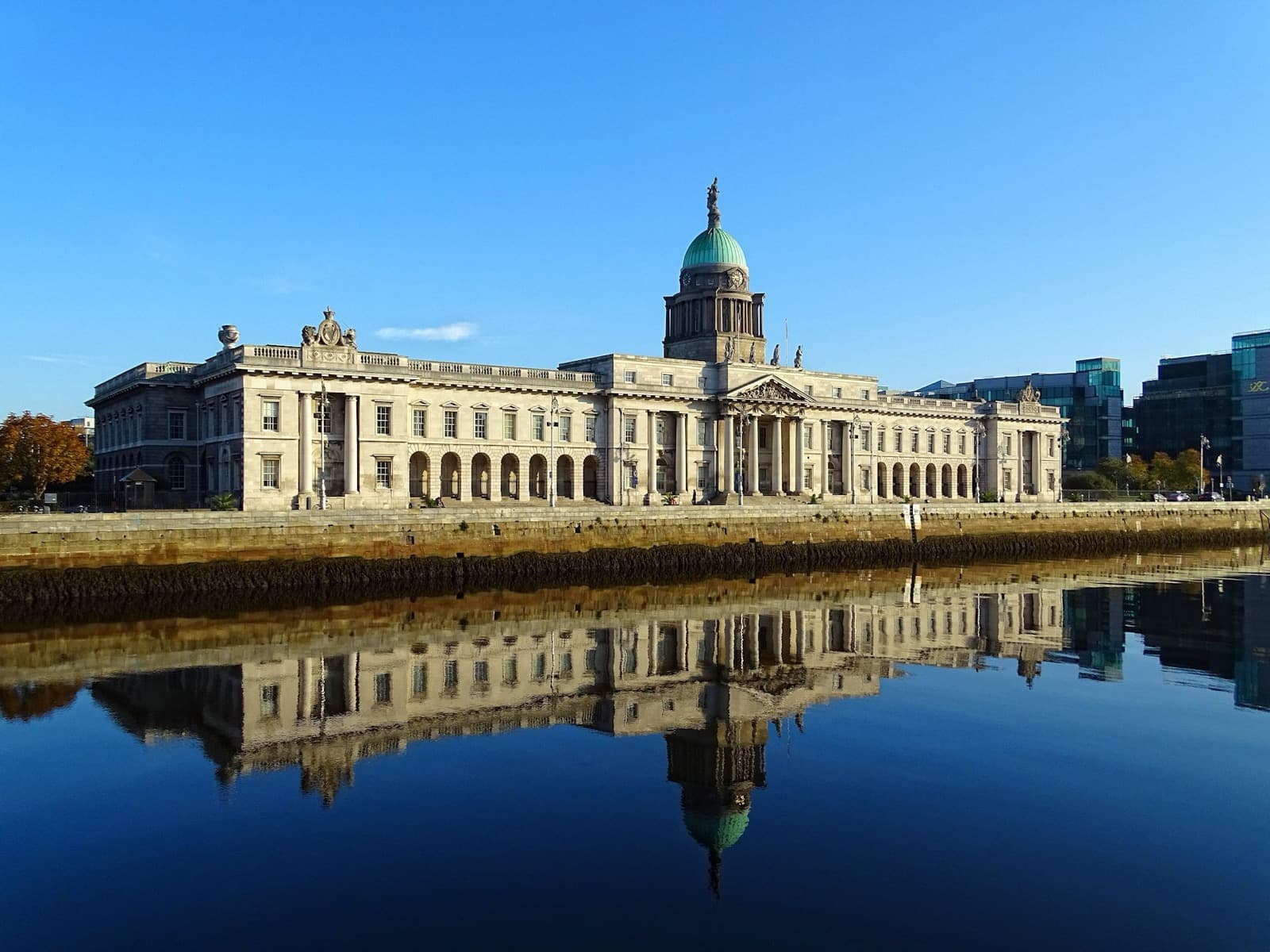
From there the walk reads the Rising stop by stop, all outdoors and free: the O'Connell Monument to Daniel O'Connell, the Liberator who won Catholic Emancipation in 1829, whose bronze winged victories at its base still carry bullet holes from 1916; the Spire, 120 meters of stainless steel completed in 2003 on the exact site of Nelson's Pillar, blown up in 1966; Moore Street, the working market where the wounded James Connolly and the leaders agreed to surrender on the 29th of April 1916; the Parnell Monument, designed by the American sculptor Augustus Saint-Gaudens and unveiled in 1911, inscribed "No man has a right to fix the boundary to the march of a nation"; and the Garden of Remembrance in Parnell Square, opened in 1966 with its bronze Children of Lir. Double back down the quays to the Custom House, James Gandon's neoclassical river palace, completed in 1791 and burned by the Irish Republican Army in 1921 to destroy the records of British administration, later rebuilt in darker Irish stone.
This closing leg is the self-guided O'Connell Street and 1916 tour, a 2.6 kilometer walk of about ninety minutes. Because every stop works from the street, it is an ideal early-evening finish: no ticket, no timed entry, and the light along the river at dusk is worth the wait.
Distances, timing, and how to pace the day
The three legs total roughly eight kilometers of walking (about five miles), plus two short connecting hops (cathedrals to Trinity, Trinity area to O'Connell Street) of ten to fifteen minutes each. Add sit-down breaks and any paid interiors and you have a comfortable full day, not a forced march. Dublin's center is flat, but expect cobbles around Dublin Castle and Trinity and a few uneven medieval lanes near Saint Audoen's, so wear broken-in shoes. Weather changes fast in any season, so carry a compact waterproof even on a bright morning.
If you would rather do less, any single leg stands on its own as a half-day. The medieval morning is the richest for interiors; the Georgian midday is the most relaxed and, thanks to the free National Museum, the cheapest; the O'Connell evening is the most moving and needs no admission at all. Ordinary city-center awareness is all that is needed on the busy central streets and at the Moore Street market: keep valuables discreet in crowds, and treat the Rising memorials and Wood Quay as places of real memory. You can browse all three routes and start them from your phone on the Dublin city page.
Sources
- Dublin Castle: Tickets and Times (official)
- Dublin Castle closes to visitors until year-end to host EU Presidency events
- Book of Kells and Old Library, Trinity College Dublin (official)
- Saint Patrick's Cathedral: Visit (official)
- Christ Church Cathedral: Admission Tickets (official)
- National Museum of Ireland, Archaeology: Visitor Information (official)
Frequently asked questions
- Can you see Dublin in one day on foot?
- Yes. Dublin's medieval core, its Georgian squares, and O'Connell Street all sit inside a compact, flat city center. A full walking day covers roughly eight kilometers (about five miles) of level pavement across three legs, plus two short ten to fifteen minute connecting walks. Every stop can be enjoyed from the street for free, with paid interiors optional.
- Is Dublin Castle open in 2026?
- Dublin Castle is closed to visitors from May 5 to December 31, 2026, while Ireland hosts the Presidency of the European Union. The State Apartments and Chapel Royal are shut, and from mid-June the whole campus closes to the public. Outside that window, self-guided entry is a small fee (around 8 euro for adults), open daily from 9:45am with last admission at 5:15pm, and the courtyards are free.
- Do you need to book the Book of Kells in advance?
- Yes. The Book of Kells and Old Library at Trinity College run on timed-entry tickets that sell out in summer, so book online ahead at the university's official site. Adult admission is roughly 21.50 to 25 euro. Note that the Old Library is under conservation: the Long Room stays open through 2027, but most of its books have been temporarily removed.
- How much do Dublin's cathedrals cost to enter?
- Christ Church Cathedral is around 12 euro for adults and St Patrick's Cathedral around 11.50 euro. Both offer discounts for students, seniors, and families, and entry to worship is free. Christ Church opens Monday to Saturday from 9:30am with short Sunday hours; St Patrick's opens to visitors Monday to Friday 9am to 5pm with longer Saturday and limited Sunday windows.
- How do you get from Dublin Airport to the city center?
- Dublin Airport has no rail or tram link. The Aircoach and Airlink express coaches run to O'Connell Street and the O'Connell Bridge area, and Transport for Ireland bus routes 16 and 41 reach O'Connell Street for a low flat fare with a Leap card. From the city center the whole itinerary is walkable, so you can leave the bus behind for the rest of the day.
- Which part of Dublin is free to walk without tickets?
- The O'Connell Street and 1916 route is entirely free: the General Post Office facade, the O'Connell and Parnell monuments, the Spire, Moore Street, the Garden of Remembrance, and the Custom House exterior all work from the street. Saint Stephen's Green, Merrion Square, the Trinity grounds, Wood Quay, Saint Audoen's, and the National Museum of Ireland Archaeology are also free.
Ready to experience it?
Medieval Dublin: The City Behind the Georgian Mask
90 min · 2.2 km · moderate
More from Dublin
Explore more at your own pace.
Dublin in Layers: The Viking Town Beneath the Georgian Mask
Dublin Castle and the Black Pool: A Medieval City Under the Georgian Mask
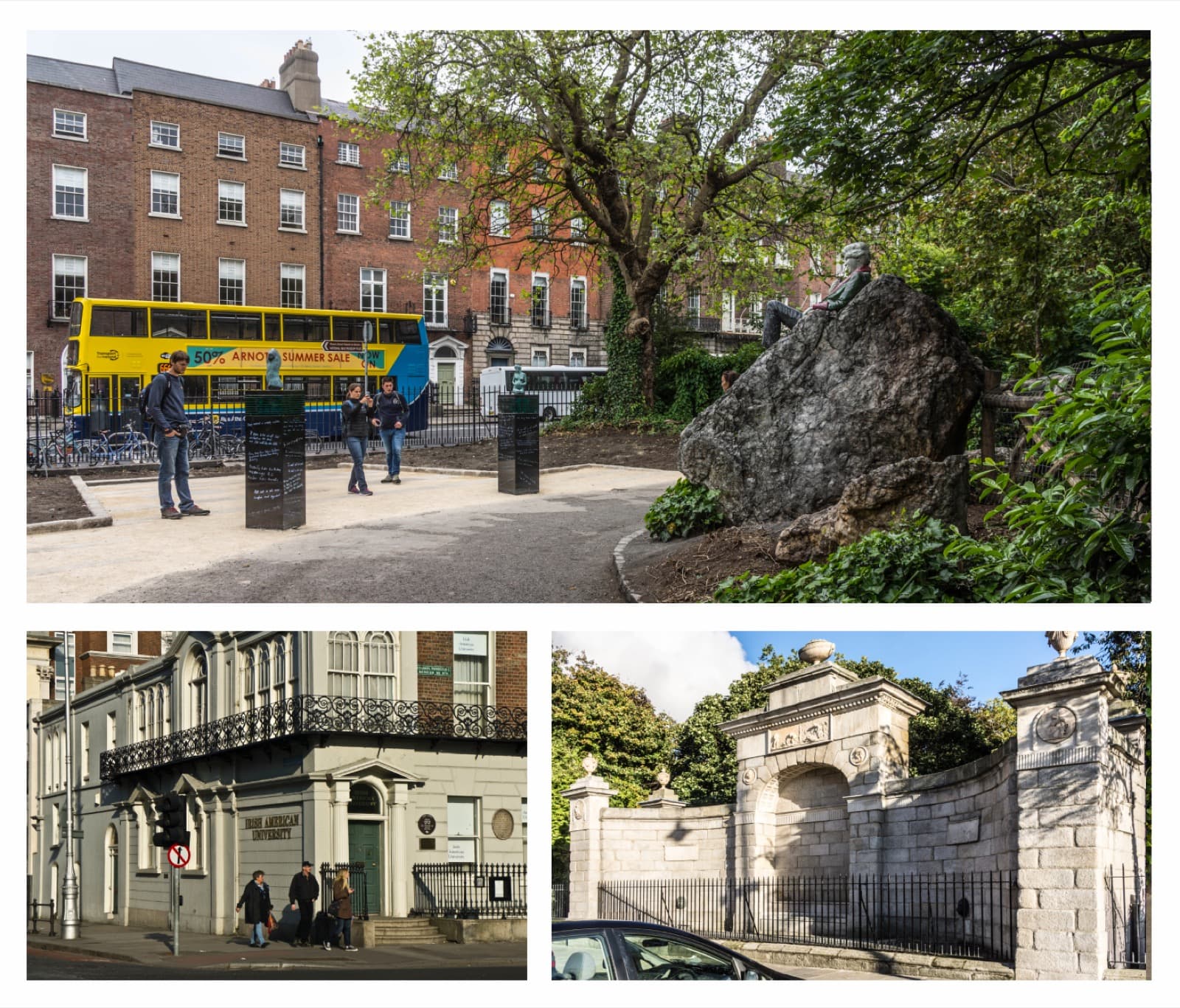
Merrion Square and the Grammar of Georgian Dublin
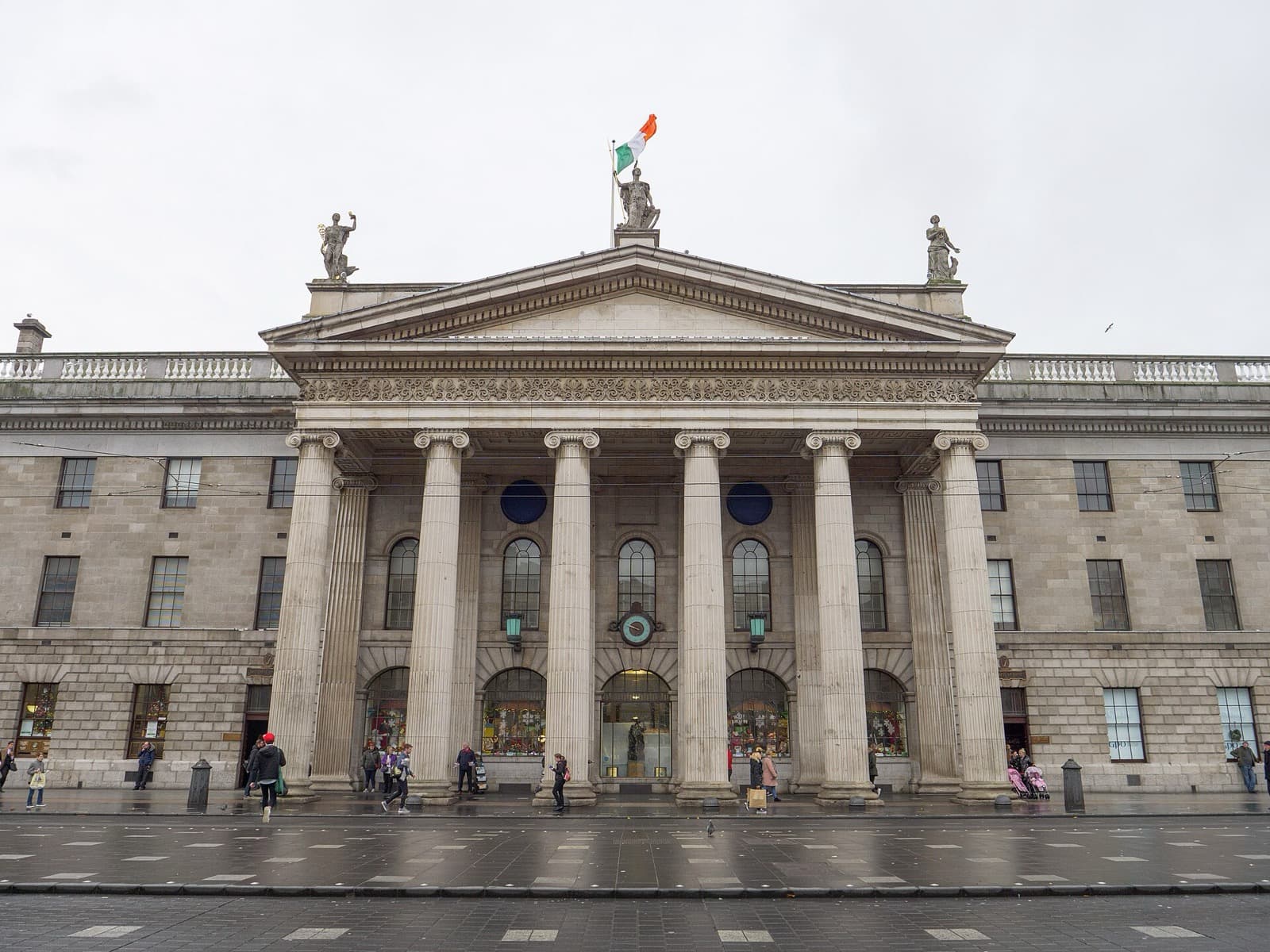
The GPO on O'Connell Street: How One Post Office Became the Birthplace of a Republic
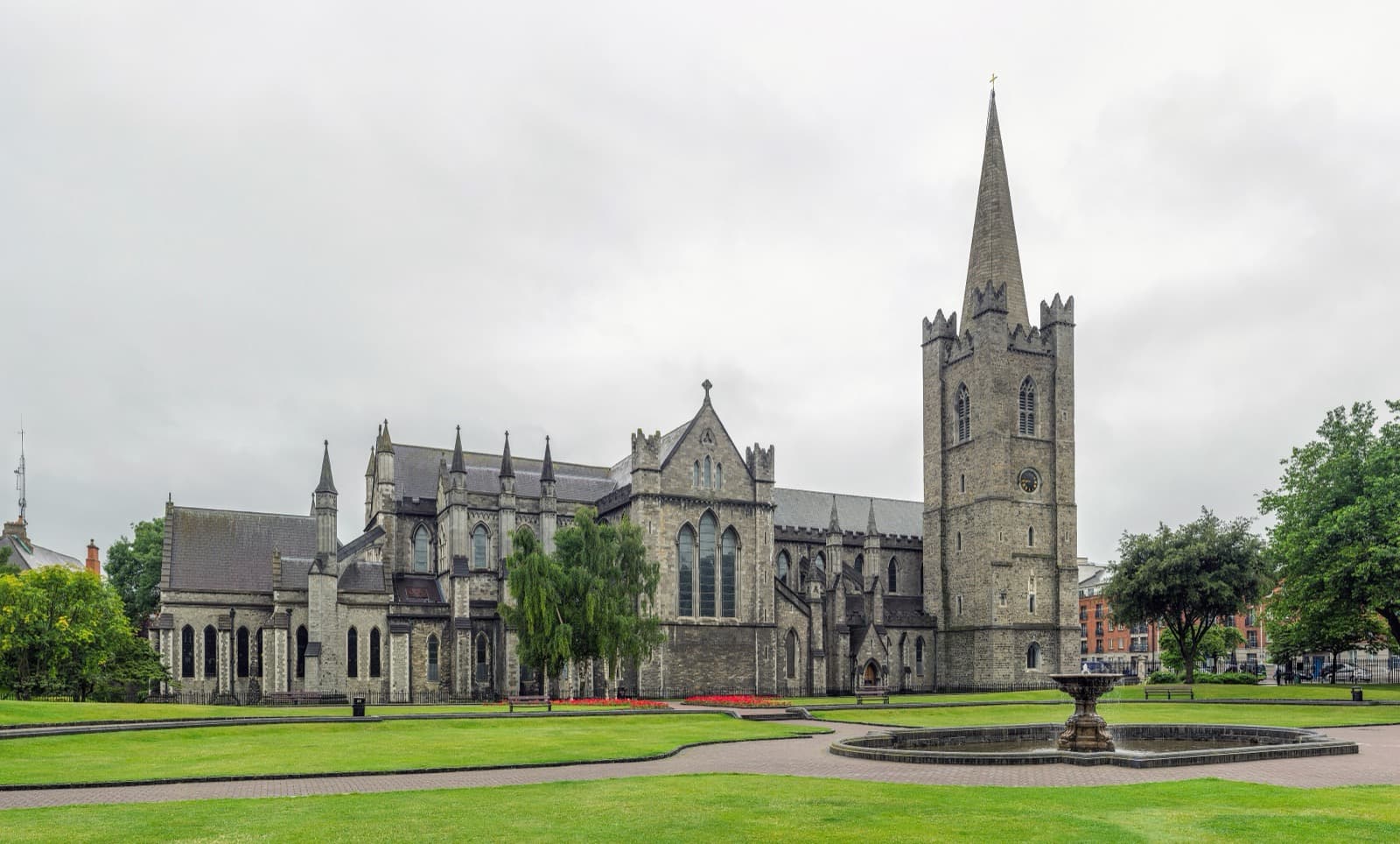
Saint Patrick's Cathedral, Dublin: Swift's Furious Epitaph