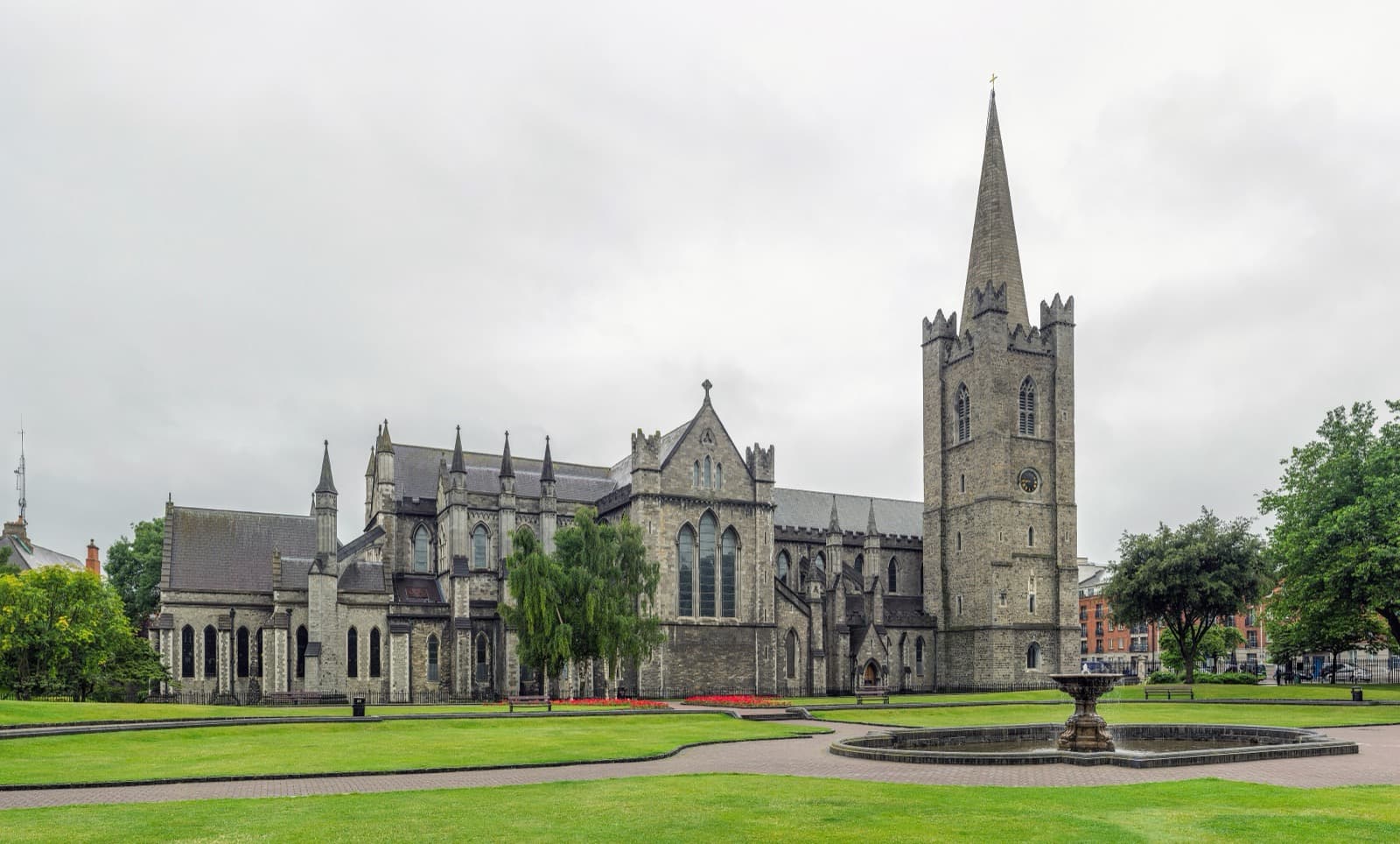
Saint Patrick's Cathedral is the largest church in Ireland, built in the early thirteenth century on ground long linked to Saint Patrick himself, and it holds the grave of Jonathan Swift beneath a Latin epitaph the dean wrote for his own tomb. Most visitors arrive expecting a cathedral and leave thinking about a man. That is the right way to read the building. Its stone tells the story of medieval Dublin, but its floor tells the story of one furious, brilliant writer who governed this place for over thirty years and then chose the words that would stand over him forever.
Why the church stands here
The cathedral did not choose its site for convenience. It stands on ground traditionally associated with Saint Patrick, beside a holy well, on what was once an island between two branches of the little River Poddle. That is the same stream whose dark pool, the Dubh Linn or black pool, gave Dublin its English name. So the national cathedral sits on some of the oldest sacred ground in the city, on an island in a river that named the whole place. There is a neat symmetry to it. A visitor standing at the west end is standing where water once ran on both sides.
Building began around eleven ninety-one under Archbishop John Comyn, the first Norman archbishop of Dublin, and the church reached cathedral status by about twelve thirteen, completed through the early thirteenth century. Comyn is a recurring name in medieval Dublin: he also oversaw the parish church of Saint Audoen's nearby, the only medieval parish church still standing in the city. The Normans who took Dublin in the eleven seventies did not simply occupy the Norse harbour town. They rebuilt it in stone, and Saint Patrick's is one of the largest pieces of that rebuilding still in daily use.
Two facts settle the cathedral's rank. Its spire rises forty-three metres, about one hundred and forty-one feet, which makes it the tallest church in Ireland. By floor area it is also the largest. This is worth understanding before you go inside, because Dublin has two medieval cathedrals within a few minutes' walk of each other, and the relationship confuses many visitors. Christ Church is the older foundation, begun under Norse rule around ten thirty and rebuilt by the Normans. Saint Patrick's is the larger and the taller. The city kept both, and both survive. If you want to see how one medieval town came to hold two cathedrals so close together, the Dublin walking tours hub maps the full route through the old core.
The dean under the floor
Hear a stop from this walk
Saint Patrick's Cathedral: Swift Under His Own Epitaph
Since eighteen seventy, Saint Patrick's has been the national cathedral of the Church of Ireland. But the reason it draws so many people to its southwest corner has nothing to do with archbishops. It is a grave.
Jonathan Swift, the author of Gulliver's Travels, was Dean of Saint Patrick's from seventeen thirteen until his death in seventeen forty-five. That is more than three decades running this cathedral, and from this deanship he wrote some of the fiercest satirical tracts ever aimed at power, many of them in defence of Ireland against English misrule. Swift was not a gentle man of the cloth. He was a savage, precise writer who used the pulpit and the pamphlet with equal force, and he did it from an office inside these walls.
He is buried here, near the southwest corner, beside Esther Johnson, his close companion, the woman he called Stella. Over his grave hangs the epitaph he composed himself, in Latin, and it is one of the most quoted funerary inscriptions in the English-speaking world precisely because Swift refused to be flattered even in death. The cathedral's own record preserves its meaning: that he has gone to a place where savage indignation can no longer tear his heart, and it urges the passerby to imitate, if he can, a man who served human liberty.
Read that again standing under it. Swift did not ask to be remembered as kind or holy. He asked to be remembered as someone whose anger came from watching injustice, and he dared the reader to match him. The phrase usually rendered as "savage indignation" (saeva indignatio in the Latin) has become shorthand for a whole temperament: the writer whose fury is a form of moral seriousness. It is a bitter, magnificent farewell, and it is the single thing most worth understanding as you stand in front of the cathedral. This is not only a monument to faith. It is the resting place of a man who read his own age as harshly as he could, and who arranged for the reading to continue over his bones.
What to understand standing in front of it
If you take one idea away, take this: Saint Patrick's is where medieval Dublin and its most unquiet spirit lie together. The building is early thirteenth century, raised by Normans on ground older than the city's English name. The grave inside belongs to an eighteenth-century dean who used this cathedral as a base for attacking the powerful. Two very different Dublins meet here, the medieval and the Georgian, the sacred and the satirical, and the walk through the old town ends at the point where they overlap.
Practical notes for the visit. The cathedral charges admission, roughly ten to twelve euro, and it is a working place of worship, so keep your voice low and be mindful of services and quiet corners. Aim to arrive well before the last admission of the day, because this is the kind of place that punishes a rushed visit. Give yourself time to find Swift's grave and his epitaph, and to walk the full length of the largest church floor in the country before you leave.
Saint Patrick's is the closing stop on the Medieval Dublin walking route, a seven-stop loop that peels back the city's Georgian and Victorian surface to find the Viking and Norman town underneath. The walk runs from Dublin Castle over the buried black pool, past Christ Church and the reconstructed Norse streets of Dublinia, down to the excavated waterfront at Wood Quay, on to the last surviving medieval city gate at Saint Audoen's, and finally here, to Swift under his own words. You set the pace, with no group and no schedule. Browse the route and the rest of the city's tours on the Dublin page, then walk it yourself and finish where the mask comes off.
Sources
- St Patrick's Cathedral, Dublin (Wikipedia): foundation date, spire height, cathedral status, and its rank as Ireland's largest church.
- Saint Patrick's Cathedral official site, "Jonathan Swift, Dean 1713-1745": Swift's tenure, burial, and the text and meaning of his self-composed Latin epitaph.
- Roamer tour transcript, "Medieval Dublin: The City Behind the Georgian Mask" (fact-audited): verified detail on the Poddle island site, holy well, and the Swift and Stella burial.
- Dublin City Council culture pages: context on the medieval core and the two-cathedral history of the old town.
Ready to experience it?
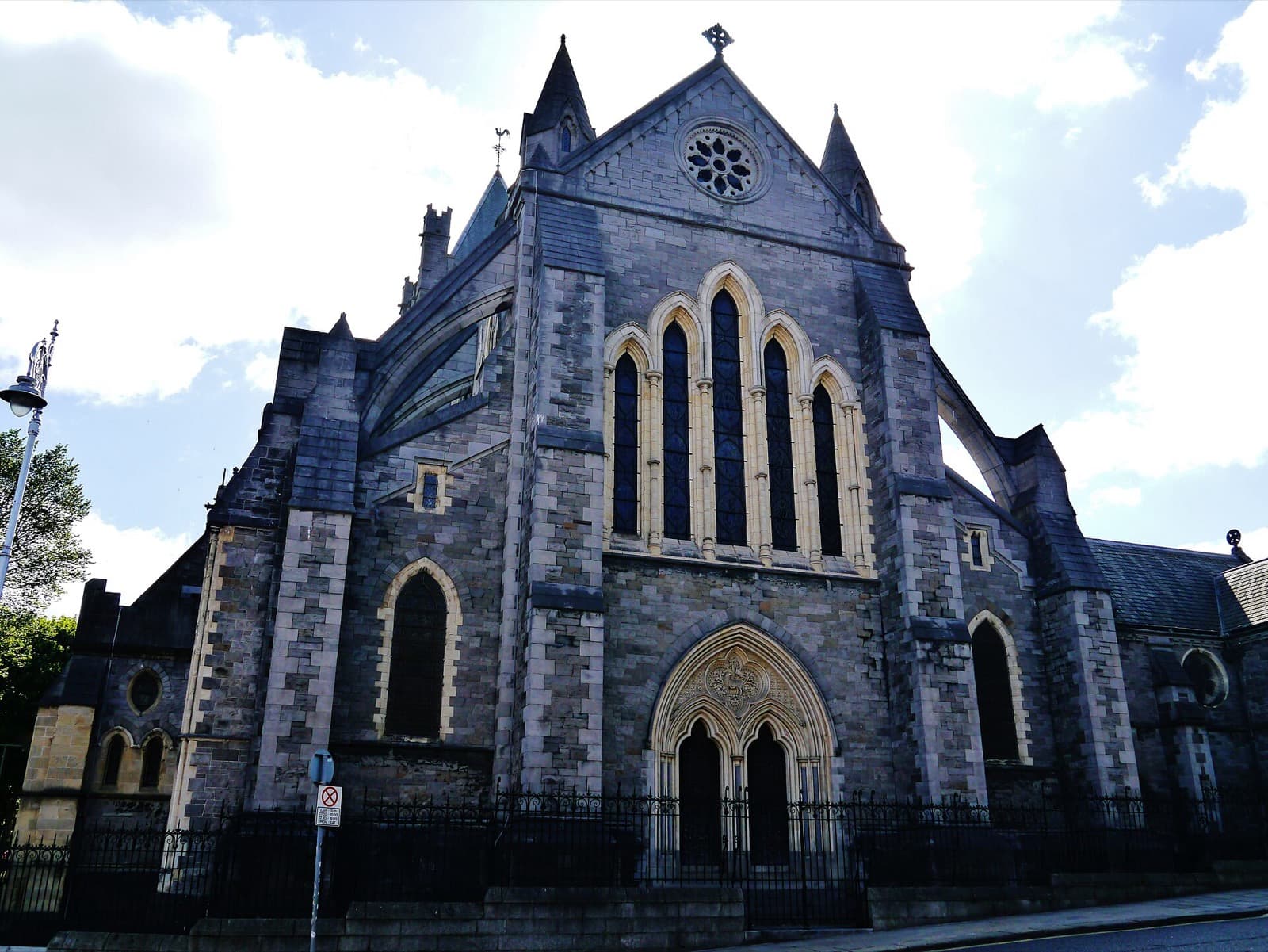
Medieval Dublin: The City Behind the Georgian Mask
90 min · 2.2 km · moderate
More from Dublin
Explore more at your own pace.

Dublin Travel Guide: Days, Transport, Weather, Safety, and Budget
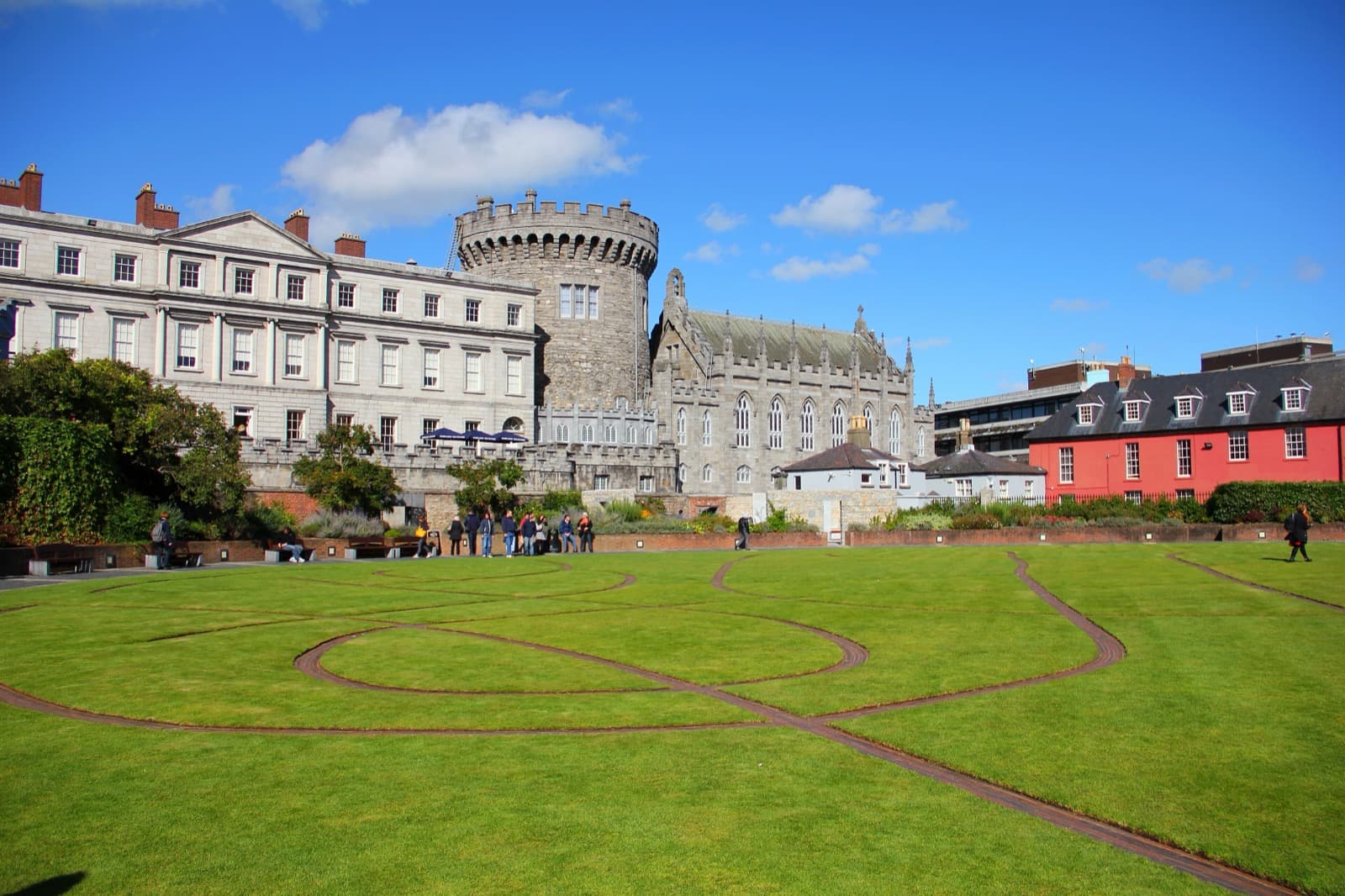
Dublin in Layers: The Viking Town Beneath the Georgian Mask
Dublin Castle and the Black Pool: A Medieval City Under the Georgian Mask
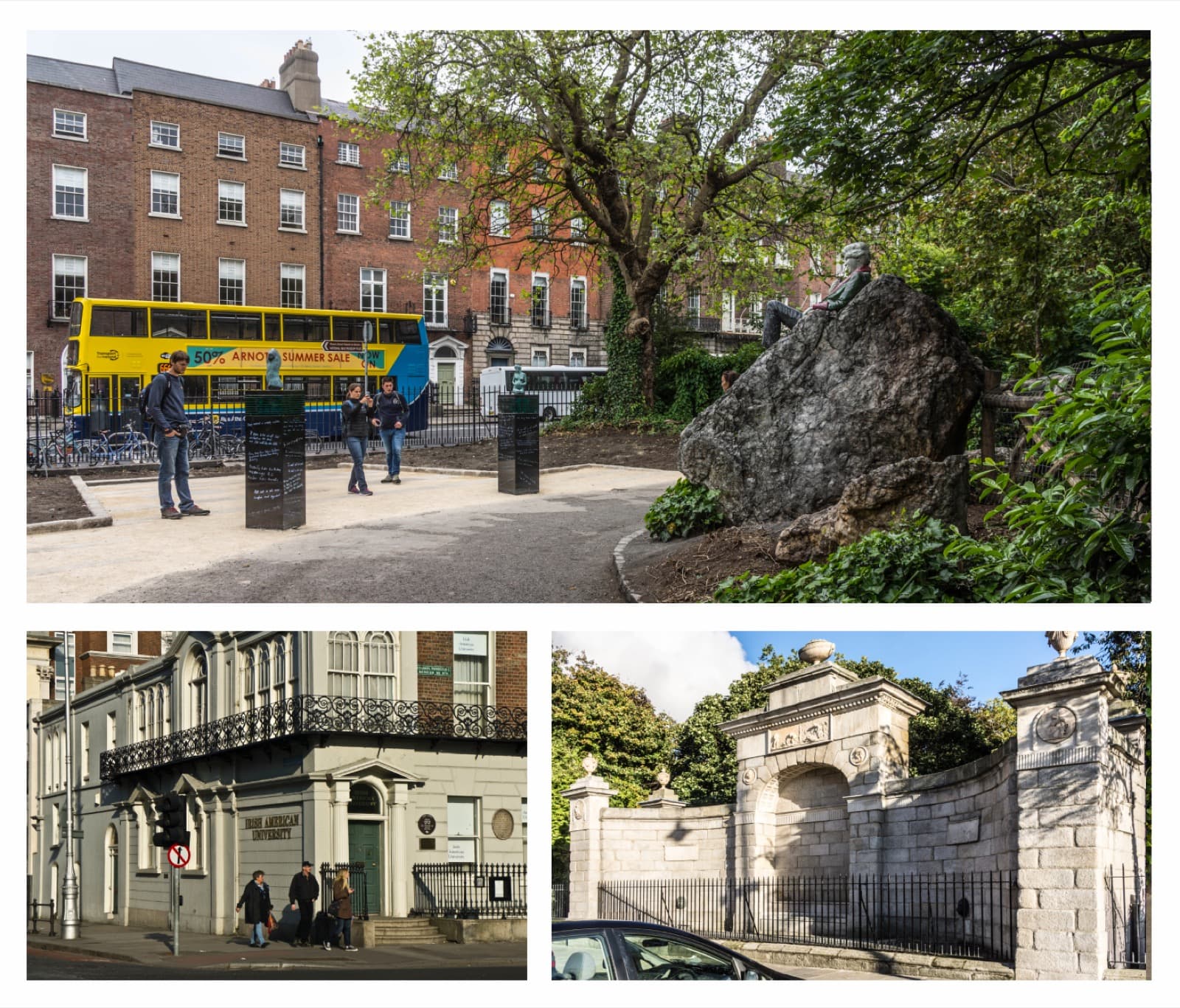
Merrion Square and the Grammar of Georgian Dublin

The GPO on O'Connell Street: How One Post Office Became the Birthplace of a Republic