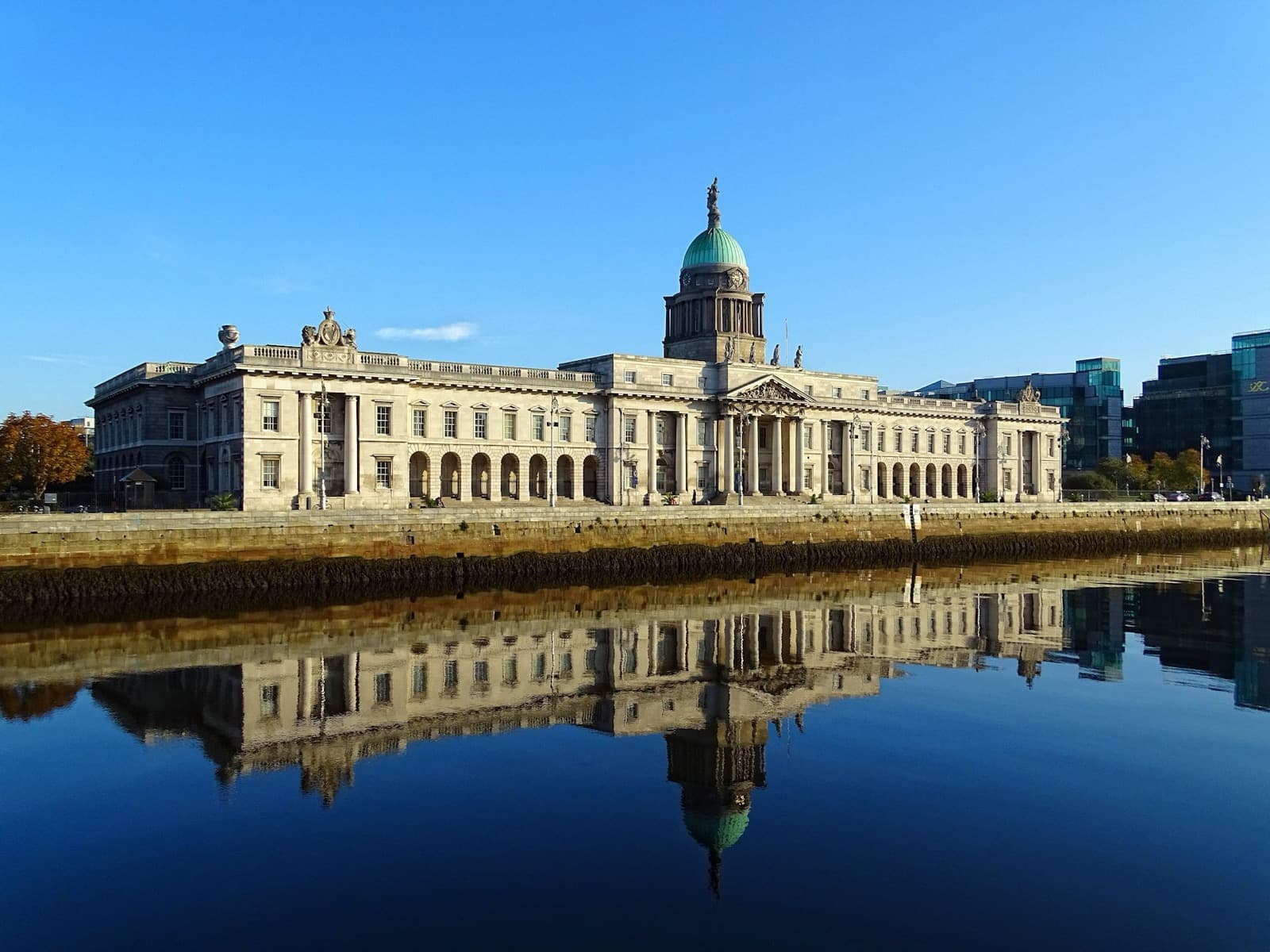
Walk east along the Liffey quays from O'Connell Street and the tightly packed shopfronts fall away until a single building takes the whole north bank: James Gandon's Custom House, a long neoclassical river palace with a copper dome, built between 1781 and 1791 to collect the customs duties of a busy port. That is what it was designed to do. What it became, on the twenty-fifth of May 1921, was a target. The Irish Republican Army burned it to destroy the paperwork of British administration in Ireland, and the darker stone in its rebuilt dome still records the fire. If you understand one thing standing in front of the Custom House, understand that: it is a building that was raised to run an empire's port, burned to break an empire's records, and raised again in Irish stone by the state that emerged. The whole arc of Ireland's independence is legible in its walls.
What Gandon built
The Custom House is the first great work of Georgian Dublin's most important architect. James Gandon came from London to design it, and he laid out a building meant to be read from the water: a river front stretching more than a hundred metres, corner pavilions, and a central dome that lifts the composition above the flat line of the quays. The keystones over the arches are carved as heads, and they are not decoration for its own sake. Each one personifies a river of Ireland, the Liffey among them, so that the building announces its purpose in stone. If you walked the O'Connell Street tour before reaching here, you met the same idea earlier. The river-god keystone on the bridge by the O'Connell Monument was carved to match these heads downstream. Gandon designed both, and the motif ties the two ends of the walk together across a century and a half of history.
For its first hundred and thirty years the Custom House did ordinary work. It handled the trade of the port, then housed the offices of local government administration. That mundane function is exactly why it burned.
Why the IRA chose it
Hear a stop from this walk
The Custom House: Gandon's River Palace, Burned and Raised
By 1921 Ireland was in the middle of the War of Independence, the guerrilla conflict that followed the Easter Rising of 1916. The Rising had proclaimed a republic and paid for it with fifteen executions, but it had not won independence. The war that came after was fought differently, by ambush and by the deliberate dismantling of British authority. The Custom House held the records of British local-government administration in Ireland, centuries of rate books, censuses, and paperwork, some of it carried in from rural offices for safekeeping. To burn that archive was to attack the machinery of the state itself.
On the twenty-fifth of May 1921, a large IRA party occupied the building and set it alight. This was not a hit-and-run raid. It was the largest action in Dublin by the rebels since the Easter Rising, planned as a public blow against British governance. It went badly. British forces reached the scene fast, and in the gun battles in and around the building several people were killed, five of them IRA volunteers and the rest civilians. Roughly seventy to eighty IRA members were captured, a heavy loss of trained men. Militarily the operation cost the IRA dearly. As a statement, it succeeded. The Custom House was gutted, the roof and dome collapsed, and centuries of administrative records went up in the fire, exactly as intended.
The darker stone
When you stand on the quay and look up at the dome, you are looking at the clearest physical trace of that day, if you know where to look. The original dome was faced in a pale imported Portland stone that matched the rest of the facade. The fire destroyed it. When the building was restored, the reconstruction of the roof and dome ran through the late 1920s, and the restorers rebuilt the dome in Ardbraccan limestone, an Irish stone quarried in County Meath that is noticeably darker than the original. That difference in tone is not weathering or dirt. It is a deliberate choice. The Irish Free State, the new government that took over after independence, raised the palace up again in Irish material rather than reaching for the imported stone Gandon had used.
There is a quiet argument built into that decision. The Custom House began as a monument to British commercial administration, the handsome face of a port run for empire. It was burned to break that administration. And when it was rebuilt, it was finished in the stone of the country it now belonged to. The building was not merely repaired. It was, in a small and permanent way, nationalised in its own masonry. A second, longer restoration in the 1980s brought the whole structure back in time for its bicentenary in 1991, but the dome's darker crown from the 1920s remains the detail that carries the history.
Standing in front of it
The Custom House is free to admire from the quay, and that is where its meaning is clearest. A visitor centre operates inside, alongside a government department that still uses the building, and the centre charges entry if you want the fuller story indoors. But the one thing worth understanding here needs no ticket. Look at the long river front Gandon composed for the port, find the carved river heads that name Ireland's own waters, then lift your eyes to the dome and read the change in the stone. That single shift in colour is the War of Independence written in limestone: a building made to serve one state, burned in the fight for another, and rebuilt by the country that won.
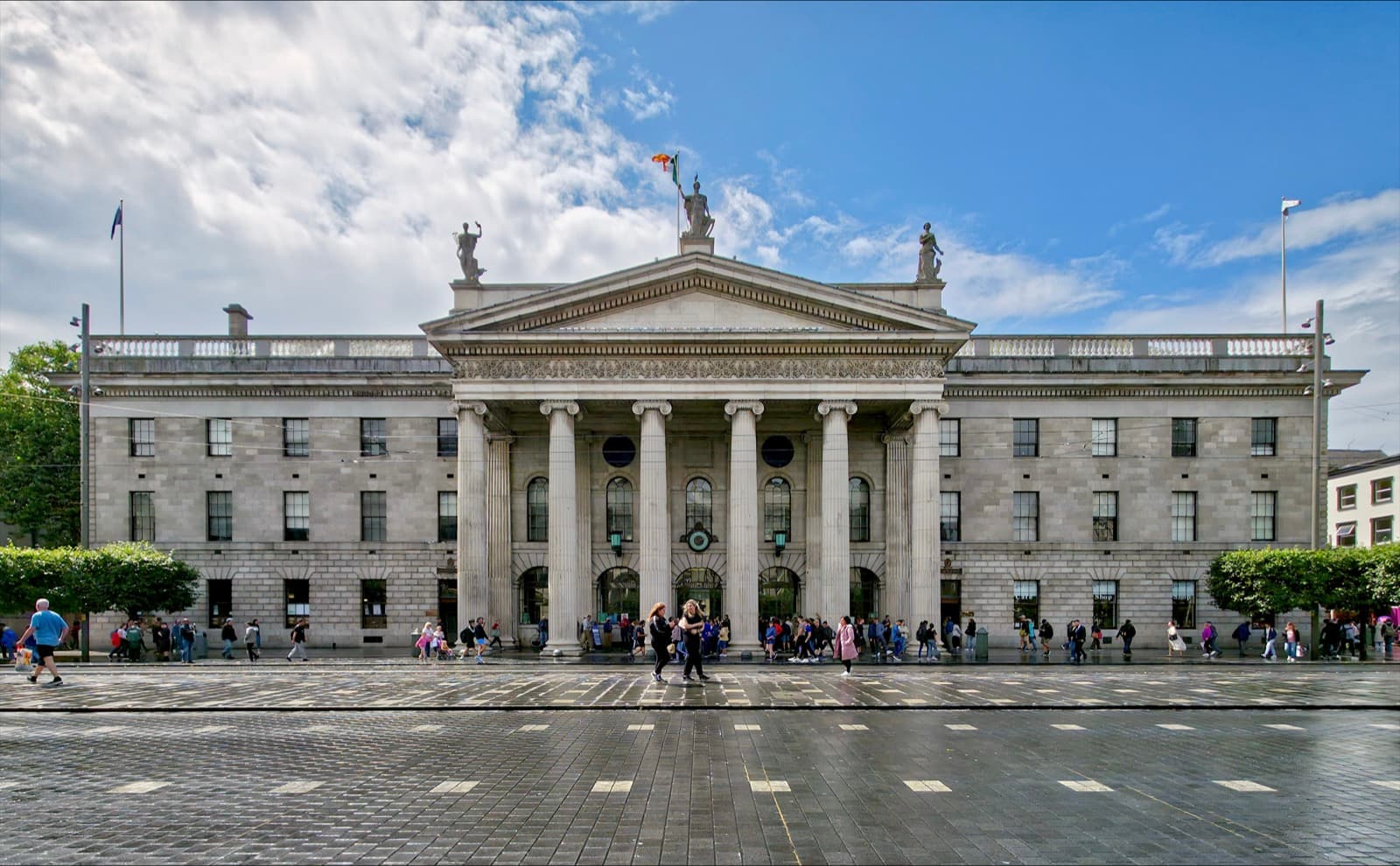
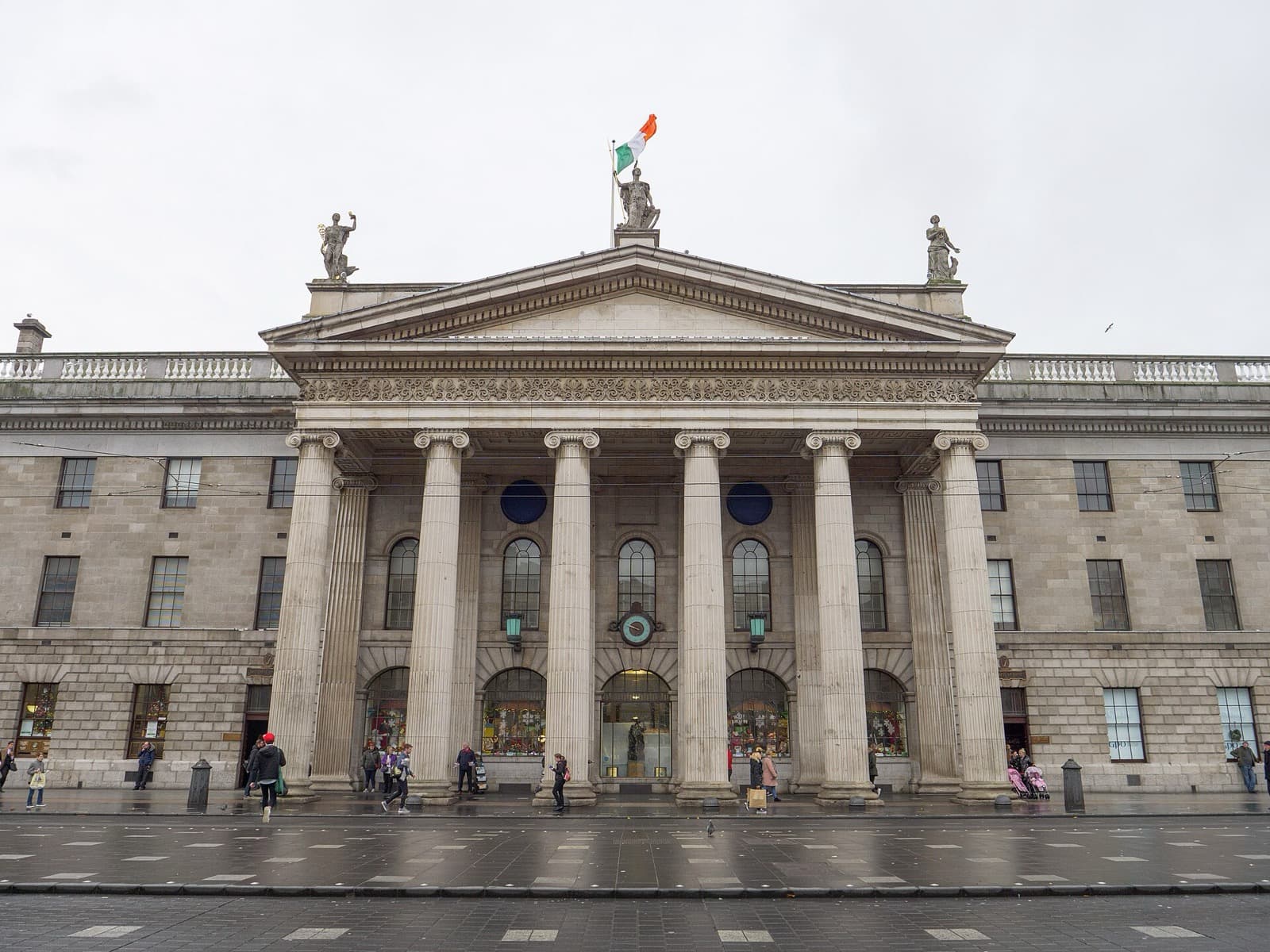
This is the last stop on the O'Connell Street tour of the 1916 Rising, and it is placed here for a reason. The walk begins at the bullet-marked General Post Office, where a republic was proclaimed, and moves through the executions, the surrender on Moore Street, and the monuments of the men who came before. It ends on this riverbank because the story does not stop with the Rising. The republic proclaimed in 1916 was fought for in the years that followed, and the Custom House is where that fight left its mark on the grandest building in the city. To walk the full sequence, from the GPO down to Gandon's river palace, is to read the birth of a state and the price of it in order, stop by stop.
If you want the wider context of the city these events shaped, see our guide to Dublin walking tours or browse everything on offer in Dublin. Then come down to the Liffey and let the darker dome tell you the rest.
Sources
- Burning of the Custom House, Wikipedia: casualty figures, the "largest action in Dublin since the Easter Rising" claim, IRA captures, and the loss of centuries of local government records.
- The Custom House, Wikipedia: Gandon's authorship, construction dates of 1781 to 1791, the Portland stone facade, and the Ardbraccan limestone rebuild of the dome.
- Buildings of Ireland (National Inventory of Architectural Heritage), Custom House listing: architectural detail and the OPW restoration history through the 1991 bicentenary.
- Office of Public Works and Department of Housing, Local Government and Heritage centenary material (2021): the reconstruction of the dome in the late 1920s in darker Ardbraccan limestone.
- History Ireland, "The burning of the Custom House, 25 May 1921": account of the operation, its planning, and its cost to the IRA.
Ready to experience it?
O'Connell Street: The Rising of 1916
90 min · 2.6 km · moderate
More from Dublin
Explore more at your own pace.
Dublin Travel Guide: Days, Transport, Weather, Safety, and Budget
Dublin in Layers: The Viking Town Beneath the Georgian Mask
Dublin Castle and the Black Pool: A Medieval City Under the Georgian Mask
Merrion Square and the Grammar of Georgian Dublin
The GPO on O'Connell Street: How One Post Office Became the Birthplace of a Republic