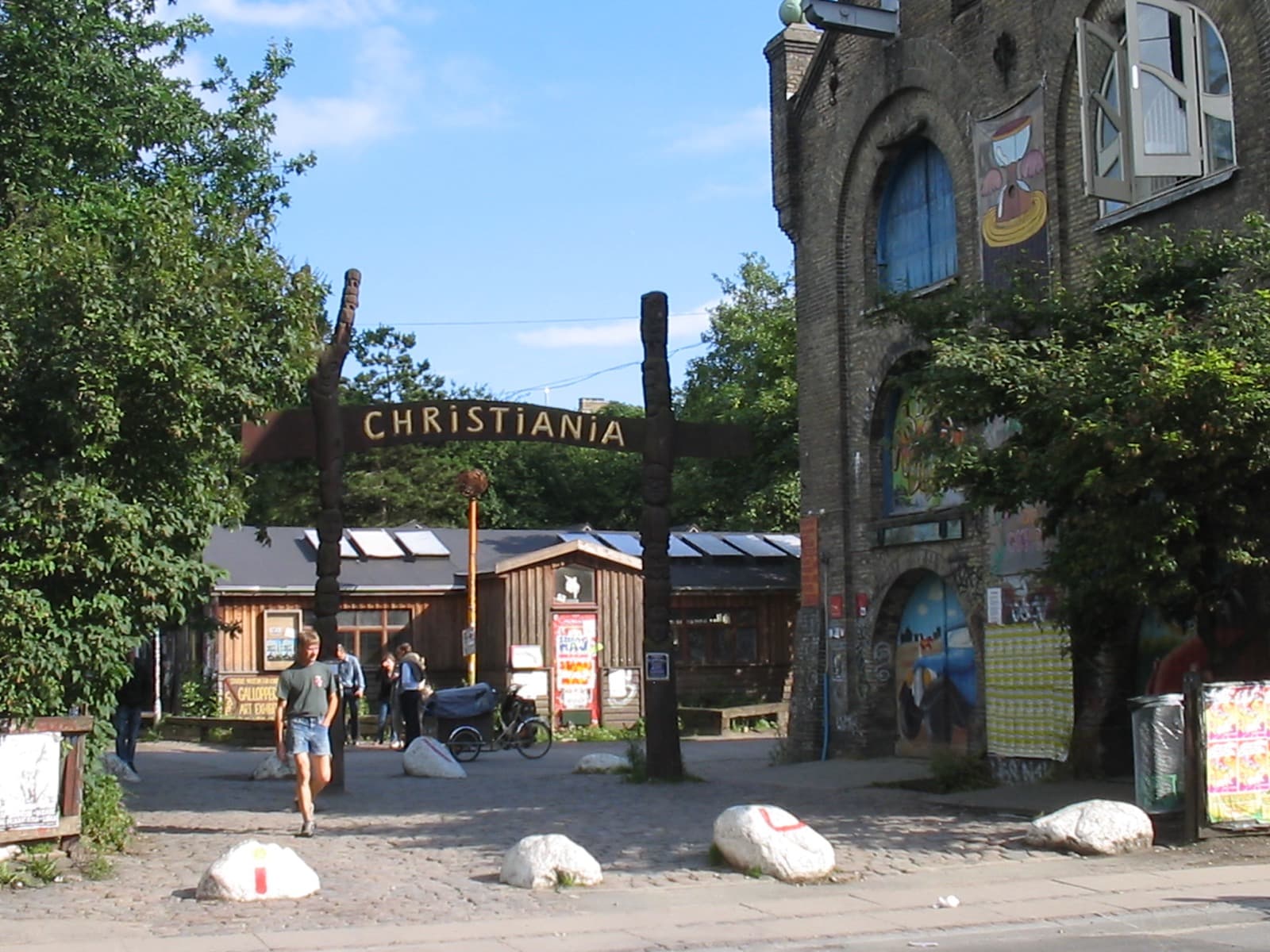
Freetown Christiania is a self-governing, car-free community that a group of squatters declared open on the twenty-sixth of September, nineteen seventy-one, on abandoned military barracks and a stretch of Copenhagen's old defensive ramparts in the Christianshavn quarter. Standing at its gate today, the single thing worth understanding is that this is not a theme park of the counterculture. It is a working settlement of roughly eight hundred fifty to a thousand people, spread across about seven and a half hectares, that has spent more than fifty years arguing with the Danish state over the ground it occupies, and it is best read as the deliberate opposite of the palace and parliament a short walk across the water.
What it actually is
The name matters. It is a "free town," a phrase that carried real intent when the activist and journalist Jacob Ludvigsen helped declare it open and co-wrote its founding statement. That statement set the objective plainly: to create a self-governing society in which every individual holds responsibility for the wellbeing of the whole community, and in which the settlement aims to be economically self-sustaining. That is not slogan language. It describes the machinery Christiania still runs on. There is no mayor and no council in the ordinary sense. Decisions are made by a residents' plenum, a consensus meeting where the people who live here settle questions of building, membership, and money.
The physical fabric follows from that. The community is car-free. Its houses were, and many still are, built by the residents themselves, which is why the architecture reads as improvisation rather than plan: timber cabins on the lakeshore, converted barracks, workshops, galleries, and music venues threaded along the earthen bastions that once defended the city. The ramparts you walk on were built for artillery. They now hold vegetable gardens and self-built homes. That inversion, defensive military ground turned into open commons, is the whole idea compressed into a walkable landscape.
The long argument with the state
Hear a stop from this walk
Freetown Christiania: The Green Free Town on the Ramparts
Christiania has never been left alone, and it has never simply surrendered. Its relationship with the Danish government has been genuinely contested for its entire existence, over legal status, over the land, and over drugs. For decades it existed in a legal grey zone: neither fully evicted nor fully legitimate, a settlement the state tolerated, prosecuted, negotiated with, and periodically threatened to clear.
The turning point came in twenty eleven. An agreement allowed the residents, organized through the Foundation Freetown Christiania, to begin buying the land they occupied directly from the state, with the first payment made the following year. That single arrangement changed the community's nature. People who had been squatters for forty years became legal owners of the ground beneath their homes. It is a strange resolution to a strange story: the anarchist free town buying itself out of its own conflict, one payment at a time, and becoming a landholder in the process. When you stand here, you are not looking at an occupation. You are looking at a community that won the argument by purchasing the terms of its own survival.
Pusher Street, and why it is gone
For most of its life, Christiania was defined in the outside world by one thing: the open cannabis trade on Pusher Street. Stalls sold hashish in the open for decades, in defiance of Danish law, and that single lane shaped the community's global reputation far more than its housing experiment or its consensus democracy ever did.
The residents themselves decided that had to end. After years of violence tied to the trade, including an August twenty sixteen incident in which a dealer being arrested shot two police officers and a civilian, one officer critically in the head, and a fatal shooting linked to gang conflict in twenty twenty-three, the community acted. On the sixth of April, twenty twenty-four, residents, supporters, and politicians gathered and physically dug up the cobblestones of Pusher Street, carrying them away in wheelbarrows. It was a symbolic act with a plain message. As the community's press spokesperson put it, "We are tired of Christiania always being defined by hashish sales." The Danish Ministry of Social Affairs backed a redevelopment, setting aside DKK 14.3 million for the first phase of remaking the area. If you visited Christiania before and after, this is the largest change in its recent history: the residents dismantling the very thing that made them famous, on their own terms.
The one thing to understand standing here
The reason Christiania belongs on a walk that begins at Christiansborg Palace is that the two places are the same story told from opposite ends. Christiansborg is the only building in the world to hold a nation's parliament, its head of government, and its supreme court under one roof, raised on the ground where Bishop Absalon fortified the islet in eleven sixty-seven. It is order, restated in granite. Christiania is what the same crown's land became when it was abandoned and then claimed by people who wanted to govern themselves. The ramparts here were built by the state for defense. The free town is the improvised human answer to everything the island of power represents.
So the thing to hold, standing at the gate, is respect over spectacle. This is a living community, and it asks that you treat it as one. There are long-standing restrictions on photography in parts of the settlement, and you should put your camera away where you are asked to. Some venues and sites charge entry in Danish kroner. Walk it the way you would walk any neighborhood where people actually live: slowly, quietly, and without turning residents into scenery. Understood that way, Christiania is not a detour from Copenhagen's history. It is one of its most honest chapters.
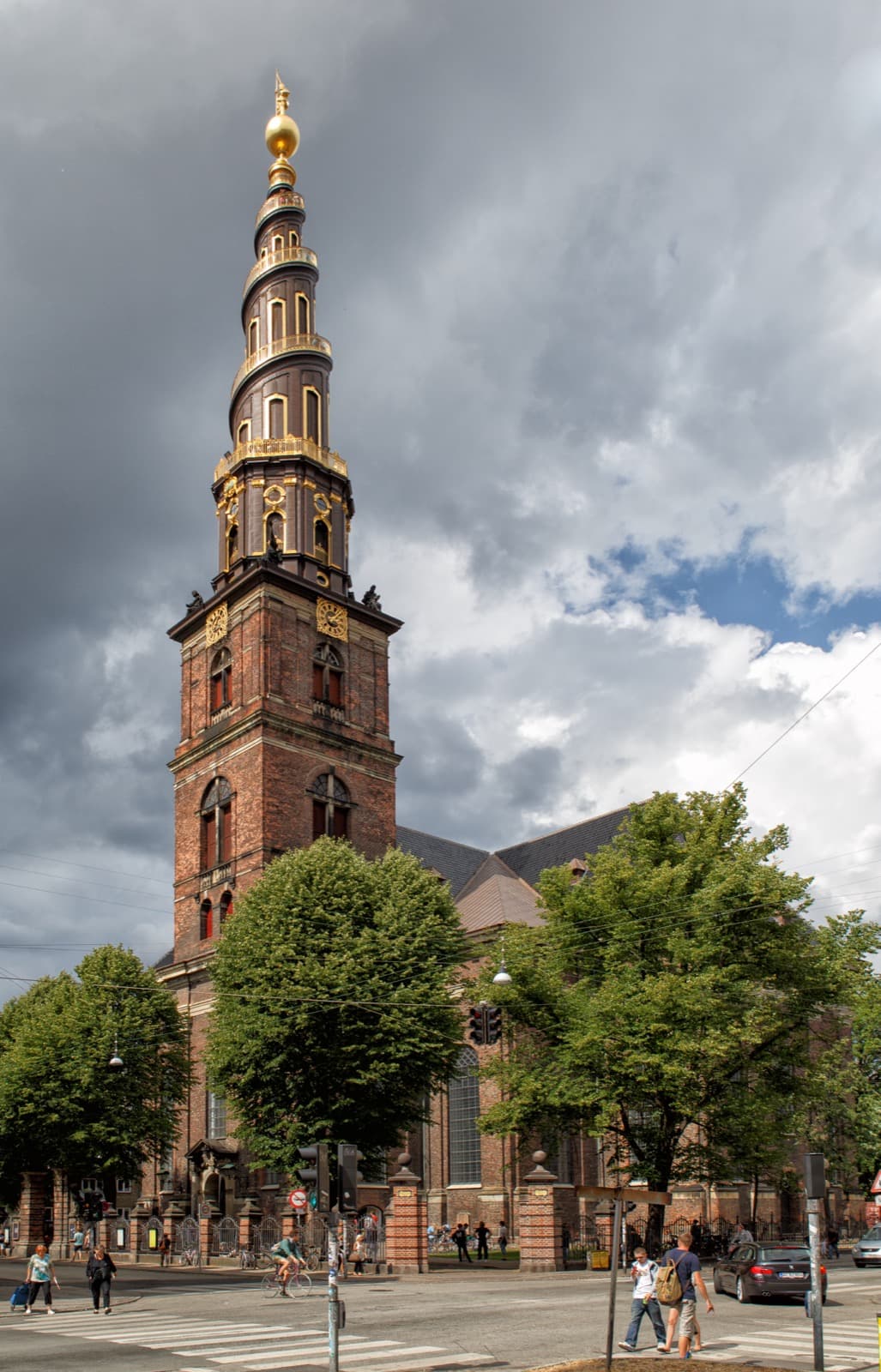
Christiania is the final stop on the Slotsholmen and Christianshavn self-guided audio tour, which crosses the little island where Copenhagen was born, from the palace of parliament and the dragon-spired stock exchange to the canal quarter and the golden spiral of the Church of Our Saviour, before ending here on the ramparts. If you are planning a wider visit, start with our guide to Copenhagen walking tours and let the water carry you from the island of kings to the green free town on the walls.
Sources
- Freetown Christiania, Wikipedia. Founding date, residents' plenum, size, the 2011 land-purchase agreement through the Foundation Freetown Christiania, and the 2016 and 2023 shootings.
- "Christiania residents dig up infamous Pusher Street in Copenhagen," The Copenhagen Post (April 6, 2024). Date of the dig, the spokesperson's quote, and the DKK 14.3 million first-phase funding from the Ministry of Social Affairs.
- "Denmark shuts down cannabis 'Pusher Street' in hippie enclave Christiania," CNN (April 6, 2024). Closure decision, the residents' motivation, and government redevelopment funding.
- Cooperatives Wiki / beCopenhagen, "Christiania." Jacob Ludvigsen's role in the 1971 declaration and the wording of the founding mission statement.
- Roamer tour transcript, "Slotsholmen: The Island of Power and the Spiral Spire" (fact-audited). Anchor facts on the ramparts, the barracks occupation, and the island-versus-free-town framing.
Ready to experience it?
Slotsholmen: The Island of Power and the Spiral Spire
80 min · 3 km · easy
More from Copenhagen
Explore more at your own pace.
The Rebuilt Capital: How Copenhagen Kept Raising Itself from Fire
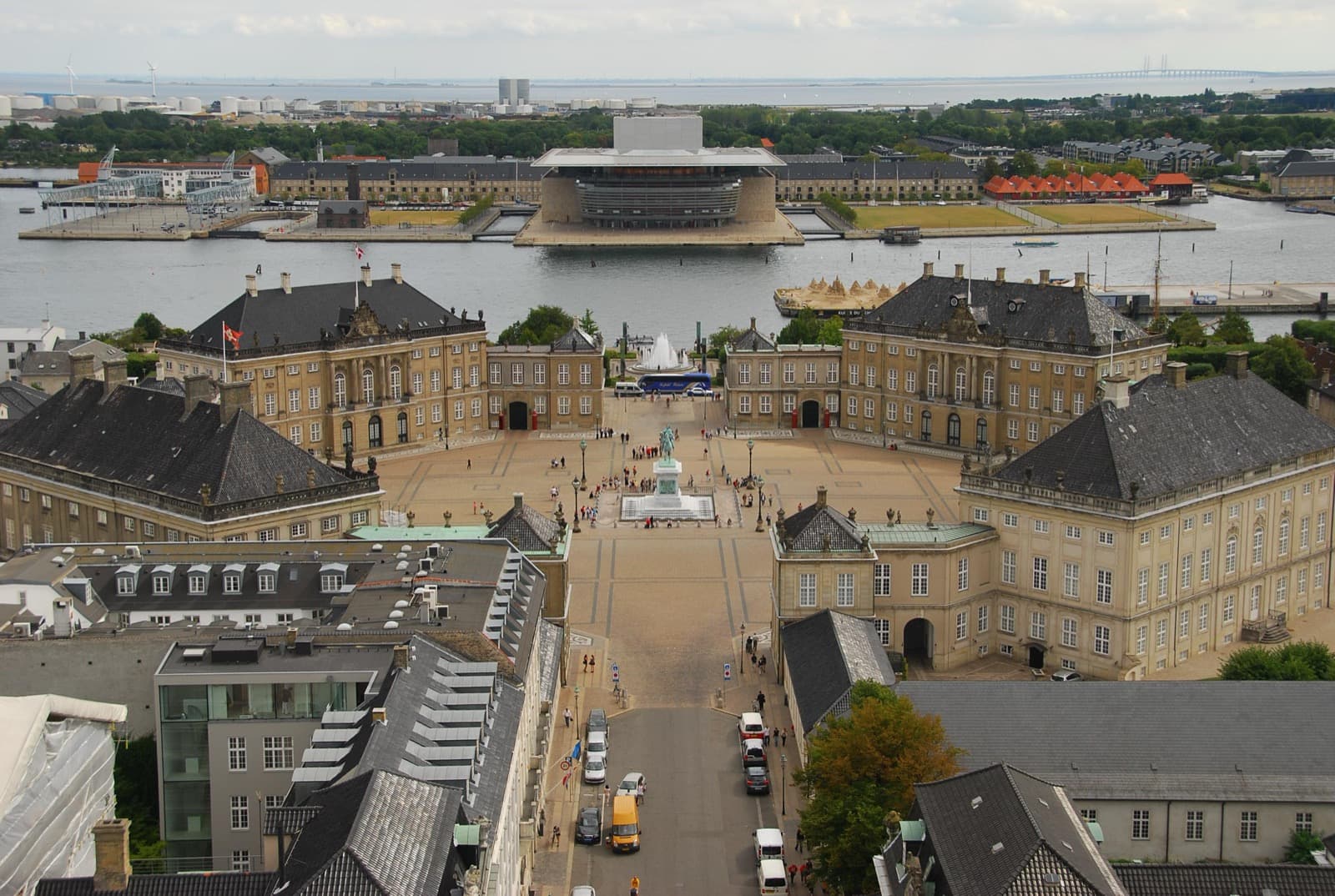
Amalienborg and the Copenhagen a King Drew on Purpose
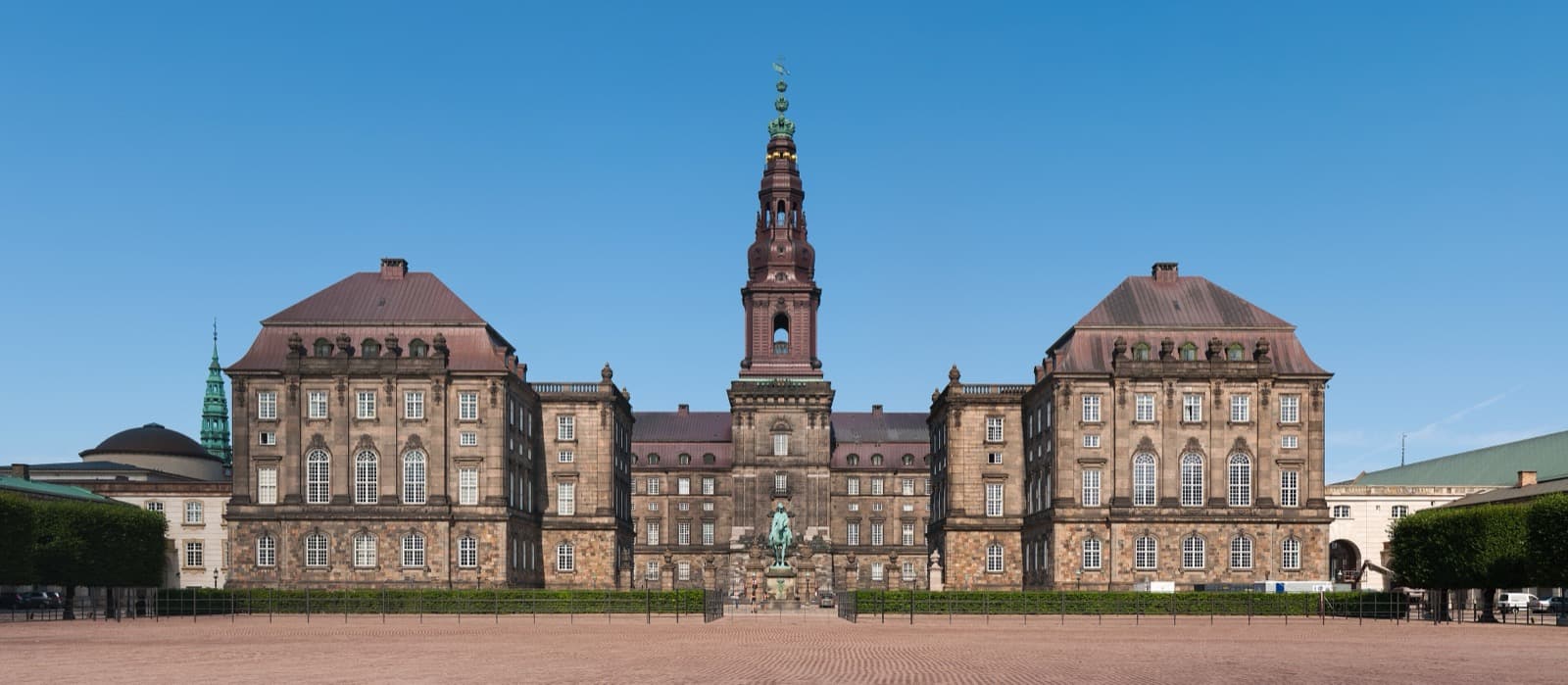
Christiansborg Palace and the Island Where Copenhagen Began
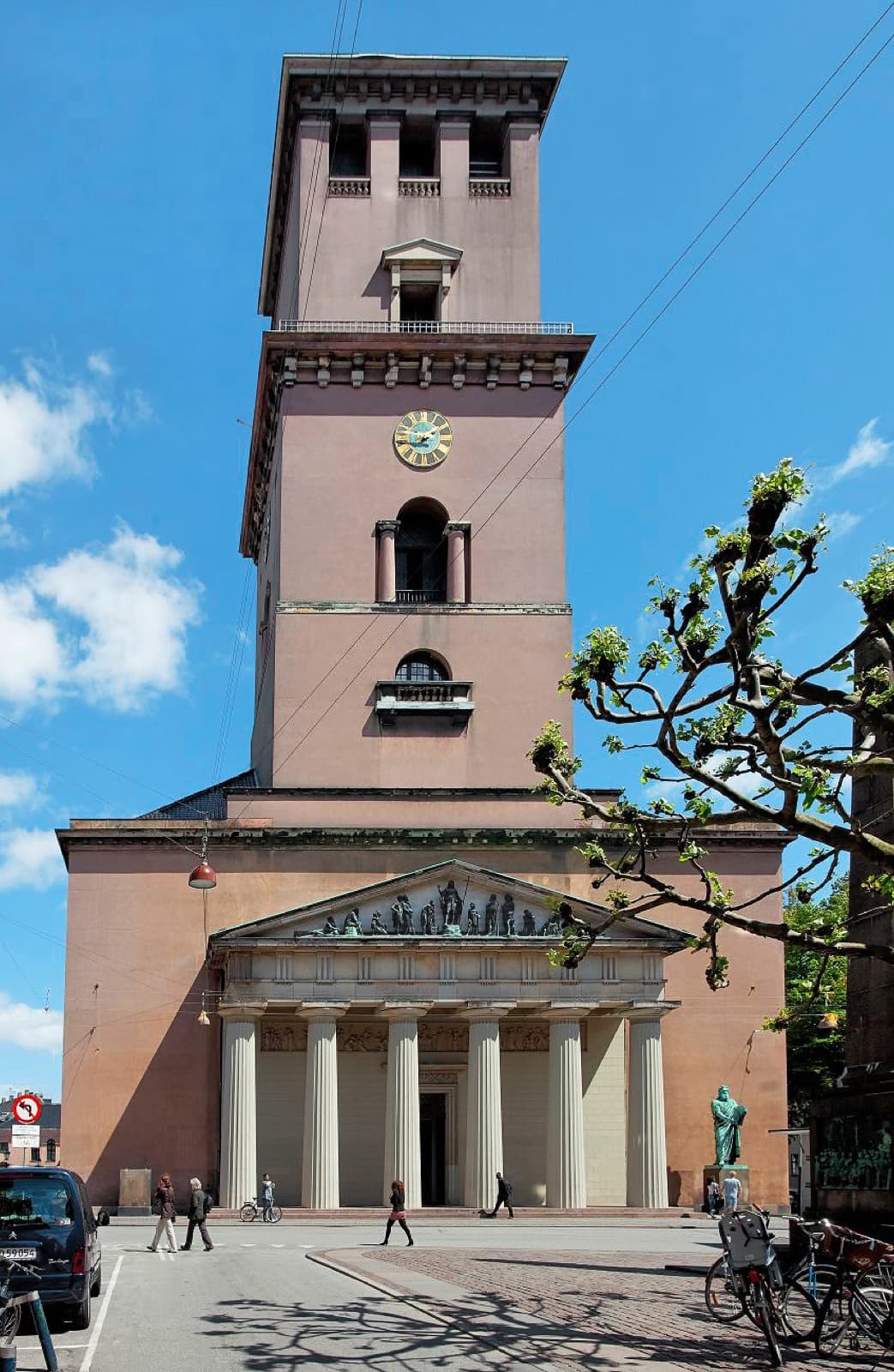
The Copenhagen Cathedral That Was Rebuilt from a Bombardment
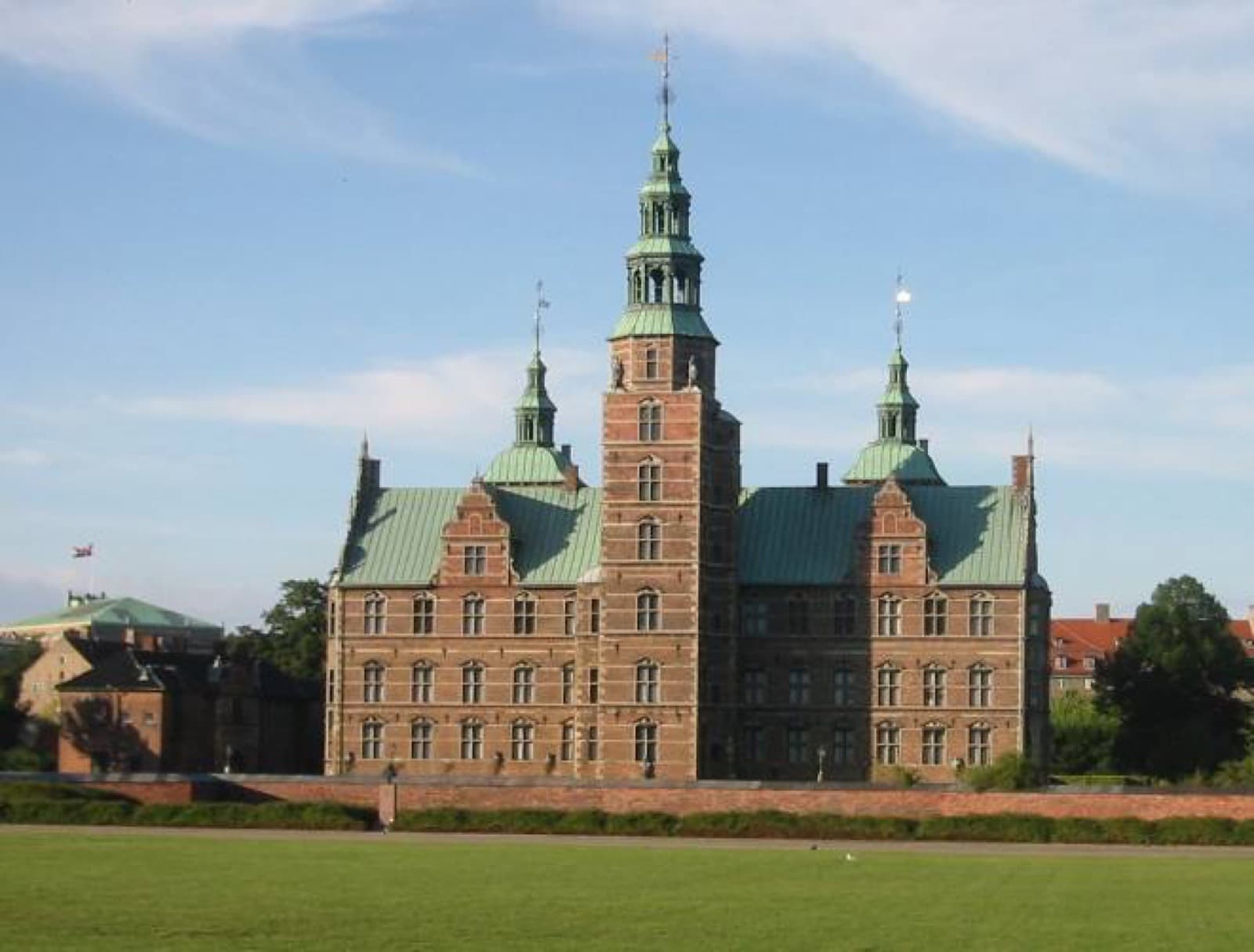
Rosenborg Castle: The Fairytale Fortress That Kept Denmark's Crown Jewels